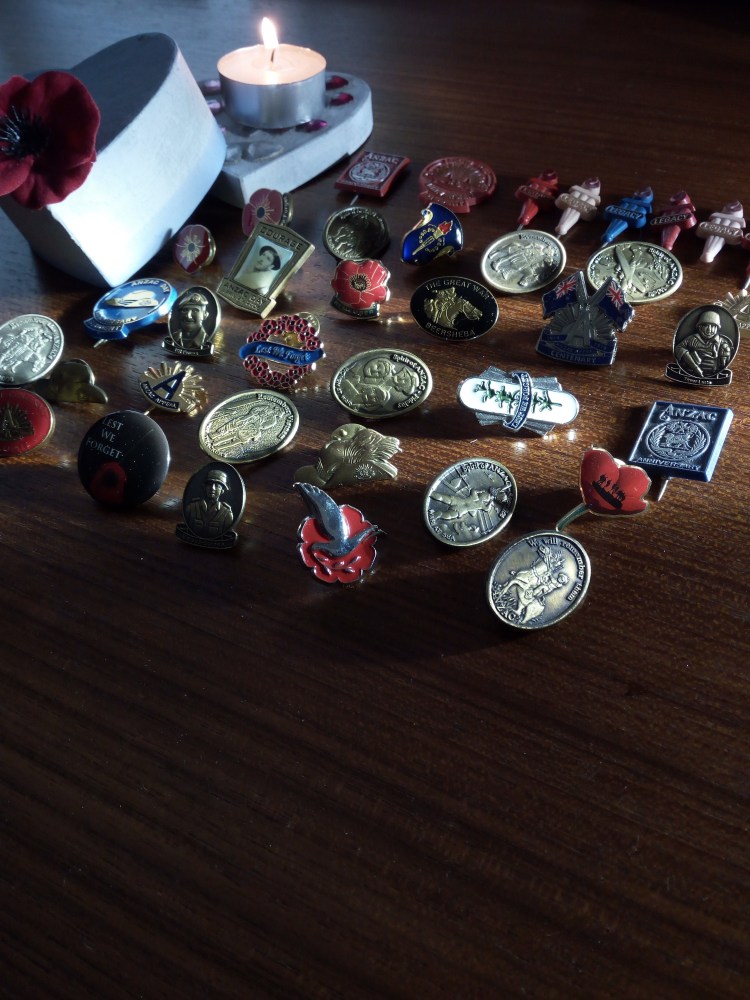
Anzac Day commemorations will take place on Monday 25 April 2022 across Australia, and at the Australian War Memorial’s Sculpture Garden, marking the 107th anniversary of the landings at Gallipoli.
This Anzac Day also marks the 80th anniversary of Anzac Day commemorations at the Memorial.
This year’s commemorative program will include:
5.30 am Dawn Service 9.30 am RSL (ACT Branch) Veterans’ March 4.45 pm Last Post Ceremony
Heads up… Brisbane’s longest-running Book Fair is coming soon! The UQ Alumni Book Fair will be spread over four glorious days in April/May 2022 with heaps more than text books.
This annual fundraiser is a much awaited event for Brisbane booklovers. Based at the University of Queensland, St Lucia campus, there is something for every reader and collector.
I’ll be going with a BIG carry bag!
The Book Fair is organised by volunteers who harness their love of books and generously donate their time to help raise funds to support researchers, educators and residential scholarships for UQ students.
Come along to the Book Fair for a huge range of—-
Pre-loved books of every genre for every age group
Magazines
Sheet music
DVDs
Videos
CDs
Vinyl records
Occasional photographs, print or piece of memorabilia
Special Family Day for young readers
The Rare Book auction is biennial and next event is 2023
Register now White Gloves talk on rare Australian books at UQ Fryer Library.
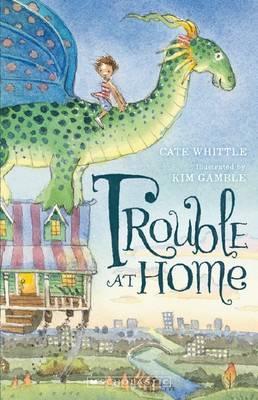
My special guest Cate Whittle, author, teacher, speaker, offers her advice and experience on how to fine-tune your manuscript before submission to a publisher.
Cate’s literary expertise covers workshops, writing courses, book launches, school visits and video tutorials—watch out below for her special MANUSCRIPT ASSESSMENT offer—but first sit back, relax, read
‘On the Fine Art of Sending Your Book Baby Out into the World’
Congratulations! You’ve made it—from those first tentative words that broke the curse of the blank page, to the carefully woven ending—you’ve finished your book!
What now?
First – bask.
This is an important moment and really deserves celebrating. So many would-be writers never get this far. So celebrate.
While you are celebrating, the manuscript is resting.
You know that.
And you know that you come back to it with fresh eyes to read through and self-edit to make it the best you possibly can. And you know that there will be a multitude of drafts before you say, ‘This is it!’
And then you send it out to the likeliest looking publisher or three?
Bzzt. Wrong.
This can be the falling point for soooo many little fledgling books.
For its first forays out of the nest, there are so many things you can do before you subject it to the scrutiny of an actual publisher.
Allow me to make some suggestions.
Let me call this Levels of Editing.
It is up to you whether you employ all or some of these levels of editing—or whether you feel happy to trust to yourself in some regards—and certainly, you will be editing with your publisher if your work is acquired by a traditional publishing house, but it is always good to be close to all the way there before you approach a publisher. And if you are self-publishing… you’d be well-advised to spend the money.
One:
Was your self-editing.
Focus in on structure and consistency, make sure your opening grabs the reader and your writing flows easily and is paced well. Look at tension and relief. Are your characters believable? Does the setting work? Is your ending satisfying—and does it work for your genre?
Two:
Might be your Mum or a Trusted Other.
This is usually good for a feel-good glow (which is great for your confidence), but do not pressure this relationship with a request for honesty. Do not. Enjoy the feel-good glow and move to the next stage.
Three:
Your critique group.
Yes, join one. Participate. I cannot recommend more highly this collegiate learning and sharing. Even J.R.R. Tolkien and C.S. Lewis (peripherally Dorothy L Sayers) and those other guys who no-one remembers, all benefited from sharing their work in their Inklings literary circle.
But be aware that this, too, has its limitations. Perhaps you do not work in the same genre so they may not understand all the tropes and symbolism in your text (I speak—lovingly—from the experience of teaching my critique group friends about fantasy). Perhaps you are all learning together. Perhaps your critique partners are unwilling or unable to offer critical feedback.
Where to from here then?
Four:
Manuscript assessment.
Strictly speaking, this is NOT editing per se. This is where a reader with some experience goes through your manuscript and offers feedback as objectively as possible (although not entirely—reading anything is a subjective and individual process).
A good manuscript assessor will provide a general commentary on:
* Voice, point of view, description, and setting
* Characters
* Plot/structure
* Punctuation, spelling, grammar, and vocabulary
* Audience/market
* Anything you have specific queries about (e.g. does my opening hook work?)
A manuscript assessment can be completed on a partial text (I offer commentary on the opening three chapters and a synopsis) to keep costs down, or on a complete text. This is your impartial reader who has some experience in the field, giving you their reaction to your book.
Manuscript assessments are often offered by editors as a first pass through your story, to let you know whether you are ready to go further. Published writers, or established teachers or librarians with a strong background in the literary process.
It’s a good starting point without investing a huge amount in the early stages of polishing your text. You should come away with some good ideas about how to develop your work further. Sometimes you can enter into a story coach arrangement with your assessor—but this is a whole extra field.
Five:
Story coach.
This is like engaging a manuscript assessor several times over a period of time, reworking and reassessing scenes together to make sure that your story is powerful and ready for the next stage of editing. Check with your manuscript assessor if they are willing to enter into such an arrangement before you start.
N.B: If you are writing non-fiction, this is the level where you might seek out a professional content editor to make sure your information is correct and presented in a way that flows.
Working with a manuscript assessor or a story coach gets you ready for the hard stuff. From hereon it can get intense!
Six:
Structural Editing.
Similar to a manuscript assessment but at a deeper level, this is usually undertaken to evaluate your characters, plot, and setting, and ensures that your narrative flows smoothly and your scenes work to move the story forward. It will look at how your chapters sit and whether they could be arranged differently to make the story more powerful.
Seven:
Line editing.
This is a skilled task that is best done by a trained professional editor. You may have already engaged an editor for your first assessment, but often this is an opportunity to let another set of eyes go through your work.
Line editing evaluates and offers corrections for the tone, style, and consistency of your work. While a good line edit will also check basic spelling, punctuation, and grammar, for a more complete overview of these mechanics of writing you would be moving to a copy edit.
Eight:
Copy editing.
Again, this is a job for a professional editor. This is all about your spelling and punctuation. This is all about getting your grammar correct. This is all about your word choices (do you need adverbs or will a stronger verb make your writing tighter?), how you lay out your text (paragraphing), minimising repetition or jargon, and weeding out redundancies.
All without losing your voice.
Nine:
Proofreading.
Except proofreading is also NOT editing. By the time you are proofreading all that is done. This is like a final going over to make sure you have dotted all your Ts and crossed all your Is…
This is checking formatting and consistency one final time, and finding those last minute, glaring typos. You can stick to your professional editor for this—or find yourself a professional reader. Your manuscript assessor might be good for this, but make sure they know it is a proofreading exercise. Now is NOT the time to come up with suggestions for a whole different structure.
Ten:
Okay, breathe.
While all this has been happening, I’m sure you have been researching your publishers for the right fit. Don’t forget to check their submission guidelines and follow their rules—and now you can press GO.
Good luck! May your fledgling fly true and straight and find a home out there (whether you go via a traditional publisher or decide to go Indie).
———————————-
Thank you, Cate, for such enlightening information! ♥ Gretchen Bernet-Ward
SPECIAL OFFER
Personal note from Cate
In the spirit of celebrating 61 Years Since 1961, I’m currently offering manuscript assessments at only 61% of my usual going price.
This offer closes on 3rd April 2022, BUT if you have something in the wings and would like to purchase an assessment at this price and take a rain check on the assessment until you are ready, just drop me a line cate@catewhittlewrites.com
I’m currently offering an assessment on the first three chapters (to 10,000 words maximum) on your Junior Fiction (which probably shouldn’t be this long!) or Middle Grade manuscript for AU$110. Alternatively you can contact me for my price schedule for a full manuscript.
Any questions? To find out more ‘On the Fine Art of Sending Your Book Baby Out into the World’ contact Cate cate@catewhittlewrites.com
Welsh author Charlotte Williams created a gripping, atmospheric crime novel of high emotion and psychological fear. Written in 2014 ‘Black Valley’ is the second book in the Dr Jessica Mayhew series, a literary symphony of tension, dark imaginings and worst possible scenarios.
A phobia I have was triggered and at times I almost stopped reading. However, I was Reading For Wales and I felt I owed it to the author and the character, psychotherapist Jessica Mayhew, to see it through to the bitter end.
Jess consults with a new patient Elinor Powell, an artist who seems fragile but in fact is quite annoyed at her twin sister Isobel, angry at her famous mother’s sudden and suspicious death, and quite demanding of Jess’s time.
Soon after the consultation, Jess’s best friend, straight-talking Mari, gives her an invitation to attend a private art viewing at the Cardiff art museum. Unwittingly Jess meets Elinor and her circle of friends from the Welsh arts scene. Particular focus is on the emergence of reclusive ex-miner Welsh Valley’s artist Hefin Morris who is touted by art dealer Blake Thomas and handsome art critic Professor Jacob Dresler as ‘the most exciting painter working in Britain today.‘ Jess queries their promotional hype.
The Hefin Morris artwork has strong depictions of the aftermath of destruction at the closure of the mines. A recurring theme echoes through the book ‘The crumbling of the infrastructure, the moral and spiritual vacuum created in the wake of that implosion, a landscape that bore silent witness to the ravages of coalmining – the heritage of the Rhondda. The abandoned landscape becomes a character in its own right’.
Jess is a newly separated single parent struggling with her estranged husband, and two daughters who live with her, but nevertheless she hits it off with Jacob Dresler. They hook up and become a couple, going out together and then away for the weekend to Twr Tal, Tall Tower, in the valley of Cwm Du, Black Valley. Atmosphere plus! But that’s when events go badly wrong and there is a death. Who is responsible for the tragedy? Jess has niggling fears that her new friends are not who they seem.
Against her better judgement, one thing quickly leads to another and Jess becomes a therapist-turned-detective. She calls DS Lauren Bonetti for guidance as she is slowly drawn into Elinor’s twin-dynamic world of manipulation. Circumstances spiral out of control while tension escalates and Jess is put in a very dangerous situation.
I was still not sure who was good and who was bad and what would be revealed as the story advanced to the final chapters. There is a section where the action is a bit contrived and I wondered if Jess would do such a silly thing considering her work ethics, but events quickly moved forward.
The ending appears inconclusive—but wait, there’s more. And it is certainly chilling how closure is drawn contrary to reader expectation. ‘Black Valley’ would suite a crime club or reading group interested in discussing trust and relationship issues.
I was saddened to read that author Charlotte Williams died of cancer prior to this book being published. It is a tribute to her writing talent. In my opinion, it sets the marker high for good quality crime novels and exposes the shallow scripting currently prevalent.
GBW22
Interestingly a second ‘Black Valley’ edition has the same bookcover as my copy and publishers Pan Macmillan have the date 2018 with Jessica Mayhew’s client as Pandora Powell not Elinor.
Throughout my copy of the book, Jacob Dresler is just called Dresler but there is a chapter inconsistency where he is only referred to as Jacob. Perhaps the book has been re-edited and re-released. Whatever: I thoroughly enjoyed this gripping narrative!
♥ Gretchen Bernet-Ward
My thanks to Book Jotter, Paula Bardell-Hedley, for instigating #Dewithon22. This is the fourth year I have participated and each time I have read eye-opening, unforgettable books set in Wales. Actually I have a couple more to read before the end of the month. Will I make it?
FYI:The House on the Cliff is the first book in the proposed Jessica Mayhew series if you are considering reading either for #Dewithon22.
University of Wales Press, Cardiff (Published 2004) University of Wales Press celebrating 100 years of publishing 1922 to 2022
What a rip-roaring, no holds barred non-fiction account of living, working and being Welsh from 1485 to 1914. Questions like “Should Henry VII be a Welsh Hero?” and interesting historical facts I did not know like “The Rebecca Riots”. This comes under the heading “Were the Welsh people Troublemakers in the 19th Century?” but I think they had good cause to rebel.
Another section explains why William Morgan’s translation of the Bible into Welsh in 1588 was a turning-point for bilingual Wales, keeping their language alive.
Stuart Bromfield, Euryn Madoc-Jones and University of Wales Press have compiled this historical overview for school use. Five hundred years over 175 pages with notes for students and teachers. Illustrations, paintings, drawings and photographs create an excellent visual guide to the standard of living for both rich and poor.
Royal taxes, crime and punishment, and the struggles of ordinary people to make a living and put food on the table are not glossed over. During the winter months, women gathered to knit woollen stockings. According to Thomas Pennant (1777) there was a good market for them.
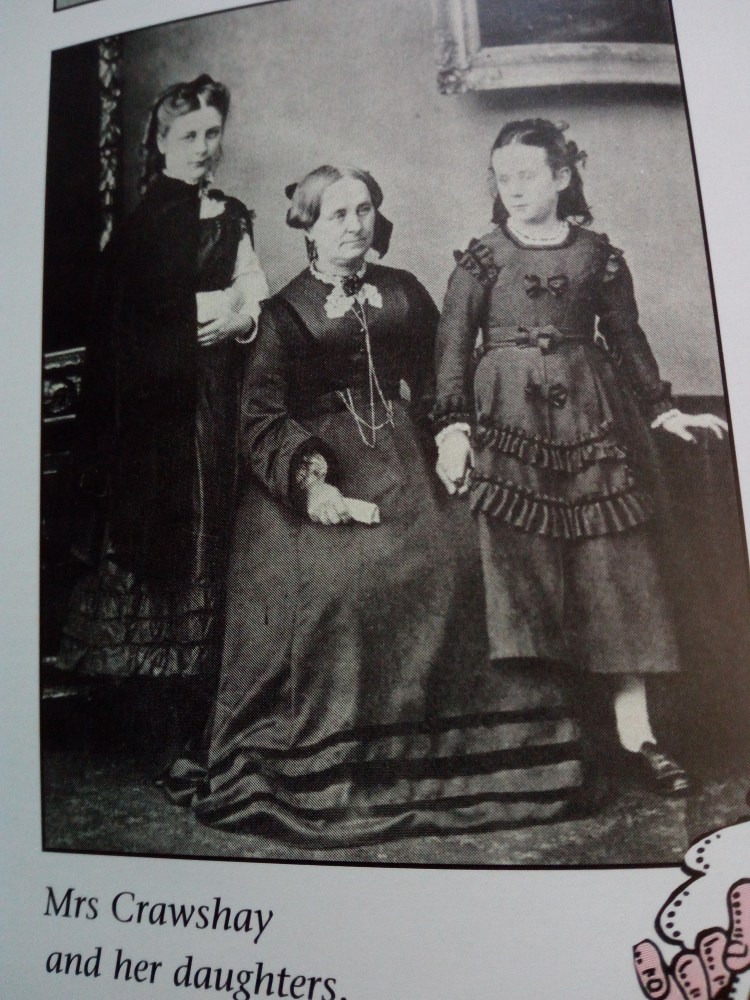
Amid the turmoil Mrs Rose Crawshay, who lived in Cyfarthfa Castle with 72 rooms and umpteen servants, helped the poor with soup kitchens and free libraries and encouraged women to read.
I bow in respect to the forgotten women “hauliers” who hauled materials from the pit face, removed coal from stone, and used large axes to break up iron stone at the surface of the mine. And I am very grateful that I never had the laborious job of five year-old “trappers” who opened and closed the pit doors all day. I hope food and a hug awaited them at the end of each gruelling day.
The industrious slate quarries, coal mines, copper and iron industries are mentioned in grim detail; such dirty, dangerous work and ultimately the rich got richer while the workers died of cholera, malnutrition and lung disease. Then the mining industries collapsed: people and landscapes bore witness to the ravages created by two centuries of coalmining.
Every country has a sad past, but the Welsh rose above it. Fellowship was strong, art and leisure time increased, choirs created “The Land of Song” and rugby players excelled. Education, religion, literature, music and the inevitable politics flourished.
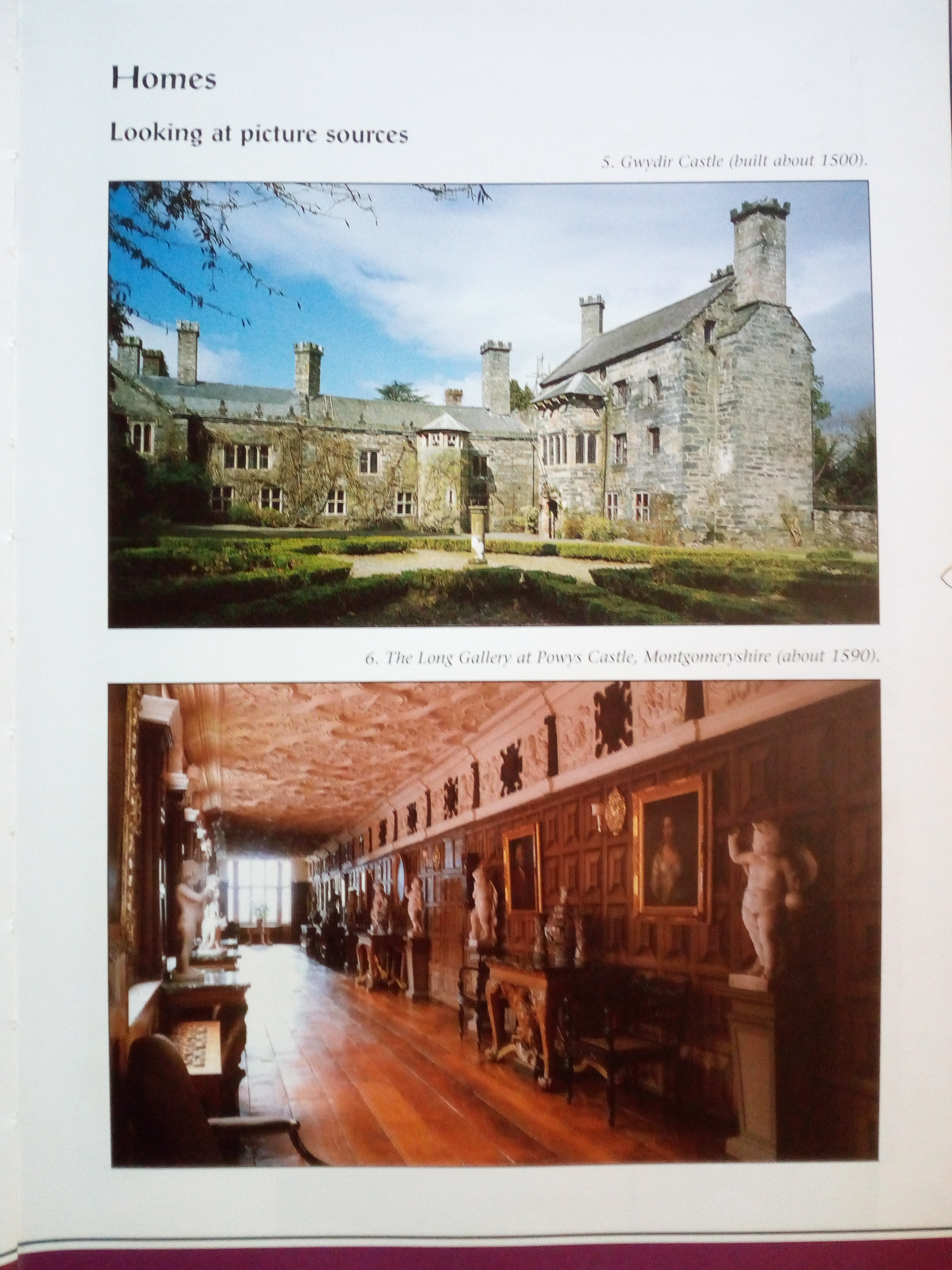
Gwydir Castle and Powys Castle (16th Century)
Of course, citizens have their own view of their country which may differ but this book satisfied my curiosity. It has made me more aware of the Welsh families who travelled across the seas to Australia in search of a new life. Ipswich City, not far up the highway from Brisbane City, has strong Welsh ties—but that’s for another day.
Excerpt from UWP website by Natalie Williams Director, University of Wales Press
“We are publishing two celebratory titles to mark our first 100 years; The History of Wales in 12 Poems by M Wynn Thomas and Dychmygu Iaith by Mererid Hopwood; re-sharing the first articles of the Press’ journals, as well as hosting a very special Centenary event in the Senedd, and events at the Hay Festival and Eisteddfod Genedlaethol during the summer.
“Our Centenary year 2022 will also see a very special announcement – the launch of a brand new imprint to serve a trade (non-fiction) readership. The imprint will offer fascinating and engaging stories, aimed at a global trade audience, with our distinct Welsh perspective and flavour. Our first books publish this year, with news and updates in the coming months until the formal launch in the Autumn.”
_________________
I think their History of the Press is well worth reading. And, of course, University of Wales Press has hundreds of books you can buy and read during #Dewithon22.
♥ Gretchen Bernet-Ward
My thanks to Book Jotter, Paula Bardell-Hedley, for instigating #Dewithon22. This is the fourth year I have participated and each time I have read eye-opening, unforgettable books set in Wales. Actually I have a couple more to read this month!
The origin of the word pikelet stems from the Welsh bara pyglyd or pitchy bread, which was a dark, sticky bread. The word spread into England and was anglicised to Pikelet.
Very easy to prepare and cook, pikelets are traditionally small yet a similar version to pancakes.
Gradually the basic pikelet recipe travelled far and wide through the world, adapting to different ingredients and varying from family to family.
Australian Pikelets
1 egg 1 cup self-raising flour 1/4cup sugar 1/2 cup milk One drop vanilla essence – optional
First beat the egg then add flour, sugar, milk, vanilla essence. Combine all ingredients and mix lightly and evenly. More ingredients can be added to batter for preferred consistency. Tablespoon mixture onto a greased, heated frying pan or griddle. Cook until pikelets rise and turn light brown, flip once.
Pikelets are cooked plain then served with a topping while hot and fresh.
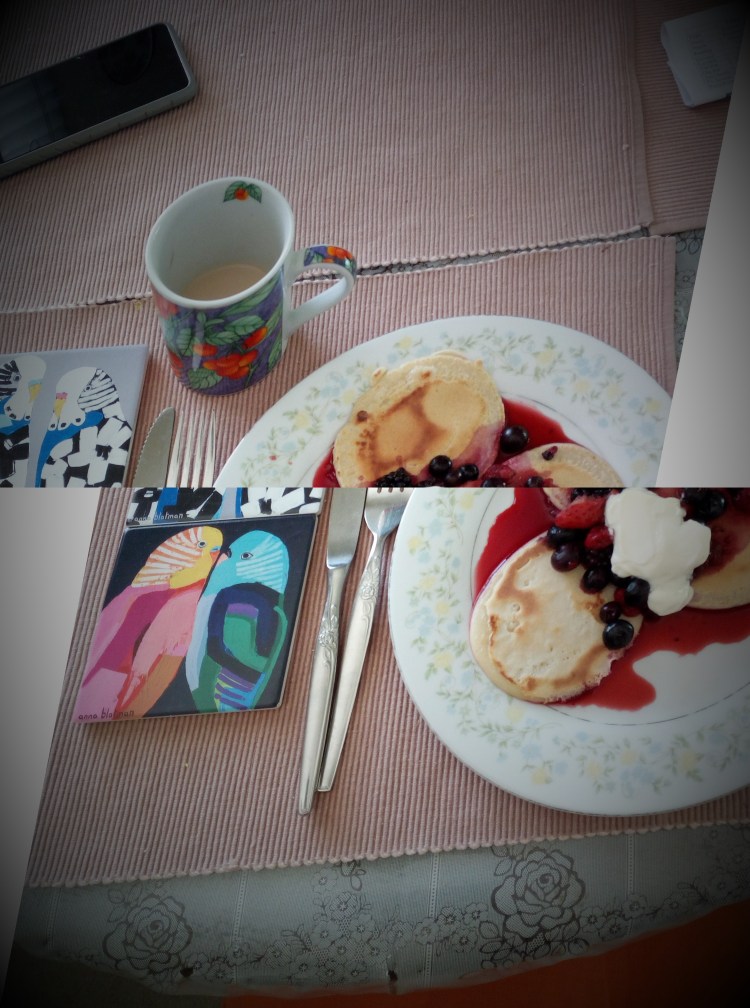
My photograph shows a rather lavish topping needing a knife and fork. Pikelets are normally finger food topped with jam and cream, or buttered, or a squeeze of lemon and dusting of icing sugar.
Children have been known to colour the batter with food dye for a holiday event.
Study Reading Wales #Dewithon22 Reading List—eat, read, enjoy!
The Owl Service by Alan Garner was a totally unexpected read for me. For a start the title does not refer to a Harry Potter-style owl delivery service. First published in 1967, I read the 2017 50th Anniversary Edition and had to adjust my thinking.
Winner of the Carnegie Medal and The Guardian Children’s Fiction Prize, Alan Garner’s story is set during summertime in an old house in a picturesque Welsh valley. There is a wonderful introduction by Philip Pullman and The Observer writes ‘Remarkable… a rare imaginative feast, and the taste it leaves is haunting’.Susan Cooper adds ‘The power and range of Alan Garner’s astounding talent has grown with every book he’s written’.
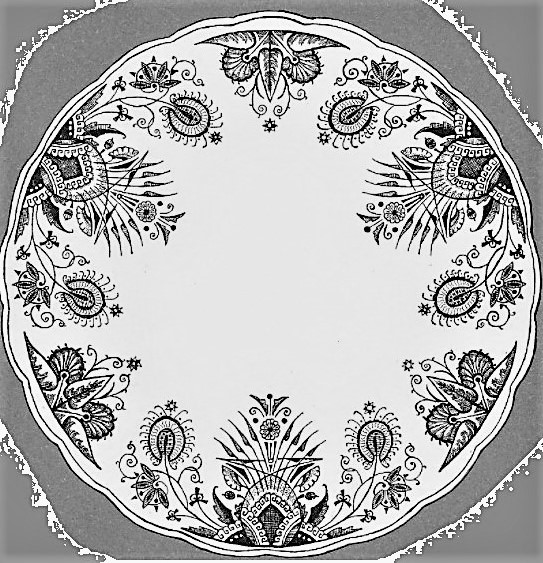
Okay, let’s get the owl service bit out of the way. It refers to a dinner service (plates) long hidden in the attic above young Alison’s bedroom where she is convalescing from a tummy bug. From the moment she sees them, she is besotted with the curious floral owl pattern and begins to copy them onto paper, cutting and folding them into tiny owls, little realising her actions will unleash events that affect several lives. Thus the atmosphere gets a little bit odd as ancient mythological forces seem to stir in the Welsh countryside.
Teenagers, Alison and her stepbrother Roger, and local lad Gwyn feel the vibes but only the caretaker Huw Halfbacon seems to understand it. The youngsters devise ways to get hold of all the owl plates because Gwyn’s mother Nancy, the cook, is horrified at their discovery and warns the children off. Too late, of course, and gradually they become not only secretive but snippy-snappy with each other and resentful of arrangements they have no control over, mainly their parents. Adult dad Clive seems to be the only calm one.
Added to the owl mystery is the local legend of a man who takes another man’s wife Blodeuwedd, a woman made from flowers. Retribution involves a rock and a spear which supposedly speared straight through the rock killing the man.
After a swim in the river, Roger discovers this rock with the hole: the Stone of Gronw. He’s an amateur photographer (think rolls of B&W film and F-stops) and muses over the paradox as he lines up trees on the horizon. This significance (and others!) was lost on me. What were the odd sounds like scratching, the motor bike, villagers mumbling or even Huw’s strange pronouncements?
Amazing artwork is found hidden in the billiard room of a dairy shed conversion. Behind the pebble-dash wall is a vision of womanly loveliness or perhaps evil? The trio are uneasy. Is it payback for that bygone grievance? Is floral Nature emerging to take revenge? The most puzzling question is what roles do the paper owls play and why are they vanishing? These vignettes do not bode well and I was floundering for a rationale, trying to conjure an explanation. Is it that the clues are merely to mislead the reader? (Here I pause thoughtfully to study the subtext, slowly untangling it)
I enjoyed the snippets of daily life, e.g. Gwyn pulls up lettuces for dinner, the teenagers visit a nearby shop—a front room in a cottage—and the casual way they talk about pocket money and cigarettes. Gwyn tells Alison he’s getting ‘out of this place’ and she says ‘I thought it meant a lot to you’ and Gwyn replies ‘It does. But you can’t eat a feeling.’
PAGE 122 THE OWL SERVICE BY ALAN GARNER
As tension mounts within the families, Gwyn likes Alison and he fights with his mother who wants to leave. I kept wondering where things were heading. The way is not clear-cut. At times I found the writing style difficult to get into and emotionally overwrought. Alison is the mercurial girl and Roger the snobbish boy; cruel things are said, especially to Gwyn and eventually he cracks under pressure. Huw watches on… this is where things get fast and furious and brilliantly captures the angst, the rain, the mountains, the desperate urge to escape.
The awe-inspiring Welsh setting, and the subtle way author Alan Garner has subverted the norm, is intriguing. Garner actually stayed in the valley where he based his story, using ‘an expression of the myth’ the legend of mythical woman Blodeuwedd and he carried out extensive research—even the owl plates are real, designed by Christopher Dresser sometime between 1862 and 1904.
The characters are fleshed out by their dialogue alone (not Welsh) and everyone plays their part—perhaps leaning towards a stage play ensemble. Indeed The Owl Service was made into a Granada Television series of the same name in 1969, and was dramatised for BBC Radio 4 in 2000. (Wikipedia facts behind the book)
Another Welsh fantasy novel of the 1960s written by Susan Cooper Over Sea, Under Stone indicates that Young Adult fiction in general began to thrive in this decade as books were being published and marketed expressly at teenagers.
I would suggest The Owl Service rating as mild fantasy with a psychological twist. It is certainly a literary milestone, although I did wonder if millennial teenagers were reading it. In my opinion, this story is more suited to those who have lived through the no-internet era. Enjoyable, yes, but far removed from the type of graphic and immersive YA fantasy novels published today.
My thanks to Book Jotter, Paula Bardell-Hedley, for instigating #Dewithon22. This is the fourth year I have participated and each time I have read eye-opening, unforgettable books set in Wales.
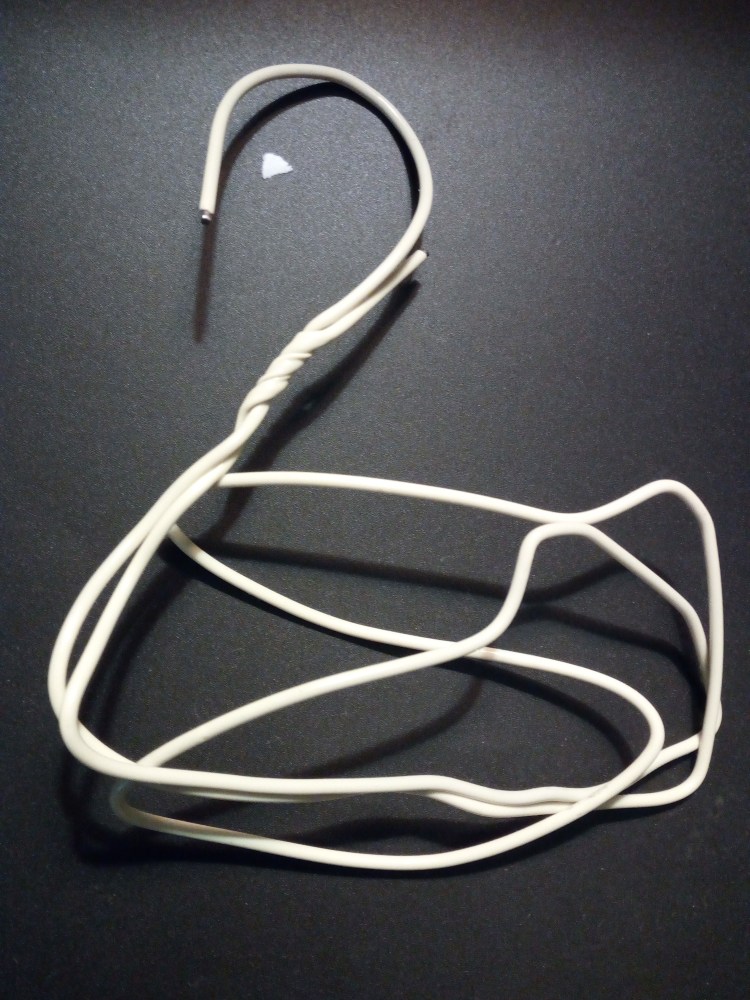
I like relativity and quantum theories because I don’t understand them and they make me feel as if space shifts about like a swan that can’t settle, refusing to sit still and be measured; and as if the atom were an impulsive thing always changing its mind.
This will be my fourth Reading Wales #dewithon and I am excited at the list of Welsh authors and poets which Book Jotter has assembled to tempt our reading taste buds.
Source one book, source ten! Create your own list! See my list! Join in Reading Wales!
Currently I have six books on a waiting list at my local library because it will be easier to collect them rather than hanging around waiting for an interstate or overseas parcel delivery.
I hold Covid-19 responsible and also a catastrophic flood which swept down the Queensland coast, through my city of Brisbane (everything is still soaked) and pounded coastal New South Wales before heading towards Sydney. Notice how I worked in the word ‘Wales’?
A MESSAGE FROM THE CREATOR BOOK JOTTER, PAULA BARDELL-HEDLEY
Welcome to the fourth Reading Wales celebration (aka Dewithon 22), a month-long event beginning on Saint David’s Day, during which book lovers from all parts of the world are encouraged to read, discuss and review literature by and about writers from Wales.
For more in-depth information on this reading jolly, head over toDHQ (Dewithon Headquarters), and to see what’s happening this year, please follow this link. You can also share your thoughts and posts on Twitter by using the hashtags #dewithon22 and/or #walesreadathon22.
____________________
visit DHQ Reading Wales Dewithon22 websites below.
click‘On Our Shelves’ to browse Dewithoner’s suggested reading list.
source books relating to Wales from library, bookshop, online.
Here Be Dragons by Sharon Kay Penman (because my family are dragon fans and it’s part of Welsh Princes trilogy I have always wanted to read). DOWNLOADED e-book.READ
Black Valley (Jessica Mayhew book 2, couldn’t source book 1) by Charlotte Williams, a domestic drama arts thriller of some intensity. AVAILABLE in my local library.READ
The Owl Service by Alan Garner was too tempting, so I’ve added it to my list. The Guardian says “…the plot is very gripping and slightly creepy.” AVAILABLE in my local library.READ
Sugar and Slate by Charlotte Williams – past winner of the Arts Council of Wales Book of the Year, an autobiographical story of a Welsh-African mixed-race woman who brings her unique qualities to the story, transforming it into a lively and living account of her life. ON ORDER.
I’m keen to get started 😀 and already made some headway!
My thoughts are that I will eventually read them all—perhaps not all in March—and I am looking forward to having my mind held captive by the literati of Wales. When I put down the books and walk Terra Australis again, my reviews will be either here or Goodreads.
Looking forward to reading about what you are reading!













 Thoughts Become Words