Forevability New Database for Empowering Tales

I received an email from Michelle Worthington of Authors Online who wrote “Tabitha Page has been working hard on a new venture which I am excited to share with you. Tabitha, children’s author and disability advocate, is currently setting up an online database under the name Forevability, where she is compiling as many books as she can for children through to young adults which have the following themes:

Disability
Illness
Medical conditions
Medical Procedures
Anxiety
Sensory
Bullying
Diverse
Own voice
Inclusion
Grief/Death/Loss

“Tabitha is also looking for books by authors and illustrators who have a disability or illness themselves, and she plans to have a showcase page of their work.”

“In addition to these resources and showcases, Tabitha will also be compiling a database of podcasts/videos/blogs/articles related to the same categories as noted above” and aims to make Forevability an easy place to find books, podcasts and more.”

“The goal of this project is to create an online space where people can find resources when they face challenges…”

Michelle Worthington

Visit the website under construction and explore the possibilities for your work http://www.forevability.org/

Tabitha Page says “We hope to inspire, empower, teach and support”.

If you have a book, or books, which would make a good match for Forevability database, or you are an author or illustrator who has a disability or illness, check to see if your book fits one of the categories in the guidelines on the website and make a submission.

Hey, you can find out more about the dynamic book fairy Michelle Worthington here.

Gretchen Bernet-Ward

The Elephant

Elephants heading upstream © Gretchen Bernet-Ward 2021

The Elephant

“When people call this beast to mind,

They marvel more and more

At such a little tail behind,

So large a trunk before”

Hilaire Belloc

Joseph Hilaire Pierre René Belloc (1870 – 1953) was an Anglo-French writer and historian and one of the most prolific writers in England during the early twentieth century. Belloc was also an orator, poet, sailor, satirist, writer of letters, soldier, and political activist.

Gretchen Bernet-Ward

Camel Milk Pancake Recipe

Pancake Recipe from 1984 ‘Country Hospitality’ Cookery Book

This is an straightforward recipe, you can juggle amounts and type of ingredients to suit. I use whatever is available in the fridge. When you are hungry, you cannot afford to be too serious with pancake-making batter. My secret ingredient is camel milk.

PANCAKES

Ingredients

1 cup self-raising flour

Pinch of salt

1 egg

1 cup camel milk (or other)

1 tablespoon butter (or other)

1 lemon

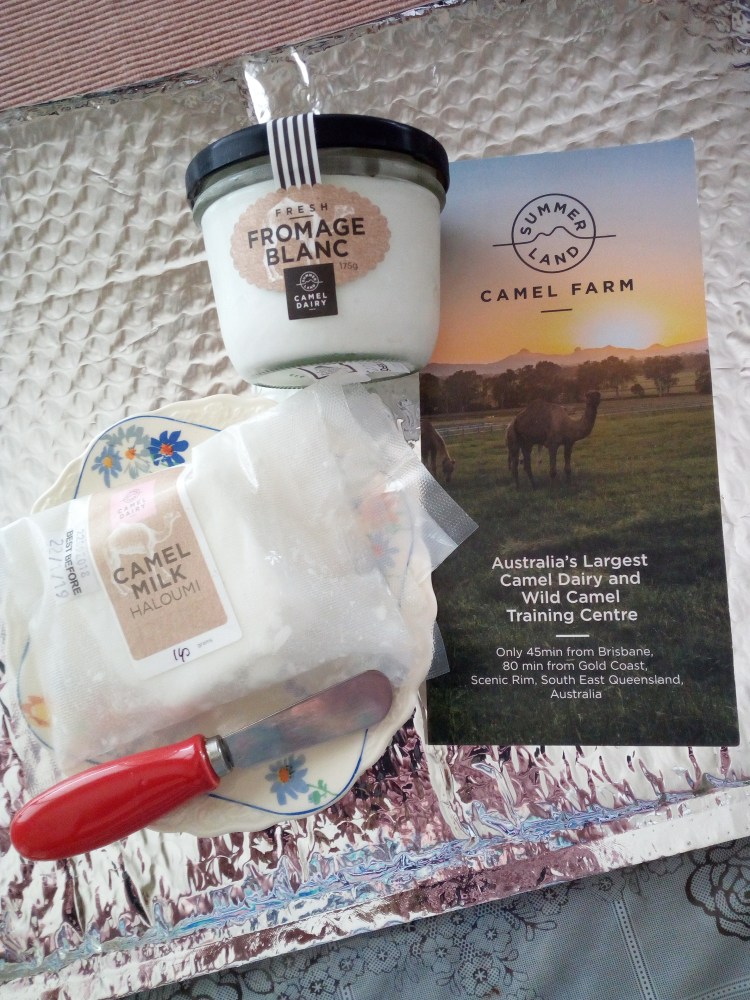
I have tried different milks, e.g. cow milk, soy milk, almond milk, goat milk (considered sheep milk) to versatile camel milk.  The Summer Land camel milk makes consistently fluffy pancakes which keep well (if you have any left over) and they take a variety of spreads or toppings.

Method

Sift the flour and salt; make a hole in the flour and break the egg into it, gradually stirring in as much flour as the egg will take;

Add half the milk by degrees and continue stirring until all the flour is absorbed;

Continue beating until bubbles rise, then stir in the rest of the milk gradually and stand batter aside for at least half an hour (I never do);

Take a small piece of butter and melt into the frying pan. Pour butter out and wipe the pan with paper (not necessary with non-stick pans) then put another piece of butter in, and when it has melted pour in a little of the batter and fry till it is light brown and tiny bubbles form;

Turn with a spatula, and when cooked on both sides, slip pancake onto a piece of paper.  Continue in the same way until all the batter is used. 

Serve

The ICPA serving suggestion is “sprinkle with castor sugar, roll up.  Serve hot, garnished with slices of lemon.”  However, I love them spread with soy margarine, honey and slices of banana.  Try seasonal fruit, peanut butter, savoury mince or a soft square of camel fetta.

Note: Summer Land camel milk (1 litre bottle) available at organics grocery stores, and also in milk powder formula. Use it with your own favourite recipe!

Thanks

This recipe is courtesy of Mrs L Nicholas of Solferino, Clermont, Queensland Australia.  Recipe published in ‘Country Hospitality’ compiled by Clermont Branch of the Isolated Children’s Parents Association 1984 with illustrations by Branch member Margaret Finger of Redrock, Clermont, Queensland Australia.  Metric conversions are approximate.

Bon appétit !

Gretchen Bernet-Ward

U3A Adds to My Life

Design and photo © Gretchen Bernet-Ward 2021

I am a member of U3A, University of the Third Age, an organisation designed for retired or semi-retired people over 50.  My focus has been creative writing but U3A provides an opportunity for members to try something different, meet new people, and share and enhance their knowledge and skills in a friendly environment.

World-wide, U3A is making a substantial contribution to societies by helping members to remain healthy and active longer.

University of the Third Age promotes learning for personal enjoyment and well-being for seniors.  Keeping the brain active, doing interesting things and making new friends are essential for helping older Australians maximise their chances of independence.

U3A Brisbane is one of many similar U3A branches throughout Australia. Formed in Brisbane in 1986, they are a volunteer organisation.  Brisbane locations provide leisure, arts and educational courses to local members at low cost each term.

Classes are conducted on Zoom and in person at a number of venues subject to Covid-19 restrictions.  

CLICK A LINK! ENHANCE YOUR SKILLS OR DISCOVER A NEW ONE:   

U3A Brisbane https://www.u3abrisbane.org.au/

U3A Queensland https://www.u3aqld.org.au/

U3A Australia https://u3aaa.org/

Gretchen Bernet-Ward

* * * * *

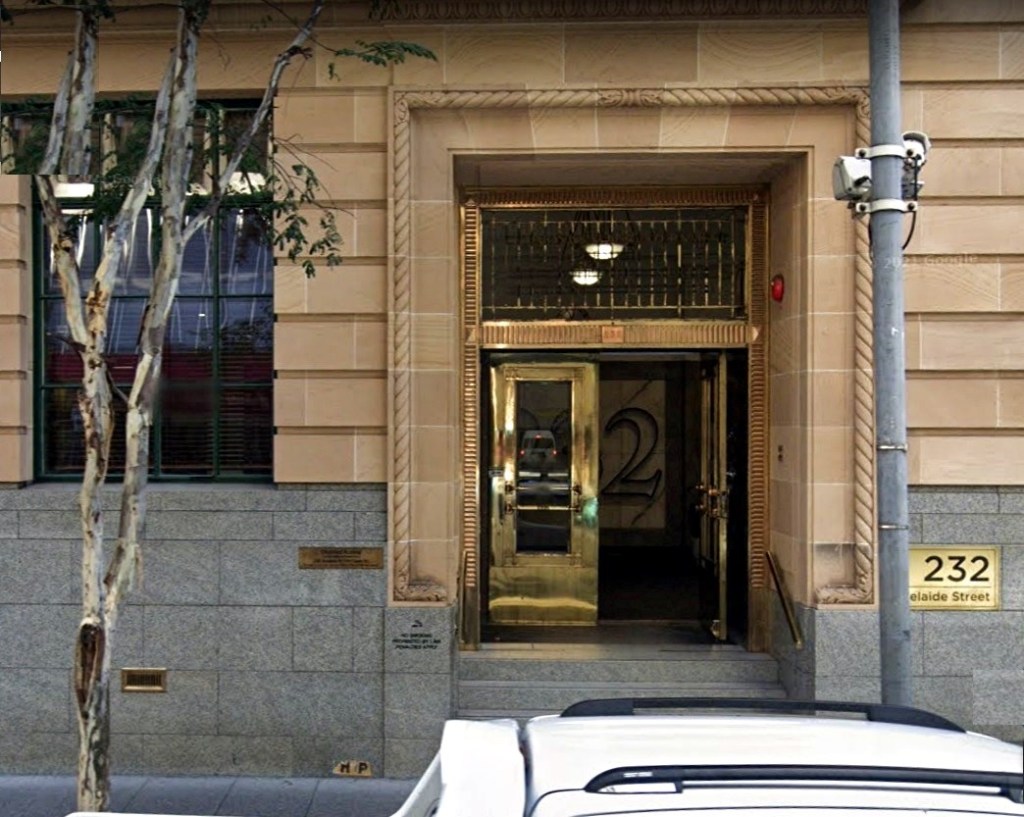
Front doors of U3A Adelaide Street, Brisbane.

John B Tabb was Ahead of His Time…

Image © Gretchen Bernet-Ward 2021

… or have we gone backwards?

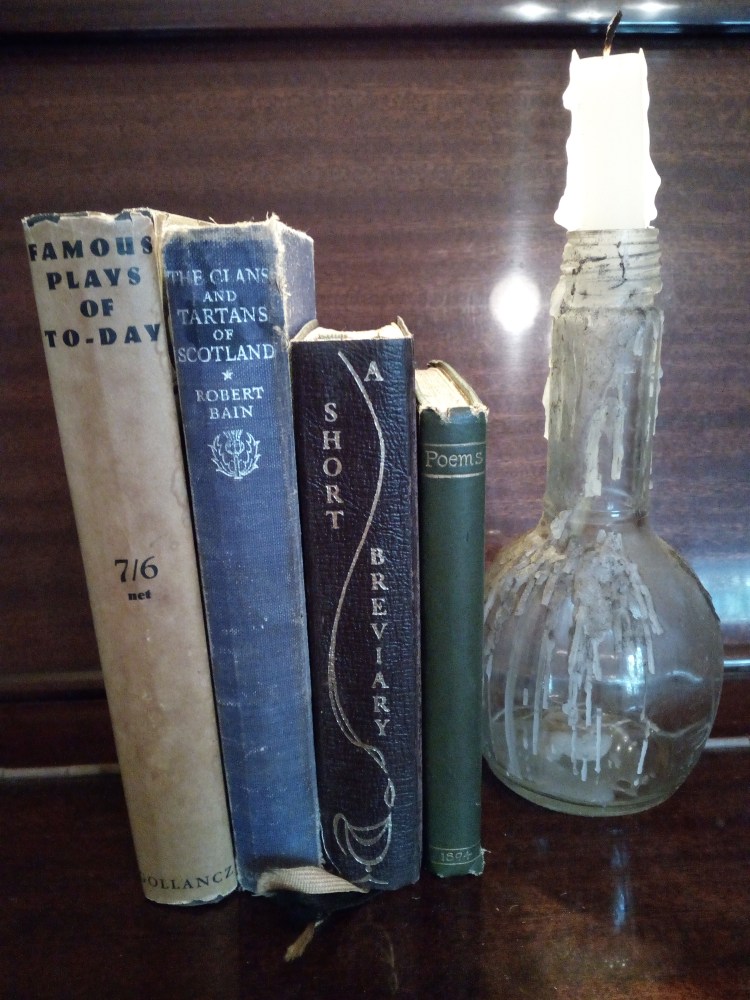
The small green book nearest the candle is simply titled “Poems”, a volume of verse by John B Tabb. Each poem is on a single page and has been written in similar length to Twitter and Instagram. All the way from 1894—I had to share it with you!

There are 172 pages, one short poem per page, extolling nature, love, life and death. I guess Tabb wanted only his poetry to shine because there is nothing personal inside.

The first page has an important red logo with lilies and Latin written on it, not for the poet but the company insignia of Copeland and Day, Boston, MDCCCXCIV (1894)

The second page states “Entered according to the Act of Congress, in the year 1894, by Copeland and Day, in the Office of the Librarian of Congress at Washington.”

The back page reads “This first edition of poems by John B. Tabb is limited to five hundred copies, which have been printed during the autumn of 1894 by John Wilson and Son, Cambridge, Massachusetts.”

A slim volume which appears to have been well handled over many years, and the pale deckle parchment is showing its age—see below.

The big question is “How did this volume arrive at a book fair in Brisbane Australia 127 years later?”

GBW 2021

After the formality of the front pages comes a seven page index (in tiny print) which has intriguing titles listed under headings. I guess the first are general rhymes, the next Quatrains and then Sonnets.

Here are some of my favourites—

The Phonograph

Hark! What his fellow-warblers heard
And uttered in the light,
Their phonograph, the mocking-bird,
Repeats to them at night.

Imagination

Here Fancy far outdoes the deed;
So hath Eternity the need
Of telling more than Time has taught
To fill the boundaries of Thought.

The Dandelion

With locks of gold to-day;
To-morrow, silver gray;
Then blossom bald. Behold,
O man, thy fortune told!

Evolution

Out of the dusk a shadow,
Then, a spark;
Out of the cloud a silence,
Then, a lark;
Out of the heart a rapture,
Then, a pain;
Out of the dead, cold ashes,
Life again.

Compensation

How many an acorn falls to die
For one that makes a tree!
How many a heart must pass me by
For one that cleaves to me!

“We may use different words but emotions are eternal”

Who was this man John B Tabb? Well, his full name and title was Father John Banister Tabb (22 March 1845 – 19 November 1909) and he was an American poet, Roman Catholic priest, and professor of English Contents. He was born into a wealthy family in Amelia County, Virginia, was a blockade runner for the Confederacy during the Civil War, converted to the Roman Catholic Church in 1872, taught Greek and English at Saint Charles College (Ellicott City, Maryland) and was ordained as a priest in 1884. Among his other works, Father Tabb published eight poetry books and was widely published in prestigious magazines of the day including Harper’s Monthly and The Cosmopolitan. The Tabb Monument in Amelia County, Virginia, is dedicated to his memory.
Source https://en.wikipedia.org/wiki/John_B._Tabb

Gretchen Bernet-Ward

——oooOOOooo——

Image © Gretchen Bernet-Ward 2021

Review ‘The Emporium of Imagination’ Tabitha Bird

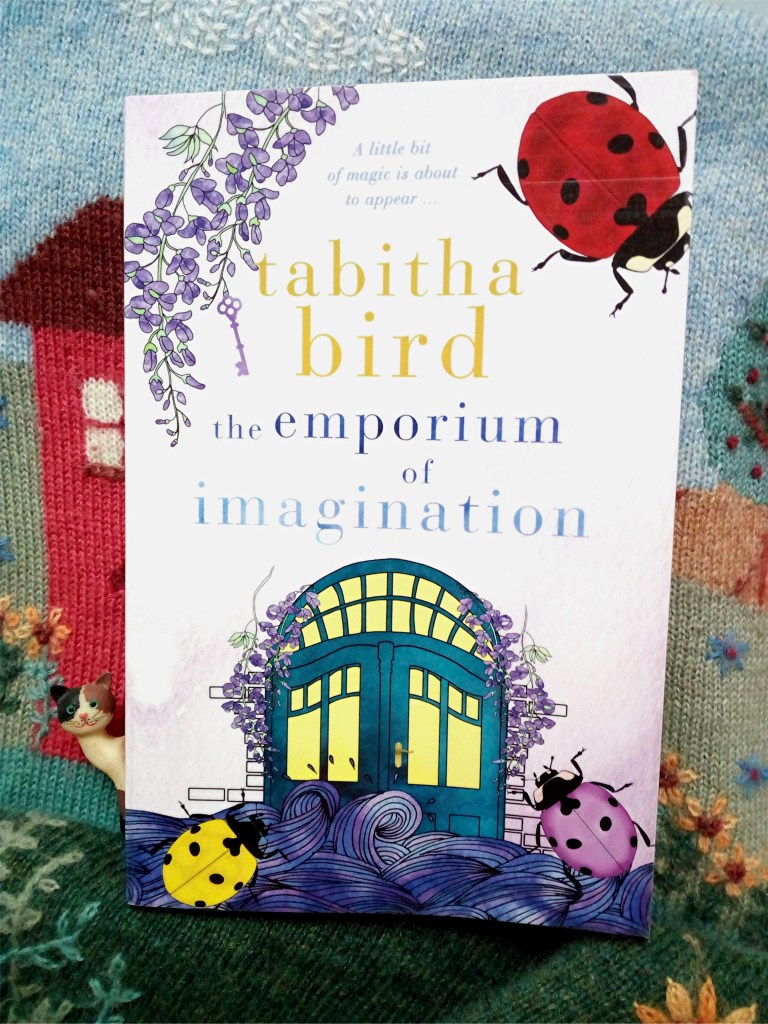
Image © Gretchen Bernet-Ward 2021

A tale of love, loss, grief and healing wrapped in magical realism and suitable for a wide range of readers.  Families in this story have lost loved ones and are either handling their grief, not handling it, or ignoring it.  They carry suppressed fears, squashed desires, and unfulfilled dreams but The Emporium of Imagination is here to help.  And help it does, in the strangest of ways.  I know the town of Boonah (and the camel farm) and felt an affinity as the story unfolded but apart from Story Tree café and Blumbergville Clock in High Street, similarities ended there.

A man, a cat and a key arrive with The Emporium and set up shop in the main street of Boonah, offering special ‘phones’, strange notes on scraps of paper and the ability to hear human grief in all its stages.  Although this may sound gloomy, at worst depressing, the characters keep things moving, offering the reader many POVs and scenarios ranging from timidity to teen humour, guilt to anger, regret, and worse case scenarios like replaying the death of a loved one.  The narrative often has dreamlike suspension of disbelief but the heartache is real.  

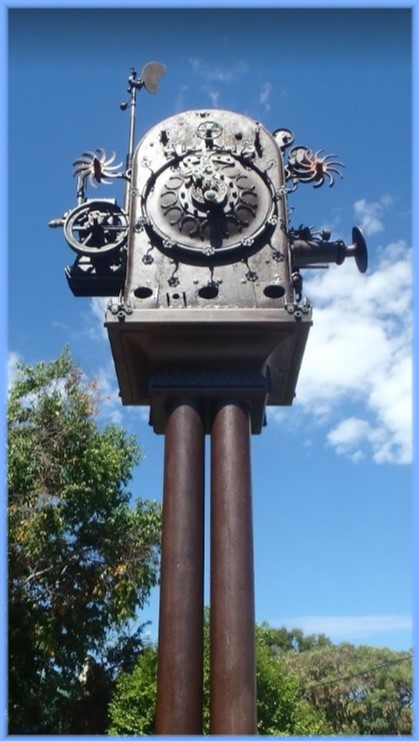
The iconic clock mentioned in the book is named after the original Blumbergville settlement in Boonah and is made out of old farming and industrial equipment. In 2014, Boonah artist Christopher Trotter created the clock with Boonah clock-maker David Bland designed to mark the town’s rural heritage.

The Emporium’s former custodian, Earlatidge Hubert Umbray, gives way to a new curator who decides not to answer the special ‘phone’ but believes the townspeople of Boonah deserve hope ‘I can’t take that away from them’ although cynical me wonders if it would give false hope?  Surely a nicely worded pep talk about getting on with your life and following those cherished dreams would work?  However, the story is more restrained than that and gently imparts the whys and wherefores of coping with grief. 

I felt the inside of The Emporium was a bit Disney-movie.  While I tried to put my own emotions into a character, the practicable side of me could not relate to uncertain concepts.  Would a final ‘phone call’ to the recently deceased help the person in mourning, or would it tip them over the brink?  Items include Ladybird lollipops (nobody pays for goods); special connections to memorabilia; a notebook which turns up in the oddest places for select clientele; and a subtle cat with an unsubtle name.

In the last pages of the book I found the experiences of author Tabitha Bird just as moving as the characters in the book (poor dear Enoch) but that’s just me.  There is an end page headed The Owner’s Guide To Grieving in keeping with The Emporium’s roving notebook, offering the opportunity to write in ‘A quiet space to simply be’. I read a new library book so abstained from writing on the page—I bet someone does.

Now I’m off to bake Bedtime Muffins from Isaac’s (Enoch’s dad) recipe!

Gretchen Bernet-Ward

Grantham Gatton Helidon Road vintage shop © Gretchen Bernet-Ward 2019

Crochet a Concrete Block

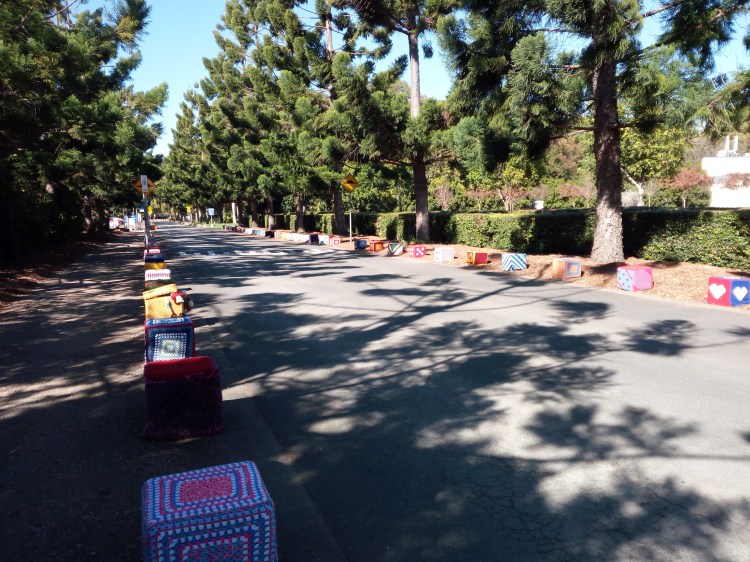
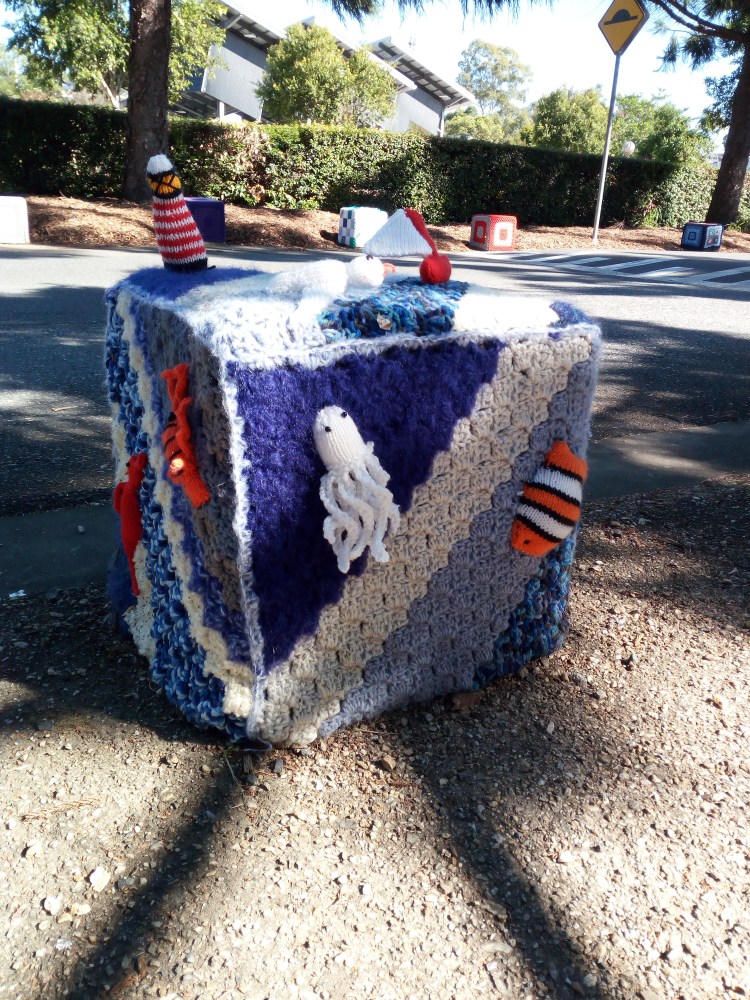
CROCHET is a handicraft in which yarn is made up into a textured fabric by means of a hooked needle. These public art works cover concrete blocks along the entrance driveway to Rocks Riverside Park, Seventeen Mile Rocks, Brisbane, a combined project from Crochet Clubs around the city.

If you are interested in trying this colourful craft, or yarn-bombing trees, here’s a link to Brisbane Crochet Club: https://brisbanecrochetclub.com.au/

Photographed on a sunny winter’s day June 2021.

Gretchen Bernet-Ward

Brisbane City Council initiative https://www.brisbane.qld.gov.au/things-to-see-and-do/council-venues-and-precincts/parks/parks-by-suburb/seventeen-mile-rocks-parks/rocks-riverside-park

The Oldest Foods on Earth

The Oldest Foods On Earth cookbook photo © Gretchen Bernet-Ward 2021

‘The Oldest Foods on Earth’ introduction by author John Newton who asks ‘What do I mean by Australian native produce?’

Quote “Indigenous foods we have always eaten, e.g. oysters, crabs, rock crayfish and all the fish that swim around us… and varieties of duck and quail… but outside the familiar are an estimated 6,000 edible plants including 2,400 fruiting trees in south-east Queensland alone, and 2,000 truffles or subterranean mushrooms.  Of those, 6,000 non-Indigenous Australians currently use less than fifty.

“Why should you eat these foods?  Firstly, for their unique flavours, then for their nutrient values… they are among the richest on the planet in the nutrients we need for health.

“This book is a guide on how to source, select and cook with Australian native produce ingredients.” © John Newton 2019

Published by NewSouth Publishing Australia with recipes from chefs such as Peter Gilmore, Maggie Beer and René Redzepi’s sous chef Beau Clugston. ‘The Oldest Foods on Earth’ will convince you that this is one food revolution that really matters.

Gretchen Bernet-Ward

Indigenous painting ‘Possums and Tall Trees’ an Arabana ILF children’s book by Aunty Kathy Arbon 2018

DID YOU KNOW? Former teacher Suzy Wilson, the owner of Riverbend Books in Bulimba, Brisbane, got the ball rolling in 2004 when she launched the Riverbend Readers Challenge to raise money to boost literacy levels. The Challenge grew, and then teamed up with the Fred Hollows Foundation and the Australian Book Industry to become the Indigenous Literacy Project in 2007. In 2011 it was superseded by the Indigenous Literacy Foundation (ILF), a national not-for-profit charity focussed on improving literacy levels in very remote Aboriginal and Torres Strait Islander communities.

Source https://www.indigenousliteracyfoundation.org.au/

Keys for Locking Things and Keeping Safe

Byron Bay, New South Wales, Australia © Gretchen Bernet-Ward 2015

COME ON, admit it.  The majority of us have a container, a bowl or tray, on a side table where we toss things.  Car keys, door keys, hats, toys, cards, pens, books, name tag, USB, junk mail, countless small items like Lego, and possibly your dog’s lead.  They all get thrown, tossed, dropped into this repository, usually near an entry door.  Next time you watch a domestic drama series, check how many times the house keys are tossed aside while the actor says ‘I’m home.’

THIS CASUAL receptacle is handy for coming home tired, but hopeless when you are in a hurry in the morning.  I have discovered that annoyed pitching never works and requires the effort of fishing the item up off the floor and trying again.

OF COURSE, we are cautioned by Neighbourhood Watch not to use this careless form of storage because thieves can take your car keys on their way out with your Edwardian silverware.  

DIFFICULT to disguise a set of car keys—good on you if you have keyless entry—but I hang unmarked keys in separate locations.  At least that way the burglar has to scurry around trying to find the right set of hooks holding the right key to your vault or whatever. Naturally a door key may not be necessary if the entry point is used to exit.

THANKFULLY on the night my domestic dwelling was genuinely plundered, I was out, so my car was not there to ‘borrow’.  I went to live theatre for the first time in years; you can read my anguish on a past blog post Stolen Jewellery Anger and Sorrow.

THE AVERAGE household uses only one or two different keys and bowl storage works out pretty well until someone wants an unused key necessary to unlock a side window in the spare bedroom.  The relevant key is finally located from a neglected bundle at the bottom of a woven tray on the kitchen sideboard.  It has been transferred to another storage facility, i.e. drawer. We humans know how to waste time searching for small things.

KEYS offer something primitive and satisfying about locking a door.  It is real, it makes a solid locking noise and creates a tangible barrier between you and the world.  For me, a beep doesn’t cut it.  Do you hear an electronic click when you issue a ‘lock door’ command?  Do you hear a thunk like a garage door closing when you tap a screen?  I guess the modern manufacturer is well versed in consumer psychology and pre-programs various locking noises.  Kind of like phone ring tones but different.

“I hope I could get an electronic sound like a warden pushing an ancient castle door closed, one which grinds and crunches as it shuts tight against rampaging possums” 

GBW 2021

A LOT can be said about smart key entry, finger print identity, voice commands, internet-based security, eye recognition, tomographic motion detection, etc, but since I don’t know how most of that technology works, I am sticking with my metal keys.  Of course, the family has keys so I check to see they have ‘properly’ locked the door at night—blame scary movies.

DOMESTIC security is important… millions of people don’t have a door to lock… or a home…

St Vincent de Paul

Vinnies Winter Appeal 2021

Over two million people live below the poverty line in Australia, including over half a million children.  This winter Vinnies Appeal will provide emergency relief to families at risk and experiencing homelessness.

Donate https://donate.vinnies.org.au/winter-appeal

Please visit ‘The Lighthouse’ poet Tom Alexander and read his introspective poem on keys
https://tomalexwrite.com/2021/07/07/different-keys/

Gretchen Bernet-Ward

‘The Tide Rises, the Tide Falls’ Longfellow

Tidal flats of Wynnum Manly foreshore Moreton Bay, Queensland © Dot Bernet 2021

The Tide Rises, the Tide Falls

By Henry Wadsworth Longfellow

The tide rises, the tide falls,

The twilight darkens, the curlew calls;

Along the sea-sands damp and brown

The traveller hastens toward the town,

      And the tide rises, the tide falls.

Darkness settles on roofs and walls,

But the sea, the sea in the darkness calls;

The little waves, with their soft, white hands,

Efface the footprints in the sands,

      And the tide rises, the tide falls.

The morning breaks; the steeds in their stalls

Stamp and neigh, as the hostler calls;

The day returns, but nevermore

Returns the traveller to the shore,

      And the tide rises, the tide falls.

* * * * *

Henry Wadsworth Longfellow, American poet (1807-1882)

https://www.poetryfoundation.org/poems/44651/the-tide-rises-the-tide-falls

Gretchen Bernet-Ward

Twilight falls on Wynnum Manly foreshore Moreton Bay, Queensland © Dot Bernet 2021