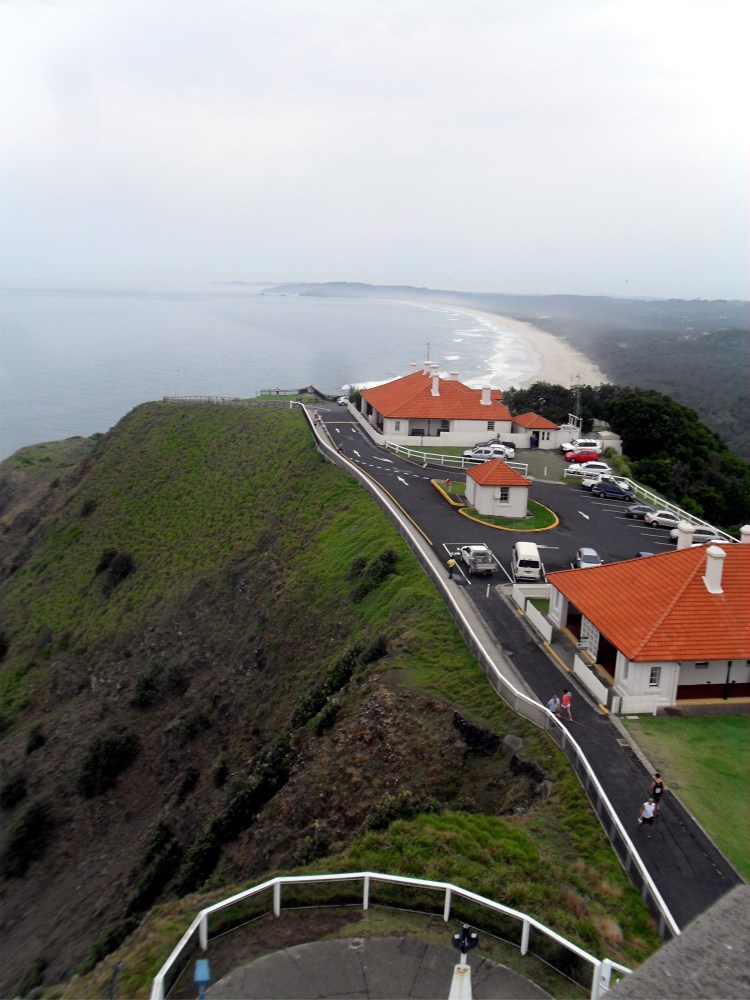
Before the sun gained intensity, it was a misty morning walk up to Cape Byron Lighthouse. Along the way, I enjoyed coastal views from the Cape Byron walking track which took me on a hike past beaches, through rainforest, grassland and along clifftops to the lighthouse.
The walk is shared by joggers and walkers and is rough in patches but passes through the shade of bangalow palms, ancient burrawangs, and across kangaroo grassland. I had tantalising glimpses of the white lighthouse ahead and views of picturesque beaches alongside before rising to the summit of Australia’s most easterly point.
From the historic town of Byron Bay, the 3.7km walk loops through rainforest and along clifftops with views of the foreshore, eastern coastline and vast hinterland behind the township.
Of course, you can drive to the lighthouse but walking is more interesting! And the town of Byron Bay may have changed but the lighthouse remains eternal.
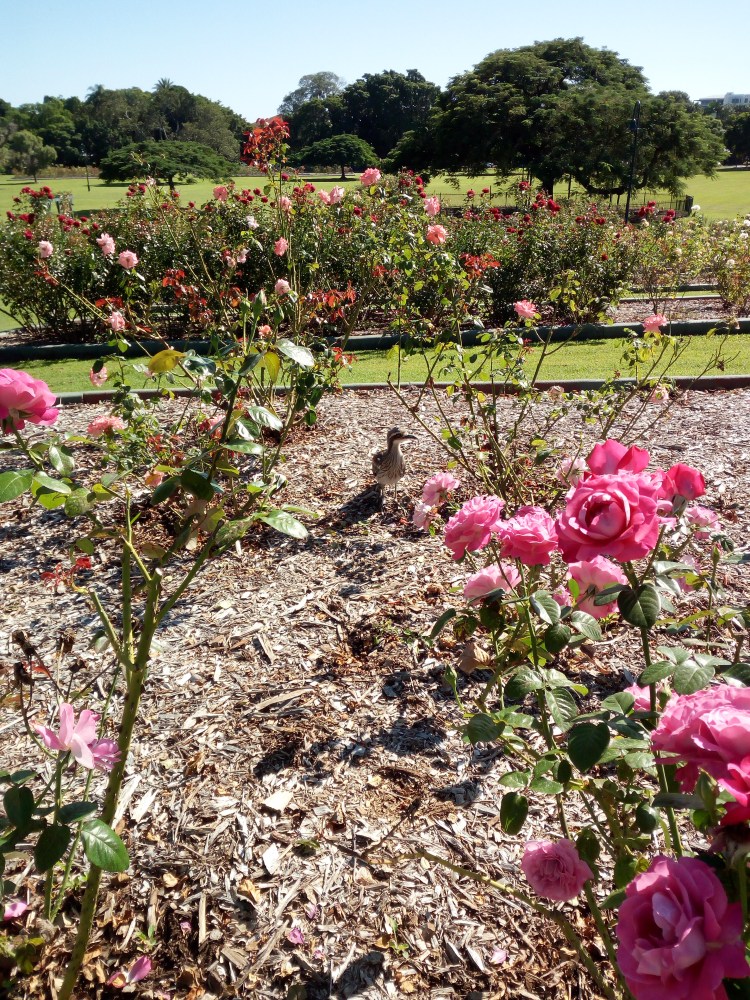
The Bush Stone-curlew or Bush Thick-knee (Burhinus grallarius) is a large ground-dwelling bird with a life span of up to 20 years. The bush curlew is endemic to Australia and found in Brisbane, usually in parkland. The curlew will adopt a rigid posture when it becomes aware of an observer, as this one did, poised amongst the roses in New Farm Park.
Curlews are terrestrial predators adapted to stalking slowly at night. Their preferred habitat is open landscapes which give them good visibility at ground level where they search for invertebrates such as insects. The grey-brown coloration is distinguished by dark streaks, its eyes are large and legs are long. Both male and female care for two eggs laid on the bare ground, usually sited in a shaded position near a bush, stone wall or fallen branch.
Queensland Bush Stone-curlews are capable of flight but rely on the camouflage of their plumage to evade detection during the day. Domestic animals are their biggest threat. At night their call is an evocative and unforgettable sound, a sort of wailing cry which echoes across open ground.
The curlew candid camera (below) is memorable!
♥Gretchen Bernet-Ward
Video by FAME 2019, Mt Rothwell in Victoria, Australia
THREE THINGS started back in June 2018, an idea from Paula Bardell-Hedley of Book Jotter under the headings READING LOOKING THINKING and it seems I am the only participant left standing.
Thus I have decided that I will write an even dozen—non metric 12—and call it quits. Not because I don’t like the idea, it’s just that now I tend to write posts without the need for an overflow outlet. I try to keep my patter short (cough) and practice slick (cough, cough) editing which mostly works. GBW.
READING
OFF THE BEATEN TRACK: THREE CENTURIES OF WOMEN TRAVELLERS
Author: Dea Birkett with foreword by Jan Morris Published: 2004 Publisher: Hardie Grant Books Australia Pages: 144 Includes: 120 Illustrations, Bibliography, Index ISBN: 1740662180
This book astounds in more ways than one. An enduring record of women in past centuries who did not stay home cooking and cleaning. From exotic, lesser known locations and fascinating old photos, to women around the world who had the courage to explore and travel alone. As Jan Morris said in the Forward “What they all had in common was their gender and their guts”. It offers the young millennials something to think about—survival without the internet.
“Writing was one of the few careers that had long provided women with professional status, more so perhaps than other forms of artistic expression”.
Off The Beaten Track: Three Centuries of Women Travellers
My particular favourite is on pages 94-95. It starts with a quote “The pictures of the pen shall outlast those of the pencil, and even worlds themselves” Ephra Behn, prologue to “The Luckey Chance” (1687).
Below, left, is a vintage bromide print (1902) taken by an unknown photographer which shows traveller Ina Sheldon-Williams dressed in white frills, painting two tribesmen with a horse and foal, in rather genteel surroundings. Unlike fish collector Mary Kingsley (1862-1900) who suffered overturning canoes, leeches and crocodiles in West Africa, and her thick skirts saved her when she fell into a pit of pointed spikes.
The photo on the right follows the biography of Ethel Mannin (1900-1984) an English woman who lived the stuff of literary dreams. Ethel was 23 years-old, had abandoned an early marriage and with one suitcase, a portable typewriter, a child of three and six words of French she went to the south of France in search of the violet fields, olive groves, vineyards and orange trees. Later, her writing enabled her to purchase a home in fashionable Wimbledon.
Ethel’s prodigious writing and her travelling were intertwined and she wrote fiction and non-fiction providing the reason for her travels. Ethel described herself as “An emancipated, rebellious, and Angry Young Woman”. I just love her 1930 B&W National Gallery portrait—a strong look, perhaps later copied by young Wednesday in “The Addams Family”. GBW.
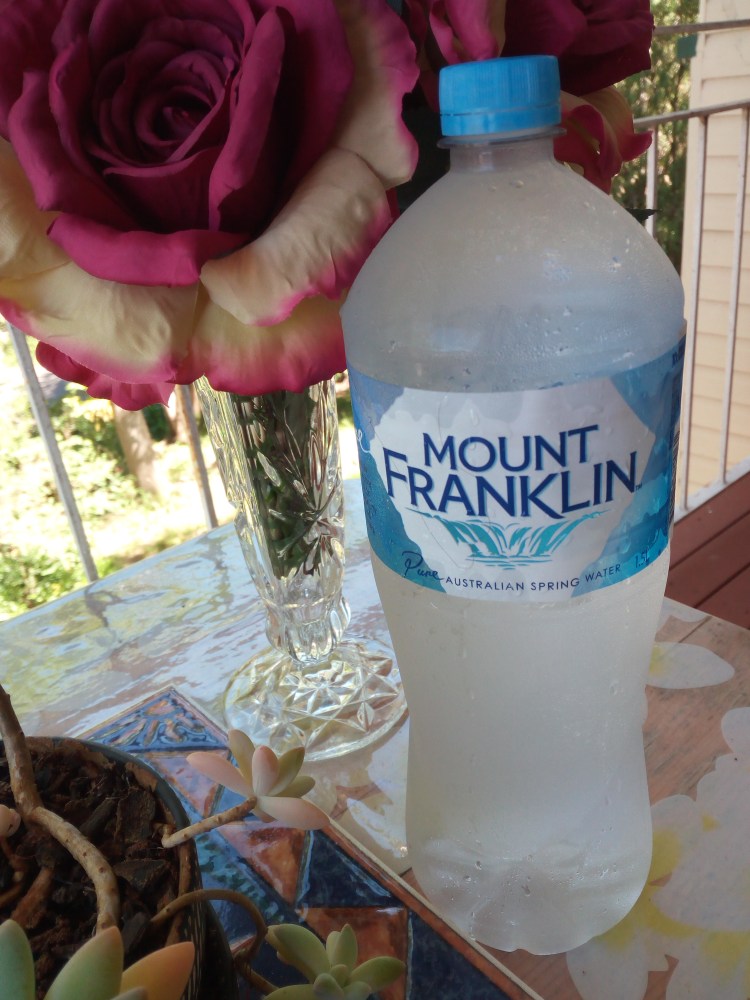
Unlike cultivated New Farm Park, I have been looking out my window with a certain amount of glumness and a large dose of embarrassment, at the backyard garden (read overgrown jungle) which has proliferated after recent steady rain. Autumnal April, an odd time for such rainfall. It fell in south-east Queensland but not enough in the water supply dam catchment areas.
Even in the 21st century we are dependent on water falling from the sky.
There was a campaign for recycled water during our big Millennium Drought but it never caught on.
I believe Las Vegas, Nevada, has used recycled (reclaimed) water for many years. It’s a mental thing, isn’t it? People are dubious of water others have already drunk and worse…
Getting back to riotous grass, the lawnmower men and gardeners are booked solid so unless I can find an old man with a hay scythe, I will avoid looking out the windows for another week or two. GBW.
THINKING
Fasten seatbelts, get ready for my stream-of-consciousness…
I have been thinking about the legacies we leave behind. Good, bad or unintentional. Of course, there are hundreds of ways a person leaves a legacy; flamboyantly, quietly, cruelly, some not necessarily acknowledged, but they will be there just the same. From the tangible to the ephemeral, the loved to the hated, a universal legacy or a small one-on-one, we leave our mark. Be aware of this legacy, this part of you which I believe you will indelibly leave behind in some form. Use it wisely so those who receive it, directly or otherwise, will know where it came from and decide if it is worthy of keeping, if it will become part of them—although some legacies are hard to shake. Many people are no-fuss, low-key individuals and that’s fine, however, they may not know it but they will intrinsically leave a legacy. A legacy is more than an amount of money or property left to someone in a Will. I believe it can be found in a good book or website (thanks Paula) but rarely in texting or social media. A legacy transcends time. Think about it. I bet you can recall a parent, sibling, teacher, partner, child, best friend or workmate saying or doing something you have not forgotten. Basically it’s the essence of that person you experience and instinctively preserve. A legacy can be as big as a skyscraper or a single gentle word, both of equal value, and both can leave a remembrance. If it is bad, destructive or no value, it should be dismissed and a life lesson learned from it. In turn you can pass on a better legacy so others will benefit. That’s what a legacy is! Sometimes you don’t know until years later (sometimes never) that your legacy of word or deed was appreciated. And it doesn’t matter if you hold a very special legacy close because you will inexorably create your own for someone else. Make it good. GBW.
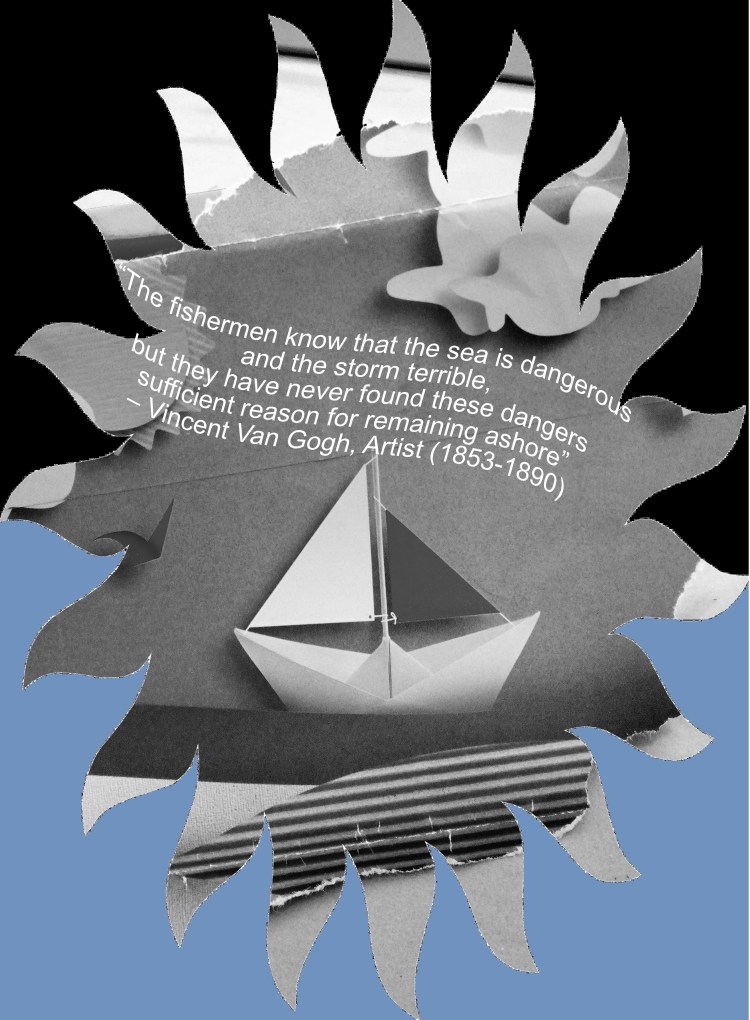
Vincent Willem van Gogh (1853-1890) was a post-Impressionist painter whose works, notable for their beauty, emotion and colour, highly influenced 20th century art. He struggled with mental illness and remained poor and virtually unknown throughout his life.
Posthumously, he became one of the most famous and influential figures in the history of Western art.
Vincent van Gogh
The eldest of six living children, van Gogh had two younger brothers (Theo, who worked as an art dealer and supported his older brother’s art, and Cor) and three younger sisters (Anna, Elizabeth and Willemina). Theo would later play an important role in his older brother’s life as a confidant, supporter and art dealer.
Vincent’s lifestory makes fascinating reading, he was truly the classic tortured genius, but there is much more to be learned behind the scenes, e.g. his own mother destroying many of his paintings; hoping to become a minister he prepared to take the entrance exam to School of Theology in Amsterdam; Vincent was fluent in French, German and English, as well as his native Dutch.
The Rolling Stones performed ‘Get Off Of My Cloud’ live on Australian TV in 1966 on Brian Henderson’s Bandstand. The Stones are so young, so pretty. Check out the boys wearing ties and the girls sitting on seats tapping their toes, and the politely orchestrated screams. So much to love ♥Gretchen Bernet-Ward
This year there is no set book for Wales Readathon 2021 so I have chosen subjects of Welsh origin which appeal to me, but it seems I have borrowed books with quite substantial content and I may not comfortably finish reading all of them within the month of March.
BOOK ONE within the ‘Penguin Book of Welsh Short Stories’ edited by Alun Richards there are twenty-four famous Welsh authors.
BOOK TWO singer Tom Jones ‘Over the Top and Back: The Autobiography’ is quite a hefty volume and packed full of action.
BOOK THREE‘The Gardens of Wales’ compiled by garden design historian Helena Attlee, photography by Alex Ramsay, is splendidly presented in true coffee-table style with absorbing information.
You can see I love a good dose of contextual facts and photographs.
Reviews below—on with the show
PENGUIN BOOK OF WELSH SHORT STORIES Edited: Alun Richards First published: 1976 Second edition: August 2011 ISBN: 9780241955468 Number of Pages: 348 Publisher: Penguin Books Ltd
There are twenty-four short stories in this slim volume ‘The Penguin Book of Welsh Short Stories’ edited by Alun Richards (some have been translated from the original Welsh) and I am going to list every one even though I am only half way through—
THE FASHION PLATE – Rhys Davies THE GOLDEN PONY – Glyn Jones ACTING CAPTAIN – Alun Lewis SATURDAY NIGHT – Geraint Goodwin THE LOSS – Kate Roberts THE BRUTE CREATION – Gwyn Jones EXTRAORDINARY LITTLE COUGH – Dylan Thomas A SUCCESSFUL YEAR – D. J. Williams THE TEACHER – Gwyn Thomas THE STRANGE APEMAN – E. Tegla Davies BE THIS HER MEMORIAL – Caradoc Evans THE RETURN – Brenda Chamberlain TWENTY TONS OF COAL – B. L. Coombes THE SQUIRE OF HAVILAH – T. Hughes Jones AN OVERDOSE OF SUN – Eigra Lewis Roberts THE HOUSE IN BUILTH CRESCENT – Moira Dearnley BLIND DATE – Jane Edwards MORFYDD’S CELEBRATION – Harri Pritchard Jones A WRITER CAME TO OUR PLACE – John Morgan A ROMAN SPRING – Leslie Norris BEFORE FOREVER AFTER – Ron Berry HON. SEC. (R.F.C.) – Alun Richards BLACK BARREN – Islwyn Ffowc Elis MEL’S SECRET LOVE – Emyr Humphreys
Backcover information reads ‘In twenty-four short stories, written by Welsh men and women, for the most part about Welsh people, we are treated to depictions of valley and mountain, country and town, as well as offered powerful and moving insights into the nature of the people.’
MY REVIEW: The calibre and wisdom of these fiction short stories blows me away, the people of Wales and the understated passion they have for their country shines through in emotive yet precisely documented stories of their era. I was drawn into their despair and great joy of everyday life, studied and examined but never artificial. So far the story which touched me the most is ‘The Squire of Havilah’ by T. Hughes Jones. Behind the tale, behind the words is a great depth of understanding about a man most of us would have met or seen once and dismissed from our mind. Daniel Jones, a 40-year-old bachelor of Rhos-y-grug, is a misjudged man who, in himself, is hopeful of a wealthy future. After being deceived and flimflammed at a fair into paying for the deeds to twenty acres of rich mineral land in Havilah, supposedly in Mesopotamia (Iraq), Jones dreams the life of a prosperous man as his farmhouse crumbles and his land turns wild around him. Religion plays a part and Jones cannot visit his tenure because the First World War is raging. There are other pertinent parts to the story and lessons lurk; perhaps distrust of fairground buskers. But everyone has something going on deep in the recesses of their mind. If you cannot help, at least acknowledge their hopes and dreams. ♥ GBW.
OVER THE TOP AND BACK: THE AUTOBIOGRAPHY Author: Tom Jones Publisher: Penguin Australia 2015 ISBN: 9780718180690 Imprint: Michael Joseph Format: Paperback Pages: 521 includes photographs
MYREVIEW: I will be upfront and say that so far I have not read all the chapters in the life of the inimitable Welsh singer Tom Jones. But ‘Over the Top and Back’ has me hooked. I love reading about the lives of famous 20th century celebrities from when they came into the world until their later years. Especially with lots and lots of old photographs like this one. The ‘aah’ nostalgia moment happens and I remember his songs and where I was, or how old I was, when I saw him on B&W television or tuned the radio and heard his current hit. Or bought ‘the single’ a small vinyl record. I discovered that Tom Jones adopted the name Tommy Scott for a short time but his real name is Thomas John Woodward. In his early life, aged twelve, he contracted TB infection, not unusual in industrial Wales during that era. He recovered after two years and wanted to be either a professional singer or a slate-faced cowboy. He writes ‘From the kitchen of 44 Laura Street in Pontypridd in the forties, the odds of becoming one appear to be about as long as the odds on becoming the other’. But as we know he did succeed—and what a ride—I lost track of the many famous people he met and worked with. Before knickers were tossed on stage, his raucous stage presence shone too brightly for the strict censorship laws of the time. A censor once told him to tone himself down during the rendition of Rolling Stones song ‘Satisfaction’ because it implied sexual satisfaction. ‘Well, isn’t it?’ said Tom. Can’t wait to read what happens when he tours America. ♥ GBW.
THE GARDENS OF WALES Author: Helena Attlee Format: Hardback | 128 pages | Colour photos Dimensions: 250 x 267 x 17.78mm | 910g Publication: 2009 ISBN: 9780711228825 Publisher: Frances Lincoln Ltd
MYREVIEW: I have a library copy of ‘The Gardens of Wales’—like Tom Jones autobiography, it is well thumbed—and the picturesque gardens are simply stunning. There are fine examples of unusual topiary but it’s the flights of fancy created by dedicated visionaries which I find jaw-dropping; whole gardens and parkland over untold acres with water features, profuse flowers, statues, fine lawns, hidden paths, grottoes, ancient trees, and the hard work and dedication by gardening staff. All set against a backdrop of magnificent heritage listed Welsh homes, er, mansions, maybe castles. Anyway, they are very grand and I hope I get to return to UK one day and visit them. For example Wyndcliffe Court, Monmouthshire ‘Warm stone terraces, bulging topiary and a good splash of colour (plus trickling fountain and bowling green) the garden of Wyndcliffe Court bears all the hallmarks of designer H. Avray Tipping’ an artisté who loved the contrast between cultivation and natural landscape. I admire the classical architecture of the follies, or summerhouses, often a miniature version of a stately home, fashioned for a couple to sit and partake of their view. This book has become a bit of a rarity, however, Helena Attlee has made a career of studying and writing about spectacular gardens in many countries around the world. Both she and photographer Alex Ramsay live in Wales. Alex Ramsay’s image of the layered Orangery Terrace, Aviary Terrace and Top Terrace at Powis Castle, Montgomeryshire, is a sight to behold. ♥ GBW.
In March 2020 last year, for the shared Wales Readathon, I ordered ‘One Moonlit Night’ by Caradog Prichard which unfortunately arrived late so I posted my review in April. It is a fascinating almost-autobiographical novel and well worth reading. But history is trying to repeat itself and the 2021 deadline is looming fast.
I will finish these books, meanwhile a halved review is better than no review, right.
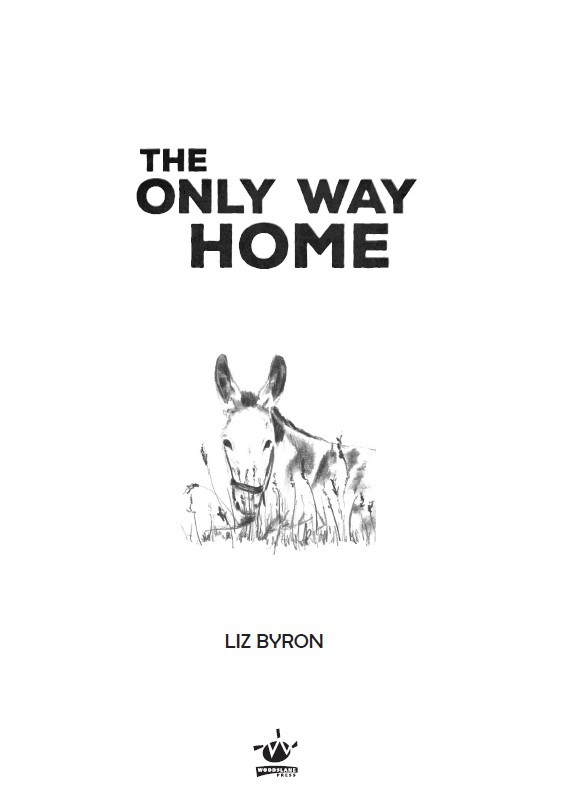
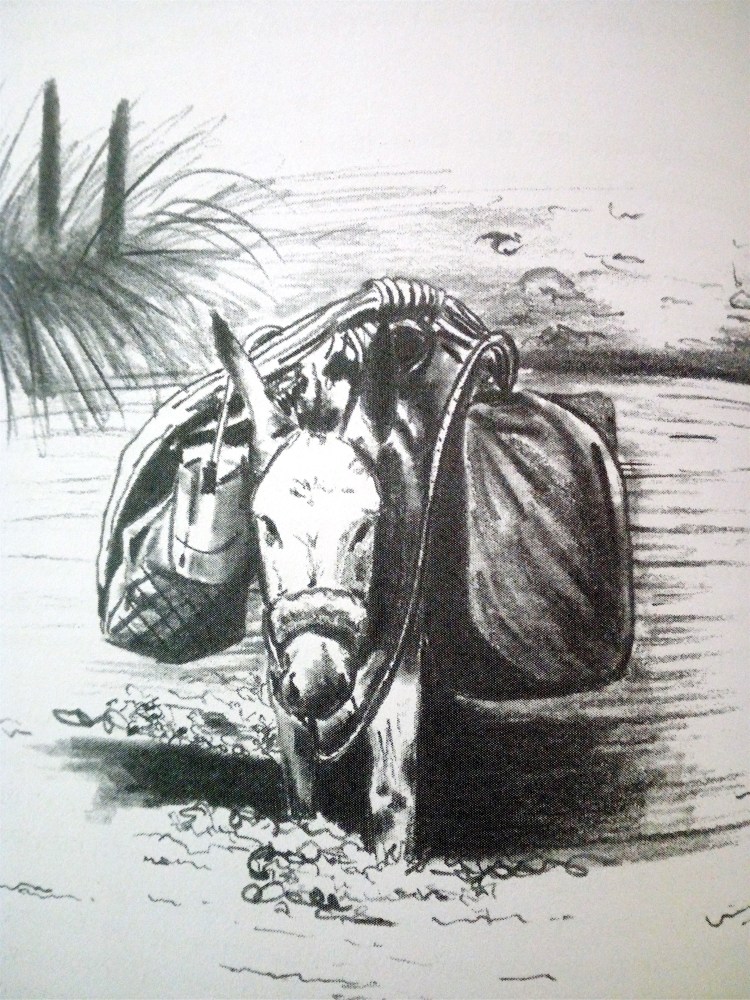
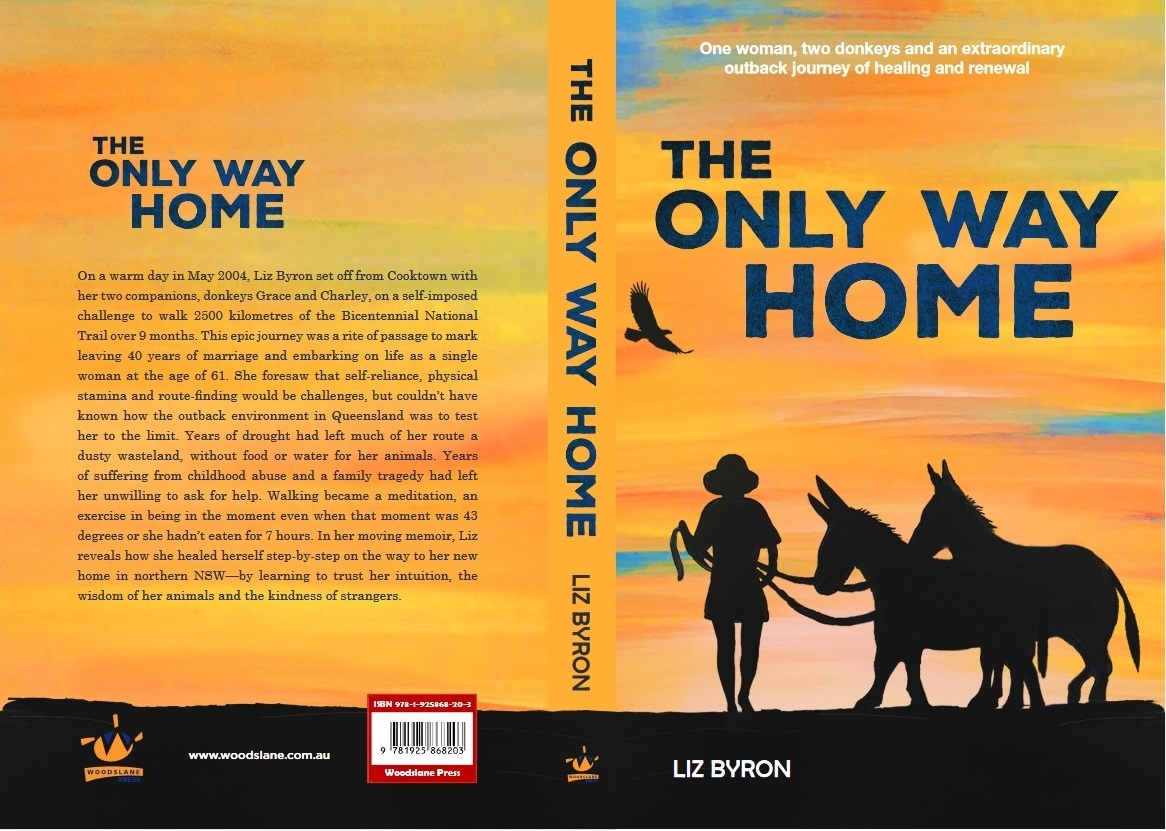
In her memoir ‘The Only Way Home’ and YouTube video (see below) Liz Byron explains what it meant leaving her roller-coaster marriage, career, family dinners, large library and a comfortable, charming home to trek 2,500 kilometres through rural Queensland on the rugged Bicentennial National Trail.
Liz, mother and semi-retired sociolegal researcher, writes from her New South Wales Northern Rivers home. Her writing is confronting and visceral in its honesty.
Each step on this radical journey of self-discovery helped Liz make sense of grief and trauma, including the tragic loss of one of her four children. Liz’s fierce independence was confronted daily as she tackled details of equipment, food supply, lack of drinking water, thorny grass seeds and the hilarious will of her two devoted donkeys Grace and Charley.
What advice would you give to someone wanting to do a long distance trek?
LIZ : From the various facets involved in a long-distance trek, consider where you might lack experience and spend time acquiring the experience you need. From thirty years of overnight bushwalking, I was experienced at living outdoors, packing light, negotiating difficult terrain and camping, cooking in all weathers. However, I had no experience with large animals and allowed myself four years to get to know my donkeys, learn how to handle them on the road and have them face as many scary situations as I could predict might arise.
What was your most essential piece of equipment?
LIZ : My hoof pick. Everything about trekking depends upon the donkeys’ feet.
You talk about having to learn about adjusting your standards of what to expect, how did the BNT trek compare to what you expected?
LIZ : Adjusting my standards was more about adjusting my expectations of other people and myself. A strong theme in the book is that – because of all my outdoor experience – physical challenges were easily overcome. It was almost as if surviving physically demanding situations was no longer part of the lessons I needed to learn. The challenges were much more about relating to people from whom I needed help – because of the extremely dry conditions and NEVER part of my trek plan – so accepting my limitations, and theirs, changed my standards of what to expect in all sorts of social situations.
What was the most important thing that working with donkeys taught you about yourself?
LIZ : Accepting the way things are, like donkeys do, is far healthier, for both mind and body, than getting lost in thoughts about how things should be.
Several years have passed since you walked the Bicentennial National Trail, have the lessons you learned endured?
LIZ : Yes. Because lessons learned from experience, in other words, from our mistakes, naturally endure.
Thank you, Liz, I enjoyed reading ‘The Only Way Home’. Your unique memoir shows strength of purpose and insights into your remarkable journey.
The beautifully illustrated book ‘The Boy, The Mole, The Fox and The Horse’ by Charlie Mackesy is intended for children not cynical adults.
The content has been reproduced in countless book reviews on Goodreads to the extent that a large portion of the book has been copied.
We should all know our own country’s copyright laws. Where possible I acknowledge the source of material I use and only quote a sentence or two for emphasis in my book reviews. Copyright is adhered to in many areas including business, education, libraries, publicity, government, even blogs and hand-out leaflets.
So why do certain Goodreads reviewers think they can profusely post someone’s artwork?
Would they like their creative endeavours photographed and reproduced, and in this case vilified, and used for a different purpose other than originally intended?
I believe that by reviewing Mackesy’s work on Goodreads, a reviewer is not justified in reproducing the words and illustrations constituting a chunk of the author’s work.
“Copyright is a form of intellectual property that protects the original expression of ideas. It enables creators to manage how their content is used.”
There may be Goodreads rules and regulations in the fine print which I could not locate but I am waiting on a reply from the Librarians.
My WordPress followers know that I do not activate Comments but I suggest if you think the copying is unfair or unjustified, check the book ‘The Boy, The Mole, The Fox and The Horse’ on Goodreads and perhaps submit a message to the gatekeepers.
“I have noticed on Goodreads that generally there does not appear to be any control over spoilers or plot reveals so what hope does copyright offer Goodreads authors. Copyright is mentioned under https://www.goodreads.com/about/terms and it would appear action has to be taken by the author.” GBW.
POSTSCRIPT—Below is my contact post to Goodreads Librarians on Monday 29th March 2021—no reply has been received:
“What are the copyright limitations on posting author illustrations on Goodreads? The Boy, the Mole, the Fox and the Horse by Charlie Mackesy has had pages copied by reviewers to such an extent that they almost represent the complete book. The book contains original work by the author and has significant meaning to him while naturally being a source of income which could be impacted due to continued copying by book reviewers. I know it is hard to control copyright (particularly on social media) but I would expect a certain level of copyright control on a book-dedicated website. I have no vested interest in this book other than enjoying it, and wanting to see Goodreads and reviewers being more circumspect regarding the posting of images from inside this book, or indeed any illustrated book.” GBW.












 Thoughts Become Words