Mother’s Day Stories & Poems Wanted

Valentine's Day 11

Exactly what we need in these days of social-distancing!

Gretchen Bernet-Ward

yellowlancer's avatarPositive Words Magazine

I’m looking for story and poetry submissions for the May issue. A nice way to honour a special person at a time when we might not be able to visit…

Mothers, grandmothers, daughters who have children of their own, special aunts and friends…send them in 🙂

Positive Words magazine

PO Box 798

Heathcote 3523 Victoria

View original post

Bush Ballad ‘The Banks of the Condamine’

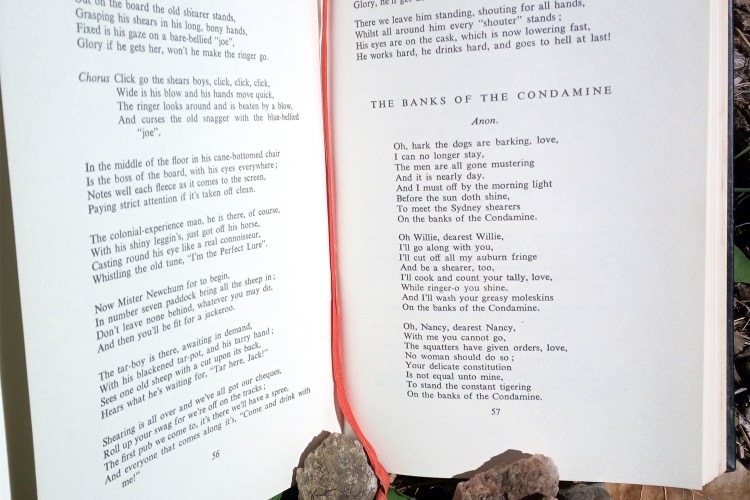
The Banks of the Condamine


Oh, hark the dogs are barking, love,

I can no longer stay,

The men are all gone mustering

And it is nearly day.

And I must be off by the morning light,

Before the sun doth shine,

To meet the Roma shearers,

On the banks of the Condamine.


Oh Willie, dearest Willie,

I’ll go along with you,

I’ll cut off all my auburn fringe

And be a shearer, too.

I’ll cook, and count your tally, love,

While ringer-o you shine,

And I’ll wash your greasy moleskins

On the banks of the Condamine.


Oh, Nancy, dearest Nancy,

With me you cannot go,

The squatters gave us orders, love,

No woman should do so;

Your delicate constitution

Is not equal unto mine,

To withstand the constant tigering

On the banks of the Condamine.


Oh Willy, dearest Willy,

Then stay back home with me,

We’ll take up a selection,

And a farmer’s wife I’ll be.

I’ll help you husk the corn, love,

And cook your meals so fine.

You’ll forget the ram-stag mutton

On the banks of the Condamine.


Oh, Nancy, dearest Nancy,

Please do not hold me back,

Down there the boys are waiting,

And I must be on the track.

So here’s a goodbye kiss, love,

Back home here I’ll incline

When we’ve shorn the last of the jumbucks

On the banks of the Condamine.


Anonymous.


From ‘Bush Songs, Ballads and Other Verse’ selected by Douglas Stewart and Nancy Keesing and published 1967 by Angus & Robertson Ltd, printed by Discovery Press.

The following information from—
https://music.stevetowson.com/track/the-banks-of-the-condamine-2

Poetry Clipart 08

Australian traditional music has a dearth of love songs, but here is one from our home state of Queensland.  The English folk singer and collector A.L. Lloyd wrote about this song—

“Throughout the fifty years from 1820 to 1870, broadside printers in London, Newcastle, Dublin and elsewhere did a good trade with the stall-ballad called ‘Banks of the Nile’, a song from the Napoleonic Wars.  The song spread to America and Australia, and in Queensland it became parodied as ‘The Banks of the Condamine’, with the hero no longer a soldier but a horse-breaker or a shearer.  It has turned up in sundry shapes, to various tunes, many times over, mostly in Queensland.”

FOOTNOTE:

  1. This bush ballad was first published under another name in The Queenslander, the literary edition of the Brisbane Courier in 1894.
  2. The Condamine River in southeast Queensland is 657 kilometres long and starts below Cons Plain and ends at the Balonne River.
  3. It was named in honour of Lieut. Thomas De La Condamine (1797-1873) the A.D.C. to Governor Ralph Darling who also has a river named after him.  But the Darling River has been known as the Baaka by the Barkindji people for thousands of years.  https://en.wikipedia.org/wiki/Condamine_River

Gretchen Bernet-Ward

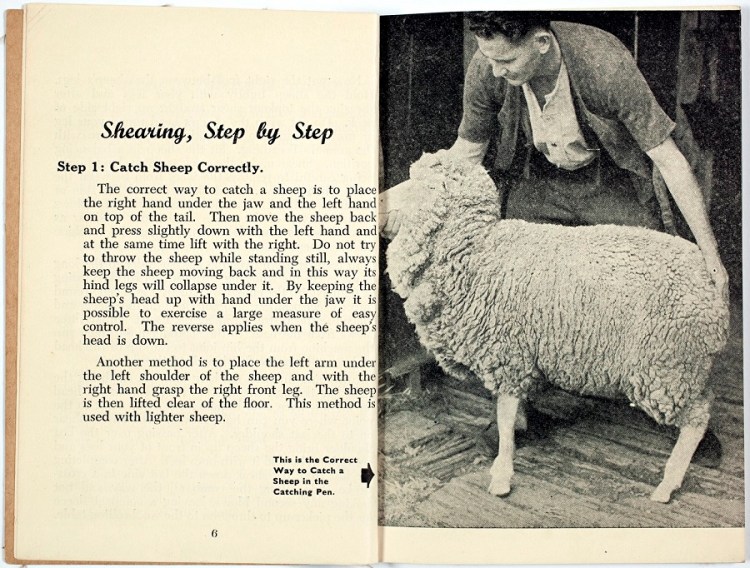
Condamine River Sheep Shearer Demo

Email – Aunt Jenny’s Doll

Hello M,

Attached are photos of Aunt Jenny’s doll.

I inherited Jenny’s doll.

There’s a special clause in Jenny’s will regarding said doll.

The doll must go to me.

But carrying no explanation.

Jenny’s doll is at least 60 years old.

Our cousin JR mailed the doll to me.

In pink tissue paper in a cardboard box.

I don’t remember the doll.

I don’t remember her name.

A happy childhood anecdote linked to this doll?

JR does not know details.

Just that Jenny always wanted me to have the doll.

JR does not know the doll’s name.

Her temporary name is Margaret.

The name of my childhood friend.

Gretchen and Margaret mean the same thing.

We both wore bows in our hair.

All our aunts are gone now.

Would anyone in the family know the story?

Did I spend my toddler years with this doll?

She must have been as tall as me then.

But not cool for a teenager.

Poor doll, re-wrapped in pink tissue paper.

Wearing a boring flannelette nightie.

What shall I do with her now she’s mine?

Love Gretchen


Email to My Cousin © Gretchen Bernet-Ward
Friday 3rd April 2020

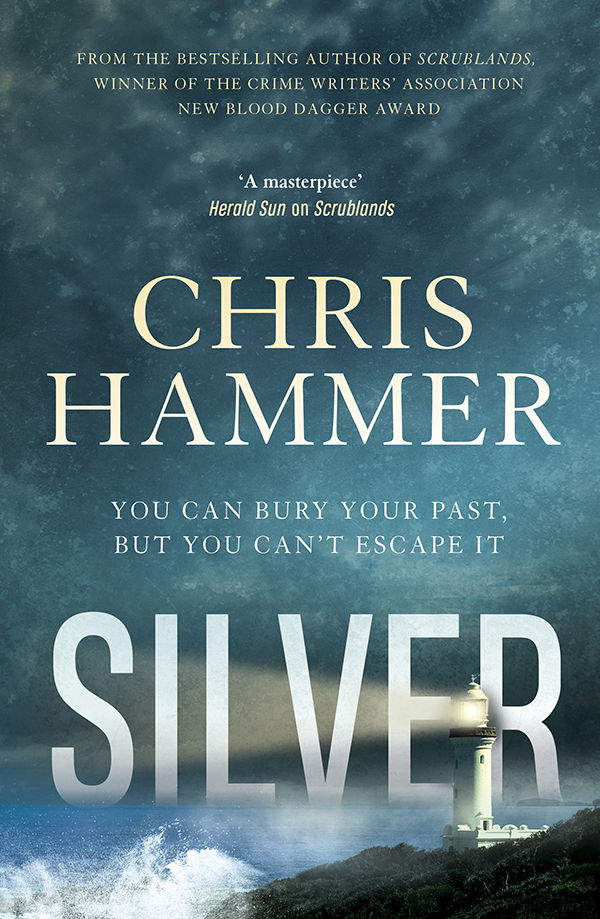
Review ‘Silver’ by Chris Hammer

Chris Hammer Bookcover Silver

Former journalist Martin Scarsden had vowed never to return to Port Silver so I was not too sure about his inauspicious homecoming nor his strained relationship with girlfriend Mandalay (Mandy) Blonde.  She has inherited an old house on a clifftop, while Martin seems distant from everything happening around him, plagued by unsettling flashbacks from his unsettled past.  And long-ago deaths in his family.

As the plot twists and turns with great characters and best-ever location, I was there strolling along the Port Silver shoreline; eating fish and chips; watching the waves break on Hummingbird Beach; driving the coastal road with Martin Scarsden as he tries to solve the stabbing death of his childhood friend Jasper Speight.  Unfortunately Jasper died in Mandy’s apartment and she is being held for his murder so Martin works on clearing her name using the only clue, a blood-stained postcard.

SDC14758

Over nine days, Martin’s exploits unfold and move inexorable towards their goal, every question important to building the story and solving the first murder mystery.  Yes, not one but two mysteries, and I like the way Chris Hammer does not describe so much as lets slip small details until they add up to a whole.

Mandy’s creepy old Hartigan house on the clifftop is suitably introduced in Disney ‘Goonies’ fashion.

Characters formed before my eyes—all with big question marks hovering over their heads.  The mellow reunion with Martin’s Uncle Vern; the glowing backpackers Topaz and Royce; real estate agent Jasper’s mother Denise; Jay-Jay Hayes surfie greenie conservationist of Hummingbird Beach; sleazy bigwig developer Tyson St Clair; oddball Swami Hawananda; and dishonest cop Johnson Pear to name a handful.

Despite youthful recollections and emotional hurdles, Martin keeps working on the murder case, annoying the police and local land developers with questions and questionable behaviour.  He gets hauled in occasionally for interrogation and was appointed a scruffy solicitor Nick Poulos to handle his case.  Then comes a tragic mass murder … or ritual suicide?

At this stage, I am undecided if I am meant to have sympathy for Martin or not.  He certainly makes mistakes and isn’t good boyfriend material.  But he’s an inquisitive bloke, and a good journo who pursues the secondary crime of the multiple deaths.  The scoop of the decade!  By chapter 24, he’s in his element, following up leads, discovering clues, writing copy, advising Terri, editor of the Sydney Morning Herald, topping it off by having dinner with media buddies just like old times.  Hmm.

An overarching question: what happened to his mother and sisters?  I think it’s stretching it to say Martin did not have an inkling about what happened all those years ago.  School mates, friends, even his alcoholic father could have babbled.  As to the possible perpetrators, I was spoilt for choice.  The only one I could happily cross off the list was Liam, the nappy-filling baby son of Mandy.

SDC14774

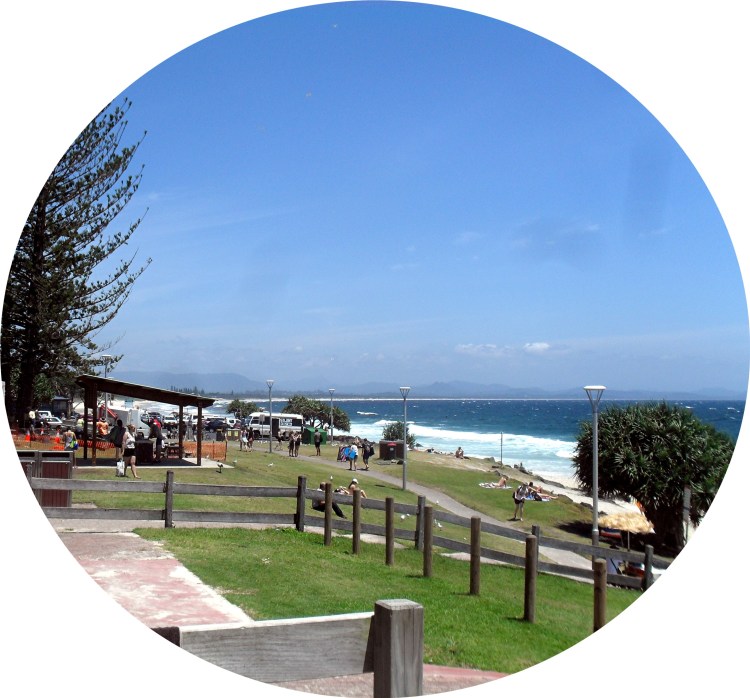
I love Aleksander J. Potočnik’s map of Port Silver.  The setting is similar to Byron Bay and my photographs, taken on an overcast day, show the iconic Cape Byron Lighthouse.

The lighthouse sits on a rocky headland, Australia’s most easterly point.  That’s what  I pictured in my mind while reading.  The beaches, lighthouse, Nob Hill, coastal views, inland sugarcane fields and menacing land development which are strongly portrayed by the author.  Landmarks like the ‘fictitious’ old Cheese Factory give off furtiveness vibes.

Heading towards Martin’s hard won resolution, author Chris Hammer deserves top marks for not changing certain Australian words which some readers may not understand but will eventually figure out.  I think it’s time to stop neutering, let readers learn, laugh and speak our colloquial sayings.

Grab this book and be swept away by the tidal undertow of crime and mystery—well worth it.

Gretchen Bernet-Ward


AUTHOR PROFILE:

printable-times-new-roman-alphabet-stencil

Chris Hammer was a journalist for more than thirty years, dividing his career between covering Australian federal politics and international affairs.  He holds a BA degree in journalism from Charles Sturt University and a Master’s degree in international relations from Australian National University.

Chris has written an award-winning non-fiction book ‘The River’ followed by crime fiction ‘Scrublands’ published 2018 and shortlisted for Best Debut Fiction at the Indie Book Awards.  Chris lives in Canberra with his wife and two children.
Website https://chrishammerauthor.com/  Recommended ‘The Coast’ a journey along Australia’s eastern shores by Chris Hammer https://www.mup.com.au/books/the-coast-paperback-softback

Review ‘Red Joan’ by Jennie Rooney

It took a while to get my head around Joan Stanley’s rationale.  Growing up, I had heard about the Official Secrets Act and censored letters from my father who was in the second world war, but never about spies selling secrets: I gleaned by inference that espionage was problematic for all sides.  Red Joan knew how to keep her lips zipped.

I really enjoyed this story and I put another book on hold to finished it.  Before and after the 70th anniversary of VE-Day, there was a rash of fact and fiction war books from the UK and this is one of them.

The bombings are what I found missing in Jennie Rooney’s tale, the destruction and the precautions every citizen had to take every day to survive.  Joan Stanley appears to live a charmed life in this regard, and not much of the physical devastation seems to touch her.

Of course, this story is character-driven, an emotional account of the Cold War, an internal struggle between what is right and wrong and justifying one’s decisions, rather than air-raids and bombed out buildings.

After a sheltered schooling, Joan attends Cambridge University where she meets flamboyant student Sonya; and Joan is easily swayed by Sonya’s handsome cousin Leo Galich.  Slowly Joan is groomed to become a spy and eventually steals top secret documents.  While her resolute decision to help the war effort unfolds beautifully and logically (to Joan at least) I couldn’t help thinking “Surely she isn’t that naive?”  But she is, and this propels the story.

That, and romance.  This is where cousin Leo comes in.  What can I say about earnest socialist Leo?  He is easy to picture—any handsome, charismatic, idealistic Uni student would fit his mould.  I can excuse Joan’s love-struck crush on Leo but not her belief in her new friend Sonya, a powerful influence.

Fur Coat New Zealand Fashion Museum 01
Fur coat 1940s in New Zealand Fashion Museum http://www.nzfashionmuseum.org.nz/f/fur-jacket-with-squared-shoulders/

I thought Joan’s shared fur coat was a nice touch, it was the tenuous connection, the innocent thread throughout the story but it spoke volumes about their personalities.

Joan Stanley (loosely based on real spy Melita Norwood) specialises in theoretical physics and when she gets a job in a metals research facility, the touch-and-go desire with Professor Max Davis is well done, I could see that happening.  The cast of males are oblivious to Joan’s duplicity, and receptionist Karen is pretty much ignored.  For a laugh I pictured Karen afterwards as a retired MI5 operative.

As I said, I like this book and would recommend it, not for an in-depth look at the war effort but as a glimpse into the human side, the male/female relationships and the story behind the atomic bomb construction.  Just enough details; the lab, scientific information, the protocols.

Destructive and fascinating at the same time.

IMG_20200316_171248
NOT relevant to Joan but just as fictitious – American actor Steve McQueen (1930-1980) on a motorcycle used in war movie ‘The Great Escape’.

Jennie Rooney’s modern day interrogators, Ms Hart and Mr Adams, were created a bit like Scully and Mulder from the X-Files, lots of meaningful glances at Joan, but they served their purpose well.

In the end, in my opinion, the unravelling of the story was pretty low-key.  Sir William Mitchell was out of the game, so that left Leo and Sonya’s questionable career moves.  Poor Joan, there seemed no end to her emotional turmoil before and after discovery.

Lately I’ve read a couple of books with weak transitions, but I thought the past and present were well written in Rooney’s story.  She did a good job with Joan’s son Nick Stanley QC, a real fly-in-the-ointment (or our own subconscious thoughts?) and he had a Hollywood style moment at the end.

I like to pick out my favourite lines in a story and I quote:

There is a pause.
“Anyway”, Joan says, “I’d have thought the Soviets would be developing their own weapons?”
“They are.  But it’s taking too long.  They’re starting from a disadvantage.”
Leo sighs and reaches once more across the table.
“Please, Jo-jo.  Don’t you see?  You’re in a unique position here to change the history of the world.”

When VE-Day dawns on 8th May 2020 it will be 75 years since the end of the war in Europe so I guess there will be more books forthcoming.

Of course, we read in hindsight and that can be a wonderfully misleading thing.

Gretchen Bernet-Ward


AUTHOR PROFILE:

Pen Paper Clipart Boy Holding PencilJennie Rooney was born in Liverpool in 1980.  She read History at the University of Cambridge and taught English in France before moving to London to work as a solicitor.  She lives in West London, and also writes and teaches History and English.  The fictitious story of Joan Stanley, the KGB’s longest-serving British spy, is her third novel.  It was adapted for the 2018 film ‘Red Joan’ directed by Trevor Nunn, starring Dame Judi Dench as aged Joan and Sophie Cookson as young Joan.

INTERVIEW:  Read Jennie Rooney’s discussion with RadioTimes about ‘Red Joan’ her book that inspired the movie and why she made changes https://www.radiotimes.com/news/film/2019-08-28/red-joan-author-on-why-she-changed-the-true-story-for-judi-dench-movie-im-not-a-biographer/

Imagine a Mature-Age Diana, Princess of Wales

In July 2020, Lady Diana, Princess of Wales, would have been 59 years old.  I don’t know about you but that makes me feel old!

Like millions of others in the late 20th century, I watched Diana’s life unfold through newspapers, magazines and television. 

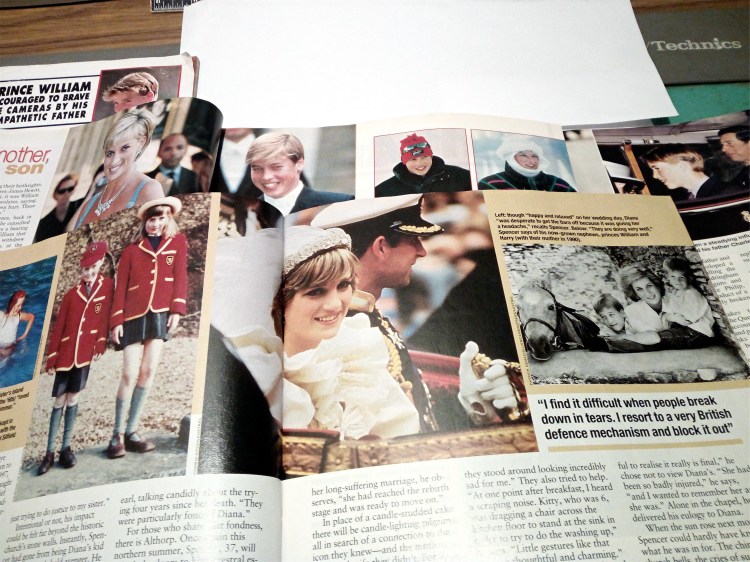
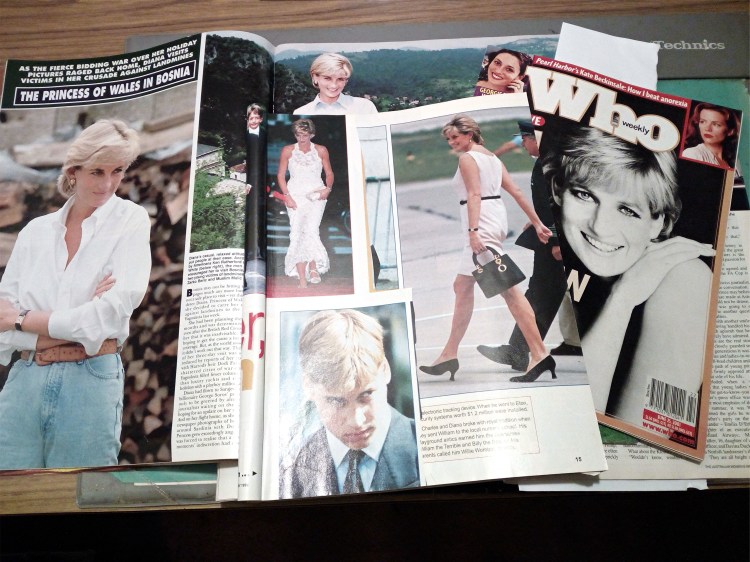
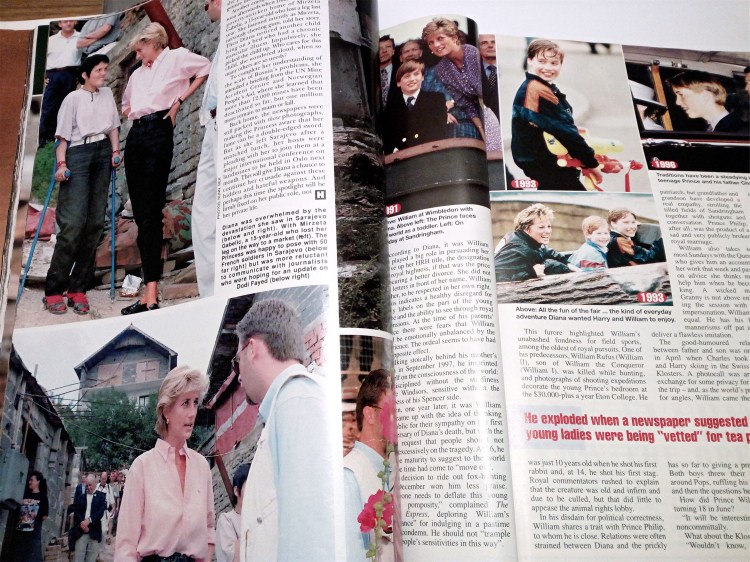
I guess I kept these magazines as a small piece of vicarious history, a trip down memory lane.  Photographs are taken from my old copies of Hello! (August 1997) The Australian Women’s Weekly (May 1998, June 2000) and Who Weekly (June 2001) in memory of the late Princess of Wales.

IMG_20200314_214315

These days there are several ways we can view the past, or a computer-generated future.  For a more mature-age Diana see link below.

BIOGRAPHY

The late Diana, Princess of Wales, was born The Honourable Diana Frances Spencer on Saturday, 1 July 1961, in Norfolk England.  She received the title Lady Diana Spencer in 1975, when her father inherited his Earldom.

Lady Diana Spencer married Charles, The Prince of Wales, at St Paul’s Cathedral in London on Wednesday, 29 July 1981, becoming Princess of Wales.  The ceremony was watched on television by millions of people around the world.  As I recall her silk wedding gown looked crushed as she alighted from the royal carriage.

One warm night in April 1983 I waited beside the bitumen road as Charles and Diana left Government House, Brisbane, to travel into the city for an official function.  The Rolls Royce was lit from within and I recall how Diana glowed and smiled even though the figures beyond her window would have been shadows. 

IMG_20200314_213808

During her marriage, the Princess of Wales undertook a wide range of royal duties with extensive overseas travel.  Family was very important to Diana, who had two sons: Prince William and Prince Henry (Harry).  After her divorce from The Prince of Wales in August 1996, the Princess continued to be regarded as a member of the Royal Family.

IMG_20200314_215355

Post-divorce, Lady Diana filmed a controversial interview about her marriage.  She died on Sunday, 31 August 1997, following a tragic car crash in Paris, believed to be caused by paparazzi chasing her vehicle through a tunnel.  After purchasing the Courier-Mail newspaper, my father told me the news and I was disbelieving, shocked.

There was widespread (and world-wide) public mourning over the sudden death of Lady Diana, Princess of Wales, a hugely popular royal, culminating with her funeral at Westminster Abbey on Saturday, 6 September 1997.  After the funeral, there was a long cavalcade by road to a small island on Althorp Estate, her family’s ancestral home in Northhampshire, England.  The streets around my home were silent, everyone watching Diana’s last journey.  It is hard to forget the funeral hearse driving past so many sad faces and billowing seas of flowers on route to her final destination.

A website link was shown here which contained a computer-aged photograph of Lady Diana and what she possibly could have looked like as a mature-age woman. Unfortunately the link became unreliable and I have deleted it.

Even after her untimely death, the Princess’s work lives on in the form of commemorative charities and projects set up to help those in need.  And also through her married sons Prince William (heir to the royal throne) Prince Harry, and in time their respective children.

Gretchen Bernet-Ward

IMG_20200314_220414
Internet advice taken from The Australian Women’s Weekly issue June 2000 which shows how far we have come and how the Diana-look was still in vogue.

‘One Moonlit Night’ has Arrived!

Excitement!  My copy of ‘One Moonlit Night’ by Welsh author Caradog Prichard has arrived safe and sound.

I could read any Welsh literature but now I have the opportunity to air my views in the weekly discussions on Book Jotter’s Dewithon20 in conjunction with Wales Readathon 2020.

READ MY REVIEW
https://thoughtsbecomewords.com/2020/04/09/review-one-moonlit-night-by-caradog-prichard-for-wales-dewithon20/

For further details on this event (and the book) have a look at these websites:

Book Jotter information
https://bookjotter.com/2020/03/01/wales-readathon-2020/

DHQ 2020
https://bookjotter.com/2018/03/26/dhq-dewithon19/

Week 1 Discussion
https://bookjotter.com/2020/03/06/dewithon-20-week-1-one-moonlit-night-by-caradog-prichard/

Gretchen’s stuff
https://thoughtsbecomewords.com/2020/02/21/are-you-ready-for-wales-readathon-2020/

Try something new!  Join us!

Gretchen Bernet-Ward

Fire and Rain from Poet Kate Llewellyn

Kate Llewellyn is a hidden treasure.  I had not read any of her works before today but she is reaching the age of legend status and should be acknowledged for her beautiful poetry now rather than in retrospect.

In ‘Blue Mountains Christmas’ Kate Llewellyn explores the particular delight of summer rain which breaks a dry spell:

Yesterday, smoke from the valley-–

I thought it was mist

until I smelt it-–

and today, each leaf holds water drops,

shining – it rained in the night.

Kate Llewellyn expresses wonder in the capacity of nature for regeneration in the face of disaster, and nature’s opportunism.  In ‘Magpies’ she defines the summer heat and leaving a garden sprinkler on while a bushfire rages:

It had been hot for days,

the garden sprawled-–

hit like a cricketer.

I left a hose on,

hanging in the apple tree,

and went indoors and slept.

Magpies found this fountain

and stalked around.

They made a midsummer opera

and gargled water-–

it became their song.

They sang as if to praise

the fountain in the tree.

While all this was happening

a hundred fires swept the State.

Great trees exploded,

birds and animals caught fire.

People died and houses burnt,

yet still these magpies sang

around the fountain in the tree.

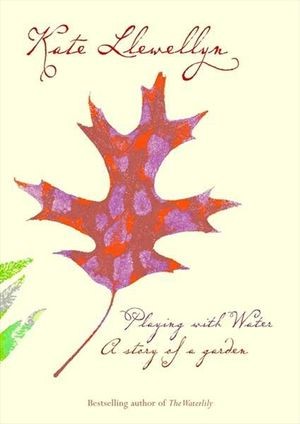
Poet Kate Llewellyn Playing With Water book
‘Playing with Water’ (Pymble NSW HarperCollins 2005) creates a meditation on nature, on community, on the cycle of life. A lyrical memoir that is a celebration of the senses and the seasons.

Australia is the driest inhabited continent on the planet.  It is natural that drought and the regeneration which comes from bushfires and drought-breaking rains are timeless subjects in our poetry and evocatively captured by Kate Llewellyn.

Gretchen Bernet-Ward

PROFILE

Kate Llewellyn is an award-winning Australian poet, author, diarist and travel writer.  She is the author of twenty-four books comprising eight of poetry, five of travel, journals, memoir ‘The Dressmaker’s Daughter’, letters and essays.  “Kate Llewellyn is naturally poetic, naturally personal, and uniquely generous with it.” writes Australian Book Review’s South Australian State Editor Peter Goldsworthy.  Further reading Poetry Library.

ABC Radio National transcript:
https://www.abc.net.au/radionational/programs/saturdayextra/kate-llewellyn/3288742

‘Share Your Story’ Writing Competition and Anthology

IMG_20200312_163859
LEGENDARY BULLOCK TEAM leaving Jondaryan Woolshed, west of Toowoomba, Queensland, loaded with bales of wool. In his heyday 1858-1862 manager James White employed 88 blade shearers in this huge T-shaped woolshed. Illustration hand-printed 1985 by H. Sperring.

Submissions are open for ‘Bedtime Yarns and Ballads from the Australian Bush’ in 2020 Share Your Story.

Here’s what coordinator, author and literary entrepreneur, Michelle Worthington has to say in her newsletter:  ‘This year’s theme ‘Bedtime Yarns and Ballads from the Australian Bush’ will have judges looking for creative, engaging short stories or poems inspired by life in Australia, Australian animals, the Outback or overcoming adversity which will appeal to children aged 0 to 12 years to be read at bedtime.’

Map of Australia 06A ‘yarn’ is a rambling story, particularly one that is implausible, and poetry must be in traditional Australian ballad format.  Michelle encourages writers to think of a modern version of Blinky Bill, Banjo Patterson, Dorothea Mackellar, ‘Wombat Stew’ (I add my own personal favourite ‘Snugglepot and Cuddlepie’) for a new generation of readers.

Michelle Worthington goes on to say ‘We would love aspiring authors of all ages to have the chance to be published in our next Anthology to raise money for Aussie’s doing it tough, with proceeds donated to the NSW Rural Fire Service’.

NOTE:  ‘The winning entries will be included in an Anthology to be launched in October 2020, and all successful authors and illustrators will be invited as VIP Guests to the Pyjama Party Book Launch at the Queensland Children’s Hospital and locations around Australia during the launch month.’

Entries open 1 Feb 2020 and close 9pm 30 April 2020

Poetry Clipart 08For competition guidelines and entry requirements, visit the website to sign up for Share Your Story newsletter

https://shareyourstorypublishing.com/

Michelle Worthington is an international award-winning author and business woman.  As Founder of Share Your Story Australia, she waves her wand to coach aspiring authors and illustrators all over the world to achieve their dreams of publication.  Michelle is also available for speaking engagements, book signings and school visits.  She runs diverse workshops, and if you are thinking of becoming a writer, check out Share Your Story or visit Facebook or contact Michelle for further information.


IMG_20200315_105328
Maybe you could rework the legend of NED KELLY (December 1854 – November 1880) an Australian bushranger best known for wearing a suit of bulletproof armour during his final shootout with the police.

Pineapples and the English Language

IMG_20200225_151042

This caged pineapple asked me why he was called a pineapple when he was neither a pine nor an apple.  I couldn’t answer his question but I did give him a lecture on the idiotic English language and how we take it for granted without knowing why Gretchen Bernet-Ward

Read on…


“English is a crazy language.
There is no egg in eggplant nor ham in hamburger; neither apple nor pine in pineapple.
English muffins weren’t invented in England or French fries in France.
Sweetmeats are candies while sweetbreads, which aren’t sweet, are meat.
We take English for granted.
But if we explore its paradoxes, we find that quicksand can work slowly, boxing rings are square and a guinea pig is neither from Guinea nor a pig.
Why do writers write but fingers don’t fing, grocers don’t groce and hammers don’t ham?
If the plural of tooth is teeth, why isn’t the plural of booth beeth?
One goose, two geese. So one moose, two meese?
If you have a pile of odds and ends and get rid of all but one of them, what is it called?
If teachers taught, why didn’t preachers praught?
If a vegetarian eats vegetables, what does a humanitarian eat?
Sometimes English speakers should be committed to an asylum for the verbally insane.
In what language do people recite at a play and play at a recital?
Ship by truck and send cargo by ship?
Have noses that run and feet that smell?
How can a slim chance and a fat chance be the same, while a wise man and a wise guy are opposites?
Have you noticed that we talk about certain things only when they are absent?
Have you ever seen a horseful carriage or a strapful gown?
Or met an sung hero who has experienced requited love?
Have you met someone who was combobulated, gruntled, ruly or peccable?
Where are those people who are spring chickens or who would actually hurt a fly?
The lunacy of a language in which your house can burn up as it burns down.
Fill in a form by filling it out, while an alarm goes off by going on.”

Written by Anonymous

Poetry Soup
https://www.poetrysoup.com/famous/quote/27538_english_is_a_crazy_language_there


Kids Storytime 04English is the most widely spoken language in the world.
No language in history has dominated quite like it.
English has adapted many different words to suit itself.
Could this be why English is one of the hardest languages to learn?
The Guardian newspaper explains—
https://www.theguardian.com/news/2018/jul/27/english-language-global-dominance