Indrani Ganguly ‘The Rose and The Thorn’ Book Review

Author Indrani Ganguly based her historical novel in Lucknow, India, a city renowned as the most refined of the Muslim kingdoms where she, her mother and grandmother were born.  In 1857 the Siege of Lucknow was also the scene of some of the most brutal fighting during the country’s uprisings.

Lucknow India 002

Indrani Ganguly’s novel is an illuminating blend of fact and fiction.  Twins Mukti and Lila Chatterjee—the eponymous rose and thorn compared to a black rose in their garden—are the heart and soul of the story.  Ganguly’s research is comprehensive thanks to an academic background, and her foreword mentions some family memories.  She explains the book is not a personal history of her family, although I think there are insights which add to the charm of the narrative.

Two parallel movements emerged in India in the 19th and 20th centuries, the national movement of Independence and the social reform to uplift the most vulnerable sections of society.  During this time of national and social upheaval, the role of Indian women makes enlightening reading.

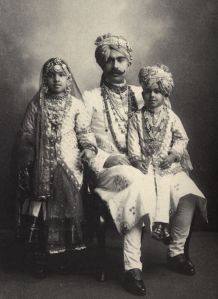
India Father and Children 1930sLucknow Rose and Thorn

There are six families in “The Rose and The Thorn”.  The main characters are Jai Chatterjee, history professor, his wife Shanti and their twin daughters Mukti and Lila.  Then follows The Mukherjees, The Alis, The Johnsons, The Banerjees, and The Maharajas.  It is easy to keep track as the years unfold, events develop in clear progression and the tension builds.

Young Mukti innocently reads the signs of civil unrest in a 1922 pamphlet calling for a boycott on foreign clothing, and the event is witnessed by her British friend Elizabeth and father Alan when riding in a tanga (horse-drawn transport).  Protesters burn clothes on a huge bonfire, quickly followed by police aggression.  One of the police inspectors, Anil, is a Chatterjee family member.

India horse-drawn Tanga

India Mahatma GandhiAround this time, non-violent resistance advocate Mahatma Gandhi is arrested and imprisoned for two years for publishing seditious material.

The twins Lila and Mukti grow up, marriages are arranged and their resilient personalities emerge to deal with life; the loss of loved ones, writing for radical newspaper Chandpur Barta, social work at a women’s centre, and an eventful protest march for women’s rights.

As a young woman in 1970s I was woven into the women’s liberation movement but did not realise how long Indian women had faced their own battles.  They were invisible, they survived as long as they had a man, otherwise they were classed as nothing.  From a 21st century stance, I find it difficult to comprehend the household dictates of that time and the shocking treatment of widows.

The character portrayals of the men and women in the story are strong, and they have firm opinions on the subjects of politics and political activism—handsome Rashid Ali spices things up!  His mother Ruksana is also a driving force.  Mosquito-hating Krishna Banerjee and the Maharaja are men not to be underestimated.  Societal revolutions are brewing but the big question is ‘Will Congress win?’  If women had the vote things may have been different.

Lucknow India 001

I was interested in the chapters dated March 1923 because that was the year my mother was born.  As my mother grew up, I wonder how much she and her Australian contemporaries knew of the Partition turmoil in India?  I knew India was part of the British Commonwealth but certainly didn’t learn about their struggles.  To quote the prologue “There are no martyrs’ monuments or eternal burning flames…” for the ordinary women who led extraordinary lives.

On a lighter note, Chapter 25, March 1923 “The Governor’s Ball” has an outrageous encounter with the Governor’s wife.  And during a family visit to the Taj Mahal, a wandering minstrel strolls by, strumming his ektara (traditional one-stringed musical instrument) singing a saucy song:

There was a rose and a thorn in my life
One was my lover and one was my wife.
Which was which I could not tell
It changed day-by-day and as night fell . . .

. . . I don’t want to give too much away, dear reader, but I will say there is a secret.

Author Ganguly explains that representing the dialogue in English was a challenge.  The two languages used in the book are Hindi and Bengali which have very different grammar syntax.  She overcame this and the result is flowing dialogue containing a smattering of Indian words which enhance the story.

India Food Luchi Eggplant 01The woven cloth khadi, and sweet and savoury food references enticed me to look for translations.  I found a recipe for Mukti’s favourite dish, freshly fried luchi and eggplant.

My curiosity was piqued by the influential roles of India’s royals, the Maharaja and Maharani, in the story.  I read a quote from modern-day Princess Shivranjani of Jodhpur who doesn’t have a problem with only male heirs inheriting but aptly retorts “If you say a boy is everything and a girl is nothing, well, I have a problem with that!”

Indian Goddess Maa Durga Devi 03Powerful Goddess Durga, whose name is spoken several times in the book, also got me researching.  “Durga” in Sanskrit means “invincible” and numerous Mantras are chanted for her throughout the year.

The era of Indian history from 1916 to 1947 is brought alive by Indrani Ganguly through the eyes of Mukti and Lila, and the wise and courageous women who supported them.  While I did not choose a favourite between the rose and the thorn, I enjoyed their journey and learned a lot about the faith and endurance of families in India during those turbulent times.

The epilogue narrator says “I myself travelled many different paths till I joined my father in Delhi but that is another story.”  I look forward to reading it!

Gretchen Bernet-Ward


AUTHOR PROFILE

IMG_20190802_140349
Author Indrani Ganguly

Indrani Ganguly was born of Bengali parents in Lucknow, India.  Her parents imbued her with a strong sense of Indian and world history and culture, and a great appreciation of  diversity in all its forms.  Indrani studied English Honours and sociology in India and did her PhD on the impact of British occupation on revolution and reform in West Bengal from the Australian National University.  In 1990, Indrani married an Australian with whom she now lives in Brisbane, Queensland.  They have a son, daughter and grandson.
Indrani’s website: https://indraniganguly139.wordpress.com/blog/

Published by Boolarong Press
https://www.boolarongpress.com.au/product/the-rose-and-the-thorn/
NOTE General photographs (above) are for illustration purposes only.

Here is the YouTube link to BBC’s Great Indian Railway Journeys video which documents the history and scenes of Lucknow, and shows the buildings which Indrani Ganguly writes about in her book.
https://www.youtube.com/watch?v=CckjZafH0vI

Bees Like My Lavender!

A subtropical climate is not conducive to growing French lavender.

I have followed all the rules, not too wet, don’t dry out, soil nutrient, trim regularly, but haven’t had much success.

This year I let my lavender shrub do its own thing.

Although the flowers and leaves are not as big or lustrous as those in designer gardens, the mauve flowers and soft leaves do have a lovely fragrance.

The big bonus is busy bees like my lavender!


Gretchen Bernet-Ward

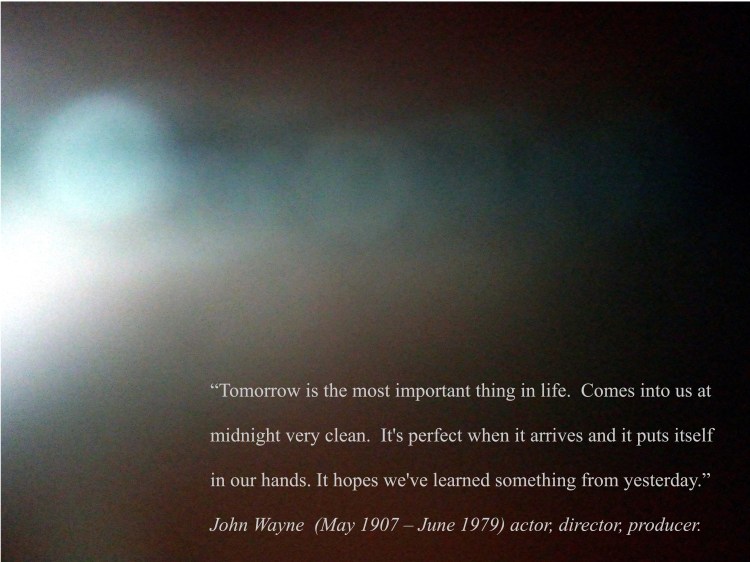
John Wayne Quotation

IMG_20190729_161904
John Wayne, or Duke, was a major American movie actor. His characters were often strong, reserved cowboys or soldiers who reflected mid-20th century values. He filmed over 77 movies https://www.imdb.com/list/ls000487182/

Gretchen Bernet-Ward

Louise Candlish ‘Our House’ Book Review

Quote “Don’t get me wrong, I’m not saying he was psychopathically charismatic or anything like that.  He didn’t set out to use his powers for evil.  More likely his powers were no match for the evil he chanced upon.” Chapter 34, Fi’s Story >1:59:07

That quotation from Bram Lawson’s wife Fiona appears to be a fair assessment of her husband’s character but is it accurate?  Bram made one faulty decision which started the ball rolling over and over until it rolled into a brick wall, and the wall started to topple.

The unforced yet headlong pace of this novel has to be read to be understood.  It is full-on right from the opening line: “London, 12.30 p.m. She must be mistaken, but it looks exactly as if someone is moving into her house.”

London Terrace Houses 03
Author Louise Candlish has the knack of subverting expectations, making her characters do things I hadn’t anticipated, and making them believable.  Everything that could go wrong, did go wrong in a progression of events at 91 Trinity Avenue in the London suburb of Alder Rise where property values are in the millions.

In this transfixing drama of house fraud and so much more, the main players are Bram and Fiona; their two young sons; would-be homeowners David and Lucy Vaughan; neighbour Merle; Mike and Wendy; the website of crime podcast The Victim.

London Terrace Houses 05

Told by Fiona (Fi) and Bram, their retrospective sides of the story nearly overlap yet never quite converge, building a strong sense of unease.  With foreboding I followed their newly separated, and prickly, domestic rituals with bird’s nest custody arrangements.  I almost shouted at the book a couple of times—I can’t reveal why—as deception and indiscretion insinuated themselves into the story.

Woven through the redolent London background are family moments, some more heart-wrenching than others, before a nasty turn of events and the final dénouement.  While the catastrophic narrative honour goes to Bram, the overarching theme is home ownership and who legally owns the house.  Apparently it is, or was, a possibility that this kind of deed transfer could happen.

“Our House” is the best crime book I’ve read this year, well crafted and written with an ending which sends out shock waves.  If you like incomparable award-winning psychological thrillers, I urge you to read this one.

Five Star Rating Star Fish 02Star Fish 02Star Fish 02Star Fish 02Star Fish 02

Gretchen Bernet-Ward


About the Author:

Louise Candlish UK Author 2019Louise Candlish is the author of eleven previous novels, including “The Sudden Departure of the Frasers”, “The Swimming Pool” and the international bestseller “Since I Don’t Have You”.  Louise studied English at University College London and worked as an advertising copywriter and art book editor before writing fiction.  She lives in South London with her husband and teenage daughter.  “Those People” is her next book.
Author website http://www.louisecandlish.com/

I also recommend author and WordPress reviewer Rachel McLean
https://rachelmclean.com/book-review-our-house-by-louise-candlish-a-gripping-psychological-thriller/

There are perceptive book club questions in a Reader’s Guide at the end of “Our House”.

Not So Secret Society of Women Writers

I’ve been asked if I belong to a writers group.  After reaching saturation point with courses and workshops, I decided to get serious and join a writers group.  Currently I am a member of two organisations, Girl and Duck.com and The Society of Women Writers Qld Inc.  One real and one virtual, both offering the interaction and motivation I crave.

I also belong to two book clubs, one leaning towards the literary and the other crime, but that’s a whole new blog post.  Today my information flow is about—

Society of Women Writers Qld IncThe Society of Women Writers Qld Inc (SWWQ) which provides an invaluable support network for women writers.  Members share comments, feedback, achievements and encouragement, or listen to guest speakers at monthly meetings.

The Beginning

In 1925 the Imperial Press Conference Sydney hosted a conference for Visiting Writers and Journalists from the United Kingdom.  At that time women were excluded from the all-male journalists’ club.  This led to the wives of the delegates and the invited female delegates forming their own group which became The Society of Women Writers.  Thus (Dame) Mary Gilmore, Pattie Fotheringham, Mary Liddell and Isobel Gullett became the four Vice Presidents.  Zara Aronson was Honorary Secretary; Agnes Mowie and Blanche d’Alpuget were Honorary Treasurers.  Abigail Clancy was one of the founding committee’s fifteen members.  In 1982 The Society of Women Writers Queensland was incorporated and Mocco Wollert became their first State President.  Di Hill is the current State President.

Postal Magazines

In 1975 Bridget Godbold felt inspired to start her own group of writers in Queensland.  While in Sydney for the Society of Women Writer’s Fiftieth Commemoration, she was asked by their Federal Executive to produce a Queensland postal magazine, based on the success of a Victorian experiment called MURU.

Bridget, with four women from Townsville, Boonah, Kingaroy and Burleigh Heads, created MORIALTA.  This Aboriginal word means ‘everflowing’ and epitomised their motto to Keep Thoughts Everflowing into Creative Writing.  The first edition of MORIALTA was produced in 1976.

Postal magazines are ideal for isolated writers or those who find it difficult to attend meetings.  An electronic newsletter is also available.

The Alice Award

Every two years, since 1978, the Society shares the privilege with other States and awards a non-acquisitive bronze statuette, The Alice, to an Australian woman writer who has made a significant contribution to Australian Literature.  Well-known past recipients include, among many others, Nancy Cato, Ruth Park, Kate Grenville, Margaret Scott, Dame Judith Wright, Dame Mary Durack, Jill Shearer, Christobel Mattingley, Susanna des Vries, Dr Claire Wright and Sally Odgers.

Ring of Bright Water

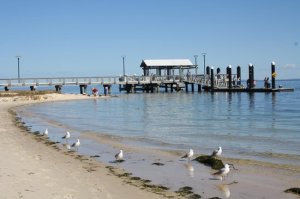
Bribie Island Jetty at Bongaree
Bribie Island

SWWQ’s newsletter Ring of Bright Water is compiled monthly and sent to members either electronically (preferred) or via Australia Post, keeping members updated on upcoming events, competitions, publishing opportunities, members achievements, writing and more.

Writers Retreat

The Society organises an annual retreat, held in October on Bribie Island, north of Brisbane.  Here writers can dedicate quality time to their works-in-progress; join structured workshops; begin new work; discuss writers, writing and books and generally share good times with like-minded people.

Competitions

Competitions for Short Story, Article and Poetry categories are held each year for members and the Estelle Pinney Short Story Competition is held annually and is open to Australian women writers over the age of 18.

The Society publishes anthologies of members work occasionally and supports many other literary events in Queensland.  SWWQ is affiliated with Society of Women Writers in WA, VIC, NSW, TAS.

For further information please contact the Secretary
secretary@womenwritersqld.org.au
or visit their website http://womenwritersqld.org.au

My Journey

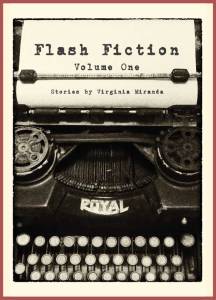
I have entered two short stories in the Estelle Pinney Short Story Competition which closes Wednesday 31 July 2019.  At the moment, I am reading The Rose and The Thorn written by member Indrani Ganguly.  After attending a meeting with guest speaker Virginia Miranda, author of Flash Fiction Volume One, I enjoyed the writing exercise she set with picture prompts and I’m all fired up on the joys of flash fiction.

Gretchen Bernet-Ward 

The Rose and The Thorn by Indrani Ganguly 2019 01Flash Fiction Virginia Miranda Volume One

Author or Businesswoman? The Story Behind Girl and Duck

Real world experience and advice from a published author with dedication, sincerity and passion for sharing her craft.
Gretchen Bernet-Ward

Featured Image -- 12053
Who is this wonder woman? Read on…

girlandduck's avatarGirl and Duck

This week at girl and duck, we opened The Scribbles Academy. It’s been super exciting and lots of people have jumped on board.

Thank you!!!! I know you’re going to love your Scribbly experience!

V2_Resized_ScribblesAcademyWordpress banner copy

But how did this all begin?

What’s the real story behind girl and duck?

I wrote about this a couple of years back. But, in those early days, I was more interested in talking about the community. How passionate it was and how it seemed to sprout from nowhere.

More time has passed and now I want to go deeper. I want you, dear reader, to know exactly how I began my online business.

How and why I started it. And who was there to help me.

Ding Ding Ding! Multiple Income Streams!

Back in 2011, it occurred to me that I might NEVER make a liveable income from writing. No matter how many books…

View original post 1,599 more words

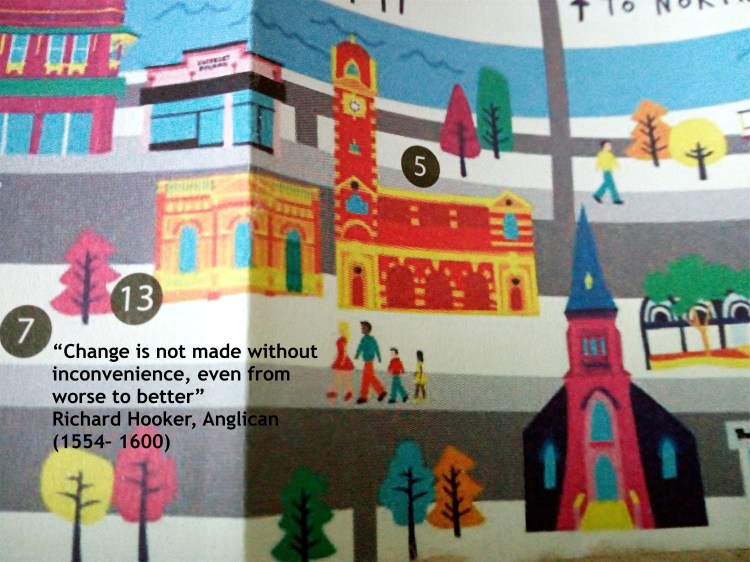
‘Change…’ said Richard Hooker

IMG_20190701_101114
Richard Hooker (March 1554 – November 1600) was an Anglican priest and an influential theologian. Hooker’s emphases on reason, tolerance and inclusiveness considerably influenced the development of Anglicanism. He was the co-founder (with Thomas Cranmer and Matthew Parker) of Anglican theological thought.

Gretchen Bernet-Ward

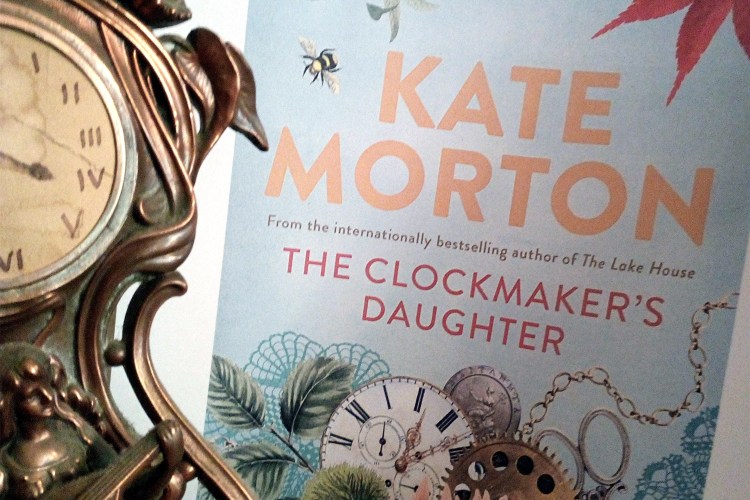
‘The Clockmaker’s Daughter’ by Kate Morton

Not my usual genre

but I love and respect this book. It deserves the status of a 21st century classic.  Narrated by numerous voices from Birdie Bell to Elodie Winslow, I was immersed in a mystery with twists and ghostly turns, fine art and emotional lives of several families over two centuries of turmoil and heartbreak.

The fluid nature of ‘The Clockmaker’s Daughter’ is similar

to the ebb and flow of a river.  In this case the Thames, and the reader should move with the tide, not fight against it.  Accept each individual character and enjoy their allotted time in the book, otherwise an undercurrent could pull you down into reader malaise which may cause you to miss the best bits.

Human emotions are the core of this novel

but some criticism seems to be there are too many characters.  Why?  The classics and modern historical fiction have loads of characters.  I think Kate Morton truly loved her cast of players and couldn’t bear to trim them to fit a mere trifle like a word limit.  Each person has a purpose!

Perhaps the 21st century reader has difficulty due to

a shorter attention span?
less retentive memory?
poorer concentration?
reading skills only suitable for glancing at a small screen?
Tick all of the above
(Sorry, just had to lecture…)

My friends know that rarely, if ever, do I reread a book
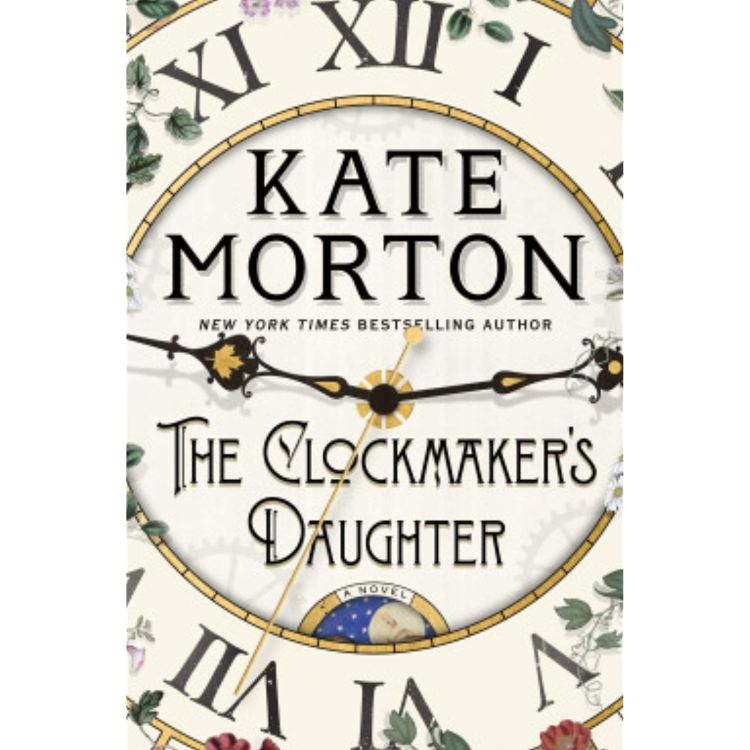
The Clockmakers Daughter by Kate Morton 03

because once read, never forgotten – well, almost – but ‘The Clockmaker’s Daughter’ is the first book in years which I have felt compelled to reread.  It touched on many threads in my own familial life and exposed feelings and understandings.  In one chapter, I had to stop because the emotion became too much as I recalled several elements of my own family’s journey through life and death.  My grandfather was an early 20th century artist, talented and struggling to make a living, perhaps similar to Edward Radcliffe.

Triggered by outstanding writing, we pour our own sentiments into a story

and Kate Morton succeeded in cracking my heart just enough to make the sadness bearable.  Then the atmosphere lightens, a scene change like a stroll in springtime.

Synopsis from publishers Simon and Schuster

https://www.simonandschuster.com/books/The-Clockmakers-Daughter/Kate-Morton/9781451649413

“In the depths of a 19th-century winter, a little girl is abandoned on the streets of Victorian London.  She grows up to become in turn a thief, an artist’s muse, and a lover.  In the summer of 1862, shortly after her eighteenth birthday, she travels with a group of artists to a beautiful house on a bend of the Upper Thames.  Tensions simmer and one hot afternoon a gunshot rings out.  A woman is killed, another disappears, and the truth of what happened slips through the cracks of time.  It is not until over a century later, when another young woman is drawn to Birchwood Manor, that its secrets are finally revealed.”

Oh, secrets revealed

but there are a couple of unanswered questions.  This is where a keen reader sees the clever intertextuality and works it out for themselves from the vignettes Kate Morton has polished and refined for us.   Even down to the defining chapter headings—or didn’t anyone notice that.  This story is a puzzle, it appeared to be disparate people until I followed the signposts, keeping observations tucked away for future reference.  Gradually events join up, different eras are linked, a genealogical timeline exposed.

Here’s my incomplete list of characters…

Elodie Winslow, modern archivist
Tip, her great-uncle
Handmade leather satchel
Birdie Bell, young pickpocket
Lily Millington, pickpocket and artist’s muse
Mrs Mack, purveyor of crime
Martin Mack, thug
Pale Joe, sickly boy
Birchwood Manor
Fairy folk tale
Edward Radcliffe, artist and portrait painter
Frances Brown, his fiancée
Lucy Radcliffe, his sister
Thurston Holmes, unpleasant friend
Ada Lovegrove, sad student
Juliet, newspaper columnist
Jack, ex-policeman
Radcliffe Blue, diamond

There are beautiful paragraphs

which I would love to reproduce, although being taken out of context would ruin the impact.  There’s grimy poverty stricken London, the joy of wildflowers, the thunder in a storm, a fascinating country manor, the love between Edward Radcliffe and Lily Millington, the dubious behaviour of their friends and family culminating in a shocking moment followed by the ultimate conclusion.

I won’t divulge crucial plot points and

my recommendation is to read ‘The Clockmaker’s Daughter’ without preconceived notions.  Unlike reviewer Caroline E. Tew, Crimson Staff Writer of The Harvard Crimson, I did not expect a resolution that is literal, practical or easy to digest.  Have a pinch of romance in your soul.

There’s a 12-Minute PDF Blog summary out there which should have a Spoiler Alert.  It reports inaccurately on a clue, and pretty much gives the game away.  I am glad I did NOT read it prior to reading the novel.  It exposes the plot in a clinical fashion, ruining the atmosphere and skimming across Kate Morton’s beautiful prose and depth of feeling.

On the other hand

an exceptionally good review of ‘The Clockmaker’s Daughter’ by Jo Casebourne of The Reading Project will give you well-rounded insights into the story and characters in chronological order from 1860s to present day.

Naturally author Kate Morton’s website is an absolute must
https://www.katemorton.com/behind-the-clockmakers-daughter/

I have reproduced a chapter vignette (below) to show a scene of top-notch character writing.  But first, let me ask you to ponder this key question, answerable after reading the book.  Out of the four woman, mother, sister, lover, fiancée, who do you think loved Edward Radcliffe the most?

Gretchen Bernet-Ward


Chapter Sixteen ‘The Clockmaker’s Daughter’ Extract

Leonard Gilbert, ex-soldier, researching the Radcliffe family.
Lucy Radcliffe, now elderly yet still sharp.

“The cottage was pleasantly dark inside, and it took a moment for his gaze to arrive at Lucy Radcliffe in the midst of all her treasures.  She had been expecting him only a minute before, but clearly had more important things to do than sit in readiness.  She was engrossed in her reading, posed as still as marble in a mustard-coloured armchair, a tiny figure in profile to him, a journal in her hand, her back curved as she peered through a magnifying glass at the folded paper.  A lamp was positioned on a small half-moon table beside her and the light it cast was yellow and diffuse.  Underneath it, a teapot sat beside two cups.
‘Miss Radcliffe,’ he said.
‘Whatever do you think, Mr Gilbert?’  She did not look up from her journal.  ‘It appears that the universe is expanding.’
‘Is it?’ Leonard took off his hat.  He couldn’t see a hook on which to hang it, so he held it in two hands before him.”

Kate Morton 09

Five Star Ratingstar twinkle twinkle 03star twinkle twinkle 03star twinkle twinkle 03star twinkle twinkle 03star twinkle twinkle 03

NAIDOC Week 2019

NAIDOC Week Poster 2019 02

NAIDOC Week 7 July – 14 July 2019

‘Awaken’ artwork by Kaurna and Narungga woman Charmaine Mumbulla.  Charmaine cares deeply about the 2019 National NAIDOC theme, and about the celebration of Indigenous art and history.

“Early dawn light rises over Uluru, symbolising our continued spiritual and unbroken connection to the land.  The circles at the base of Uluru represent the historic gathering in May 2017 of over 250 people from many Aboriginal and Torres Strait Islander nations who adopted the Uluru Statement from the Heart.  Our message, developed through generations, is echoed throughout the land: hear our voice and recognise our truth.  We call for a new beginning, marked by a formal process of agreement and truth-telling, that will allow us to move forward together.”

Learn more about poster winner Charmaine Mumbulla.

Download a copy of the National NAIDOC Poster and Teaching Guide.

Website https://www.naidoc.org.au/

Indigenous Network https://www.indigenous.gov.au/regional-network

As a National NAIDOC poster winner, Charmaine Mumbulla is excited to be part of NAIDOC history.  Charmaine plans to celebrate NAIDOC Week by taking her children to the National Centre of Indigenous Excellence to celebrate Aboriginal and Torres Strait Islander culture and achievements with a community BBQ and entertainment.  Charmaine will also be doing some workshops at her children’s school and making their favourite morning tea…Johnny cakes with lilly pilly jam.

NAIDOC Week 2019 Artist Mumbulla News

Gretchen Bernet-Ward