Twenty Rules for Writing Detective Stories 1928-2024

Originally published in the American Magazine (September 1928) and included in the Philo Vance Investigates omnibus. Reproduced here (September 2024) as one big scroll almost a century later.

Full credit goes to author S.S. Van Dine, AKA Willard Huntington Wright who was born 15th October 1888, Charlottesville, Virginia, USA. He died 11th April 1939 (aged 50) New York City, USA.

THE DETECTIVE STORY is a kind of intellectual game. It is more — it is a sporting event. And for the writing of detective stories there are very definite laws — unwritten, perhaps, but none the less binding; and every respectable and self-respecting concocter of literary mysteries lives up to them. Herewith, then, is a sort of Credo, based partly on the practice of all the great writers of detective stories, and partly on the promptings of the honest author’s inner conscience. To wit:

1. The reader must have equal opportunity with the detective for solving the mystery. All clues must be plainly stated and described.

2. No wilful tricks or deceptions may be placed on the reader other than those played legitimately by the criminal on the detective himself.

3. There must be no love interest. The business in hand is to bring a criminal to the bar of justice, not to bring a lovelorn couple to the hymeneal altar.

4. The detective himself, or one of the official investigators, should never turn out to be the culprit. This is bald trickery, on a par with offering someone a bright penny for a five-dollar gold piece. It’s false pretences.

5. The culprit must be determined by logical deductions — not by accident or coincidence or unmotivated confession. To solve a criminal problem in this latter fashion is like sending the reader on a deliberate wild-goose chase, and then telling him, after he has failed, that you had the object of his search up your sleeve all the time. Such an author is no better than a practical joker.

6. The detective novel must have a detective in it; and a detective is not a detective unless he detects. His function is to gather clues that will eventually lead to the person who did the dirty work in the first chapter; and if the detective does not reach his conclusions through an analysis of those clues, he has no more solved his problem than the schoolboy who gets his answer out of the back of the arithmetic book.

7. There simply must be a corpse in a detective novel, and the deader the corpse the better. No lesser crime than murder will suffice. Three hundred pages is far too much pother for a crime other than murder. After all, the reader’s trouble and expenditure of energy must be rewarded.

8. The problem of the crime must be solved by strictly naturalistic means. Such methods for learning the truth as slate-writing, ouija-boards, mind-reading, spiritualistic séances, crystal-gazing and the like, are taboo. A reader has a chance when matching his wits with a rationalistic detective, but if he must compete with the world of spirits and go chasing about the fourth dimension of metaphysics, he is defeated ‘ab initio’ ‘from the beginning’.

9. There must be but one detective — that is, but one protagonist of deduction — one ‘deus ex machina’ ‘God from the machine’ ‘contrived solution‘. To bring the minds of three or four, or sometimes a gang of detectives to bear on a problem, is not only to disperse the interest and break the direct thread of logic, but to take an unfair advantage of the reader. If there is more than one detective the reader doesn’t know who his ‘conductor’ is. It’s like making the reader run a race with a relay team.

10. The culprit must turn out to be a person who has played a more or less prominent part in the story — that is, a person with whom the reader is familiar and in whom he takes an interest.

11. A servant must not be chosen by the author as the culprit. This is begging a noble question. It is a too easy solution. The culprit must be a decidedly ‘worthwhile person’ — one that wouldn’t ordinarily come under suspicion.

12. There must be but one culprit, no matter how many murders are committed. The culprit may, of course, have a minor helper or co-plotter; but the entire onus must rest on one pair of shoulders: the entire indignation of the reader must be permitted to concentrate on a single dark nature.

13. Secret societies, camorras, mafias, et al, have no place in a detective story. A fascinating and truly beautiful murder is irremediably spoiled by any such wholesale culpability. To be sure, the murderer in a detective novel should be given a sporting chance; but it is going too far to grant him a secret society to fall back on. No high-class, self-respecting murderer would want such odds.

14. The method of murder, and the means of detecting it, must be rational and scientific. That is to say, pseudo-science and purely imaginative and speculative devices are not to be tolerated in ‘roman policier’ ‘romantic police officer’. Once an author soars into the realm of fantasy, in the Jules Verne manner, he is outside the bounds of detective fiction, cavorting in the uncharted reaches of adventure. (That’s changed!)

15. The truth of the problem must at all times be apparent — provided the reader is shrewd enough to see it. By this I mean that if the reader, after learning the explanation for the crime, should reread the book, he would see that the solution had, in a sense, been staring him in the face – that all the clues really pointed to the culprit — and that, if he had been as clever as the detective, he could have solved the mystery himself without going on to the final chapter. That the clever reader does often thus solve the problem goes without saying.

16. A detective novel should contain no long descriptive passages, no literary dallying with side-issues, no subtly worked-out character analyses, no ‘atmospheric’ preoccupations. such matters have no vital place in a record of crime and deduction. They hold up the action and introduce issues irrelevant to the main purpose, which is to state a problem, analyse it, and bring it to a successful conclusion. To be sure, there must be a sufficient descriptiveness and character delineation to give the novel verisimilitude.

17. A professional criminal must never be shouldered with the guilt of a crime in a detective story. Crimes by housebreakers and bandits are the province of the police departments — not of authors and brilliant amateur detectives. A really fascinating crime is one committed by a pillar of a church, or a spinster noted for her charities.

18. A crime in a detective story must never turn out to be an accident or a suicide. To end an odyssey of sleuthing with such an anti-climax is to hoodwink the trusting and kind-hearted reader.

19. The motives for all crimes in detective stories should be personal. International plottings and war politics belong in a different category of fiction — in secret-service tales, for instance. But a murder story must be kept ‘gemütlich’ agreeable’, so to speak. It must reflect the reader’s everyday experiences, and give him a certain outlet for his own repressed desires and emotions.

20. And (to give my Credo an even score of items) I herewith list a few of the devices which NO self-respecting detective story writer will now avail himself. They have been employed too often, and are familiar to all true lovers of literary crime. To use them is a confession of the author’s ineptitude and lack of originality:

(a) Determining the identity of the culprit by comparing the butt of a cigarette left at the scene of the crime with the brand smoked by a suspect.

(b) The bogus spiritualistic séance to frighten the culprit into giving himself away.

(c) Forged fingerprints.

(d) The dummy-figure alibi.

(e) The dog that does not bark and thereby reveals the fact that the intruder is familiar.

(f) The final pinning of the crime on a twin, or a relative who looks exactly like the suspected, but innocent, person.

(g) The hypodermic syringe and the knockout drops.

(h) The commission of the murder in a locked room after the police have actually broken in.

(i) The word association test for guilt.

(j) The cipher, or code letter, which is eventually unravelled by the sleuth.

And there you have it. Not a modern gadget in sight!

Thank you, Willard ❤ Gretchen Bernet-Ward

More information
https://en.wikipedia.org/wiki/S._S._Van_Dine
https://en.wikipedia.org/wiki/Golden_Age_of_Detective_Fiction

Willard Huntington Wright (S.S. Van Dine)
1887-1939
Fantastic Fiction
https://www.fantasticfiction.com/v/s-s-van-dine/
1. The Benson Murder Case (1926) · 2. The Canary Murder Case (1927) · 3. The Greene Murder Case (1928) · 4. The Bishop Murder Case (1928) · 5. The Scarab Murder Case (1930) 

Night Walk in Covid-19

Fairy trees © image Dot Bernet 2019

“Hands up all the blog writers who wrote about their experiences of living through Covid-19 and its aftermath. Okay, I will join your ranks and become one of those adding something to world history with a personal experience; of course the names have been changed to protect the innocent.”

During the time of the worldwide Covid-19 pandemic, Angela and her daughter Jenny decided they would go for a walk every evening. Just a short one around a block or two, maybe across the park to upset the plovers in the damp grass, then home again. A walk was especially invigorating during the colder months of August in Brisbane. It got them out of the house, away from the air-con heating, into the refreshing chill of the cool night air. They donned jackets and beanies and shoved gloves in their pockets just in case of light rain. The suburban streets were deserted yet the night was infused with noise, the dull murmur of a distant highway, the sound of birds settling in to roost, a possum scuttling across a rooftop, the whoosh-whoop of fruit bat wings as they scoped out a mulberry tree or date palm and then crash-landed into the foliage. Owls were heard but never seen, unlike car drivers who appeared to have lost all concept of care and responsibility, arbitrarily speeding through red traffic lights because the streets were empty. However, while joggers, scooters, dog owners and their canines were tucked up in front of their preferred screens, a full moon would rise and cats would prowl under its glow. It was not unusual for a feline to stroll across the street to check out the two interlopers, then perhaps allowing Angela the occasional stroke of neck fur or chin scratch. These nightly walks offered the duo some unusual sights, the least of which was the activity of a darkened 4WD vehicle continually cruising up and down various back streets. Were they lost, were they scoping out burglary opportunities, or is that impugning a parent teaching their teenager to drive?

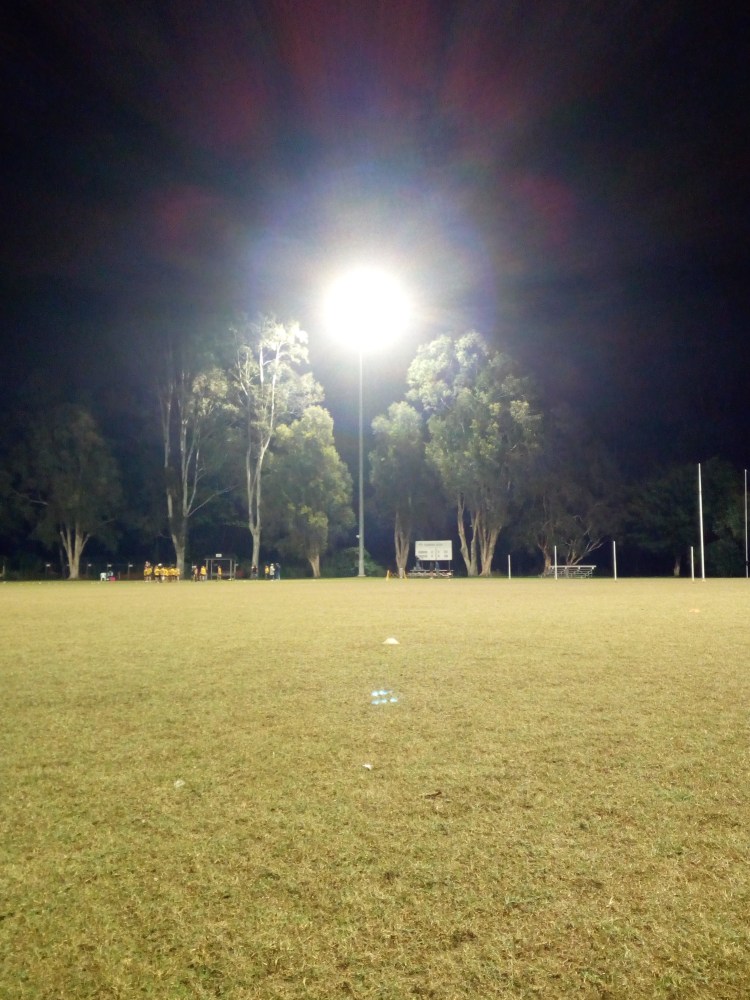
Footy training cancelled © image Dot Bernet 2019

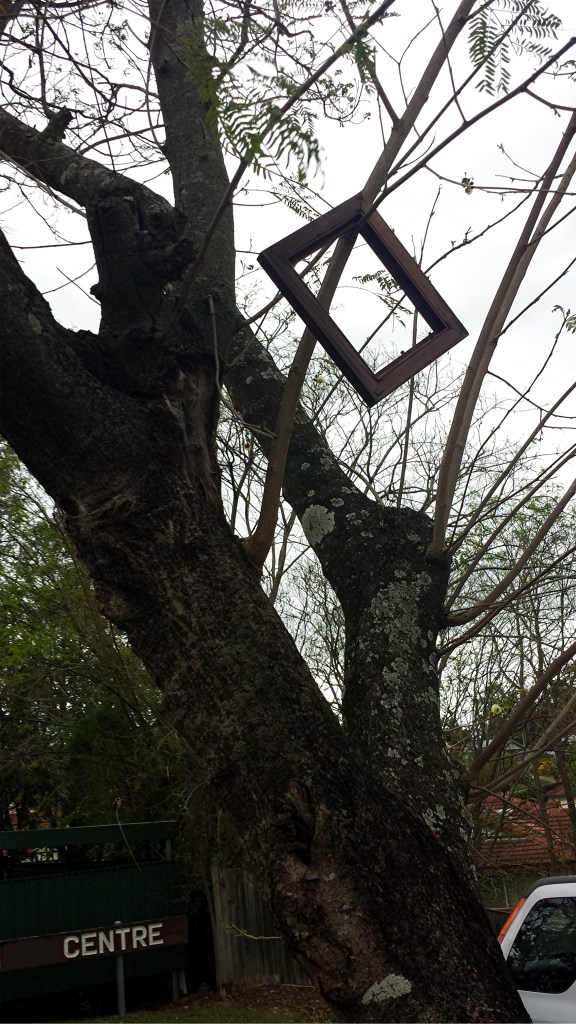
Many homes had their living room curtains open so it was easy to see their televisions, replaying the gloomy news over and over again as the fatality statistics grew more and more alarming each night. Often cooking smells hung in the air or the tang of eucalypt competing with the pall of grey smoke left over from backyard firepits, an ill-advised council initiative. Angela was glad her face mask filtered the worst of it. One night they took a different route and Jenny was chastised for impulsively, recklessly walking down the middle of a major suburban road just because she could. Not a delivery van, ambulance or person in sight, only rows and rows of parked cars and houses with twinkling fairy lights strung around trees and across balconies and down driveways. They saw unloved little street libraries, a ghost bus lit up but without passengers, and even a large picture frame hanging high up a jacaranda tree. There was a trend among real estate agents to put either cheery red bows or teddy bears on their For Sale signs. Unfortunately the follow-up maintenance was non-existent so, after rain, ribbons of blood-red dye ran down the advertisements and the poor teddy bears were soaked, left to dangle in macabre poses of decomposition. Indirectly a gloomy statement of that period in history. It always felt nice to return home.

❤ © Gretchen Bernet-Ward 2024

Why? © image Dot Bernet 2019

The Dawn Sunrise

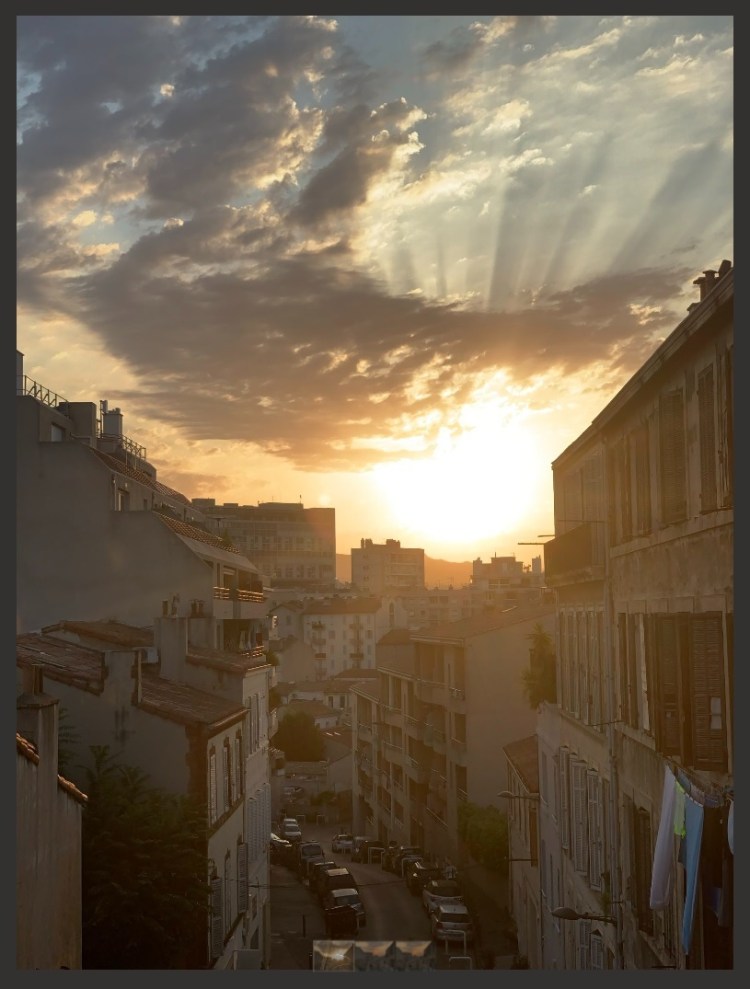
Marseilles France Sunrise Series © Josh Harbort 2024

The Dawn

I stood upon a street at break of day,

When first the rays of sunlight pierced the clouds

And banished frosts and mists of night away

And with them all the fears that night enshrouds.

I saw the city’s buildings lift their heads,

To stand once more four square beside the spires,

And men who last night crawled half-heartedly to bed

Now hurried forth with hope’s rekindled fires.

The mighty clouds that fain would linger on

The chilling winds that sought to hurt and freeze,

Now faded into nothingness at dawn,

I marvelled that we’d given heed to these.

While through the air a thought of newness came,

New strength and vim, with joy to brest the fray,

This was God’s gift, to every one the same.

The greatest of all gifts — a new-born day.

by Robin A. Walker

https://discoverpoetry.com/poems/sunrise-poems/

Mt Coot-tha Lookout Brisbane © Gretchen Bernet-Ward 2022

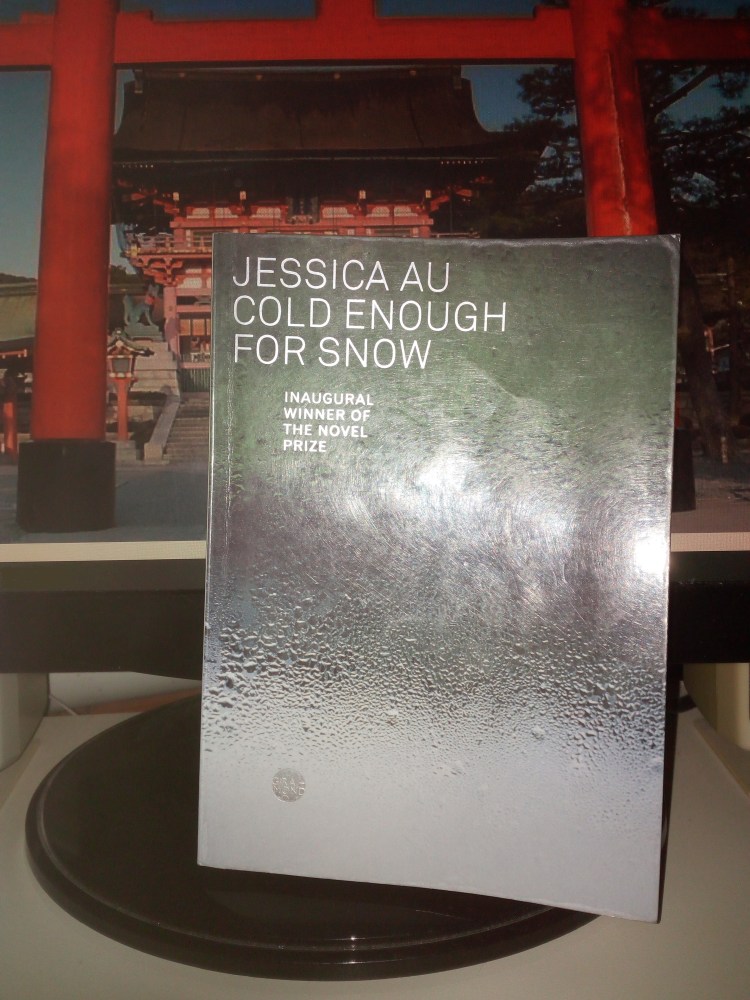
Review ‘Cold Enough For Snow’ Novella by Jessica Au

Jessica Au ‘Cold Enough For Snow’ Novella 2022

A gently flowing story of the tenuous relationship between an adult daughter, the narrator, and her ageing mother during a tourist trip to Japan. The memories, flashbacks and every day minutia come from the daughter. At times the dialogue between the two is fragile, hesitant, and the occasional polite conversation is a description of scenery or food, never their emotions, never connecting on a personal level, but still caring. The daughter remembers her studies and her then boyfriend Laurie. I thought it was surreal when she went kayaking with Laurie and crossed an ancient meteor crater full of deep dark water. Not something I could do but this is not an adventure book, it exposes us to thoughts.

Our memories shift and bend. The grey bookcover perhaps represents the hazy way we walk through life and remember. There’s a mystifying love birds recollection and the daughter even imagines clearing out her mother’s flat, sorting through a lifetime of possessions. Not for gain, just practical, like planning to visit Japan and her mother asking if it was “cold enough for snow”. The story, like the gentle and seemingly never-ending raindrops, carried me through galleries, museums, shopping, rural landscapes and train stations where gifts are carefully chosen for the family. There comes thoughtful gestures from the daughter, always aware of her mother’s pace, watching if she tires, suggesting places to visit and taking care of their meals and travel plans. I enjoyed the calm, methodical pace of this story.

I think you can have memories to talk about, worry about, analyse or just carry close. A meaningful picture of this quiet couple is compiled in my mind without any great realisation on my part until towards the end of the book. “It had been cold outside and warm in the train.” and I felt subtext; is the daughter really with her mother on this journey? Or is she remembering it? Seemingly disconnected, everything does connect to make the daughter an interesting character. Snippets like her restaurant work and her student days were easily imagined. I loved the couple of pages describing her time in Hong Kong and her reluctance to tell her future husband Laurie that she had once lived there.

Wearing puffer jackets, reliving old memories and making new ones, the mother and daughter’s last stopping point is to Inari gates Shinto shrine in southern Kyoto. (The Inari shrine complex is comprised of worship halls at the base of the mountain connected via astounding vermilion torii gate-lined paths). Situated in the mountains, this walk shows their stamina and unspoken mother/daughter bond, each perhaps recalling what they had seen and experienced together. At the end of this novella, the thought conveyed to me is that their journey is not quite over yet.

Gretchen Bernet-Ward 2024

Catalonia ‘Sant Jordi Day’ Books Roses and Love

Planning an overseas holiday? This looks perfect for book lovers!

A yearly event: The Day of Books and Roses will be celebrated in Catalonia, Spain on Wednesday 23rd April 2025. This day is traditionally known as Diada de Sant Jordi (Saint George’s Day) in Catalan. On this special day, love and literature are celebrated throughout Catalonia, and books and roses are exchanged. In Catalonia on 23rd April 2016 more than 1,580,000 copies of 45,267 book titles were sold, and a percentage of those were in the Catalan language.

Always learning: This is a part of the world I have never visited and I had no knowledge of this beautiful celebration. Catalan’s Sant Jordi Day really is commemorated with books, roses and love. Since 1997 the official slogan of the day has been ‘A rose for a love, and a book forever’. Perfect!

Love is in the air: The rest of the world awaits Valentine’s Day to celebrate love, Catalan’s most romantic day of the year is Sant Jordi, which also coincides with World Book Day on 23rd April. A day dedicated to ‘literature and love’, and of course books and roses are the main attraction.

‘Rose and Book’ Public Domain image by George Hodan

Tourism: Visitors and locals can stroll through stalls full of books and red roses. You can visit any Catalan city and soak up the festival’s atmosphere in and around the city’s central streets. Librarians take their books outside and set up stalls with the latest must-reads and some old classics. Flower vendors display thousands of red roses. Both make a brisk trade. Also, there are small tables of illustrators and authors selling and signing their books. I wonder if the patisseries (la pastelería) bake cakes and pastries shaped and decorated like books?

Culture: Although being part of Spain, Catalonia’s culture is quite different. They have their traditions (such as Sant Jordi Day) public holidays, and the language is Catalan. Sant Jordi is celebrated throughout Catalonia, so no doubt where you are, you’ll find a red rose and an excellent book. Some of the older buildings are decorated with red roses, the photos look amazing!

The legend of Sant Jordi: Catalans celebrate Sant Jordi’s Day to commemorate the death of Saint George in the year 303 AD. He became the symbol of Catalonia during the 19th century when the cultural and political movement known as the Renaissance reclaimed the signs of Catalan identity.

Modern-day Geography: Catalonia comprises most of the medieval and early modern Principality of Catalonia (with the remainder northern area now part of France’s Pyrénées-Orientales). It is bordered by France (Occitanie) and Andorra to the north, the Mediterranean Sea to the east, and the Spanish autonomous communities of Aragon to the west and Valencia to the south.

World Book Day: The book tradition on this day doesn’t come from Saint George himself. It comes from the International World Book Day which started in Spain in 1923. The date coincides with the death of two world-famous writers, Spanish Miguel de Cervantes and English William Shakespeare in 1616. In 1995, UNESCO declared 23rd of April as the UNESCO World Book & Copyright Day. In 2017, a group of Catalan publishers, booksellers, florists, and other professionals presented an application to UNESCO to have the ‘Day of Books and Roses’ recognized as Intangible Heritage. Extremely special things to celebrate!

❤💐📚 Gretchen Bernet-Ward 2024

My thanks to the following websites for their information:
Information https://unexpectedcatalonia.com/sant-jordi/
About https://unexpectedcatalonia.com/about/
Catalonia trip planning: https://unexpectedcatalonia.com/catalonia-essential-guide/
Wikipedia https://en.wikipedia.org/wiki/The_Day_of_Books_and_Roses

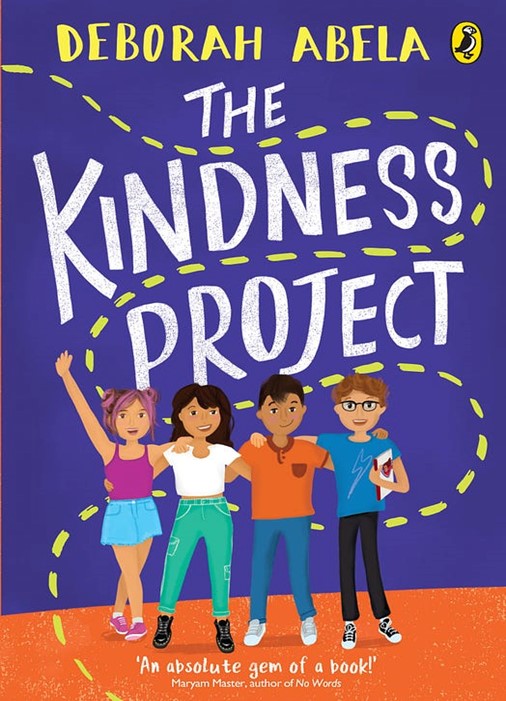
Review ‘The Kindness Project’ by Deborah Abela

A text layout which will appeal to young readers and older readers reading the book to younger readers. A gem of a story from author Deborah Abela who wrote inside ‘I hope you enjoy this little dose of kindness!’ For me it’s more than a dose, it’s a great big generous helping, with thanks to Zanni Louise for my copy.

Of course things don’t start off all sweetness and light, oh no, there’s shy Nicolette, DJ a bully and various obstacles to conquer. Along comes Leaf, a kid you will recognise (and hope in hindsight that you were nice to him). He deserves niceness and big bunches of kindness. Where is his mother?

Both Leaf and Nicolette have troubled backgrounds. They become friends but not before Nicolette imagines all sorts of disasters. Her mind goes off on fearful tangents, she tends to think worst-case scenario and moments do go awry. Ideally ‘You tell someone your worries and they don’t laugh or tease you or call you names, they just listen’ although it does seem like her Nanna is getting a raw deal in the aged care system. The drama is heightened and Nicolette and Nanna make daring plans. What could go wrong?

Event sold out!

I think the type-setting and font changes for this book are brilliant and I haven’t had this much fun since Oliver Jeffers ‘The Incredible Book Eating Boy’. Parents are distracted and teacher Ms Skye, doesn’t seem to notice classroom dynamics but she gives the class a school project. ‘The Kindness Project’ and anyone who has ever done this type of school assignment will groan in sympathy. Coming up with ideas is hard but when you have an obstructive, rude classmate like DJ throwing nasty comments around, the task becomes a hundred times harder.

Naturally Nicolette and Leaf team up but will their combined ideas be enough? Can they create understanding and kindness throughout their school and beyond? Honesty is the best policy but it’s a big ask for young kids with family problems weighing them down.

My heart and mind collide and I shed a happy tear towards the end – mushy I know. While I would like a stronger sense-of-place, the characters do make up for it and Deborah Abela (Ambassador for Room to Read.org) writes young realism in a way which makes reading this story both meaningful and enjoyable.

Gretchen Bernet-Ward 2024

You are never alone in the world, there is always someone out there waiting to say hello © image Gretchen Bernet-Ward 2024

Yúya Karrabúra (Fire is Burning) by Indigenous Poet Alice Eather

MY POST IS DEDICATED TO ALICE EATHER INDIGENIOUS POET FROM ARNHEM LAND, NORTHERN TERRITORY, AUSTRALIA.

In her powerful poem “Yúya Karrabúra” (Fire is Burning), Indigenous poet Alice Eather paints a complex picture of two colliding worlds of which she is a product. In the middle, Alice brings the two worlds together “to sit beside this fire and listen”. Alice was an Aboriginal Australian slam poet, environmental campaigner and teacher from Australia’s Northern Territory.

A moving YouTube video of Alice’s own recital was posted 9th July 2019 and I acknowledge her poetry on ThoughtsBecomeWords 9th July 2024 for NAIDOC Week.

Alice Eather quote “I walk between these two worlds, a split life, split skin, split tongue, split kin. Everyday these two worlds collide and I’m living and breathing this story of black and white.”
https://en.wikipedia.org/wiki/Alice_Eather#

Poster title ‘Urapun Muy’ by Artist Deb Belyea 2024

NAIDOC Week is celebrated in Australia from Sunday 7th July to Sunday 14th July. The acronym NAIDOC stands for National Aborigines and Islanders Day Observance Committee. NAIDOC has its roots in the 1939 Day of Mourning, becoming a week long event in 1975, and from the first Sunday to second Sunday in July each year.

I acknowledge the Traditional Owners and Custodians of the lands on which I live and work and pay my respects to Indigenous Elders past, present and emerging. Sovereignty has never been ceded. It always was and always will be, Aboriginal land. Vale Alice Eather.

Gretchen Bernet-Ward 2024

Bicycle Poem by Bob Sterry

Bicycle stored on wall in underground carpark Brisbane Australia
© image Gretchen Bernet-Ward 2024

Bicycling Poem

A Little Taste Of Tarmac

A little taste of tarmac, Bobby
Let me spin my wheels
A little taste of the long flat road
I’ve forgotten how it feels.

A little taste of tarmac, Bobby
Make my chainwheel hum
A little taste of the up hill grind
Thirty miles and some

A little taste of tarmac, Bobby
Way out among the farms
A little taste of dust on your lips
My metal soul would calm…

By Bob Sterry (Extract)

Full poem https://hellopoetry.com/poem/794734/a-little-taste-of-tarmac/

Poet notation: “If a bicycle could have a soul this is a poem that my favourite bike ‘Loretta’ would have written to me after a long period of neglect as I recovered from some injury or other.” July 2014

‘Migraine and Me’ A Doctor’s Experience of Understanding and Coping with Migraine

Many sufferers similar to me wish for a miracle cure to banish a migraine. Like a hundred amplified headaches, nothing seemed to work. A regular, debilitating sickness which cannot be stopped, only endured. Feeling wretched and putting up with it seems to be the norm, the only way I could cope until it faded away.

We know this pounding headache, nausea, vomiting and weakness will eventually recede but, like the beast from the black lagoon, it will rise again. Parenting, careers, shopping, everyday life dissolves for days at a time. In my case nothing worked except silence and bed rest. I spoke to doctors, attended talks, took various pharmaceutical remedies and closely watched my diet but nothing was one hundred percent effective. I needed real comparisons from others, their coping skills and understanding to alleviate the hardship of painful and debilitating migraines.

QUOTE
“In writing this book, retired doctor Jennifer Barraclough has drawn on her personal journey with migraines which began in her teenage years and persisted until later life.
‘Migraine and Me’ is a concise practical guide intended for migraineurs themselves and for their families, colleagues and friends.”
‘Migraine and Me’ by Jennifer Barraclough 2024

https://www.jenniferbarraclough.com

SYNOPSIS: Interweaving her own personal story and those of other contributors with evidence from published research, Jennifer addresses migraine from a holistic perspective. Besides summarizing current medical knowledge about causes and management, she considers psychological, social and spiritual aspects, including some controversial topics such as the concept of a migraine personality; and the reasons for stigma. Alongside the use of prescribed drugs for preventing and treating attacks, the potential for self-help through lifestyle changes and natural therapies is highlighted.

The relationship between migraine and creativity is examined, and some possible silver linings are proposed. ‘Migraine and Me’ offers empathy, practical insights, and hope for anyone affected by this complex neurological condition.

Although I no longer suffer from bed-ridden migraines, I do wish I had known about this information when I was younger, the comparisons are compiled from Jennifer Barraclough’s own research and other sufferers. It’s never too late! Reading the research and experiences of others can guide a sufferer to recognise symptoms from food, stress and environmental factors. Chapter Four ‘Triggers: Diet’ is particularly enlightening regarding cheese. Acquiring food knowledge can help when explaining to others in the office, in your family or coffee with a friend – if caffeine is not your trigger!

It is horrible to have very little control over losing days out of your life. One of the ways Jennifer Barraclough and her contributors have enlightened me is to show I am not alone in experiencing debilitating migraine symptoms and relief may come in different ways. Knowledge is power!

Gretchen Bernet-Ward 2024

Old Blocksidge Poem on Frosty Morning

Sunrise on a frosty May morning © image Gretchen Bernet-Ward 2024

This 1908 poem extract from William Blocksidge captures the mood.

“And, interspersed among the spangled sheen,
Looks out in differing shades the darkened green—
A background whereupon, in outline bold,
Stands the rich mintage, silver mixed with gold.”

I have quoted a small part of a poem from ‘Songs of the South’ 1908 titled ‘Brisbane’ by William Blocksidge (aka William Baylebridge) courtesy of The Institute of Australian Culture. 

For all its floridness, this poem is quite cutting and the topics are quite revealing. Our modern sensibilities tend to forget the trials and trauma of establishing a town in a new land. Not to mention the brutality towards convict labour and the rightful Indigenous population. Interestingly this is the year the Victorian Government passed the Adult Suffrage Bill 1908 granting female suffrage for the first time. Women’s suffrage is the right of women to vote in elections. Australia was the first nation in the world to grant women these dual rights.

For those keenly interested in the entire version of this past century’s rather long yet insightful poem from a man whose real estate family is well-known in Brisbane, Queensland, below is a copy from AIC for your reading pleasure. Strong billy tea is recommended with damper and golden syrup if you have it handy.

One shilling is now 10 cents

‘Brisbane’ poem by William Blocksidge also known as William Baylebridge, was published in Songs o’ the South (1908)

Brisbane

Brisbane, thou art a city of the sun,
A forest queen, a sea-nymph, joined in one!
Here Summer loves to spin her lengthened rule,
While Winter’s care is but the earth to cool;
Here golden wealth, from many a distant plain,
Is piled in ships, to swim the billowy main —
Here Commerce floods the tides, and minions toil
To prove the measure of her mounting spoil!

How often, perched above the hilly bounds
That wrap thee as a nest its brood surrounds,
Wooing the wind that bears the ocean’s breath,
And many a tale to such as listeneth —
How often have I lovingly surveyed
The scene before my wondering gaze displayed —
The lengthening spires, that point the lofty way
While yet the soul is idling in its clay;
The spacious pile that lifts its stately head;
The winding river, to its lover wed;
The hills that rise above to kiss the sky;
The valleys that within their shadows lie;
The shipping crowding on the silver stream;
The living threads that through the mazes teem!

And when soft Night, in sable vestment gown’d,
Has wrapped her stole thy tranquil form around,
’Tis then, in panoramic splendour viewed,
Thou’d be by fond Imagination wooed;
For then, fair Brisbane, when thy fading bowers,
Tipped with their beacons, turn to fairy towers,
Thy beauty scorns the bounds of words, for dumb
Are these, and ’neath the burden soon succumb!
Now myriad lamps, upon its margin’s crest,
With gleaming pennons light the river’s breast;
And where the city’s constellation lies
The glimmering haze ascends to gild the skies.
The villas blazing on the craggy hills
Augment the golden flood the night that fills;
The bridge displays, above the Garden Bend,
Its fiery lines, that in the cluster blend.

And, interspersed among the spangled sheen,
Looks out in differing shades the darkened green —
A background whereupon, in outline bold,
Stands the rich mintage, silver mixed with gold.
Now sound (for Night has giv’n the magic key)
The pregnant chords of heavenly harmony;
And softly floats across, in mingling rhyme,
The mellowing cadence of the pealing chime —
Such tones as wake the soul’s celestial lyre
When pensive memories the theme inspire;
And, each with each in concord blending true,
With holy rapture flood the heart anew.

Ah, was it but a century ago
When thou did’st in the womb of earth lie low,
And yet unborn to bear the shame of men,
And, rising, throw the burden off again? —
When down the hollow gale, that trembling fled,
At dusk and dawn, the wailing for the dead
In eerie numbers woke the echoes weird,
Till, floating down the vale, it disappeared?
And was it where those stately buildings stand,
Where lofty Art displays her lavish hand,
That plenteous game before the huntsmen sped?
Or down the maze the dusky dancer led?
That round the turrwan, with his magic stone,
The sick revived by simple faith alone;
Or, failing this, full-toothsome morsels made
To tempt their brothers to the festal shade?

Ah, yes, those primal scenes, with plenty crown’d,
Made all the wooded valley hallowed ground,
Till came the time — ill-omened, true, for them —
When, first by truce and then by stratagem,
The settlement unfolded in the vale,
’Neath Logan’s iron rule to fret and quail!

What curses now the trembling wretches spend
As ’neath the blows their bleeding bodies bend —
As, shackled to the rude triangle’s lines,
The gory flood th’ adjoining ground defines!
I seem to hear again the clanking chain,
The creaking treadmill grinding small the grain;
And see the convict turn the stubborn clod,
Or, ’neath the pine, the sluggard bear the rod.

But why dilate? Those cruel days are done:
Time’s ceaseless round has blotted every one:
A fairer scene now meets the favoured eye —
Thou, smiling city, ’neath my gaze dost lie.
What though land-hungry Gipps thought passing fit
To cripple where he lacked improving wit!
Among the first of Austral fair will stand
The one disfigured by his vandal hand!

And while the ages roll their waning round,
Till earth’s but mortal mould the shades confound,
May Plenty’s best thine every call attend,
And smiling Peace her priceless treasure lend!
May noble sons thy benison e’er bless,
And daughters fair thy tender claims confess;
And thus may every tongue conspire to name
Thee and thine offspring heirs to Honour’s fame!

By William Blocksidge (1887-1942)

Further reading: Selected poems, by William Blocksidge (Baylebridge, William) 1887-1942, Songs o’ the South, London: Watts, 1908 pp.60-62.
Also https://www.britannica.com/topic/Songs-o-the-South
Wikipedia https://en.wikipedia.org/wiki/William_Baylebridge

Hope you made it this far.
William touched on a nerve, quite the fascinating poet.
Gretchen Bernet-Ward 2024

The Turrbal and Yuggera peoples have lived in the Brisbane area for more than 32,000 years and their ancestors go back more than 60,000 years. The Turrbal and Jagera people speak Yuggera and their name for Brisbane is Meanjin.
Written on Sunday 26th May 2024
National Sorry Day

https://www.turrbal.com.au/our-story
‘Progress’ Photographed in archives at University of Queensland Fryer Library 2019