‘My Dragon Reads Books’ Rhyme

IMG_20180629_141407

My Dragon Reads Books

My dragon gives me dirty looks,

When I borrow his favourite books.

I settle down in cosy nooks,

Or rest beside babbling brooks,

To read about pirates with curvy hooks,

And wildly passionate celebrity cooks,

And scattered flocks of noisy rooks,

And a veggie patch of scratching chooks.

There’s even a dungeon full of crooks,

Trying to hide from shimmering spooks.

My dear dragon sulks and sooks,

He folds his wings and mutters ‘zooks’,

Then joins with me to read his books.

Gretchen Bernet-Ward

Dragon Computer Gretchen

Public Dangers

IMG_20180630_160606
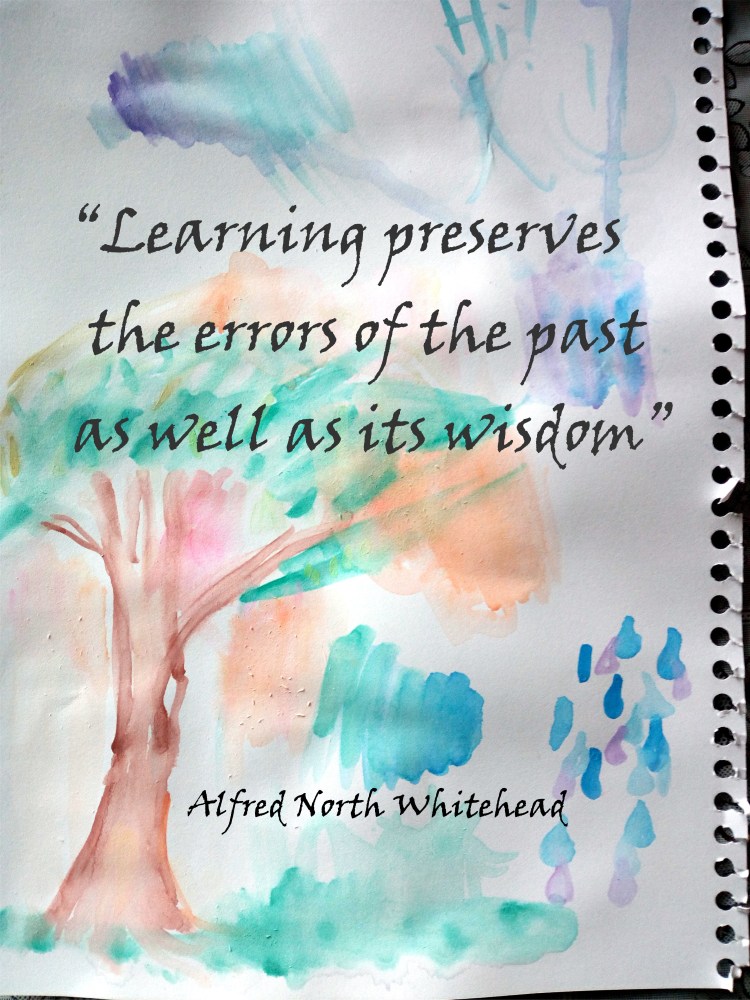
Alfred North Whitehead (1861–1947) was a British mathematician, logician and philosopher best known for his work in mathematical logic and the philosophy of science.
To quote Mr Whitehead in full "...For this reason, dictionaries are public dangers, although they are necessities” ― Alfred North Whitehead.

A witty comment or would he have thought the same of IT in the 21st century e.g. Wikipedia and social media?

Gretchen Bernet-Ward

Three Things #2


READING:
  Saw the heading “The genre debate: Literary fiction” and I was hooked when Austen aficionado and author Elizabeth Edmondson said “literary fiction is just clever marketing”.
and continued…
In the third of The Guardian’s series on literary definitions “Jane Austen never for a moment imagined she was writing Literature.  Posterity decided that––not her, not John Murray, not even her contemporary readership.  She wrote fiction, to entertain and to make money.”
followed by…
“Genre fiction is a nasty phrase––when did genre turn into an adjective? But I object to the term for a different reason.  It’s weasel wording, in that it conflates lit fic with literature.  It was clever marketing by publishers to set certain contemporary fiction apart and declare it Literature––and therefore Important, Art and somehow better than other writing.”
with mandatory…
“Which brings me to the touchy subject of literary snobbery.  Perhaps I should call it LitSnob.  Lit fic: good.  Popular, commercial, trash and pulp fiction: bad.”
there’s more…

Worth reading even if it makes your blood boil––includes 110 comments!
Website https://www.theguardian.com/books/booksblog/2014/apr/21/literary-fiction-clever-marketing-genre-debate

The Guardian report is from her speech given at an Oxford Literary Festival debate and was first published Monday 21 April 2014.  Sadly Elizabeth Edmondson (Aston) passed away 11 January 2016.  GBW.


LOOKING:  Love reading the adult works of author Nick Earls and can brag that I had tenuous, almost ethereal, contact with the man at a book-related charity event.  Okay, he was in the same room and he did nod hello.  By some weird default in the booking system, I was seated at the head table with Mr Earls and treated like a VIP.  I kept getting covert glances from the other diners, socialites wondering who the heck I was.  I felt nervous but not intimidated.

Anyway, I have just enjoyed watching a short YouTube video of Nick Earls talking about his children’s book series “Word Hunters: The Curious Dictionary” co-written with Terry Whidborne.  Also, author and blogger Kate Forsyth did a good book review.

Promo blurb reads Twins Lexi and Al Hunter stumble upon an old dictionary and the world as they know it changes. They are blasted into history to hunt down words that threaten to vanish from our past and our present.”   And use word nails – sorry, the video is no longer available but you can read the publishers PDF notes for teachers here.  GBW.


THINKING: 
(My apologies because part of this post was accidentally released earlier)  Reusing old books, repurposing their mellow covers and yellow pages into something other than pulp
––there are good illustrations on this subject but I was musing about reusing the forgotten cotton carry bags in our car boot.  Whatever we buy, potatoes, pistachios, mangoes or marshmallows, we will need to bring our own grocery bags to supermarkets in Queensland from 1st July 2018.  Plastic bags are banned.  The perfect opportunity to reuse single-use carry bags with huge logos on them, like the paper Folio Books bag in muted charcoal with strong handles which currently houses old draft manuscripts.

I’m sure my grandmother’s 1950s wicker shopping basket is in the garage somewhere.  It’s the original multiple-use item.  Imagine me with the arched handle hooked over my arm, resting in the crook of my elbow, as I peruse the iceberg lettuces for just the right one.  A chip off the old block?  That’s how my grandmother used to shop with nary a polyethylene-sealed item in sight.

Here’s to the olden days and onward to a cleaner, healthier environment!  GBW.

POSTSCRIPTEvery Saturday I change my Home page Photo Of The Week.


Remember, one post with three acts READING, LOOKING, THINKING an idea started by Book Jotter, innovative blogger Paula Bardell-Hedley.  Her invitation to participate offers a slight change from ‘Thinking’ to ‘Doing’ if that suits your purpose but I’m sticking with the first format.  I can love, like or loathe in three short bursts!
Gretchen Bernet-Ward

Ridiculum ‘Plebs’ TV Series

Salve!  Three young men in Ancient Rome doing what three young men would be doing today except with more crudity, nudity and ribald humour.  Given my age and TV viewing preferences, it does seem unlikely that I would fall for such juvenile behaviour in a bawdy sit-com like ‘Plebs’.  However, you doubters, I have fallen for it.

Promo blurb reads “Whilst others revel in the grandeur, opulence and splendour of Rome, low-on-the-totem-pole Marcus (Tom Rosenthal), Stylax (Joel Fry), their apathetic slave Grumio (Ryan Sampson) and cheeky Jason (Jonathan Pointing) are more interested in doing what lads the world over do – which usually involves women.”  More often than not, the desire to earn money gets them into some funny situations.  It works for me, I even sing the theme music!

The actors, the location, the storylines, oh, the storylines!  Any writer looking for inspiration will get it from ‘Plebs’.  The circumstances in which Grumio, Stylax, Marcus and Jason find themselves are anchored in reality but always contain a twist – a comical and clever twist.  I think ‘Plebs’ has similarities to earlier episodes of ‘Seinfeld’ when the world was young and fresh and madcap.  ‘Seinfeld’ language was polite contemporary but ‘Plebs’ is uncouth contemporary.

Extract from The Guardian TV & Radio interview in which Roman historian Dr Anna Clark is surprised there are quite a few accuracies.  "It's set in 27BC, when Rome really did feel like the centre of the universe (to the Romans at least).  The main characters – Marcus, Stylax and their slave Grumio – live cheek by jowl in rented rooms, overseen by a dodgy landlord.  From what the ruins of Pompeii tell us, this seems to be how many people lived, though I suspect actual Roman landlords were much less pleasant."

Working well together with differing comedic styles (think ‘Upstart Crow’) the permanent actors are Tom Rosenthal, Ryan Sampson, Joel Fry (replaced by Jonathan Pointing) Tom Basden and Karl Theobald, whereas Doon Mackichan, Sophie Colquhoun, Lydia Rose Bewley and the supporting cast change accordingly.  To quote the executive producers Caroline Leddy and Sam Leifer “As has become ‘Plebs’ tradition, a host of dazzling adversaries will be stepping into the Roman arena, with special cameos coming from top acting and comedic talent.”

An early IMDb reviewer, Niki Timpson, hit the nail on the head with these comments:

“Loving this – it’s pretty much The Inbetweeners do Ancient Rome.  Class.  The story focuses around three guys living in a pretty dull area of Rome – not Gladiators, nor Senators, just blokes – hence the title.  Tom Rosenthal plays the very straight Marcus, who has the most resentful slave ever in the fabulous Grumio (Ryan Sampson, rocking a hairdo like Howard from Big Bang, and pretty much channelling Baldrick with a grumpy attitude) They live with the over-sexed Stylax (Joel Fry), next door to the gorgeous but dim Cynthia (Sophie Colquhoun) and her scary and whip smart slave, Metella (Lydia Rose Bewley) – both from Briton.  A must-see for Inbetweeners fans, do not miss the second episode with Danny Dyer being a very macho but sensitive Gladiator.  Brilliant.”

There’s been a lot of water along the Roman aqueduct since that review (four series, in fact) but the quality of ‘fortitudinem et honorem’ remains.

Over the course of 30 episodes I have spied familiar British actors, always excellent in their roles.  However, if pressed, I would have to say tetchy food-obsessed Grumio is my favourite character.  Actor Ryan Sampson undergoes a complete change to play the role.  It’s worth watching the show for his subtle underplaying of Grumio’s antics, especially the snail racing and chicken episodes.

Here are the stats if you want to track it down––

Executive producers:  Caroline Leddy, Sam Leifer
Producers:  Tom Basden, Caroline Leddy, Sam Leifer, Teddy Leifer
Location:  Nu Boyana Studios, Bulgaria
Running time:  25 minutes
Production company:  Rise Films
Original network:  ITV2
Distributor:  Universal Pictures

ADDENDUM:  Should you decide to view ‘Plebs’ on DVD, remember it’s NOT suitable for children.  If you are a sensitive type, I suggest you leave your prim, more formal self outside in the garden sipping tea.

Gretchen Bernet-Ward

What is Bureau of Meteoranxiety?

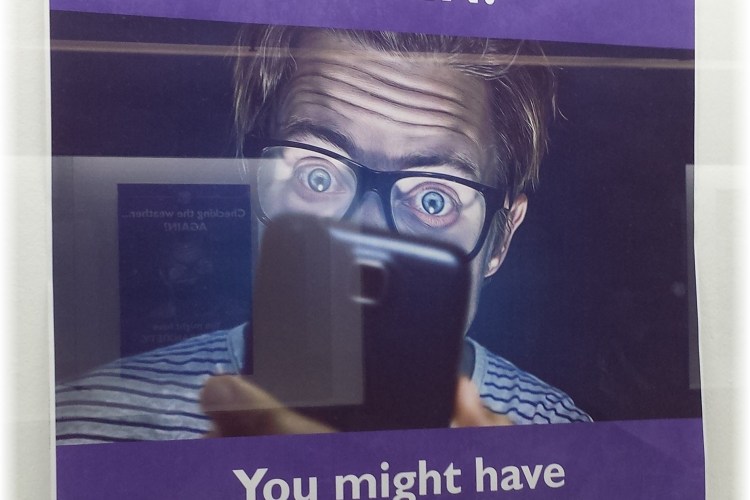
As I read the posters on the Degraves Street subway wall, I wondered if BoMa is fact or fiction.  You see, I may have hot weather meteoranxiety.  Then I discovered that Perth-based multimedia artists Olivia Tartaglia and Alex Tate ran their ‘public wellness program trial’ at Blindside Gallery, Melbourne––so possibly both fact and fiction.

Incorporating clever posters and cutting-edge technologies including a virtual forest, an immersive storm simulation and an AI counsellor named Gail (developed by Howard Melbyczuk), BoMa offered its meteoranxious clients a means to manage their ‘symptoms’.

The Bureau of Meteoranxiety program ran from 10 - 19 May 2018 at Blindside Gallery as part of Next Wave Festival and unProjects.

Image 04: Olivia Tartaglia and Alex Tate, Bureau of Meteoranxiety (propaganda posters) 2018, A3 posters. Photo credit: Jess Cockerill.

Interviewer Jess Cockerill asks “Are you worried about the weather? Feel like the seasons are out of sync? Fretting about longer summers, strange storms or rising sea levels?  Fear not; the Bureau of Meteoranxiety (or BoMa) may have the appropriate therapy to calm your climate concerns”.  Read on––

Jess Cockerill
How did the Bureau of Meteoranxiety come about?
Alex Tate
Our original idea was definitely set more in the future, where climate change has happened, it’s devastated earth. But as we went through Next Wave’s artist development program, sincerity became more important, particularly present-day sincerity.
Olivia Tartaglia
We were thinking about how we deal with this thing that’s already upon us. You could talk about so many different ways of how it will happen, but we thought it could be more interesting to look at how it is happening right now, and how we’re dealing with that, which, in some respects, is not very well.
JC
I am curious about your choice of terminology: why meteoranxiety, and not ecoanxiety?
OT
Ecoanxiety was a starting point. We were doing a lot of research and we discovered Glenn Albrecht, who is a Western Australian ecophilosopher, and he coined the term meteoranxiety … it just seemed like a more specific definition.

It’s the feeling of being anxious about weird weather, or suddenly-changing weather, due to climate change. Glenn Albrecht talks about it as an anxiety we have but we wouldn’t necessarily know that we’re feeling it. The main point of the work is to make people aware of what they’re feeling, to put a word to the feeling.

AT
The feeling of ecoanxiety is much more closely linked to climate change, whereas with meteoranxiety, even if climate change is real or not, you still feel it. The media will just say ‘weird weather!’ ‘strange weather event!’ ‘record temperatures!’. They avoid saying climate change, because they don’t want to politically-charge these articles, but they still want to get the clicks.

And of course, it’s a play on the Bureau of Meteorology. People already have that association with bureaucracy and government policy.

JC
What are some instances where you have felt meteoranxiety?
AT
I see it in the day-to-day. You see bananas on special because there’s a bumper crop, because of unusual weather. We just moved into a new place and watched the tree at the park shed its leaves three months early.

I think we’re hypersensitive to it now we’ve done this project. We were looking for articles and research to source material, so I kinda see it in everything.

JC
To what extent do you feel growing up in Western Australia has informed this work?
OT
I always would go down south WA, once a year or even more, and I think that’s why we featured the Boranup Karri Forest in the Virtual Reality, because it’s so beautiful. We both love it there and have such a connection to that space; we want people to experience it.
AT
In Western Australia we have the Fremantle Doctor, and all these other features in our weather, that it was a given they’d be a part of BoMa.1 And in the southwest of WA, there’s so many unique plants and animals that rely on consistency, and exist because of it, that are at risk due to the weather.

We live on that point of the earth where we feel it. It will hit us closer to home sooner than other states, except probably the Northern Territory. When we get a 40°c day in autumn, I notice it, other people notice it.

OT
It’s everywhere! On the news, social media, you talk about it to like five people you see, you can’t escape it.
JC
Having created this work, what do you think: do we need to just accept these changes and adapt? Or should we still be pushing against it?
OT
Of course we need to stop climate change but I also don’t think that’s going to happen. I think people are just going to try again and again to adapt.
AT
The heavy use of technology in the work is a way of bringing up the common notion that technology will save us, that we can just use technology to solve the problem. It’s kind of a really sad waiting game, where something really terrible seems to have to happen before the government will do anything. And there’s an anxiety in that. But even once that happens, maybe it’ll be passed off as just an anomaly, just weird weather. Or even just a condition we can manage using technology.

But I really hope that BoMa serves as a starting point for people thinking about the real world … if the Bureau of Meteoranxiety fails in one aspect – which it will, because these therapies are not real – and they don’t feel that it meets their requirements, then maybe they can relate it to our real government not meeting their needs, and see the connection there.

Interview by Jess Cockerill

Image 06: as above.

Image: Olivia Tartaglia and Alex Tate, Bureau of Meteoranxiety 2018, multimedia. Photo credit: Michael Tartaglia.


  1. The ‘Fremantle Doctor’ is local Western Australian slang for the cool afternoon sea breeze that occurs during summer in the south-west of the state.
  2. Read the full BoMa article with images and credits here
  3. Review by Hannah Francis of The Age newspaper.
  4. Quote “Perhaps a future treatment for Facebookfomophobia” GBW.

Gretchen Bernet-Ward

Look Where I Live

Here’s a map of Queensland and video of Brisbane City which makes me think I live in a pretty good place.  Nomad Girl of The Jasmine Edit films short, interesting videos around the world.  She makes it look like fun; maybe I could make a video, too?

Queensland Map

Oops, just noticed a spelling error near the Great Barrier Reef.

If you are interested in early Queensland architecture from Victorian, Federation and inter-war era, please click here to view Wikipedia Queensland Architecture

Queensland Home

Gretchen Bernet-Ward

I Agree with Herbert

H G Wells House Plaque
Plaque by the H. G. Wells Society at Chiltern Court, Baker Street in the City of Westminster, London, where Wells lived between 1930 and 1936.

“No compulsion in the world is stronger than the urge to edit someone else’s document” said Herbert George Wells, and I know the feels––Herbert is better recognised as H. G. Wells, an exceptional English author, satirist and biographer (21 Sept 1866 – 13 Aug 1946) who famously wrote The Invisible ManWar of the Worlds and The Time Machine.

I can understand how the fingers of Mr Wells must have itched, his brain must have misfired and his breath must have been shallow as he read a paragraph which badly needed editing.  Indeed, I often wonder how some books (or e-books) get into print when it is glaringly obvious they need a bit of trimming and correction.

Just recently I read an e-book with blurb announcing an award, author kudos and high sales.  Undeserved as far as I’m concerned.  Why?  The author had no idea of descriptive body language.  The best he could do was “He frowned”, “She frowned”, and for variety “He scowled”, “She scowled” until I deleted the book at “She wrinkled her brow”.

How did this get loose and launched on the general reading public?  I’m sure Rule 101 is “If in doubt, substitute ‘said’ and let the dialogue do the work”.  Don’t repeat yourself.  Unpublished as I am, I guess the writer can sneer and say “Well, I got the pay cheque and you didn’t” but I can retort with “Have some integrity.”  Or go back to writing classes.

It’s easy to think “Not all publishing houses are that blind” but, oh, many are.  If you haven’t read a book with an error, you haven’t read enough books.  Pathetically, hardly a week goes by without my subconscious editing a typo or tidying a sentence.  I will never know how efficient I am, whether I am always right, but, man, it makes me feel better!

Gretchen Bernet-Ward

Proofreading Copy Editing Banner
Proof-reading is the first step, make it count…

North Wales Folk Tales for Children

For anyone, young or old, who know dragons do exist and not just in their dreams…

theopinionatedreaderblog's avatarThe Opinionated Reader

31297500Title: North Wales Folk Tales For Children

Writer: Fiona Collins

Publishing House: The History Press

Date of Publication: May 2nd 2016

Rating: 4 stars

”…under the stone, two dragons are curled up, fast asleep. All day, they sleep, but at night they wake, and then they fight. Their battle destroys your tower each night.”

Wales, lovely, mysterious, mythical Wales… A land of heroes and gods, a place where myth and history walk hand-in-hand only to be lost in times unrecorded, misty and shadowy. This beautiful little book is dedicated to the Northern part of Cymru, home to the legendary area of Snowdonia and Ynys Môn and to three World Heritage sites.

Σχετική εικόνα

(Porth Dafarch Cove, Anglesey)

Known once as the Kingdom of Gwynedd, North Wales has an endless wealth of traditions and folklore. We will meet a giant and a giantess who fight over a hammer. A clever boy named Gareth (…Wales…

View original post 204 more words

Three Things #1

Paula Bardell-Hedley WP Book BloggerOne post with three headings READING, LOOKING, THINKING an idea started by Book Jotter, innovative blogger Paula Bardell-Hedley.  Her invitation to participate offers a slight change from ‘Thinking’ to ‘Doing’ if that suits your purpose but I’m sticking with the first format.  Also, I am restricting myself to around 200 wordcount per heading.  I can love, like or loathe in three short bursts!
READING:  Let’s not pretend we always read high calibre books like Booker Prize winners and heady non-fiction tomes, most people like a bit of lowbrow stuff to pass the time without stretching the brain too much.

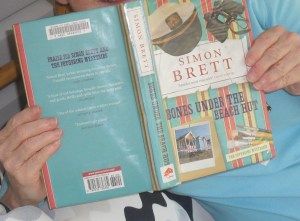
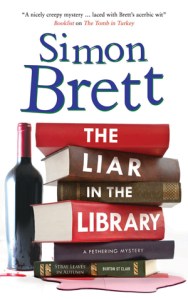
This is why I love reading ebooks on my iPad, so accessible via OverDrive, and so many back numbers that it’s easy to binge on a writer’s complete oeuvre.  At the moment my guilty pleasure, no, rephrase that, my escapism is prolific British author Simon Brett and his Fethering Mysteries series.  A cross between Agatha Raisin, Miss Marple and cosy crime books featuring ‘mature’ women, Brett has created retiree Carole Seddon and her neighbour Jude, a healer, who live in an English seaside village which thrives on gossip and, you guessed it, murder.  Amateur sleuths Carole and Jude manage to solve crimes without external help, e.g. police, by persistence and sheer nosiness.  Exploits often revolve around fragmented marital relationships.  The first book I read was “Bones Under The Beach Hut”, coincidentally while I was on a beach holiday, and have enjoyed the consistency of the characters ever since, although some plots are more gripping than others.  Apart from Fethering series, Simon Brett has also written the Charles Paris, Mrs Pargeter, and Blotto & Twinks series of crime novels.  GBW.

SDC14741

Simon Brett British Author 02


LOOKING:
  My movie review of the HBO television version of Liane Moriarty’s “Big Little Lies” could be filled with vitriol but I’ll rein it in.

How did it go so wrong?  Why base the story on a best-selling book if you aren’t even going to try to recreate the ambience?  I was one of the first to read and review the novel “Big Little Lies” by Liane Moriarty (before I became a blogger) and I knew it was a winner.  Modern, edgy, clever, the plot was enhanced by social media comments from witnesses, police, etc, which obviously didn’t translate to the screen.  In the turgid, overblown DVD 3-disc version, which thankfully I borrowed free from the library, the school-obsessed mothers were rich, pampered, spoilt like their children and their husbands were just as bad.  I could not relate, nor feel any sympathy for the movie characters although they were portrayed by big-name actors.  I can’t even begin to write about the weak build up and even weaker ending.  Moriarty’s name does not get credited on the DVD case and the words ‘based on’ is unreasonable.  In my view, the book is brilliant and regrettably I think anybody who has seen the HBO depiction will have a tainted view of the genuine meaning.  GBW.

Big Little Lies    IMG_20180613_221536


THINKING:
  Dog eats possum in suburban backyard.  No, not a newspaper headline, something which happened in my quiet, sober suburban street two days ago.

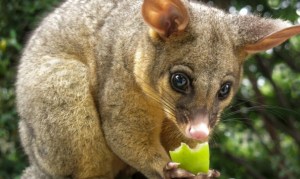
For a start, there are three dogs which is against Council bylaws and one of them has just birthed ‘accidental’ puppies.  They are territorial so they bark at anything that moves, people walking, kids on bikes, and possums.  Possums are a fact of life in my suburb, we have possum-proofed our house.  On a moonlit night they will pound across the roof, jumping from tree to tree, house to house in search of food.  I won’t go into the habits of possums, the main thought I can’t get out of my head is my neighbour calmly telling me the mother dog caught and ate a possum.  Horribly, I had heard the commotion, the desperate squealing, so my fears were confirmed.  The said neighbour let this happen because it was ‘good nourishment’ for the lactating dog.  Suburban possums are full of parasites, the least of which is worms.  That dog has now given those worms to her puppies.  I’m not squeamish, I understand how the animal world survives but that’s in the countryside, not a suburban block where owners need to conform and dogs need to be domesticated.  GBW.

Possums New Nature by Tim Low


Brushtail possum eating apple


POSTSCRIPT:  Every Saturday I change my Home page Photo Of The Week.
Join in with your Three Things
––for more information here’s the link:
https://bookjotter.com/category/three-things/

Gretchen Bernet-Ward

Henry Lawson’s Birthday Tribute

Henry Lawson Photograph 1902
Henry Lawson 1902

It’s Henry Lawson’s birthday today.  Writer, poet and balladist, Henry Archibald Hertzberg Lawson (17 June 1867–2 Sept 1922) redefined and immortalised early Australian life despite suffering many hardships including deafness.  Along with his contemporary Andrew ‘Banjo’ Paterson, Henry Lawson is among the best-known Australian bush poets and fiction writers of the Colonial period.  He was the son of the poet, publisher and feminist Louisa Lawson.


Henry Lawson Bush Poem

Read the full version of this ballad on Australian Poetry Library website.


Henry Lawson Poetry Book
‘While the Billy Boils’ is a collection of short stories in prose and verse by iconic Australian writer Henry Lawson, published by Angus and Robertson in 1896.  It includes ‘The Drover’s Wife’, ‘On the Edge of a Plain’ and ‘The Union Buries Its Dead’.

Quote: “Old Mathews drank to drown sorrow, which is the strongest swimmer in the world.”  The Ridiculous Family, from ‘Triangles of Life and Other Stories’ (1913)

Gretchen Bernet-Ward