Love Food Hate Waste Campaign

Brisbane Queensland Australia 05
Brisbane Queensland Australia

Maybe it’s because I was brought up by post-war parents that I am shocked at the staggering amount of food waste in Brisbane.  I could not understand why our local Government has joined the world-wide campaign Love Food Hate Waste.  Surely you only buy, cook and eat what you need and freeze leftovers?

Apparently for millions of households, it’s not that simple!

The Council brochure states “Love Food Hate Waste was launched in 2007 by Waste and Resources Action Program (WRAP) in the United Kingdom followed by New Zealand, Canada and Australia.  With food waste making up 37% of the average Brisbane rubbish bin, 1 in 5 shopping bags of food ends up in the bin.  That’s 97,000 tonnes of food thrown away every year.   There are simple and practical changes which residents can make in the kitchen to reduce food waste; planning, preparation and storage of food will make a big difference to your wallet and keep Brisbane clean, green and sustainable.”

Scramble over the mat, don’t trip on the dog, here’s a tasty listicle of Council wisdom prepared earlier:

  • Plan meals ahead – create a meal plan based on what is already in your fridge, freezer and pantry.
  • Shop mindfully – stick to your shopping list!
  • Store food correctly – Learn how to store food to ensure it lasts as long as possible and check your refrigerator is functioning at maximum efficiency.
  • Cook with care – Without controlling portions, we tend to waste food when we prepare or cook too much.  Remember fruit and vegetables ripen quickly and are best consumed daily.
  • Love your leftovers – Freeze leftovers to use for lunches, keep for snacks, or add to another main meal.
  • Consider composting – Turn your kitchen scraps into rich nutrients for your garden, get a Bokashi bucket, consider owning pets like chickens or guinea pigs.
  • Join a community garden – Composting hubs operate in selected community gardens.
  • Six-week food waste challenge – Every week the Council will provide step-by-step information on how you can reduce food waste in your home.  Seriously.

Bokashi Bucket Diagram 01

We are over-stocked, over-fed and over-indulgent of our taste buds.  Or as my dear mother would say “Your eyes are bigger than your stomach.”

Gretchen Bernet-Ward

Love Food Hate Waste BCC Campaign

Wishes – A Gloomy Quotation

Scottish Castle Dunnottar on Aberdeenshire Coastline 11
“When You Wish Upon a Star” originally sung by Cliff Edwards as Disney’s character Jiminy Cricket in “Pinocchio”

THIS GLOOMY LITTLE QUOTATION WAS AT THE BOTTOM OF MY COMPUTER SCREEN ON JANUARY 2018 COURTESY OF FIREFOX:

“The nearest star is 4.25 light-years from Earth which is why most wishes take at least 9 years to come true.”

IT WON’T STOP ME!

Gretchen Bernet-Ward

Why, Sue Grafton, Why?

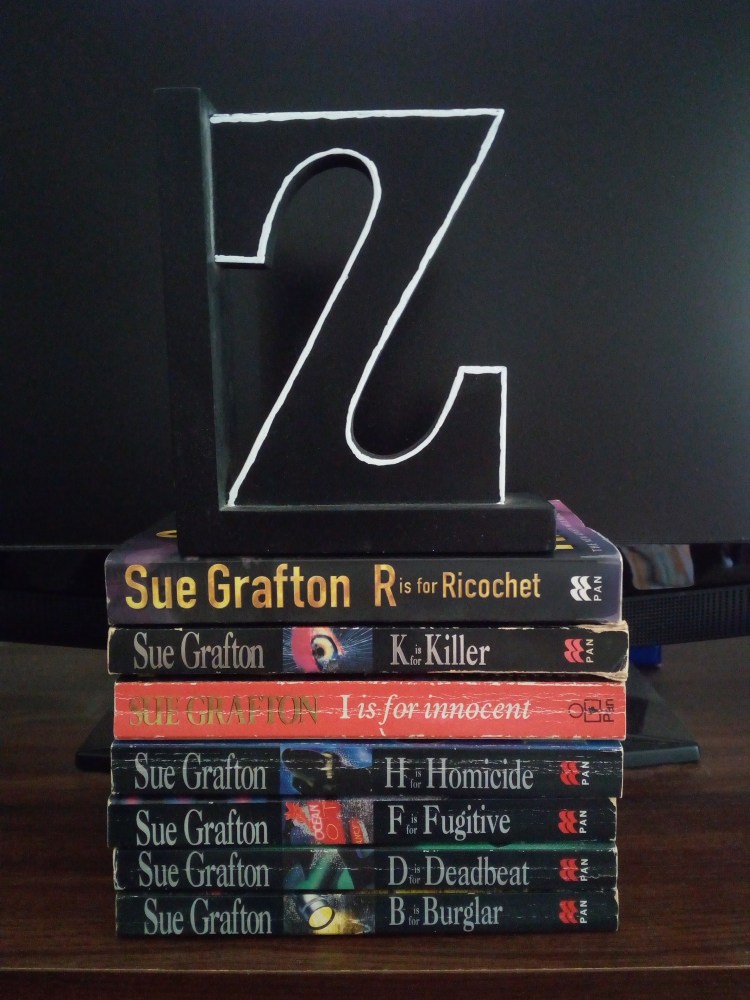
Sue Grafton Bookstack

American author Sue Grafton passed away in Santa Barbara on 28 December 2017 after a two-year battle with cancer.  On hearing the sad news, millions of readers, writers and fans must have screamed “Noooo” and fallen to the ground, arms raised to the sky, wailing “Why, Sue Grafton, why?”  Well, at least I did, and that’s no lie.

Famous for her 25-book Alphabet crime series, Sue Grafton’s last Kinsey Millhone book Z will remain unwritten.  To quote her family “The alphabet stops at Y” and this has been echoed around the world.

Sue Grafton brought me back into crime reading and showed me the joys of a good detective novel.  I was floundering in a bad ten years of my life where I’d lost my father and was struggling with the care of my ailing mother while battling my own ill-health when, quite out of the blue, I was given a second-hand paperback of Grafton’s book “K is for Killer”.

PI Kinsey Millhone walked into my life.  Grafton’s detective series listed below – “H is for Homicide”, “N is for Noose”, “V is for Vengeance” and so on – transported me into a place I understood, 1980s an era I knew, yet detailed the life of a woman in a job which was so foreign, so far removed from my own experiences that I was immediately entranced.  Or as my father would have said “Caught, hook, line and sinker.”

This fortuitous state of affairs meant I had many books to read before I was up-to-date with the current publications.  Here I would like to thank my cousin Laurie who willingly sent me several paperbacks to feed my addiction.  So I read one and moved straight onto the next, graduating from that first battered paperback to hardcovers and finally e-book editions.

The major characters are unchanging; Kinsey is a private detective in California who joined the police force then left to acquire her detective licence; landlord Henry Pitts is now forever in his kitchen; gregarious Rosie; love interest Cheney Phillips and Robert Dietz.  It was fascinating watching Kinsey evolve, if that’s the right word, because in all she only advanced a couple of years and is destined to remain immortalised in her thirties.

It seems Sue Grafton did not even draft a copy of her final book.  The old adage “Leave them wanting more” is true but not the case.  Her family is adamant that although Grafton had a working title (prophetically) “Zero”, there will be no final book, no ghost writer, no movie and no happy ending – just a blank space on the bookshelf.

My condolences to her family.  The final chapter has ended for Sue Grafton and Kinsey Millhone RIP.

Gretchen Bernet-Ward

Sue Grafton Alphabet Crime Series Featuring Kinsey Millhone

  1. A is for Alibi (1982)
  2. B Is for Burglar (1985)
  3. C Is for Corpse (1985)
  4. D Is for Deadbeat (1987)
  5. E Is for Evidence (1988)
  6. F Is for Fugitive (1989)
  7. G Is for Gumshoe (1989)
  8. H Is for Homicide (1991)
  9. I Is for Innocent (1992)
  10. J Is for Judgement (1993)
  11. K Is for Killer (1994)
  12. L Is for Lawless (1995)
  13. M Is for Malice (1996)
  14. N Is for Noose (1998)
  15. O Is for Outlaw (1999)
  16. P Is for Peril (2001)
  17. Q Is for Quarry (2002)
  18. R Is for Ricochet (2004)
  19. S Is for Silence (2005)
  20. T Is for Trespass (2007)
  21. U Is for Undertow (2009)
  22. V Is for Vengeance (2011)
  23. W is for Wasted (2013)
  24. X (2015)
  25. Y is for Yesterday (2017)

‘Kitty Peck Music Hall Murder Mysteries’ Kate Griffin Book Review

London winter 1880, Limehouse, and chorus girls are disappearing from music halls in Paradise, the criminal precinct run with ruthless efficiency by the ferocious and opium addicted Lady Ginger aka The Lady.

Kitty Peck and the Music Hall Murders
Published 2013
(First book in the Kitty Peck series)
A novel by Kate Griffin

Seventeen-year-old Kitty Peck, a seamstress at The Gaudy, is summoned by The Lady and blackmailed to perform a hair-raising act every night to uncover vital information about the missing girls.  Kitty is taunted by The Lady who withholds the truth about her family, particularly her beloved brother Joey.  Before long Kitty becomes the talk of London with her daring show and the plan begins to work.  Gradually she’s drawn into the world of high society ‘toffs’ and embroiled in depravity and murder.  With only her two friends Peggy and set painter Lucca for support, Kitty is shocked to find herself facing an adversary more horrifying than The Lady crime baron.

First of all, the pace and atmosphere is superb throughout the books.  Immediately I was right in the action and swept along on a very dark ride.  The characters evolve nicely and flesh out into interesting and tortured human beings who find themselves in rather bizarre circumstances.  They have subplots with much to hide, emotions seesaw as their personal history gradually unfolds.

There’s a heavy dose of Cockney slang which, due to an Anglophile father, I picked up quickly enough.  Some reveals are to be expected but one took me by surprise!  The novels have adult content.  However, don’t expect true romance.  It’s the Queen Victoria version of an action movie.  Grim, grimy, cold, damp London of the 19th century is a backdrop to dirty deeds done by black-hearted people and Kitty must keep her wits about her to survive.  The endings are cliff-hangers which lead into each book.

Kitty Peck and the Child of Ill-Fortune
Published 2015
(Second book in the Kitty Peck series)
A novel by Kate Griffin

Due to spoilers, I cannot reveal too much about Book Two or Three.  Certain text in the following review has been taken from the book blurb:

London’s East End, March 1881 and Kitty Peck, a spirited but vulnerable young woman, is the reluctant heiress to Paradise, the criminal empire previously overseen by the formidable Lady Ginger aka The Lady.  Kitty is now The Lady, with all that entails; servants, buildings, stock, music halls and vicious crime barons.  Far from the colour and camaraderie of the music hall where Kitty had been working, this newfound power brings isolation and uncertainty, and a disdainful lawyer Telferman.

Desperate to reconnect with Joey, her estranged brother, Kitty travels to Paris with Lucca.  She is unable to refuse the request of a handsome stranger to take a child back to London.  Within days of their return, it’s clear she has been followed by someone, and this someone is determined to kill the child and anyone who stands in their way…starting with Kitty.

There are mesmerizing and harrowing scenes throughout this book which serve to shape Kitty and her world.  More of the secondary characters emerge and betrayal rears its ugly head.  Tension builds as Kitty nears the deadline to meet the other Barons of London, merchants, jewellers, bankers, the controlling elite who are rotten to the core. Will they break her and destroy the Paradise she has inherited?

Kitty Peck and the Daughter of Sorrow
Published 2017
(Third book in the Kitty Peck series)
A novel by Kate Griffin

London, the hot summer of 1881, and the streets of Limehouse are thick with coal smoke and opium; and Kitty Peck is choking on the ever-present bitterness of evil.  At eighteen Kitty has inherited Paradise, she is The Lady of a sprawling criminal empire on the banks of the Thames.  Determined to do things differently from the fearsome Lady Ginger, she now realises that the past casts a menacing and treacherous shadow.

Plagued by city heat, haunted by a terrible secret and facing more deaths, Kitty is stalked by a criminal league intent on humiliation and destruction; she should never go out alone.  But she’s ready to fight for the future of everyone she cares for and more.  Including journalist Sam Collins?

Always difficult to review books with clever twists and turns one cannot expose.  ‘Descriptive’ and ‘gripping’ hardly does them justice.  Sense of place, POV and clothing are beautifully transcribed.  There is one minor point I noticed when reading––there is little mention of food.  Tea and gin are drunk habitually, and champagne is used as a lever, but food is not often consumed.  No matter, they are gritty stories which had me on the edge of my seat.  While it is not an era I would like to inhabit, I can highly recommend this series with a shiny five star rating.

To be concluded in Book Four – Kitty Peck and the Parliament of Shadows – Coming July 2019

“Even though Paradise was riddled with rot, I reckoned I could make it a cleaner place for the poor types who came with the dirty trades. I could make them all love me, I thought.  I was wrong about that. I’ve been wrong about so much.”  My book review to be advised.

ABOUT THE AUTHOR
Kate Griffin was born within the sound of Bow bells, making her a true-born Cockney.  She has worked as an assistant to an antiques dealer, a journalist for local newspapers and now works for The Society for the Protection of Ancient Buildings.  “Kitty Peck and the Music Hall Murders”, Kate’s first book, won the Stylist / Faber crime writing competition and she has written other genres.  Kate’s maternal family lived in Victorian Limehouse and her grandmother told her many stories of life around the docks.  Kate lives in St Albans, north of London.

Further reading  Author Kate Griffin is interviewed by Sarah Oliver  a close look at her lifestyle and writing methods.

Gretchen Bernet-Ward

Goodbye to Facebook Again

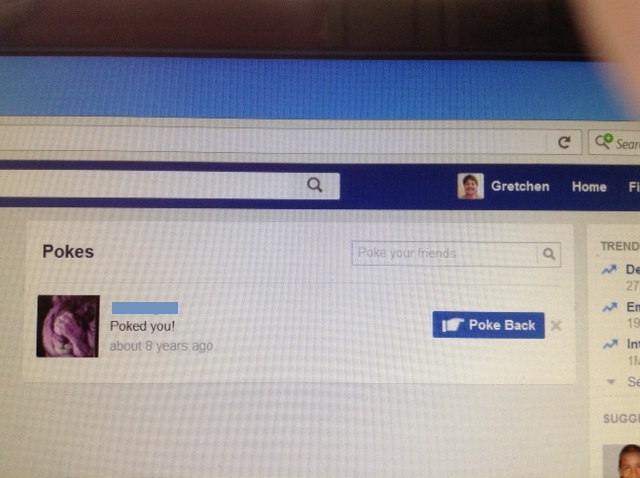
Facebook Poke 02

After taking one year off to immerse myself in the art of writing, my time is up.

New Year’s resolution: I will no longer be posting regularly on Facebook because it is the most all-consuming part of my day and ultimately hollow.  Eight years ago I dropped out, as evidenced by the snapshot of this unanswered Poke.  Author Jen Storer of Girl & Duck, The Duck Pond and Scribbles creative groups can be pleased she was the one who drew me back into social media to nurture my writing dream – you light up my life – thank you.

My unFacebooking is not due in any way to the calibre and overall enjoyment of the wonderful ‘friends’ I made, I will miss virtually following your daily journeys in writing and illustration.  Conversely, we all are living two lives, the one on Facebook and the real one.

My departure is due to the links, Likes, highlights, comments, feeds, Facebook layout and general entanglements with people whom I do not know on a real level.  It may feel personal but it is not; and I need to grasp reality, my home, my family and my proper writing.

A visit from a little red hen named Took got me back out into our overgrown garden and I realised the computer screen is destroying my creativity rather than enhancing it.

My WordPress blog will continue https://thoughtsbecomewords.com/

“Year’s end is neither an end nor a beginning but a going on, with all the wisdom that experience can instil in us” – Hal Borland, American author.

Happy New Year 2018, everyone, and much fulfillment!

Gretchen Bernet-Ward


Postscript
: According to the 2017 Deloitte Media Consumer Survey, daily social media usage in Australia is down from 61 percent to 59 percent in 2017, and 20 percent of Australian social media users say they are no longer enjoying their time on the platforms.  Likewise, almost one third (31 percent) of survey respondents said they have temporarily or permanently deactivated one or more of their social media accounts in the past year.  Fake news is killing the media star with 58 percent of respondents agreeing that they have changed the way they access online content given the prevalence of fake news.  So, folks, I am not alone!

Proof-reading Style Errors

IMG_20171225_204232
Breaking the proof-reading rules?

The style guide reads: Below are errors in style due to inappropriate or poor choices of language which can lead to boring, imprecise and inaccurate writing. In some situations, they may be relevant and suitable, but they are usually best avoided––

  • Clichés, over-used phrases, e.g. bed of roses, pretty as a picture.
  • Vogue words and trendy expressions, e.g. proactive, meaningful dialogue.
  • Colloquialisms in formal writing.
  • Parochialism in documents intended for a wide audience.
  • Jargon in documents intended for a general audience.
  • Euphemisms, e.g. pass away, upwardly mobile.
  • Overstatements, e.g. fabulous, incredible, fantastic, amazing.
  • Archaic words, e.g. herewith, thereby, hereinafter.
  • Sexist terms, e.g. man-made, nurseryman, waitress.
  • Tautologies, e.g. totally unique, completely empty.
  • Ambiguity, e.g. maybe I would if I could.
  • Unnecessary use of foreign words and phrases.

This information was retrieved from my older Word.doc files with no acknowledgements attached.  As a touch of humour, I wrote the short profile of Aunt Belinda.  I can only suppose such formal advice is for non-fiction writers.

Gretchen Bernet-Ward

Australian Editors and Publishers Set Bar Too High

I have come to the conclusion that the Australian publishing industry and its associated editors and reviewers have set the bar way too high for Australian writers.  Emerging authors have a pretty slim chance of being published with huge odds against hitting the big time.

Strong-willed literature-controlling gurus rule our domestic market like school teachers from the 1950s.  They seek perfection, the best book of the year, often cerebral stuff ignored by half the population, and they disregard perfectly serviceable down-to-earth Aussie authors.  Also, when did parochialism creep in, e.g. Melbourne is the hub of all things literary?  Let’s focus on inclusive Australian content.  Oh, and stop changing words to suit international readers, they’re cool, they can work it out.

Publishing houses receive thousands of unsolicited manuscripts each year and the selection process is fierce.  Only a handful of authors are chosen, gather a following, write more books and hopefully make money.  The untried crime writer, for example, may not appeal to the literati judges, but, hey, there’s always that coterie of readers who will love them.  The way it is now, their work may never see the light of day.  Dive deep into that slush pile!

Book Publishing 04
Sure, there’s always the internet, WordPress, e-books, self-publishing, writing competitions (see below) and a gazillion non-traditional ways to be seen but nirvana is a publishing deal with a real-deal publishing house.


“Relax,” I say to publishers from my seat of ignorance.  “The shock of ebooks has faded, so forget micro-niche and churn out those books, get those names in print.”  What?  Too much of a risk, not financially viable?  Yeah, I guess that’s right.  Nobody wants risk in business.  I say “Lighten up, people, offer a broader spectrum of books to the general public”.  Stop book snobbery because, meanwhile, mediocre books with typos are flooding in from overseas and I’m getting a bit sick of it.

Did I hear our aspiring authors cannot compete with the overseas calibre?  Our readers are not savvy, interested or sincere enough to try a reasonably good newbie?  Come off it!  Peel back those layers.  An Australian author or reader is as good as the next person but needs the exposure, the push, the shove, the necessary connections and circumstances to make it work.

Chips on shoulders, the need to prove we Australians are well-read, has past. Forget the Cultural Cringe, dismiss ‘benchmark’ literary awards and too perfect prose and embrace the mass production of typically Australian-written and illustrated books and be proud of them.

Gretchen Bernet-Ward

FURTHER READING:  https://journals.uic.edu/ojs/index.php/fm/article/view/3353/3030  with quote taken from “Non-Traditional Book Publishing” by Jana Bradley, Bruce Fulton,  Marlene Helm, Katherine A Pittner in “First Monday” Journal and, although somewhat passé, it shows foresight.  EVEN FURTHER READING:  https://www.theliftedbrow.com/liftedbrow/2017/11/22/keep-your-eyes-on-the-prize-unpublished-manuscript-competitions-and-you  The Lifted Brow is a not-for-profit literary publishing organisation based in Melbourne, Australia, and Martin Shaw’s article explains an awful lot about the hidden terms and conditions of competition entry.

{NB. Gretchen has reviewed books, worked in the library industry and reads extensively.  As an aspiring writer, she may have shot herself in the foot}

Am I Sharing With The World Or Just Getting Stuff Out Of My Head?

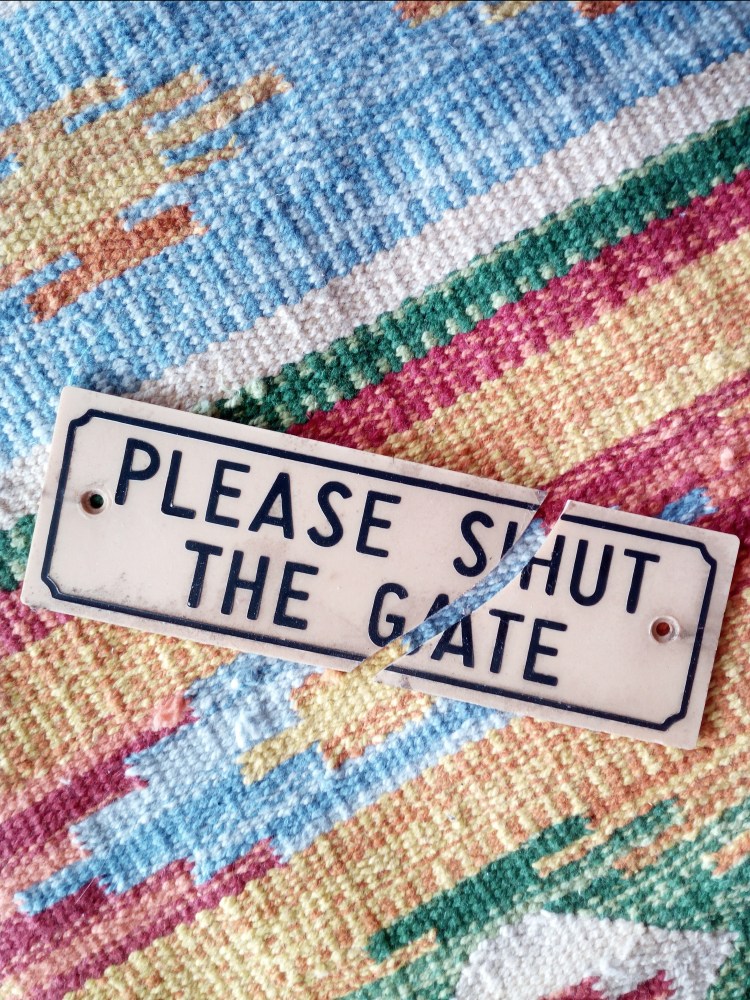
Please Shut The Gate Sign

Writers need to write but do readers need to read?

From early on I made the decision not to Like a post unless I had read it.  As you can guess, its hard to do.  Every day millions of posts circulate around the world on countless blogging platforms and social media sites to such an extent that most of them will NEVER be read.  At least, not fully.  I think I am pretty safe in saying that.  We are doing the modern equivalent of shutting the gate after the horse has bolted.

Which brings me to the heading of my post.  I will answer my own question.  It is preferable to get things out of your head and onto a page for personal satisfaction rather than thinking you are making a useful contribution to the world.  Plenty of specialists are making useful contributions but I guarantee they are writing to a niche audience, not the world.

Another decision (note I use the word ‘decision’ because we are given choices then have to make one decision) I made is not to seek Likes and Followers and not to maintain a prolific output to pursue a high profile.  I have not activated my Comments because the majority of blogging sites appear not to have worthwhile comments or replies and, if they do, the bulk of them are from fans bordering on sycophant behaviour.

I’m not a tortured genius nor do I have a singular agenda so I am way down the favourites listicle.  I am happy doing my own thing and don’t pine for kindly Likes.  However, I am very grateful for those Likes and Followers I do have because I feel confident they have actually read my blog posts.  You can tell by my Home page that I am not going to stick to a theme, although I do have Photo Of The Week and I’m loosely hung up on the importance of literacy.

Why did I write this post?  I will probably feel differently tomorrow but today I wanted to get it out of my head.

Gretchen Bernet-Ward

Silent Reading and Socio-Cultural Development

Reading Readers 04

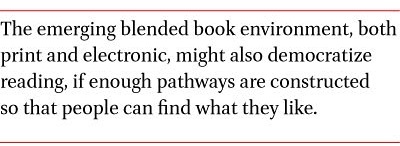
Among scholars, says Thu-Huong Ha, there is a surprisingly fierce debate around when European society transitioned from mostly reading aloud to mostly reading silently.  Thu’s latest article for Quartzy shines a light on the evolution of reading silently––

Finding Space
“The beginning of silent reading changed Westerners’ interior life”
By Thu-Huong Ha
Tuesday 19 November 2017

People think of reading as the introvert’s hobby: A quiet activity for a person who likes quiet, save for the voices in their head.  But in the 5,000 or so years humans have been writing, reading as we conceive it, an asocial solo activity with a book, is a relatively new form of leisure.

For centuries, Europeans who could read did so aloud.  The ancient Greeks read their texts aloud.  So did the monks of Europe’s dark ages.  But by the 17th century, reading society in Europe had changed drastically.  Text technologies, like moveable type, and the rise of vernacular writing helped usher in the practice we cherish today: taking in words without saying them aloud, letting them build a world in our heads.

Among scholars, there is a surprisingly fierce debate around when European society transitioned from mostly reading aloud to mostly reading silently—some even say the ancients read silently just as much as they read aloud—but there is one scene in literature they agree is crucial.  In St. Augustine’s Confessions, the titular professor describes the reading habits of Ambrose, the bishop of Milan:

“But when Ambrose used to read, his eyes were drawn through the pages, while his heart searched for its meaning; however, his voice and tongue were quiet. Often when we were present—for anyone could approach him and it was not his habit that visitors be announced to him—we saw him reading in this fashion, silently and never otherwise.”

The fact that this was so remarkable to Augustine, some scholars argue, is because in the 400s, silent reading wasn’t really a thing.

Other researchers say that this passage is meant more to point out Ambrose’s rudeness.  “It’s really that Ambrose would go on reading silently while he was there, like someone going on texting while you’re trying to talk to them,” says D. Vance Smith, a medievalist in the Princeton English department.  “[Augustine is] surprised by his rudeness at not reading out loud to share with him.”

Reading Readers 05

“The default assumption in the classic period, if you were reading around other people, you’d read aloud and share it,” says Smith. “For us, the default is we’ll read silently and keep it to ourselves.”

If silent reading was in fact rare or rude in ancient times, then at some point the expectation of readers in society shifted.  As late as the 1700s, historian Robert Darnton writes, “For the common people in early modern Europe, reading was a social activity.  It took place in workshops, barns, and taverns.  It was almost always oral but not necessarily edifying.”

But by the time Marcel Proust was writing in the late 1800s, his narrator hoping for time to read and think alone in his bed, reading privately had become more of a norm for wealthy, educated people who could afford books and idle bedroom rumination.

This came with the spreading of literacy and diverse kinds of reading material.  Writes Darnton, records from until as late as 1750 showed that people who could read had only a few books: perhaps the Bible, an almanac, and some devotionals, that they read and re-read. But by 1800, he writes, people were reading more voraciously—newspapers and periodicals—and by the late century they had branched out into children’s literature and novels.

Reading Guy 06

As reading shifted away from the social, some researchers believe this helped create what we now call an interior life.

Writes Alberto Manguel in his 1996 book, A History of Reading:

“But with silent reading the reader was at last able to establish an unrestricted relationship with the book and the words.  The words no longer needed to occupy the time required to pronounce them.  They could exist in interior space, rushing on or barely begun, fully deciphered or only half-said, while the reader’s thoughts inspected them at leisure, drawing new notions from them, allowing comparisons from memory or from other books left open for simultaneous perusal.  And the text itself, protected from outsiders by its covers, became the reader’s own possession, the reader’s intimate knowledge, whether in the busy scriptorium, the market-place or the home.”

“Psychologically, silent reading emboldened the reader because it placed the source of his curiosity completely under personal control,” librarian Paul Saenger writes in his 1997 book, Space between Words.  “In the still largely oral world of the ninth century, if one’s intellectual speculations were heretical, they were subject to peer correction and control at every moment, from their formulation and publication to their aural reception by the reader.”  As Saenger writes, asocial reading helped facilitate intellectual rigor, introspection, criticism of the government and religion, even irony and cynicism that would have been awkward to read aloud.

This strange new trend of reading to oneself naturally had its detractors.  Sceptics thought silent reading attracted day-dreamers and the “sin of idleness,” as Manguel writes.  And worse: it let people learn and reflect without religious guidance or censure.  Silent reading by the late 19th century was so popular that people worried that women in particular, reading alone in bed, were prone to sexy, dangerous thoughts.
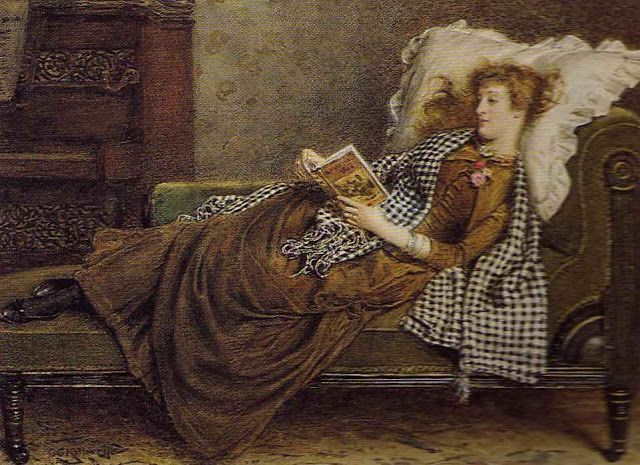
Reading Girl 57

There isn’t much consensus between historians on why people would have started reading silently.  Saenger hypothesizes that a shift in the way words were laid out a page facilitated the change.  Latin words once ran all together, makingithardtoparsethem. Saenger argues that Irish monks, translating Latin in the seventh century, added spaces between words to help them understand the language better.  This key design change, he argues, facilitated the rise in silent reading.

M. B. Parkes, in his 1992 book “Pause and Effect: Punctuation in the West” argues something similar.  He writes that a “grammar of legibility”—the visual changes made to texts, like punctuation and word spaces—changed the way we read.  This early book technology was premised on the idea that the scribes, the people writing, didn’t know who their readers would be, or how fluent they might be in reading Latin, and so had to find a standardised way of telling them how to read: pause here; these are two separate words; this is a long “a.”

This scholarship applies for the most part to the Latin-based writing and reading of Europe.  In other major reading cultures of the world like Chinese, whose script doesn’t have spaces between words, and whose literature depends heavily on prosody, silent reading may have developed differently.

Mainstream historical accounts would have us think that the end of oral reading in the Middle Ages was part of the Renaissance, a new European preoccupation with the individual.  But it’s possible humans’ desire for privacy, the carving out of a little pocket in which to escape by way of a book, was there all along.  We just needed a little help getting there.

Written by Thu-Huong Ha for Quartzy newsletter, a weekly dispatch about living well in the global economy.  Original webpage The Beginning of Silent Reading was also the Beginning of an Interior Life.

Gretchen Bernet-Ward

Feathered Fraudster or Duped Duck

Duck KSSS 02
Duck No: 4938

As I left the local gym, a rat scampered towards me waving a crumpled envelope.

“You’re Bertha East, right?” he squeaked. I started to explain I was Bertha West but he let the envelope flutter to the footpath and raced off. I scooped it up and saw on the back that it was from Duck No. 4938, a nodding acquaintance at the gym. The letter had been scribbled with a quill and Duck No. 4938 explained that she was currently behind bars at Critters Incarcerated. According to her letter, she was blameless of the charges levelled against her, while remaining tight-billed about her true intentions.

I was puzzled until next day the story became public knowledge. This had prompted her lawyer Henny McCluck to state that her client Duck No. 4938 was nowhere near The Duck Pond on the afternoon in question.

Apprehended with a plastic bag of crumbs under her wing, proceedings are currently underway to determine if Duck No. 4938 gobbled all the dry bread crusts before other ducks had a chance to exit the water. The Duck Pond is a popular picnic spot, a prominent sign warns Do Not Feed The Birds, and investigators are urging the child who dropped the bread crusts to come forward.

“My client pleads not guilty and hopes for early release,” said McCluck. She added that the Duckolympic champion held the coveted title of Paddling Fury and should be respected for her sporting prowess. I realised that this would not help her cause. In a photograph released today, Duck No. 4938 appeared rather haunted, her feathers askew. Lawyer McCluck can be seen loitering in the background.

Meanwhile, the letter I received from Duck No. 4938 hinted that she believes lawyer McCluck is pecking through what little grain savings she has left and asks for my support. I decided against sending a 2kg bag of cracked corn to the address she nominated and considered the letter to be some sort of scam.

The arrest had caused a flurry in the catering industry and representatives were standing in readiness to take stomach content samples.

By now social media tweets were going viral, ruffling large flocks of the feathered fraternity with #stuffedduck #duckdiving and #whatsitallaboutduckie.  Television news coverage focused on the issue of slim pickings for underprivileged water birds. Dramatic press headlines read “Feathered Fraudster” and “Dead in the Water” with an inflammatory byline from an angry drake.

“She snatched it right out from under my webbed feet!”

A shiver ran up my spine. The drake has engaged the services of Paulo Dingo, known in legal circles as ‘Hungry’.

Undisclosed sources close to The Duck Pond were striving to gain access to security camera videos which could prove Duck No. 4938 was not in the vicinity of the water’s edge at the time of the incident.

“Video footage won’t prove a thing,” said ‘Hungry’ Dingo in his scathing report on the inadequacy of the wildlife penal system. “Judge Cassowary wouldn’t know one duck from another,” he howled.

My after-lunch doze was unsettled by thoughts that blackmail and swamp weed may be at the root of the allegations. At the very least Duck No. 4938 may have been duped and become ensnared in a network of fowl crime. But why come to me? Why doesn’t she tell the truth?

The phone rang and I discovered that local Constable Steve Brolga was conducting enquiries. He said he would be undertaking a nest-to-nest search and interviewing anyone who may have seen or heard Duck No. 4938 acting suspiciously in the surrounding area.

“Keep your ears tuned for me, Bertha,” he said.

My ears twitched and I pondered the fact that Duck No. 4938 may have a secret hiding place. Unexpectedly I had the answer. A clutch of ducklings, safely hidden from the likes of ‘Hungry’ Dingo.

A guilty verdict would certainly hinder her parental responsibilities. She had to plan, she needed someone on the outside, someone who lived nearby and could go to the address in the letter. Someone she could trust to protect her family.

I confided my swirling thoughts to young Joey.
“I guess I can help,” I mused, “What’s 2kg of cracked corn anyway?”
He was dubious and thought it may have been a trap. “Or we might be followed.”

But the more we talked, the more I thought about food relief. “Maybe we could scrounge some stale bread rolls from the back of the supermarket?”

This proved to be a difficult task and I scrambled over enough plastic bags and wasted food to last me a lifetime. A couple of crows helped by flicking slices of bread out of a half-opened skip but maintained their image by cawing loudly every time one hit me on the head. Joey laughed until a mouldy slice hit him.

Next day I alerted Constable Brolga and planned to meet him at the location specified by Duck No. 4938. Joey and I set off mid-morning and arrived earlier than intended. I stopped at a rusty wire gate to confirm the address.

“This is it.” The only noise was the rustling of eucalyptus leaves.

Before I could stop him, Joey bounced out with the bulky package and pushed through the gate.
“Let’s blow this case wide open!”
I sighed and shoved the letter back in my pouch.

We hopped up a set of shallow steps to the wooden door of an old shed. Heat radiated from the corrugated iron cladding and we strained to hear any sound of ducklings from within. Flies buzzed around us, the smell was overpowering and Joey wrinkled his nose. I knocked forcefully, rattling the door.

There was scuffling and very slowly and carefully the door slid open. Suddenly we were engulfed in a tide of fluffy yellow pinfeathers and eagerly quacking bills. Joey moved forward as bright little eyes scanned our food parcel.

He held up his paw. “Who wants to be first in line?”

I felt comfortable with our decision. Whatever truths the trial may reveal, the innocent must not suffer.

Gretchen Bernet-Ward