My documentation is office-organised but my writing approach is organic. I will have four or five manuscripts simmering away then one will bubble to the top. That’s The One. I pursue it to the end. Sometimes those left simmering, sink to the bottom. Other times a new thought will be added and not even stirred into the mix, it will shine immediately and have my full attention.
You gotta love what you’re working on, right!
♥Gretchen Bernet-Ward
“Double, double toil and trouble; Fire burn and cauldron bubble”
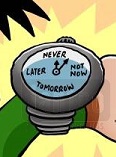
Author Sally Piper’s quotation is a writer’s block-buster: “Procrastination is a defence mechanism. It allows us to avoid the terror of other people reading our work. It protects us from criticism. It keeps us safe from failure” and I would like to add “it stops us from growing” so don’t let procrastination dictate the terms.
Mindfulness blogger David Cain of Raptitude wrote: “It turns out procrastination is not typically a function of laziness, apathy or a lack of work ethic, as it is often assumed to be. It’s a neurotic self-defence behaviour that develops to protect a person’s sense of self-worth.” Don’t put it off, your writing is always better than you think!
Hmm . . . a puzzling book. Good, then it dissolves into vignettes.
It is a book which sometimes comes back to me in flashes. I didn’t love it but I didn’t hate it.
Lucy has an extended stay in hospital. I found the mother-daughter part of the story made me think. We all relate to our own personal experiences and I definitely got twinges when I related my mother’s attitude to Lucy’s mother – although my relationship was different. I didn’t like her father, troubled but not nice.
Much of Lucy’s early family life came out in tiny bits here and there. The trickle affect showed the reader the cruel hardship of her earlier life. Is that why Lucy was estranged? Why was she locked in the old car?
It was interesting how Lucy loved her kind doctor, she got no real love or compassion from her father or her husband. The author Sarah Payne was a great character, I wish she had been fleshed out a bit more. I liked her comment after that cutting PTSD remark “…And anyone who uses their training to put someone down that way – well, that person is just a big old piece of crap.”
After Lucy came out of hospital, the story took on the quality of snapshots as though author Elizabeth Strout saw or heard something and jotted it down then couldn’t quite flesh it out but wanted to use it anyway. There are very human insights but we don’t even know what Lucy wrote in her books.
Lucy’s relationship with her grown-up daughters was rather superficial but I liked the unnerving chapter about her brother, and also when she is bothered by the fact that friend Jeremy may have been the dying AIDS patient she saw in hospital.
The marble statue of Ugolino and His Sons by Jean-Baptiste Carpeaux in the Metropolitan Museum of Art fascinated Lucy but I couldn’t understand why. It’s graphic but to me just shows the agony of imprisonment.
Overall, I guess I’d give this book three out of five stars because I’m not poetic enough to read between the lines!