Elly Griffiths Forensic Archaeology Series
IMG_20180816_162457
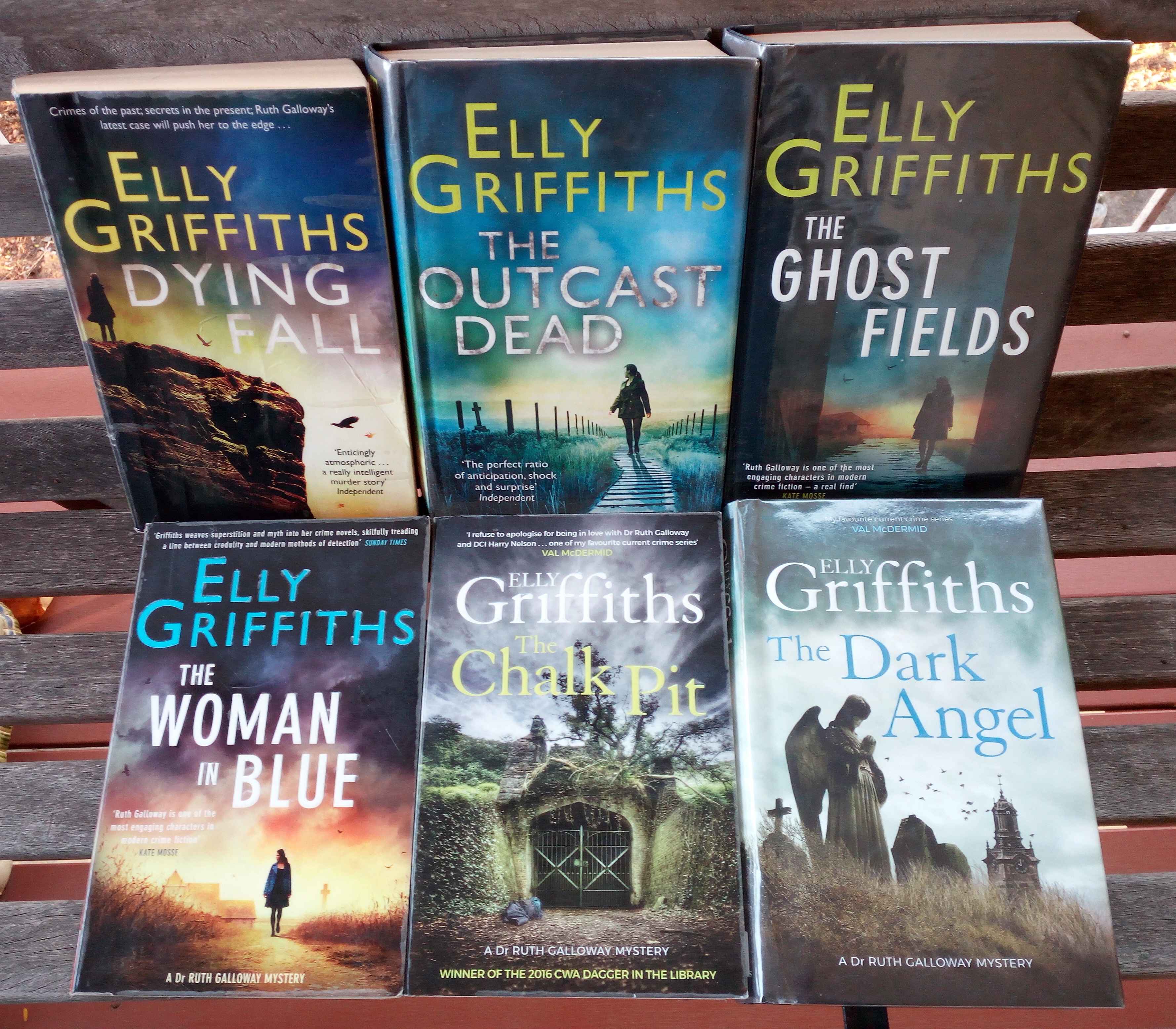
Sample of this 10-book series with book 11 The Stone Circle due 2019.

I love binge-reading!  When I discover a good author like Elly Griffiths who has ten books in her crime oeuvre, I am ready, willing and able to read all.  The archaeologist Dr Ruth Galloway mystery series fits the bill nicely.  To quote the Independent ‘The perfect ratio of anticipation, shock and surprise’.

Elly Griffiths is the pen name of Domenica de Rosa; she has written other novels under her real name.  I like the historical and archaeological authenticity of this series which could be due to the fact that she’s married to Andrew Maxted, curator of archaeology at Brighton Museum.

I enjoyed the earlier books and then the later ones shown above.  I loved ‘The Ghost Fields’ WWII story and found award-winning ‘The Chalk Pit’ quite fascinating.  I struggled with ‘The Outcast Dead’ subject matter although it is fitting.  I must mention the clever yet sneaky outcome of ‘The Dying Fall’ which has a touch of Hollywood about it.

The stories mainly revolve around Norfolk UK, tidal marshlands, excavations (with an occasional nod to ‘Time Team’) coastal regions and fictional University of North Norfolk where Ruth Galloway works.  She is also a police adviser.  The relationships of the key players are intriguingly tricky because of love triangles, children, 21st century parenting, murder and mystical goings-on.

Rather than a book review, I thought I’d do a quick character overview:

  • Dr Ruth Galloway lives on the Saltmarsh, lectures in forensic archeology, makes ground-breaking discoveries, and likes old bones and her cat Flint.
  • Fast-driving policeman DCI Harry Nelson moved with his family from Blackpool to Norfolk and doesn’t really like the place but he’s a born copper.
  • Two glamorous women, Michelle Nelson is wife of DCI Nelson, and Shona MacLean is Ruth’s bestie.
  • Michael Malone (aka Cathbad) brings enjoyable highlights to each plot with his spiritual insights, Druid instincts and flowing cloak.
  • Part of Nelson’s team are police officers DS David Clough ‘old school’ and DS Judy Johnson ‘graduate’ who don’t always share the same views.
  • Phil Trent, professor of archaeology at UNN, worries about funding but loves TV cameras, publicity and himself.

As I dug and sifted through the series, I noticed less archeology and gradual changes to the main characters but that’s the grit which makes these books human and relatable.  There’s drama in their lives; a rocky layer or two over a conspiracy waiting to be uncovered.

Elly Griffiths has a nice knack of getting you up-to-speed with each book while revealing a ‘fresh’ crime involving the living and the desiccated.  At one stage I quibbled over her use of Anglo male names like Max, Dan, Tim, Tom, Ted, Bob, well, you get my drift…but this has improved and the VIP reviews keep on coming:

"I refuse to apologise for being in love with Dr Ruth Galloway and DCI Harry Nelson, one of my favourite current crime series . . . a pleasure from start to finish"
Val McDermid.

"I adore the Elly Griffiths series and have eagerly read each book. I love seeing how the recurring characters are living and working out their relationships"
Joyce of joycesmysteryandfictionbookreviews

I’m waiting for book No.11 ‘The Stone Circle’ but don’t you hang around, start reading!

Gretchen Bernet-Ward


—NEWS FLASH NEW BOOKS—
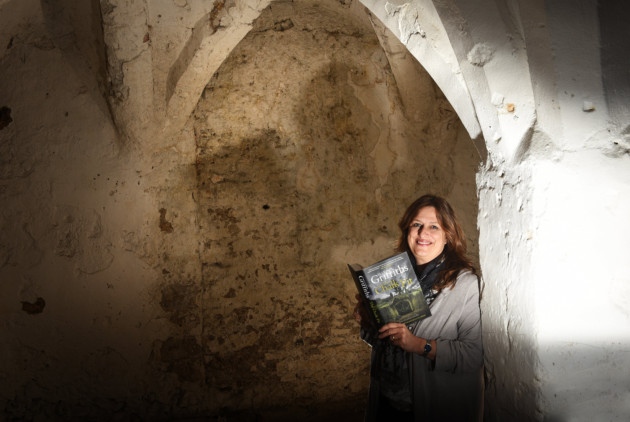
Elly Griffiths UK Author
Elly Griffiths ‘The Chalk Pit’ and something evil is waiting in the dark tunnels under Norwich – forensic archaeologist Dr Ruth Galloway had better watch her step https://www.hachette.com.au/elly-griffiths/the-chalk-pit

Extra List: Ruth Galloway Mystery series book No.12 ‘The Lantern Men’ (2020) and book No.13 ‘The Night Hawk’ (2021) then Book No.14 ‘The Locked Room’ (2022) and finally book No.15 ‘Final Remains’ (2023).  
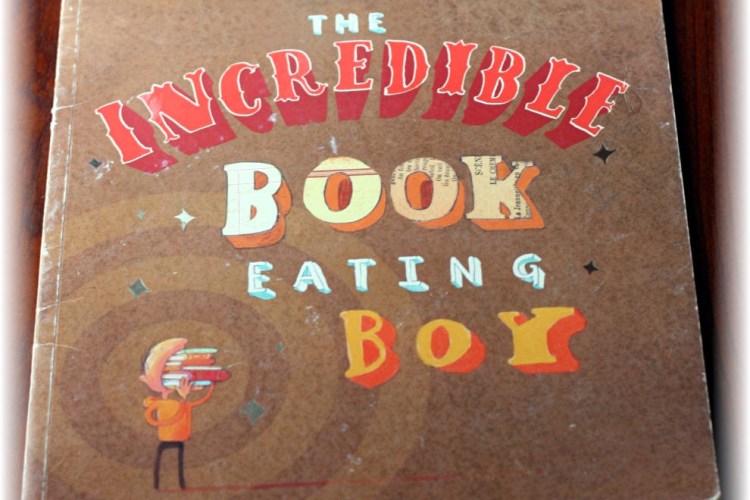
‘The Incredible Book Eating Boy’ by Oliver Jeffers

My picture book review
My bonus picture book lesson
My link to Just Awesome Picture Books


THE REVIEW:

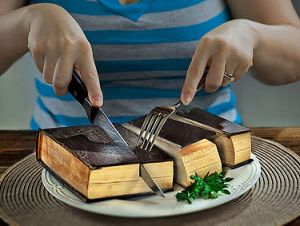
Book Sliced Up on Plate with KnifeHenry is a boy who likes eating books.  He absorbs knowledge as he happily munches his way to becoming the smartest boy on earth.  Everything goes well until there’s an internal rebellion.  Share Henry’s journey as he discovers something better than eating books.

Award-winning Oliver Jeffers’ concept is clever and I found his plot madly appealing.  The illustrations are unique and show creative grunge like an old diary or well-used notebook.  For me, although the story has the potential to be scary, it is handled in an adventurous way with Henry supported by believable characters which adds intertextuality to an otherwise imprudent tale.

I think The Incredible Book Eating Boy is best suited for small group readings or child-and-parent because there’s a lot happening and the visual literacy may need some explanation for younger children.

All in all, a praiseworthy picture book with a good message for 4 – 8 years range to which I give a 5-Star rating.  GBW.


The Incredible Book Eating Boy 01
I discovered this book on Just Awesome Picture Books! Check the website https://justawesomepicturebooks.com/


THE LESSON:

In my opinion, less is more!  Wordy picture books tire the reader and the listener.  The illustrations should highlight the uncluttered wording.  The words push the narrative forward and the child uses their imagination from the visual cues.

It’s a common fallacy that picture books are easy to write.  This is far from the truth because the very minimalist nature of picture books means that every single word has to be perfectly rendered.  Learn more about writing for children from author Jen Storer of Girl & Duck.

As a general guide, here are some basics:

A children’s picture book is 32-pages but 8 pages are used for endpapers and book information.  The story is over 24 pages or 12 spreads of text and illustrations which span two opened pages at a time.  These pages can be half-page spreads, single-page spreads, double-page spreads or vignettes.  A number of vignettes are used in The Incredible Book Eating Boy.

There is symmetrical, complementary and contradictory illustration approaches and I think The Incredible Book Eating Boy is approached in a complementary manner.  Oliver Jeffers plays around with the location of text to good effect.

Board books, pop-ups and novelty may have no words, just illustrations.
Young picture books are aimed at 2 to 5-year-olds with 200 to 400 wordcount.
Trade (general readership) picture books are suitable for 3 to 8-year-old children with 500 to 600 wordcount.
Picture story books for older children 6 to 10-year-olds with 1000 to 3000 words are often non-fiction.
Chapter book fiction over 3500 words are suitable for competent readers, with a sliding age range due to small sketches and quirky touches often added between the pages to enhance the reading experience.
YA (young adult) are the more tailored books suitable for older teenagers.

Something different.  A theatre performance video of the book at The Joan, Penrith’s premier performing arts centre The Incredible Book Eating Boy production.  The cast use song, movement and puppetry to bring Oliver Jeffers’ much loved story to life on stage.

Enjoy eating, er, reading this picture book with that special little someone.

Gretchen Bernet-Ward

Jane Milburn Slow Clothing Advocate

Slow Clothing reflects author and refashion advocate Jane Milburn’s own unique style, independent of “fast fashion” trends.  Upcycled from denim jeans, the dress Jane wore during her talk at a local BCC library had the potential to look strange but was distinctive and quite beguiling.

Jane, sustainability consultant and founder of Textile Beat, touched on several key elements during her talk––environmentally unfriendly fabrics and dyes; sweat shop labour; landfill; passive fashion; synthetic vs natural fibre; signature style and minimal wardrobe.  Hot topics included recycle by exchange, shopping tips, Sew It Again mending and creating new from old.  Jane tends to hoard fabric offcuts and used buttons, and has a passion for real cotton thread.

Rethinking clothing culture doesn’t mean wearing your clothes until they fall apart at the seams, it means mindful immersion, repairing and refashioning your garments.

An attentive audience, Jane encouraged us to make thoughtful, ethical, informed choices to reduce our clothing footprint on the world.  Until recently, she regularly visited charity shops for secondhand garments but is currently resisting the temptation and working with what she’s got.  “We believe secondhand is the new organic and mending is good for the soul.  In return, we are liberated and satisfied.”

In her book Slow Clothing: finding meaning in what we wear Jane shares insights and upcycling advice.  She has created templates like Upcycled Collar and History Skirt, guiding home sewing conversion of a beloved garment to reflect the changes in our lives.

To provide meaning and story to her own favourite pieces, Jane Milburn restyles and sews her clothing by hand.  Currently testing t-shirt cotton drawstrings as an alternative to underwear elastic (elastic is made from synthetics) Jane stitches everything by hand.

Help! I can hear you say, nobody has hand-sewn an outfit since the mid-twentieth century––except maybe Vivienne Westwood––but don’t panic, Jane’s book provides testimonials, illustrations and clear instructions for eco-dyes and upside-down jumper skirts through to sewing on a button.  Eco-fashionistas unite!

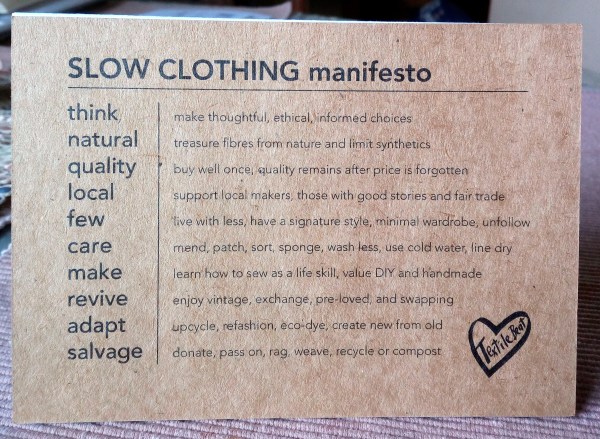
Although Slow Clothing is a multifaceted, easy-to-read book with positive chapter headings (Purpose, Authenticity, Creativity, Action, Autonomy, Reflection) amid the ingenious apparel, I am missing a frivolous note, perhaps a ball gown?  On a serious mission, Jane has created a Slow Clothing Manifesto with ten tags to keep in mind when out shopping: think, natural, quality, local, few, care, make, revive, adapt, salvage.

IMG_20180723_091617Quotes from Jane embody the Slow Clothing philosophy “Slow Clothing brings wholeness through living simply, creatively and fairly” and “We buy thoughtfully, gain skills, and care for what we wear as an embodiment of ourselves.”  Personally I am hoping to see people clutching their Slow Clothing Manifesto cards at an op shop near me.

The current trail Jane Milburn is blazing makes fascinating reading.  Arts Queensland, meeting VIPs, War on Waste ABCTV, visiting 103-year-old Misao Jo in Osaka, hosting a Clothing Repair Café, conducting workshops and championing natural-fibre, Jane says “It has been personally satisfying to see the uptake of upcycling as a conscious practice with many young people interested in its potential for customising their clothes.”

Unfortunately I didn’t get to ask Jane Milburn how we go about combating the greed of designer labels.  But the clear message is––help reduce landfill by upcycling your clothes to reflect your own unique style.

Gretchen Bernet-Ward

24 Stories: of Hope for Survivors of the Grenfell Tower Fire

My emotions overcame me when I read this piece…read for yourself…

Paula Bardell-Hedley's avatarBook Jotter

by Kathy Burke (Editor)

24 STORIES COVERMy routine was much as usual on the morning of Wednesday 14th June 2017: I arose early for work, fed the chickens, settled myself at the kitchen table for my first cuppa of the day and switched the TV on to watch BBC News.

For several seconds I stared vacantly at the screen, unable to comprehend the shocking nature of the images I was seeing. There was a man sobbing incoherently to a reporter and then emergency services vehicles were shown illuminating huddles of grim-faced onlookers in their flickering lights. It began to make sense when the picture jumped to a high-rise block of flats of the sort you find in cities throughout the UK, except this one had taken on the appearance of an immense Chinese lantern burning uncontrollably over a sleeping city.

This was Grenfell Tower, a 24-storey Brutalist-style construct in North Kensington…

View original post 543 more words

North Wales Folk Tales for Children

For anyone, young or old, who know dragons do exist and not just in their dreams…

theopinionatedreaderblog's avatarThe Opinionated Reader

31297500Title: North Wales Folk Tales For Children

Writer: Fiona Collins

Publishing House: The History Press

Date of Publication: May 2nd 2016

Rating: 4 stars

”…under the stone, two dragons are curled up, fast asleep. All day, they sleep, but at night they wake, and then they fight. Their battle destroys your tower each night.”

Wales, lovely, mysterious, mythical Wales… A land of heroes and gods, a place where myth and history walk hand-in-hand only to be lost in times unrecorded, misty and shadowy. This beautiful little book is dedicated to the Northern part of Cymru, home to the legendary area of Snowdonia and Ynys Môn and to three World Heritage sites.

Σχετική εικόνα

(Porth Dafarch Cove, Anglesey)

Known once as the Kingdom of Gwynedd, North Wales has an endless wealth of traditions and folklore. We will meet a giant and a giantess who fight over a hammer. A clever boy named Gareth (…Wales…

View original post 204 more words

‘The Last Dragonslayer’ by Jasper Fforde

IMG_20180318_112055
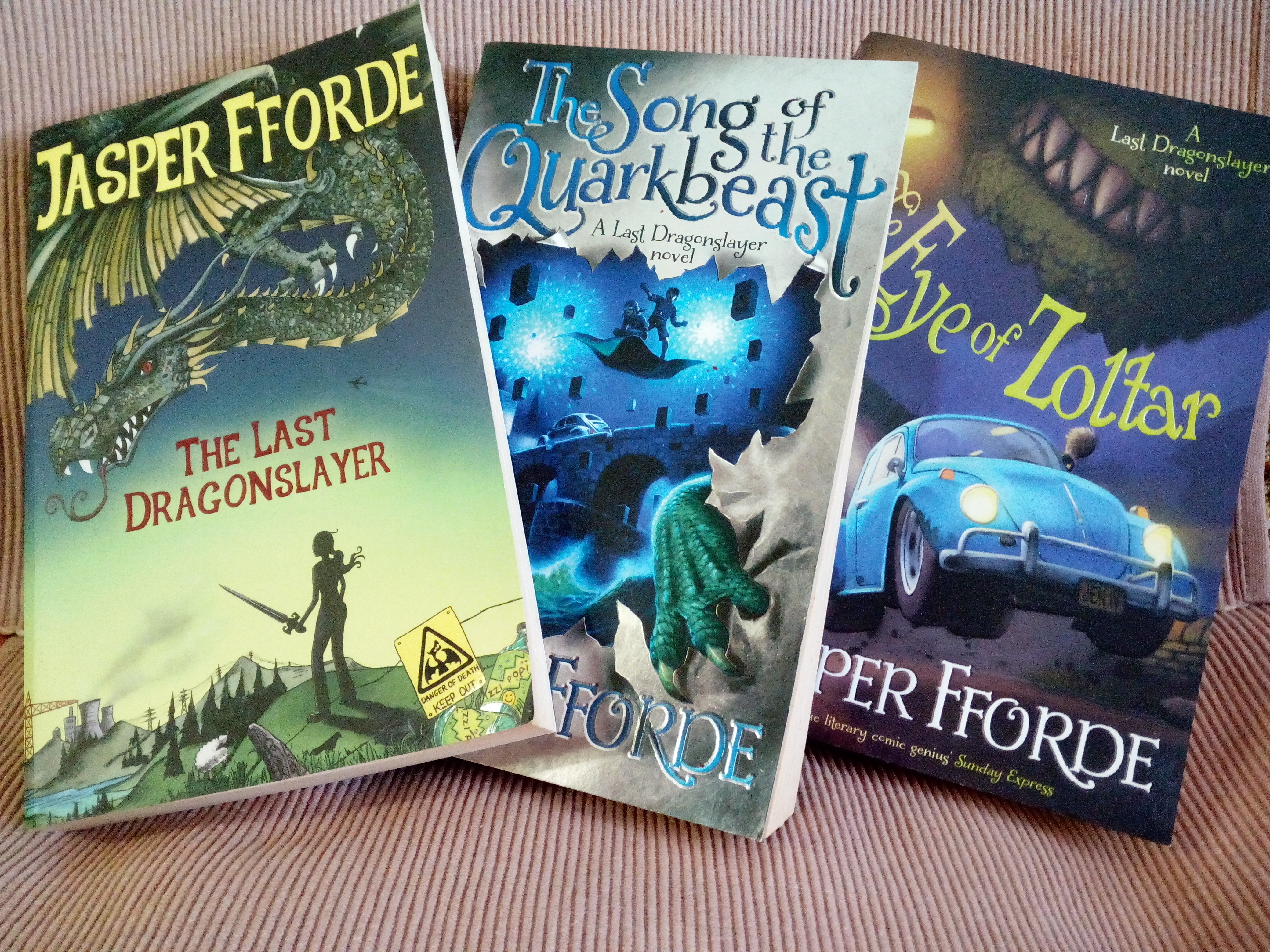
The Last Dragonslayer novels by Jasper Fforde

While Thursday Next lives in a parallel universe, The Last Dragonslayer is set in a world of myths, illusions and modern magic.

Orphan Jennifer Strange, a practical teenager, runs Kazam Mystical Arts Management with eccentric magicians who create irregular spells.  But magic and dragons are losing power and Jennifer discovers evil King Snodd IV wants to grab the Dragonlands, 350 acres of prime real estate.  Jennifer dislikes the King’s greed and so does the last Dragonslayer, an old wizard named Brian who controls dragons with an ancient sword.

Helped by her cool friend Tiger Prawns, and a metal-munching Quarkbeast with frighteningly sharp teeth, Jennifer rallies to protect the Dragonlands.  Meanwhile, wizard Brian is hatching a secret plan.  Jennifer doesn’t realise she is part of that plan.

This is the first book in Last Dragonslayer/Kazam Chronicles by Jasper Fforde and I loved reading their vital quest.  Suitable for 12 years and up, the second and third books are The Song Of The Quarkbeast and The Eye Of Zoltar.  There will be a fourth book in the series but at this stage only working titles have been released; possibly Humans vs Trolls or The Strange And The Wizard or The Great Troll War.  Guess we’ll just have to wait for the next quirky edition!

Author Jasper Fforde

Publisher Hodder & Stoughton UK

Movie by Mallinson Television Productions on Vimeo screened by Sky1

Gretchen Bernet-Ward


The Last Dragonslayer Jennifer Strange

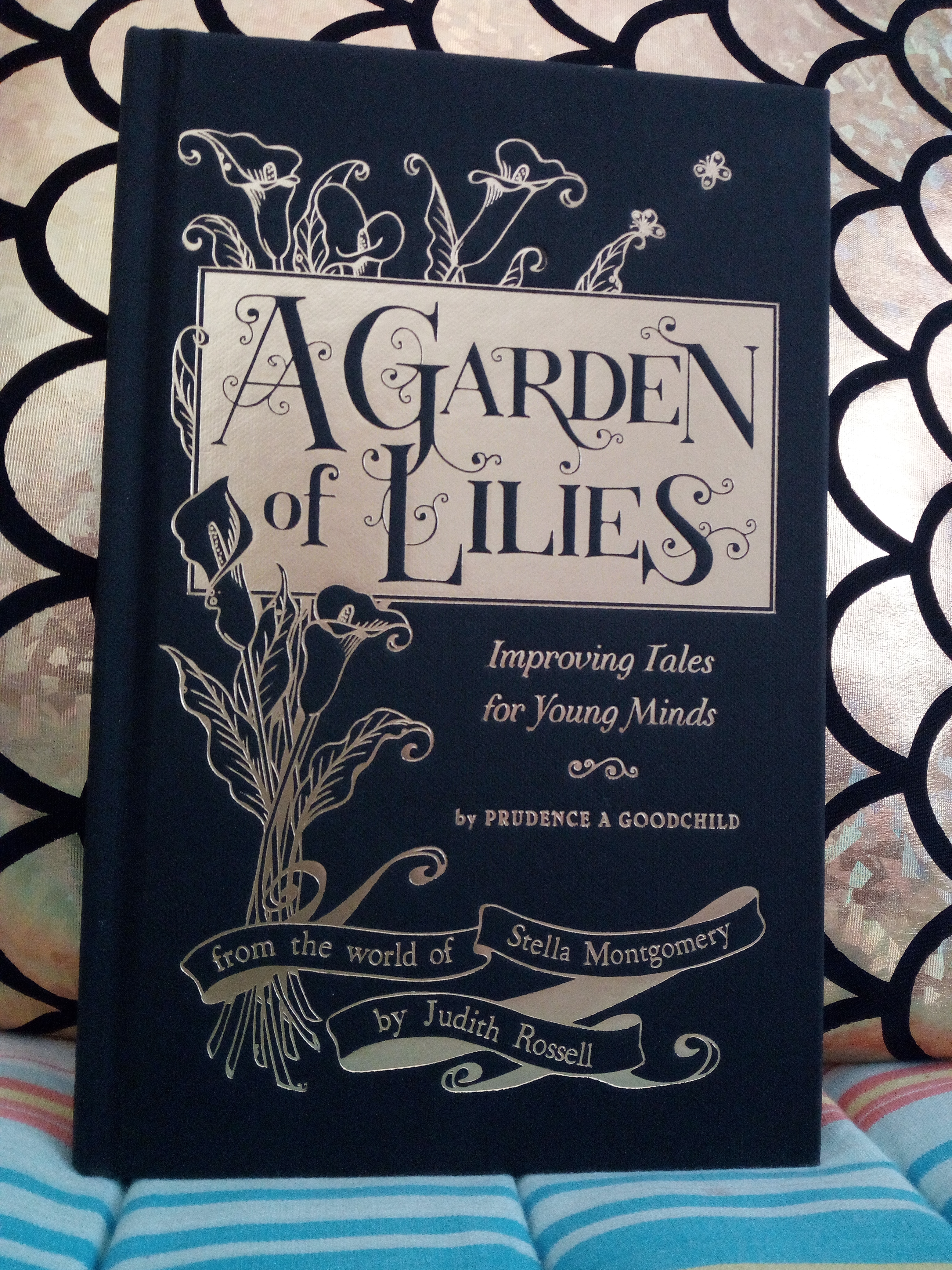
‘A Garden of Lilies’ Tales from Judith Rossell

IMG_20180409_162238
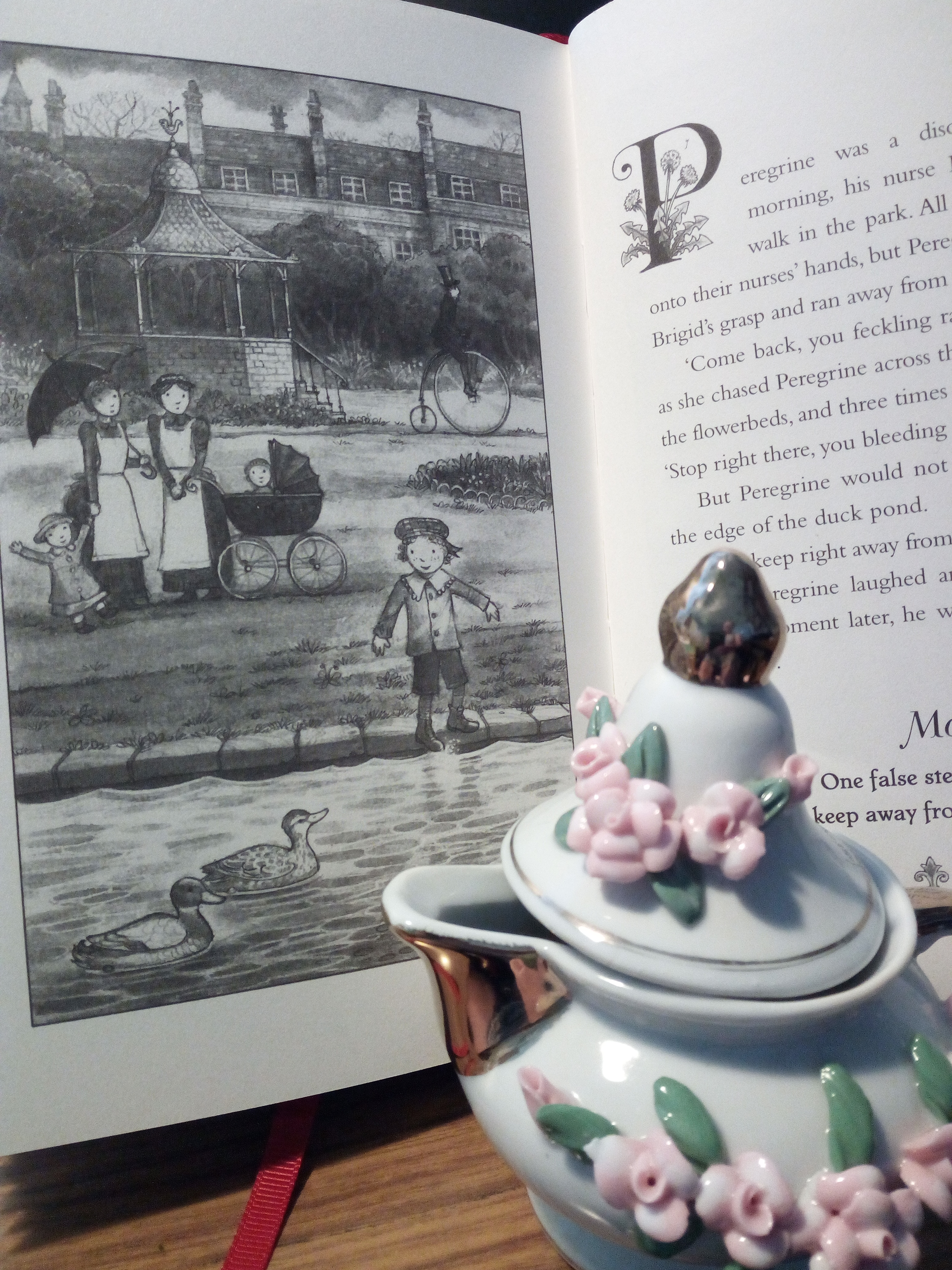
Page 39 “Peregrine was a disobedient child…”

With a knowing smile, this Victorian-style book of manners is reminiscent of the period of parenting when misbehaving children were given orders and told dire consequences would ensue if they did not obey.  Despite warnings, when a child in this book ignores an instruction, there is an aftermath of great magnitude.

IMG_20180410_133833
Page 28 “Jesephany and Keziah were unruly and wild…”

In “A Garden of Lilies: Improving Tales for Young Minds – by Prudence A Goodchild” children’s author and illustrator Judith Rossell has produced an atmospherically illustrated and tightly written volume.  She has also mastered the art of a left-right jab, hitting with swift endings which leave the reader breathless.

Each punchy short story closes with a judicious moral.  For example, Isadora daydreamed too much during her chores.  One day she daydreamed while idly brushing her hair.  Let’s just say she didn’t get to finish the task.  “Moral: For hair that’s glossy, clean and bright, Two hundred strokes, both morn and night”.

After Isadora’s tale, there is what appears to be a lovely page entitled “Care of the Hair” with a recipe for making Soft Soap which “…will improve both the texture and colour of the hair” until things get a bit nauseating.  Apart from kitchen scraps, the mixture must boil for hours until it forms a clear, thick jelly.

IMG_20180410_134735
“A Garden of Lilies: Improving Tales for Young Minds” by Prudence A Goodchild (author Judith Rossell) ABC Books Australia

Basically the stories are about kids being kids and the 21st century reader should see the endings for what they are – a sample of Victorian etiquette and psychology which we would not dream of using on children today.  Right?  Okay, explain that to your child and laugh.

This slim book is approximately sixty pages (with attractive binding and colour plates) and scattered throughout are “Interesting Facts” and helpful hints like An Economical Recipe for a Plain Cake, A Useful Compass, Parlour Games and my personal favourite, An Album of Sea-Weeds.  I will work on drying and pressing seaweed during my next holiday!  Hmm, would seaweed smell like that starfish I once brought home?

In closing, I will give a shout-out to Mr Lindon of Woolloongabba, Queensland (Page 45) who grew a giant marrow.  I think he must have read the book’s suggestion To Grow a Giant Marrow which signifies “A Garden of Lilies” is indeed a versatile volume!

I cannot give you a childproof safety rating but I think it is suitable for a sliding age scale and my own rating is 5-star.

Gretchen Bernet-Ward


Judith Rossell — Biography

Judith Rossell is the multi-award-winning author-illustrator of the bestselling Stella Montgomery series (Withering-by-Sea, Wormwood Mire, A Garden of Lilies and forthcoming Wakestone Hall).  Judith has written thirteen books and illustrated more than eighty, and her work has been published in UK, US, Germany and translated into more than twenty languages.  Before beginning her career in children’s books, Judith worked as a government scientist (not a mad scientist, a normal kind of scientist) and also for a cotton-spinning company (which made threads for T-shirts, denim jeans, mops and teabag strings).  Judith lives in Melbourne, Australia with a cat the size of a walrus.

ACCLAIM FOR WITHERING-BY-SEA AND WORMWOOD MIRE:
Indie Awards – Winner 2015, Shortlisted 2017
Australian Book Industry Awards – Winner 2015, Shortlisted 2017
CBCA Awards – Honour Book 2015, Notable Book 2017
Davitt Awards – Winner 2015, Shortlisted 2017
Prime Minister’s Literary Awards – Shortlisted 2015
ABA Booksellers’ Choice Awards – Shortlisted 2017
Australian Book Design Awards – Shortlisted 2017
Aurealis Awards – Shortlisted 2015

‘Behind the Sun’ Convict Girl Series by Deborah Challinor

In a dread-laden atmosphere of shocking sights and smells, the transportation of four convicts to the women’s gaol Parramatta Female Factory is as grim as their backstory.  Although hiding a terrible secret between them, these young women are resilient and struggle against the harsh conditions.

The Convict Girls four-book series written by Deborah Challinor follows four bonded female convicts Friday Woolfe, Rachel Winter, Sarah Morgan and Harriet Clarke who are shipped from London’s infamous Newgate Prison to the penal colony of Sydney Town, New South Wales, to work off their sentences.  The penalties for petty crime, like the strange new land, are unforgiving.

Set in 1832, the travails of Friday, Rachel, Sarah and Harrie jump off the page as each book tells the story from each woman’s perspective while moving the narrative forward.  Titles are Behind the Sun, Girl of Shadows, The Silk Thief, A Tattooed Heart.  As they work through their bond in different forms of servitude, the reader follows their friendship, the physical and mental strain, and their all-important futures.

Author Deborah Challinor skilfully expands and elaborates on their new lives (the homebody, the thief, the seamstress, the prostitute) while keeping the voice true.  She gets the more risqué messages across without unnecessary crudeness.  Her well researched, well written plots and strong supporting characters, like cruel Bella Jackson and handsome Dr James Downey, blend together to spin a gripping yarn, spiced with highs, lows, loves, laughs, drama and murder.

I love good historical fiction, this quartet is superb (look beyond the chick-lit cover art) and Deborah Challinor knows how to lure her readers.  The outstanding imagery, ripe for screen adaptation, kept me reading long after I should have turned off the light.  I strongly recommend this 5-star series and suggest reading the stories in sequence so they unfold in all their splendour.

Gretchen Bernet-Ward


AUTHOR BIODeborah Challinor Author PhotoDeborah Challinor is a writer and PhD historian from Waikato in New Zealand.  She lived in Australia while researching the stories for her Convict Girls series.  The books follow four young woman transported to New South Wales for petty crimes. The character of Friday Woolfe is loosely based on her great-great-great-great-great-grandmother Mary Ann Anstey who was caught stealing a silk handkerchief and sent out to Sydney Town on Lady Juliana, a convict ship dispatched in 1789 from England to Australia.  Deborah Challinor has written over 16 books, historical fiction and non-fiction titles. Website https://www.read-nz.org/writer/challinor-deborah/

Assassin and the Actress ‘Reckoning: A Memoir’

A highly charged and deeply honest memoir, ‘Reckoning’ combines research into the life of assassin and Polish World War II survivor Zbigniew Szubanski , father of Australian actress Magda Szubanski, and Magda herself as she struggles to come to terms with her father’s legacy and forge her own career within the world of television and movies.  This absorbing, eloquently written book contains remarkable revelations of wartime espionage, emotional family ties and facing the truth, and I was enthralled to the very last page.

First published in 2016, ‘Reckoning’ is Magda’s debut novel, and courageously written.  I must admit my initial thoughts were ‘Wow, she’s brave putting that in writing’ but it made me love this book even more.  Definitely a five-star read!  Magda relates one of those true stories from childhood to adulthood which hits the right cord with just about everyone.  We’ve had similar feelings and domestic issues and career changes and sexuality debates and, yes, sadly, the father we got to understand a little too late.

‘Reckoning’ has gone on to bigger things but here’s the first results:
Winner Nielsen BookData Booksellers Choice Award, 2016
Winner Book of the Year, Australian Book Industry Awards, 2016
Winner Biography of the Year, Australian Book Industry Awards, 2016
Winner Douglas Stewart Prize for Non-Fiction, NSW Premier’s Literary Awards, 2016
Winner Indie Award for Non-Fiction, 2016
Winner Victorian Community History Award Judges’ Special Prize, 2016
Shortlisted Matt Richell Award for New Writer of the Year, Australian Book Industry Awards, 2016
Shortlisted Dobbie Literary Award, 2016
Shortlisted National Biography Award, 2016

Website https://www.textpublishing.com.au/books/reckoning
Twitter https://twitter.com/magdaszubanski

ABOUT THE AUTHOR
Magda Szubanski is one of Australia’s best known comedy performers.  She lives in Melbourne and began her career in university revues before writing and appearing in a number of comedy shows.  Magda created the iconic character of Sharon Strzelecki in ABC-TV series ‘Kath and Kim’.  She performs in theatre productions and has acted in movies – notably ‘Babe’ and ‘Babe Pig in the City’ – and currently ‘Three Summers’ directed by Ben Elton and ‘The BBQ’ directed by Stephen Amis.

Gretchen Bernet-Ward

DBC Pierre Writes at Feverpitch

DBC Pierre Photo Montage 02
Photograph of novelist DBC Pierre by Murdo MacLeod for The Guardian.

“I wrote 300 pages in five weeks,” says novelist DBC Pierre, who made his debut with Vernon God Little, a Booker Prize winner, and delivers writing guidance in his contemporary work Release the Bats.

I enjoyed his gutsy and wildly perceptive advice which perhaps appeals to a ‘pantser’ style of writing rather than a ‘plotter’ but the quotable gems will stick with me.  Wisdom with a 21st century twist and language to match.

“A few pages into writing and find yourself drowning, as I did.”  DBC Pierre.

“When I started to write,” says self-confessed bad boy DBC Pierre in The Guardian interview, “I wasn’t particularly well-read, but I found two things critical. Together they can turn a pile of thoughts into a novel, in case you’re at a loose end next weekend, or are in prison. They’re also helpful if you’ve swum a few pages into writing and find yourself drowning, as I did.”

“The first might seem stupid but I actually found it the main hitch in getting words down and ‘letting rip’, ‘sticking with it’, and all that noble stuff we’re supposed to do. ‘The responsibility of awful writing’ was Hemingway’s twist on his own phrase ‘the awful responsibility of writing’. As the man who also said ‘first drafts are shit’, he pointed to a truth: if the key to finishing a novel is sticking with it, then the main challenge is to face writing crap.”

DBC Pierre Vernon God Little Bookcover

“All I liked after writing the first page of Vernon God Little was the voice. It had things to say about everything. I could feel it wanting to say them. But I went on to write 300 pages that didn’t make a book. I wrote them in five weeks, in a fever, without looking back. And at the end, I still liked the voice – but it hadn’t really said anything. Or rather, it had said plenty but nothing else had really happened. I soon found advantages to having done it that way.”

“Even writing 50 pages of crap gives a sense of achievement.”  DBC Pierre. 

“For one thing, I would usually find it hard to move on to page two if I didn’t like page one. I bet you could wallpaper the planet with books that never got to page two. And it’s a circular trap, in that some of the energy you need to forge ahead and push your page count up is generated by forging ahead and pushing your page count up. Even crap gives a sense of achievement when you get to 10, 20, 50 pages of it. When you don’t get past page one, you lose the spur. After that, the thing spirals into bad feeling and dies while you check email.”

“Half the problem is the expectation that we’ll see finished writing at once, more or less in its place. But I wouldn’t have written what I wrote if I’d thought about structure and form at the time. Obviously, if we’re writing about a boy going to the river, we make him go to the river. I don’t mean write without an idea – just that better ideas will come later. They attract each other and grow. We write crap in the meantime. It can work like a compost.”

“If you watch a dieter breaking their diet, you’ll see that they gobble things before they can stop themselves, before the internal arguments, before the shame. Guiltily and fast: that’s how to approach a first draft. A free writer is not something you are, but a place you can go. To start that climb: speed. Don’t look down. Keep a note of your page or word count, watch it grow like an investment. Amp yourself up. When we do things this way, a phenomenon comes to bear that justifies our approach: art. Some of what we write will crystallise for reasons we can’t explain, and the story comes into a life of its own.”

“If the job gets boring, loosen up…throw in a new character.”  DBC Pierre.

“Eventually, take that feverish pile, bravely or drunk, and read it back. Get over the cringing and find a glimmer, see what sentence or idea intrigues or excites you. Start from there and build out. If the job gets boring, loosen up, take a tangent, throw in a new character. In this process, the work begins to show itself. We show ourselves. When gems have grown into paragraphs, paragraphs into pages, look again. Find the part that works best and lift the rest up to it. This is how it climbs, by following what pleases us most.”

“We can’t compete with Shakespeare or Hemingway, nor should we try. Our particular feeling is all we can bring to this party, and our whole job should be to wrestle it into a story that works for us alone. After that we can dress it for others to read. A different job entirely. Save that for a strong coffee on a Monday.”

One of three different interviews by Chris Wiegand, Dave Simpson and Homa Khaleeli.  Wed 22 Feb 2017 06.00 AEDT “Culture” The Guardian newspaper.
https://www.theguardian.com/culture/2017/feb/21/frank-turner-dbc-pierre-creative-industry-advice
Heading : So You Want To Be An Artist? Then Let The Pros Show You How It’s Done.

You can also read my book review of Breakfast With The Borgias by DBC Pierre.

Gretchen Bernet-Ward