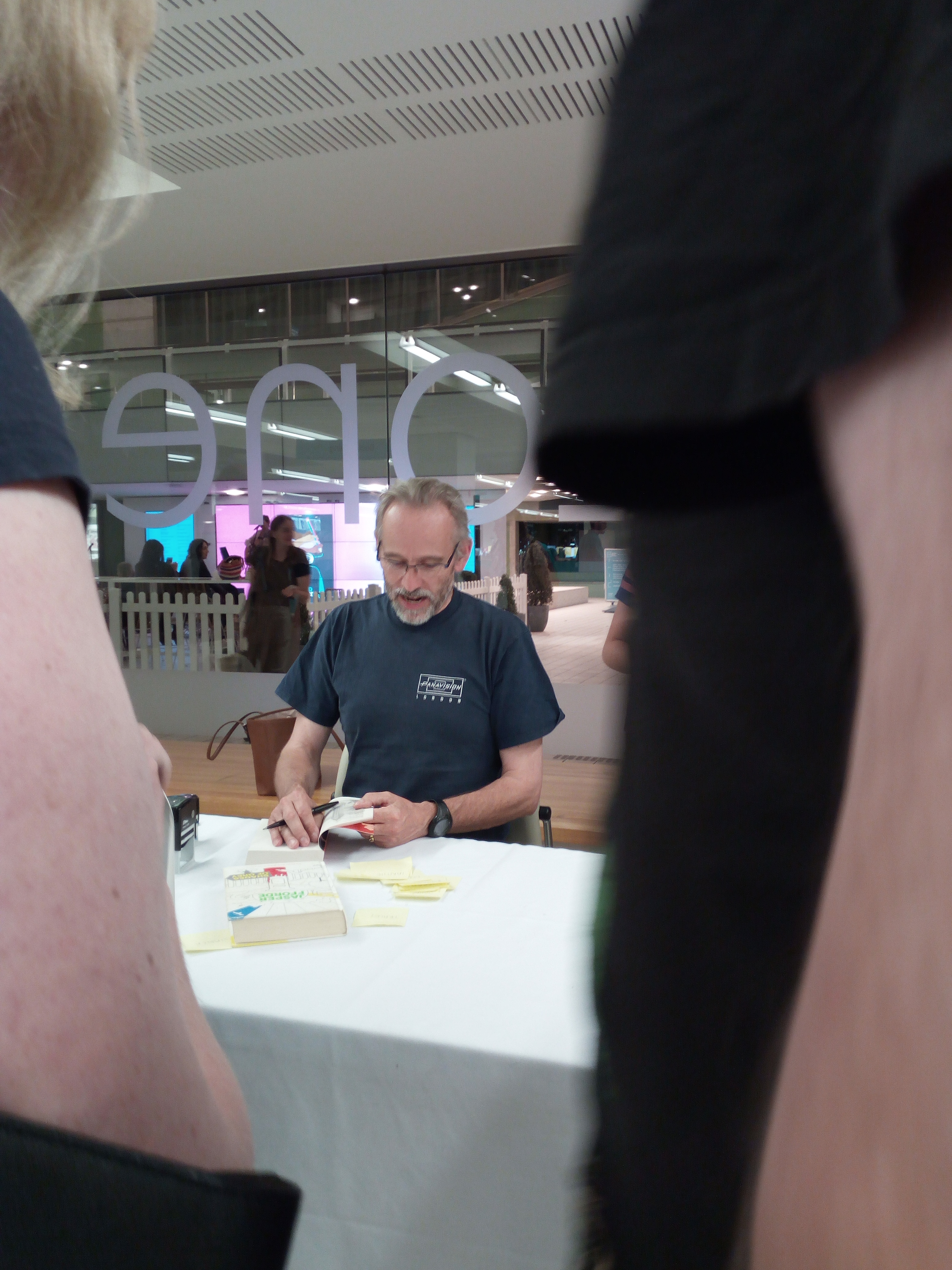
‘The Finisher’ by Peter Lovesey
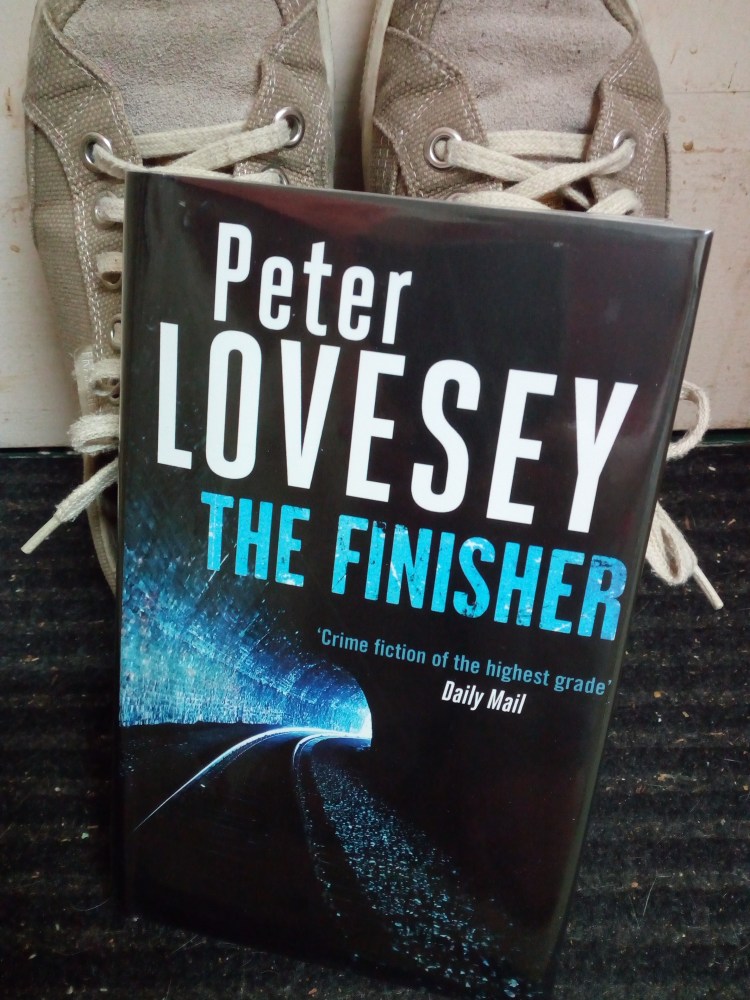
THIS IS A GRAND STORY of old-school police procedural proportions, a murder mystery which employs the same dedication and precision as the runners in training for the Bath Half Marathon.  The build-up is firm and steady, the plot delivers survival tactics, and every likely and unlikely event is taken into consideration.

MOST OF THE GROUNDING for this solid piece of deduction has to do with Detective Superintendent Peter Diamond of Bath’s Criminal Investigations Department.  I can’t say Diamond is all that loveable, and he gets himself into trouble on the odd occasion, but he’s a great character to drape a story around.

DIAMOND HAS A GIRLFRIEND Paloma and when they are together I get a midsomer murder ‘Shakespeare and Hathaway’ vibe.  Diamond is aided and abetted by two sensible police officers, Keith Halliwell and Ingeborg Smith, and annoyed by Assistant Chief Constable Georgina Dallymore. Like any good whodunnit, there’s a crusty forensic pathologist Dr Sealy and a number of important characters woven into the story.

Bath Half Marathon August 2020 03
Do you think you could run this marathon? https://bathhalf.co.uk/race-info/

I AM NOT BIG on writing synopses because I figure that a potential reader can get any amount of reviews online which offer insights into this ingenious plot.  Suffice to say that the Bath Half Marathon is an absolutely huge running event held in UK and literally thousands of people from all walks of life compete each year for charity.  On this occasion, a murder takes place and Diamond has to find the body before he can make an arrest. Actually there are two murders but this is where it gets tricky…

AUTHOR PETER LOVESEY has given the reader several suspects to choose from and they are all plausible.  Some of the characters include Spiro and Murat part of the modern-day slave trade, Maeve Kelly primary school teacher, sleazy Tony Pinto, and wife of Russian oligarch Olga Ivanova, taking part in the Bath Half Marathon for wildly different reasons. 
IMG_20201017_200429

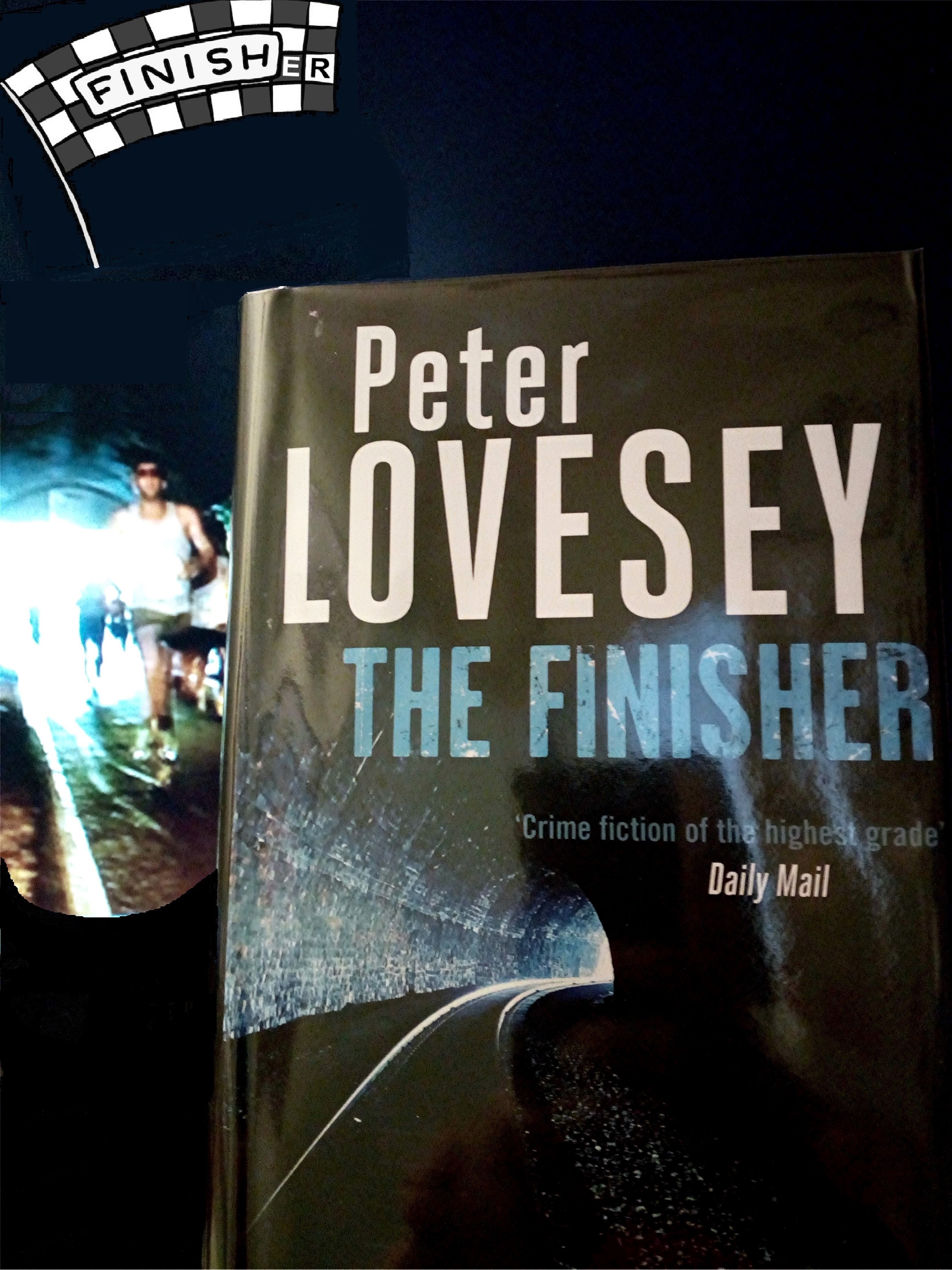
I HAD A MASSIVE claustrophobia attack: the hills where the race is run has hundreds of old tunnels and underground quarries.  I haven’t felt that bad since I read ‘The Chalk Pit’ a Ruth Galloway mystery by Elly Griffiths.  Cruelly, Lovesey did not spare my nerves.

THE BOOK TITLE is apt in various ways, and apart from showcasing beautiful Bath, there are techie things like micro-chipped runners and aerial drones.  However, Lovesey does say that the route he mapped out is not the one followed by real runners.  He has never run the marathon but as an author and sports writer he cleverly captures the mood and excitement of the event.

Nothing like running a hot bath after running the Bath Half Marathon.

I MAY NOT SAY ‘Where are my running shoes?’ but with at least seventeen other novels in the Peter Diamond series, I am going to start my own reading marathon.

Gretchen Bernet-Ward


AUTHOR PROFILE

Poetry Clipart 08Peter (Harmer) Lovesey (born 1936), also known by his pen name Peter Lear, is a British writer of historical and contemporary detective novels and short stories. His best-known series characters are Sergeant Daniel Cribb, a Victorian-era police detective based in London, and Peter Diamond, a modern-day police detective in Bath.

Peter Lovesey lives near Chichester UK and was a teacher/lecturer before he turned to full-time writing.  In 2020 he celebrates 50 years as an author and ironically in 1970 his first prize-winning novel was ‘Wobble to Death’ where a bizarre six-day endurance race takes place in 1880s London.  His son Phil Lovesey also writes crime novels.

Jasper Fforde ‘The Constant Rabbit’ Book Review

IMG_20200724_134144

Most readers will grasp the fact that this book is not going to be about Bugs Bunny.  Jasper Fforde’s unique trademark of invective wit and critical observation cover politics, racism, sexism, bureaucracy and libraries.  Actually the library in the village of Much Hemlock has reverted to the old card system but is still afloat despite very tight restrictions.  Some reviewers say this book is a departure from Fforde’s usual style but I disagree.  Jasper Fforde has always been out-there, although his unique writing charm has become more prominent since Douglas Adams and Terry Pratchett left the room.

The main protagonists are village newcomer Constance Rabbit and long-time residents Peter Knox and his daughter Pippa.  Despite cultural differences, they meet in the library and become friends.  And the book title?  I thought it had something to do with “The Constant Gardener” by John le Carré but in a Zoom interview via Avid Reader Bookshop, Brisbane, Mr Fforde himself said that it refers to people rabbiting on, e.g. constantly talking – so there you go.

Rabbits rarely lie,” said Pippa.  “They take their greatest pride in preserving most strongly the parts of them that aren’t us”. Thus rabbits walk tall but do lean towards the tonal qualities of Beatrix Potter so it’s a shock when UKARP United Kingdom Anti-Rabbit Party rears its ugly head, ready to enforce rehoming of rabbits to a Mega Warren in Wales.  Things don’t look good for Connie but she’s not going to hop away.  Can sharing her difficulties with her neighbour cause romance to blossom over a lettuce salad?  But wait, average bloke Peter hides a dark secret.

Jasper Fforde Zoom Chat The Constant Rabbit 2020 Image
Jasper Fforde reads a portion of his new book The Constant Rabbit during Zoom interview via Avid Reader Bookshop, West End, Brisbane, Australia in July 2020 https://avidreader.com.au/products/the-constant-rabbit-1

As the byline reads “It’ll take a rabbit to teach a human humanity…” and for any reader with an open mind that’s what this book achieves.  Situations run parallel to today’s world like a surreal split in the time-continuum, engaging satire and brazen behaviour with apprehension and alarm.  It doesn’t take much effort to transpose our current social and political climate over the chapters.  It rapidly becomes clear that the intertextual remarks are meaningful and at times confronting.

Like the home-created experiments that lived and breathed in Thursday Next (in earlier Fforde books Pickwick the Dodo was made from a kit) Connie’s large family had not been the only animals caught up in the 1965 Spontaneous Anthropomorphising Event.  Six weasels, five guinea pigs, three foxes, a Dalmatian, a badger, nine bees and a caterpillar suffered disorders.  What happened to them is succinctly explained. 

Chapter “Searching in vain & Shopping in town” Connie talks about her acting career and lets slip a few movie names. There’s even a dig at the Playboy Bunny era.  I could have done with more illustrations as per previous books but real product brand names and clever wordplay are liberally sprinkled throughout the story; and organisations like TwoLegsGood, Rabxit, and RabCoT exist alongside old-school references, a mixture of “jolly good chap” and 2020 tactile sensibility.

IMG_20201014_091628
Part illustration taken from frontispiece drawn by Bill Mudron of Portland, Oregon USA (and my cast-iron rabbit)  https://www.billmudron.com/

What I like about Fforde’s writing style is the wry humour, he tells it like it is – with a twist.  The smarmy Senior Group Leader, Mr Torquil Ffoxe does not escape being lampooned for about forty permutations of the double ff in his name when “All, without exception, were pronounced Fox” so is that a dig at Fforde’s own moniker or reader misinterpretation?

In my opinion, this book is vaguely similar to George Orwell’s “Animal Farm” but does not match because in “The Constant Rabbit” Fforde has significantly placed every name, action and event to create an edgy kind of intimacy, an uncomfortably familiar stab of recognition for readers.  With Manor Farm you feel things won’t turn out right; in Much Hemlock you want things to turn out right.  Best of all, Connie Rabbit has joined the illustrious list of strong female characters Jasper Fforde has written over the length of his literary career.

Gretchen Bernet-Ward


IMG_20190907_185124Author Profile:

Jasper Fforde has been writing in the Comedy/Fantasy genre since 2001 when his novel “The Eyre Affair” debuted on the New York Times Bestseller list. Since then he has published 14 more books (which include a YA trilogy) with several becoming bestsellers, and counts his sales in millions. “The Constant Rabbit” is his 15th novel.

Jasper Fforde previously worked in the film industry, and now lives and writes in Wales UK. His oeuvre consists of series and standalones and his recent novel “Early Riser” is a thriller set in a world in which humans have always hibernated; his latest book “The Constant Rabbit” about anthropomorphised rabbits becoming the underclass in a post-Brexit Britain was published 2020.

Check out Dan Simpson’s blog Writer’s Routine for Jasper Fforde audio interview.
All you ever wanted to know
http://www.jasperfforde.com/

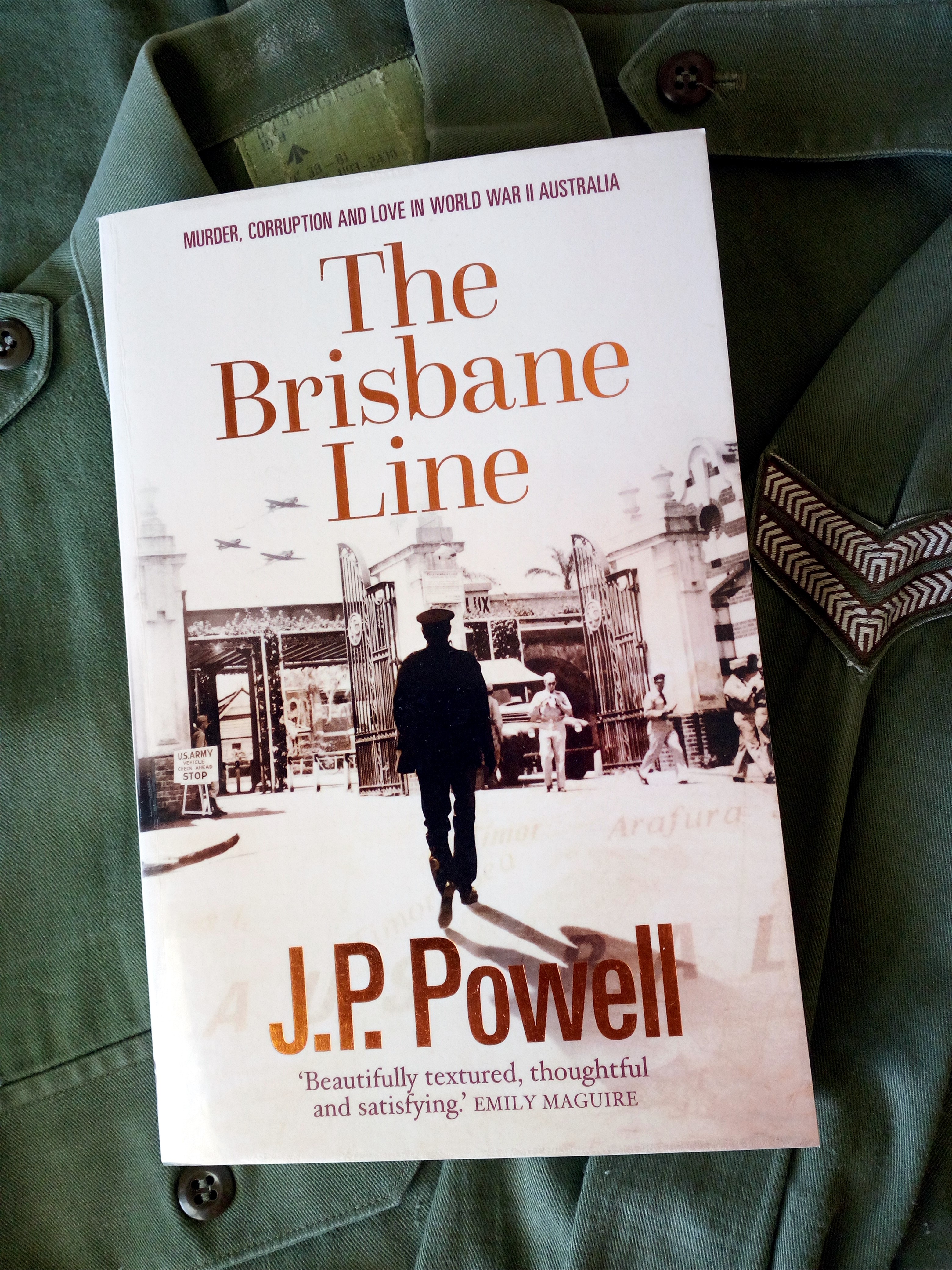
Review ‘The Brisbane Line’ by J P Powell

IMG_20200811_124224

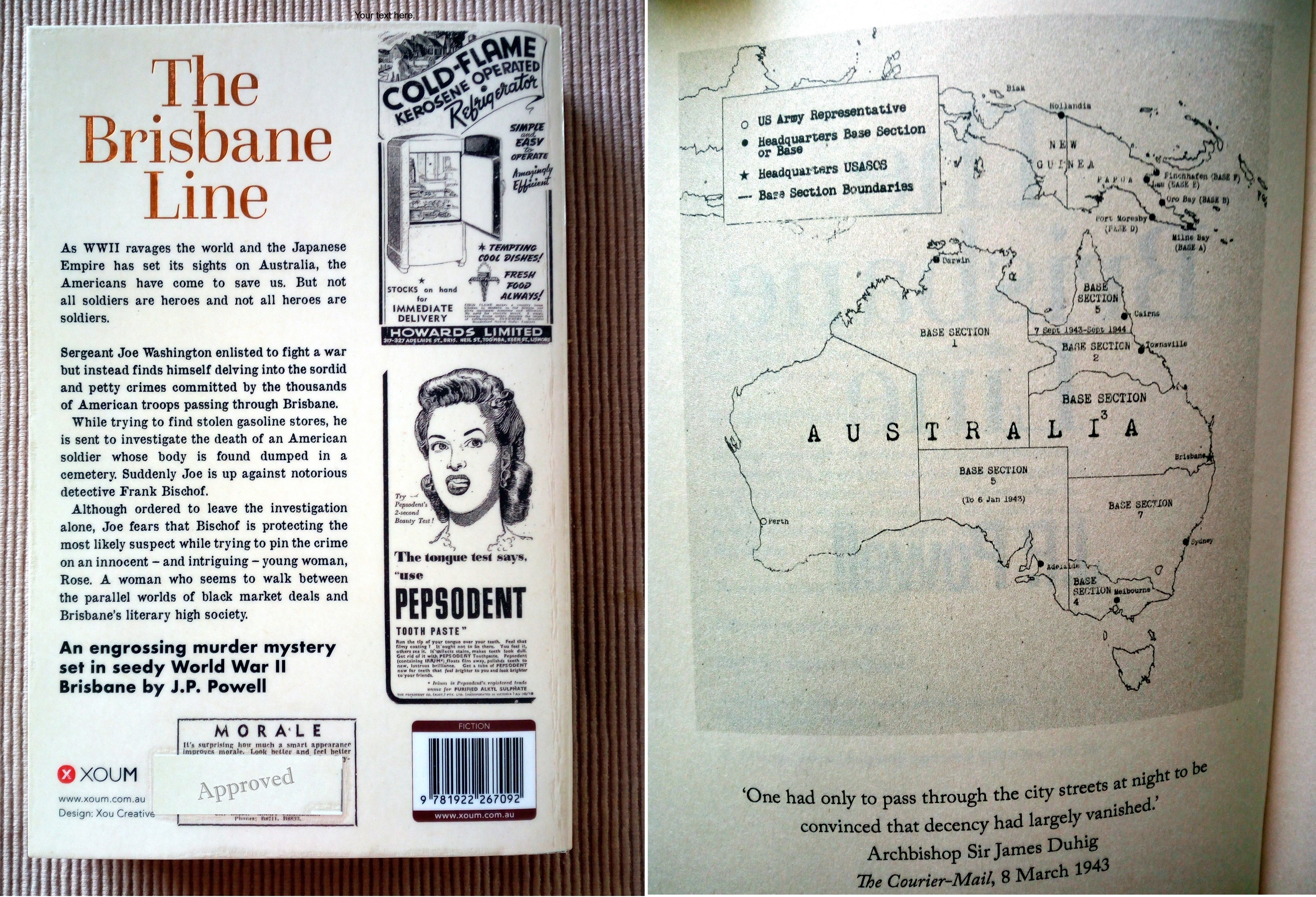
This is a book I had to read.  The name is derived from “an alleged 1942 WWII government plan to abandon Northern Australia in the event of a Japanese invasion”—there is nothing alleged about it.  My father was a young soldier in WWII based in Melbourne when his division received the command to form The Brisbane Line.  It made such an impression on him that later, when he was married, he relocated the family to Brisbane where I currently live.

I dearly wish I could discuss this novel with my late father but I do remember him reminiscing about the off-duty times and leave in tropical Far North Queensland where hi-jinks often lead to a soldier’s death.   I am sure there was tension, corruption and murder among the thousands of American troops stationed in Brisbane, but on the other hand I know families of young women who married GI Joe’s and went to live in US never to return.

Enigmatic protagonist, Rose, has a boyfriend who is a prisoner-of-war and she says “It’s men who cause the trouble in the first place.  It’s just another hypocrisy.”

IMG_20200820_122715

Suitable for crime readers and historians, this well-researched yet fictionalised novel is based on a real person and his original paperwork.  It is more interesting than a text book and follows Sergeant Joe Washington, a US Military Police officer and amateur photographer who joins local police in battling crime and black market corruption.  Joe also has grave suspicions of a murder cover-up.

The humid atmosphere is laced with grunge and irritability offset by guys and gals dancing the night away at the Trocadero Dance Hall.  Well-known landmarks and people make an appearance, for example notorious cop Frank Bischof, author Thea Astley and General Douglas MacArthur, an American who in WWII commanded the Southwest Pacific region. 

The book is gritty and at times the inequality upset my 21st century sensibilities but it is based on true events.  Powell has recreated a vibrant town which embraced a huge influx of cashed-up strangers in uniform and the repercussions this had on Brisbane society, some of which still lingers today.

In “The Art of War” Chinese military strategist Sun Tzu wrote “All warfare is based on deception” and “The greatest victory is that which requires no battle” so I think Judy Powell’s book shows there was no battle—but plenty of deception closer to home.  

Gretchen Bernet-Ward


Author Profile

Briobooks
http://briobooks.com.au/authors/jppowell
YouTube Avid Reader Books interview
https://www.youtube.com/watch?v=SbE0v3Yhkx0

Brisbane Line JP Powell Author Photo 2020 (5)Judy Powell is an archaeologist and historian with a passion for bringing the past to life.  She has worked as a high school teacher, an academic, a National Parks officer, a museum administrator and has excavated in Jordan, Cyprus and Greece as well as leading historical archaeology projects in Australia.  Powell, who lives outside Brisbane, was awarded a QANZAC Fellowship by the State Library of Queensland to pursue research into, and writing of, a series of crime novels set in Brisbane during World War II.


Book Review ‘Shepherd’ by Catherine Jinks

IMG_20200725_100525

On my first reading attempt

I wasn’t ready for this book.  I wanted to enjoy it as much as I enjoyed Catherine Jinks other books but it didn’t work for me right from the start.  The setting was vivid but the raw, brutish behaviour and sheer masculinity of the story overwhelmed me.  Does that make me a sexist, a bigot, a wimp when it comes to macho bravado?  I don’t know.  I turned the pages with trepidation, not interest.  Maybe the colonial frontier loneliness affected me and I didn’t want to go on.

On my second reading

the story felt less crushing.  I concentrated on young English convict Tom Clay, a former poacher transported in chains to Australia, and now a shepherd.  I willed him to be okay, to learn and survive intact.  His country assignment in New South Wales works well, he didn’t steal from landowner Mr Barrett so he was never flogged and he works hard.  Through his eyes, I saw the strangeness of a harsh new land, the vast differences, and the cruel pitiless men he is forced to live and work with guarding sheep against theft and wild dogs.

Tom has a jaundiced eye

when it comes to things like Australian native wildlife and his comment on first seeing kangaroos is less than flattering.  I was disappointed with the header on the bookcover which reads “The wolf is not the only hunter”.  There are no wolves in Australia, there are dingoes (wild dogs) and that should have been apparent.

IMG_20200504_124952
Sheep stealing, jumbuck, billabong, Waltzing Matilda, poet Banjo Paterson

The conditions are harsh

and Tom’s fight for life against his arch nemesis Dan Carver is harsher still.  These chapters are tightly written.  The knock down drag ‘em out battles are horrific, the ghastly metal trap, the shootings, the human and animal deaths… but Tom dearly loves his sheep dogs.

I am not a fan

of an undefined location nor overused nonlinear narrative.  Tom’s past comes out in this way.  Flashback to eight year old Tom at his mother’s funeral, his former life almost as bad as his current one.  He learns “No matter what a convict’s situation might be, he’ll never persuade a trooper that he’s telling the truth.”  Flashback to when Tom first met convict Rowdy Cavanagh, a con man who joked, laughed and teased his way to success until he was caught “A single misstep and it ruined me life.”

The age rating

for this tense, chilling, thrilling story eludes me, but it is a tale I did not fully enjoy.  I do respect it wholeheartedly for the screenplay fear and fascination it instilled in me regarding the rough and thoroughly inhumane life early convicts were forced to endure.

A sequel?

Tom’s situation could lead to listening and learning from the Indigenous custodians of this ancient land, and perhaps encourage a new phase in his life.

Gretchen Bernet-Ward


Author info

Catherine Jinks ‘Shepherd’ interview on Paperchain Bookstore blog.

Catherine Jinks  (Australia b.1963) is a four-time winner of the Children’s Book Council of Australia Book of the Year award, and has also won a Victorian Premier’s Literature Award, the Adelaide Festival Award for Literature, the Ena Noel Award for Children’s Literature and an Aurealis Award for Science Fiction.  In 2001 she was presented with a Centenary Medal for her contribution to Australian Children’s Literature.

Catherine Jinks Author Photograph 02Catherine Jinks, author of over thirty books for children and adults, including the award-winning Pagan Chronicles series, was born in Brisbane and grew up in Sydney where she studied medieval history at the University of Sydney.

She became a writer because she loves reading, as well as history, films and television.  Catherine gets ideas for her novels from everywhere, particularly good science fiction films.  She lives in the Blue Mountains NSW with her Canadian husband and daughter Hannah.

Review ‘The Weed that Strings the Hangman’s Bag’ by Alan Bradley

IMG_20200723_141412

This Alan Bradley story is deserving of 10 stars.  The irony, the wit and the revealing portrayal of 1950s English village life, is both hilarious and horrible.  Events are seen through the eyes of young Flavia de Luce, an implausibly precocious 11 year old girl who lives with her family in genteel decline.

Young Flavia’s encounters turn into forensic investigations and she has an inherent love of chemistry, brewing dangerous concoctions in her late grandfather’s lab.

The village of Bishop’s Lacey appears to be close-knit, yet even gossipy Mrs Mullet didn’t seem to know who or what killed young Robin Ingleby at Gibbet Hill.  The story really kicks off when well-known BBC puppeteer and bully Rupert Porson gives his last performance.  The scene-setting is brilliantly done and I felt immersed in the story from the beginning right through to the end.

Perhaps not a book for younger readers because they may get tired of the mid-20th century writing style.  Mature readers who like a quirky character will enjoy this tale.  I have never encountered the likes of Flavia de Luce, a strange mixture of Wednesday Addams and Bones.

But she certainly knows how to snoop or turn on the charm when necessary.

Generally the main players are conventional but it’s what I expected, having been raised on a diet of British books, magazines and television series.  Their dialogue and the descriptions of village society in post-war Britain were familiar to me – at least fictionally – and it’s clever how the tension and Flavia’s ‘fluctuations’ from girl to grown-up and back again is established.

Question: Apart from the shock value, what is the significance of Jack’s puppet face?  And I don’t mean who it represents.

‘The Weed that Strings the Hangman’s Bag’ is book 2 in the current 10 book Flavia de Luce mystery series, and takes its title from Sir Walter Raleigh.  With my thanks to Goodreads friend and writer Chris Hall for recommending this delightfully different book.

Gretchen Bernet-Ward


Poetry Clipart 13Author profile

Alan Bradley is a mystery writer known for his Flavia de Luce series featuring this pre-teen sleuth with a passion for chemistry.  The series began with the acclaimed ‘The Sweetness at the Bottom of the Pie’.  See more books in the series at Penguin Random House.  Bradley is also a New York Times bestselling author of many short stories, children’s stories, newspaper columns, and the memoir ‘The Shoebox Bible’.  More about Alan Bradley

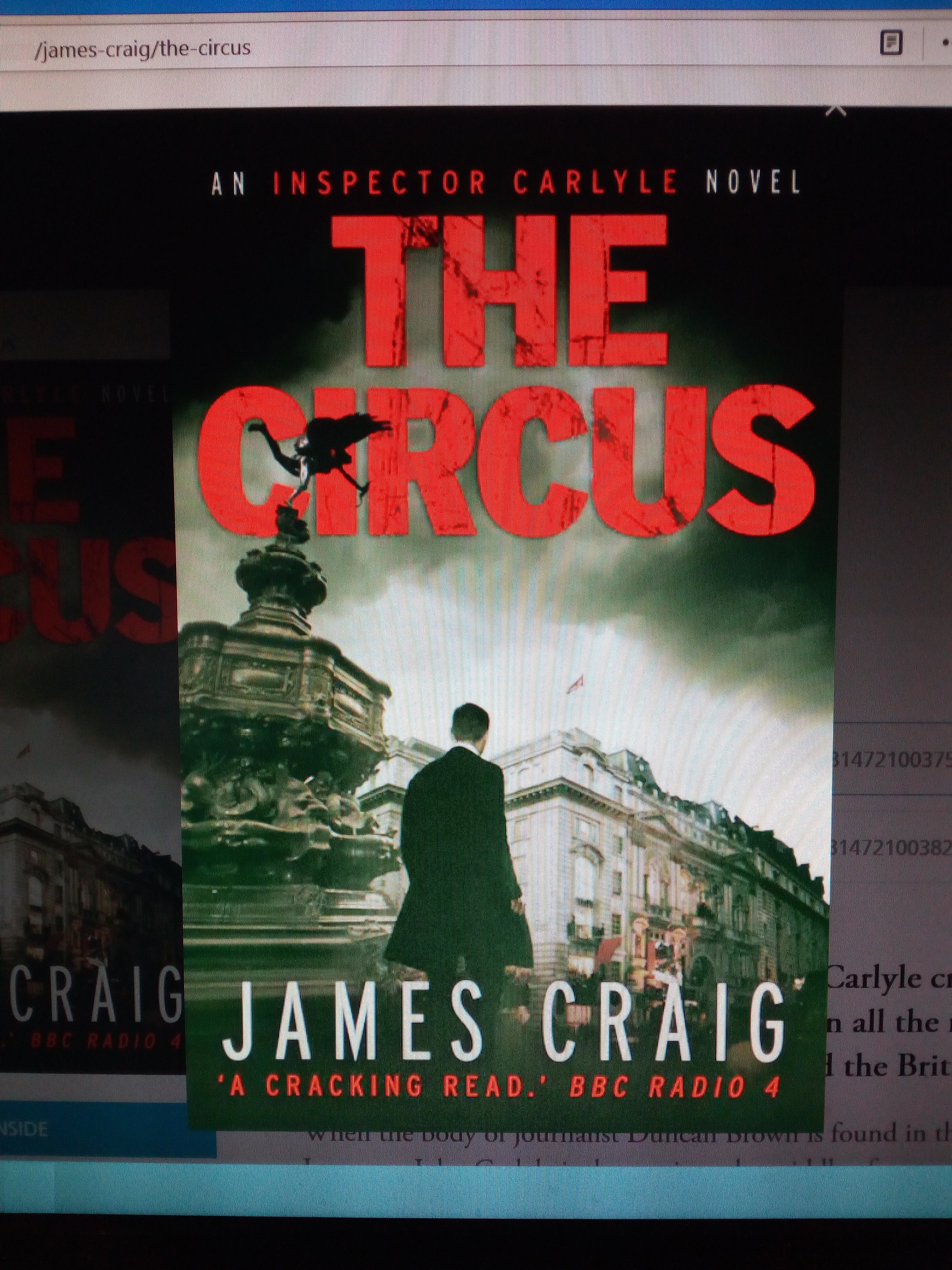
Inspector Carlyle ‘The Circus’ by James Craig

Not so much a circus as a train.  Or a circus on a train.  Not a speeding train, not the Orient Express, not even a suburban train.  This book is a fully loaded interstate train heading inexorably towards a broken bridge over a river.  Along the way, passengers are jostled around, some jump out the doors, most get drunk in the dining carriage, several are angry and the rest are bemused.

Inspector John Carlyle is the most bemused of them all

IMG_20200713_155619
This series has an arresting array of bookcovers

I love a criminal book, you can comment hard!

Somewhere along a distant track I had stopped reading James Craig’s Inspector Carlyle series and this fourth book refreshed my memory.  It contains such a high level of macho rubbish, female exploitation and smarmy politics that it is well past the read-by date.

It is astounding that the book doesn’t run off the rails with the ludicrous amount of murders

If Inspector Carlyle didn’t have off-sider Joe Szyszkowski and other sensible police personnel to back him up, he would still be floundering for answers at the end of the ill-fated journey.  Maybe he’s on the wrong train?  He gets cranky and often causes ‘accidents’ to himself and others due to his own dullness.  Yes, he gets bashed up but never thinks his nemesis and ugly thug Trevor Miller knows where he lives – operative words ‘never thinks’.  Miller is now the Prime Minister’s security adviser and totally out of control.

Unreliable Narrator 03

When it comes to using high-end brand names, from beer to clothes, watches to furniture and a plethora of cafés, this story takes the cake.  Or biscuit if you are Carlyle who pays more attention to topping up his blood sugar levels and imbibing strong coffee than policing.  The ending will have you spluttering in your coffee, it is beyond contrived.


Published in 2013, the political issues and phone tapping scandal is old.  The dialogue is old, most characters give a neutral “Hm” when asked to respond.  There are too many hands placed on arms, too many raised eyebrows; and the plentiful white males POV often switches to an omnipotent narrator.

For me, the best character is the City of London

Without alcohol the stratagem would flounder, trim the sexual abuse and the chapters would be less, without repeat paragraphs like Carlyle whining about the declining standards of UK newspapers this book would be blessedly shorter.  And without packing in umpteen suspects from the Prime Minister to residents of greater London, this whole book would not have dragged on and could have been more effective.

Good grief, there are over 9 more books…

Gretchen Bernet-Ward


Pen Paper Clipart Boy Holding PencilPublisher synopsis

https://www.hachette.com.au/james-craig/the-circus

“When the body of journalist Duncan Brown is found in the back of a rubbish truck, Inspector John Carlyle is thrown into the middle of a scandal that threatens to expose the corrupt links between the police, the political establishment and the hugely powerful Zenger media group.

Hunting down Brown’s killer, Carlyle finds himself going head-to-head with his nemesis, Trevor Miller.  A former police officer turned security adviser to the Prime Minister, Miller has dirty money in his pockets and other people’s blood on his hands.  Untouchable until now, he is prepared to kill again to protect his position – having failed once already to dispose of Carlyle he is not prepared to slip up again.”

Review ‘A Very Unusual Pursuit’ by Catherine Jinks

Book review

Birdie McAdam is a bogler’s assistant, a stout defender of Alfred Bunce and his unusual profession.  The ‘unusual’ relates to luring and eradicating child-eating bogles by using Birdie as bait.  Her songs sometimes quaver when a foul bogle monster leaves its lair but she holds firm.  A spear and split second timing is needed and old Alfred is the man for the job.

Before reading Catherine Jinks adult novel ‘Shepherd’ I read her children’s trilogy City of Orphans.  These stories captured my interest from the first page and held it to the last.  Following the adventures of young orphan Birdie McAdam, a lively, focused girl with a beautiful singing voice, I soon blended into the damp, grimy streets of 1870s London.

After the messy demise of a chimney bogle in a fancy parlour, the story kicks up a notch with overlapping events; Fagan-like Sarah Pickles with her young thieves and no scruples; well-to-do Miss Eames with an interest in mythology and rehabilitating young Birdie; and evil Dr Morton, a man with a heart as ugly as a bogle.  And, of course, the markets and docklands of London.

I love the levels of intrigue, grim deeds, and disagreeable behaviour which surround Birdie and Alfred.
As true protagonists, they rise to every challenge.
Birdie has entertaining friends, although she wouldn’t admit that to rascals Ned or Jem.
These lads get to shine in books two and three.
Characters are clearly and consistently written.
Together they overcome hardship and show concern for each other.
There is great strength of purpose when adversity strikes.

The fast-moving chapters are vividly written and although I am not the target audience, each time the tension rose I held my breath.  This plot builds and moves forward with fortitude, the second book in sight.  All three books are well worth reading, and while the mood may get darker and the bogles may get messier, the sequence of events lead to a very satisfying conclusion.

Gretchen Bernet-Ward 

My postscript

Poetry Clipart 08Bookcovers, like those beauties above, hold a certain fascination for me.  Way back I did a blog post about it.  In this instance, the publication of different titles and different artwork in overseas countries let me down.  They are nothing like the bookcovers shown here, their titles don’t capture the atmosphere of the era nor do the illustrations recreate how the bogles are described.  Gotta love marketing.  GBW.


About the author

Catherine Jinks, Australia (b.1963)  http://catherinejinks.com/

Catherine is a four-time winner of the Children’s Book Council of Australia Book of the Year award, and has also won a Victorian Premier’s Literature Award, the Adelaide Festival Award for Literature, the Ena Noel Award for Children’s Literature and an Aurealis Award for Science Fiction.  In 2001 she was presented with a Centenary Medal for her contribution to Australian Children’s Literature.

Catherine Jinks Author Photograph 02Catherine Jinks was born in Brisbane and grew up in Sydney where she studied medieval history at the University of Sydney.  She became a writer because she loves reading, as well as history, films and television.  She gets her ideas for her novels from everywhere, particularly good science fiction films.

The author of over thirty books for children and adults, including the award-winning Pagan Chronicles series, Catherine writes whenever she gets a spare moment, and could write for eight hours straight if she had the chance.  She lives in the Blue Mountains NSW with her Canadian husband and daughter Hannah.
Series

City of Orphans trilogy

  1.  A Very Unusual Pursuit (2013)
    or  How to Catch a Bogle
  2.  A Very Peculiar Plague (2013)
    or A Plague of Bogles
  3.  A Very Singular Guild (2013)
    or The Last Bogler

Pagan Chronicles

  1. Pagan’s Crusade (1994)
  2. Pagan in Exile (2004)
  3. Pagan’s Vows (2004)
  4. Pagan’s Scribe (2005)
  5. Pagan’s Daughter (2006)

Allie’s Ghost Hunters

  1. Eglantine (2002) – very quirky story.
  2. Eustace (2003)
  3. Eloise (2005)
  4. Elysium (2007)

Genius

  1. Evil Genius (2005)
  2. Genius Squad (2008)
  3. The Genius Wars (2010)

Favourite School Story – Helen Hollick on Ruby Ferguson’s Jill Series

After reading two of Debbie Young’s Sophie Sayers mystery novels out of order, I decided to savour the series and start from the beginning with ‘Best Murder in Show’.  Debbie also writes St Brides, a British girls’ boarding school series for grown-ups, and in that vein she has interviewed award-winning historical and fantasy novelist Helen Hollick about her favourite childhood books.

Please read on…. Gretchen Bernet-Ward

Debbie Young's avatarDebbie Young's Writing Life

The fourth in my occasional series of interviews with author friends who love school stories

First in my own series of school stories for grown-ups
When I launched my St Bride’s series set in a British girls’ boarding school, I asked some author friends which school stories they’d most enjoyed when they were growing up and invited them to share their enthusiasm on my blog. So far I’ve run posts by Jean Gill talking about Anne of Green Gables, Helena Halme on Pippi Longstocking, and Clare Flynn on The Prime of Miss Jean Brodie – all very different books set in different countries: Canada, Sweden and Scotland.

Now at last it’s time for my home country to get a look in, as historical novelist Helen Hollick explains her passion for a classic English series: the Riding School stories by Ruby Ferguson.

Helen Hollick writes:

First in my own series…

View original post 1,502 more words

Dr Claire Weekes ‘Self-Help For Your Nerves’ Cracking the Anxiety Code

IMG_20200504_131459

Face, Accept, Float, Let time pass.

In other words, face your reactions, accept them, do not fight them, float with your feelings, and gradually let time pass.  If you are having a panic attack, your body throws up danger signals while your mind goes into worse case scenario.  I know, I’ve been there.  Dr Claire Weekes advice is simple and it worked for me.

My older family members also recall being helped by Dr Claire Weekes’ publications, including my mother who purchased one of her books in early 1970s.  My mother often used to quote a paragraph here or there for the benefit of others with ‘nervous tension’.  Gradually the name ‘Dr Claire Weekes’ became synonymous with staying calm (not controlling or fighting the anxiety) and floating through it.

Dr Claire Weekes Self Help For Your Nerves Book

My aunt took Valium (Diazepam) to control her panic attacks, masking the cause, and no guidance was offered to help her understand what was happening to her body.  Stress, palpitations, pins and needles, shortness of breath, fear of collapse.  She read ‘Self-Help For Your Nerves’ and was able to recognise what was happening and float through it without medication.

This may not work for everyone, especially if there are other symptoms involved.

Dr Claire Weekes wrote five books during her lifetime

  1.     Self Help for Your Nerves (1962)
  2.     Peace from Nervous Suffering (1972)
  3.     Simple Effective Treatment of Agoraphobia (1976)
  4.     More Help for Your Nerves (1984)
  5.     The Latest Help for Your Nerves (1989)

Now a book has been written about her life

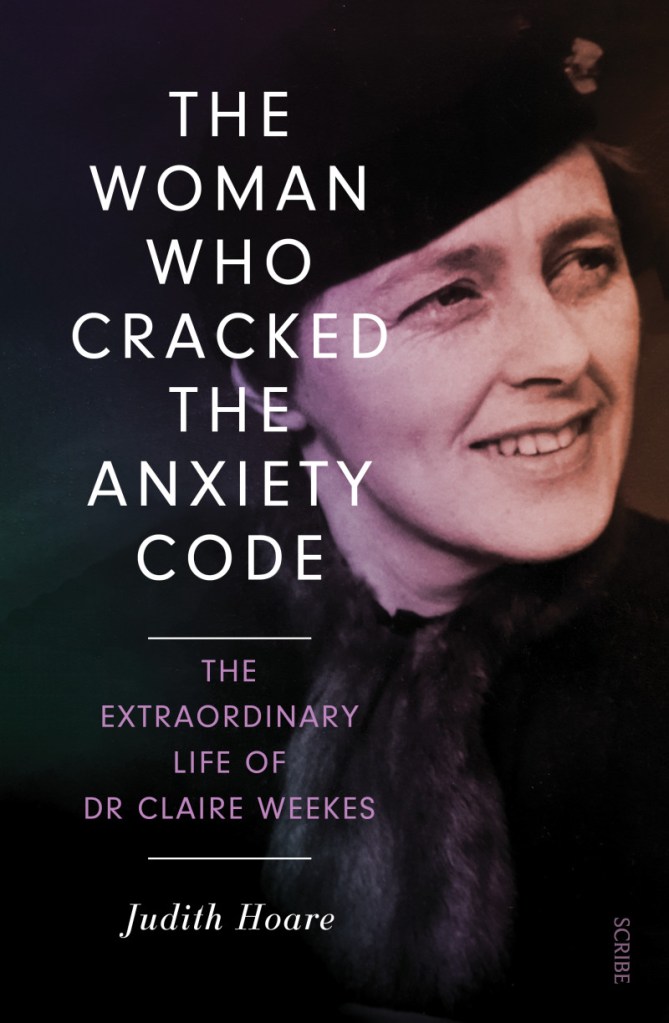
‘The Woman Who Cracked the Anxiety Code: The Extraordinary Life of Dr Claire Weekes’
Judith Hoare author (2019) non-fiction, Melbourne Scribe Publications.

This book is the first to tell that story, and to tell Weekes’ own remarkable tale, of how a mistaken diagnosis of tuberculosis led to heart palpitations, beginning her fascinating journey to a practical treatment for anxiety that put power back in the hands of the individual.”  https://scribepublications.com.au/books-authors/books/the-woman-who-cracked-the-anxiety-code

Dr Claire Weekes Book by Judith Hoare

A book review and a quotation offering insight…

MY COMMENT After pointing out the non-scientific nature of Dr Claire Weekes work, and skirting round the fact that she was up against privileged white males who ignored women’s problems (like my mother) Professor of Psychology at University of Melbourne, Nick Haslam writes the following:

“Ages of Anxiety” by Nick Haslam
QUOTE “…Weekes deserves our recognition not for making grand discoveries about the nature of anxiety.  She deserves it for recognising the vast but often hidden suffering caused by “nerves”, for developing an accessible method for reducing it on a grand scale at a time when most treatment was one-to-one and ineffective, and for having the energy and determination to promote that method around the world.

“It is impossible to quantify the human suffering that Weekes’s work has alleviated, but major awards and honours are routinely given for scientific discoveries that have surely had far less benefit.  Contributions of this kind — high in influence but low in prestige, because ‘popular’ — are often overlooked.  In this fine book, Judith Hoare has rescued the legacy of a great Australian from that fate.”
https://insidestory.org.au/ages-of-anxiety/

“The Claire Weekes Approach to Anxiety” by Calm Clinic
QUOTE “Dr Claire Weekes, an Australian psychiatrist who lived between 1903 and 1990, had some revolutionary ideas about anxiety that are still noted today for being ahead of their time.  The books she wrote on the nature of anxiety, which also included the details of the simple exercises she used to treat both her patients’ anxiety and her own, are still sold today”.
https://www.calmclinic.com/treatmentclaire-weekes

Poetry Clipart 13This blog post started off as a way to express my family’s gratitude for the work of Dr Claire Weekes and it may have ended up seeming like a product endorsement.  Let me state that I am only commenting and not endorsing the books, the benefits or the quotations.  YOU HAVE TO MAKE UP YOUR OWN MIND AND SEEK HELP IF YOU NEED IT.  LIKEWISE, OFFER HELP IF YOU SEE ANOTHER PERSON SUFFERING MENTAL HEALTH ISSUES.

Gretchen Bernet-Ward

Good health and happiness!

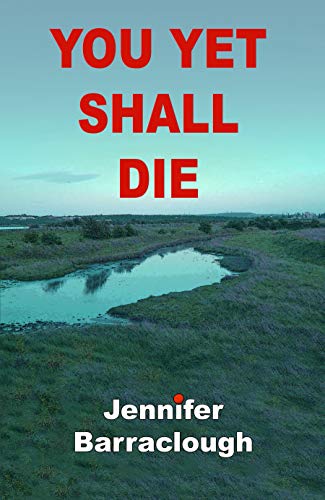
Review ‘You Yet Shall Die’ by Jennifer Barraclough

You Yet Shall Die by Jennifer Barraclough 02

Hidden at the heart of the Harper family, veiled in secrets, is a mystery waiting to be solved.  A skilfully plotted novel with intriguing characters, crime, cats and a brother and sister unaware of what they will expose when they start peeling back the layers.

Set in south-east England around 2005, Hilda Harper tramps across the North Kent marshland on a summer’s evening.  She is mulling over an unusual meeting she had earlier in the day.  A woman named Nicky had knocked at her door and revealed some astounding news.  This unexpected visit impels Hilda to explore the truth about her family’s past.

How well did she know her father?  What was the cause of her mother’s death?  Is Nicky really who she says? 

You Yet Shall Die by Jennifer Barraclough 01

The story is told through the three main characters, Hilda, Dunstan and Nicky, each with their own chapters and different points of view.  Hilda and her younger brother, Dunstan, approach their deceased parents anomalous behaviour in varied ways.  The plot revolves around their strict, controlling father Dr Nicolas Harper and their religious mother Violet who suffered from a cardiac disorder.

Dunstan believes his father could do no wrong but Hilda couldn’t wait to leave home and start rescuing abandoned cats and kittens.  Dunstan says “My sister Hilda is, to put it kindly, rather eccentric.”  I agree, but she is a great character.  I think Dunstan has way more hang-ups to overcome, courtesy of his disenchanted upbringing.

Touching on mental issues, domestic bullying and unsettled memories, there comes a time when the scales dip towards a desperate action.  Poor Dunstan goes off the rails.  A cliff-hanger tempted me to untap my bookmark and keep reading into the night.  I followed the clever twists and turns until I arrived at two startling discoveries.  One more shocking than the other.

Family secrets can be destructive, changing the course of lives.IMG_20200417_133141

For me, the sense-of-place is strong and characters are easily envisaged.  Nicky is quite lively yet generally I felt a genteel vibe and imagine the setting would work equally well further back in time.  I liked the medical details, and Hilda’s love of cats; her rescue of tiny Magic echoes author Jennifer Barraclough’s support for animal welfare.

The book title is taken from “The Yew Tree” poem by Valerie Dohren, but I will close with a quote from Hilda “I need a walk to clear my troubled mind, so after lunch I put on my oilskins and gumboots and set off over the desolate marshland towards the Thames.  It is a cool and misty day with a light rain falling and there are no other people about, just a few sheep and gypsy ponies.”  A perfect remedy.

Top marks for “You Yet Shall Die” an absorbing crime and mystery story without the gory bits.

Gretchen Bernet-Ward


Cat Black and White 04AUTHOR PROFILE

Formerly a medical doctor in England, Jennifer Barraclough now lives in New Zealand and writes novelsnon-fiction books and a blog.  Jennifer is a cat owner and Magic has a cameo in her latest book You Yet Shall Die a novel in the “domestic noir” genre, set in the North Kent marshes near her childhood home.

After moving to her husband’s native New Zealand in 2000, Jennifer studied natural healing, and ran a Bach flower practice for ten years.  Writing is her main occupation now but her other interests include animal welfare activities, choral singing, and visiting the local beaches and cafés.

Jennifer’s new novel You Yet Shall Die and all her book publications like Wellbeing of Writers can be found at Amazon.com  Amazon.co.uk   Smashwords.com  and other online retailers.


Cat Black and White 03

ACKNOWLEDGEMENT
My thanks to the author for a complimentary copy of this book.  I appreciate the opportunity to read and review “You Yet Shall Die”
—GBW.


Cat Drawing Guttenburg Project

FOR LOVERS OF CATS AND ILLUSTRATIONS – GUTENBERG CAT FILE
https://www.gutenberg.org/files/35450/35450-h/35450-h.htm
The Project Gutenberg eBook ofOur Cats and All About Them” by Harrison Weir (1892) a well researched and remarkable volume.  Full Title: “Our Cats and All About Them.  Their Varieties, Habits, and Management; and for Show, the Standard of Excellence and Beauty; Described and Pictured”.