The style guide reads: Below are errors in style due to inappropriate or poor choices of language which can lead to boring, imprecise and inaccurate writing. In some situations, they may be relevant and suitable, but they are usually best avoided––
Clichés, over-used phrases, e.g. bed of roses, pretty as a picture.
Vogue words and trendy expressions, e.g. proactive, meaningful dialogue.
Colloquialisms in formal writing.
Parochialism in documents intended for a wide audience.
Jargon in documents intended for a general audience.
Euphemisms, e.g. pass away, upwardly mobile.
Overstatements, e.g. fabulous, incredible, fantastic, amazing.
Archaic words, e.g. herewith, thereby, hereinafter.
Sexist terms, e.g. man-made, nurseryman, waitress.
Tautologies, e.g. totally unique, completely empty.
Ambiguity, e.g. maybe I would if I could.
Unnecessary use of foreign words and phrases.
This information was retrieved from my older Word.doc files with no acknowledgements attached. As a touch of humour, I wrote the short profile of Aunt Belinda. I can only suppose such formal advice is for non-fiction writers.
Jen Storer is an established Australian children’s author brimming with imagination and inspiration. This post encapsulates her talent, personality and future plans. Jump into The Duck Pond and start paddling with emerging writers and illustrators! ♥Gretchen Bernet-Ward
I like writing blog posts at Christmas. No one expects much. Do they?
Writing: I finally finished Truly Tan: Baffled! (book seven) and delivered it to my publisher on time (working right up until December 15, the day it was due). Phew! Next year I’ll be waaaay more organised. Ahem.
Finalising: We signed off on Danny Best: Me First! Check out the full cover. Talk about The Best! 😉 Due out in Feb 2018.
Receiving: I received a Christmas card from a Tan reader. The letter attached said, I know you like wolves. So here’s a card with a fox on it. God, I love my readers.
Planning and: pondering 2018. I have some lovely plans for girl and duck, including a Scribbles Boot Camp in Feb, and an IRL (in real life) Scribbles master class in Melbourne in May. We will also be launching the Girl and Duck…
Is a listicle clickbait, fun facts written for readers with short attention spans, or an orderly way to write information?
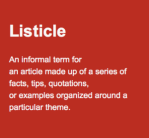
First of all, the word listicle is comprised of two words, list and article, and features numbered sentences. The salient content is brief, frequently light on facts, often humorous and has an almost hypnotic quality. There is a compulsion to read a listicle to the end but this can leave a feeling of dissatisfaction. Yet, as time and the internet marches on, readers can’t get enough of them. Accordingly, listicles have transcended dot points and editorial shortcuts to become the layout of choice for everyday writers and bloggers needing a quick and easy-to-read solution.
You know what to expect by the heading of a listicle, usually important nonsense, so opinions are divided on their usefulness. Are they ever meant to be taken seriously? Many people think so, but that’s probably because they are writing a how-to manual.
Back when a listicle in a magazine was called a Guide or Questionnaire, and had titles like “Ten Ways To Find Out If Your Boyfriend Really Loves You”, the format was short, numbered sentences and had ten boxes to tick ‘yes’ or ‘no’ and ended with your score. Listicles have morphed into a more sophisticated version of this ‘filler’ yet still pretend to be useful data, advice or handy hints to enhance your lifestyle.
So, does this glossary format, this amusing fad with the cute name, continue on or can it be classed as nouveau 21st century literacy?
It doesn’t affect my reading ability (heck, I’ve re-blogged them myself) and I tend to treat a listicle as an expurgation, a beguiling and abridged version of real reading. Just type in ‘listicle websites’ and have a look at the content. Hardly literature at its finest even allowing for sentences stripped bare.
There are as many ‘for’ and ‘against’ stories as there are listicles. Here are 3 of my favourite takes on listicles with apologies for not making it 10––
(1)Excerpt from “What Is A Listicle?” https://www.thoughtco.com/what-is-a-listicle-1691130
From Richard Nordquist comes this Garrison Keillor slice of the Darker Side Of Listicles, an interview with the writer who popularised listicles (or did he?) and asks him––
Q: Do you have any idea what damage you’ve done, Jim? You’ve made people more stupid. Some of your readers now find it hard to read paragraphs that aren’t numbered. A: How many? A lot?
(2)Excerpt from Mark O’Connell “Ten Paragraphs About Lists You Need in Your Life Right Now” The New Yorker, August 29, 2013 https://www.newyorker.com/books/page-turner/10-paragraphs-about-lists-you-need-in-your-life-right-now
“The rise of the listicle obviously connects with the internet’s much-discussed effect on our ability (or desire) to sit still and concentrate on one thing for longer than ninety seconds. Contemporary media culture prioritises the smart take, the sound bite, the takeaway––and the list is the takeaway in its most convenient form. But even when the list, or the listicle, has nothing really to do with useful information, it still exerts an occult force on our attention––or on my attention, at any rate. (’34 Things That Will Make ’90s Girls Feel Old.’ ’19 Facts Only a Greek in the U.K. Can Understand.’ ’21 Kinds of Offal, Ranked By How Gross They Look.’) Like many of you, I am more inclined to click on links to articles that don’t reflect my interests if they happen to be in the form of countdowns. And I suspect my sheep-like behaviour has something to do with the passive construction of that last sentence. The list is an oddly submissive reading experience. You are, initially, sucked in by the promise of a neatly quantified serving of information or diversion….Once you’ve begun reading, a strange magnetism of the pointless asserts itself.”
Note how Mark O’Connell has numbered all his paragraphs.
(3)On the flip side, here is an excerpt from pro-listicle website “Five Reasons Listicles Are Here to Stay and Why That’s OK” https://www.wired.com/2014/01/defense-listicle-list-article/
Rachel Edidin talks about ‘active progression’ and ‘lane-markers’ and her opening comment launches straight into battle “Lists are everywhere. They’re the bread and butter of sites like Cracked and BuzzFeed, and regular content or sporadic filler at dozens more. (Yes, even WIRED). From the multimedia gallery to the humble Top 10, list-format articles – listicles – are rapidly becoming the lingua franca of new-media journalism…” and later says “… listicles are just another tool in the box.”
If you are a listicle fan, you won’t be reading this blog post.
For those who have struggled this far, here is a bonus extra:
On a scrap of paper, I’ve just written my higgledy piggledy shopping list––or is it?
Postcards are alive and well and received by countless friends, family and complete strangers around the world. Complete strangers? This is where Postcrossing comes into the picture.
I first learned about Postcrossing, a postcard exchange group, from a quarterly Stamp Bulletin and joined free-of-charge. The five-step guidelines are easy to follow, the website makes it simple to set up a profile and tweak your settings. Navigate around and check out the stunning and prolific cards received and uploaded by Postcrossing members. Everyone abides by the rules so things flow smoothly between more than 69,000 members in over 200 countries.
SEND: There’s pleasure in finding and choosing suitable postcards and stamps uniquely representative of your own location. Clever members can match a postcard to followers hobbies. It took a couple of weeks for the first postcard to hit my letterbox but I could start mailing out straight away.
RECEIVE: The beauty, variety and quantity I received, often from places I’d never heard of, was impressive. English is universal although you can specify countries and language. Handwritten, never laser printed, it takes a certain skill to describe something about yourself and your town on the back of a small piece of cardboard!
The Postcrossing project was created in 2005 by Postcrossing Founder Paulo Magalhães as a side project when he was a student in Portugal. From 2008 to 2017, 40 million postcards have been sent. Naturally Paulo loves to receive postcards and finding one in his mailbox always makes his day!
Right down to the different shapes of the stamps, and in some cases, distinctly long addresses, I was hooked on the fun.
The Postcrossing website has stats and charts to follow the progress of your postcards and I only had one go missing in action. I think the British postcards were the quickest to arrive and I’ll be diplomatic and not say which was the slowest. Larger countries sometimes lagged, perhaps because of sheer volume – or misguided postal cuts. In Australia, there’s an infinite variety of unique postage stamps and supply doesn’t look like declining any time soon.
This world-wide concept stands strong, despite the challenges of internet and social media. Stamps are still stuck on postcards, timeless messages are still written on the back, and they are still physically mailed to a real address.
Postcrossing friendships are possible via their blog, forum and meet-ups. Due to work commitments, I closed my Postcrossing account and gave many of my postcards to a collector. I kept a few colourful ones to wistfully gaze at on a quiet day.
It would seem natural to present your writing in a positive manner but it’s often hard to do. Sometimes it can be easier to shrink away, to be shy or introverted, and other times quite difficult not to be self-effacing, apologetic or too polite. Regardless of what you’re offering, present a positive attitude to the world. I don’t mean a pushy pitch or aggressive behaviour, and it’s usually of no benefit to be bold to the point of belligerence, but tell yourself to be positive and you will be met with a greater degree of interest.
Just as my Grandma used to say “Don’t hide your light under a bushel”, and school teachers cajoled us to “smarten that attitude”, the following example of loss-and-gain is what I observed one Saturday morning at my local shopping centre.
It was Fundraising Week for a local youth group and they were selling sweet biscuits. Their traditional biscuits are round, flat and stamped with an insignia. This time they were also offering chocolate chip, shortbread, gluten free, etc, and the stall outside the supermarket was groaning with packets of enticing treats. The girls were in their uniforms, with neat hair and shiny faces. They proudly showed me the products on sale, offered me a sample and told me the pricing. It was such a pleasant encounter that I purchased several packets.
As I walked back to my car, I turned a corner and nearly bumped into more members of the group selling the same biscuits. They had the packets of biscuits on the flagstones and were standing with arms by their sides, eyes down, embarrassed by the shoppers walking past. No display, no smiles, no attempt to present themselves or their product in a good light. I think one shopper took pity and bought a packet, telling the girls to keep the change. The response was mumbled. Too late, a group leader came along as I was leaving.
Naturally I don’t expect everyone to be a salesperson, I understand those girls were daunted by the prospect, finding themselves in a situation outside their comfort zone. Nevertheless, they needed a positive-outlook boost because they represented an organisation, whereas writing is a personal extension of you – but surely it’s the same? You write for a reason, get it out there, let it go!
In my experience, being positive about your work brings confidence along for the ride.
Launch yourself from an author platform! Get yourself out there!
Emerging writers are advised to expand their author platform by widening their online presence, broadening their social media and linking websites. Recommended tips are video highlights and engaging with other writers on blogs and internet discussion groups. No doubt new writers mull over the difficulties of going from guts to glory. Or, in 21st century terms, Likes to glory. That’s it, isn’t it? The biggest number of Likes, page views or virtual friends you can get will make you the winner. Or does it?
I have read well-written books and I have read badly written books and sometimes those badly written books make it to the top. Why? Marketing the brand, the buddy system, freebies? Or is it because it’s fantastically easy to Like someone even if a reader forgets they tapped Like because they were texting, drinking coffee, looking for food in the refrigerator? Once you’ve reached published paradise via internet or bookshop, sales still remain a genuine way to gauge popularity. It’s a longer process to engage the reader and it involves thinking about the purchase. Tacky as it sounds, when money is exchanged you’re heading in the right direction.
Millionaire writers at the top of their literary game probably don’t put in the same internet hours the novice does. A rookie writer spends a lot of time staring at a screen, tapping away at a keyboard to keep the “me” momentum going. Only to find that if they neglect an area of connectivity for more than a day, they are already stale news. Their post and avatar moves on, drops out and someone else steps into the gap, glowing with instant recognition. Instant, that’s a tricky word, online presence needs to be instantaneous. But it’s usually not permanent, it does not equate to stardom, it just means that they hover in the pack of thousands for an instant.
It’s difficult to know how much networking is too much. Creativity can suffer. Another driving force for the evolving author is the ever-present fear that an editor from a prestigious publishing house will scorn their week-old post and think they are not up to the job. This raises an online conundrum; content versus frequency. The pressure is on.
So that my thoughts can become words, I am using a good media platform right now. However, I’m under no illusions that suddenly it will make me readable, bankable and popular. Personally, I think perpetual loyalty to the internet crushes originality. Ah, a lightbulb moment! As long as you feel fulfilled as a writer, you will write and you will love what you write. Don’t be too concerned about the initial lack of Likes. To gain any sort of recognition, I think we should remain steady and plod along and work hard yet with a happy heart. Stay true to that inner core, that part of our soul which says “Do it, you know you want to, you know you can” and accept the outcome.
Walking in a park, I saw this wall of trompe l’oeil on the side of a public convenience block and just had to photograph it. The illusion, the trick of the eye was something special which I appreciated more after I saw my photograph. It was painted by local Sherwood (Brisbane) artists with the name Half Dozen Group of Artists Inc.
One of my favourite pastimes is to change my screensaver image. I do it on my PC and iPad regularly. Silly obsession, I know, but it gives me a smile when I log on each day. I take my own photographs wherever I might be, and have a supply of snapshots and artwork amassed from family and friends over the years. Some work well, some don’t. “Framing and focus” was the old adage.
Searching
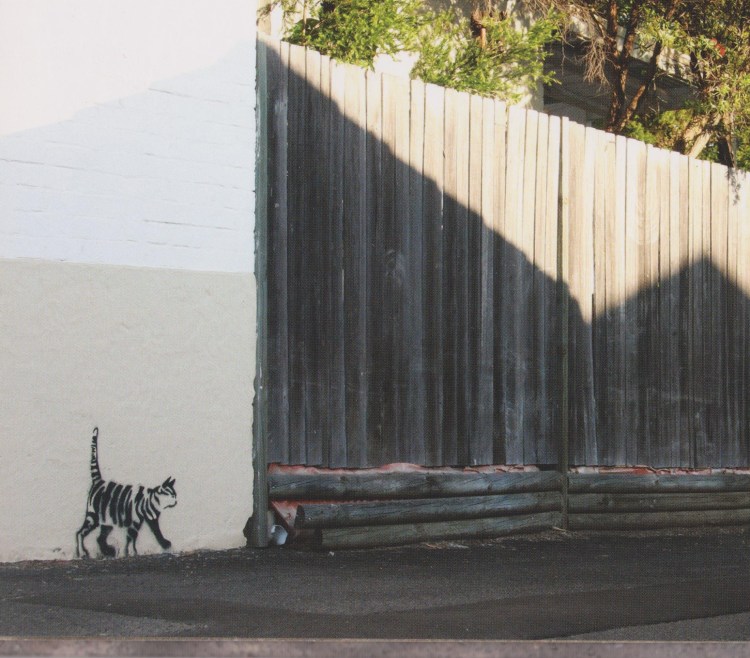
There is a children’s picture book entitled “The Stripey Street Cat” by Peter Warrington and Rachel Williams which is a photographic series of stencilled street art images of a stray cat. They tell the story of Stripey who is looking for a lost friend, meeting various other Newtown (Sydney) cats along the way.
An illustration I use regularly which attracts attention for all the wrong reasons is this one of Snoopy typing away in the middle of the night with a cigarette in his mouth. I’m anti-smoking but there’s something naughty about making an icon like Snoopy do such a thing. The artist is unknown but I think he’d have a good sense of humour.
It is going to be an uncomfortable meeting. The aluminum-lined tin roof of the old scout hut has Christmas lights still hanging from the beams but no ceiling fans. In the slowly increasing heat, city council employees stand around fanning themselves with official paperwork, sweat running into the collars of their creased jackets.
A gathering of various ages and nationalities, husbands, wives, old friends milling about, young children already fidgeting, and teenagers comparing notes about being awake so early on a Saturday. And me, taking notes for a writing class.
My brief: Go to an unusual place and observe people and surroundings then write about it.
I tread the worn linoleum flooring, past bare walls, seeking a vacant chair. Instead being lured by chilled water jugs, beaded with droplets. The moisture runs onto trestle tables covered with plastic cloths and neatly stacked glassware. On a corner table, ignored, a tea urn, china cups and sugar. “Too hot for a cuppa,” hisses a woman “but a biscuit would be nice.” No such luck, it looks like it will be all business.
I chose this council meeting, billed as a Community Centre Public Consultation, hoping for a good cross-section of individuals. The focus is an old disused council depot just up the street from the scout hall which is ripe for redevelopment. Possibly a venue for arts and crafts, retired folk or out-of-work men with carpentry skills. Doesn’t sound too threatening but you never know with hot tempers and hotter weather.
There are not enough white plastic chairs so a frantic search gets underway to find more seats for late arrivals. By now, attendance hovers around 45 humidity-affected people. Craggy old veterans, highly-perfumed women, groups in casual shirts and shorts, retired types perhaps looking forward to the proposed construction. One woman commands attention with a loud voice, passionate about protecting her home from noise and extra traffic. A male voice tells her “It hasn’t started yet so shut up.”
Registration sheets are handed around and duly completed, information leaflets handed out, a welcome speech, introductions all round and the meeting starts. The Councillor and various council departments take turns talking about the proposed community centre site and how it will benefit the general public. A white board and black pens are used to draw proposed plans, stressing that existing trees will remain and more planted.
I put my reading glasses on as a slide presentation illuminates but some gruff local residents butt in with irrelevant queries. A young, flushed council assistant is hassled by senior homeowners out to protect their land values, citing added burdens on the already strained infrastructure. “Traffic is bad enough now, this street can’t cope with extra cars.” And “If an event was on, numbers would treble and we couldn’t get out of our driveways!” There is a smattering of applause and a red-faced toddler starts to cry.
The Councillor is getting agitated, stern faced and unhappy about these interruptions to her pet project. She rises, retorts in a firm, concise manner “Questions and answers will be held at the end of this session. Please refrain from interrupting” then she sits down and furiously scribbles a note.
Feeling overheated and drowsy as the meeting drags on, I’m shaken from my lethargy by an unusual break in the proceedings. Oh dear. A plus-size young lady on a wobbly plastic chair is starting to slip. Slowly, her chair sinks as the legs buckle and she gracefully slides to the floor. Plop! The Council officials gasp as one. Embarrassed, she rolls over and stands up. Everyone is fussing, offering her sympathy and cold water. The weakened chair is quickly replaced and a sturdier one supplied.
More words, blurring in, old ground is covered then comes audience input time. An outpouring of emotion from local residents, more fervent than factual, practical comments are overruled by zealous objections. Limp council staff organise the tables and chairs into groups and hand out sheets of butcher’s paper and pens for the audience to scrawl down comments about traffic, parking issues and the type of structure they would like to see near their homes. I don’t attempt a drawing, unlike the person next to me who is lavishly embellishing a castle-like structure. Hardly acceptable but she is about six years old. My hand melts the thin paper and the felt-tip pen smudges as I write a couple of comments.
The Councillor stands, looking strained, and addresses the gathering with a formal thank-you. Her politeness is wasted. It’s time to go and already people are moving towards the rear doors. Outside the air is heavy with the smell of eucalyptus. I fold my notes, not looking forward to my hot car and a long drive home.
AFTERWORD: Jump ahead in time, eight years to be precise, and the derelict sheds are revitalised and re-purposed into a community centre, a thriving hub for group activities. Men’s Shed displays are held yearly, artisans can be commissioned for special projects. The perceived threat to peace and tranquility did not materialise due to sensible planning and a carpark. Feathers were hardly ruffled … unlike the storm brewing over old homes being demolished and their sites redeveloped for high density box-like dwellings. Now that really will affect their suburban infrastructure …
This photograph intrigued me for two reasons. First, I thought perhaps the laird is a children’s storybook lover, and second, perhaps National Trust Scotland has relaxed their heritage rules. The illustrations certainly capture the essence of fairytales, well-worked and colourful. No doubt this eye-catching display attracts the attention of the viewing public. For better or worse!
Now, for those who like the facts, here they are:
The Graffiti Project
Most people know Kelburn for its innovative street art projects, or perhaps it is better described as ‘castle art project’, which brought together four leading graffiti artists from Brazil. The artists were asked to transform the rendered exterior of the castle’s south walls and tower into a gigantic work of art, blending Scottish architecture with vibrant and colourful urban art on a giant scale. The Kelburn Castle ‘canvas’ has been named one of the Top 10 examples of street art in the world.
There are lots of other attractions at Kelburn Estate, well worth a visit!
Historical romance author Jessica Blair was unmasked as 93 year-old British grandfather Bill Spence. In the past, female writers like Charlotte Brontë had to adopt male pen names in order to get their books published. But the tables were turned for former war hero Bill Spence after he wrote a series of romance sagas.
The grandfather from Ampleforth, North Yorkshire, was told his books would need to be printed under a feminine moniker if he wanted them to sell – and so his pseudonym Jessica Blair was born.
Bill has various genres published under another name but has written 26 novels under the female pen name. In 1993, his first book was “The Red Shawl”. In 2017 his current title is “The Life She Left Behind” about a young widow, with futures to secure for her two daughters, who is torn between remaining at her beloved estate Pinmuir in the Scottish Highlands or following the plans her deceased husband made to join his brother in America. Hmm, that outcome could go either way.
My congratulations, Bill, on longevity in both writing and living!


 Writing: I finally finished Truly Tan: Baffled! (book seven) and delivered it to my publisher on time (working right up until December 15, the day it was due). Phew! Next year I’ll be waaaay more organised. Ahem.
 Receiving: I received a Christmas card from a Tan reader. The letter attached said, I know you like wolves. So here’s a card with a fox on it. God, I love my readers.








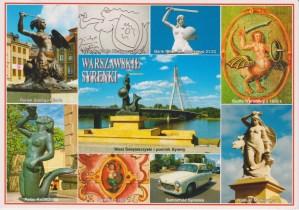 SEND: There’s pleasure in finding and choosing suitable postcards and stamps uniquely representative of your own location. Clever members can match a postcard to followers hobbies. It took a couple of weeks for the first postcard to hit my letterbox but I could start mailing out straight away.
 Right down to the different shapes of the stamps, and in some cases, distinctly long addresses, I was hooked on the fun.
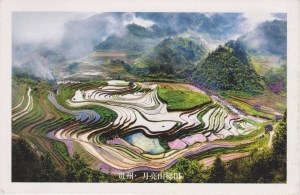 Postcrossing friendships are possible via their blog, forum and meet-ups. Due to work commitments, I closed my Postcrossing account and gave many of my postcards to a collector. I kept a few colourful ones to wistfully gaze at on a quiet day.








 Thoughts Become Words