The Centenary Theatre Group, a company based in Chelmer, Brisbane, has made an official announcement calling for actors to fill roles in Agatha Christie’s inimitable stage production of ‘Verdict’ with opening night in November 2024. You may like Agatha Christie novels, or perhaps keen to tread the boards with this seasoned amateur group, read on—
SYNOPSIS Karl Hendryk, a brilliant professor who, with his wife and her cousin, have fled persecution in their homeland to find themselves ensconced in London. This stage play revolves around human experience and relationships. ‘It satisfied me completely. I still think it is the best play I have written with the exception of Witness for the Prosecution,’ said Agatha Christie.
AUDITION For Centenary Theatre Group PRODUCTION OF ‘VERDICT’ by Agatha Christie (opening November 2024) TIME & DATE: 2.00PM SATURDAY 14 SEPTEMBER 2024 LOCATION: CHELMER COMMUNITY HALL, 15 QUEENSCROFT STREET, CHELMER, BRISBANE. GOOGLEhttps://maps.app.goo.gl/GPWBBYnpwgjcncKS7
‘Verdict’ Written by Agatha Christie Directed by David Bell ‘Verdict’ is a 1958 stage play by British mystery writer Agatha Christie. It is unusual from other Agatha Christie plays: it is an original not based on a story or novel and, although there is a murder, it is more than a typical ‘whodunnit’ mystery.
CAST REQUIRED Lester Cole 25 years old. Mrs Roper 40 years old plus, gruff and rude. Lisa Koletzky Early 30’s, attractive. Professor Karl Hendryk 45 and handsome (German accent). Anya Hendryk 38, invalided in wheelchair and Karl’s wife (German accent). Dr Stone 60 years old and a typical family doctor. Helen Rollander age 23 and beautiful. Sir William Rollander middle age, tall and Helen’s father. Detective Inspector Ogden 40’s and pleasant nature. Police Sergeant Pearce sergeant’s age open, mid-thirties plus. NOTE All cast need to be proficient in English accents.
SETTING This 2-act play will be set in the year it was written – 1958. ‘Verdict’ is one of only a few Christie plays written directly for the stage and not adapted from another story. It originally opened at Strand Theatre in West End, London, May 1958.
Originally published in the American Magazine (September 1928) and included in the Philo Vance Investigates omnibus. Reproduced here (September 2024) as one big scroll almost a century later.
Full credit goes to author S.S. Van Dine, AKA Willard Huntington Wright who was born 15th October 1888, Charlottesville, Virginia, USA. He died 11th April 1939 (aged 50) New York City, USA.
THE DETECTIVE STORY is a kind of intellectual game. It is more — it is a sporting event. And for the writing of detective stories there are very definite laws — unwritten, perhaps, but none the less binding; and every respectable and self-respecting concocter of literary mysteries lives up to them. Herewith, then, is a sort of Credo, based partly on the practice of all the great writers of detective stories, and partly on the promptings of the honest author’s inner conscience. To wit:
1. The reader must have equal opportunity with the detective for solving the mystery. All clues must be plainly stated and described.
2. No wilful tricks or deceptions may be placed on the reader other than those played legitimately by the criminal on the detective himself.
3. There must be no love interest. The business in hand is to bring a criminal to the bar of justice, not to bring a lovelorn couple to the hymeneal altar.
4. The detective himself, or one of the official investigators, should never turn out to be the culprit. This is bald trickery, on a par with offering someone a bright penny for a five-dollar gold piece. It’s false pretences.
5. The culprit must be determined by logical deductions — not by accident or coincidence or unmotivated confession. To solve a criminal problem in this latter fashion is like sending the reader on a deliberate wild-goose chase, and then telling him, after he has failed, that you had the object of his search up your sleeve all the time. Such an author is no better than a practical joker.
6. The detective novel must have a detective in it; and a detective is not a detective unless he detects. His function is to gather clues that will eventually lead to the person who did the dirty work in the first chapter; and if the detective does not reach his conclusions through an analysis of those clues, he has no more solved his problem than the schoolboy who gets his answer out of the back of the arithmetic book.
7. There simply must be a corpse in a detective novel, and the deader the corpse the better. No lesser crime than murder will suffice. Three hundred pages is far too much pother for a crime other than murder. After all, the reader’s trouble and expenditure of energy must be rewarded.
8. The problem of the crime must be solved by strictly naturalistic means. Such methods for learning the truth as slate-writing, ouija-boards, mind-reading, spiritualistic séances, crystal-gazing and the like, are taboo. A reader has a chance when matching his wits with a rationalistic detective, but if he must compete with the world of spirits and go chasing about the fourth dimension of metaphysics, he is defeated ‘ab initio’ ‘from the beginning’.
9. There must be but one detective — that is, but one protagonist of deduction — one ‘deus ex machina’ ‘God from the machine’ ‘contrived solution‘. To bring the minds of three or four, or sometimes a gang of detectives to bear on a problem, is not only to disperse the interest and break the direct thread of logic, but to take an unfair advantage of the reader. If there is more than one detective the reader doesn’t know who his ‘conductor’ is. It’s like making the reader run a race with a relay team.
10. The culprit must turn out to be a person who has played a more or less prominent part in the story — that is, a person with whom the reader is familiar and in whom he takes an interest.
11. A servant must not be chosen by the author as the culprit. This is begging a noble question. It is a too easy solution. The culprit must be a decidedly ‘worthwhile person’ — one that wouldn’t ordinarily come under suspicion.
12. There must be but one culprit, no matter how many murders are committed. The culprit may, of course, have a minor helper or co-plotter; but the entire onus must rest on one pair of shoulders: the entire indignation of the reader must be permitted to concentrate on a single dark nature.
13. Secret societies, camorras, mafias, et al, have no place in a detective story. A fascinating and truly beautiful murder is irremediably spoiled by any such wholesale culpability. To be sure, the murderer in a detective novel should be given a sporting chance; but it is going too far to grant him a secret society to fall back on. No high-class, self-respecting murderer would want such odds.
14. The method of murder, and the means of detecting it, must be rational and scientific. That is to say, pseudo-science and purely imaginative and speculative devices are not to be tolerated in ‘roman policier’ ‘romantic police officer’. Once an author soars into the realm of fantasy, in the Jules Verne manner, he is outside the bounds of detective fiction, cavorting in the uncharted reaches of adventure. (That’s changed!)
15. The truth of the problem must at all times be apparent — provided the reader is shrewd enough to see it. By this I mean that if the reader, after learning the explanation for the crime, should reread the book, he would see that the solution had, in a sense, been staring him in the face – that all the clues really pointed to the culprit — and that, if he had been as clever as the detective, he could have solved the mystery himself without going on to the final chapter. That the clever reader does often thus solve the problem goes without saying.
16. A detective novel should contain no long descriptive passages, no literary dallying with side-issues, no subtly worked-out character analyses, no ‘atmospheric’ preoccupations. such matters have no vital place in a record of crime and deduction. They hold up the action and introduce issues irrelevant to the main purpose, which is to state a problem, analyse it, and bring it to a successful conclusion. To be sure, there must be a sufficient descriptiveness and character delineation to give the novel verisimilitude.
17. A professional criminal must never be shouldered with the guilt of a crime in a detective story. Crimes by housebreakers and bandits are the province of the police departments — not of authors and brilliant amateur detectives. A really fascinating crime is one committed by a pillar of a church, or a spinster noted for her charities.
18. A crime in a detective story must never turn out to be an accident or a suicide. To end an odyssey of sleuthing with such an anti-climax is to hoodwink the trusting and kind-hearted reader.
19. The motives for all crimes in detective stories should be personal. International plottings and war politics belong in a different category of fiction — in secret-service tales, for instance. But a murder story must be kept ‘gemütlich’‘agreeable’, so to speak. It must reflect the reader’s everyday experiences, and give him a certain outlet for his own repressed desires and emotions.
20. And (to give my Credo an even score of items) I herewith list a few of the devices which NO self-respecting detective story writer will now avail himself. They have been employed too often, and are familiar to all true lovers of literary crime. To use them is a confession of the author’s ineptitude and lack of originality:
(a) Determining the identity of the culprit by comparing the butt of a cigarette left at the scene of the crime with the brand smoked by a suspect.
(b) The bogus spiritualistic séance to frighten the culprit into giving himself away.
(c) Forged fingerprints.
(d) The dummy-figure alibi.
(e) The dog that does not bark and thereby reveals the fact that the intruder is familiar.
(f) The final pinning of the crime on a twin, or a relative who looks exactly like the suspected, but innocent, person.
(g) The hypodermic syringe and the knockout drops.
(h) The commission of the murder in a locked room after the police have actually broken in.
(i) The word association test for guilt.
(j) The cipher, or code letter, which is eventually unravelled by the sleuth.
And there you have it. Not a modern gadget in sight!
Willard Huntington Wright (S.S. Van Dine) 1887-1939 Fantastic Fiction https://www.fantasticfiction.com/v/s-s-van-dine/ 1. The Benson Murder Case (1926) · 2. The Canary Murder Case (1927) · 3. The Greene Murder Case (1928) · 4. The Bishop Murder Case (1928) · 5. The Scarab Murder Case (1930)
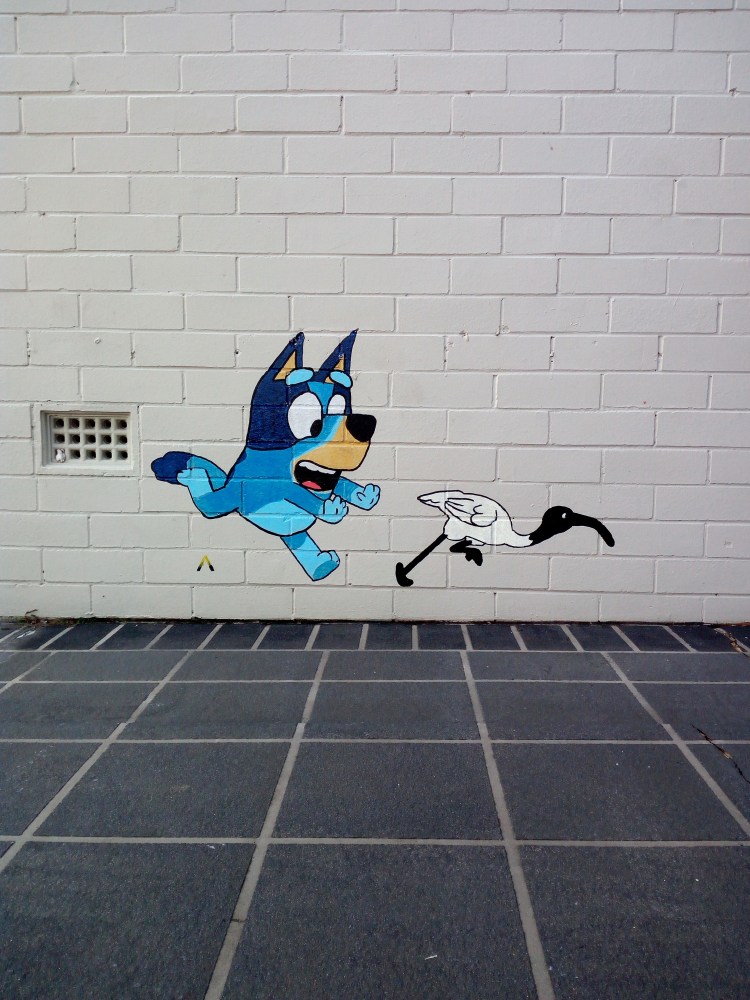
Is our cartoon star Bluey from Brisbane (seen here in the suburb of Sherwood) living up to the Blue Heeler herding tag, or did the Ibis shout “Chasey! Bet I can beat you!” My money is on the Ibis because, unlike an Emu, the Ibis can fly.
The Australian White Ibis was once known as the Sacred Ibis but is sadly now often referred to as a “bin chicken, tip turkey or dumpster diver”. They tend to be opportunistic scavengers and can often be spotted at rubbish tips and in city parks. However, they are harmless to humans.
But first some facts on Bluey: Bluey is an Australian animated television series for school children which premiered on ABC Kids. The cartoon program was created by Joe Brumm and is produced by Queensland-based company Ludo Studio. The stories follow Bluey, an anthropomorphic six-year-old (later seven-year-old) Blue Heeler puppy who is characterised by her abundance of energy, imagination and curiosity about the world. The young dog lives with her father, Bandit, mother, Chilli, and her younger sister Bingo who regularly joins Bluey on adventures through imaginative play. Other characters featured each represent a different dog breed. Overarching themes include focus on family, growing up and Australian culture. Ostensibly for children, the program is watched by all age groups. Bluey was created and produced in Queensland and the capital city Brisbane inspires the show’s settings.
The Australian Museum website has White Ibis details but here’s some further reading—
The Australian white ibis (Threskiornis molucca) is a wading bird of the ibis family, Threskiornithidae. It is widespread across much of Australia. It has a predominantly white plumage with a bare, black head, long downcurved bill, and black legs. While it is closely related to the African sacred ibis, the Australian white ibis is a native Australian bird. Contrary to urban myth, it is not a feral species introduced to Australia by people, and it does not come from Egypt.
Historically rare in urban areas, populations have disappeared from natural breeding areas such as the Macquarie Marshes in northern New South Wales and urban populations in Sydney. However, the Australian white ibis has established in urban areas of the east coast in increasing numbers since the late 1970s; it is now commonly seen in and around Wollongong, Sydney, Melbourne, Adelaide, Darwin, the Gold Coast, Brisbane and Townsville. In recent years, the bird has also become increasingly common in Perth, Western Australia and surrounding towns. As yet it has not been sighted in Tasmania.
Aussies love a good nickname and, as mentioned, due to the Ibis increasing presence in the urban environment and its habit of rummaging in garbage, this protected species has acquired a variety of colloquial names such as “bin chicken”. In recent years these birds have become an icon of Australia’s popular culture, regarded with glee by some and passionate dislike by others. I don’t hinder their Ibis lunch in the park and they (so far) don’t disrupt mine.
An autobiographical tale condensed into a short story for my writers group on Tuesday, and yes, you get to read it here first!
Due to the nature of my story, I have not used paragraphing or dialogue so there is one continual flow of consciousness.
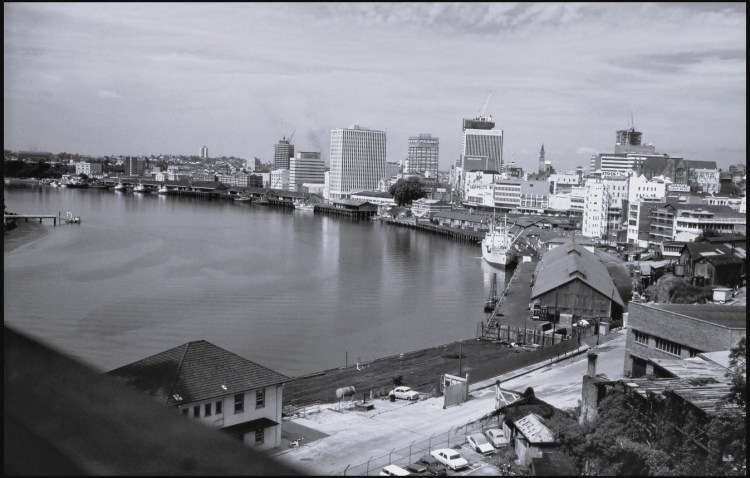
Brisbane River CBD red arrow marks the approximate area where the warehouse building in my story exposéwas located in 1970s.
One thing I disliked about doing temp work for a small city employment agency was the tedious, repetitive and uncomfortable jobs I was sent to do without so much as a ‘Would you like this assignment?’ or ‘Does this one suit you?’ No, I was just shunted off without any idea of what I was going to be doing. You could bet on it being the worst office job, the one that no staff member would touch, nor would they give any help to the newbie. Off I would trot to a dingy 1970s office with old-fashioned equipment, uncomfortable chairs and messy desks with tea mug stains which I was supposed to miraculously turn into a fully functioning, pristine work environment in eight hours. At least, I always hoped my assignments were one-off because more than a day would usually send me around the bend. Particularly if the staff were snobby or the boss was grumpy. One fellow sat like a school principal on a raised platform and watched everyone to see that they only took five minutes for tea break. I learned from other assignments to take my own snack pack of biscuits and fruit to sustain me throughout the long, long day. Once I had a manager who actually checked my waste paper basket to see if I was making mistakes and using up his precious stationery. Another time, I was assigned to a city real estate agency in a grim, gloomy warehouse office somewhere alongside the Brisbane River near the Story Bridge off-ramp to Ivory and Ann Streets, now luxury apartments. I swear that day I never saw another staff member except the front desk receptionist. Surrounded by dust motes and empty desks of the old dark wood sharp-cornered style, I was given the job of typing mail-out letters and addresses on envelopes, a task I was always particular about, and phoning the Courier Mail real estate advertisement section to place ads for forthcoming auctions. I did not understand any of the in-house jargon and I am sure they did not understand my misinformation. At lunchtime, without a briefing, I found myself substituting for the reticent front desk receptionist who may or may not have gone to lunch. This was transition time, the 1970s on the cusp of the 1980s with the 21st century looming. An office world ruled by paper, bookkeeping ledgers, staplers, hole-punchers and Liquid Paper. Also this was the era of IBM golf-ball typewriters and weird flat switchboards; plus there was a two-way radio for the real estate sales reps to call in with information on new clients, or when they were on lunch (probably the pub) or just plain going home for the day. Without a test run, I botched that two-way connectivity twice. The dusty potted plant in the corner seemed to shrug in commiseration. Whatever. I put on my best smile when a woman wearing heels and heavy make-up walked in to pay her rent money. She pulled a wad of fifty dollar notes from her handbag. Back then apparently it was all cash unless you paid with a bank cheque. And she asked for a receipt. What? How was I meant to know where the receipt book was? The searing question uppermost in my panicking brain was ‘What do I do with all this cash?’ The renter helped me muddle through, flashing her long red nails in the direction of the desk drawers and a large manilla envelope. I was very uncomfortable with the whole situation. The reception desk was closely aligned with the open front door and as I hand-wrote a carbon-copy receipt, the noise, grit and heat of the city washed across me. No ducted air-conditioning in those days, even the old pedestal fan couldn’t handle summertime. Of course, one of the selling agents called again on the two-way. Again, I fumbled the call. I have a hazy memory of what transpired next, another rent payer perhaps? One who had the good sense to say they would come back later. Subtext: when a more competent staff member was on duty. As I sat there, I could almost feel the old walls oozing the gloom of years of suffering, clerical staff clock-watching their lives away. I had an epiphany. When the real receptionist returned to her post, I showed her where I’d shoved the money, turned and clip-clopped across the wooden floor boards back to the end-row of desks where I had stowed my handbag. Without hesitation I picked up my belongings and headed for the front door. I walked passed the receptionist on a phone call and gave her a quick nod loaded with nuance. She blinked slowly then went back to the caller. I left that building never to return. I cannot remember if I was paid for half a day’s work, I did type a pile of addressed envelopes. However, there were no repercussions from my unscheduled walk-out. On that day, as the glare shimmered up from the concrete footpath, I took a deep breath of freedom knowing I would resign from the employment agency and find a permanent job, one that I could really love. Happily I did, but there was a lot of typing along the way as new equipment superseded the old. I embraced the electronic era, the internet and email connectivity, the computer functions, the fabulous formatting and home printers. And thankfully unchanged keyboards. However, I will never embrace Excel and I will always love books, pens, paper clips and days off. GBW.
ⓒ Written and compiled by Gretchen Bernet-Ward ❤ 2024.
Brisbane River Wharves 1970 viewed from Story Bridge – Original image attributed to Queensland University of Technology.
Many homes have a hoarder, a collector of items, souvenirs, mementoes, toys, anything from sentimental to historical objects which gather dust, get donated, or are disposed of when the collector themselves reach the ephemeral stage.
Exhibit One: These skinny Brisbane telephone books are clinging on to past glories when everyone in business or at home reached for the ubiquitous phone book for a million different reasons. (Of course, prior to that, Directory Assistance were actually real women in the exchange answering calls with plugs and cords). The ‘modern’ phone book was a thick, chunky, printed paper volume in every home, every phone booth and on every desk in Australia. Now the same service is extended a billion times more via electronic means, mainly mobile phones. Except now you have to look more closely, assess more astutely, question more thoroughly the validity and genuineness of what you are reading from an often unverified source via an individual screen.
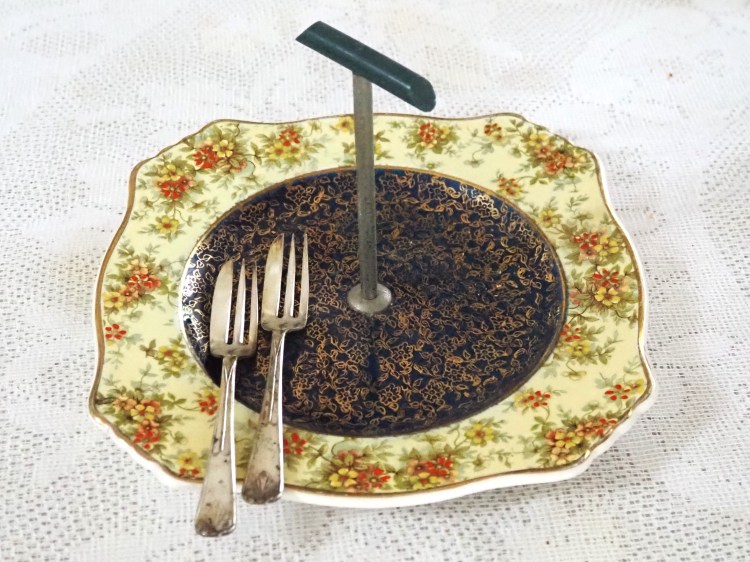
Exhibit Two: I pondered longingly on which of my inherited items would have the most value. Neither seem likely. Who wants old phone books and who polishes cake forks to use on a hand-painted cake server with a handle? This one was made and crafted in England by Royal Winton Grimwades pottery. It has all the right marks on the back to suggest it is genuine but relatively worthless. Royal Winton is an English brand of ceramics made by Grimwades Limited, a Stoke-on-Trent based company founded in 1885. The brand is particularly associated with chintzware and did not survive the unsentimental 1960s ethos of ‘Out with the old and in with the new’.
Let’s believe Peter Allen‘Everything old is new again’. In the future will everyday items become useful again, reused, recycled, or just sentimentally remembered via old movies, ubiquitous YouTube and books—yes, books will still exist! Chat to your sweet grandmother, verbose grandfather or trusted mature person and listen to their stories before AI fiction rewrites their history.
❤ Gretchen Bernet-Ward
Postscript: Our personal memories only go back as far as we have lived. Or not. Depends on your age, health and wellbeing. Write those unique experiences down for the future! GBW.
Birdlife co-exists with humans in every big city. Not sure if this Bush Stone-curlew was initially at the South Bank Cultural Centre to visit the Gallery of Modern Art or the Museum’s ornithological displays, but seemingly for dinner. Curlew was guarding its meal and nervously waiting until the walkway was clear.
Bush Stone-curlews live on the ground and are mostly nocturnal. This night it was not wailing its unnerving cry, just waiting for me, the photographer, to leave so it could get on with the job of takeaway for the family.
Feeding Habits: Bush Stone-curlews have a wide-ranging diet for such a fragile-looking bird, they prefer to feed on insects, molluscs, small lizards, seeds and occasionally small mammals. Feeding takes place at night. During the breeding season, nesting birds will search for food in the vicinity of the nest site, while at other times the birds may travel large distances. All food is taken from the ground. Bon Appétit 〰🐤
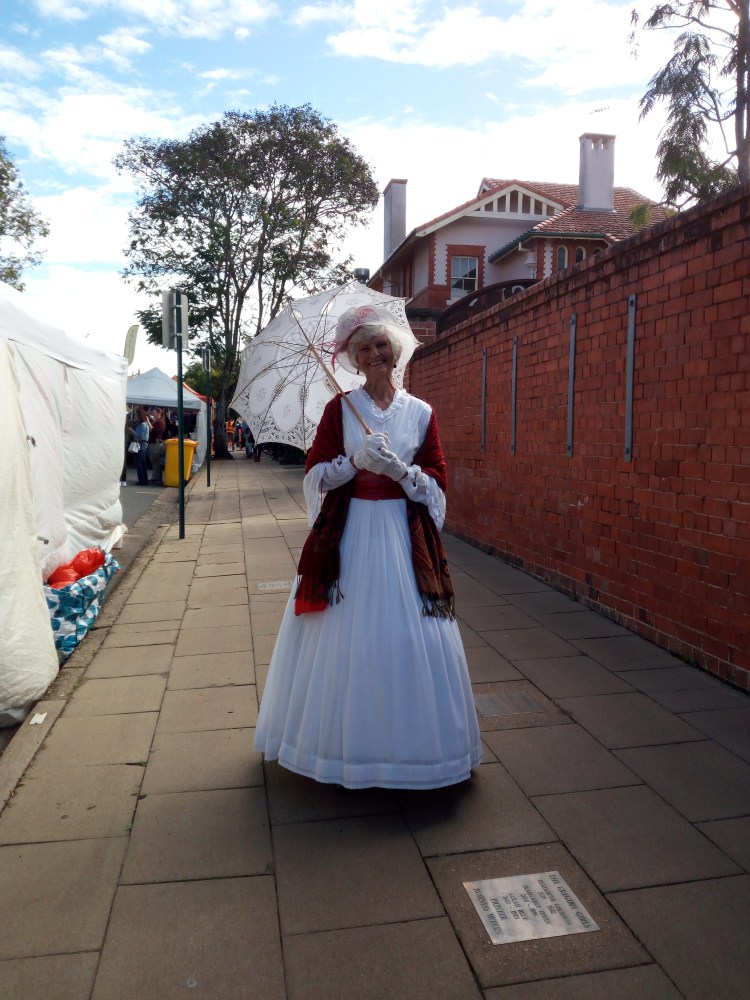
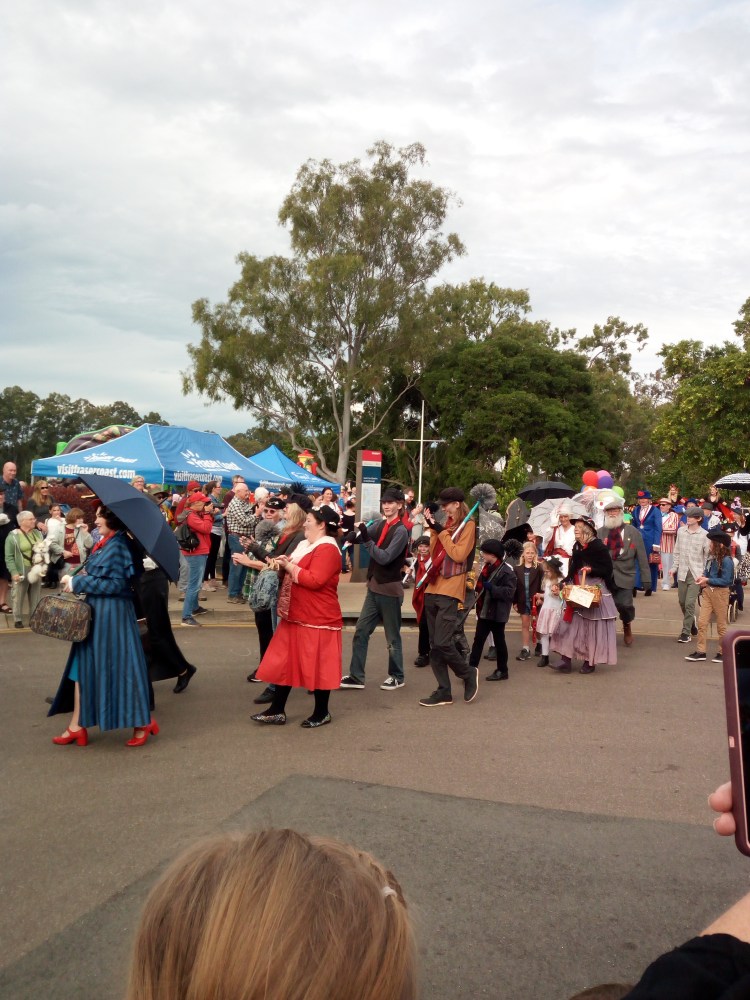
Street performers and buskers have existed all over the world since ancient times delivering accessible entertainment to the masses. Many people volunteer their time to historical re-enactments and charity events. It is an opportunity for undiscovered talent and the fearless and creative artisans of theatre to strut their stuff for a coin in the hat. However, a hat is not the only consideration for a street performer.
Australian Laws regulating street performances vary between Australian States. I don’t think these Maryborough performers need to worry but if your performance contains possibly offensive dialogue and/or conduct, you will need to be aware of the Summary Offences legislation. This includes legal constructs of what is considered to be “offensive” and who is the “reasonable person” in the 21st Century.
A WELL-KEPT SECRET! It is not uncommon when I mention University of The Third Age to retired people, they do not know anything about this organisation and the variety of resources on offer. Guess what! U3A does not want to be a well-kept secret!
THEY WANT SENIORS to be life-long learners and follow up that long-held wish to learn a Language, know more about Art, History, Creative Writing, how to use that Excel program on their computer and many other classes and activities from Scrabble to Healthy Living, keeping both mind and body working well—with no end-of-term exams.
U3A BRISBANE IS INVITING SENIORS from across the greater Brisbane area to discover the benefits of lifelong learning at an Open Day on Saturday 9 September, 2023. The event will run from 9.30am to 12.30pm at its City Campus (nextdoor to Anzac Square) on the 5th floor at 232 Adelaide Street, Brisbane. There is a carpark nextdoor and the building is minutes away from BCC buses and Central Station.
President Gabrielle Power West explains: “We are excited to welcome everyone to our Open Day. U3A Brisbane is not just about learning, it is about fostering a sense of belonging, creating an environment where seniors can continue to engage positively in our community.”
UNIVERSITY OF THE THIRD AGE The name says it all! There are over 200 branches Australia-wide: U3A Brisbane is a non-profit organisation run entirely by volunteers with a limited advertising budget. I have been attending classes for three years now and I know they are hoping to reach as many people as possible for this informative Open Day. Please tell your family and friends, carers and seniors new to Brisbane. Bring them along to discover this not-so-secret and highly accessible resource in the heart of Brisbane.
OPEN DAY OPPORTUNITIES will be provided for visitors to— • Explore the diverse range of courses on offer. • Find out about the benefits of participation in U3A. • Connect with their friendly tutors who are keen to share their knowledge in an inclusive and enjoyable learning environment. • Discover the camaraderie that makes U3A Brisbane a thriving community of like-minded people.
TUTOR A CLASS U3A Brisbane is always keen to hear from people who would like to share their knowledge or passion with others. Being a tutor can be rewarding in its own right. If you are reading this as a current member, have you considered running a course yourself? Do you know someone who is knowledgeable or passionate about a subject who would be prepared to share that by taking on the role of tutor/facilitator? There will also be an opportunity at the Open Day to ask about what is involved in being a tutor and the support U3A can provide.
ALL ARE WELCOME Admission is free. Light refreshments will be available. Please assist with catering by registering your intention to attend using this link or visit their website.
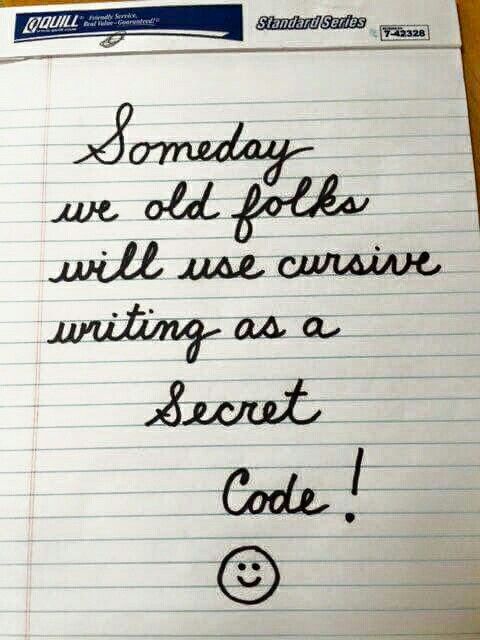
LIFT THE LID and spread the word about U3A. Impress your grandchildren, tell them where you go to school. Let everyone in on the secret!
You write a note, you play a note, you spend a fifty dollar note, you note the car registration, you notice a lot of things when you take note of them, like a friend’s new dress, your mate’s new haircut or that yapping dog nextdoor. Politicians and criminals are notorious and actors want to be noteworthy. People say “I will make a note of that” and in the 21st century this means on paper, in a diary or various devices with a keyboard, keypad, screen or verbally to an electronic entity.
The word Note has a lot of explanations, e.g. to observe, to bear in mind, a brief record of points or ideas, to write down as a memory aid or prompt and underscore a special event. I guess the word note has been abbreviated from notation or possibly elaborated since note originally comes from Latin nota, meaning to mark, sign, remark.
Many years ago I had an overseas penpal but don’t recall our youthful correspondence. I still handwrite to a friend living interstate. I remember passing secret notes in the classroom at a time when penmanship was a prize-winning skill. Believe it or not there are four primary methods of note-taking: lists, outlines, concept maps, and the Cornell method. No mention of a paper plane… Students can define which methods support their learning style and the academic teaching style, e.g. apply strategies to make note-taking more effective.
I learned Pitman Shorthand and loved ‘taking a letter’ and note-taking in special spiral-bound notebooks. Dictaphones came along and notes were transcribed. Generally by then notes were written on lined foolscap notepads (A4 size)—then of course clunky word processors and chunky computers took hold of the world. At home I write freehand/longhand notes in any old exercise book or on any old blank sheet of paper. Small ordinary scraps are great for quick notations and casual doodling. Write shopping lists on the back of shopping dockets (also envelopes if you still get real mail) and you can scrawl as fast and messy as you like. As with many things, paper does not respond well to water and needs to be kept high and dry. The same goes for an electronic device.
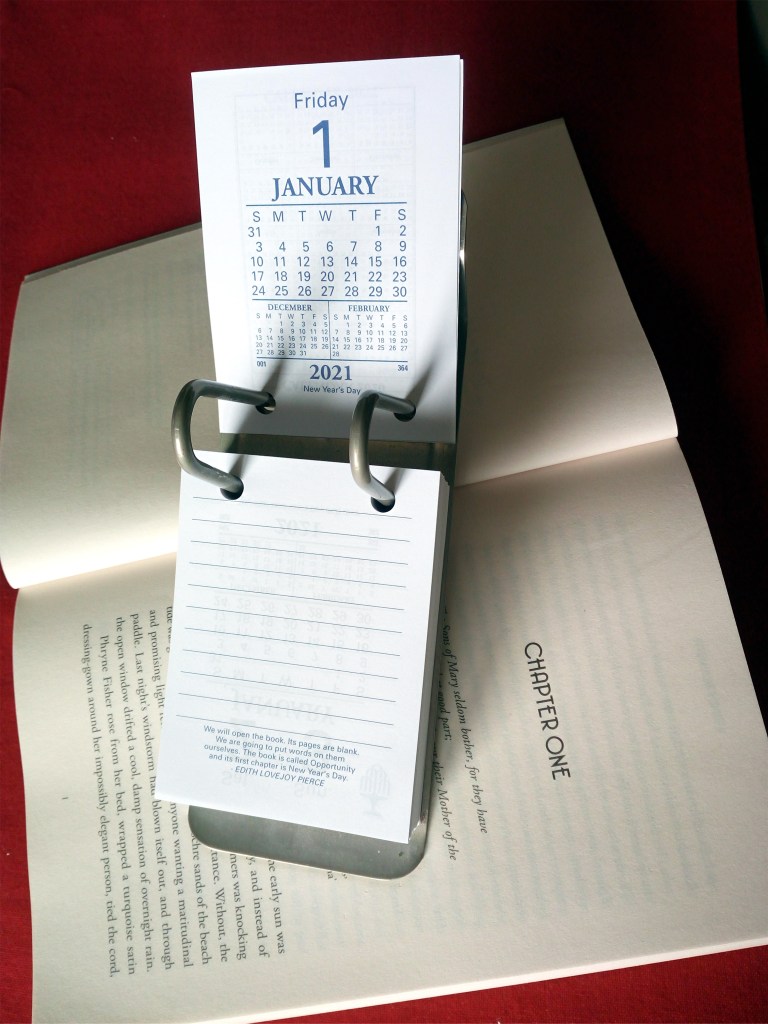
Ideas come from notes. The trouble with my taking of notes is the volume. I have succinct reminders scribbled on scrap paper on my desk, post-its on the fridge, book review drafts, diary appointments, reams of lecture notes in cardboard boxes, and manilla folders bulging with writing course work. My family and I specifically choose yearly wall calendars with big blank squares for our daily notations. Who needs an email prompt when it’s right there on the wall in nice neat numbered squares with the bonus of a lovely new image each month.
‘Yeah, yeah,’ I hear you say, ‘I can get that all in one place on my electronic device.’ But I say ‘That doesn’t have the same charming tactile feel as my pen to paper and the symbolic drawing of a love heart or wonky birthday cake.’ GBW.
Long live paper! Sorry trees, you are the only downfall. I guess with sustainable forestry and me always recycling, you come back in other forms. Let’s face it, I am a product of the 20th century. I have neat paper piles everywhere around me as I type this: books, bills, bunch-of-dates, receipts, invoices, diary, newspaper and a magazine. What’s not to love? Paperwork is a quiet companion. It does not talk back or get in your face with crude advertisements, and never continually updates its own pages. Best of all, a pen and ream of paper (500 sheets) does not need electricity, the internet or expensive repairs.
Brisbane City Botanic Gardens heritage significance has many aspects. The oldest botanical garden in Queensland is located in Brisbane’s central city on the banks of the Brisbane River. Originally called the Brisbane Botanic Gardens, it was established in 1855. It was among the first places to be listed under the Queensland State heritage legislation back in 1989 and one of the few non-buildings to be included.
The gardens have many attractions. Some of my favourites are the mature trees, native plants, palms, water features, sculptures, winding paths, rolling lawns, a quaint café (with white Ibis) and, of course, beautiful flowers including the Hibiscus Garden (above) and masses of marigolds (below) in circular beds which were attracting the bees.
There is a variety of wildlife including possums at night. I took a photo (below) of a camouflaged Kookaburra. Can you SPOT THE KOOKABURRA in the tree?
These gardens are so different to what I remember as a youngster, they are now lush and green, better planted and more well managed. I love Weeping Fig Avenue and Bamboo Grove but have no current photos. Do you know I have never seen an event at the River Stage! Many events are hosted within the grounds including the spectacular night-time Botanica Light Show in May.
The little house on stilts (above) has significant meaning for our river city. I tried to take a photo of it at night, but it got lost in the evening mist on the mysterious pond.