‘Peach’ by D. H. Lawrence

IMG_20200102_204409

Peach


Would you like to throw a stone at me?

Here, take all that’s left of my peach.


Blood-red, deep:

Heaven knows how it came to pass.

Somebody’s pound of flesh rendered up.


Wrinkled with secrets

And hard with the intention to keep them.


Why, from silvery peach-bloom,

From that shallow-silvery wine-glass on a short stem

This rolling, dropping, heavy globule?


I am thinking, of course, of the peach before I ate it.


Why so velvety, why so voluptuous heavy?

Why hanging with such inordinate weight?

Why so indented?


Why the groove?

Why the lovely, bivalve roundnesses?

Why the ripple down the sphere?

Why the suggestion of incision?


Why was not my peach round and finished like a billiard ball?

It would have been if man had made it.

Though I’ve eaten it now.


But it wasn’t round and finished like a billiard ball;

And because I say so, you would like to throw something at me.


Here, you can have my peach stone.


San Gervasio  D. H. Lawrence (1923)


     *   *   *   *   *  


David Herbert Lawrence, English author, poet, literary critic (1885–1930) is regarded as one of the most influential writers of the 20th century.

Lawrence’s hard working-class upbringing shaped his life, and he wrote extensively about the experience of growing up in the poor mining town of Eastwood, Nottinghamshire.  “Whatever I forget,” he said, “I shall not forget the Haggs, a tiny red brick farm on the edge of the wood, where I got my first incentive to write.”

A prolific writer and traveller, Lawrence earned fame for his earthy novels (some banned) and short stories, and subsequently received acclaim for his personal letters in which he detailed a range of emotions, from exhilaration to depression to ruminating on life and death.

The story of his ashes and final resting place makes intriguing reading on Poets’ Graves
https://www.poetsgraves.co.uk/lawrence.htm

Gretchen Bernet-Ward

To Sleep or Not To Sleep said William…

IMG_20191105_173631

… Wordsworth as he tossed and turned and counted sheep, perhaps after a rollicking New Year’s Eve party.  Hope you got some sleep once the brand new decade had dawned.  Maybe reciting William’s poem can give you “fresh thoughts and joyous health!” in 2020.

To Sleep


William Wordsworth (1770–1850)


A flock of sheep that leisurely pass by

One after one; the sound of rain, and bees

Murmuring; the fall of rivers, winds and seas,

Smooth fields, white sheets of water, and pure sky;—


I’ve thought of all by turns, and still I lie

Sleepless; and soon the small birds’ melodies

Must hear, first utter’d from my orchard trees,

And the first cuckoo’s melancholy cry.


Even thus last night, and two nights more I lay,

And could not win thee, Sleep! by any stealth:

So do not let me wear to-night away:


Without Thee what is all the morning’s wealth?

Come, blessed barrier between day and day,

Dear mother of fresh thoughts and joyous health!


°°°°°°°°°°°°∇°°°°°°°°°°°°


William Wordsworth, born April 7, 1770, Cockermouth, Cumberland, England—died April 23, 1850, Rydal Mount, Westmorland, English poet whose Lyrical Ballads (1798), written with Samuel Taylor Coleridge, helped launch the English Romantic movement.

Encyclopædia Britannica an absorbing article written by Stephen Maxfield Parrish

Gretchen Bernet-Ward

Rain for Christmas Day!

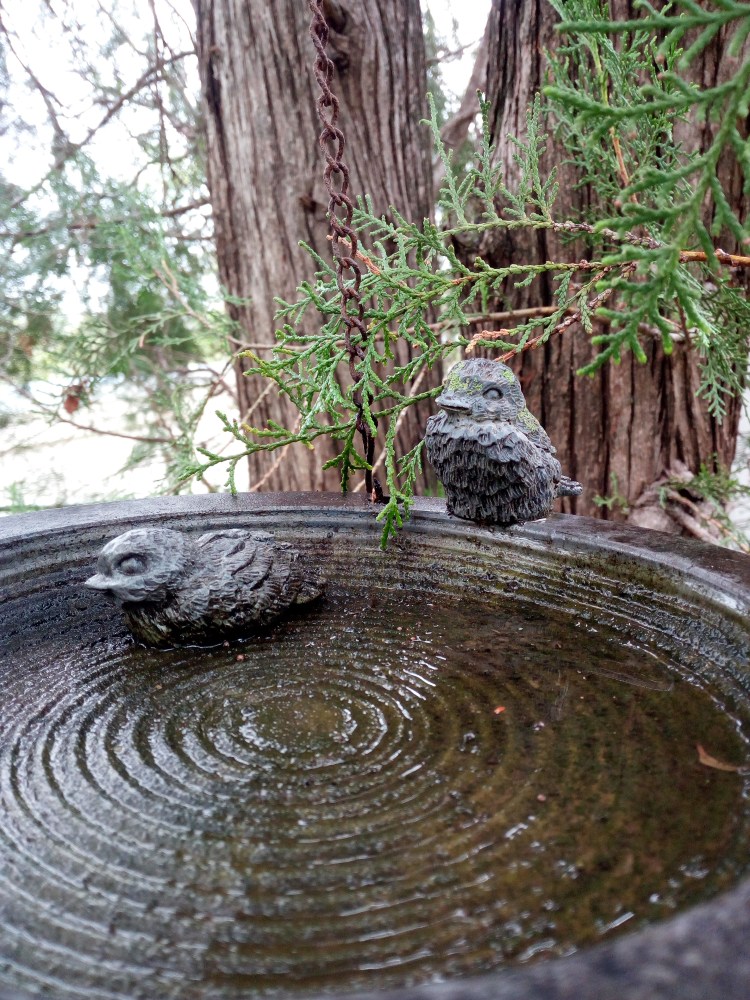
IMG_20191226_101837
After months of drought-like conditions it actually rained on Christmas Day!

THE BIRD BATH

by Stephen Whiteside

I’m just a humble bird bath.  I have no tap or drain.

I only ever fill up if we have a fall of rain.

I never have a bar of soap, or bottle of shampoo,

Or sachet of those clever salts that soak you through and through.

I’m never cleaned.  I’m never scrubbed.  There’s lichen on my lip.

I’m gritty and I’m earthy.  I provide a proper grip,

And those that use my services don’t mind that I am old,

Though my water might be cloudy, and its temp’rature quite cold.

They leap.  They splash.  They frolic, throwing spumes high in the air.

They play with great abandon, like they’ve not a single care.

They use me as a wash tub, yes, but choose to drink as well

Of my cool, refreshing water.  They are happy, I can tell.

I’m just a simple bird bath, standing silent in the yard;

Abandoned, half forgotten, but I do not find life hard.

I’m frequently replenished by refreshing falls of rain,

And all my good friends visit me…again…again…again.

© Stephen Whiteside  11.09.2012

Website https://www.stephenwhiteside.com.au/

Poems https://australianchildrenspoetry.com.au/australianpoets/u-z-2/stephen-whiteside/

Photographs Gretchen Bernet-Ward  26.12.2019

IMG_20191226_101812

Audre Lorde, Poet

IMG_20191122_203220

Audre Geraldine Lorde was born on February 1934 in New York City, and went on to become a leading African-American poet and essayist who gave voice to issues of race, gender and sexuality.

Lorde’s love of poetry started at a young age, and she began writing as a teenager.  She attended Hunter College, working to support herself through school.  After graduating in 1959, she went on to get a master’s degree in library science from Columbia University in 1961 and was head librarian at Town School Library in New York City.

‘The Black Unicorn’ (1978), a volume in which Lorde explored her African heritage, is considered one of her greatest works by many critics.  In addition to poetry, Lorde was a powerful essayist and writer.

In terms of her nonfiction work, Lorde is best remembered for ‘The Cancer Journals’ (1980) in which she documents her own struggle with breast cancer.  She died November 1992 on the US island of St. Croix.

Information from The Biography.com website  https://www.biography.com/scholar/audre-lorde

Citation Information

Article Title
Audre Lorde Biography

Author
Biography.com Editors

Website Name
The Biography.com website

Access Date
November 27, 2019

Publisher
A&E Television Networks

Last Updated
April 16, 2019

Gretchen Bernet-Ward

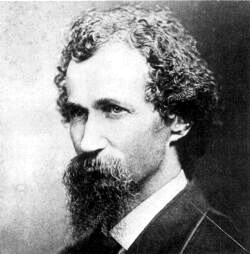
‘September in Australia’ Poem by Henry Kendall

‘September in Australia’ by Henry Kendall

Grey Winter hath gone, like a wearisome guest,
And, behold, for repayment,
September comes in with the wind of the West
And the Spring in her raiment!
The ways of the frost have been filled of the flowers,
While the forest discovers
Wild wings, with the halo of hyaline hours,
And the music of lovers.

September, the maid with the swift, silver feet!
She glides, and she graces
The valleys of coolness, the slopes of the heat,
With her blossomy traces;
Sweet month, with a mouth that is made of a rose,
She lightens and lingers
In spots where the harp of the evening glows,
Attuned by her fingers.

The stream from its home in the hollow hill slips
In a darling old fashion;
And the day goeth down with a song on its lips,
Whose key-note is passion.
Far out in the fierce, bitter front of the sea
I stand, and remember
Dead things that were brothers and sisters of thee,
Resplendent September.

The West, when it blows at the fall of the noon
And beats on the beaches,
Is filled with a tender and tremulous tune
That touches and teaches;
The stories of Youth, of the burden of Time,
And the death of Devotion,
Come back with the wind, and are themes of the rhyme
In the waves of the ocean.

We, having a secret to others unknown,
In the cool mountain-mosses,
May whisper together, September, alone
Of our loves and our losses.
One word for her beauty, and one for the grace
She gave to the hours;
And then we may kiss her, and suffer her face
To sleep with the flowers.

High places that knew of the gold and the white
On the forehead of Morning
Now darken and quake, and the steps of the
Night Are heavy with warning!
Her voice in the distance is lofty and loud
Through the echoing gorges;
She hath hidden her eyes in a mantle of cloud,
And her feet in the surges!

On the tops of the hills, on the turreted cones –
Chief temples of thunder –
The gale, like a ghost, in the middle watch moans,
Gliding over and under.
The sea, flying white through the rack and the rain,
Leapeth wild at the forelands;
And the plover, whose cry is like passion with pain,
Complains in the moorlands.

Oh, season of changes – of shadow and shine –
September the splendid!
My song hath no music to mingle with thine,
And its burden is ended;
But thou, being born of the winds and the sun,
By mountain, by river,
Mayst lighten and listen, and loiter and run,
With thy voices for ever.

Henry Kendall (1839 – 1882)

‘Leaves from Australian Forests’
Poems of Henry Kendall – with Prefatory Sonnets.
Third poem – Page 7 of original book.
Pages 163 – with Dedication.
Published 1869 by George Robertson, Melbourne, Australia.
Printed by Walker, May & Co, Melbourne, Australia.

Leaves from the Australia Bush Henry Kendall 02
Poet Henry Kendall – painting ‘Bush Burial’ by Frederick McCubbin (1890)

Website https://books.google.com.au/books/about/Leaves_from_Australian_Forests.html?id=D5UuAAAAYAAJ&printsec=frontcover&source=kp_read_button&redir_esc=y#v=onepage&q&f=false

Gretchen Bernet-Ward
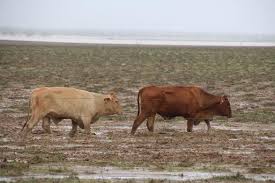
‘Undrought’ Poem by Casey Williams

Undrought

The year has barely started,
The ringers still on leave,
The wet is running late this year,
Lord, bring us our reprieve.

The North is bloody thirsty
The cows are calving down
The grass is getting sparser
And the ground is turning brown

It’s been this way a while now
Too long, in fact, for some
The dry is taking over
When will the rain please come?

At last the clouds are building
And the frogs are crying out
I wonder if they know at all,
What’s due to come about?

A couple inches, you bloody beaut!
What a blessed sight,
The sound of raindrops on the roof,
I’ll listen up all night.

Another night, and then again,
She’s getting fairly damp,
The river’s running beautifully,
She’s really set up camp.

Again and again, it hammers down,
In drowning, vicious waves,
We hate to sound ungrateful
But rain, please go away.

At last the drought is broken
But so are all our hearts
Homes are under water
Lives are ripped apart

No warning of the enormity
No chance to get ahead
Just paralysed by water
And what we will find dead

The land has gone from Barron
To an ocean, vast and brown
The calves are drowned or frozen
Their mothers, bogging down.

The rain has finished finally
The world turned upside down
There’s cattle stuck in trees
Dead wildlife on the ground.

The North just copped a big one
We’re hurting far and wide
Our community’s a strong one
But we need you on our side

Don’t kick us while we’re down
Don’t say we have no shame
You want to see compassion
Drive up here, see our pain.

I for one, could not be prouder
Of the industry up here
It’s one of strength and courage,
Through drought, through flood and fear

I say this to all affected
To those who’ve lost so much
You’re the backbone of this country
Keep talking, stay in touch

You’ve got your mates behind you
To help with all your doubts
We can rebuild together
The sunshine has come out.

by Casey Williams

Saturday 16 Feb 2019 ABC Brisbane Queensland Australia
Also blog post Drought
Gretchen Bernet-Ward

Queensland Map

‘Wynken, Blynken and Nod’ Poem by Eugene Field

Childhood can come crashing back when you read something from your past.  I saw the words ‘Wynken, Blynken and Nod’ and instantly I was about five years old.

Unwilling to stay in bed, sleep seemingly a million miles away, I knew as soon as my mother recited this magic poem, I would drift off into dreamland.

Eugene Field may not have known the children around the world who fell asleep under the spell of his words, but I’m pretty sure his own kids were good examples.  Did they know the entire poem?  Every line, every verse, every nuance?  I certainly did not.

If you are in the same shoe-boat, read on to discover the complete original while you sip strong coffee…


Wynken, Blynken and Nod

Wynken, Blynken, and Nod one night
Sailed off in a wooden shoe —
Sailed on a river of crystal light,
Into a sea of dew.
“Where are you going, and what do you wish?”
The old moon asked the three.
“We have come to fish for the herring fish
That live in this beautiful sea;
Nets of silver and gold have we!”
Said Wynken, Blynken, and Nod.

The old moon laughed and sang a song,
As they rocked in the wooden shoe,
And the wind that sped them all night long
Ruffled the waves of dew.
The little stars were the herring fish
That lived in that beautiful sea —
“Now cast your nets wherever you wish —
Never afraid are we”;
So cried the stars to the fishermen three:
Wynken, Blynken, and Nod.

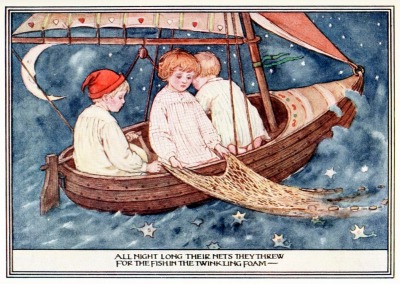
All night long their nets they threw
To the stars in the twinkling foam —
Then down from the skies came the wooden shoe,
Bringing the fishermen home;
‘Twas all so pretty a sail
 it seemed
As if it could not be,
And some folks thought ’twas a dream they’d dreamed
Of sailing that beautiful sea —
But I shall name you the fishermen three:
Wynken, Blynken, and Nod.

Wynken and Blynken are two little eyes,
And Nod is a little head,
And the wooden shoe that sailed the skies
Is a wee one’s trundle-bed.
So shut your eyes while mother sings
Of wonderful sights that be,
And you shall see the beautiful things
As you rock in the misty sea,
Where the old shoe rocked the fishermen three:
Wynken, Blynken, and Nod.

By Eugene Field (1850 – 1895) poet and journalist.

https://www.poets.org/poetsorg/poet/eugene-field


Biography:Wynken Blyken and Nod by Eugene Field Poet Columnist 01

Eugene Field was born in St Louis, Missouri, on 2 September 1850 and by all accounts was a great practical joker.

In 1875 he married Julia Comstock and eventually they had eight children.  In 1883 he moved to Chicago, Illinois, to write a column for the Chicago Daily News.

His columns occasionally featured light verse for children and he became known as the ‘Poet of Childhood’.  These imaginative poems were both happy and sad (‘Little Boy Blue’ is a well-known tearjerker) and later published in collections including ‘The Tribune Primer’ in 1900 and ‘A Little Book of Western Verse’ in 1903.  Eugene Field died on 4 November 1895 in Chicago, Illinois.

Wynken Blyken and Nodd Artwork by Maxfield Parrish 1905Maxfield Parrish and other artists illustrated his earlier books, and artwork changed to reflect 20th century styles over the years while the eponymous characters remained constant.

Gretchen Bernet-Ward

Australia Day 2019

aussie icon australia day 2019

Long weekend

Hot weather

Stretch and yawn

Shorts and t-shirt

Bushells cuppa

Vegemite on toast

Barbecue smoke

Burned sausages

Tomato sauce drips

Potato salad

Paper plates sag

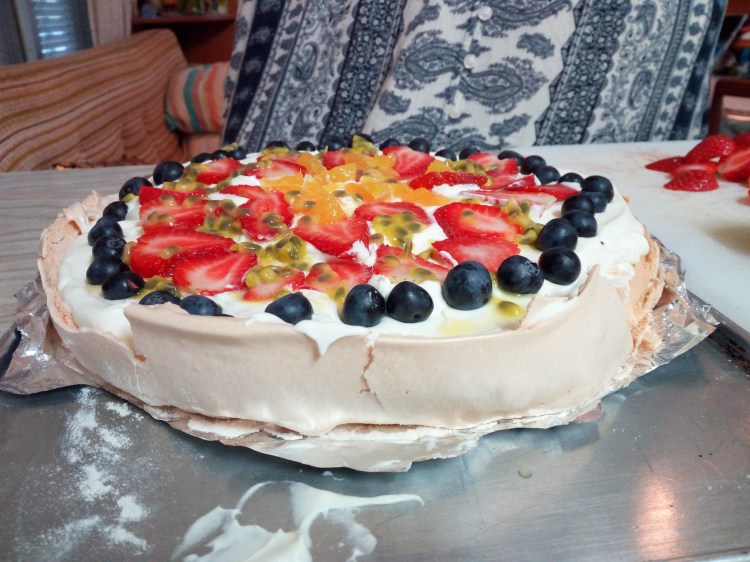
Pavlova sweetness

Dry lamingtons

Lemonade spiders

Cricket match

Afternoon sleep

Bonfire crackling

Eucalyptus spits

Singalong

Mosquitoes bite

Humid night

Ceiling fan

Beach tomorrow

Gretchen Bernet-Ward

img_20190126_172117
HOMEMADE AUSSIE PAVLOVA is a baked crusty meringue with a soft fluffy centre, topped with whipped cream and sweet tangy seasonal fruits. Melts in your mouth!

‘Going to School’ Poem by C J Dennis

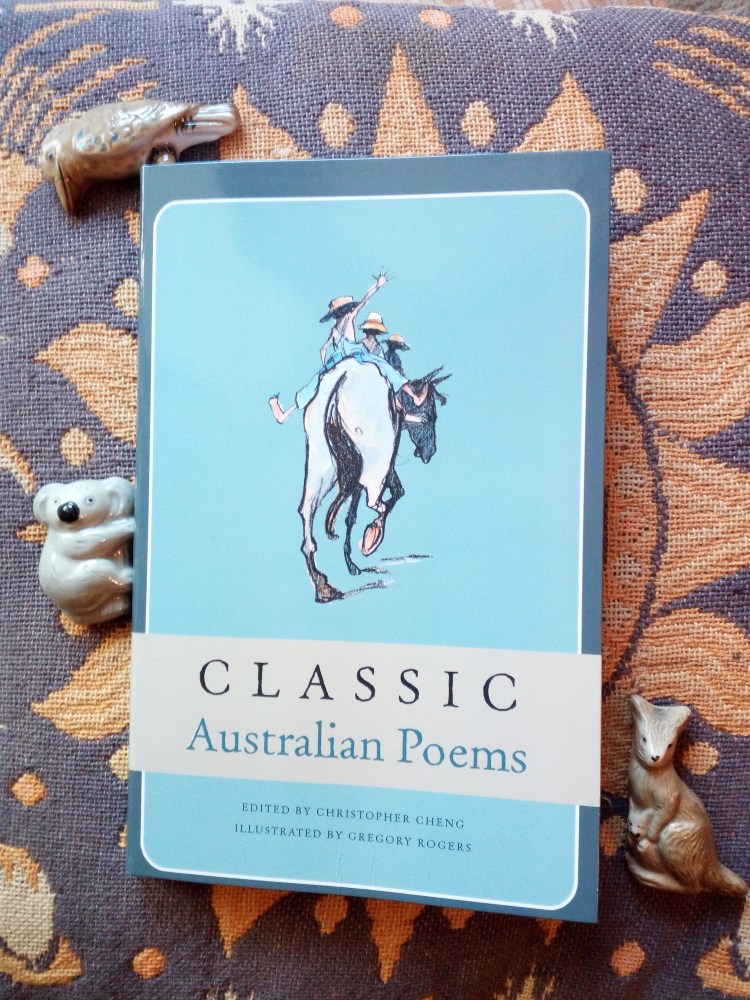
IMG_20180803_091129
Published by Random House Australia, November 2011 https://www.penguin.com.au/books/classic-australian-poems-9781742753621

Going to School

C J Dennis


Did you see them pass today, Billy, Kate and Robin,
All astride upon the back of old grey Dobbin?
Jigging, jogging off to school, down the dusty track––
What must Dobbin think of it––three upon his back?
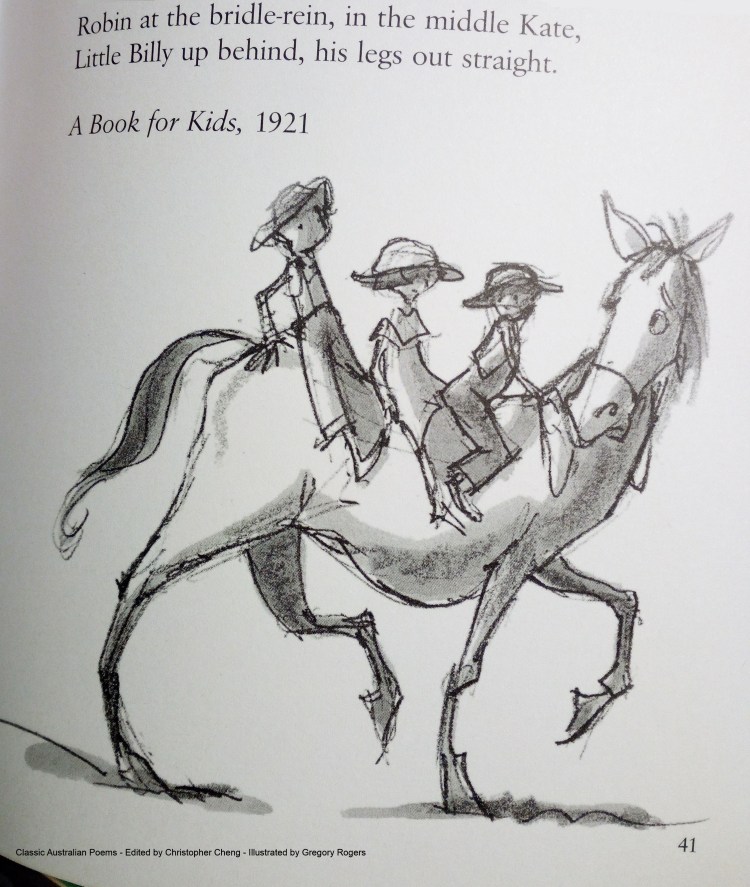
Robin at the bridle-rein, in the middle Kate,
Billy holding on behind, his legs out straight.

Now they’re coming back from school, jig, jog, jig.
See them at the corner where the gums grow big;
Dobbin flicking off the flies and blinking at the sun––
Having three upon his back he thinks is splendid fun:
Robin at the bridle-rein, in the middle Kate,
Little Billy up behind, his legs out straight.

Poem originally published in ‘A Book for Kids’ 1921


IMG_20180801_210630
Poem by Clarence Michael James Dennis, better known as Australian poet C J Dennis (Sept 1876 – June 1938) who had a variety of jobs, from bar tender, secretary to a senator, to publisher and editor. He is fondly remembered for the humorous stories and verse he wrote for big city newspapers and was dubbed ‘laureate of the larrikin’ which means he penned prose about boisterous, unruly people. GBW.

Ever get poetry nostalgia?  Australian school children learn poems by C J Dennis, Henry Lawson, Banjo Paterson and many more.  Often a particular poet’s verse follows them through life, even though their lives are nothing like the rough and tumble era in which these pioneer poets wrote.

Changes were afoot in Australia in late nineteenth/early twentieth century and were reflected in the country’s poetry.  In the evening, after dinner, someone would recite a poem or two.  Years later, I grew up with Banjo Paterson’s ‘The Man From Snowy River’, a rollicking ode to bush men, stock riders, the dangerously rugged land and the great value of horses.

Gretchen Bernet-Ward