My Short Story Rejections
Most writers at some time or another, usually early in their literary career, enter a writing competition. It gives you a reason to write when you think you have lost the plot. There is exposure and the bonus of possibly getting a monetary reward. Occasionally there are the perks of receiving feedback from the judges and maybe your work appearing on the relevant website. Not all writing competitions do this, especially if they specify a word/theme which is only used as a one-off with no ongoing relevancy other than it being a writing exercise to aid your creative thinking.

Never put your name on the actual story, write it on the submission form. If A4 size paper is requested (e.g. Word.doc, email attachment, PDF) – if font is requested – if the line spacing is requested – if any other requirements are requested please do it for best results. Another necessary thing you must do is wordcount. Absolutely stick to the specified wordcount. This does not guarantee you will win but it will leave a good impression.

Okay, I know you may have already entered some writing competitions, and perhaps none of this is new to you, but that should not stop you from fully reading the competition rules and guidelines and sticking with them. Be aware that there may be an entry fee for some of the bigger writing challenges. Usually if you are a member of a local writers group you can enter free. Note, I have never been given money as a prize and once a story is published is cannot be used again in competitions.

If you are reading this far, I have included two of my most recent short stories (below) which were written for two key-words supplied by a writers centre prompt. ‘Fragment’ and my piece is titled ‘Rocky Horror.’ Allow me to offer a critique and say the winning entry for ‘Fragment’ was predictably sentimental. The prompt and title for my second tale is ‘One Room Story’.
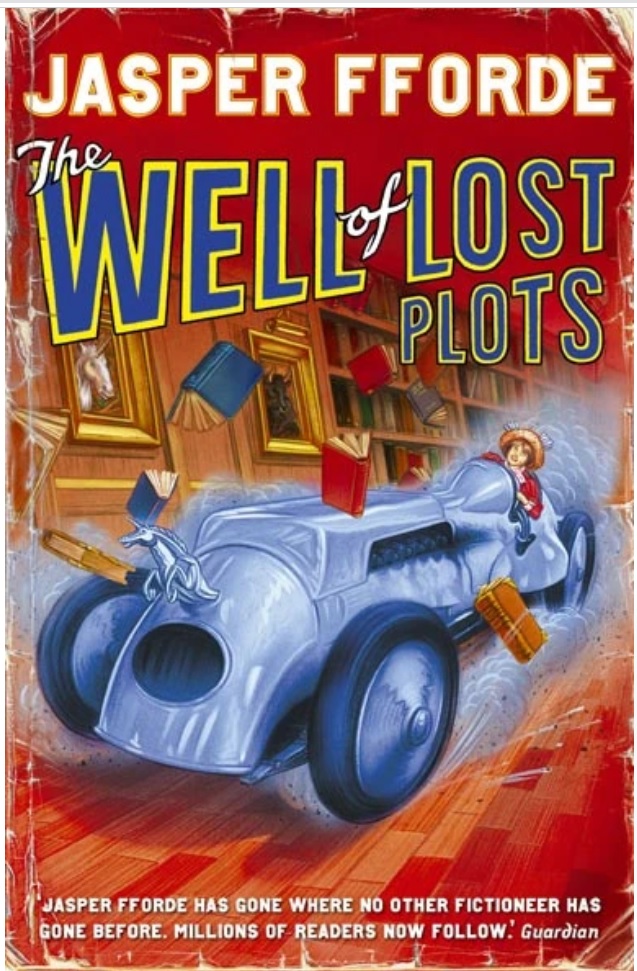
Anyway, my two stories are short, both are well within the 500 wordcount limit and as you can see they are different styles. Although rejected I did have a sense of achievement writing them. So don’t fall into that Well of Lost Plots.
Great book title, thanks Jasper!

——ROCKY HORROR——
By Gretchen Bernet-Ward 2025
The pavement fractured under her feet and fissures formed. A fragment of rock flew down from a dark sky then bounced back up. Annie fled for the house – fast.
Felicia sniffed, her author brain unimpressed.
“Too much alliteration,” she reasoned, and ducked a meteorite as Annie reached out for the front door handle. The molten mass smashed a jagged hole straight through the door and landed on Annie’s new carpet. It choked the air with sulphurous intent, which caused Annie to wail uncontrollably.
Felicia glanced upward. “That’s not rain.”
Sharp shards showered down onto the rooftop shingles. She held grave fears for their resilience under the rapid assault.
“Cut it out,” she yelled in her head. It stopped.
Now feeling foolish and faintly ridiculous, she quickly wrote down fragments of what had just happened as another gritty fissure crackled towards the house. It wasn’t looking good, she still had an imagination too wild for pre-school books.
Annie shrieked “Help me, please!” a fraction too late as Felicia swiftly drew a thick black line across the previous paragraph.
The workshop lecturer looked up and raised an elegant eyebrow.
“Having trouble with this exercise?” she asked.
Unnoticed by group members, a light sprinkle of insect-like shale bounced and pinged off her neatly groomed head.
“No, no,” replied Felicia, “just trying to control my fractured thoughts.”
She smoothed her notepaper as a resurrected Annie tipped over a metal bin, sending granite boulders rolling silently across the meeting room floor towards the unsuspecting lecturer.
“Actually,” Felicia mused, “I seem to have hit a rocky patch.”

——ONE ROOM STORY——
By Gretchen-Bernet Ward 2025
The waiting room chair had a cracked leather seat which pressed through her summer dress like a blunt knife. She tried to move slightly, knowing mother would hiss, do not fidget. Maybe her button-up shoes could reach the floor, maybe that would ease the pressure on her insides. Heels swung, mother glared.
Only two other people sat in the doctor’s waiting room, the nurse at a desk and an old man with wire-framed spectacles who breathed in and out like a faulty balloon.
Why was she here? It hadn’t been said at breakfast, only that she would miss school for the morning. Like a gift given and snatched away, her stomach churned with what might be waiting for her behind that big brown polished door with its fancy gold lettering. That slow, slow rotation of the brass door knob. She hoped the old man would live long enough to go through first.
The front sash window was slightly ajar but didn’t allow for an escape.
An idea, perhaps she could bolt out the front door while everyone was looking at the surgery door?
No, her mother was fast, even catching squawking hens. 
Glancing around she studied the glass fronted cabinet beside the nurse’s desk. Medicine in small bottles made of brown glass with paper labels and cork stoppers. Bill Beans Laxatives also in their family medicine chest. Saltrates, Alkia, Nitrate of Amyl and her grandmother’s stomach powder. Like medicine daddy gave her at night.
Her body shivered. Time to move. She slid and jumped, the seat tore at her dress.
A black and white tiled dash to the front door but the shiny door handle was unyielding. She tugged hard, memories rose, she whimpered as mother pulled her back.
The nurse steered her to the uncomfortable seat, not to worry, the doctor was a nice man. She remembered daddy had whispered, be good. A special treat tonight.
A quick glance, the hem of her dress torn, she felt bad as her mother quietly wept.

Now it’s your turn to start plotting! Write something wild about the Blue Geese photograph. Or follow through and blog your own prompt and short story. I promise not to critique them. Send me a link to your latest short story and I will post your link below where I have mentioned *Ekphrastic Writing. Whether it be writing or frantically editing to meet a deadline, make something great from those 26 letters of the English alphabet.
You know you can!
📚 Gretchen Bernet-Ward 2025
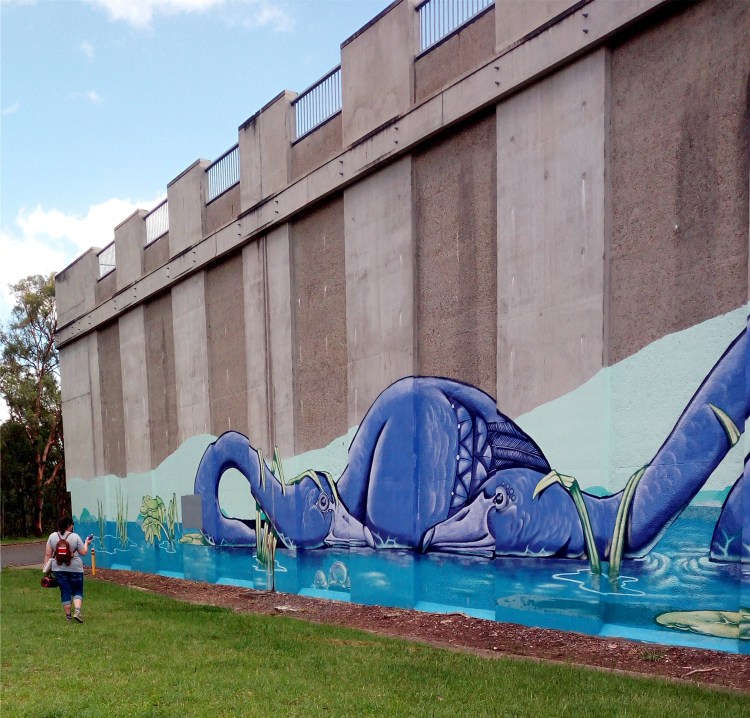
BLUE GEESE Community Arts project by STREET ART MURALS on Green Hill Reservoir Brisbane Australia https://www.australiansiloarttrail.com/green-hill-reservoir
© image Gretchen Bernet-Ward 2021
Don’t forget to look at my Photo of the Week every Saturday on my home page.

STOP THE PRESS: This information may be of interest!
AUSTRALIAN WRITERS’ RESOURCE
https://www.austwriters.com/competitions
A seriously long list of writing competitions around the world!

The AWR has sourced information from other websites
and no assurance can be given as to its current accuracy.

*Ekphrastic writing is a literary description of a work of art
such as a painting, sculpture, or performance
BUT IT CAN BE USED FOR EVERYDAY ITEMS within a story.
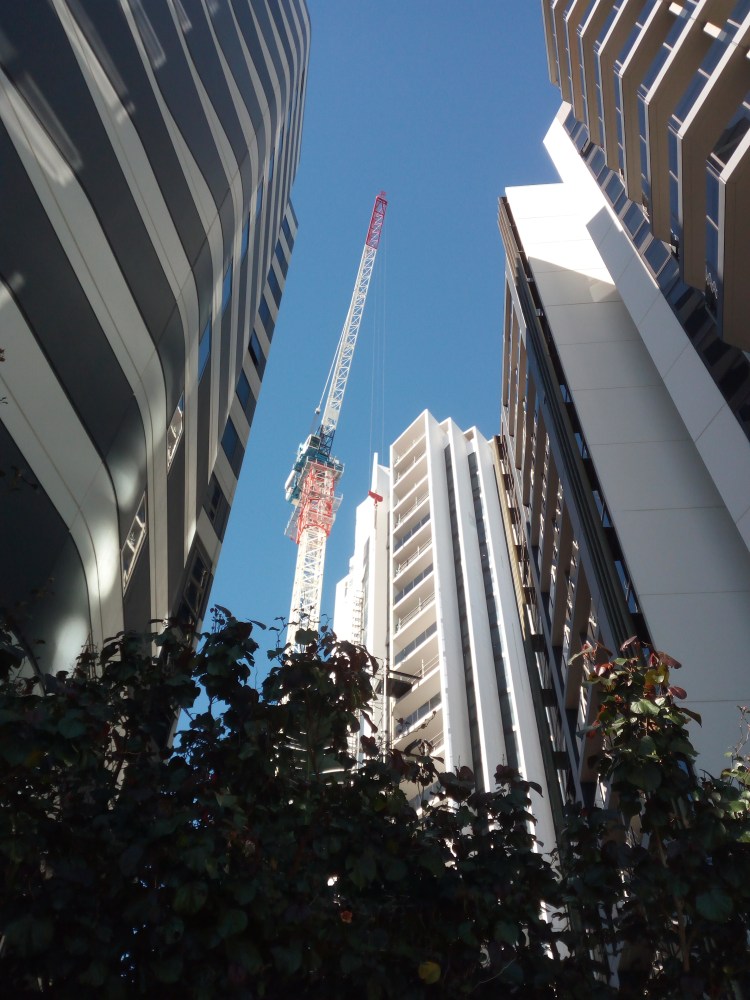

Quick Crime Read ‘Building On Past Events’

Highrise © image Gretchen Bernet-Ward 2024

The construction company boss has an accident or is it something more sinister? A ten minute read, dialogue driven, no chapters, no indents or page breaks (courtesy of unwieldy formatting) and I originally wrote it for writing group. Certainly an interesting result.

Erica Brook of Brook Constructions looked across the messy building site and was not happy. Work progress was slow, money was tight. And she’d been doing some thinking. She parked the Tesla and fastened the velcro on her hi-vis jacket. Time to ditch the altruistic ideals and read the riot act to the tradies, most of whom she’d known for years.
As Erica crossed the site, the right boot of her R.M. Williams caught on unfinished paving and she sprawled sideways across half-finished brickwork which crumbled under her weight and sent her down onto an exposed foundation spike.
“Erica!” shouted bricklayer Joan Campbell. “You all right, boss?”
Erica’s stricken look betrayed her pain. Blood was leaking through the leg of her jeans, white bone jutting through the fabric. She passed out and came back to reality in the ambulance.
“Don’t worry,” Joan’s face mirrored the white of her hard-hat. “Things’ll be okay.”
Erica rasped through the oxygen mask. “Not likely, Joanie.”
She grabbed Joan’s hand firmly. “Want to become a partner in the business?”
Joan winced. “I think you’re a bit delirious.”
As the ambulance swung into the Emergency bay, Joan made a quick decision.
“Okay, I’m in.”
Outside the hospital ward, Joan diligently phoned everyone to advise of Erica’s impending leg operation.
Post surgery, she returned and sat beside Erica’s bed in a screened off cubicle, nervously twisting her hard-hat in her hands. Opposite her sat Erica’s wafer-thin wife Michelle who trilled “Trieste needs the vet for a nail clip.”
Erica managed a groan through her swollen jaw.
A light-footed nurse in a blue Covid mask entered holding a glass of water and medication. The charged glance the nurse shot Joan took her breath away.
Michelle sat stiffly, gazing out the window, while the nurse neatly administered pills to Erica then left the cubicle.
“Erica,” Joan asked, “Want anything to eat? Chiko Roll from the cafeteria?”
Erica’s glazed eyes managed to look hopeful.
“No,” snapped Michelle, “she’s on a diet.” 
Disconcerted, Joan muttered “Okay, the site manager should phone soon, I’ll be off then.”
She scrambled to leave ahead of Michelle. At the nurses station she leaned over the counter towards Erica’s nurse and read her name tag. “Annalise”.
Keeping a blank face she asked Annalise if Erica was going to be okay.
Annalise replied in a low voice “She’s suffering from external symptoms.”
Realisation dawned on Joan. “Oh, her wife, I get it…”
Annalise put a finger to her lips to shush Joan and pointed towards the lift doors.
Already wearing sunglasses, Michelle prodded furiously at the buttons, saw a plaque on the wall, and almost tripped through the opening doors.
Joan broke the silence “I’m going down to the cafeteria, want anything?”
“No thanks.” Annalise grimaced. Joan wondered if that was directed at her or the food.
Over lunch Joan checked the news reports and came back thirty minutes later to ask Annalise if she’d seen her hard-hat. “Under the chair where you sat, silly.”
Joan walked the squeaky linoleum floor, entered the ward and stopped at the wrong cubical. “Sorry,” she said, backing out.
She found her hard-hat and bid poor Erica’s taped and tubed body a sombre goodbye.
At home, Joan Campbell was detained by police and told that she and nurse Annalise would be taken to Central police headquarters to be interviewed separately regarding the unexpected death of construction billionaire Erica Brook.
Their second interview was together, without legal representation, in a windowless room at a police detention centre. Joan wanted answers but the only response from a tall uniformed constable was a paper cup of water and his advice to wait patiently.
Drumming her fingers, Annalise stared blankly at the pockmarked white wall until finally it was confirmed that Erica had been murdered.
“Murdered!” Joan stared at Patricia Ruben, the incumbent Senior Detective with small yet stunning earrings no doubt frowned upon by her boss.
“How?” asked Annalise.
Detective Ruben sat down and glanced at her papers. “Death from suffocation.”
She turned to Joan. “Ms Campbell, tell me your movements from when you arrived to when you left the hospital.”
“Well, there was the site accident, an ambulance ride, a chat around Erica’s bedside, I spoke to Annalise, had lunch, went back to get my hard-hat, and left.”
Annalise shrugged. “Standard treatment. The patient was stable and resting.”
Ruben turned again to Joan. “Ms Campbell, I must warn you that building on past events, your return to the cubicle makes you a suspect.
Joan flared up. “No way.”
“And,” Ruben held up a long straight finger, “you inherit the Brook Constructions company.”
“Totally not right.” Joan felt weak and slouched back in the chair.
Ruben passed her the water cup. “You had a discussion in the ambulance.”
“Erica was emotional with pain. It wasn’t some high-powered business transaction.”
“From her hospital bed Ms Brook had informed her wife Michelle of company changes, best to check with her.” Ruben shuffled documents. “Meanwhile did you notice anything odd?”
Joan sighed.
Annalise gazed at the ceiling, arms folded across her pale blue uniform.
“The whole day was screwed,” she said and continued when the detective tilted her head. “There were patients, visitors, couriers, cleaners, florists and maybe small Paul.”
At that name, Ruben frowned. “Elaborate.”
“He’s short and gets mistaken for a child.”
Joan straightened up. “Just remembered! I went to the wrong cubicle, there was a youngster in the bed.”
“Nobody was in there all day,” snapped Annalise dismissively.
“There was, I saw him.” Joan was adamant.  
Detective Ruben scribbled furiously. “Is he likely to still be there?”
“Check the discharge papers at the hospital,” drawled Annalise.
Overlooking this remark, Ruben asked if anything else had occurred.
“Michelle, er, Mrs Brook certainly left in a hurry,” said Joan.
Annalise jabbed her finger in recollection. “She was pushing the lift buttons as if her life depended on it.”
Ruben made another quick file notation.
“I went back for my hard-hat,” Joan mused. “My work clothes had left dust on the chair seat. I noticed a shoe print.”
“Describe the imprint.” The expensive midnight blue pen scrawled across the page.
“Smallish, not a boot, more casual.”
“I’ll be right back.” Ruben left the solid door ajar.
The constable closed the door and blocked it with his looming presence.
Joan crushed the empty paper cup without thinking. The warm interview room thrummed, making her sweat uncomfortably. She missed her phone and became mesmerised by Annalise finger-grooming her balayage hair but the seductive gestures were spoiled by a what-are-you-looking-at scowl.
Joan leaned forward when a paper-rustling Ruben and the constable regrouped.
“Forensics are still checking,” Ruben advised, “but nobody had seen or heard a youngster.”
She opened a spiral bound notepad, wrote quickly, ripped out the page and showed it to Annalise and then Joan.
Turning it around, she read “One of you is lying.” She scrunched the paper. “And what are you going to do about it?”
Annalise stood up. “I’m not speaking any further.”
Joan felt a stab of despair. How could she have been so blind? She launched herself out of the chair and grabbed Annalise by the shoulders.
The alert constable stepped forward but Detective Ruben raised her palm. 
“Why?” shouted Joan, shaking Annalise who flinched and twisted away.
“Enjoy your broken building company.”
“You killed a good friend!” shrieked Joan.
“She used you like she used everyone,” mocked Annalise.
Ruben checked that she had left the audio recorder running. She gestured Joan to sit and pinned Annalise with a glare.
“Tell me how you knew Ms Brook?”
“By her lousy reputation. Brook and brainless here never cleaned up their work place, never fixed broken equipment or fences or filled deep holes even though council specified it.”
“That’s not right.” Joan squirmed at her lie. “What harm did she cause you?”
Annalise clenched her fists, eyes glazed. “It was a case of sooner or later. I waited until she eventually came into Emergency.”
She refocussed. “Remember the child who got run over by one of your site vehicles?”
“Y-yes,” Joan hesitated. “I had just started, but I did see a plaque near the hospital lift.”
Detective Ruben obviously knew where this was going. She wrote quickly, documenting a nightmare as Annalise marked off items on her fingers.
“No security, no hazard warning signs, no site training, no first aid post.”
Joan’s stomach lurched again. “That plaque. Your child.”
Raising her folder, Ruben read “Legal wrangles dragged on. Erica offered no settlement or financial assistance although she was the mother of Annalise’s adopted son.”  
“Her workplace negligence killed my boy Paul,” Annalise screamed. “She blamed me but I got even.”
Joan’s thoughts were spinning as Detective Ruben read out the arresting procedure. Another uniformed officer arrived and Annalise was steered out of the interview room.
She was held by both arms and lead down the corridor, her piercing shrieks echoing back to them. “Erica Brook was easy to smother, I’m glad the bitch is dead!”
A heavy door slammed shut.
“Off to be processed.” Ruben stacked paperwork and glanced at her phone before noticing Joan’s stunned expression. “Forensics already had a match on the shoe print. Maybe she checked for witnesses.”
“There was a child in the next bed.” Joan was quite sure of that.
“Hospital staff didn’t see anyone.” Ruben slowly capped her pen. “That memorial plaque isn’t detailed but allegedly her son used to detour through the worksite on his way to visit the hospital.”
“Poor kid,” thought Joan feeling light-headed, “he saw her retribution.”
Guilt gnawed at her stomach. Instead of confronting Erica about the construction site mess, her obstacle course prank had backfired and caused another deadly outcome.

© Gretchen Bernet-Ward 2024
© GBW2024

https://hawkeyebooks.com.au/pages/hawkeye-publishing-manuscript-development-publication-prize
Start building your story and cement your character in readers minds.

https://www.facebook.com/groups/writersgroupslisting

New Girl and The Boss

Messy Business © image Gretchen Bernet-Ward 2024

Linda wasn’t quite sure if she should go.
After all she had never been invited into the manager’s office upstairs.

Viv the senior receptionist snapped “Please put this envelope on his desk,” then added ominously “and come straight back.”

Possibly seeing the shock and hesitancy in the young girl’s eyes, Viv softened her voice. “Go on, love, he won’t bite and you’ll be back in time for the fire drill.”

It wasn’t biting or fire drill that Linda was worried about. His temper was known throughout the industry, voices were lowered in his presence, the accountant scampered around, flapping papers for signatures when a meeting was due, and shareholders routinely refused tea and biscuits on the pretext of another urgent meeting.

There was no staff interaction and she had the feeling that the boss did not know their names, or did not care, because they came and went on a regular basis. What if he shouted at her? What if she fainted? But Linda enjoyed her reception work, the customers were nice, although edgy, constantly looking over their shoulders.

The small flat switchboard was new and easy to use and the company name was not hard to pronounce when she answered in that singsong voice of all new receptionists.

Plus she had an intercom and a proper ergonomic faux leather desk chair which swivelled.

The other employees were mildly friendly as if to keep her at arms length because she could be gone by the end of the month. She needed this job, she was going to stick it out, and the gloss had not yet worn off. However, she did not want to have anything to do with the notorious Mr. Arthur Roberts of Roberts & Co Pty Ltd.

Linda whispered to one of the office girls “Maybe it would be better if you popped it on his desk, Joanne.” The reply was quick. “Too busy minding your switchboard.”

“Get hopping,” instructed Viv, “and put it in the middle of the sheet of blotting paper on his desk.” Apparently Mr. Roberts still used a fountain pen. Occasionally it leaked Quink and he often requested a document be retyped due to a spreading stain.

Linda thought it was all too quaint and old-fashioned compared to what she was taught in business college but she went along with it. Until he started shouting at someone.

One of her duties was typing invoices on the new IBM Golf Ball typewriter. It made a satisfying clatter. And for the time being she was the envy of her friends, many of whom had left school to work in the public service or one of the lesser banks in town. Linda had her sights set on the travel industry and the glamour of free flights. Leaving Roberts & Company far behind.

Ignoring the office boy’s wink, she stood up and tucked a strand of hair behind her ear before smoothing her dress, always grateful she did not have to wear a skirt and blouse emblazoned with the company name. An airline hostess uniform would be far more elegant.

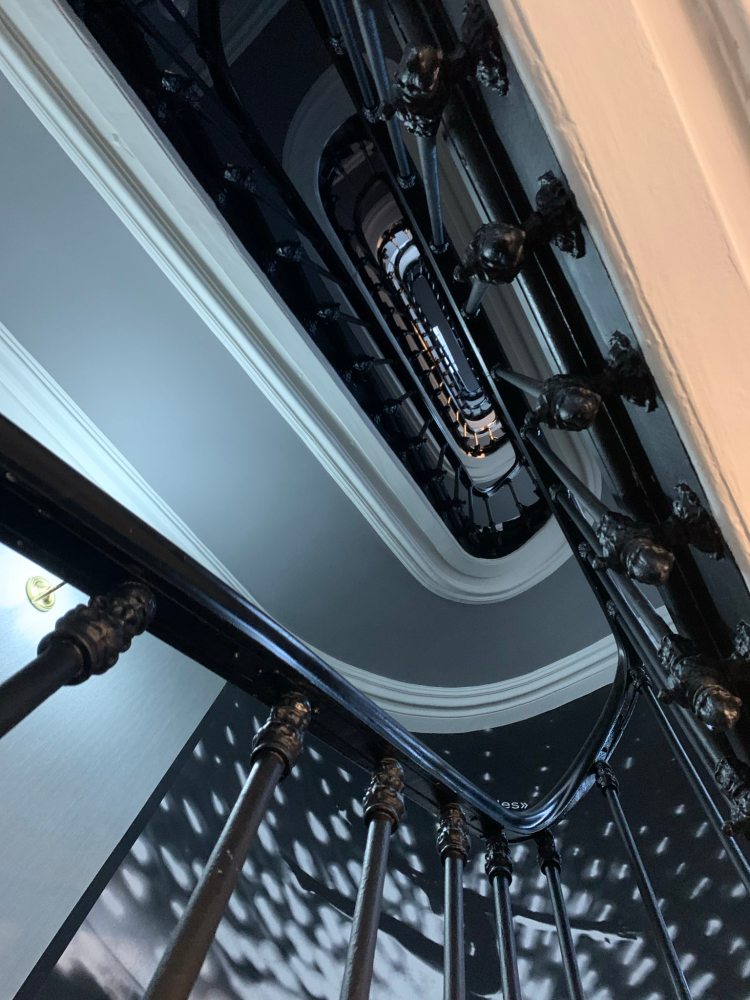
Stairwell in Paris France (Photo © Josh Harbort 2024)

The shaky old lift in the foyer stank of cigarettes and Linda had taken an instant dislike to it. Fortunately it only took a few minutes to go up the back stairs where she emerged onto the luxurious deep blue carpet of the fifth floor. Then realisation hit her.

The envelope was still on her desk.

With a huff of annoyance, she was turning back to the stairwell when she heard raised voices. One, of course, was Mr. Roberts and the other was a very angry woman. Moving a bit closer she saw that Mr. Roberts office door was ajar so she stood listening. It was obviously an argument over money. She had heard enough of those from her parents when her father handed over his weekly pay packet.

Linda sucked in a deep breath then slowly, inexorably, found herself drawn towards the heavily panelled door. There was a gasp, the sound of a pained groan and something fell. A spurt of adrenaline coursed through her body before her brain caught up. She turned back to the stairwell door but was too late to stop a fast moving woman reaching it first.

This wild-eyed woman sported a nasty red stain across her chest but had no difficulty in pushing Linda aside. Just as the woman entered the fire door, Linda went into her brother’s favourite soccer slide. She tripped the woman who staggered down several metal steps before falling flat on her face on the next level. There was a metallic clang as a knife fell from her grasp.

“Hey, what’s going on up there?” shouted Viv from below.

A wet cough behind Linda made her turn around, slowly, slowly.

There was Mr. Roberts. He stood with his face the same shade as the blotting paper pressed against his left shoulder. “I’ve buzzed security,” he said. “Best if you ring for an ambulance.” He swayed then sank to the plush carpet and passed out.

“Viv,” screamed Linda, “get the first aid kit!”

At home next day, after several telephone calls from police and workmates, Linda was told different versions of what must have transpired but the knife wound was definitely inflicted by Mr. Robert’s estranged wife Eileen.

“The person you sent catapulting down the back stairs,” Viv observed dryly, “that’s one way to miss fire drill.” The envelope remained undelivered.

Mr. Roberts was recovering in hospital and probably shouting at the nurses. Eileen was held in another wing under police guard pending investigation. Linda, on the other hand, was ensconced at home in her favourite lounge chair, feet up and a big bowl of mixed lollies beside her on the TV tray.

What if I had not gone up those stairs?” Linda mused, then shrugged it off.

“It was the shock really,” she explained to everyone who called to asked how she was feeling. “My legs just went all wobbly.”
That was her story and she was sticking to it.

🧡 © Gretchen Bernet-Ward 2024

NOTE: Originally titled “What If” a Short Story for U3A Writing Class read at end-of-term.
Fictional events but some elements are retro autobiographical.
First draft Wednesday 4th September 2024. GBW.

Brisbane telephone books © image Gretchen Bernet-Ward 2024

Night Walk in Covid-19

Fairy trees © image Dot Bernet 2019

“Hands up all the blog writers who wrote about their experiences of living through Covid-19 and its aftermath. Okay, I will join your ranks and become one of those adding something to world history with a personal experience; of course the names have been changed to protect the innocent.”

During the time of the worldwide Covid-19 pandemic, Angela and her daughter Jenny decided they would go for a walk every evening. Just a short one around a block or two, maybe across the park to upset the plovers in the damp grass, then home again. A walk was especially invigorating during the colder months of August in Brisbane. It got them out of the house, away from the air-con heating, into the refreshing chill of the cool night air. They donned jackets and beanies and shoved gloves in their pockets just in case of light rain. The suburban streets were deserted yet the night was infused with noise, the dull murmur of a distant highway, the sound of birds settling in to roost, a possum scuttling across a rooftop, the whoosh-whoop of fruit bat wings as they scoped out a mulberry tree or date palm and then crash-landed into the foliage. Owls were heard but never seen, unlike car drivers who appeared to have lost all concept of care and responsibility, arbitrarily speeding through red traffic lights because the streets were empty. However, while joggers, scooters, dog owners and their canines were tucked up in front of their preferred screens, a full moon would rise and cats would prowl under its glow. It was not unusual for a feline to stroll across the street to check out the two interlopers, then perhaps allowing Angela the occasional stroke of neck fur or chin scratch. These nightly walks offered the duo some unusual sights, the least of which was the activity of a darkened 4WD vehicle continually cruising up and down various back streets. Were they lost, were they scoping out burglary opportunities, or is that impugning a parent teaching their teenager to drive?

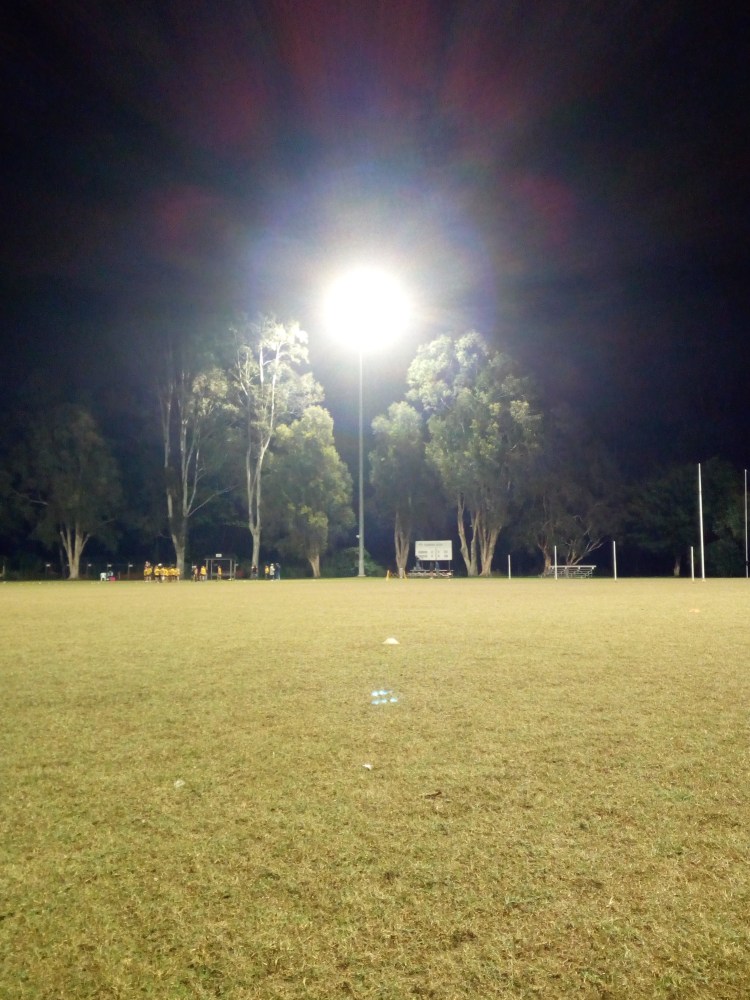
Footy training cancelled © image Dot Bernet 2019

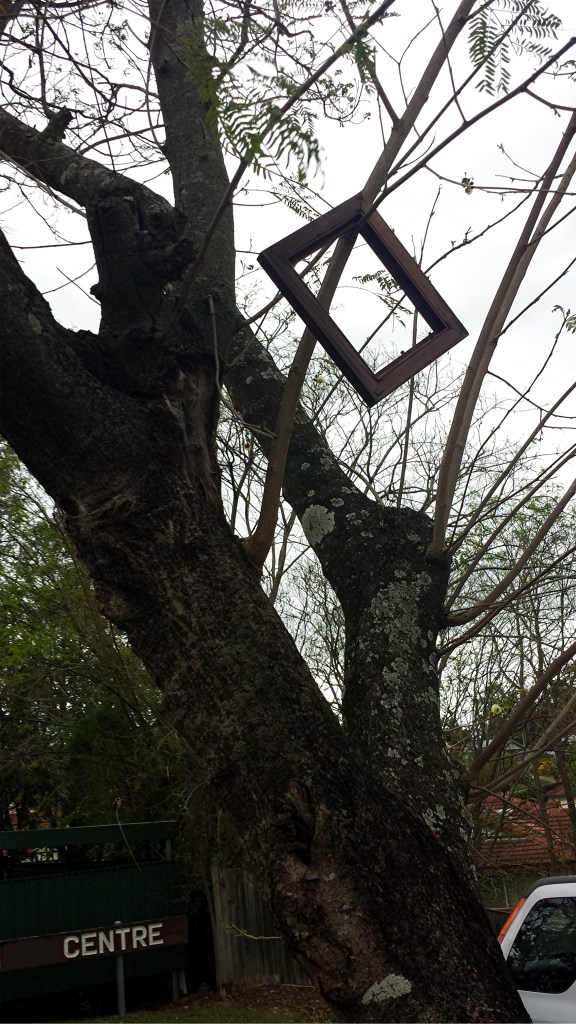
Many homes had their living room curtains open so it was easy to see their televisions, replaying the gloomy news over and over again as the fatality statistics grew more and more alarming each night. Often cooking smells hung in the air or the tang of eucalypt competing with the pall of grey smoke left over from backyard firepits, an ill-advised council initiative. Angela was glad her face mask filtered the worst of it. One night they took a different route and Jenny was chastised for impulsively, recklessly walking down the middle of a major suburban road just because she could. Not a delivery van, ambulance or person in sight, only rows and rows of parked cars and houses with twinkling fairy lights strung around trees and across balconies and down driveways. They saw unloved little street libraries, a ghost bus lit up but without passengers, and even a large picture frame hanging high up a jacaranda tree. There was a trend among real estate agents to put either cheery red bows or teddy bears on their For Sale signs. Unfortunately the follow-up maintenance was non-existent so, after rain, ribbons of blood-red dye ran down the advertisements and the poor teddy bears were soaked, left to dangle in macabre poses of decomposition. Indirectly a gloomy statement of that period in history. It always felt nice to return home.

❤ © Gretchen Bernet-Ward 2024

Why? © image Dot Bernet 2019

Temp Work Trials and Tribulation

An autobiographical tale condensed into a short story for my writers group on Tuesday, and yes, you get to read it here first!

Due to the nature of my story, I have not used paragraphing or dialogue so there is one continual flow of consciousness.

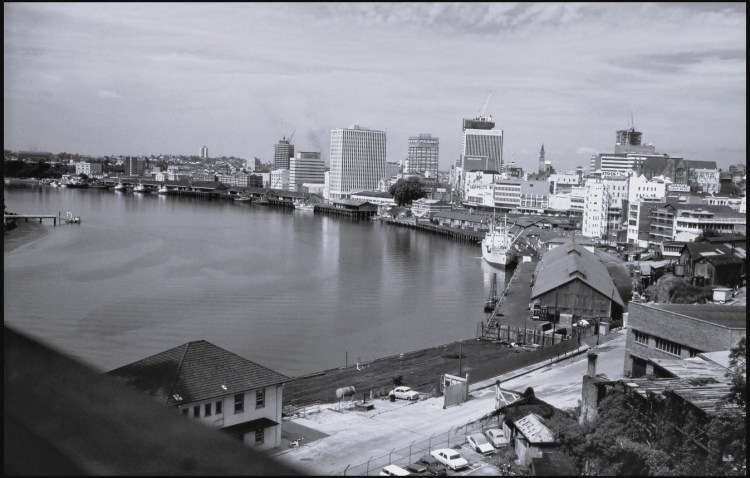
Brisbane River CBD red arrow marks the approximate area where the warehouse building in my story exposé was located in 1970s.

One thing I disliked about doing temp work for a small city employment agency was the tedious, repetitive and uncomfortable jobs I was sent to do without so much as a ‘Would you like this assignment?’ or ‘Does this one suit you?’ No, I was just shunted off without any idea of what I was going to be doing. You could bet on it being the worst office job, the one that no staff member would touch, nor would they give any help to the newbie. Off I would trot to a dingy 1970s office with old-fashioned equipment, uncomfortable chairs and messy desks with tea mug stains which I was supposed to miraculously turn into a fully functioning, pristine work environment in eight hours. At least, I always hoped my assignments were one-off because more than a day would usually send me around the bend. Particularly if the staff were snobby or the boss was grumpy. One fellow sat like a school principal on a raised platform and watched everyone to see that they only took five minutes for tea break. I learned from other assignments to take my own snack pack of biscuits and fruit to sustain me throughout the long, long day. Once I had a manager who actually checked my waste paper basket to see if I was making mistakes and using up his precious stationery. Another time, I was assigned to a city real estate agency in a grim, gloomy warehouse office somewhere alongside the Brisbane River near the Story Bridge off-ramp to Ivory and Ann Streets, now luxury apartments. I swear that day I never saw another staff member except the front desk receptionist. Surrounded by dust motes and empty desks of the old dark wood sharp-cornered style, I was given the job of typing mail-out letters and addresses on envelopes, a task I was always particular about, and phoning the Courier Mail real estate advertisement section to place ads for forthcoming auctions. I did not understand any of the in-house jargon and I am sure they did not understand my misinformation. At lunchtime, without a briefing, I found myself substituting for the reticent front desk receptionist who may or may not have gone to lunch. This was transition time, the 1970s on the cusp of the 1980s with the 21st century looming. An office world ruled by paper, bookkeeping ledgers, staplers, hole-punchers and Liquid Paper. Also this was the era of IBM golf-ball typewriters and weird flat switchboards; plus there was a two-way radio for the real estate sales reps to call in with information on new clients, or when they were on lunch (probably the pub) or just plain going home for the day. Without a test run, I botched that two-way connectivity twice. The dusty potted plant in the corner seemed to shrug in commiseration. Whatever. I put on my best smile when a woman wearing heels and heavy make-up walked in to pay her rent money. She pulled a wad of fifty dollar notes from her handbag. Back then apparently it was all cash unless you paid with a bank cheque. And she asked for a receipt. What? How was I meant to know where the receipt book was? The searing question uppermost in my panicking brain was ‘What do I do with all this cash?’ The renter helped me muddle through, flashing her long red nails in the direction of the desk drawers and a large manilla envelope. I was very uncomfortable with the whole situation. The reception desk was closely aligned with the open front door and as I hand-wrote a carbon-copy receipt, the noise, grit and heat of the city washed across me. No ducted air-conditioning in those days, even the old pedestal fan couldn’t handle summertime. Of course, one of the selling agents called again on the two-way. Again, I fumbled the call. I have a hazy memory of what transpired next, another rent payer perhaps? One who had the good sense to say they would come back later. Subtext: when a more competent staff member was on duty. As I sat there, I could almost feel the old walls oozing the gloom of years of suffering, clerical staff clock-watching their lives away. I had an epiphany. When the real receptionist returned to her post, I showed her where I’d shoved the money, turned and clip-clopped across the wooden floor boards back to the end-row of desks where I had stowed my handbag. Without hesitation I picked up my belongings and headed for the front door. I walked passed the receptionist on a phone call and gave her a quick nod loaded with nuance. She blinked slowly then went back to the caller. I left that building never to return. I cannot remember if I was paid for half a day’s work, I did type a pile of addressed envelopes. However, there were no repercussions from my unscheduled walk-out. On that day, as the glare shimmered up from the concrete footpath, I took a deep breath of freedom knowing I would resign from the employment agency and find a permanent job, one that I could really love. Happily I did, but there was a lot of typing along the way as new equipment superseded the old. I embraced the electronic era, the internet and email connectivity, the computer functions, the fabulous formatting and home printers. And thankfully unchanged keyboards. However, I will never embrace Excel and I will always love books, pens, paper clips and days off. GBW.

ⓒ Written and compiled by Gretchen Bernet-Ward ❤ 2024.

Brisbane River Wharves 1970 viewed from Story Bridge – Original image attributed to Queensland University of Technology.

Hope of the Tree Queen Warrior – Soliloquy

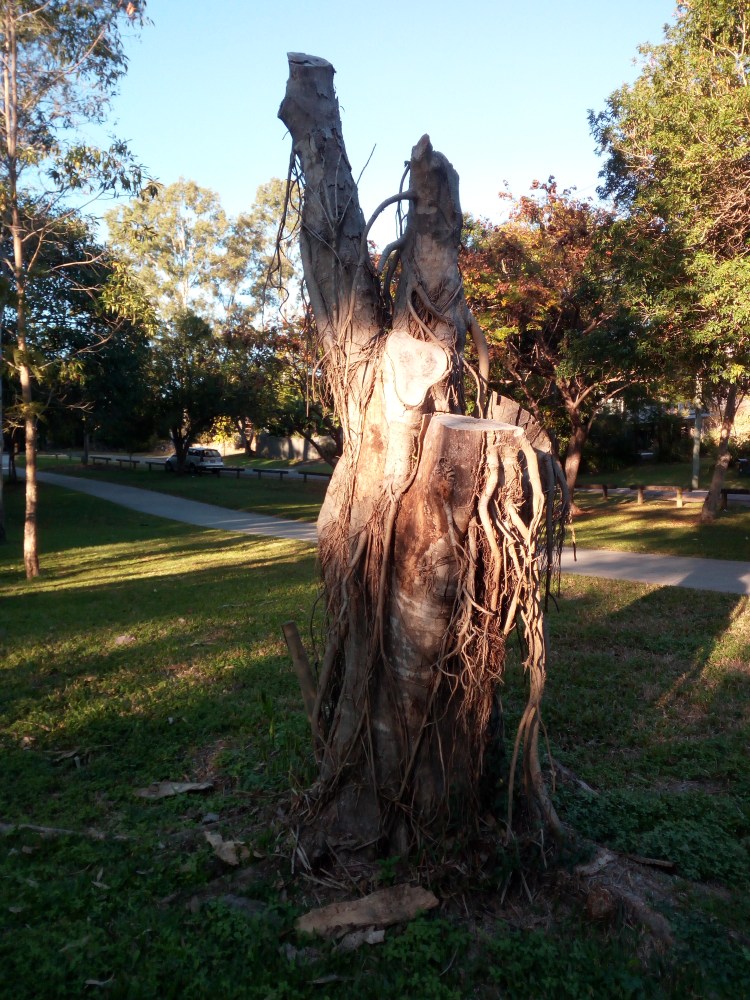
Tree Queen Warrior © image Gretchen Bernet-Ward 2023

The morning light struck her wounded heart but she raised her jagged limb and cried unheard “I shall be victorious! For I did nothing wrong, I was defenceless. If I could, I would speak loudly of the man in the dark night who, frustrated that I interrupted his view, tried to killed me with poison. My leaves fell, my smaller branches became brittle. The men in orange vests came with their chainsaws to finish me off. One muttered that I was unsafe, the other heard me sigh in sadness and stopped his brutal machine. They looked at me for awhile then trimmed me down. Orders were orders they said. No human has come back to mourn with me, the birds and insects dip their wings but do not stop. The geckos and ants will return when the poison washes away. I remain undefeated, I will grow again and keep my land green, the air cool, give rest to tired walkers, nesting for birds and adventure for the children who climbed my sturdy limbs. And the rain will nurture my young seedlings. See, they are struggling. It will take a long, long time to regrow, for that is how long it took me to grow. I am older than the man who almost killed me. Nature, my strength, says I can create sturdy limbs, green leaves and be a strong tree once again. I will try. I will outlive him. But today I am tired and my life-roots ache for clean water. I must rest before the first pale buds struggle to unfold.”

♥  Gretchen Bernet-Ward  
© Gretchen Bernet-Ward 2023

Quick Stories #10 Don’t Touch

Image © Gretchen Bernet-Ward 2021

Ten Days Ten Short Stories

One a day for ten days. I write when I can, do the best I can, and I am willing to put my work out there! My thoughts are Don’t Be Embarrassed, Don’t Make Excuses, Don’t Stop Writing.

Recently I completed a 10-week term on Fridays with U3A Brisbane Creative Writing Group on Zoom and enjoyed the prompts, feedback and general literary discussions.  The writers in the group are quite diverse in style and writing content.

The wordcount limit is 500 words and while I found their prompts were ‘forcing’ me to come up with something different each week, I really enjoyed doing it.  I was quickly learning how to keep them short and sweet.  Edit, edit, edit.

My characters are good, bad and ugly and the majority of the time I had no idea where they came from!

I say write for yourself first and don’t be precious about your words.  For better or worse, here are mine—the prompt was to write about a character using one main Sense throughout as their habit or quirk. 

Don’t Touch

When she finally left the confines of four walls, the coronavirus played havoc with Alva’s uncontrollable desire to touch things.  Touching was curtailed now she had to steer clear of a global pandemic.  More rules, wear a mask, keep your distance, use stinging hand sanitiser and avoid frowning people when she hovered too long over an item.

Neighbours gossiped, asked “Why does she do it, why doesn’t she stop?”  Alva would touch anything to get a sensation through her fingers. As long as something was within arm’s reach, she would touch it.  Uninvited, raising eyebrows and brashly crossing social boundaries, she would slide her hands over both public and private property. 

Alva looked back on moments of craving, her compulsion led to some embarrassing and hurtful situations.  She had stroked art gallery statues and let her fingers trail down their finely carved contours regardless of “Do Not Touch” as security guards marched towards her.

Park rangers were unforgiving when this random woman stuck her fingers into the wire of the exotic monkey enclosure.  The screeching was so loud, zoo visitors stopped in their tracks.  Alva was screeching along with the monkeys.  She nearly lost a finger that day and left the zoo via the first aid room and a rabies shot.

A mere glitch on the tactile radar which didn’t stop her caressing the shiny bonnet of a new car while the owner was inside.  On hands and knees, she loved the feel of cold marble floors; the juxtaposition of gritty sand; the fur of her neighbour’s fluffy cat Fluffy.  Best of all, the soft skin of her first granddaughter. The parents nervously hovered around when Alva visited unexpectedly but she put it down to new-baby nerves.

Alva touched the foggy glass of refrigerator doors in the supermarket, the round shiny apples, the springy bread rolls, and habitually opened egg cartons to fondle the smooth eggs.  Egg shells are an optical illusion, they cracked easily often speckling the front of her clothes.  As always, she purchased the carton of eggs at the checkout, along with the seven or eight other items she had lingered too long over in the fresh food aisles.

As a toddler, Alva was not allowed to touch anything for fear of disease.  Her chubby, exploring fingers were denied the grasping of matches, silver cutlery, dog food, shiny beads; the feel of feathers or a squishy banana.  Mother laced white cotton gloves on her hands, forbidding tactile experiences.  “Don’t touch this, don’t touch that!”

Outside the supermarket, Alva ran her hand along the rough bricks of the building, around the sturdy white poles in the carpark, and even debated whether or not to touch the hot metal railing of the trolley bay.  A quick palm slide.  The burn made her feel present, in the moment.  Heat on her skin always satisfied her sense of unity, completion, perhaps even closure. She smiled at the helper waiting beside the van.

——© Gretchen Bernet-Ward 2021——

“Generally, emerging writers don’t write every day; some writers don’t stretch themselves; some writers don’t share their work; some writers fear feedback; just do it!” Gretchen Bernet-Ward

Quick Stories #9 Cheers Dears

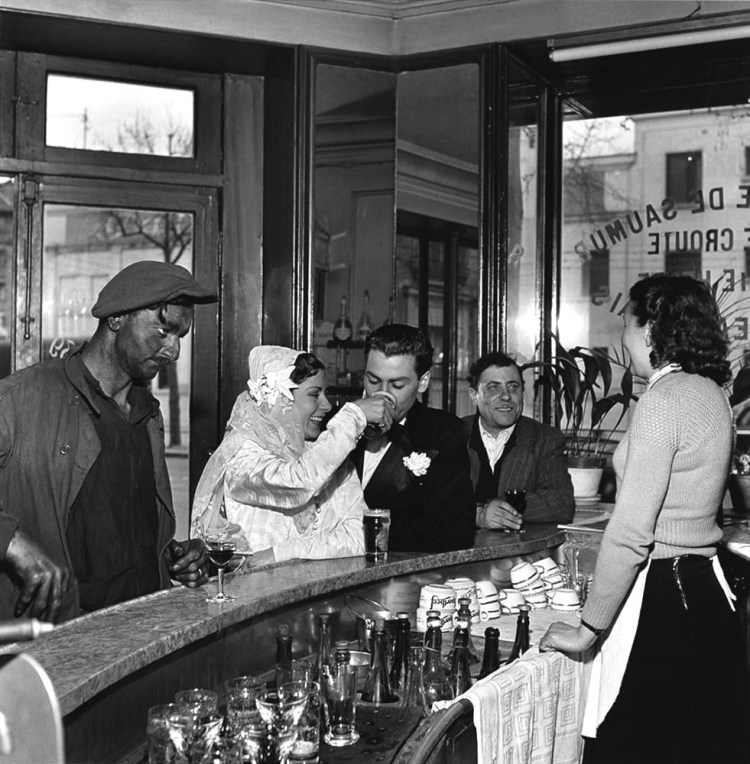
Café Noir et Blanc, Joinville-le-Pont 1948, taken by Robert Doisneau (1912-1994) a noted French photographer who had a poetic approach to Paris street photography and later became a pioneer of photojournalism.

Ten Days Ten Short Stories

One a day for ten days. I write when I can, do the best I can, and I am willing to put my work out there! My thoughts are Don’t Be Embarrassed, Don’t Make Excuses, Don’t Stop Writing.

Recently I completed a 10-week term on Fridays with U3A Brisbane Creative Writing Group on Zoom and enjoyed the prompts, feedback and general literary discussions.  The writers in the group are quite diverse in style and writing content.

The wordcount limit is 500 words and while I found their prompts were ‘forcing’ me to come up with something different each week, I really enjoyed doing it. I was quickly learning how to keep them short and sweet.  Edit, edit, edit.

My characters are good, bad and ugly and the majority of the time I had no idea where they came from!

I say write for yourself first and don’t be precious about your words.  For better or worse, here are mine—the prompt (above) is a black and white photograph.

Cheers Dears

There had been bitter discussions over the guest list regarding Roderick’s brother Ivan, the odd sheep of the family, and whether or not he should be invited to our afternoon wedding.

I thought Ivan, while not fully conversant with wedding etiquette, well, any etiquette really, was an all right sort of fellow who could knock back a sherry with the best of us.

Roderick joked that he was the only person who had ever seen Ivan take a bath; one bath.  Ivan was perpetually in transit to and from distant coal mines.  No perks, just Black Lung, high risk, low pay.  Whereas Roderick had chosen banking, and naturally I was pleased with his substantial wages.

Over family luncheon, Roderick tabled the No-vote and Ivan replied “I’ll find a way.”  Mother had stifled a nervous giggle; I remained silent.

Ivan’s occupation had not dimmed his wits and I personally think that’s why Roderick’s family shunned him.  He could be too sharp with his tongue and cut too close to the bone.  Roderick said he spoiled things.  Strangely enough Ivan never aimed an acerbic comment in my direction.   

Our big day arrived and the ceremony was only slightly marred by Roderick inexplicably going red in the face and choking during the vows.

Afterwards, our wedding photographer suggested something casual.  Something along the lines of newlyweds imbibing a fortifying drink.  The cosy bar where we first met was chosen for its location halfway between the church and reception rooms.

Stephen, the best man, hurried us through the narrow streets as shoppers stopped to smile or offer a cheeky comment.

I sensed somebody was following us but I couldn’t pinpoint anyone when I looked back.  “Nerves,” I thought, squeezing Roderick’s damp hand.  “Guests to greet, boring speeches, cake to cut.”

My bridesmaid Ethel is a teetotaller and declined to accompany us.  Wisely as it turned out.  The gritty pavement ruined the soles of my satin shoes and the hem of my gown.  I knew Mother would be distressed, aggravating her heart condition.

On the way into the bar, I snagged my bridal veil on something, the door handle perhaps, and Roderick untangled it with a tut-tut of exasperation.

We ordered our drinks, and one for the photographer. While Stephen chatted up the barmaid, the photographer positioned himself further down the counter, clicking away.

“Oops,” I said during a playful attempt to give Roderick a sip of my drink.  Liquid dribbled onto his hand-made silk cravat.

He tut-tutted again, grumbling “Don’t want to look like Ivan on my wedding day.”

I raised a perfectly plucked eyebrow.  “Our wedding day, husband dearest.”  Under my breath I muttered “Here’s to Ivan…”

During our bridal waltz, news came that Ivan had been killed when a tunnel collapsed on the early shift. A week later, our agitated photographer said “No charge”.  Roderick was distraught. Ivan looms in every photograph in our wedding album.

——© Gretchen Bernet-Ward 2021——

“Generally, emerging writers don’t write every day; some writers don’t stretch themselves; some writers don’t share their work; some writers fear feedback; just do it!” Gretchen Bernet-Ward

Quick Stories #8 Something Lost Something Found

Ten Days Ten Short Stories

One a day for ten days. I write when I can, do the best I can, and I am willing to put my work out there! My thoughts are Don’t Be Embarrassed, Don’t Make Excuses, Don’t Stop Writing.

Recently I completed a 10-week term on Fridays with U3A Brisbane Creative Writing Group on Zoom and enjoyed the prompts, feedback and general literary discussions.  The writers in the group are quite diverse in style and writing content.

The wordcount limit is 500 words and while I found their prompts were ‘forcing’ me to come up with something different each week, I really enjoyed doing it.  I was quickly learning how to keep them short and sweet.  Edit, edit, edit.

My characters are good, bad and ugly and the majority of the time I had no idea where they came from!

I say write for yourself first and don’t be precious about your words.  For better or worse, here are mine—the prompt was Something lost something found.

Something Lost Something Found

When I lost someone precious, I discovered something unique. Inside. I found a hidden strength; strength I never knew existed within my core being.  Compassion, knowledge, insights into human nature, a powerful understanding of the love, the joys, the sorrow of being alive.  I look beyond the grieving widow, the crying child, the unhappy workers, and I see what is really going on beneath the surface.  I’ve been there, experienced the hurt which shows on the faces of struggling men and women.  Yet humanity so often hides behind a mask of stoic resignation, and this is accepted.  When humanity rises up and protests at the injustices, it is not accepted.  Because it causes disruption; it causes people to think, compare, feel uncomfortable.  Next time you lose something, think about another person who has nothing left. Their despair at seeing everything destroyed in horrific circumstances; knowing they will never see another, never be the same again; family, home, job, life.  I have had that happen to me.  It is painful, it scars your heart, your soul for eternity.  I carry on but it will always be with me, that’s why I see it in others.  My hope is that one day when you too connect with that something within, you grow stronger in the knowledge of humankind.  Thus, when a person masks their heartache and begins to stumble, you understand, you can reach out.  After loss, empathy is found.  Use it wisely, young one. 

——© Gretchen Bernet-Ward 2021——

“Generally, emerging writers don’t write every day; some writers don’t stretch themselves; some writers don’t share their work; some writers fear feedback; just do it!” Gretchen Bernet-Ward

Quick Stories #7 Artist as a Child

Moggill Farmhouse Brisbane Queensland © Elle 2019

Ten Days Ten Short Stories

One a day for ten days. I write when I can, do the best I can, and I am willing to put my work out there! My thoughts are Don’t Be Embarrassed, Don’t Make Excuses, Don’t Stop Writing.

Recently I completed a 10-week term on Fridays with U3A Brisbane Creative Writing Group on Zoom and enjoyed the prompts, feedback and general literary discussions.  The writers in the group are quite diverse in style and writing content.

The wordcount limit is 500 words and while I found their prompts were ‘forcing’ me to come up with something different each week, I really enjoyed doing it.  I was quickly learning how to keep them short and sweet.  Edit, edit, edit.

My characters are good, bad and ugly and the majority of the time I had no idea where they came from!

I say write for yourself first and don’t be precious about your words.  For better or worse, here are mine—the three prompts (courtesy of AWC Furious Fiction) were 1. The story’s first sentence must contain only four words. 2. The story must include something being shared. 3. The story must include the words paint, shift, wave and toast.

Artist as a Child

His pose seems unrehearsed.   Gavin sits with one shoe raised on the chair, leg bent.  His elbow rests on his elevated knee, arm dangling.  A persuasive artist, gallery patrons arrive and gladly absorb his relaxed aura.

This unperturbed look is the impression he gives to anyone who doesn’t know him better.  Apart from guest appearances, he is an horrendously difficult person to be around.

Oil paint, turpentine soaked rags, brushes, and canvas torn from frames habitually litter the studio floor.  Thus I dispute the saying “order out of chaos”.  If Gavin could do that, he would never paint a single picture.

One of his latest, and most important works, was completed in an afternoon of ranting and raving when a courier delivered the right set of three wooden easels wrapped in the wrong brown paper.

“It’s for an art installation.  It has to be unwaxed brown paper!”  He paced the concrete floor.  “The whole idea is to paint in situ.”

The courier didn’t want to understand the significance.  He was already backing out the door, having encountered Gavin’s artistic temperament once before.

“Take it up with the boss,” he said, sliding our huge door shut with a thud.

Gavin pulled irritably at the neckline of his t-shirt which had seen better days, soon to join the castoffs on the floor.  “Sabotaged!”

“I can order a roll of brown paper from the newsagent.”  I tried not to sound too down-trodden.

Gavin hissed “Elle, I don’t want stuff they cover school books with!”

I let my office diary drop, scattering a zodiac of tiny seed pods across the work bench.

“Improvise, Gavin.” I said calmly.  “You may find it works better without the absorbency.”

I dabble, you see, landscapes.  His eyes lit up and I almost heard his brain creak.

He accepted help to shift the easels closer to the window for natural light, jostling unfinished works aside.

We share the art studio, an unusual arrangement for siblings considering one is famous and the other does not want to be.

I had declined to organise tonight’s chat and chew platters, believing that I already fill the role of sales and booking manager so catering was a bit too much.  The honorary title of art advisor suits me.  Nowhere does it state I must “arrange tiny scraps of organic food on dry toast.”

When our spendthrift patron Lady Augusta arrives, she gives me a quick wave before aiming straight at Gavin to discuss her eighth portrait sitting.  Goodness knows where these works end up.

Gavin quickly grabs an illustrated catalogue, head down, apparently ready to discuss technique with a notable art critic. He tells the critic “They want me on the cover.” I wince.

Guests are moving aside as Lady Augusta swoops, all fluttering chiffon and swinging pearls. Nevertheless the exhibition is a success and I sell my lone painting; at the evening’s highest price.

——© Gretchen Bernet-Ward 2021——

“Generally, emerging writers don’t write every day; some writers don’t stretch themselves; some writers don’t share their work; some writers fear feedback; just do it!” Gretchen Bernet-Ward