Came over the hill and the Brisbane River is to the right…And a line of waiting cars can be seen to the left…The Moggill Ferry is on the opposite bank…Here it comes, loaded with cars…With a clank, the metal plank is lowered and the cars drive off…A warning to boats cruising up the river…It is nice to sit on the river bank in the sun.
♥Gretchen Bernet-Ward
BACKGROUND INFORMATIONMoggill Ferry, a tolled vehicular cable ferry, crosses the Brisbane River between Moggill, Brisbane and Riverview, Ipswich, Queensland. It has weathered several floods since 1920s and had various replacements. The ferry was motorised in 1940s under joint control of the Ipswich and Brisbane City Councils. It can carry 20 vehicles (car AU$1.90) GVM vehicle up to 4.5 tonnes (AU$16.30) pedestrians (free) and operates between sunrise and sunset—if you miss the last ferry, you have to take the long way via Ipswich Highway. Services operate daily, except for Good Friday and Christmas Day. The journey takes approximately 4 minutes on the vehicle ferry. I think that depends on the pull of the current. During the floods of 2011, the ferry cables broke and ferry staff lashed it to the riverbank so it would not get washed away. It may look like a bygone era but it is well-used and only 19km (12 miles) from the centre of the city. GBW.
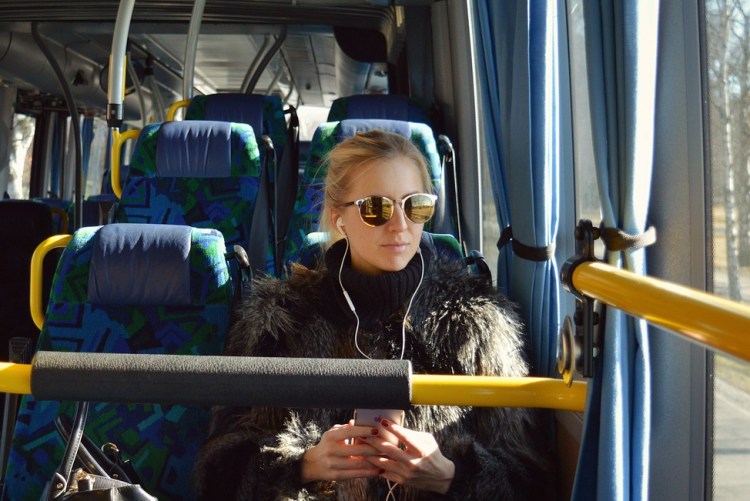
It’s nauseating. I usually don’t read on public transport. Sentences sway like a line of melting ants. I look out the bus window, watching cars whoosh along one level, trains on another. Soon train tracks swoop down, crossing the road. Ding, ding, ding, shrills the signal. A teenager ducks under the falling boom gate and sprints across the tracks. Impatient, foolish. Two seconds between life and resembling dog vomit. Platform security guards move in. The teenager projects nonchalance then slumps onto a metal seat. The bus moves off and my eyes fall to the formicine words.
“The written word has been a big part of my work-life, never for personal fulfillment. The birth of my blog activated the joyous freedom of self-expression. I use public transport and, oh, the things I’ve seen …” – the author
Do you occasionally go Goth and take a walk in the cemetery?
It has long been a source of comfort to me when I’m in a depressed mood.
Whether it’s the tranquillity, the otherworldliness or the bees buzzing in the freshly laid flowers, I couldn’t say. The grass, not quite a lawn, is comfortable to walk on.
I can think melancholy thoughts because I am walking able-bodied through the cemetery, reasonably intact for my age, wearing casual clothes and a sunhat, clutching my water bottle and car keys.
In front of me, the carved headstones, sinking marble slabs and rusty iron railings hold a certain olde worlde charm but tell of sadness and loss and neglect.
It has been several months since my last visit and I notice new gravestones. It is a hard heart that is not moved by the chisel-etched lettering. The rows of columbarium niches. Or newly turned earth.
My gloominess shifts, alternating between being surrounded by absolute endings and ongoing beginnings. Generations moving forward, carrying the same blood in their veins––until it too drains away.
I chide myself for forgetting to bring flowers when I see a child’s name on a temporary cross. My memories race to another place, my heart-broken mother lying across the back seat of the car, weeping tears which splash onto the vinyl seating. Inconsolable grief beyond my young understanding but I knew my brother had gone.
We know death hovers over us for many different reasons. We ignore, we forestall, but when the time comes we construct memorials to the deceased and monuments to the power of death.
Like my favourite mausoleum.
It had rained in the night, the scent of pungent eucalyptus leaves all around, and I can see the sides of the stone mausoleum are still damp.
Small patches of brown and green mould creep around the edges of a large, tightly sealed wooden door with solid metal hinges and no handle. Not even a lock. A firm statement of eternity for those entombed within. Unless it’s a cenotaph. Either way, I don’t think anyone will answer my knock.
I see this edifice as an art form of some complexity. Not knowing anything about it, no name or plaque to give an inkling of tenure, I feel neither fear nor intimidation, and am certainly not in awe of its size and prominence on the hillside.
The roof is domed. An off-white marble angel stands in prayer on the top, miraculously intact given the damage to smaller, equally virtuous angel statues set around the outer walls. Lower down, straggly weeds mingle with intricately carved flowers which appear to sprout from the earthworks.
A mosaic frieze, rendered in ceramic tile and glass fragments, encircles all four walls. Some parts twinkle and glisten, most are dull. I can never work out if it depicts a religious theme or the life of a prosperous family. Ah, entwined I think.
The worn stone step beneath the sturdy door looks unsafe and ready to crumble at the slightest shoe pressure. Clearly not the original bluestone foundation slab. The breeze picks up and two withered plants on either side of the gravel pathway shiver and shake like baby rattles.
I glance skyward as the afternoon sun is covered by streaks of sombre cloud. It doesn’t take much imagination to realise this resting place would look forbidding by night. I am unsettled. Those dark hours would be a step too far.
After completing my circuit, I gather myself, my mind, my accoutrements and I am ready to acknowledge the towering obelisk stationed at the gate. Did it sway? I politely thank its ebony magnificence and amble out to the carpark.
So, why is this cemetery connected to me? Will I end up here? Can I conceive of the idea of me ending up here?
I cannot conceive of me ending up here, the thought is unmanageable, bizarre even.
Which is why I like a quiet walk in the cemetery. I breathe the fresh air and rejoice in the fact that today I can.
♥Gretchen Bernet-Ward
Gretchen, I would like to thank you, on behalf of the Scottish Mental Health Arts Festival and Bipolar Scotland, for taking the time to write and submit your work to the writing competition for the 2019 Scottish Mental Health Arts Festival. Your contribution to the competition was very much appreciated. Unfortunately, on this occasion, your work was not chosen for our shortlist. Chief Executive, Bipolar Scotland.
Come back from the mirror it distracts your thoughts
Take off your dark glasses leave them on the floor
Turn off the television and put down the phone and
Burn the magazines you read when you’re alone
Let’s go down to the cemetery
Let’s go down to the cemetery
Let’s go down to the cemetery
Let’s go down
In the dead out of the city there’s a place I know that
Everyone ignores and people never go
All streets lead there so we’ll find our way
And when we get there you do not have to be afraid
They’re diggin’ our graves but while they work
Let’s laugh at them cause all of it is so absurd
Let’s go dancin’ there above the dead
Oh let’s celebrate that we’re not yet
Let’s go down to the cemetery
Let’s go down to the cemetery
Let’s go down to the cemetery
Let’s go…
Hold my breath feel that it is warm
But it is temporary baby it will soon be gone
Take a handful of dust and throw it in the air what
You once were you will be again
So when we’re gone let’s two graves together
By the tree that rises tall and brave
And those who are still livin’ out their birth we’ll go
Dancin’ over our small patch of earth
Let’s go down to the cemetery
Let’s go down to the cemetery
Let’s go down to the cemetery
Let’s go down.
Eternal rest grant unto them, O Lord, and let perpetual light shine upon them.
May the souls of the faithful departed, through the mercy of God, rest in peace.
Amen.
It’s a bright, breezy Saturday morning and I’m doing light housework when I hear a knock on the front door. On the weekend nobody knocks at the front door at this time of day. Nobody except salespeople touting a product, charity or religion. I go to the window and look down at the doorstep, which doesn’t have a porch covering, and I see two people. A fair-haired woman who is thumbing through an iPad and a man in a jaunty hat. The window is open so I lean out, say a loud hello and they look up. Predictably, they respond with surprise, the man uttering the usual “A voice from above” and I give a weak smile. The woman swallows and clears her throat. She launches straight into her patter which goes something like this “We are currently in your neighbourhood discussing death and dying and what this means to families, your family…etc, death cropping up several times…and what are your thoughts on this subject?” My first reaction is annoyance, she hasn’t said who she represents. The invisible signs are as obvious as the outward message. My second reaction is one of astonishment. Do they really expect me to talk over such a matter with them, total strangers, door-knocking my street, making dogs bark, trying to look deep and meaningful on a topic which is universally devastating no matter what the circumstances? My third and final reaction is to look her in the eyes and say “I’m sorry, I do not wish to participate.” She smiles, he smiles, I offer them a polite good-bye and they wish me a happy weekend. As I’m drawing back, I catch a momentary look of relief on the woman’s face. ♥Gretchen Bernet-Ward
My friend and fellow writer Maud Fitch tilted her head at me and said “Everything is fine for the first three months then the rot sets in and the wheels fall off. Or, for a modern analogy, your reception drops out.” She checked to see if I was listening. “You are left high and dry and feeling cheated, let down, out of sorts, tired, jaded or basically unmotivated. The first three months of anything are the best, then comes the worst three months.” As she took a breath, I gave her a querying look. “Why?” she responded, “Well, who knows? This is my take on human nature.”
I was perched on a wooden stool while Maud had settled herself down in an easy chair, cardigan wrapped tightly and slippers wedged firmly on her small feet. She coughed delicately and adjusted her spectacles before continuing. “A new career, a new car, exercise workout, bonsai class, creative writing, artistic pursuit, second marriage, an extended holiday, all seemingly wonderful for those crucial three months. Then, bam, a total train wreck. Worse, it’s a total bore! Then you wish you had never started.” I opened my mouth to protest but she ploughed ahead. “Of course, this phenomenon can work in reverse. The first three months of a new baby, the first three months of post-operative surgery, or worse, the first three months of giving up smoking. Two words – mindset.” I stifled a laugh. “Okay, one word. But keep an open mind because nothing stays the same for long.”
Uncomfortable, I stretched my shoulders. “Don’t thrash around,” Maud shouted, startling me. She waved her arm dangerously close to her favourite cat figurine. “Look up, look ahead, search for those footholds and handholds to help move you forward again. Work your way out of the slump, not by changing direction (although you might, she hissed in an aside) but by forging through the undergrowth on that overgrown path until you reach a reasonable destination where you can relax, regroup and start again – when you are good and ready! It may not be the perfect spot to wait, nevertheless, it will do until you reinvigorate.”
Maud slumped back. “Do you think that’s too strong for them?” I laughed. “Maud, I am sure the ladies luncheon committee has heard stronger things than that.” She eyed me dubiously, unsmiling, the inference being that she knew them better than I ever could. I was sure her delivery would win them over and if it didn’t, just like seasonal change, there was always another one.
After some shuffling, Maud pulled out a crumpled sheet of paper from down the side of her chair. “I was going to reference motivationalist Julia Cameron when she says ‘Sometimes these U-turns are best viewed as recycling times’ but I’m going to read this genuine job advertisement first and say ‘Ladies, be thankful you are relaxing here today’ then launch straight into my talk.” Maud cleared her throat and read loudly:
“About you – Highly motivated, you possess excellent listening and strong customer service skills. You have proven ability to build rapport with customers, key partners and management. You possess strong problem solving and resolution capabilities. Resilient, flexible, literate, you have the ability to work under pressure, deal with rapid change and work to strict time frames. Self-motivated, available at short notice, you are currently looking to embark on your next career challenge and add value to a growing organisation. If this sounds like you APPLY today! Previous exposure dealing with print/sales/retail is desirable however not essential.”
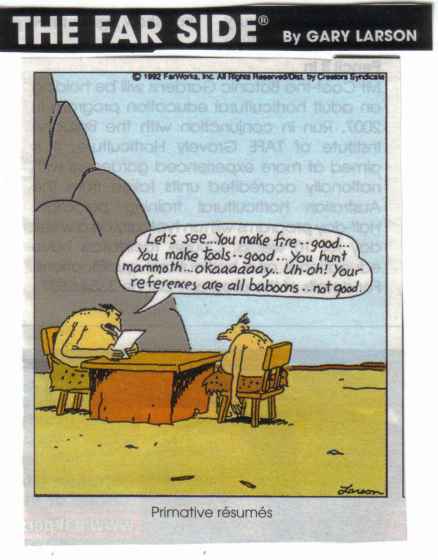
With a snap of fingers on paper, Maud whooped “Burnout dead ahead” which I thought was a bit unfair. “Oh, Maudie” I said, a nickname she disliked, “you make me want to grab a coffee and start scrolling endless, mindless amusements across my screen.” I picked up my phone. I don’t think that was quite the incentive she had in mind and may have misinterpreted my gesture. She frowned and started flipping through the pages of her speech, obviously keen to memorise more text. “Look.” I offered her the phone. On the screen was an old Gary Larson “The Far Side” cartoon. Now, that really did make her laugh.
Maud Fitch was well-known to the local police. While Maud would say she was recognised for her crime-busting phone calls and neighbourly good deeds, Sergeant Ron Tisdale on the front desk of Kingsgrove police station expressed the opinion that she was a nuisance caller.
“In fact,” he said in his rich baritone voice, “she’s a serial pest.”
Sergeant Tisdale had just hung up from her latest telephone call.
“It’s not as though Maud fits into the lonely old woman category,” he said generously. “She’s got a good family, a part-time job and plenty of hobbies.”
A junior officer asked what the problem was this time. “An escaped nerd alert?”
“Don’t be too cheeky, lad,” said Tisdale, careful not to let his soft spot show. “This time Maud has been observing her retired neighbour across the road and she thinks he’s murdered his sister and disposed of the body.”
The younger officer laughed. “Wasn’t that a storyline on TV last night? She’s a sponge. She absorbs everything she sees on television and translates it to her own life to spice things up.”
“That might be so but I’ll log the details just the same,” said the Sergeant. He rubbed his chin. “I think I’ll drop by Ms Fitch’s place on my way home this afternoon. Just a quick visit to check that everything is fine.”
Being the senior officer, he ignored the knowing wink from his subordinate.
Maud had made a comment about uncharacteristic behaviour which sounded an
alarm bell in his orderly mind. At the very least, he wanted to see that sparkle in her eyes when she had a hunch about something.
* * *
Maud saw Angus McDowell draw the living room curtains again. He seemed to open and close the floral curtains three or four times a day in a vain attempt to make it look like someone was at home. That in itself was unusual in such a safe little town like Kingsgrove but it was always his sister, Felicity, who did the domestic work inside their home. Angus was the outside type. He trimmed the garden, attacked the weeds and planted flowers as orderly as a row of chairs at the movies.
“He’s been doing that curtain thing for several days now,” said Maud. She shaded her eyes from the afternoon sunlight which gleamed down on her pale skin and auburn hair. She turned and caught Sergeant Tisdale with a transfixed look on his face. “And I haven’t seen Felicity for almost a week.”
The Sergeant cleared his throat and reached for his fourth helping of Maud’s homemade biscuits.
“Perhaps she’s gone on a holiday?” he suggested. “Has he told you anything specifically to the contrary to arouse your suspicions?”
Maud poured more hot water into his coffee cup and frowned.
“That’s just it, he’s cut himself off, Sergeant.”
“Please, call me Ron,” he said.
“Angus isn’t answering the phone or the door bell,” she added, “Ron.”
“Maybe Felicity is visiting family and he didn’t want to go with her. Could be he’s home alone having a kind of bachelor break.” Sergeant Tisdale muttered to himself, “Lord knows we all need one of those occasionally.”
Maud understood that his daughter was leaving the grandchildren with him more and more now that his divorce had come through, thinking that it would cheer him up.
“He’s not the type,” she said emphatically. From her position as a twice-divorced woman with grown-up sons, Maud felt she could speak with authority on the slovenly ways of men when left to their own devices. Angus was neither a loner nor a slob.
The Sergeant shrugged his broad shoulders.
To highlight her next words, she tapped her spoon on the side of her cup.
“He’s been doing everything under the cover of darkness.”
After she had outlined the nocturnal behaviour of her neighbour, Sergeant Tisdale said “I don’t want to snuff out your theory with a fire blanket, Maud, but I hardly think getting the groceries delivered or taking out the rubbish and collecting the mail after dark constitutes a criminal case.”
Crumbs were starting to gather on the front of the Sergeant’s shirt and he automatically brushed them off. Maud’s glare made him hang his head like a school boy. He apologised as she hurried out of the room to find her hand-held vacuum cleaner. When she came back she noticed he had taken the opportunity to stuff a savoury cheese sandwich in his mouth.
Over the suction noise of the vacuum, Maud said “I haven’t told you the clincher yet.”
“Clincher?” mumbled Sergeant Tisdale. The look on his face indicate that he thought this was another word for Maud’s guesswork. But she knew he was actually allowing himself enough time to swallow the sandwich. It gave her the chance to air her next piece of evidence.
“Yesterday, when I dropped by, there was no flower bed in the back garden. Now there’s one near their old jacaranda tree.” Her voice rang with triumph.
Sergeant Tisdale smiled politely. “The McDowell’s have a neat garden, they like gardening, I see nothing unusual with that.”
“But, Ron,” gasped Maud, “it was dug in the middle of the night.”
“Well?” said Sergeant Tisdale as he eyed the last biscuit.
Maud shoved the plate towards him. “It’s the same size as a graveyard plot.”
Unimpressed, Sergeant Tisdale sighed. “And?”
“And there’s no flowers planted in it,” said Maud. “The reason I think this is so significant is the fact that Angus has a bad back so all the hard work is carried out by a landscaper who arrives around ten o’clock in the morning.”
She waited for a rebuke, similar to the kind her family dished out, which usually ended with her being told she was a sticky beak. Instead, Sergeant Tisdale asked “When did you last…?” With a dramatic squeal, she cut him off and pointed out the window. “Look! He’s fussing at the curtains again. I can see his gardening overalls.”
Sergeant Tisdale half rose from the armchair which caused a cushion to tumble to the floor and coffee to slop onto his trousers. Maud gave a snort of annoyance but it was directed through the window.
“Too late,” she said. “He’s ducked out of sight.”
“Sorry about that,” said Sergeant Tisdale. He sat back down and carefully reached for a paper serviette.
“Oh, don’t worry…” began Maud.
“No, I don’t mean spilling my coffee,” he said. “I meant twitchy behaviour. It happens a lot around policeman. Police cars also have a way of making citizens nervous.” He dabbed at his knee with the disintegrating paper and changed the course of the conversation. “Maybe he’s worried about you, Maud.” She rejected this idea with a wave of her hand. “No, I think he knows we’re on to him.” For emphasis, she punched a small fist into the palm of her hand.
“Let’s nail him,” she said.
“I’m shocked,” said the Sergeant and smiled. “You have a wonderful imagination.”
His comment was ignored because Maud remembered something else she’d forgotten to tell him. “You know, I rang all the hospitals in Kingsgrove and none of them had a Felicity McDowell on their patient admissions list.”
By tilting his head to the side, Maud thought his interest was piqued but he dashed her hopes.
“What’s the motive, Maud? From all reports, Angus and Felicity McDowell have got on very well over the years, considering they are brother and sister. No sibling rivalry there. They’ve settled into retirement together after the death of their mother and have never put a foot wrong, so to speak. Now, answer me this,” he said and leaned forward slightly. “Why do you think Angus has murdered his sister Felicity?”
His voice sent a shiver up Maud’s spine. She sucked in a lungful of air and expelled it slowly. “Well, dear Ron, I was saving the most incriminating evidence until last.”
Sergeant Tisdale put his cup aside, drew himself up in the armchair and displayed credible anticipation.
“The McDowells were arguing just before Felicity disappeared.” Maud moistened her lips. She believed this was the good part. “Felicity was leaving the house and she shouted at him saying he was a boring old man and it showed. She didn’t want to end up a wrinkled prune like him. She said he was stuck in a rut and should live a little, move with the times.”
“How did you hear all that?” asked Sergeant Tisdale.
Maud felt guilty and knew it showed. “I was watering the garden.”
With reluctance, Sergeant Tisdale rose from the comfort of the chair and said “Hurt feelings yes, murder no. An argument like that doesn’t indicate Angus would have been angry enough to commit murder.”
Maud was crestfallen. She had hoped Sergeant Tisdale would look into it for her. However, his next words brightened her outlook.
“I’ll call on Angus tomorrow, just for a little man-to-man talk. But I’m not promising anything. I’m sure there’s a reasonable explanation for Felicity’s absence.”
As he walked towards the door, Maud followed him and voiced her main worry. “I certainly hope Angus is not a serial killer or I may be next on his list.”
Sergeant Tisdale assured her that normal people don’t turn into serial killers overnight. He thanked her for the afternoon tea and was just about to cross the threshold when he paused. He asked Maud if she had seen or spoken to either of the McDowells in the past week.
“No, except for partially seeing Angus at the window,” she said. “Why do you ask?”
“We don’t know if that person in the house across the road is actually a McDowell. It could be anyone.”
As far as Maud was concerned, their conversation had taken a turn for the worst. She was horrified to think that perhaps both McDowells were murder victims.
“Oh,” said Maud. “Both murdered.”
She opened and shut her mouth then managed to utter “Oh, Ron.”
Sergeant Tisdale told her how this particular thought had been niggling at the back of his mind. Maud couldn’t tell if he was serious. “Don’t worry,” he said and gave her elbow a squeeze. “Just speculating out loud. Not a very plausible scenario. Also, if someone was in there house-sitting, I’m sure you would have witnessed other comings and goings.”
“And surely they would have told me if they were going away?” said Maud. She felt indignant at the very idea of being excluded from this information.
“Not necessarily,” said the Sergeant. “For example, they might have been too embarrassed to say they were going to a nudist camp.”
Despite herself, Maud laughed. It was an unlikely event as far as she was concerned. She said if that was the case, she would never be tempted to join them.
“Shame,” said Sergeant Tisdale.
As she closed the front door, she was aware that the Sergeant’s look was one of interrupted longing. She assumed he was disappointed he had not been invited to dinner. With a final vacuum of the armchair, she dismissed the flaws of men because a plan of action had already germinated in her fertile mind.
Sneak Peek
Dusk had melted into darkness and the clock numerals glowed towards midnight as Maud changed her clothes. She put on her black slacks and a dark blue shirt which she buttoned to the top. In the wardrobe she found a black cap her nephew had left behind. Once it was firmly clamped on her head, she surveyed the effect and was satisfied she looked slinky enough to blend into the night.
“Now for a bit of sneak and peek,” she whispered to the mirror.
At first, Maud thought it would be a good idea to dig up the grave-like mound beside the McDowell’s jacaranda tree but visions of a gruesome discovery quickly ended that notion. Now she wanted to see who was in the McDowell house.
She crossed the dimly lit road, opened the wooden gate and tiptoed across the springy lawn. The act of trespass did not enter her mind. She headed for the side of the house because, she reasoned, it was less visible from the road and more likely to have an open window. Startled by a creature rustling in the shrubbery, she paused and held her breath. It was then she heard another sound. The sound of digging. Maud was sure her heart skipped a beat.
“Caught in the act,” she thought. Surprised at her bravery, she moved forward. She wanted to see who was doing the dirty work.
“Maybe the body is being moved?” This thought made her shudder.
Maud crept along paving stones as she followed the noise around the corner of the old house. Dull light from an open doorway partially lit the back garden. There, hunched over the newly-dug garden bed, was a shadowy figure wearing heavy grey overalls and thick gloves. Although she only had a back view, Maud guessed it was Angus. She could distinguish his movements and watched him dig at the soil with a small trowel.
Suddenly her bravado faded and Maud lost her nerve. She couldn’t tackle him and she certainly couldn’t accuse him of anything. It was too tricky, too dangerous even. Inwardly she chastised herself for doing such a foolhardy thing.
As she cursed her impulsive behaviour, her innermost thoughts screamed in a high pitched voice “Run, run now,” but she willed herself to stay calm.
She started to back away. As she moved slowly down the path, she felt for the stability of the wall. Without warning, she stood on a loosely coiled water hose and staggered. It twisted around her ankle. The more she flayed, the more entangled she became until the hose wrapped around her leg. Finally she fell backwards and plonked down in a puddle of water.
The silhouette jumped up and ran over to her. Two sturdy boots halted in front of her downcast eyes. Maud did not want to look up. She did not want a confrontation. She knew she was cured of sleuthing for life. One steel capped boot tapped with intimidation as she forced herself to look upwards.
In the same instant she raised her eyes, the backlit figure spoke.
“Maud Fitch,” said a female voice. “What on earth are you doing spying on me in the middle of the night?”
“Felicity! You’re safe!” cried Maud, flooded with relief.
“Of course,” said Felicity. “Now answer my question.”
Maud gulped. “I thought you were dead.”
“Obviously not,” said Felicity.
“But, but,” stammered Maud, “why are you dressed in Angus’ clothes?”
“To do a spot of gardening,” said Felicity.
Maud felt bold enough to ask for some assistance. Felicity helped her untangle the garden hose and she stood upright. As she brushed at her damp slacks, Maud saw a line of potted plants waiting to be transplanted.
Unable to resist, she said “Why do it at this time of night?”
“Planting by the lunar cycle,” said Felicity.
“Angus does the gardening. Where is he?”
“None of your business,” said Felicity. She appeared about to add something, instead she pulled off the gardening gloves and shoving them into a plastic bucket.
“You didn’t…” Maud’s voice faded.
Felicity shot her a sly grin. “You reckon I’ve bumped him off and buried him in the garden, don’t you?”
Maud nodded and wondered how fast she could run.
“I could easily do that to you,” said Felicity matter-of-factly, “and nobody would ever know.”
“Ron Tisdale would,” said Maud, then covered her mouth.
“Will the good Sergeant be arriving next?”
“Yes,” lied Maud.
Felicity appeared unfazed by this and Maud watched as she swiftly removed the stained overalls. Unfortunately it was too shadowy for Maud to tell if the marks were made by grass or blood. Felicity jammed the overalls into the plastic bucket and stood there wearing a pair of tight jeans and a flattering top. To Maud’s dismay, Felicity then snatched up a pair of pruning shears and shook them menacingly at her. “You’re a nosey old sticky beak,” she said.
Maud was relieved when Felicity dropped the shears into the overcrowded bucket. She retorted “Tell me something I don’t know.”
Felicity chuckled. She sat down on the door step in the pale glow from the kitchen beyond and ran her fingers through her newly-cropped hair. It was almost a challenge.
Her attitude no longer threatened Maud but she was disconcerted when Felicity smiled and crossed her legs in a relaxed fashion. Maud wondered why her image was so cool, so casual. And, she noted with surprise, so young-looking. She thought “If Felicity is older than me then she should look older.” In fact, Felicity looked younger and more unlined than when she and Maud first met ten years ago. It took Maud a few seconds to work it out.
“You’ve had Botox injections,” she accused.
“Yes, I have. Got it done last week when I was in Sydney, only took a few hours. And I’m loving it,” said Felicity with a girlish toss of her head. “When do you think Sergeant Tisdale will get here?”
“I think you should be arrested,” Maud exploded. “Obviously you wanted a new life, a carefree younger life. You didn’t want Angus hanging around, poor old wrinkly Angus, so you killed him. Clearly the treatment has addled your brain.”
“You’re the one who’s addled.” Felicity glared as much as the Botox treatment would allow. “Angus got knifed. It was no accident.” She paused and straightened her sleeve. “I persuaded him to go under the knife. I’ve been covering for him while he recuperates from cosmetic surgery.” Maud was dumbfounded. “Angus, cosmetic surgery? Never!”
“It’s true,” said Felicity. “It’s our little secret. Please don’t give the game away. He should be home tomorrow so you can check out the work for yourself.”
“I won’t be coming back, I couldn’t imagine anything more awful. What a ludicrous thing to do,” shouted Maud. She turned and stormed off before she realised her behaviour was excessive but she had gone too far to make amends. As she rounded the corner, she yelled over her shoulder “You’re a couple of vain peacocks.”
She muttered all the way home about people who couldn’t grow old gracefully, who were image obsessed and wanted immortality through the process of body distortion.
“I love my wrinkles,” she said defiantly. Then wondered if it was true.
* * *
Next day, Maud had driven home from work and cruised down the last familiar stretch of her own road when she saw Sergeant Tisdale’s police vehicle pull away from the kerb outside the McDowell residence. For her own benefit, she needed to know what he had been told about her unseemly actions and started to formulate an excuse.
She flashed the headlights then flagged him down with windmill-like arm gestures. The Sergeant appeared both annoyed and amused but pulled over good-naturedly and lowered his car window.
Maud was ready with her questions but he spoke first.
“I’ve solved the McDowell mystery,” he said.
Maud went to speak but he kept talking. “Old Angus and Felicity are there. He told me that both he and Felicity had each taken a short vacation.”
She gave a wary nod.
Sergeant Tisdale continued “The separation must have done them both the world of good. They look ten years younger.” Maud smiled. At that moment, she experienced a revelation. She decided that saving face was not as important as keeping a friend’s secret. Sergeant Tisdale looked at her expectantly. “Glad to hear it,” was all she said.
Maud accelerated sharply and left the Sergeant behind without a second glance.
She knew he wouldn’t give up on her that easily and she had biscuits to bake.
♥Gretchen Bernet-Ward
(With my thanks to Maud Fitch, friend and fellow writer)
Fleur was sick and tired of the competition rules, regulations and conditions which surround the submission of a manuscript. She decided to cheat the system. But one of the worst things is to think you are going to get caught, that you are double-dealing the system, that you’ve done something you shouldn’t have done. Be self-assured?
“Sure, you justify it to yourself that you aren’t going to win a prize in that writers competition anyway so what the heck, give it your best shot, enter four competitions with the same short story under 3,000 words.” Fleur finds her handbag and house keys. “And who cares? First world problems, right? They can only disqualify me. They’ll get an entry fee without the hard slog. What hey, they will do the hard work first. Judges will find out later that I’ve cheated. Well, not exactly cheated, more bent the rules.”
Fleur submitted the exact same story to four different organisations in the hope that one would succeed. Of course, deep down she knows that the story will not succeed. But there’s that tiny little glimmering hope that one entry will win. “Ha,” snaps Fleur’s psyche, ‘you’ll win first, second or third place in each competition and cause a furore.” There will be a lot of huffing and puffing, but Fleur says “I don’t care! Keep the entry fees, frankly I don’t care!” There will be tedious emails pointing out her indiscretion and how naughty she’s been – she don’t care! They can sort it out by themselves. Go ahead, eliminate her, but questions sneak through before the front door closes.
Fleur’s shoes pound the pavement as her rant continues “At the time I think I said to myself that I had not submitted to another competition, however, by the last entry I had. And I didn’t change a word. But here’s two questions for you. How come books and authors can win the Pulitzer Prize, Nobel Prize, Ned Kelly Award, Prix Goncourt, Man Booker Prize, etc, even though they have already won another prize? Or magazine articles which have been reprinted elsewhere with author permission? Like I said, I don’t care!”
“Please, please,” Fleur takes a breath “don’t let me win a place in any more than one competition. I couldn’t stand the hassle. As a matter of fact I don’t quite understand why I did it. Well, in the case of the smaller organisation, I think I did it out of pity to bolster their entry numbers. And in the case of the larger organisation, I think I did it out of spite to prick their egotistical speech bubbles.”
Fleur is expounding this tirade now because three of the organisations have announced their cut-off date, entries have closed. The minor one is still struggling on. “Oh,” she says, her pace slowing “I forgot to mention that I have submitted another manuscript, quite a different story but the same copy to two interstate writing competitions. Their game plans are miles apart, one laidback and one stiff and starchy. The story is rather laidback itself so I will be interested to see if it gets anywhere, I do like it.”
On the subject of slightly ignoring their instructions on the grounds of “get over yourselves, bloody gatekeepers” Fleur couldn’t help adding “If they don’t like it then that’s tough. I don’t care!” She knows she will have second thoughts after formal announcements are made in a few months’ time, and she voices the unsettling assumption that she may be victimised. Fleur has heard tales of editors, indeed publishing houses, blacklisting people and the writing fraternity shunning one of their own for not following the guiding principle of “doing it the right way”.
Fleur stops walking. “Publishers want unusual, they want different, but mostly they are just as rigid as the public service, any spark of individuality snuffed before it ignites. Death to the formula!” She hears her bulky envelope fall into the metal post-box and slams the flap shut. The guidelines stated that all entries must be submitted by email attachment.
Angus shuffled through a pile of bills and sent one fluttering to the floor. His son Steve stood beside the dining room table, arms folded, watching him. Every week Angus misplaced an important piece of paperwork.
“Told you it wasn’t far away.” Angus held up an electricity account.
“You should have a proper filing system, Dad,” Steve said. “One day the electricity will be cut off and you’ll wonder why you’re in the dark.”
“It’s you who’s in the dark, my lad.” Angus tapped his nose, an obscure family joke.
Steve gave a brief smile. “Let me buy you a three-drawer filing cabinet with suspension files and alphabetical tabs.”
“My manila folder is just fine,” said Angus, holding up a battered cream folder with various names crossed out and a succession of dates which finished at 1998.
“You’re damn lucky I haven’t forced you into owning a computer,” said Steve, stacking old invoices, “otherwise I’d make you pay bills online.”
“The only line I like is a fishing one,” said Angus, his mouth twitching at the corners. He couldn’t resist adding “Just ‘cos you program computers doesn’t mean I have to like ‘em.”
Steve gave a good-natured harrumph and went in search of his mobile phone. He gave a whistle and his dog Fancy raced in from the garden with her tongue lolling and eyes gleaming. “Come on, girl, it’s time to take the old bloke shopping.”
Angus knew that Fancy had been foraging in the garden by the dirt clinging to her paws. “Glad someone likes my little courtyard,” he said. She placed a paw on his bony knee and he ruffled her ears. “No treats yet.”
Before they left, Angus surreptitiously swallowed a blood pressure tablet.
They took Steve’s car and drove into town, parking on a broken two-hour meter. At the shopping centre, Angus went straight to the rawhide-smelling pet store and bought a packet of dog treats.
“One hundred percent pure beef,” he read.
“You spoil the dog,” said Steve.
Angus jutted his jaw but said nothing.
At the next stop, Angus purchased postage stamps and talked with the postmaster.
“Steve’s going to make me a grandfather in a couple of week’s time.” His thoughts strayed and he said quietly, “That will certainly change things.”
Steve tapped his watch and mouthed the word “Coffee”. Angus knew he had just two minutes to pay the electricity bill. He said to the postmaster, “Can’t miss out on my Café Bijou treat.”
Leaving the post office, they walked a short distance to the café, pausing once for Angus to catch his breath.
“When can we eat at a healthy place?” Steve sounded like a five year old child.
“When I’m gone,” said Angus, taking off his sweaty Akubra and fanning himself. The steps going into the café were uneven and he tripped.
“Steady.” Steve offered his arm but Angus shook his head.
Café Bijou served a wide range of high fat, carb-loaded meals and well sweetened desserts. Angus enjoyed the never-ending cups of coffee served by the eighty year old waitress Dita. Her hands had started to shake but she didn’t spill their coffees.
“Dita, you’re a living treasure,” said Angus. He took a swipe at her apron bow as she ambled away.
“Ah, ha,” Dita crowed, “you never could hit me backside.”
“Don’t know why––it’s broad enough,” said Angus in an aside to Steve, who hung his head and started tapping on his phone. Angus handed the menu to him. “I bet you’ll check which sandwiches have the least amount of red meat.”
“Do you have the slightest idea what cholesterol is?” asked Steve.
Angus ignored him and leaned over to take a newspaper off the top of a bundle. “Same stories, just a different way of writing ‘em. If sporting heroes stopped screwing up their lives, the media would be stumped for ideas. Look, one of them died from a health-nut overdose.” Steve rolled his eyes.
As they were leaving, the treasurer of the bowls club halted Angus in the doorway, asking for a donation for their sponsored charity. Angus obliged but the chitchat got to him. Shifting his weight from foot to foot, he said “I’m going shopping with my boy Steve. He’s pretty busy these days. Every moment counts.” With apologies, he pursued Steve’s figure down the street, heading in the direction of the supermarket, his least favourite place.
Fancy had been asleep in the car but woke when she heard their voices returning. They loaded the grocery bags into the boot.
“We’ve got time to look at a new filing system,” said Steve.
“Let’s do it another time.”
“It would help keep your records more organised, Dad.”
“It’s just how I like it,” said Angus and slipped a dried treat to Fancy.
Once on the road, they travelled in silence until Angus saw Steve glance at him in a melancholy way.
“The doc said my new pills are working just fine,” said Angus, aware that his illness hung between them, an unseen yet active enemy. “I don’t have another appointment until next month.”
Steve nodded. “Good.”
Angus didn’t add that the surgeon had said he may not be allowed to drive again.
He watched Steve negotiate a corner. “You’re a good driver, Steve. Shame I never taught you how to drive a ute across a furrowed paddock.”
“I was too young. Then the farm was sold.” Steve toyed with the digital controls on the dashboard. “You did more for me in other ways.”
After awhile, Angus said, “Can we take a different route home?”
“That sounds ominous,” said Steve but obliged by turning off the main highway.
The rural landscape was sparsely treed with very few farm buildings.
Without warning, Angus said “Stop!” He asked Steve to pull over outside an old barn-like warehouse with an adjoining timber yard.
“I reckon we could make our own filing cabinet, don’t you?” said Angus.
The old lady across the road died alone but at a good age after a good life, well, that’s what the family said as they stripped her house of all its fixtures, fittings and 1960s furniture. They singled me out from the group of neighbours on the front verandah and asked me if I would like anything from Mary’s junk, er, they cleared their throats, her mementos and stuff. I raced home to my mother and being politely greedy I raced back with her message that we’d take anything they didn’t want, and also Mary was a lovely old gal. She was too, she used to worked at the university and was clever, always keeping up with radio bulletins and had newspapers delivered from London and New York.
Mrs Anglesea and her toddler were standing at their front gate, wiping eyes and sniffing about poor Mr Roberto gone, gone forever. No more bark-bark said the toddler. Mary’s terrier Mr Roberto had been bundled into a pet carrier and taken to the local vet. The carrier came back empty. Even my mother blinked at that. But to help the family with their clear-out, she gave them a load of flattened cardboard boxes from a high-end removalist company. My mother didn’t know they cost money so it wasn’t until she saw them in the back of some bloke’s ute did she twig that they’d sold them on.
So, it was with the feeling of recompense that we were offered, and graciously received said my mother, a framed drawing of a grey English village, a chrome-legged brown laminated table and an old armchair. I was pretty annoyed we hadn’t been given the choice of some of the good things like her TV or bookcase or favourite figurines but I had already spotted a woman trundling them out to her white van. I knew she sold stuff on eBay and sent them a million miles away. I wondered if Mary had followed her belongings or left her soul in the house like my mother said she would have . . .
AUTHOR NOTE This story has been temporarily withdrawn . . . it was rewritten, submitted, and subsequently awarded Third Place (and won a cash prize) in a short story writing competition with the option for publication.
“It’s like a luxury hotel in here,” said Penny to Cleo, who was draped across a chair in the lounge room of Pandanus Palms psychiatric hospital, a pink hibiscus tucked behind her ear. They were discussing the merits of combining tropical plants and plush furniture with the plastic chandelier.
“It’s done on movie sets to create an illusion of opulence,” said Cleo. She sat up and stretched her arms. She gave a yelp. “That new guy Tom grabbed me too hard in the final scene last night.”
Penny knew Tom. “I’m sure he didn’t mean to,” she said.
Cleo surveyed the bruises on her arms. She noticed marks on her wrists. “The make-up people forgot to remove my scars.”
Penny was going to change the subject but fortunately Cleo yawned.
“You’re getting tired, dear.” Penny began to gather her things. “I’d better go.”
Cleo rubbed her eyes and blinked rapidly. “Did you see him?”
Penny spun around but there was no-one else in the room. The air was still and heavy with the perfume from a flowering orchid. “Who?”
“The producer. He looked in the window.” Cleo sat stiffly in the chair, staring at the window like an unblinking cat.
Penny readied herself for an outburst. “I’ll buzz for the––” she began.
Suddenly Cleo jumped up and ran to the window.
“I won’t go back into his hell-hole of a studio.” She tugged frantically at the heavy, brocade curtains. Once closed, the dimness appeared to satisfy her but she paced up and down with clenched fists. “He was checking the spot where the stunt man fell. They don’t know why he toppled out the window. It wasn’t in the rehearsal script.”
She went to the curtains and peeked out. “Thank God, he’s gone.”
Penny leaned over and pushed the nurse’s call buzzer. “You can buzz all you want, the waiter service is atrocious,” said Cleo. “When they do come, they hold you down and force you to eat.” She started to twirl around the room, knocking into furniture. Her medication is wearing off fast, thought Penny. She felt unsafe. “Stop it!” she shouted.
Cleo sat down on the floor, a dazed look on her face. “It’s dark in here,” she said, wrapping her arms around her ribcage. “This is what that lady in the buckled up jacket does.”
Penny went to the window and opened the curtains. Summer sunlight flooded back into the room. Cleo winced. “That spotlight is too bright.”
“I’ll tell the lighting technician,” Penny said. She hurried from the room and saw that the long white hallway was empty. The staff must be at the press conference, she thought.
After straightening a painting with shaking fingers, Penny had an idea and returned to the lounge room.
“The director says the cast can take a break,” she told Cleo.
“About time. Scene after scene and none of them mine. I’m freezing my butt off waiting for my audition cue and it never comes. Boredom and suicide are the same thing.” Cleo again paced the floor.
Penny recognised the first signs of her hourly ritual. Cleo went through the motions of taking an imaginary cigarette from its packet, putting it in her mouth and lighting it. With a noise of disgust, she tossed the cigarette on the carpet. Quickly, she stamped it out. “Have to save oxygen,” she said. “The door shouldn’t be closed. It’s the stunt man’s idea. ‘Get off me,’ I tell him. He knows I don’t like small spaces. The door is made of steel. Hey, HEY, can anyone hear me? This isn’t funny, guys. The sound of nothing is pressing into my ear drums. The silence will squash my head. Let me OUT!”
Penny made cutting actions with her finger across her throat. “The cameras have stopped rolling.”
“I need warm soup,” said Cleo, her teeth chattering. “Where’s the c-catering van?”
“Think about something else, dear,” Penny said, hoping a nurse was on the way.
“Remember when you were little? You said if something went wrong, you’d make-believe. It’s fun to pretend you’re another person. You can be anything you set your mind to.”
“That box room was too strong, it over-powered my mind.” Tears started to form in Cleo’s eyes. “I didn’t want to play a dead person. The box was trying to kill off my character––it wanted to be my coffin.”
“You lasted a lot longer than most people would, given the circumstances.” Penny lead Cleo to a couch and sat with her, gently smoothing her hair. After awhile, two people entered the room, Cleo’s doctor and a new clinical nurse. Penny surreptitiously made the sign of the cross.
The nurse checked Cleo’s pulse then injected her in the middle of a bruise on her upper arm. Cleo pulled back, slowly rubbing her skin. “More pain.”
The nurse pointed to a bluish lesion and said, “I hope you gave as good as you got.”
“One of my better performances,” said Cleo, tossing her head.
With a weak smile, the doctor said, “Ready to meet your fans, Cleo?”
“No.” Cleo turned her back and toyed with a palm frond. They coaxed her into leaving the room and walked down several corridors until they reached an unmarked door. When it was opened, Penny hugged Cleo and left. She hated to watch that door close and wanted to be out of earshot before it slammed. In the foyer of the hospital, Penny wondered how far she should carry Cleo’s delusion. The hospital portico was swarming with staff and media representatives.
With one hand on her heart and the other on the door handle, Penny opened the front door.
A reporter pounced.
“What happened on the set of Cleo’s new movie?”
Before Penny could reply, Tom, the psychiatric nurse, ran over and grabbed her arm.
“Come with me, Penelope,” he said. “It’s time for your medication.”
♥Gretchen Bernet-Ward
AUTHOR NOTES:
Cleo is a mentally disturbed woman. She talks in riddles and, due to an apparently traumatic event on a movie set, she cannot
separate fact from fiction. She confuses the Pandanus Palms
psychiatric hospital with a film location. We are lead to believe she
has once tried suicide and that the stunt man may have caused her
latest breakdown.
Penny has “adopted” Cleo and calls her “dear”. She cares about
her and understanding her moods but is not able to help in a positive
way. She has her own set of unseen demons.
Tom is a bit player with an important part. Did he cause the bruising on Cleo’s arms?
The setting is a room with lavish décor but Cleo becomes cold and
hungry. Is she reliving an incident or just acting the part?
Is the box a padded cell or a prop gone wrong?
Does Cleo see the truth wrapped up in theatrical guise? Is she driven
by revenge to murder? When the “reveal” comes at the end, can we
guess at what was truth and what was the swirling of a delusional
mind, aided and abetted by Penny.


















 Thoughts Become Words