Beware of Monotony
♥ Gretchen Bernet-Ward
Miscellaneous Collection by Gretchen Bernet-Ward
♥ Gretchen Bernet-Ward
♥ Gretchen Bernet-Ward
♥ Gretchen Bernet-Ward


♥ Gretchen Bernet-Ward
Seniors Week 2018
Celebrating a Queensland for All Ages
Seniors Week provides the opportunity for older Queenslanders to explore programs and services, events and activities, connect with people of all ages and backgrounds from 18-26 August. Celebrate the many contributions older people make in our communities. Visit https://www.qldseniorsweek.org.au/
♥ Gretchen Bernet-Ward
♥ Gretchen Bernet-Ward
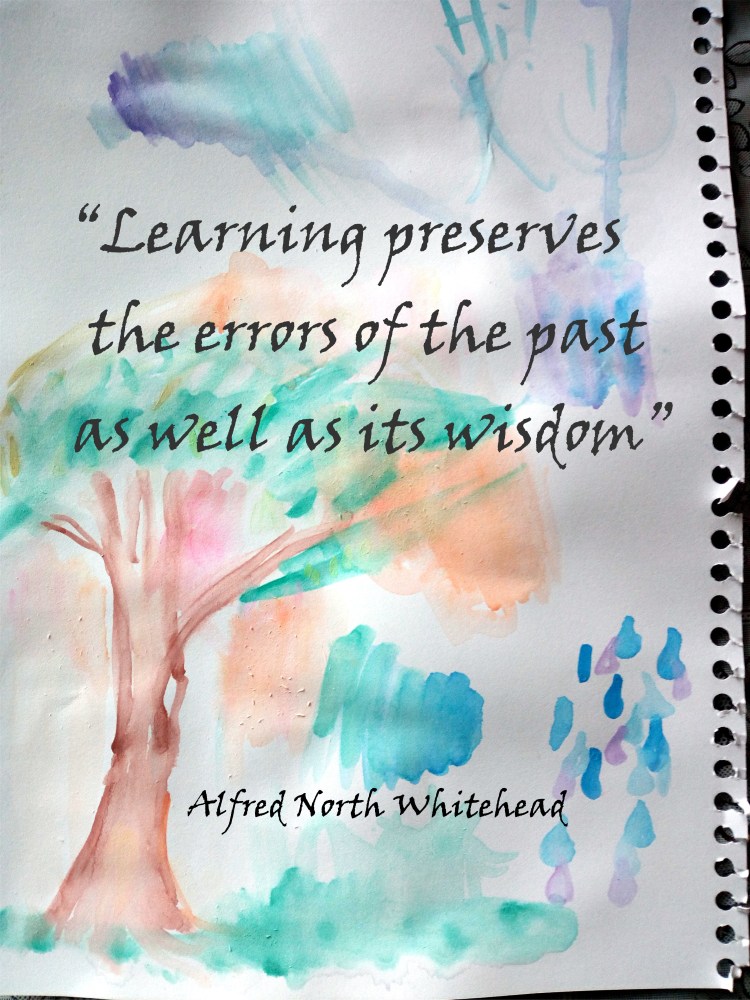
To quote Mr Whitehead in full "...For this reason, dictionaries are public dangers, although they are necessities” ― Alfred North Whitehead.

A witty comment or would he have thought the same of IT in the 21st century e.g. Wikipedia and social media?
♥ Gretchen Bernet-Ward

“No compulsion in the world is stronger than the urge to edit someone else’s document” said Herbert George Wells, and I know the feels––Herbert is better recognised as H. G. Wells, an exceptional English author, satirist and biographer (21 Sept 1866 – 13 Aug 1946) who famously wrote The Invisible Man, War of the Worlds and The Time Machine.
I can understand how the fingers of Mr Wells must have itched, his brain must have misfired and his breath must have been shallow as he read a paragraph which badly needed editing. Indeed, I often wonder how some books (or e-books) get into print when it is glaringly obvious they need a bit of trimming and correction.
Just recently I read an e-book with blurb announcing an award, author kudos and high sales. Undeserved as far as I’m concerned. Why? The author had no idea of descriptive body language. The best he could do was “He frowned”, “She frowned”, and for variety “He scowled”, “She scowled” until I deleted the book at “She wrinkled her brow”.
How did this get loose and launched on the general reading public? I’m sure Rule 101 is “If in doubt, substitute ‘said’ and let the dialogue do the work”. Don’t repeat yourself. Unpublished as I am, I guess the writer can sneer and say “Well, I got the pay cheque and you didn’t” but I can retort with “Have some integrity.” Or go back to writing classes.
It’s easy to think “Not all publishing houses are that blind” but, oh, many are. If you haven’t read a book with an error, you haven’t read enough books. Pathetically, hardly a week goes by without my subconscious editing a typo or tidying a sentence. I will never know how efficient I am, whether I am always right, but, man, it makes me feel better!
♥ Gretchen Bernet-Ward

♥ Gretchen Bernet-Ward
♥ Gretchen Bernet-Ward
 Thoughts Become Words