A balmy Friday night with a nip in the air because it’s still winter, and it seemed everyone wanted to head in the same direction we were going. The bus was late, the traffic was jammed and lunch seemed a long time ago. Worst of all, we were most certainly going to arrive late for the author talk. And what a prestigious author!
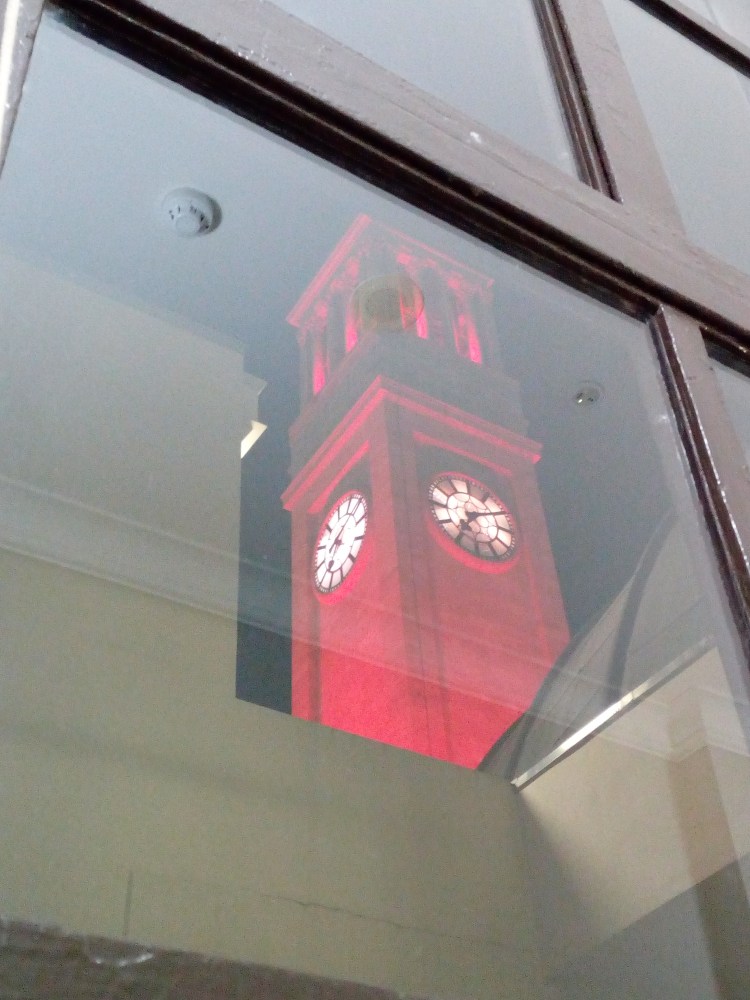
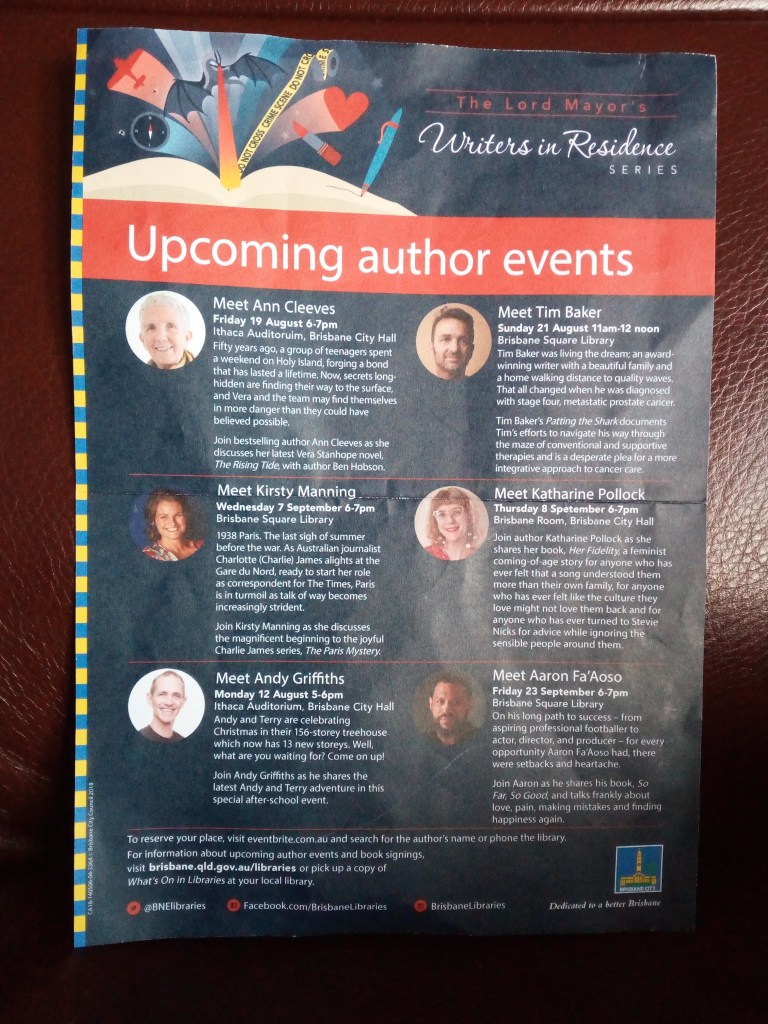
The bus finally got us into town (or more accurately the Central Business District) to attend a Brisbane City Council Lord Mayor’s Writers in Residence Series author talk in City Hall.
Ready to race… off the bus, through the ornate vestibule, up in the lift, straight through the door…
And there she was—Ann Cleeves author of Vera and Perez fame. She sat in a relaxed pose on the stage, speaking calmly, eloquently and humorously to the 300-plus audience seated in the ancient Ithaca Room. On such uncomfortable chairs with bad sightlines. But we were enthralled.
The host may have read Ann Cleeves’ Vera Stanhope crime novels but his inept questions did nothing to ruffle her calm and considered replies. Such aplomb! Especially when the floor was opened for general question time. Needless to say she held the audience of besotted readers in the palm of her authorial hand.
It was fascinating to learn how book-Vera came into being, based on real women the author had known, and also the rapport she has with ITV actor Brenda Blethyn aka Vera. Later I discovered Ann was awarded an OBE in the 2022 New Year Honours List “for services to Reading and Libraries.”
When the event drew to a close, people filed out into the foyer, clutching their favourite book for signing or to buy the latest book for a signature on the pristine flyleaf. The book signing queue was jam-packed with readers nattering about their favourite characters.
I purchased two books The Rising Tide and Raven Black (see photos) but the line was too long and too slow for me to consider waiting while my stomach grumbled so loudly.
Across mosaic hand-cut floor tiles, through the huge doors and outside into King George Square where the city was an evening fairyland of lights presenting countless alluring restaurants and eateries. My companion and I compared notes as we ate dinner, having purchased different books from the series. Then it was time to return to the suburbs.
Standout book quote so far, page 40, Joe Ashworth says of the deceased “They didn’t find a note. He was a writer. You’d think he’d want to leave a few words for his friends.”
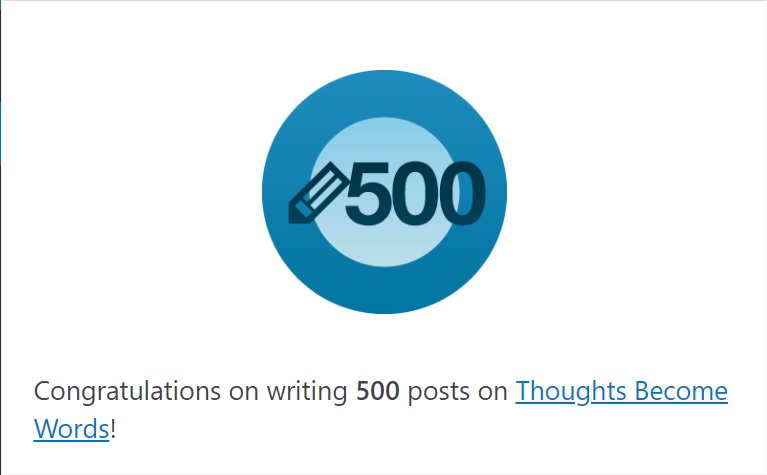
Two accidental milestones: As of August 2022, the number of my blog posts is 499, one digit off the magic marker of 500. This post will click it over to 500 posts. Ironically, and surprisingly for me, I am also one number off my current Book Reviews tally of 99. This will click over to 100 book reviews when I read and review Ann Cleeves latest novel The Rising Tide and discover what crimes DCI Vera Stanhope has sorted out this time.
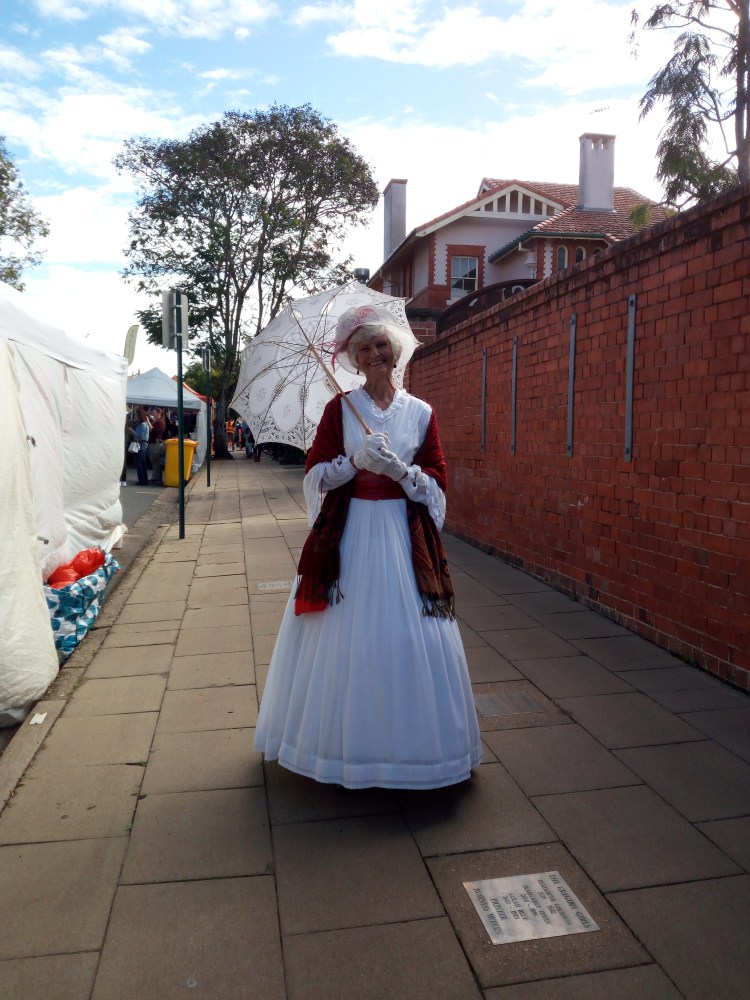
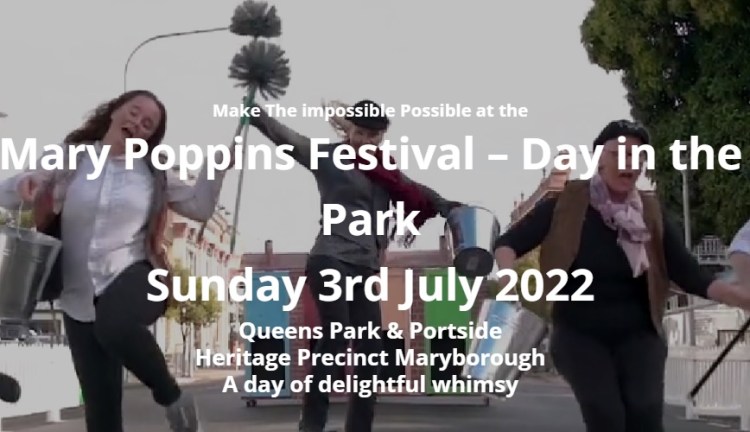
Here is my pictorial of the Mary Poppins Festival 2022 in Maryborough, Queensland, where Helen Lyndon Goff (better known as Pamela Lyndon Travers) grew up with no inkling of her wonderful life ahead as an author and creator of a children’s literary icon.
Here are some of the fabulous people who made the whole day magical and supercalifragilisticexpialidocious!
Special buildings and ye olde shops were open, roads were closed, hot food stalls did a roaring trade, and there were nanny and chimney sweep races. The final parade was a sight to behold, everyone had happy smiles!
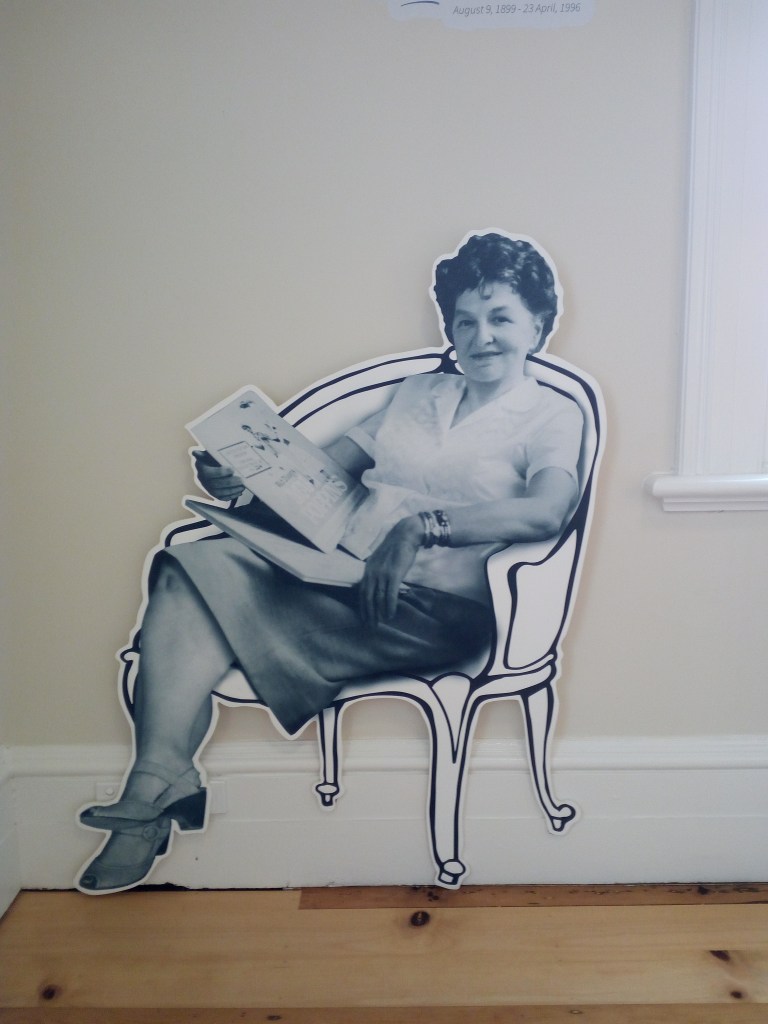
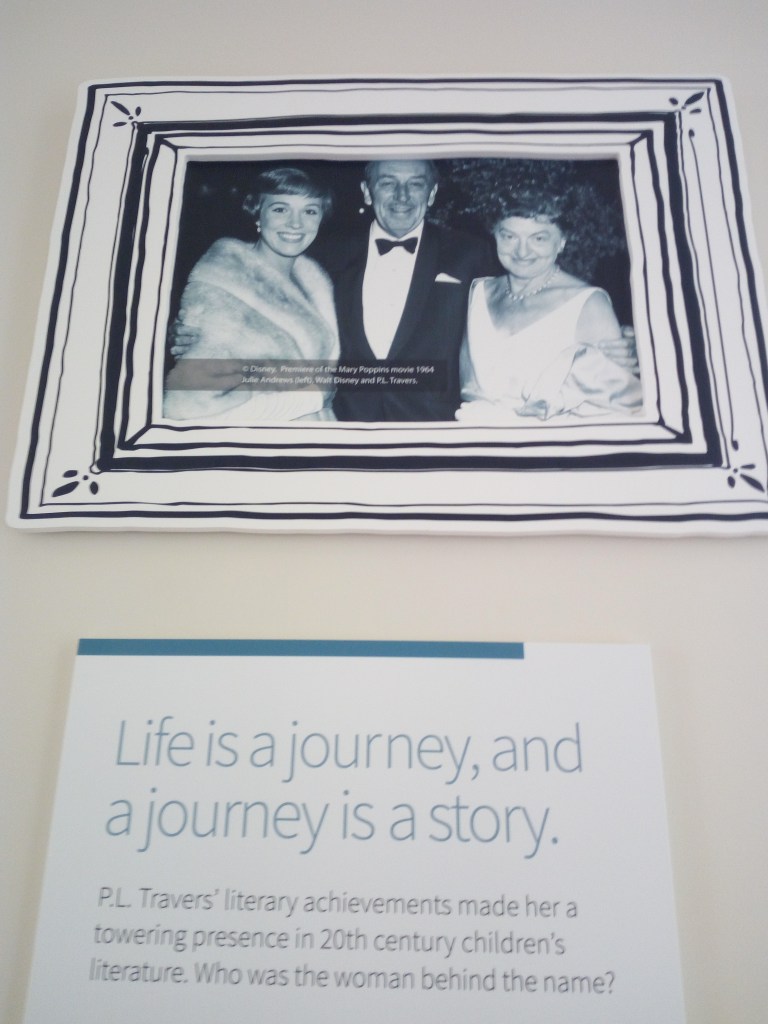
Below is the childhood home of P L Travers, formerly a bank (her father was the bank manager) which is now a beautifully preserved, interactive tribute to her writing career.
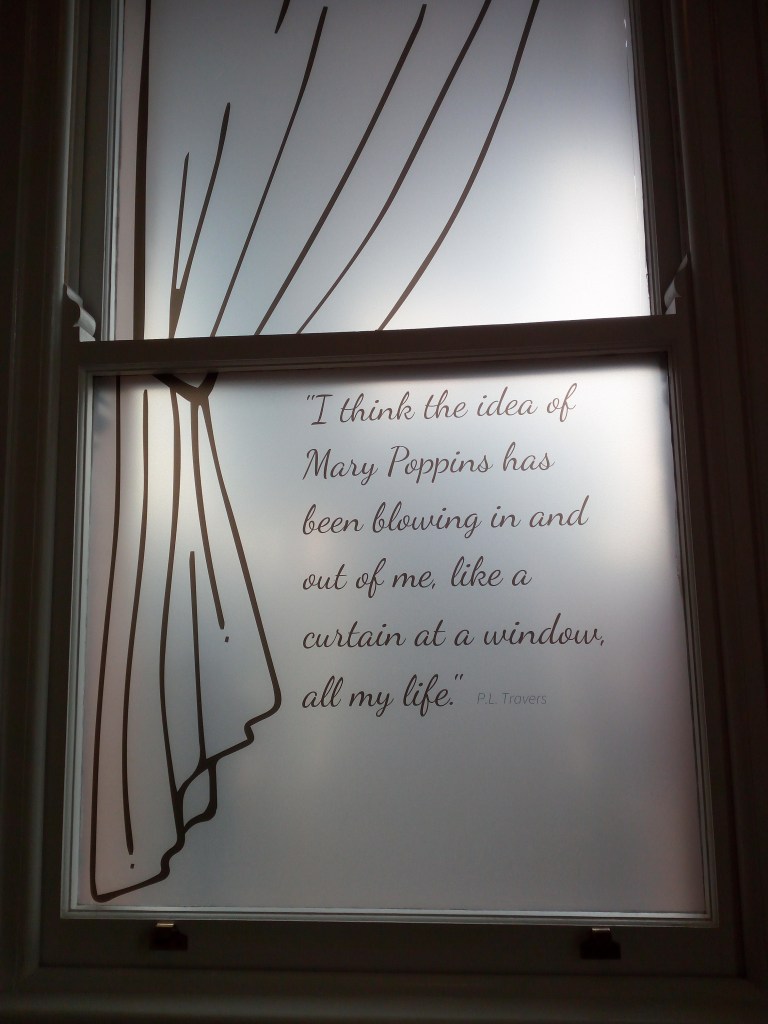
The first window below echoes the words of author P L Travels while further on is the window of the family library in the corner of the building… oh, and there’s Mary Poppins…
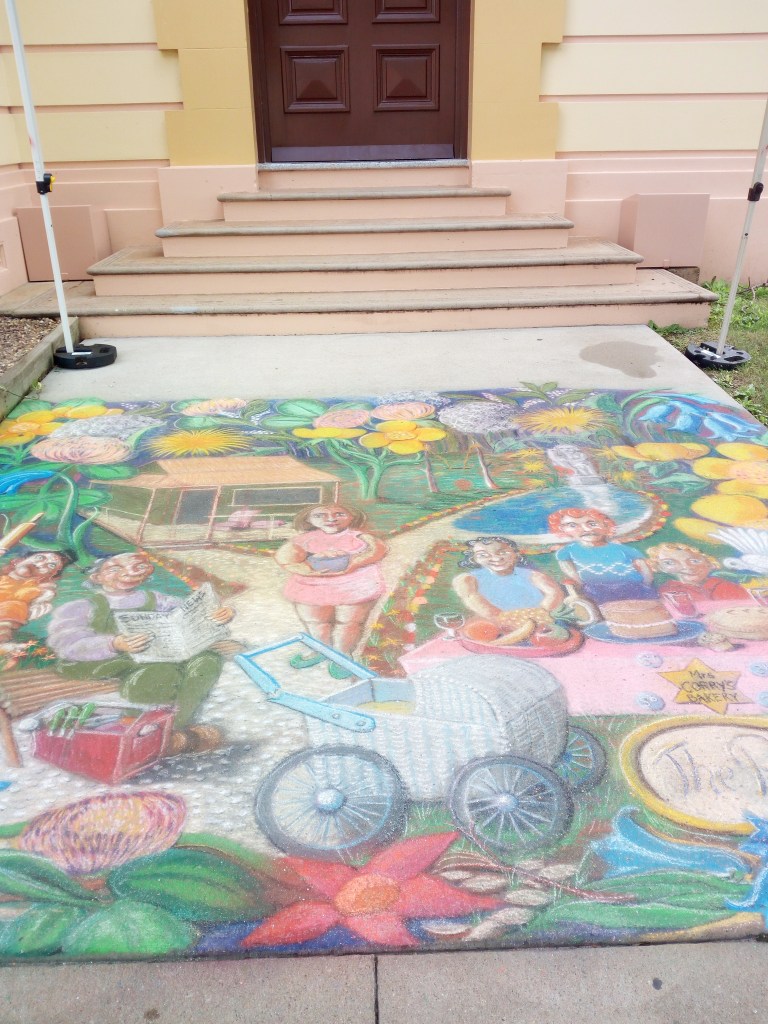
After a meal, live music and a quick look at Phillips Botanical Gardens, next came chalk street art, a visit to the calm atmosphere of the Art Gallery and a bit of history found under the paint and framed.
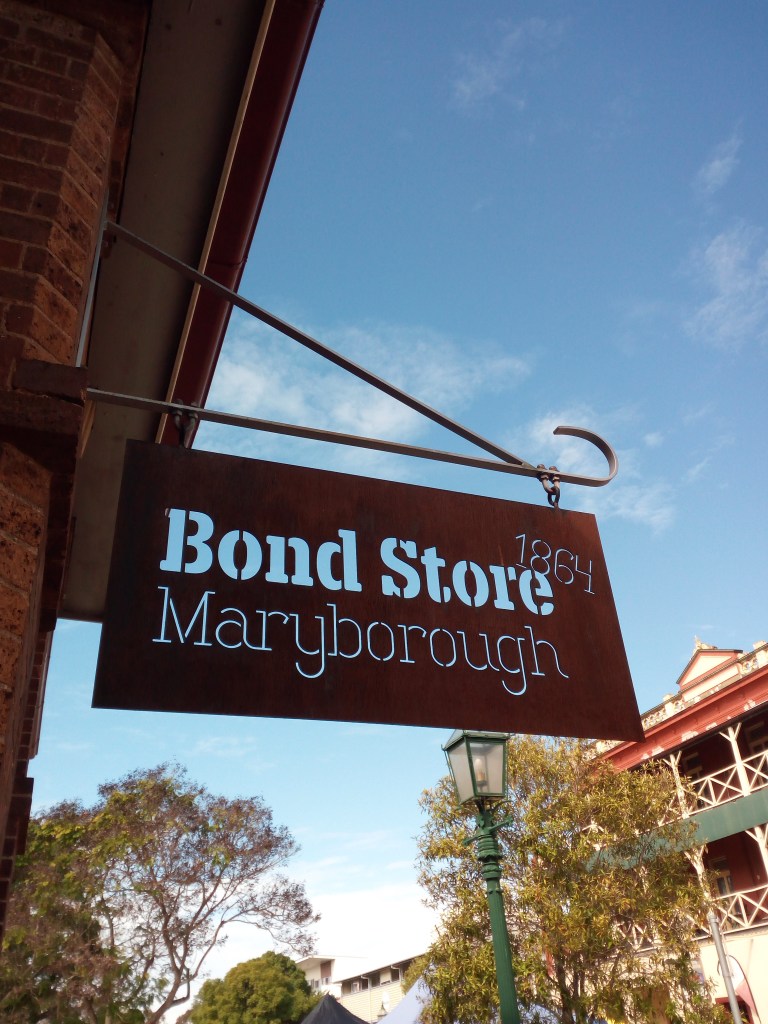
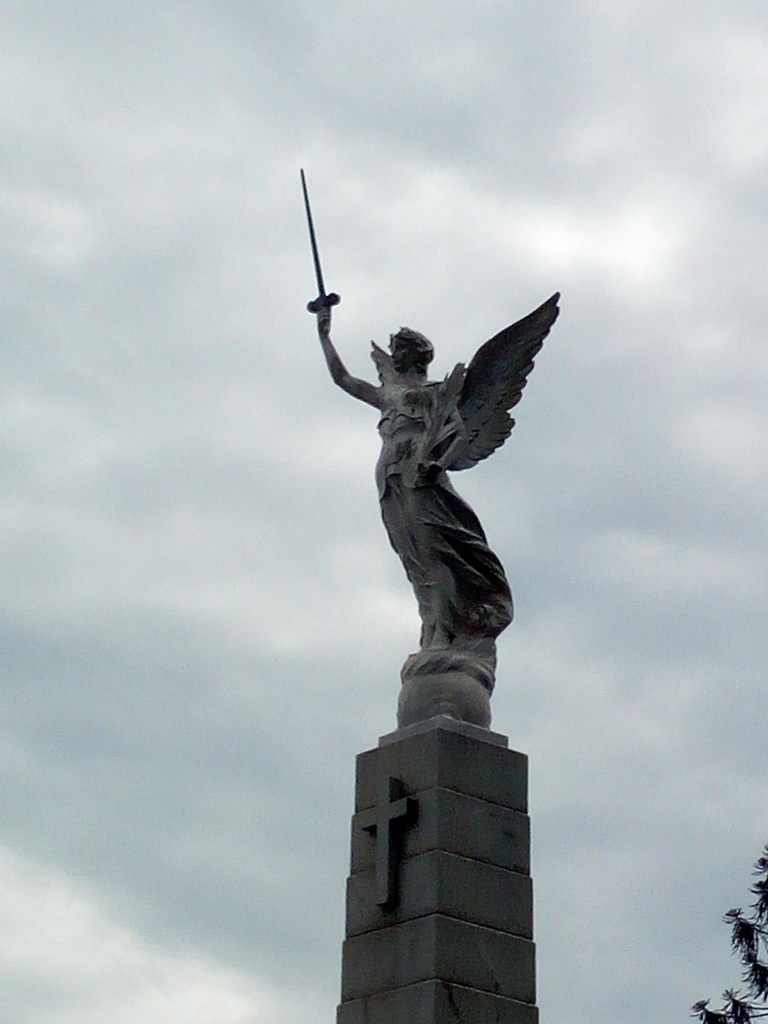
Landmark photos below give an idea of early Maryborough, finishing with a late afternoon stroll alongside the Mary River.
I have a great desire to return and explore further. These snapshots were taken over the course of a day and do not encompass the diversity of the event nor the city and colonial past of the Maryborough region.
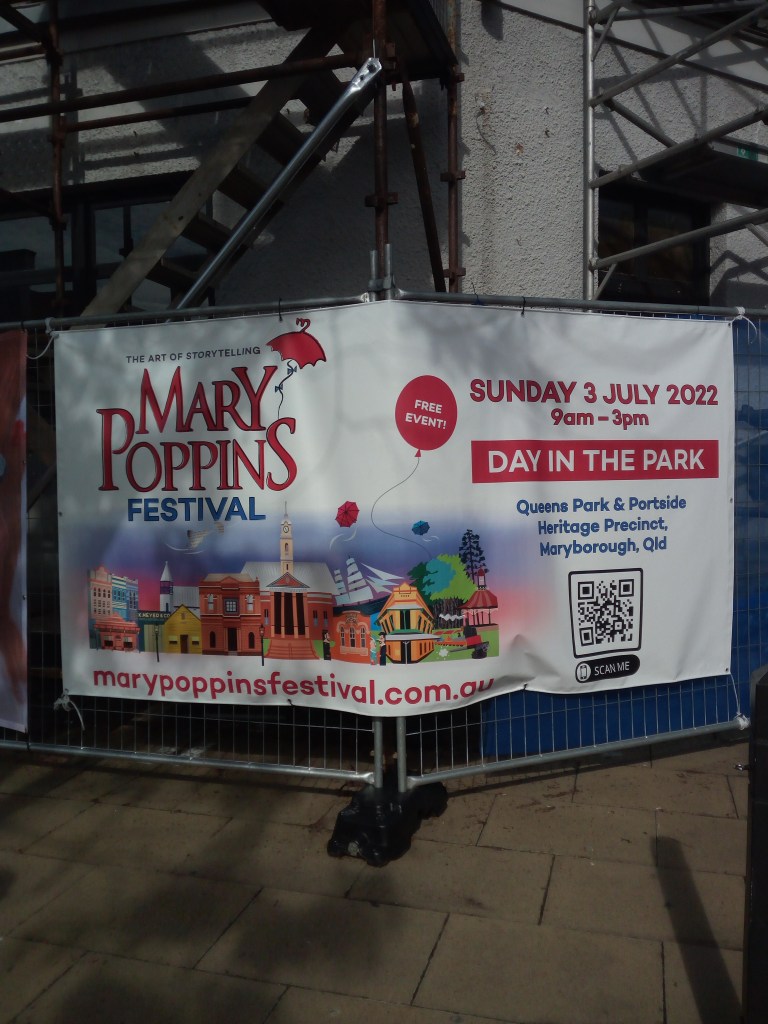
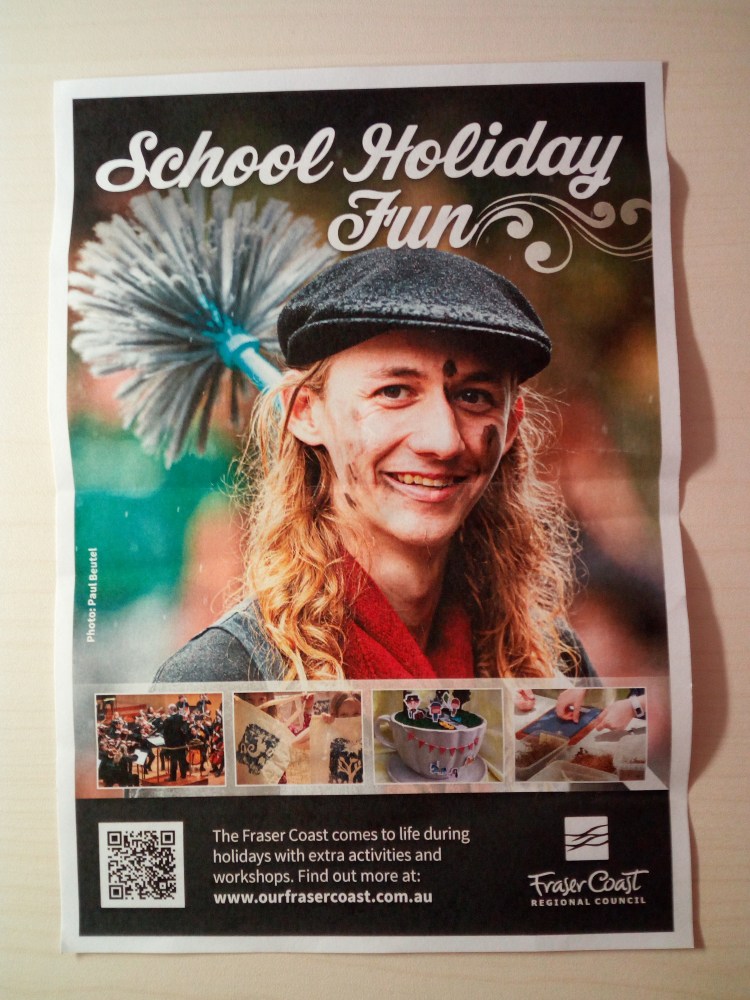
Just loved the poster below and had to include it…
❤ Gretchen Bernet-Ward
https://www.marypoppinsfestival.com.au/Detail from Mary Poppins Festival publicity showing a drawing of the Admiral’s canon. During the festival a real canon was fired. Please note the Disney movie “Saving Mr Banks” starring Tom Hanks is fabrication and, apart from being filmed entirely in California USA, in my opinion it bears little resemblance to the true facts of author P L Travers life.
I never thought I would last this long and still be interested in blogging the miscellaneous bits and pieces which make up my literary life.
Over the last five years I have written, read, liked, followed, commented and corresponded with many other bloggers around the world. It is such informative fun, thanks everybody, and I look forward to continuing.
What have I got to show for it? To answer that question, a look through my Archive List is required. Select a category from the drop-down menu.
Meanwhile, I have just returned from a holiday in Maryborough (an historic Queensland town – actually the whole region is pretty special) and one of the highlights was attending the Mary Poppins Festival in the birthplace of her creator, author P L Travers. Many will remember the Disney version of her famous book.
Naturally I did heaps of things and took heaps of photos, so once they are curated I will be posting a travel pictorial. “Chim chiminey, chim chiminey, chim chim cher-ee” there is more to see.
Unfortunately it had been raining for several days when we left Brisbane and headed north with no sign of letting up. The journey to Maryborough, situated inland from the Fraser Coast region, is about 250km and it rained the whole way; it was still raining when we arrived.
The next day was the Mary Poppins Festival and a huge amount of outdoor activities with most people in costume. Lo and behold, the rain stopped! The whole day was fine and sunny. You guessed it, the next day it bucketed down again!
WordPress 5 Year Anniversary July 2022
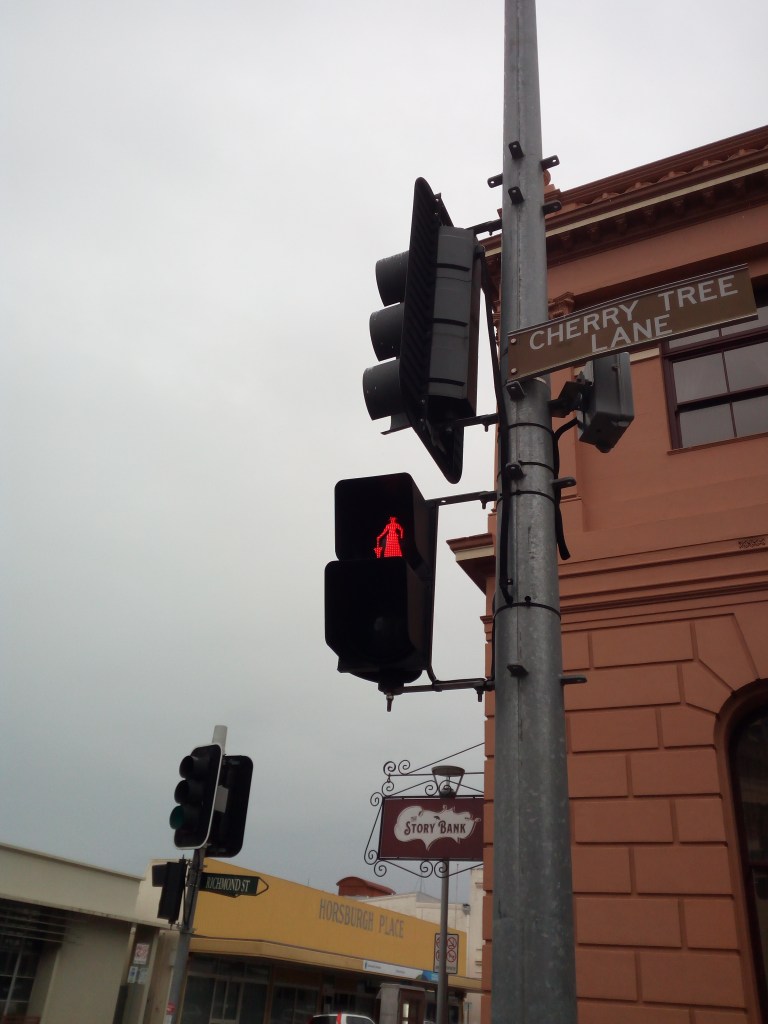
If I go prepared, rain is a novelty for me. I took an old family umbrella with frills around it. But when the wind blows cold (it is winter here in Australia) it’s not much fun hanging onto a brolly unless you are Mary Poppins. Her classic silhouette, in glowing red then bright green, blinks and beeps as pedestrians cross at traffic lights.
Anyway, the itinerary held good. We achieved our goals, seeing interesting sights (the Mary River curves around the town and there were a number of yachts moored), strolled through art galleries and parks, antique shops, City Hall, the library, the historic Story Bank museum, and ate local produce including pizza in the skate park after dark. We met friendly, welcoming and relaxed people, and waved vigorously at the Mary Ann steam locomotive as it huffed and puffed down the tracks. A different way of life…
Enjoy more pictorial highlights of my Maryborough visit:
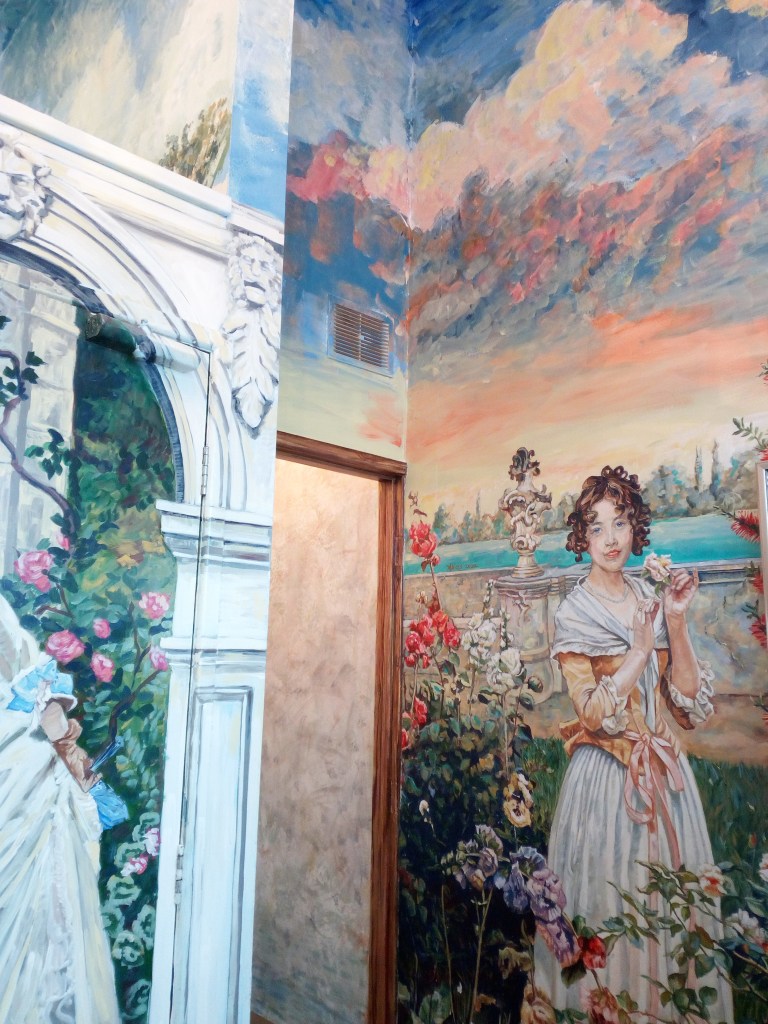
Maryborough City Hall 1908Maryborough City Hall ladies rest room
Author Overview:Helen Lyndon Goff (author P L Travers) was born and grew up in Maryborough, Queensland, before being sent to boarding school in Sydney NSW. Her writing was first published when she was a teenager. Later she worked briefly as a journalist and a professional Shakespearean actress.As author P L Travers, Goff wrote many children’s stories, non-fiction and collections, and lived a varied yet personal life. Wikipedia entry reads “In a 1977 interview on the BBC radio programme Desert Island Discs, Travers remarked about the Disney film, “I’ve seen it once or twice, and I’ve learned to live with it. It’s glamorous and it’s a good film on its own level, but I don’t think it is very like my books.”
Our Belloo Creative playwriting tutor Katherine Lyall-Watson asked us to suggest issues of importance to today’s society, issues which affect us all and need addressing. As we called out our single words, strong topics emerged to write about, and to heighten awareness for the future.
Founded by four women in 2013, Belloo Creative creates original new works fusing body and text. The Co-Artistic Directors of Belloo are Caroline Dunphy and Dr Katherine Lyall-Watson.
Belloo creates innovative, inclusive and experiential work including transcultural content.
Belloo delivers content globally across artforms that inspire imagination, collaboration and change.
In honour of the Queen’s Platinum Jubilee (and because I like umbrellas!) I have reblogged my enthusiastic post from 21st April 2018 to add to the 70th celebrations in 2022 – it’s all about the umbrellas!
_______________________________
In UK, Her Royal Highness has two birthdays each year: her actual birthday on 21st April and her official birthday usually the second Saturday in June. Born in 1926, at the time of writing, she is 92 years-old and still going strong. Happy birthday, Your Majesty!
The birthday of reigning monarch Queen Elizabeth II is celebrated at different times of the year throughout the Commonwealth countries and usually accompanied by a public holiday. In Australia, each State and Territory has decreed a different day.
In Queensland (named after Queen Victoria) we have a Monday holiday in honour of the Queen’s birthday and enjoy a long weekend. This year it falls on Monday 1st October 2018 and Brisbane residents will head to official celebrations, BBQs, coastal regions, rainforest walks or just laze around at home and read a book.
♥Gretchen Bernet-Ward
“God Save Our Gracious Queen”
Royal Umbrellas
Britain’s Queen Elizabeth II holds her umbrella as she meets guests as she hosts a Garden Party at Buckingham Palace in central London on June 3, 2014. AFP PHOTO / POOL / YUI MOK
Queen Elizabeth’s Platinum Jubilee concert in London 2022 was an over-the-top extravaganza of real people, digital wonders, popular songs, personal tributes and Paddington Bear served tea. The music swelled while famous folk talked, superstars sang and everyone swished up and down the huge stage. At night, Buckingham Palace was an ever-changing canvas of celebration showing special moments from over 70 years. High above, fireworks shimmered, creating magical icons for smiling members of the Royal family and the ecstatic crowd of well-wishers, literally millions of cheering flag-waving people spread out as far as the eye could see. What a night!
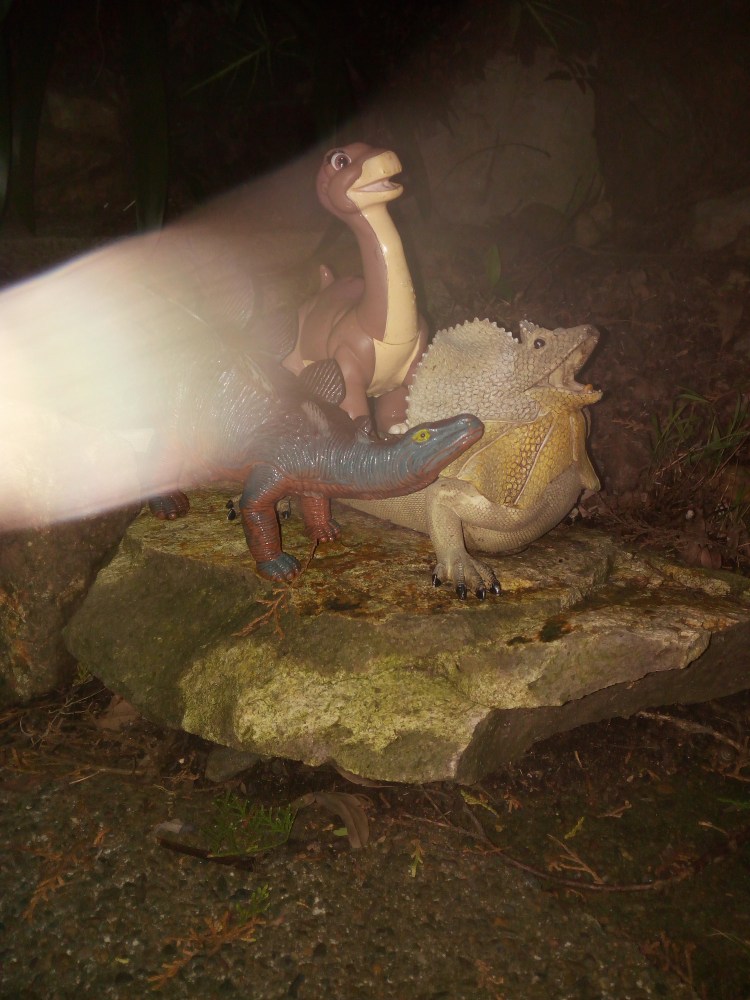
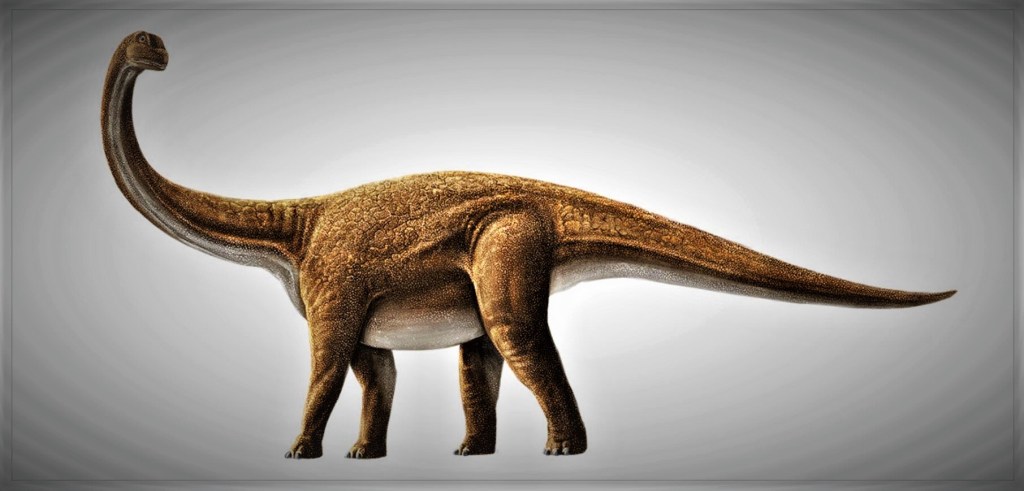
Some of the nominees are dinosaurs. My family has always been fascinated by dinosaurs. From books, movies, kids series to figurines, they have loomed large in our home for many years. Now Queenslanders of all ages have the opportunity to help choose the 10th official State emblem, a fossil—it doesn’t have to be a dinosaur.
Choosing a Fossil Emblem
There are 12 fossil candidates lined up for the honour of being our State’s newest emblem. “Did you know in the Early Cretaceous Period, inland seas covered much of Outback Queensland? This means that Queensland has some of the most exciting fossil museums, dinosaur trails and discovery centres in the world, including the internationally renowned fossil sites of the Riversleigh World Heritage Area.“
“Outback Queensland towns like Hughenden, Richmond and Winton are on Australia’s Dinosaur Trail, and many other Outback areas such as Eromanga, Eulo and Quilpie regularly attract fossil hunters and dinosaur lovers.”
All Shapes and Sizes
I am surprised that as well as featuring large prehistoric creatures, the endearing platypus is on the list, and Lovellea wintonensis, the oldest known permineralised fossil flower (which dinosaurs munched on).
Select your preference for Queensland’s newest fossil emblem—
Visit the website View the illustrations Read the history Click a million years in the making!
Postscript: I m-i-g-h-t have voted for a dinosaur…
NEWS FLASH
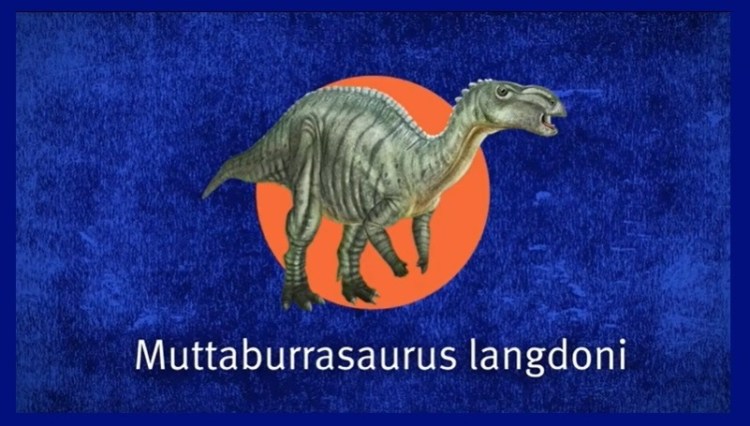
19th January 2023 – Queensland’s State Fossil Emblem is the Muttaburrasaurus langdoni.
The Muttaburrasaurus has been chosen by Queenslanders as the State’s fossil emblem. The intact dinosaur fossil was found in Muttaburra, Central Queensland, by a local cattle grazier in 1963.
Queensland’s Newest State Fossil Emblem is the Muttaburrasaurus langdoni
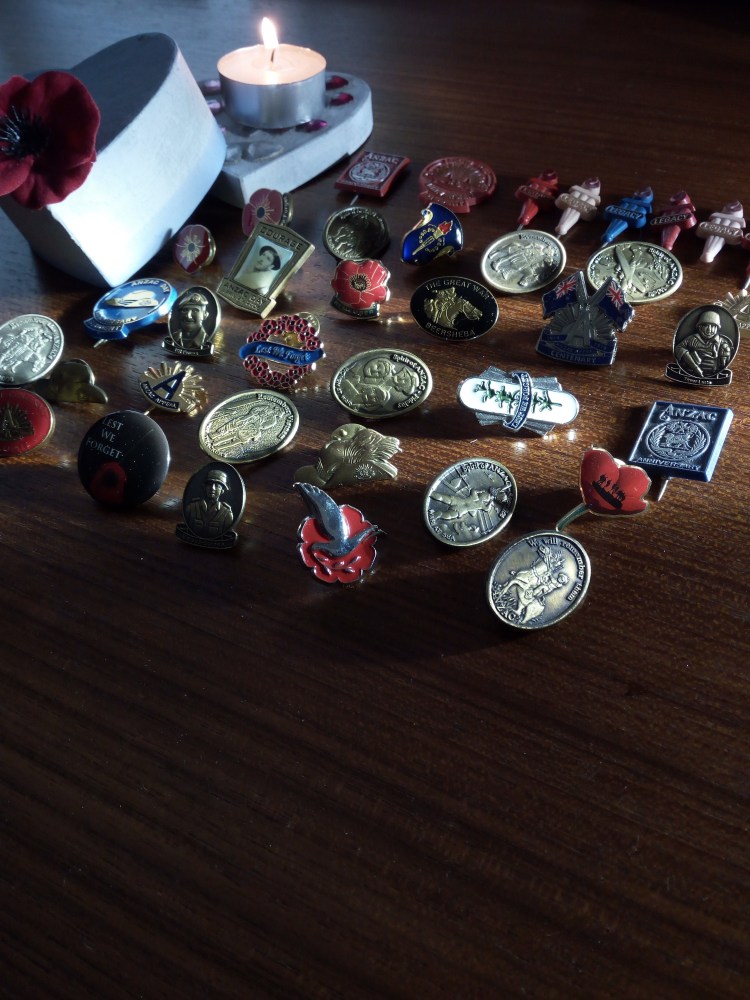
Anzac Day commemorations will take place on Monday 25 April 2022 across Australia, and at the Australian War Memorial’s Sculpture Garden, marking the 107th anniversary of the landings at Gallipoli.
This Anzac Day also marks the 80th anniversary of Anzac Day commemorations at the Memorial.
This year’s commemorative program will include:
5.30 am Dawn Service 9.30 am RSL (ACT Branch) Veterans’ March 4.45 pm Last Post Ceremony
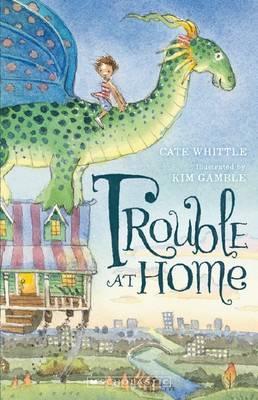
My special guest Cate Whittle, author, teacher, speaker, offers her advice and experience on how to fine-tune your manuscript before submission to a publisher.
Cate’s literary expertise covers workshops, writing courses, book launches, school visits and video tutorials—watch out below for her special MANUSCRIPT ASSESSMENT offer—but first sit back, relax, read
‘On the Fine Art of Sending Your Book Baby Out into the World’
Congratulations! You’ve made it—from those first tentative words that broke the curse of the blank page, to the carefully woven ending—you’ve finished your book!
What now?
First – bask.
This is an important moment and really deserves celebrating. So many would-be writers never get this far. So celebrate.
While you are celebrating, the manuscript is resting.
You know that.
And you know that you come back to it with fresh eyes to read through and self-edit to make it the best you possibly can. And you know that there will be a multitude of drafts before you say, ‘This is it!’
And then you send it out to the likeliest looking publisher or three?
Bzzt. Wrong.
This can be the falling point for soooo many little fledgling books.
For its first forays out of the nest, there are so many things you can do before you subject it to the scrutiny of an actual publisher.
Allow me to make some suggestions.
Let me call this Levels of Editing.
It is up to you whether you employ all or some of these levels of editing—or whether you feel happy to trust to yourself in some regards—and certainly, you will be editing with your publisher if your work is acquired by a traditional publishing house, but it is always good to be close to all the way there before you approach a publisher. And if you are self-publishing… you’d be well-advised to spend the money.
One:
Was your self-editing.
Focus in on structure and consistency, make sure your opening grabs the reader and your writing flows easily and is paced well. Look at tension and relief. Are your characters believable? Does the setting work? Is your ending satisfying—and does it work for your genre?
Two:
Might be your Mum or a Trusted Other.
This is usually good for a feel-good glow (which is great for your confidence), but do not pressure this relationship with a request for honesty. Do not. Enjoy the feel-good glow and move to the next stage.
Three:
Your critique group.
Yes, join one. Participate. I cannot recommend more highly this collegiate learning and sharing. Even J.R.R. Tolkien and C.S. Lewis (peripherally Dorothy L Sayers) and those other guys who no-one remembers, all benefited from sharing their work in their Inklings literary circle.
But be aware that this, too, has its limitations. Perhaps you do not work in the same genre so they may not understand all the tropes and symbolism in your text (I speak—lovingly—from the experience of teaching my critique group friends about fantasy). Perhaps you are all learning together. Perhaps your critique partners are unwilling or unable to offer critical feedback.
Where to from here then?
Four:
Manuscript assessment.
Strictly speaking, this is NOT editing per se. This is where a reader with some experience goes through your manuscript and offers feedback as objectively as possible (although not entirely—reading anything is a subjective and individual process).
A good manuscript assessor will provide a general commentary on:
* Voice, point of view, description, and setting
* Characters
* Plot/structure
* Punctuation, spelling, grammar, and vocabulary
* Audience/market
* Anything you have specific queries about (e.g. does my opening hook work?)
A manuscript assessment can be completed on a partial text (I offer commentary on the opening three chapters and a synopsis) to keep costs down, or on a complete text. This is your impartial reader who has some experience in the field, giving you their reaction to your book.
Manuscript assessments are often offered by editors as a first pass through your story, to let you know whether you are ready to go further. Published writers, or established teachers or librarians with a strong background in the literary process.
It’s a good starting point without investing a huge amount in the early stages of polishing your text. You should come away with some good ideas about how to develop your work further. Sometimes you can enter into a story coach arrangement with your assessor—but this is a whole extra field.
Five:
Story coach.
This is like engaging a manuscript assessor several times over a period of time, reworking and reassessing scenes together to make sure that your story is powerful and ready for the next stage of editing. Check with your manuscript assessor if they are willing to enter into such an arrangement before you start.
N.B: If you are writing non-fiction, this is the level where you might seek out a professional content editor to make sure your information is correct and presented in a way that flows.
Working with a manuscript assessor or a story coach gets you ready for the hard stuff. From hereon it can get intense!
Six:
Structural Editing.
Similar to a manuscript assessment but at a deeper level, this is usually undertaken to evaluate your characters, plot, and setting, and ensures that your narrative flows smoothly and your scenes work to move the story forward. It will look at how your chapters sit and whether they could be arranged differently to make the story more powerful.
Seven:
Line editing.
This is a skilled task that is best done by a trained professional editor. You may have already engaged an editor for your first assessment, but often this is an opportunity to let another set of eyes go through your work.
Line editing evaluates and offers corrections for the tone, style, and consistency of your work. While a good line edit will also check basic spelling, punctuation, and grammar, for a more complete overview of these mechanics of writing you would be moving to a copy edit.
Eight:
Copy editing.
Again, this is a job for a professional editor. This is all about your spelling and punctuation. This is all about getting your grammar correct. This is all about your word choices (do you need adverbs or will a stronger verb make your writing tighter?), how you lay out your text (paragraphing), minimising repetition or jargon, and weeding out redundancies.
All without losing your voice.
Nine:
Proofreading.
Except proofreading is also NOT editing. By the time you are proofreading all that is done. This is like a final going over to make sure you have dotted all your Ts and crossed all your Is…
This is checking formatting and consistency one final time, and finding those last minute, glaring typos. You can stick to your professional editor for this—or find yourself a professional reader. Your manuscript assessor might be good for this, but make sure they know it is a proofreading exercise. Now is NOT the time to come up with suggestions for a whole different structure.
Ten:
Okay, breathe.
While all this has been happening, I’m sure you have been researching your publishers for the right fit. Don’t forget to check their submission guidelines and follow their rules—and now you can press GO.
Good luck! May your fledgling fly true and straight and find a home out there (whether you go via a traditional publisher or decide to go Indie).
———————————-
Thank you, Cate, for such enlightening information! ♥ Gretchen Bernet-Ward
SPECIAL OFFER
Personal note from Cate
In the spirit of celebrating 61 Years Since 1961, I’m currently offering manuscript assessments at only 61% of my usual going price.
This offer closes on 3rd April 2022, BUT if you have something in the wings and would like to purchase an assessment at this price and take a rain check on the assessment until you are ready, just drop me a line cate@catewhittlewrites.com
I’m currently offering an assessment on the first three chapters (to 10,000 words maximum) on your Junior Fiction (which probably shouldn’t be this long!) or Middle Grade manuscript for AU$110. Alternatively you can contact me for my price schedule for a full manuscript.
Any questions? To find out more ‘On the Fine Art of Sending Your Book Baby Out into the World’ contact Cate cate@catewhittlewrites.com
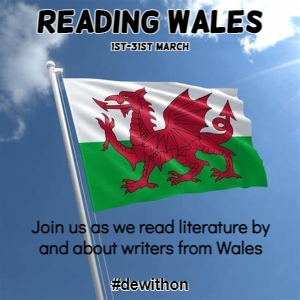
This will be my fourth Reading Wales #dewithon and I am excited at the list of Welsh authors and poets which Book Jotter has assembled to tempt our reading taste buds.
Source one book, source ten! Create your own list! See my list! Join in Reading Wales!
Currently I have six books on a waiting list at my local library because it will be easier to collect them rather than hanging around waiting for an interstate or overseas parcel delivery.
I hold Covid-19 responsible and also a catastrophic flood which swept down the Queensland coast, through my city of Brisbane (everything is still soaked) and pounded coastal New South Wales before heading towards Sydney. Notice how I worked in the word ‘Wales’?
A MESSAGE FROM THE CREATOR BOOK JOTTER, PAULA BARDELL-HEDLEY
Welcome to the fourth Reading Wales celebration (aka Dewithon 22), a month-long event beginning on Saint David’s Day, during which book lovers from all parts of the world are encouraged to read, discuss and review literature by and about writers from Wales.
For more in-depth information on this reading jolly, head over toDHQ (Dewithon Headquarters), and to see what’s happening this year, please follow this link. You can also share your thoughts and posts on Twitter by using the hashtags #dewithon22 and/or #walesreadathon22.
____________________
visit DHQ Reading Wales Dewithon22 websites below.
click‘On Our Shelves’ to browse Dewithoner’s suggested reading list.
source books relating to Wales from library, bookshop, online.
Here Be Dragons by Sharon Kay Penman (because my family are dragon fans and it’s part of Welsh Princes trilogy I have always wanted to read). DOWNLOADED e-book.READ
Black Valley (Jessica Mayhew book 2, couldn’t source book 1) by Charlotte Williams, a domestic drama arts thriller of some intensity. AVAILABLE in my local library.READ
The Owl Service by Alan Garner was too tempting, so I’ve added it to my list. The Guardian says “…the plot is very gripping and slightly creepy.” AVAILABLE in my local library.READ
Sugar and Slate by Charlotte Williams – past winner of the Arts Council of Wales Book of the Year, an autobiographical story of a Welsh-African mixed-race woman who brings her unique qualities to the story, transforming it into a lively and living account of her life. ON ORDER.
I’m keen to get started 😀 and already made some headway!
My thoughts are that I will eventually read them all—perhaps not all in March—and I am looking forward to having my mind held captive by the literati of Wales. When I put down the books and walk Terra Australis again, my reviews will be either here or Goodreads.
Looking forward to reading about what you are reading!
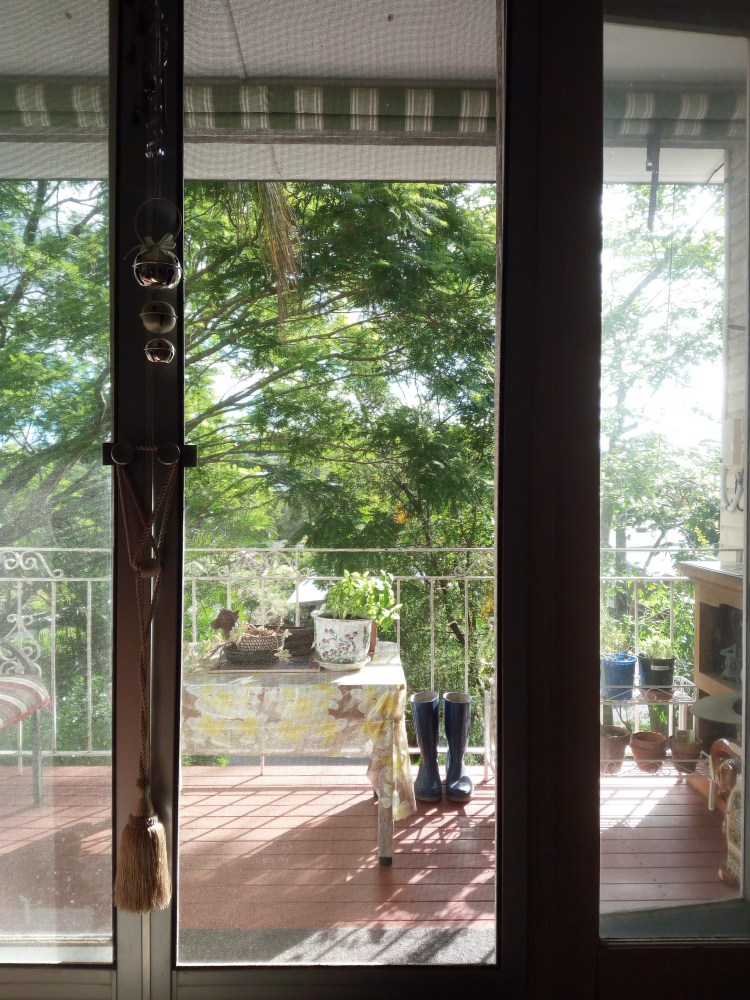
What can you see? What can you surmise from this scene? Is it in suburbia or the mountains or maybe near the sea?
Can you name the trees? Or guess the potted plants? What time of day, or time of year, do you think the photograph was taken?
And who might live there? Who owns those gumboots?
You could write a short story about someone who walks out onto this balcony. Perhaps it’s the home of the Capulet family? There is a good reason why Juliet walks out onto a balcony.
Valentine’s Day is nearly here! Imagine an alternate ending. A happy, sad, good, bad or exciting scene… Writers, write about it in your own hand! Put it in an envelope and present it to your loved one.
❤️ Gretchen Bernet-Ward
Postscript: I will write my own version on traditionally the most romantic day of the year 14th February 2022.