Temp Work Trials and Tribulation

An autobiographical tale condensed into a short story for my writers group on Tuesday, and yes, you get to read it here first!

Due to the nature of my story, I have not used paragraphing or dialogue so there is one continual flow of consciousness.

Brisbane River CBD red arrow marks the approximate area where the warehouse building in my story exposé was located in 1970s.

One thing I disliked about doing temp work for a small city employment agency was the tedious, repetitive and uncomfortable jobs I was sent to do without so much as a ‘Would you like this assignment?’ or ‘Does this one suit you?’ No, I was just shunted off without any idea of what I was going to be doing. You could bet on it being the worst office job, the one that no staff member would touch, nor would they give any help to the newbie. Off I would trot to a dingy 1970s office with old-fashioned equipment, uncomfortable chairs and messy desks with tea mug stains which I was supposed to miraculously turn into a fully functioning, pristine work environment in eight hours. At least, I always hoped my assignments were one-off because more than a day would usually send me around the bend. Particularly if the staff were snobby or the boss was grumpy. One fellow sat like a school principal on a raised platform and watched everyone to see that they only took five minutes for tea break. I learned from other assignments to take my own snack pack of biscuits and fruit to sustain me throughout the long, long day. Once I had a manager who actually checked my waste paper basket to see if I was making mistakes and using up his precious stationery. Another time, I was assigned to a city real estate agency in a grim, gloomy warehouse office somewhere alongside the Brisbane River near the Story Bridge off-ramp to Ivory and Ann Streets, now luxury apartments. I swear that day I never saw another staff member except the front desk receptionist. Surrounded by dust motes and empty desks of the old dark wood sharp-cornered style, I was given the job of typing mail-out letters and addresses on envelopes, a task I was always particular about, and phoning the Courier Mail real estate advertisement section to place ads for forthcoming auctions. I did not understand any of the in-house jargon and I am sure they did not understand my misinformation. At lunchtime, without a briefing, I found myself substituting for the reticent front desk receptionist who may or may not have gone to lunch. This was transition time, the 1970s on the cusp of the 1980s with the 21st century looming. An office world ruled by paper, bookkeeping ledgers, staplers, hole-punchers and Liquid Paper. Also this was the era of IBM golf-ball typewriters and weird flat switchboards; plus there was a two-way radio for the real estate sales reps to call in with information on new clients, or when they were on lunch (probably the pub) or just plain going home for the day. Without a test run, I botched that two-way connectivity twice. The dusty potted plant in the corner seemed to shrug in commiseration. Whatever. I put on my best smile when a woman wearing heels and heavy make-up walked in to pay her rent money. She pulled a wad of fifty dollar notes from her handbag. Back then apparently it was all cash unless you paid with a bank cheque. And she asked for a receipt. What? How was I meant to know where the receipt book was? The searing question uppermost in my panicking brain was ‘What do I do with all this cash?’ The renter helped me muddle through, flashing her long red nails in the direction of the desk drawers and a large manilla envelope. I was very uncomfortable with the whole situation. The reception desk was closely aligned with the open front door and as I hand-wrote a carbon-copy receipt, the noise, grit and heat of the city washed across me. No ducted air-conditioning in those days, even the old pedestal fan couldn’t handle summertime. Of course, one of the selling agents called again on the two-way. Again, I fumbled the call. I have a hazy memory of what transpired next, another rent payer perhaps? One who had the good sense to say they would come back later. Subtext: when a more competent staff member was on duty. As I sat there, I could almost feel the old walls oozing the gloom of years of suffering, clerical staff clock-watching their lives away. I had an epiphany. When the real receptionist returned to her post, I showed her where I’d shoved the money, turned and clip-clopped across the wooden floor boards back to the end-row of desks where I had stowed my handbag. Without hesitation I picked up my belongings and headed for the front door. I walked passed the receptionist on a phone call and gave her a quick nod loaded with nuance. She blinked slowly then went back to the caller. I left that building never to return. I cannot remember if I was paid for half a day’s work, I did type a pile of addressed envelopes. However, there were no repercussions from my unscheduled walk-out. On that day, as the glare shimmered up from the concrete footpath, I took a deep breath of freedom knowing I would resign from the employment agency and find a permanent job, one that I could really love. Happily I did, but there was a lot of typing along the way as new equipment superseded the old. I embraced the electronic era, the internet and email connectivity, the computer functions, the fabulous formatting and home printers. And thankfully unchanged keyboards. However, I will never embrace Excel and I will always love books, pens, paper clips and days off. GBW.

ⓒ Written and compiled by Gretchen Bernet-Ward ❤ 2024.
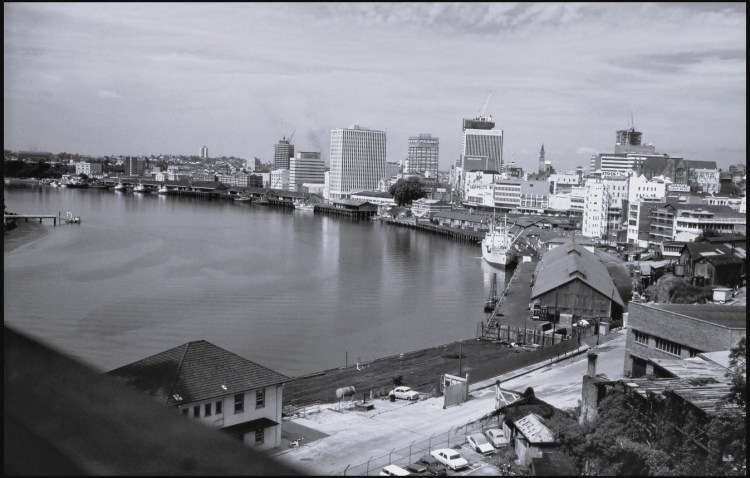
Brisbane River Wharves 1970 viewed from Story Bridge – Original image attributed to Queensland University of Technology.

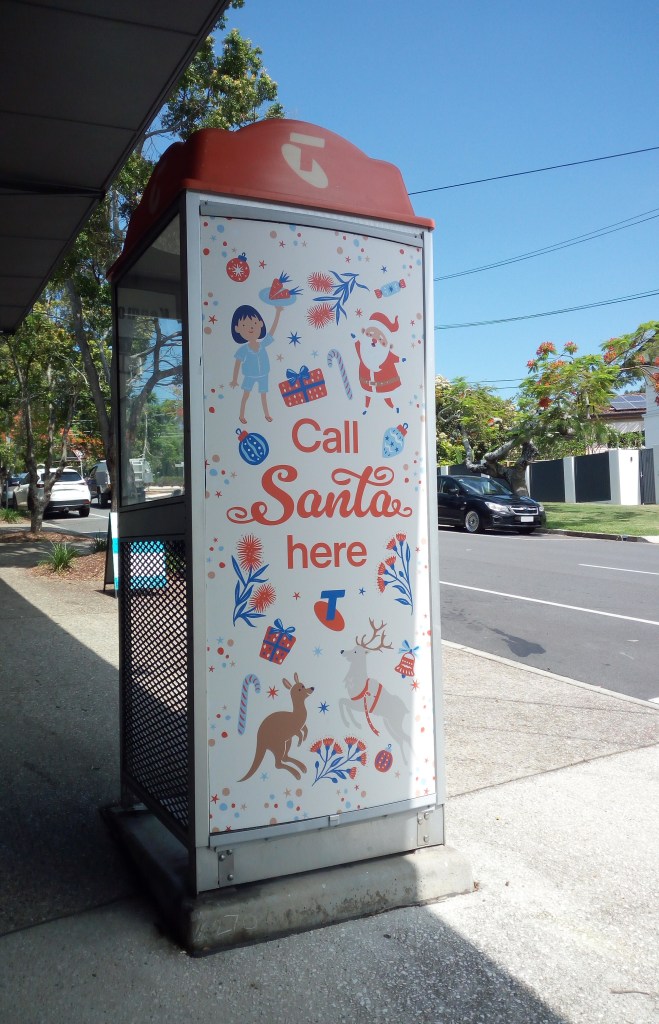
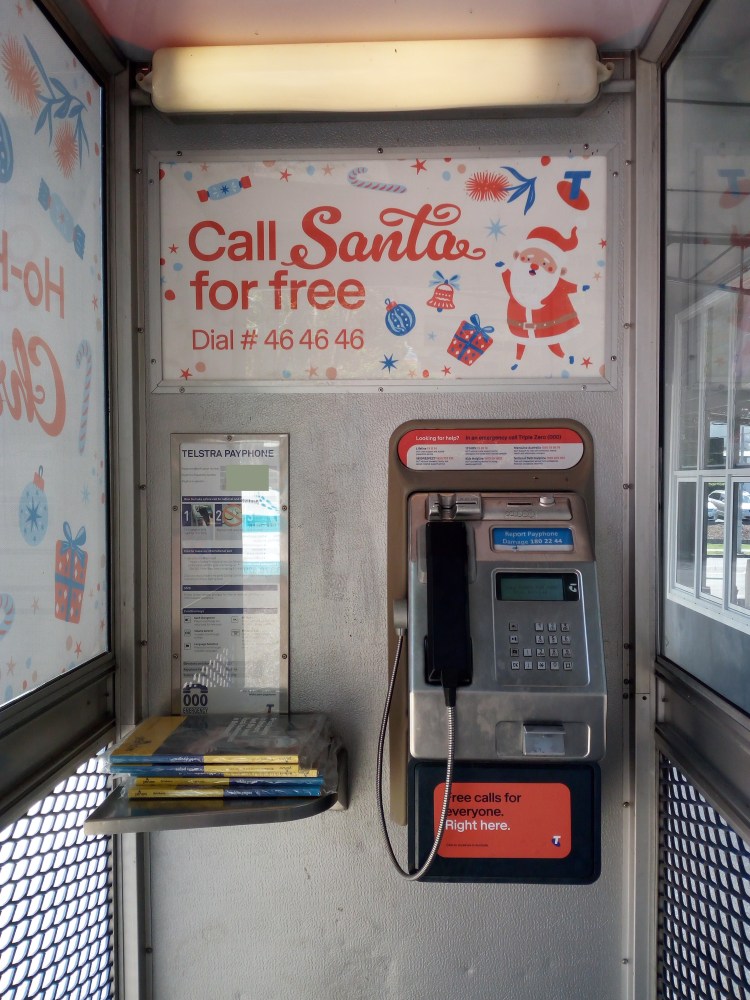
Santa’s Retro Phone Freecall

Santa’s Old School Phone Box © image Gretchen Bernet-Ward 2023

After getting the warm-and-fuzzies thinking how lovely that children may still like to talk to Santa on a telephone, I realised how good of Telstra Australia to enabled all its 14,500 payphones nationwide to give free calls to the North Pole for a magical conversation with Santa Claus. Known elsewhere as St. Nicholas, Kris Kringle, Père Noël, Sinterklaas…

Quote “Find the closest payphone by searching ‘Telstra Payphone on Google Maps’, and have a chat with Father Christmas.” Chances are you will find a public phone at your local shopping centre.

It will be fun for the little ones but it will not be a true heart-to-heart chat.

This is where the stylus scratches across my virtual vinyl record.

Why? Because—“This year, Santa has another helper to make the conversation as natural as an everyday conversation: Google Cloud’s set of generative AI solutions.”

Details here:
https://blog.google/intl/en-au/products/google-businesses/generative-ai-santas-new-little-helper-bringing-christmas-cheer-to-australia/

An imitation human at this time of year! I think I’ll find a real bloke in the shopping centre, sitting on a gold papier maché throne, sweating inside a red velvet Santa suit. Might even slip him an eggnog and some gingerbread during interval.

Can you be warmed by the voice or a twinkle in an AI’s eye?

They don’t even have proper eyes.

Happy holidays,
Enjoy a real cool Yule!
Gretchen Bernet-Ward 2023

Retro phonebox 20th Century Santa © image Gretchen Bernet-Ward 2023

Time Is… by Henry Van Dyke

Poem from Henry Van Dyke ‘Music and Other Poems’ 1904.

Time Is… © image Gretchen Bernet-Ward 2023

Henry Van Dyke (born 10 November 1852, Germantown, Pennsylvania, USA, and died 10 April 1933, Princeton, New Jersey USA) He was a Presbyterian minister, short-story writer, poet and essayist popular in the early decades of the 20th century. Van Dyke married Ellen Reid in 1891 and they had nine children.

A leading writer of his age, Henry van Dyke wrote profusely in the fields of religion, literature, diplomacy, education, nature and public service. He was an admirer of Alfred, Lord Tennyson and met him while overseas.

Van Dyke’s great love of the outdoors was a crucial part of his Christianity, and in the early twentieth century he became a conservationist speaking out for the preservation of Yellowstone. His belief in nature and religion drove his literary criticism and other writings throughout his life.

Gretchen Bernet-Ward

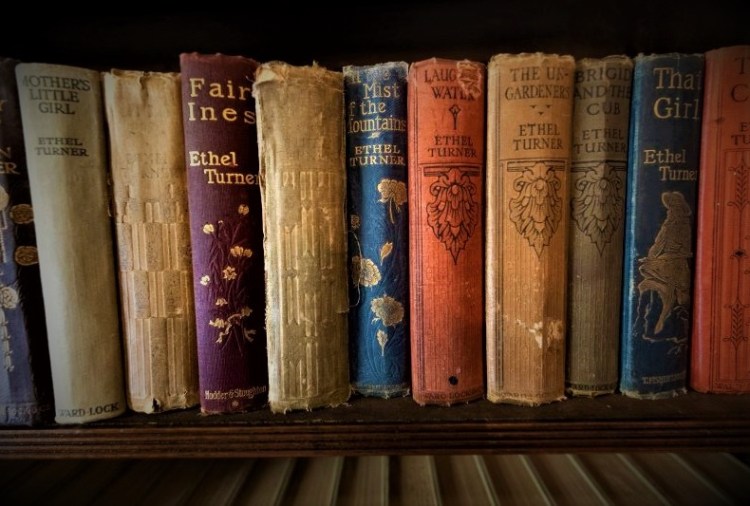
Ethel Turner Wrote More Than Seven Little Australians

King Anne by Ethel Turner was published in 1921 and my great aunt gifted this novel to her sister, my paternal grandmother, at Christmastime in 1922 after she had first read it. Many years passed by and when Grandma thought the time was right she passed King Anne on to me.

Unfortunately at that time I was not the least bit interested.

British-born Australian author Ethel Turner (1870-1958) was a novelist and children’s literature writer. She wrote over 30 books and collections of short stories and verse, mostly centred around girls and for girls. King Anne was Turner’s thirty-sixth published work.

Perhaps because I didn’t quite get into her first novel, the epic family saga Seven Little Australians (1894) of which NSW State Library holds the original hand-written manuscript, I therefore gave pseudo-royal King Anne’s weighty tome (as it seemed to me at the time) a wide detour.

The bookcover faded and King Anne languished for many, many years on the family bookshelves, sandwiched between ancient copies of Kidnapped, Pilgrims Progress and Wind in the Willows, and enduring several moves until by some quirk of fate I reached for it today February 2022 when my great aunt and grandmother would have read it one hundred years ago. (Shivers)

I have no memory of the storyline. Now I WILL have to read it!

First I shall create a pictorial and some background information—

The book has foxing and is not in good condition but you can see the etiquette of the time. Written in brackets underneath ETHEL TURNER is the abbreviation Mrs coupled with her husband’s name thus Mrs H. R. Curlewis. Herbert Raine Curlewis was a judge.

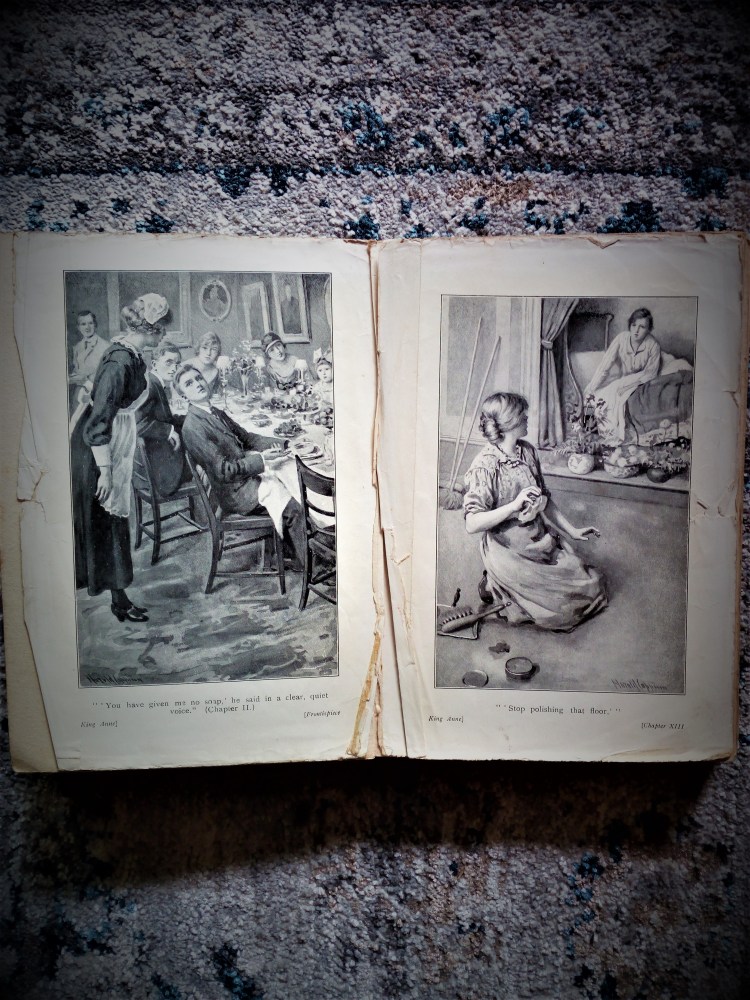
The frontispiece and three illustration plates are beautifully rendered, showing family life at the time. They are miniature works of art in their own right, sometimes removed and framed by the book owner. The far right image was adapted and embossed on the front cover of King Anne.

The artist has not been acknowledged and from online booksellers information you can take your pick. Possibly Harold Copping, and it seems A.J. Johnson‘s small-format illustrations were later replaced by full page works from J. Macfarlane. Each had illustrated books for Ethel Turner.

Inside the back leaves of King Anne (you leaf through a book because the pages are called leaves) under the heading Charming Stories by Isabel M Peacocke – another author of similar genre – there is a rather ambiguous book review of My Friend Phil (1915) from a Queensland Times reviewer which reads “… without doubt the best since Ethel Turner took the reading world by storm with her ‘Seven Little Australians’…” poor Isabel M Peacocke.

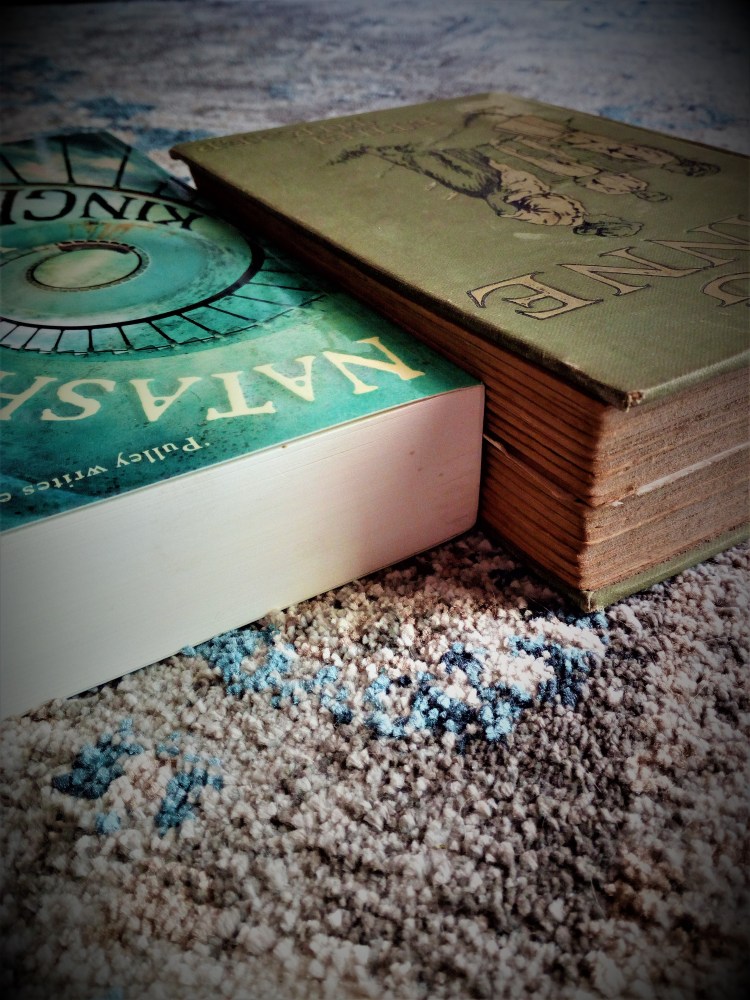
The difference between the size and weight of these two books was misleading until held in my hands. Natasha Pulley’s The Kingdoms is a slimmer volume with a lighter bookcover and thinner pages compared to Ethel Turner’s bulky King Anne with its fabric-over-cardboard bookcover, cotton stitching and stiff parchment-like pages. The modern publication is 200g heavier.

Australian author Ethel Turner booklist:

Seven Little Australians (1894)
The Family at Misrule (1895)
Story of a Baby (1895)
Little Larrikin (1896)
Miss Bobbie (1897)
Camp at Wandining (1898)
Gum Leaves (1900)
Three Little Maids (1900)
Wonder Child (1901)
Little Mother Meg (1902)
Raft in the Bush (1902)
Betty & Co (1903)
Mothers Little Girl (1904)
White Roofed Tree (1905)
In the Mist of the Mountains (1906)
Walking to School (1907)
Stolen Voyage (1907)
Happy Hearts (1908)
That Girl (1908)
Birthday Book (1909)
Fugitives from Fortune (1909)
Fair Ines (1910)
An Orge up to Date (1911)
Apple of Happiness (1911)
Fifteen & Fair (1911)
Ports & Happy Havens (1911)
Tiny House (1911)
Secret of the Sea (1913)
Flower O’ the Pine (1914)
The Cub (1915)
John of Daunt (1916)
Captain Cub (1917)
St Tom & The Dragon (1918)
Brigid & the Cub (1919)
Laughing Water (1920)
**King Anne (1921)
Jennifer, J. (1922)
Sunshine Family (1923)
(with Jean Curlewis her daughter)
Nicola Silva (1924)
Ungardeners (1925)
Funny (1926)
Judy & Punch (1928)
**King Anne is Number 36 on this list and according to the list in my book (photo above) this was her 21st novel.

Ethel Turner’s literary works have been largely forgotten but she, and a handful of other women writers, paved the way for Australian books for Australian children. My grandparents were educated with, and read, British books, so I admire Ethel Turner’s achievements. The following websites make interesting reading – GBW.

Tea With Ethel Turner by author blogger Rowena (link below) is exceptionally well written and researched. On my own research, so far I have found scant reference to King Anne.

https://teawithethelturner.com/category/seven-little-australians/

https://biblio.com.au/king-anne-by-turner-ethel/work/1139377

https://adb.anu.edu.au/biography/turner-ethel-mary-8885

https://www.fantasticfiction.com/t/ethel-turner/

https://australianwomenwriters.com/

Important Addendum: Australian Women Writers Challenge The Early Years is concentrating on past Australian women writers of all genres who were published then faded away. AWW have restructured their blog to highlight the writing of earlier Australian women; works published 50+ years ago. If you happen to find and read a forgotten gem, AWW would be interested in your book review.

I will be posting my King Anne review in due course. In the meantime, perhaps YOU might find another first edition little-known Ethel Turner on your bookshelf?

Classics deserve to be read again!

 Gretchen Bernet-Ward

Ethel Turner’s first home ‘Woodlands’ NSW as it was in 1892. Ethel is pictured on the right side of the verandah, her older sister and fellow author Lillian is on the left. The gentleman on the horse is unnamed, possibly Herbert Curlewis. The residence has been added to and greatly altered over many years. Picture: Mrs Phillipa Poole

‘Woodlands’ (circa 1884) information and photographs compiled by Alison Cheung, writer and real estate reporter.

‘Avenel’ (circa 1906) compiled and posted by David Carment Lost Mosman from various sources with his photographs and others courtesy of Mosman Library.

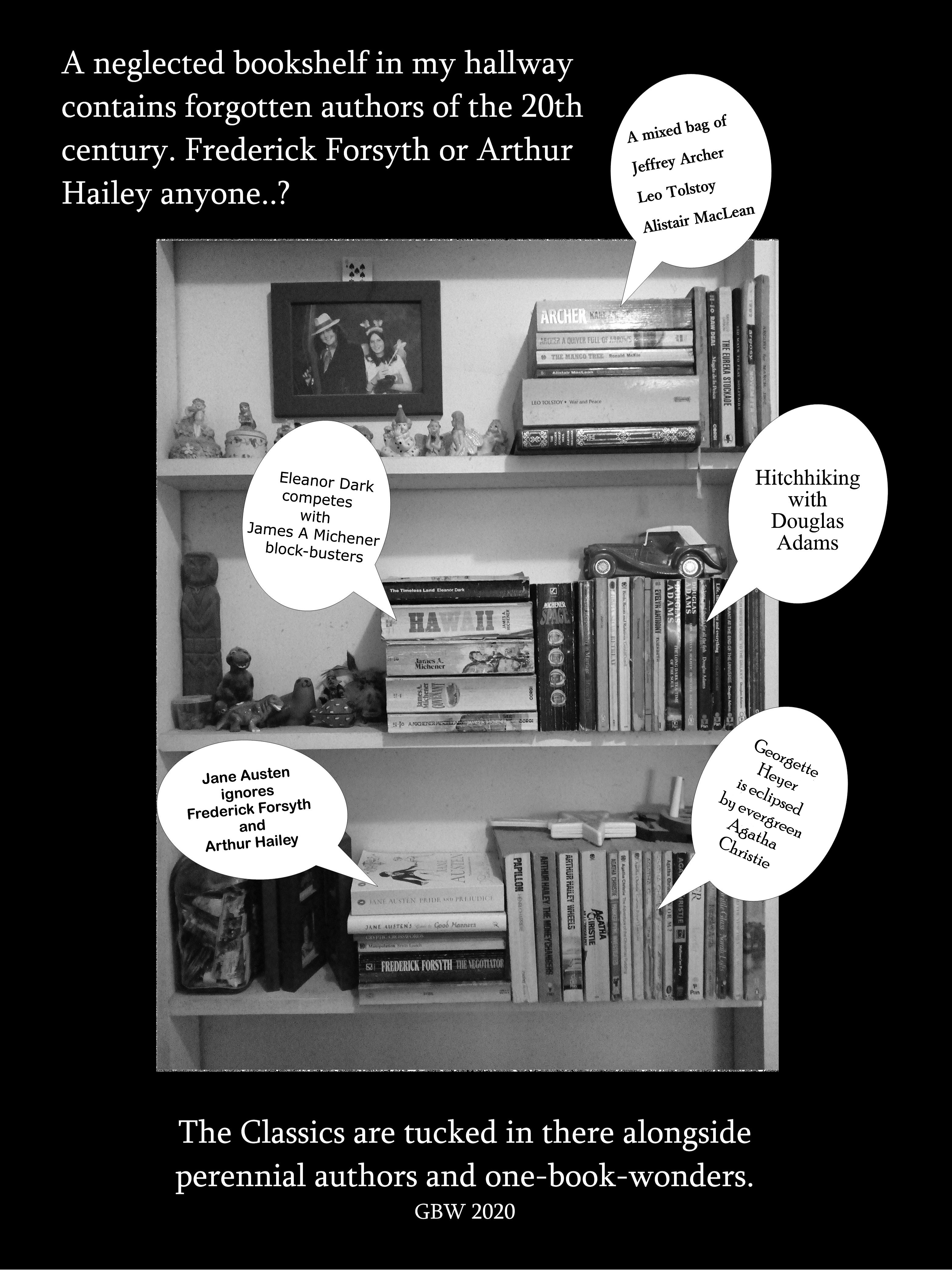
My Neglected Bookshelves

IMG_20200825_093745
Old bookshelf © Gretchen Bernet-Ward 2020

Don’t look too closely, there’s plenty of dust on them thar bookshelves. These books have sentimental value but may be destined for the University of Queensland Alumni Book Fair 2021 at St Lucia Campus, Brisbane—
Link https://alumni.uq.edu.au/uq-alumni-book-fair

Here’s the first installment of my three-day visit in April 2019—
https://thoughtsbecomewords.com/2019/04/28/rare-book-auction-and-alumni-book-fair/

Old books or new ones, ebooks or audio, I wish you all good books!

Gretchen Bernet-Ward

IMG_20190505_123307
A corner of the UQ Alumni Book Fair 2019

Review ‘The Weed that Strings the Hangman’s Bag’ by Alan Bradley

IMG_20200723_141412

This Alan Bradley story is deserving of 10 stars.  The irony, the wit and the revealing portrayal of 1950s English village life, is both hilarious and horrible.  Events are seen through the eyes of young Flavia de Luce, an implausibly precocious 11 year old girl who lives with her family in genteel decline.

Young Flavia’s encounters turn into forensic investigations and she has an inherent love of chemistry, brewing dangerous concoctions in her late grandfather’s lab.

The village of Bishop’s Lacey appears to be close-knit, yet even gossipy Mrs Mullet didn’t seem to know who or what killed young Robin Ingleby at Gibbet Hill.  The story really kicks off when well-known BBC puppeteer and bully Rupert Porson gives his last performance.  The scene-setting is brilliantly done and I felt immersed in the story from the beginning right through to the end.

Perhaps not a book for younger readers because they may get tired of the mid-20th century writing style.  Mature readers who like a quirky character will enjoy this tale.  I have never encountered the likes of Flavia de Luce, a strange mixture of Wednesday Addams and Bones.

But she certainly knows how to snoop or turn on the charm when necessary.

Generally the main players are conventional but it’s what I expected, having been raised on a diet of British books, magazines and television series.  Their dialogue and the descriptions of village society in post-war Britain were familiar to me – at least fictionally – and it’s clever how the tension and Flavia’s ‘fluctuations’ from girl to grown-up and back again is established.

Question: Apart from the shock value, what is the significance of Jack’s puppet face?  And I don’t mean who it represents.

‘The Weed that Strings the Hangman’s Bag’ is book 2 in the current 10 book Flavia de Luce mystery series, and takes its title from Sir Walter Raleigh.  With my thanks to Goodreads friend and writer Chris Hall for recommending this delightfully different book.

Gretchen Bernet-Ward


Poetry Clipart 13Author profile

Alan Bradley is a mystery writer known for his Flavia de Luce series featuring this pre-teen sleuth with a passion for chemistry.  The series began with the acclaimed ‘The Sweetness at the Bottom of the Pie’.  See more books in the series at Penguin Random House.  Bradley is also a New York Times bestselling author of many short stories, children’s stories, newspaper columns, and the memoir ‘The Shoebox Bible’.  More about Alan Bradley

Review ‘Brisbane’s Greek Cafés: A Million Malted Milks’ by Toni Risson

Toni Risson Greek Cafe Malted Milks Bookcover

From the beautifully tactile bookcover and the glorious old photographs, to the spectacular amount of research and Greek family interviews, Toni Risson has written and created a book which is reader-friendly and as energetic as the boundless service in a 20th century Greek café.

Like a Greek café menu, there’s never a dull moment.  Toni has amassed images of people, posters, menus, waitress fashion, the furniture, big mirrors, the soda fountain, cigarette counter—the mid-century nostalgia is strong for me just looking at the old buildings.  And let’s not forget the food, ah, so much delicious food!  Everything was freshly prepared, and ice-cream, chocolates and chilled fruit drinks were made on the premises in a time before the invention of air-conditioning.

IMG_20190929_114137

Open from 8am to 7pm seven days a week, back when few other proprietors could match it, Greek cafés became meeting places and stopping points for a variety of daily events; late breakfast; ladies morning tea; midday meal; shopping break; date before the cinema; cool drink at the end of the day; weekend family gatherings.

Remember this was in the days before coffee chains and fast food outlets.

Visiting as a child, I recall strawberry ice-cream and also eating a banana split with “the lot” including a cherry on top.  I think I got into trouble because I refused to eat my (healthy) banana.  The malted milkshakes were huge to my young eyes, and I can still remember the aroma of warm chocolate emanating from the display cabinet.

I could rattle off the chapter titles and you’d see the important position Greek family cafés held in pre-television society in Brisbane.  But I won’t because there are 35 chapters—some bearing names I know today, Andronicos, Samios, Freeleagus and more.  Every page has a delightful story, a witty quote or snippet of memorabilia.

The type of book which I keep referring to, always finding something extra to read aloud to anyone in the room.

You don’t have to be Greek, or local, to read about the Greek café phenomenon which spread throughout Queensland.  Several towns are mentioned including Bundaberg, Charleville, Dalby, Inglewood, Stanthorpe.  You’ve heard the song “Video Killed The Radio Star”, well, television killed Greek cafés.  In this book, you can find out what happened.

IMG_20190929_172519I was fortunate enough to attend the official launch of “Meet Me at the Paragon” the State Library of Queensland’s retrospective display of all things relating to Greek café culture.

From neon signs to monogrammed crockery, this six-month SLQ exhibition runs until mid-March 2020 and ties in with Toni Risson’s book.

I saw a large amount of the items mentioned in her book, plus rare family photos during a white gloves tour.
Here’s my blog post
https://thoughtsbecomewords.com/2019/10/03/meet-me-at-the-paragon-a-greek-cafe-experience-slqgreekcafes/

Finalist in Queensland Literary Awards, “Brisbane’s Greek Cafés: A Million Malted Milks” is a time-capsule, a treasury of ephemera which will remain documented and preserved within its pages. 

This book is a great gift for a foodie friend or entrepreneur.

Suitable for readers interested in nostalgia or café trends.  And family histories, particularly those of inventive and industrious Greek families.

Gretchen Bernet-Ward


AUTHOR PROFILE

IMG_20191210_115545

Toni Risson is a storyteller, food writer and cultural historian.  She writes short stories and children’s novels, and her doctorate mapped Australian childhood through the magic of lollies.

In a more ‘grown-up’ vein, Toni curated the State Library of Queensland’s exhibition “Meet Me At The Paragon” which displays the meteoric rise of Greek cafés across Queensland.  She has also written “Aphrodite and the Mixed Grill” 200 pages jam-packed with photographs and stories about iconic Greek cafés in Ipswich, Queensland.

Quotation from Cesare Pavese

Cesare Pavese was an Italian novelist, poet and translator, and an outspoken literary and political critic.

Not well-known outside Italy, Pavese is numbered highly among the important 20th century authors in his home country.

Born in rural Santo Stefano Belbo, he often returned to the area, enjoying the solitude away from his turbulent career and heartbroken love life.  Pavese was not destined to live long, he died just before his 42 birthday.

Cesare_Pavese_Italian_Novelist_Poet_1930
Cesare Pavese (1930) rocking his Harry Potter glasses.

✨ Website Biography and Book Review

https://www.poetryfoundation.org/poets/cesare-pavese
https://1streading.wordpress.com/2018/06/24/the-beautiful-summer/

✨ Cesare Pavese Poems

  1. The Cats Will Know
  2. Ancestors
  3. Habits
  4. You Have A Face Of Carved Stone
  5. Death Will Come With Your Eyes
  6. In The Morning You Always Come Backmy favourite
  7. Passion For Solitude from ‘Disaffections: Complete Poems 1930-1950’.

Gretchen Bernet-Ward