The Christmas My Life Fell Apart

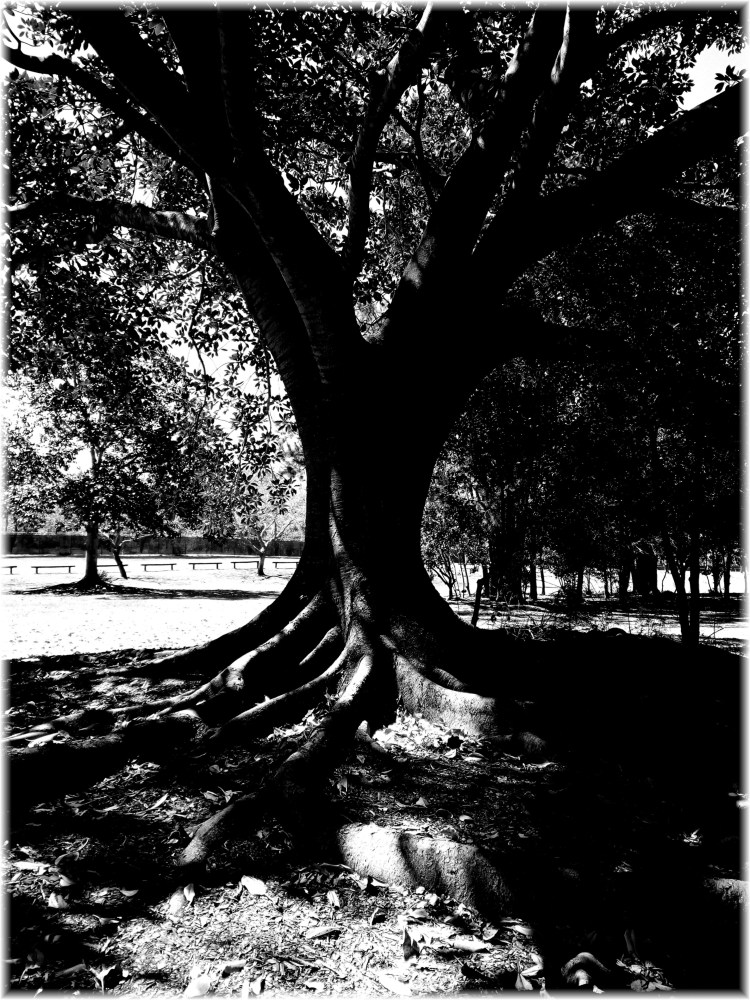
King George Square Brisbane Australia © image Gretchen Bernet-Ward 2025

Truly, I don’t know about you, but I am a wreck at Christmas time. Trigger warnings are advised. Not because of the festive fuss, the food, the fun, the family gatherings. My gloom stems from the loss of a loved one who never got to grow old like me. It was the last day of school, Christmas was felt everywhere, in homes, the shops, the mall music, the tinsel bling covering up the true reason for the season. It was the last day of High school, Christmas holidays had arrived and my teenage brother was wheeling his bicycle across the designated school crossing, a woodwork parcel on the handlebars. A large van came through the crossing and ran my brother down, he died in the ambulance on the way to hospital. The policeman who came to the door to tell my mother was less than compassionate. Someone had to tell my father at work. I just stood in the doorway frozen in time. Chillingly my mother whispered to the room, “I heard the ambulance.” Later, a neighbour dropped off my brother’s mangled bicycle, a thoughtless and grim reminder. My brother’s best friend was also crossing the road, however I am doomed to never know what happened to him. I believed he was okay but what he witnessed would have shattered him emotionally. There would also have been cars and high school students leaving the school grounds. No doubt equally traumatised, but I will never know if counselling was offered since classroom assembly would not have taken place until the new school year.

The funeral was attended by crowds of people, families and friends. At the Church service and the Cremation Chapel banks of beautiful flowers and condolence cards were displayed. On the coffin rested a small bunch of freesia flowers, my mother’s favourite. Leaving, my mother, father and I walked in a daze passed them all and got into a black car to be taken home. I don’t remember much else, I cannot recall family faces, friends, but more cards and flowers came into our home. People left food on the doorstep, at dusk a neighbour watered our newly turfed front lawn and slipped away as silently as she had come. My father was stoic, I know my mother cried for a very long time that night, and perhaps forever. I can honestly say now as a mature adult that I was probably in denial, trying to say that I was alright, that I was okay when I was not. I did not accept or know words of comfort to offer anyone, least of all my grieving parents. How could I be okay when my family and closest cousins were also devastated? After a long awhile the pain and heartache of loss, which almost doubled me over, slowly began to subside leaving a void. My parents did not want to talk about it. Did not want to press charges against the van driver. He was interviewed by police and they found his licence expired. On inspecting his vehicle it was found to have faulty gears and a faulty breaking system. In other words he knew he could not stop the vehicle in time. As an adult now many years later, I never forget the shock, the hurt, the need for retribution for the sudden gaping loss, the hole which that illegal van driver so swiftly and brutally left in my life; yet knowing under such circumstances that no amount of legal action would return a loved one.

In small ways it still does affect my life; as I type this I feel the pain, the sudden sense of loss because absolutely nothing could replace my brother. He was cremated and later, on a bright sunny weekend, my parents and I visited the cemetery and his plaque in the columbarium wall. For me it was all quite surreal, somehow misty like a movie. The strongest memory I have from that day is my mother, usually an undemonstrative woman, falling into the car, lying on the back seat sobbing deeply, tears cascading down her cheeks onto the vinyl seat. I patted her, a gesture of comfort, but knew nothing I could do would help. The rest is a blur although eventually we moved away, a new State, a new city, but in hindsight it was perhaps not the best thing to do. Leaving family and friends behind, starting afresh like nothing had ever happened. Slowly we adapted and the climate did help ease my asthma. My Dad found a good job, Mum worked for a time but preferred to stay home. I grew up, made wonderful new friends who were lead to believe I was an only child (still didn’t talk about it) and had some creative and marvellous yet not highly paid jobs. Marriage followed the universal pattern set by my age group. I guess I am pretty average and everybody has one personal story that changed their outlook on life.

However, deep down I think I regret that we left everything behind because my parents support system, their immediate close family had gone. Yes, the relatives, the cousins, flew in during the holidays but it wasn’t the same. Likewise, when we drove interstate to visit them, it was stilted and formal and often uncomfortable although occasionally we had a good laugh about something silly. Nobody ever raised the subject of my lost teenage brother, the kind one, the one who never got to grow into maturity. This is from my perspective, I will never know what my parent thought or discussed in private. I will never know the full trauma it may have caused my relatives and friends and I will never be free from the awful day before Christmas when that policeman knocked on our door. In short, dear reader, although I try to hide it, I am a snivelling scrooge at Christmas time. Bah humbug ‘Carols By Candlelight’ and I crumble. Jingle bells music and I mourn the loss of a brother who never got to come home for the school holidays. My thoughts also fly to those who have lost loved ones at this time of year. Maybe that’s part of what Christmas is all about. Love, loss, understanding and acceptance.

💗 © Gretchen Bernet-Ward 2025
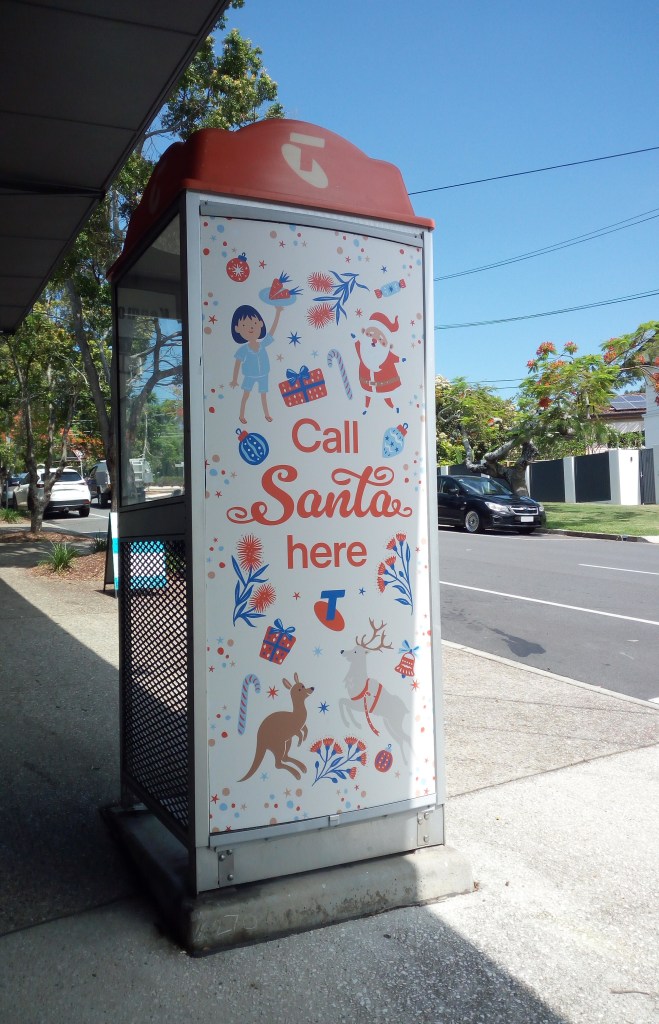
Telstra Retro Telephone Callbox
20th Century Santa
© image Gretchen Bernet-Ward 2025
Quick Crime Read ‘Building On Past Events’

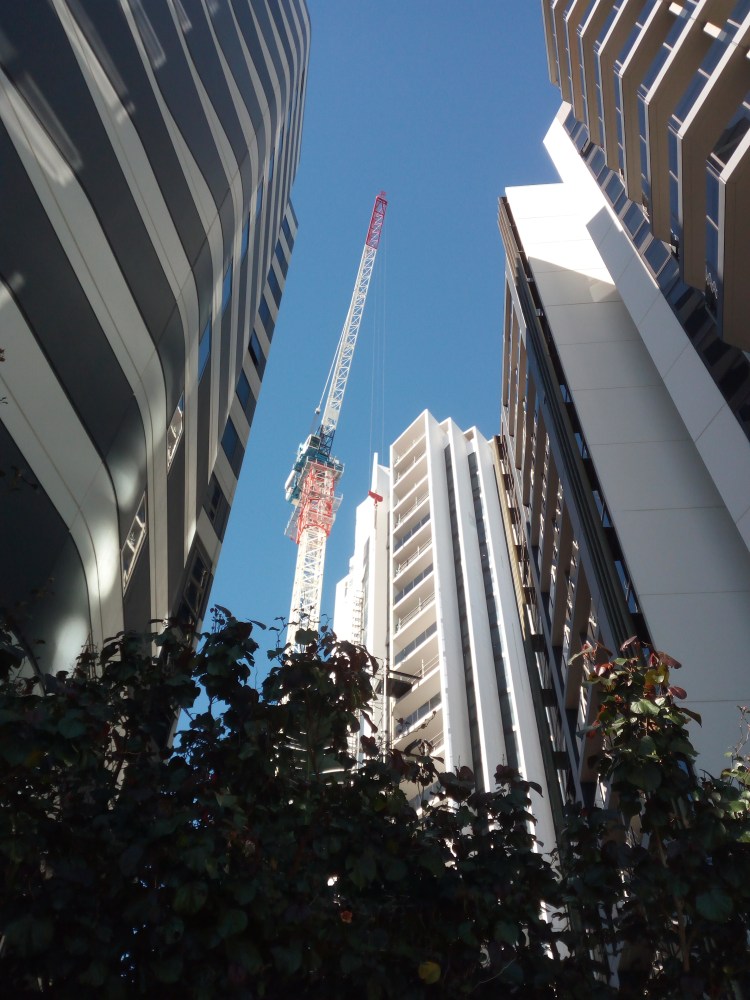
Highrise © image Gretchen Bernet-Ward 2024

The construction company boss has an accident or is it something more sinister? A ten minute read, dialogue driven, no chapters, no indents or page breaks (courtesy of unwieldy formatting) and I originally wrote it for writing group. Certainly an interesting result.

Erica Brook of Brook Constructions looked across the messy building site and was not happy. Work progress was slow, money was tight. And she’d been doing some thinking. She parked the Tesla and fastened the velcro on her hi-vis jacket. Time to ditch the altruistic ideals and read the riot act to the tradies, most of whom she’d known for years.
As Erica crossed the site, the right boot of her R.M. Williams caught on unfinished paving and she sprawled sideways across half-finished brickwork which crumbled under her weight and sent her down onto an exposed foundation spike.
“Erica!” shouted bricklayer Joan Campbell. “You all right, boss?”
Erica’s stricken look betrayed her pain. Blood was leaking through the leg of her jeans, white bone jutting through the fabric. She passed out and came back to reality in the ambulance.
“Don’t worry,” Joan’s face mirrored the white of her hard-hat. “Things’ll be okay.”
Erica rasped through the oxygen mask. “Not likely, Joanie.”
She grabbed Joan’s hand firmly. “Want to become a partner in the business?”
Joan winced. “I think you’re a bit delirious.”
As the ambulance swung into the Emergency bay, Joan made a quick decision.
“Okay, I’m in.”
Outside the hospital ward, Joan diligently phoned everyone to advise of Erica’s impending leg operation.
Post surgery, she returned and sat beside Erica’s bed in a screened off cubicle, nervously twisting her hard-hat in her hands. Opposite her sat Erica’s wafer-thin wife Michelle who trilled “Trieste needs the vet for a nail clip.”
Erica managed a groan through her swollen jaw.
A light-footed nurse in a blue Covid mask entered holding a glass of water and medication. The charged glance the nurse shot Joan took her breath away.
Michelle sat stiffly, gazing out the window, while the nurse neatly administered pills to Erica then left the cubicle.
“Erica,” Joan asked, “Want anything to eat? Chiko Roll from the cafeteria?”
Erica’s glazed eyes managed to look hopeful.
“No,” snapped Michelle, “she’s on a diet.” 
Disconcerted, Joan muttered “Okay, the site manager should phone soon, I’ll be off then.”
She scrambled to leave ahead of Michelle. At the nurses station she leaned over the counter towards Erica’s nurse and read her name tag. “Annalise”.
Keeping a blank face she asked Annalise if Erica was going to be okay.
Annalise replied in a low voice “She’s suffering from external symptoms.”
Realisation dawned on Joan. “Oh, her wife, I get it…”
Annalise put a finger to her lips to shush Joan and pointed towards the lift doors.
Already wearing sunglasses, Michelle prodded furiously at the buttons, saw a plaque on the wall, and almost tripped through the opening doors.
Joan broke the silence “I’m going down to the cafeteria, want anything?”
“No thanks.” Annalise grimaced. Joan wondered if that was directed at her or the food.
Over lunch Joan checked the news reports and came back thirty minutes later to ask Annalise if she’d seen her hard-hat. “Under the chair where you sat, silly.”
Joan walked the squeaky linoleum floor, entered the ward and stopped at the wrong cubical. “Sorry,” she said, backing out.
She found her hard-hat and bid poor Erica’s taped and tubed body a sombre goodbye.
At home, Joan Campbell was detained by police and told that she and nurse Annalise would be taken to Central police headquarters to be interviewed separately regarding the unexpected death of construction billionaire Erica Brook.
Their second interview was together, without legal representation, in a windowless room at a police detention centre. Joan wanted answers but the only response from a tall uniformed constable was a paper cup of water and his advice to wait patiently.
Drumming her fingers, Annalise stared blankly at the pockmarked white wall until finally it was confirmed that Erica had been murdered.
“Murdered!” Joan stared at Patricia Ruben, the incumbent Senior Detective with small yet stunning earrings no doubt frowned upon by her boss.
“How?” asked Annalise.
Detective Ruben sat down and glanced at her papers. “Death from suffocation.”
She turned to Joan. “Ms Campbell, tell me your movements from when you arrived to when you left the hospital.”
“Well, there was the site accident, an ambulance ride, a chat around Erica’s bedside, I spoke to Annalise, had lunch, went back to get my hard-hat, and left.”
Annalise shrugged. “Standard treatment. The patient was stable and resting.”
Ruben turned again to Joan. “Ms Campbell, I must warn you that building on past events, your return to the cubicle makes you a suspect.
Joan flared up. “No way.”
“And,” Ruben held up a long straight finger, “you inherit the Brook Constructions company.”
“Totally not right.” Joan felt weak and slouched back in the chair.
Ruben passed her the water cup. “You had a discussion in the ambulance.”
“Erica was emotional with pain. It wasn’t some high-powered business transaction.”
“From her hospital bed Ms Brook had informed her wife Michelle of company changes, best to check with her.” Ruben shuffled documents. “Meanwhile did you notice anything odd?”
Joan sighed.
Annalise gazed at the ceiling, arms folded across her pale blue uniform.
“The whole day was screwed,” she said and continued when the detective tilted her head. “There were patients, visitors, couriers, cleaners, florists and maybe small Paul.”
At that name, Ruben frowned. “Elaborate.”
“He’s short and gets mistaken for a child.”
Joan straightened up. “Just remembered! I went to the wrong cubicle, there was a youngster in the bed.”
“Nobody was in there all day,” snapped Annalise dismissively.
“There was, I saw him.” Joan was adamant.  
Detective Ruben scribbled furiously. “Is he likely to still be there?”
“Check the discharge papers at the hospital,” drawled Annalise.
Overlooking this remark, Ruben asked if anything else had occurred.
“Michelle, er, Mrs Brook certainly left in a hurry,” said Joan.
Annalise jabbed her finger in recollection. “She was pushing the lift buttons as if her life depended on it.”
Ruben made another quick file notation.
“I went back for my hard-hat,” Joan mused. “My work clothes had left dust on the chair seat. I noticed a shoe print.”
“Describe the imprint.” The expensive midnight blue pen scrawled across the page.
“Smallish, not a boot, more casual.”
“I’ll be right back.” Ruben left the solid door ajar.
The constable closed the door and blocked it with his looming presence.
Joan crushed the empty paper cup without thinking. The warm interview room thrummed, making her sweat uncomfortably. She missed her phone and became mesmerised by Annalise finger-grooming her balayage hair but the seductive gestures were spoiled by a what-are-you-looking-at scowl.
Joan leaned forward when a paper-rustling Ruben and the constable regrouped.
“Forensics are still checking,” Ruben advised, “but nobody had seen or heard a youngster.”
She opened a spiral bound notepad, wrote quickly, ripped out the page and showed it to Annalise and then Joan.
Turning it around, she read “One of you is lying.” She scrunched the paper. “And what are you going to do about it?”
Annalise stood up. “I’m not speaking any further.”
Joan felt a stab of despair. How could she have been so blind? She launched herself out of the chair and grabbed Annalise by the shoulders.
The alert constable stepped forward but Detective Ruben raised her palm. 
“Why?” shouted Joan, shaking Annalise who flinched and twisted away.
“Enjoy your broken building company.”
“You killed a good friend!” shrieked Joan.
“She used you like she used everyone,” mocked Annalise.
Ruben checked that she had left the audio recorder running. She gestured Joan to sit and pinned Annalise with a glare.
“Tell me how you knew Ms Brook?”
“By her lousy reputation. Brook and brainless here never cleaned up their work place, never fixed broken equipment or fences or filled deep holes even though council specified it.”
“That’s not right.” Joan squirmed at her lie. “What harm did she cause you?”
Annalise clenched her fists, eyes glazed. “It was a case of sooner or later. I waited until she eventually came into Emergency.”
She refocussed. “Remember the child who got run over by one of your site vehicles?”
“Y-yes,” Joan hesitated. “I had just started, but I did see a plaque near the hospital lift.”
Detective Ruben obviously knew where this was going. She wrote quickly, documenting a nightmare as Annalise marked off items on her fingers.
“No security, no hazard warning signs, no site training, no first aid post.”
Joan’s stomach lurched again. “That plaque. Your child.”
Raising her folder, Ruben read “Legal wrangles dragged on. Erica offered no settlement or financial assistance although she was the mother of Annalise’s adopted son.”  
“Her workplace negligence killed my boy Paul,” Annalise screamed. “She blamed me but I got even.”
Joan’s thoughts were spinning as Detective Ruben read out the arresting procedure. Another uniformed officer arrived and Annalise was steered out of the interview room.
She was held by both arms and lead down the corridor, her piercing shrieks echoing back to them. “Erica Brook was easy to smother, I’m glad the bitch is dead!”
A heavy door slammed shut.
“Off to be processed.” Ruben stacked paperwork and glanced at her phone before noticing Joan’s stunned expression. “Forensics already had a match on the shoe print. Maybe she checked for witnesses.”
“There was a child in the next bed.” Joan was quite sure of that.
“Hospital staff didn’t see anyone.” Ruben slowly capped her pen. “That memorial plaque isn’t detailed but allegedly her son used to detour through the worksite on his way to visit the hospital.”
“Poor kid,” thought Joan feeling light-headed, “he saw her retribution.”
Guilt gnawed at her stomach. Instead of confronting Erica about the construction site mess, her obstacle course prank had backfired and caused another deadly outcome.

© Gretchen Bernet-Ward 2024
© GBW2024

https://hawkeyebooks.com.au/pages/hawkeye-publishing-manuscript-development-publication-prize
Start building your story and cement your character in readers minds.

https://www.facebook.com/groups/writersgroupslisting

Quick Stories #6 Walk in the Park

Moreton Bay fig tree © Gretchen Bernet-Ward 2021

Ten Days Ten Short Stories

One a day for ten days. I write when I can, do the best I can, and I am willing to put my work out there! My thoughts are Don’t Be Embarrassed, Don’t Make Excuses, Don’t Stop Writing.

Recently I completed a 10-week term on Fridays with U3A Brisbane Creative Writing Group on Zoom and enjoyed the prompts, feedback and general literary discussions.  The writers in the group are quite diverse in style and writing content.

The wordcount limit is 500 words and while I found their prompts were ‘forcing’ me to come up with something different each week, I really enjoyed doing it. I was quickly learning how to keep them short and sweet.  Edit, edit, edit.

My characters are good, bad and ugly and the majority of the time I had no idea where they came from!

I say write for yourself first and don’t be precious about your words.  For better or worse, here are mine—the prompt was Pain.

Walk in the Park

The temperature was cool and pale winter light shone from an almost cloudless grey sky.

“Nice day for a walk, ” thought Janet as she drove into the carpark, “and coffee at Beans if I get that far.”

A knee injury had confined Janet to the house.  A foolish accident sustained while moving furniture.  A mere second which had induced weeks of debilitating pain.  She cautiously manoeuvred out of the car.  Elasticised support around her left knee bulked out her grey slacks giving the appearance of elephantiasis, but comfort overrode vanity.

Janet tested the weight on her knee.  It twinged but held.  She walked slowly along the ancient tree-lined avenue.  Her pace increased when she noticed murky clouds gathering in the distance, threatening.  An abrupt gust of wind buffeted her, bringing a drop in temperature and moisture in the air.  The sudden change made her head swim.

Disconcerted, she stopped.  “This is weird.”   

Regaining equilibrium, Janet lurched forward and glanced at the old Moreton Bay fig tree overhanging the path, leaves rustling and branches swaying.  She had the ludicrous feeling that the tree was getting ready to walk across in front of her.  A dry rustle came from behind.  Half her senses screamed “Don’t turn around”, the other half wanted to know what was going on.  Cold wind and grit stung her eyes but Janet turned to look.

The primeval trees were blending into each other, meshing their long heavy branches across the avenue, blocking her route back to the car.  Adrenalin rose, overruling the growing throb in her knee.

“Need shelter… Beans café.”

She spun back to confront the old Moreton Bay fig.  Its leaves whispered around her head, a long tree root tugged her leg.  She panicked, stumbled, and cried out as her knee gave way.  The wind moaned through the branches, whipping up foliage and twigs, encircling her body.  She heard a crack, the sound of splintering wood, crashing, falling.  Green, then black, followed by bright lights and two voices asking the same question over and over.

“Can you hear me, Miss Gallagher?”

Equipment beeped, the bed was hard, Janet was back in hospital with a reassuringly numb knee.

“What happened?” she croaked.

The doctor and nurse exchanged glances.

“You were in the park,” said Nurse, “and lost consciousness when a tree branch almost crushed you.”

The doctor air-patted near her shoulder.  “Nothing to worry about.”

Nurse grinned.  “The ambulance driver said you were wrapped in greenery, heaven knows why.”

Janet knew why.  The Moreton Bay fig had tried to warn her, tried to protect her from the deadly branch.

“Presumably,” said the doctor, “you had accidentally taken a double dose of pain medication for your knee.  Your GP did stress caution because it can cause disorientation.”

“Or worse,” intoned Nurse.

Janet nodded vaguely.  As soon as she was discharged, she would go and thank that Moreton Bay fig tree.

——© Gretchen Bernet-Ward 2021——

“Generally, emerging writers don’t write every day; some writers don’t stretch themselves; some writers don’t share their work; some writers fear feedback; just do it!” Gretchen Bernet-Ward