Twenty Rules for Writing Detective Stories 1928-2024
Originally published in the American Magazine (September 1928) and included in the Philo Vance Investigates omnibus. Reproduced here (September 2024) as one big scroll almost a century later.

Full credit goes to author S.S. Van Dine, AKA Willard Huntington Wright who was born 15th October 1888, Charlottesville, Virginia, USA. He died 11th April 1939 (aged 50) New York City, USA.

THE DETECTIVE STORY is a kind of intellectual game. It is more — it is a sporting event. And for the writing of detective stories there are very definite laws — unwritten, perhaps, but none the less binding; and every respectable and self-respecting concocter of literary mysteries lives up to them. Herewith, then, is a sort of Credo, based partly on the practice of all the great writers of detective stories, and partly on the promptings of the honest author’s inner conscience. To wit:

1. The reader must have equal opportunity with the detective for solving the mystery. All clues must be plainly stated and described.

2. No wilful tricks or deceptions may be placed on the reader other than those played legitimately by the criminal on the detective himself.

3. There must be no love interest. The business in hand is to bring a criminal to the bar of justice, not to bring a lovelorn couple to the hymeneal altar.

4. The detective himself, or one of the official investigators, should never turn out to be the culprit. This is bald trickery, on a par with offering someone a bright penny for a five-dollar gold piece. It’s false pretences.

5. The culprit must be determined by logical deductions — not by accident or coincidence or unmotivated confession. To solve a criminal problem in this latter fashion is like sending the reader on a deliberate wild-goose chase, and then telling him, after he has failed, that you had the object of his search up your sleeve all the time. Such an author is no better than a practical joker.

6. The detective novel must have a detective in it; and a detective is not a detective unless he detects. His function is to gather clues that will eventually lead to the person who did the dirty work in the first chapter; and if the detective does not reach his conclusions through an analysis of those clues, he has no more solved his problem than the schoolboy who gets his answer out of the back of the arithmetic book.

7. There simply must be a corpse in a detective novel, and the deader the corpse the better. No lesser crime than murder will suffice. Three hundred pages is far too much pother for a crime other than murder. After all, the reader’s trouble and expenditure of energy must be rewarded.

8. The problem of the crime must be solved by strictly naturalistic means. Such methods for learning the truth as slate-writing, ouija-boards, mind-reading, spiritualistic séances, crystal-gazing and the like, are taboo. A reader has a chance when matching his wits with a rationalistic detective, but if he must compete with the world of spirits and go chasing about the fourth dimension of metaphysics, he is defeated ‘ab initio’ ‘from the beginning’.

9. There must be but one detective — that is, but one protagonist of deduction — one ‘deus ex machina’ ‘God from the machine’ ‘contrived solution‘. To bring the minds of three or four, or sometimes a gang of detectives to bear on a problem, is not only to disperse the interest and break the direct thread of logic, but to take an unfair advantage of the reader. If there is more than one detective the reader doesn’t know who his ‘conductor’ is. It’s like making the reader run a race with a relay team.

10. The culprit must turn out to be a person who has played a more or less prominent part in the story — that is, a person with whom the reader is familiar and in whom he takes an interest.

11. A servant must not be chosen by the author as the culprit. This is begging a noble question. It is a too easy solution. The culprit must be a decidedly ‘worthwhile person’ — one that wouldn’t ordinarily come under suspicion.

12. There must be but one culprit, no matter how many murders are committed. The culprit may, of course, have a minor helper or co-plotter; but the entire onus must rest on one pair of shoulders: the entire indignation of the reader must be permitted to concentrate on a single dark nature.

13. Secret societies, camorras, mafias, et al, have no place in a detective story. A fascinating and truly beautiful murder is irremediably spoiled by any such wholesale culpability. To be sure, the murderer in a detective novel should be given a sporting chance; but it is going too far to grant him a secret society to fall back on. No high-class, self-respecting murderer would want such odds.

14. The method of murder, and the means of detecting it, must be rational and scientific. That is to say, pseudo-science and purely imaginative and speculative devices are not to be tolerated in ‘roman policier’ ‘romantic police officer’. Once an author soars into the realm of fantasy, in the Jules Verne manner, he is outside the bounds of detective fiction, cavorting in the uncharted reaches of adventure. (That’s changed!)

15. The truth of the problem must at all times be apparent — provided the reader is shrewd enough to see it. By this I mean that if the reader, after learning the explanation for the crime, should reread the book, he would see that the solution had, in a sense, been staring him in the face – that all the clues really pointed to the culprit — and that, if he had been as clever as the detective, he could have solved the mystery himself without going on to the final chapter. That the clever reader does often thus solve the problem goes without saying.

16. A detective novel should contain no long descriptive passages, no literary dallying with side-issues, no subtly worked-out character analyses, no ‘atmospheric’ preoccupations. such matters have no vital place in a record of crime and deduction. They hold up the action and introduce issues irrelevant to the main purpose, which is to state a problem, analyse it, and bring it to a successful conclusion. To be sure, there must be a sufficient descriptiveness and character delineation to give the novel verisimilitude.

17. A professional criminal must never be shouldered with the guilt of a crime in a detective story. Crimes by housebreakers and bandits are the province of the police departments — not of authors and brilliant amateur detectives. A really fascinating crime is one committed by a pillar of a church, or a spinster noted for her charities.

18. A crime in a detective story must never turn out to be an accident or a suicide. To end an odyssey of sleuthing with such an anti-climax is to hoodwink the trusting and kind-hearted reader.

19. The motives for all crimes in detective stories should be personal. International plottings and war politics belong in a different category of fiction — in secret-service tales, for instance. But a murder story must be kept ‘gemütlich’ agreeable’, so to speak. It must reflect the reader’s everyday experiences, and give him a certain outlet for his own repressed desires and emotions.

20. And (to give my Credo an even score of items) I herewith list a few of the devices which NO self-respecting detective story writer will now avail himself. They have been employed too often, and are familiar to all true lovers of literary crime. To use them is a confession of the author’s ineptitude and lack of originality:

(a) Determining the identity of the culprit by comparing the butt of a cigarette left at the scene of the crime with the brand smoked by a suspect.

(b) The bogus spiritualistic séance to frighten the culprit into giving himself away.

(c) Forged fingerprints.

(d) The dummy-figure alibi.

(e) The dog that does not bark and thereby reveals the fact that the intruder is familiar.

(f) The final pinning of the crime on a twin, or a relative who looks exactly like the suspected, but innocent, person.

(g) The hypodermic syringe and the knockout drops.

(h) The commission of the murder in a locked room after the police have actually broken in.

(i) The word association test for guilt.

(j) The cipher, or code letter, which is eventually unravelled by the sleuth.

And there you have it. Not a modern gadget in sight!

Thank you, Willard ❤ Gretchen Bernet-Ward

More information
https://en.wikipedia.org/wiki/S._S._Van_Dine
https://en.wikipedia.org/wiki/Golden_Age_of_Detective_Fiction

Willard Huntington Wright (S.S. Van Dine)
1887-1939
Fantastic Fiction
https://www.fantasticfiction.com/v/s-s-van-dine/
1. The Benson Murder Case (1926) · 2. The Canary Murder Case (1927) · 3. The Greene Murder Case (1928) · 4. The Bishop Murder Case (1928) · 5. The Scarab Murder Case (1930) 

Dealing with Change

IMG_20191030_112254
Quote from “500 Days of Summer” a film based on the relationship between a man and a woman, Tom and Summer, who work at a greeting card company https://en.wikipedia.org/wiki/500_Days_of_Summer

Gretchen Bernet-Ward

Old Woman Sitting Reading

Not So Secret Society of Women Writers

I’ve been asked if I belong to a writers group.  After reaching saturation point with courses and workshops, I decided to get serious and join a writers group.  Currently I am a member of two organisations, Girl and Duck.com and The Society of Women Writers Qld Inc.  One real and one virtual, both offering the interaction and motivation I crave.

I also belong to two book clubs, one leaning towards the literary and the other crime, but that’s a whole new blog post.  Today my information flow is about—

Society of Women Writers Qld IncThe Society of Women Writers Qld Inc (SWWQ) which provides an invaluable support network for women writers.  Members share comments, feedback, achievements and encouragement, or listen to guest speakers at monthly meetings.

The Beginning

In 1925 the Imperial Press Conference Sydney hosted a conference for Visiting Writers and Journalists from the United Kingdom.  At that time women were excluded from the all-male journalists’ club.  This led to the wives of the delegates and the invited female delegates forming their own group which became The Society of Women Writers.  Thus (Dame) Mary Gilmore, Pattie Fotheringham, Mary Liddell and Isobel Gullett became the four Vice Presidents.  Zara Aronson was Honorary Secretary; Agnes Mowie and Blanche d’Alpuget were Honorary Treasurers.  Abigail Clancy was one of the founding committee’s fifteen members.  In 1982 The Society of Women Writers Queensland was incorporated and Mocco Wollert became their first State President.  Di Hill is the current State President.

Postal Magazines

In 1975 Bridget Godbold felt inspired to start her own group of writers in Queensland.  While in Sydney for the Society of Women Writer’s Fiftieth Commemoration, she was asked by their Federal Executive to produce a Queensland postal magazine, based on the success of a Victorian experiment called MURU.

Bridget, with four women from Townsville, Boonah, Kingaroy and Burleigh Heads, created MORIALTA.  This Aboriginal word means ‘everflowing’ and epitomised their motto to Keep Thoughts Everflowing into Creative Writing.  The first edition of MORIALTA was produced in 1976.

Postal magazines are ideal for isolated writers or those who find it difficult to attend meetings.  An electronic newsletter is also available.

The Alice Award

Every two years, since 1978, the Society shares the privilege with other States and awards a non-acquisitive bronze statuette, The Alice, to an Australian woman writer who has made a significant contribution to Australian Literature.  Well-known past recipients include, among many others, Nancy Cato, Ruth Park, Kate Grenville, Margaret Scott, Dame Judith Wright, Dame Mary Durack, Jill Shearer, Christobel Mattingley, Susanna des Vries, Dr Claire Wright and Sally Odgers.

Ring of Bright Water

Bribie Island Jetty at Bongaree
Bribie Island

SWWQ’s newsletter Ring of Bright Water is compiled monthly and sent to members either electronically (preferred) or via Australia Post, keeping members updated on upcoming events, competitions, publishing opportunities, members achievements, writing and more.

Writers Retreat

The Society organises an annual retreat, held in October on Bribie Island, north of Brisbane.  Here writers can dedicate quality time to their works-in-progress; join structured workshops; begin new work; discuss writers, writing and books and generally share good times with like-minded people.

Competitions

Competitions for Short Story, Article and Poetry categories are held each year for members and the Estelle Pinney Short Story Competition is held annually and is open to Australian women writers over the age of 18.

The Society publishes anthologies of members work occasionally and supports many other literary events in Queensland.  SWWQ is affiliated with Society of Women Writers in WA, VIC, NSW, TAS.

For further information please contact the Secretary
secretary@womenwritersqld.org.au
or visit their website http://womenwritersqld.org.au

My Journey

I have entered two short stories in the Estelle Pinney Short Story Competition which closes Wednesday 31 July 2019.  At the moment, I am reading The Rose and The Thorn written by member Indrani Ganguly.  After attending a meeting with guest speaker Virginia Miranda, author of Flash Fiction Volume One, I enjoyed the writing exercise she set with picture prompts and I’m all fired up on the joys of flash fiction.

Gretchen Bernet-Ward 

The Rose and The Thorn by Indrani Ganguly 2019 01Flash Fiction Virginia Miranda Volume One

Blogging Pleasure and Pain

I’m reading blog posts which say ‘Posting has become a chore’ or ‘It’s hard to post regularly’ or ‘Feeling the pressure to post’—-stop right there!

Take a break, the earth, the sky and the stars will still be there, the world will still turn.

Conversely there are serious blog posts coercing, er, cajoling the writer into a formula.  Or worse, a winning formula to be the best blogger in the blogosphere.

There’s even a blog ideas generator, how unoriginal can you get!

YOUR WORDS, YOUR WORLD, CREATE YOUR WAY!

Does a technique overcome bloggers block?  Better blogging supposedly comes with strategies, structure, schedules, regularity, planning…bah, humbug I say!  There’s probably enough pressure in your world without adding more via your blog.  If anything, blogging should be

a freedom,

a release from the daily grind,

your little patch of calmness,

a zone of personal creativity,

a focus on what you want,

how you want to say it,

and most of all, don’t worry,

let your originality take over.

The old hippie saying ‘go with the flow’ is appropriate when doing morning pages and you may like writing in the morning or writing in the evening.  Don’t push yourself to write to someone else’s rule, someone else’s timetable.  Free-writing is better than no writing.  You can actually write anywhere, anytime, and I don’t mean social media.

IMG_20180611_104547

Self-control up to a point.
Yeah, I know people who have to have a hammer hanging over their heads on a piece of string.  If they stand up, the hammer hits them on the head, they sit back down and do another 500 words of pain.  One famous writer actually tied his body to the chair to write.
Then there’s that annual trial by acronym.
Which does not spell  g-o-o-d  w-o-r-k  to me.

Do you really want a target audience?  Do you personally know anyone who is making a decent living from blogging?  They’re the ones in the pressure cooker.  If you are not commercially selling, I say ‘Do your own thing!’ and that’s exciting.

I speak from experience.  You will find your own rhythm if you truly want to write.  And nobody, least of all me, will help you or hinder you.  You’re on your own, kid.

YOUR WORDS, YOUR WORLD, CREATE YOUR WAY!

‘Work hard to create great content’ if it’s too hard it won’t work.

‘Blog often while controlling quality’we all know quality varies.

‘Find your competition and observe them’nothing worse than a lurker.

‘Write to please your readers’first ask yourself ‘Am I pleased with it?’

‘Improve your blog writing formula’your creativity is not a prescription.

‘What is your target market searching for?’don’t pander to the people.

‘What type of content do readers prefer?’write your content and let them Follow.

‘Start internal link building’in other words Liking but not liking.

‘You need to know the right audience for you’ other bloggers will work that out.

‘Make your blog post titles catchy’why get hung up on headings.

‘Don’t have time to write then reblog or hire a ghost-writer’ha ha ha ha ha.

‘Images are important to highlight your post’keep them relevant, naturally.

Good eye-appeal in formats and layouts’beauty is in the eye of the blogger.

‘Learn basic SEO’because it’s basic but not life threatening.

‘Reply to Comments daily’meaning a proper reply or else deactivate Comments.

‘Bill Gates once said Content Is King’well, hey, that’s a given.

‘Keep wordcount down’there are people who can still read lots of words.

Gretchen Bernet-Ward

YOUR WORDS, YOUR WORLD, CREATE YOUR WAY!

Typewriter 15
A refreshing nap or agony for hours…

Young When You’re Old

IMG_20180726_125824

Seniors Week 2018
Celebrating a Queensland for All Ages
Seniors Week provides the opportunity for older Queenslanders to explore programs and services, events and activities, connect with people of all ages and backgrounds from 18-26 August.  Celebrate the many contributions older people make in our communities.  Visit https://www.qldseniorsweek.org.au/

Gretchen Bernet-Ward

‘A Garden of Lilies’ Tales from Judith Rossell

IMG_20180409_162238
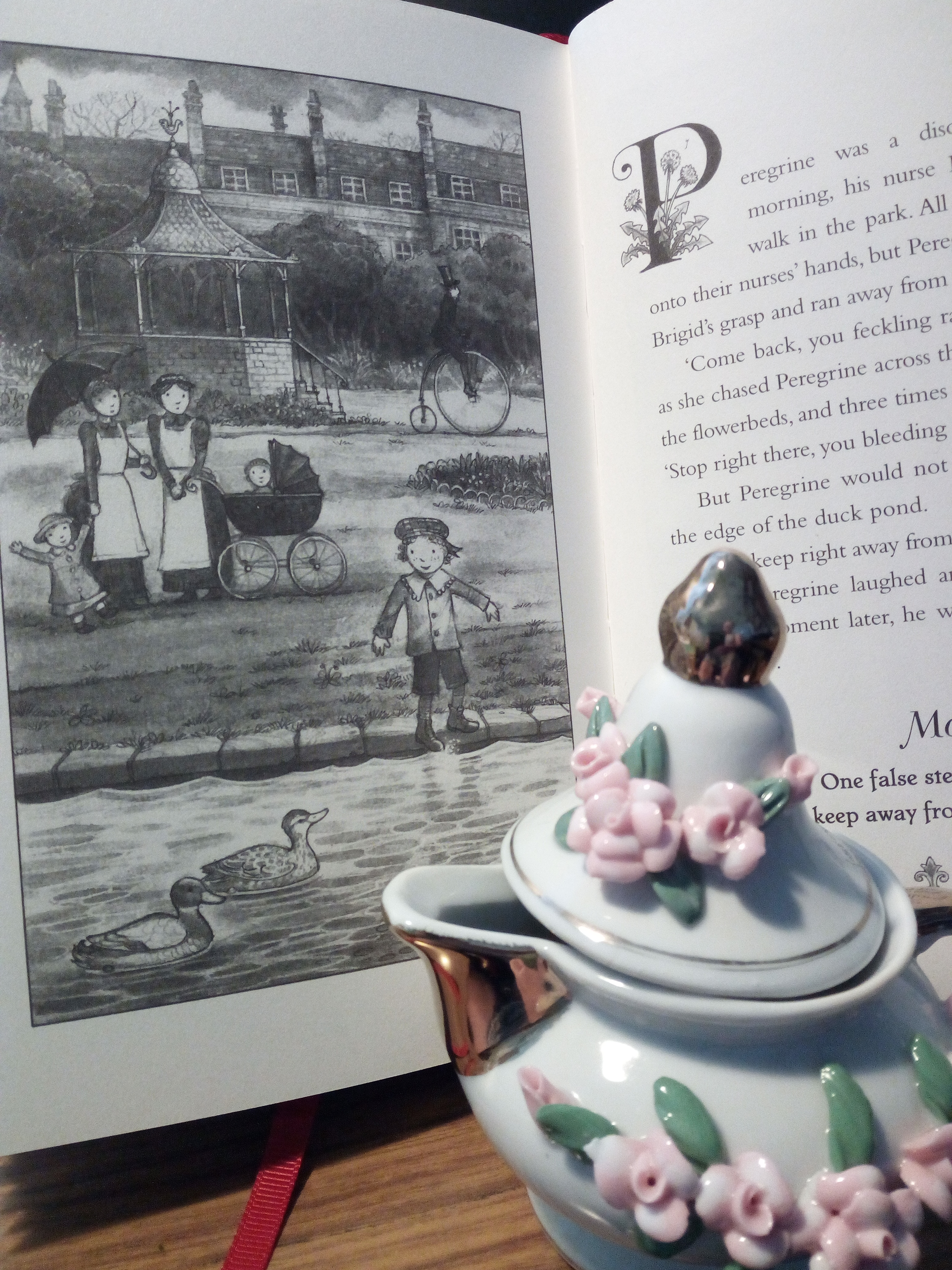
Page 39 “Peregrine was a disobedient child…”

With a knowing smile, this Victorian-style book of manners is reminiscent of the period of parenting when misbehaving children were given orders and told dire consequences would ensue if they did not obey.  Despite warnings, when a child in this book ignores an instruction, there is an aftermath of great magnitude.

IMG_20180410_133833
Page 28 “Jesephany and Keziah were unruly and wild…”

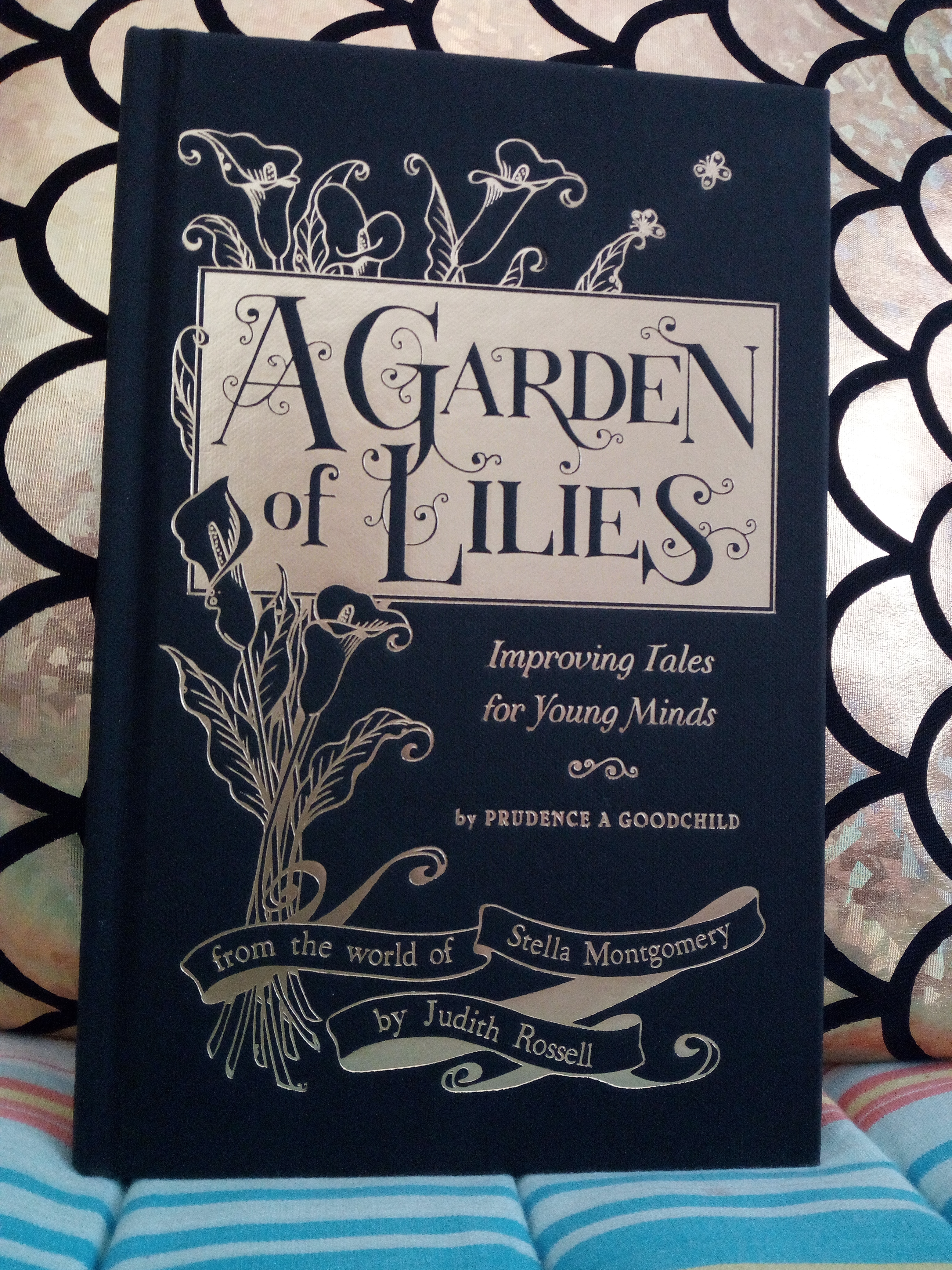
In “A Garden of Lilies: Improving Tales for Young Minds – by Prudence A Goodchild” children’s author and illustrator Judith Rossell has produced an atmospherically illustrated and tightly written volume.  She has also mastered the art of a left-right jab, hitting with swift endings which leave the reader breathless.

Each punchy short story closes with a judicious moral.  For example, Isadora daydreamed too much during her chores.  One day she daydreamed while idly brushing her hair.  Let’s just say she didn’t get to finish the task.  “Moral: For hair that’s glossy, clean and bright, Two hundred strokes, both morn and night”.

After Isadora’s tale, there is what appears to be a lovely page entitled “Care of the Hair” with a recipe for making Soft Soap which “…will improve both the texture and colour of the hair” until things get a bit nauseating.  Apart from kitchen scraps, the mixture must boil for hours until it forms a clear, thick jelly.

IMG_20180410_134735
“A Garden of Lilies: Improving Tales for Young Minds” by Prudence A Goodchild (author Judith Rossell) ABC Books Australia

Basically the stories are about kids being kids and the 21st century reader should see the endings for what they are – a sample of Victorian etiquette and psychology which we would not dream of using on children today.  Right?  Okay, explain that to your child and laugh.

This slim book is approximately sixty pages (with attractive binding and colour plates) and scattered throughout are “Interesting Facts” and helpful hints like An Economical Recipe for a Plain Cake, A Useful Compass, Parlour Games and my personal favourite, An Album of Sea-Weeds.  I will work on drying and pressing seaweed during my next holiday!  Hmm, would seaweed smell like that starfish I once brought home?

In closing, I will give a shout-out to Mr Lindon of Woolloongabba, Queensland (Page 45) who grew a giant marrow.  I think he must have read the book’s suggestion To Grow a Giant Marrow which signifies “A Garden of Lilies” is indeed a versatile volume!

I cannot give you a childproof safety rating but I think it is suitable for a sliding age scale and my own rating is 5-star.

Gretchen Bernet-Ward


Judith Rossell — Biography

Judith Rossell is the multi-award-winning author-illustrator of the bestselling Stella Montgomery series (Withering-by-Sea, Wormwood Mire, A Garden of Lilies and forthcoming Wakestone Hall).  Judith has written thirteen books and illustrated more than eighty, and her work has been published in UK, US, Germany and translated into more than twenty languages.  Before beginning her career in children’s books, Judith worked as a government scientist (not a mad scientist, a normal kind of scientist) and also for a cotton-spinning company (which made threads for T-shirts, denim jeans, mops and teabag strings).  Judith lives in Melbourne, Australia with a cat the size of a walrus.

ACCLAIM FOR WITHERING-BY-SEA AND WORMWOOD MIRE:
Indie Awards – Winner 2015, Shortlisted 2017
Australian Book Industry Awards – Winner 2015, Shortlisted 2017
CBCA Awards – Honour Book 2015, Notable Book 2017
Davitt Awards – Winner 2015, Shortlisted 2017
Prime Minister’s Literary Awards – Shortlisted 2015
ABA Booksellers’ Choice Awards – Shortlisted 2017
Australian Book Design Awards – Shortlisted 2017
Aurealis Awards – Shortlisted 2015