It was a nice surprise to discover an older piece of writing I’d forgotten, particularly when it still holds up.
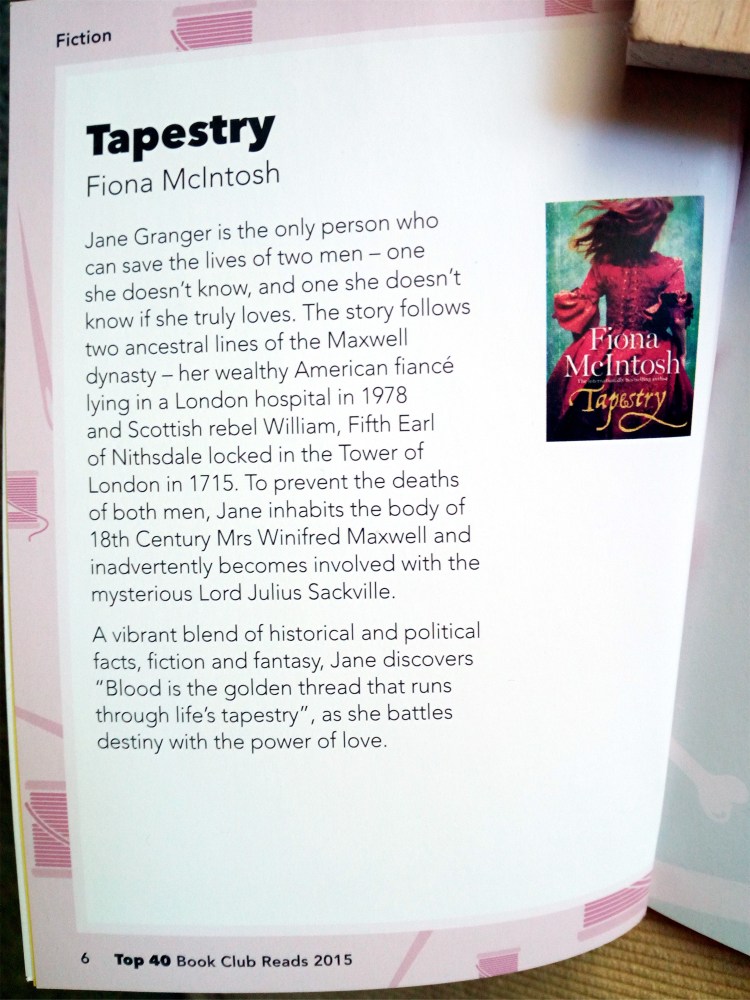
My overview of Fiona McIntosh’s historical fiction “Tapestry” was penned for Top 40 Book Club Reads 2015, a regular Brisbane City Council Library Service booklet written and compiled by unacknowledged library staff.
The book—billed as timeslip fiction—has a layered plot and it was hard to write a 100 word description without sounding too stilted. McIntosh chose settings in two countries, Australia and Britain, in two different eras of history. I particularly liked the second half in 1715 within the Tower of London.
Synopsis by Gretchen Bernet-Ward
After visiting the Tower of London to research her book, McIntosh had “An unforgettable day and I attribute much of the story’s atmosphere to that marvellous afternoon and evening in the Tower of London with the Dannatts when the tale of Lady Nithsdale and my own Tapestry came alive in my imagination.”
Author Fiona McIntosh has written quite a stack of books set in many parts of the world, and in different genres: Non-Fiction, Historical Romantic-Adventure, Timeslip, Fantasy – Adult, Fantasy – Children, and Crime.
Check your local library catalogue in person or online.
♥Gretchen Bernet-Ward
In order of appearance, the Brisbane Libraries Top 40 book club recommendations for 2015—I have not read Poe Ballantine’s chilling tale “Love and Terror on the Howling Plains of Nowhere” and I may never read it—See how many titles you’ve read!
The Visionist; Moriarty; Tapestry; The Bone Clocks; California; Z – Novel of Zelda Fitzgerald; The Mandarin Code; Merciless Gods; Upstairs at the Party; Friendship; Birdsong; Heat and Light; Time and Time Again; What Was Promised; The Austen Project; The Paying Guests; The Exile – An Outlander Graphic Novel; Lost and Found; Amnesia; Cop Town; Mr Mac and Me; Nora Webster; The Girl Who Saved the King of Sweden; Inspector McLean – Dead Men’s Bones; The Soul of Discretion; We Were Liars; Stone Mattress – Nine Tales; Family Secrets; South of Darkness; The Claimant; This House of Grief; She Left Me the Gun; Mona Lisa – A Life Discovered; The Silver Moon; Revolution; Love and Terror on the Howling Plains of Nowhere; What Days Are For; Mistress; Warning – The Story of Cyclone Tracy; The Birth of Korean Cool.
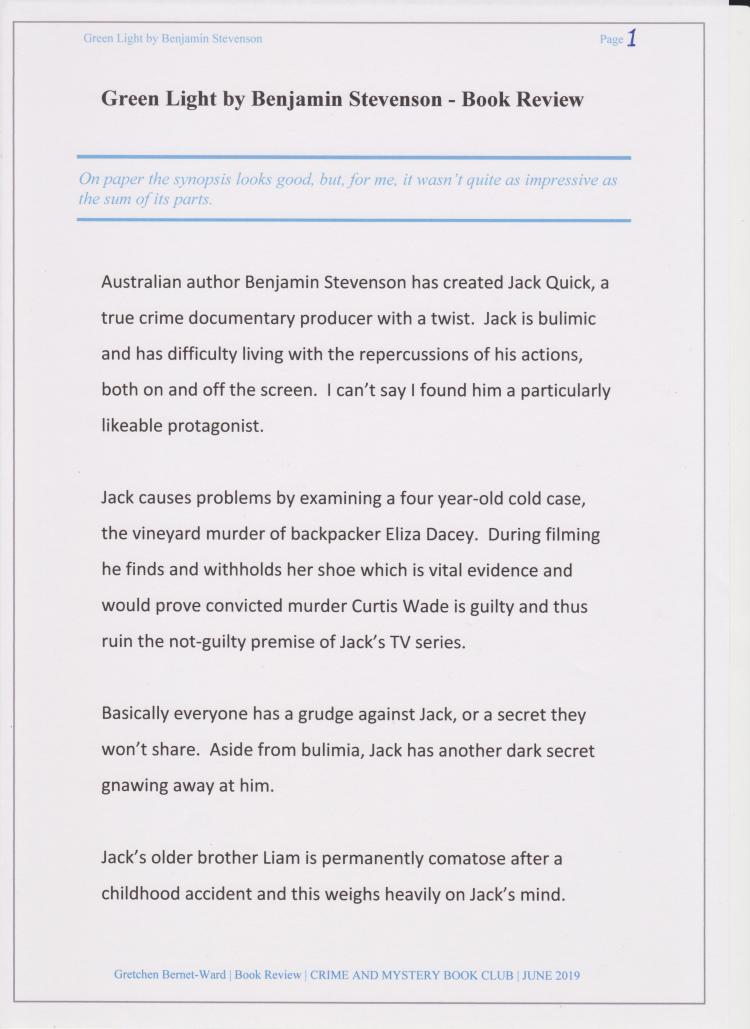
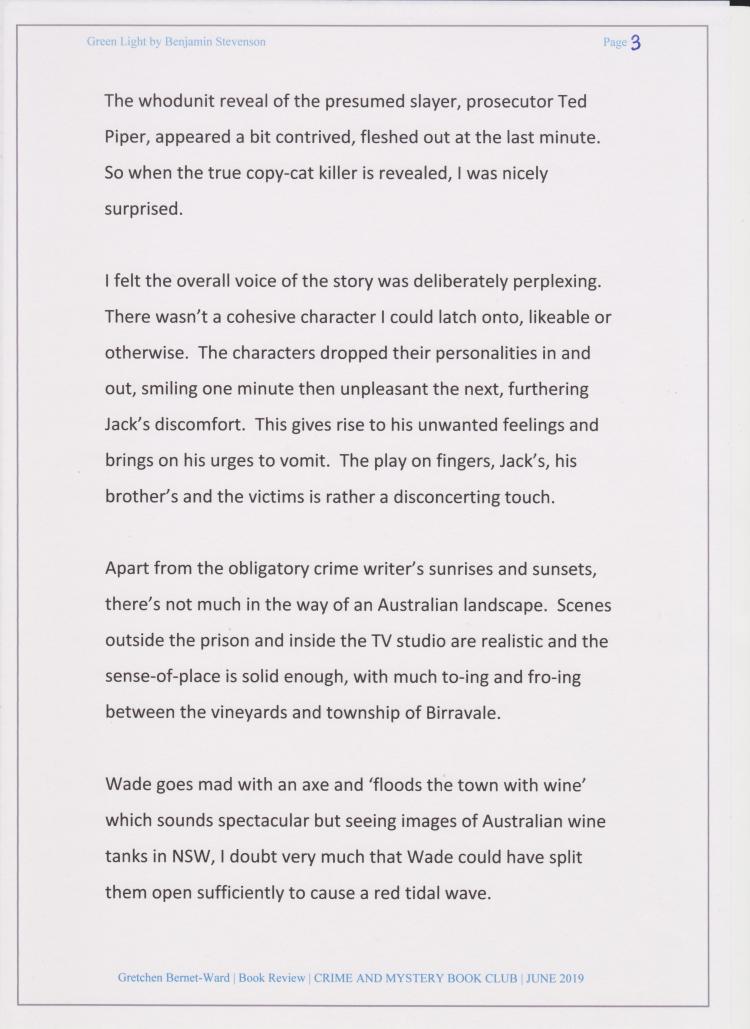
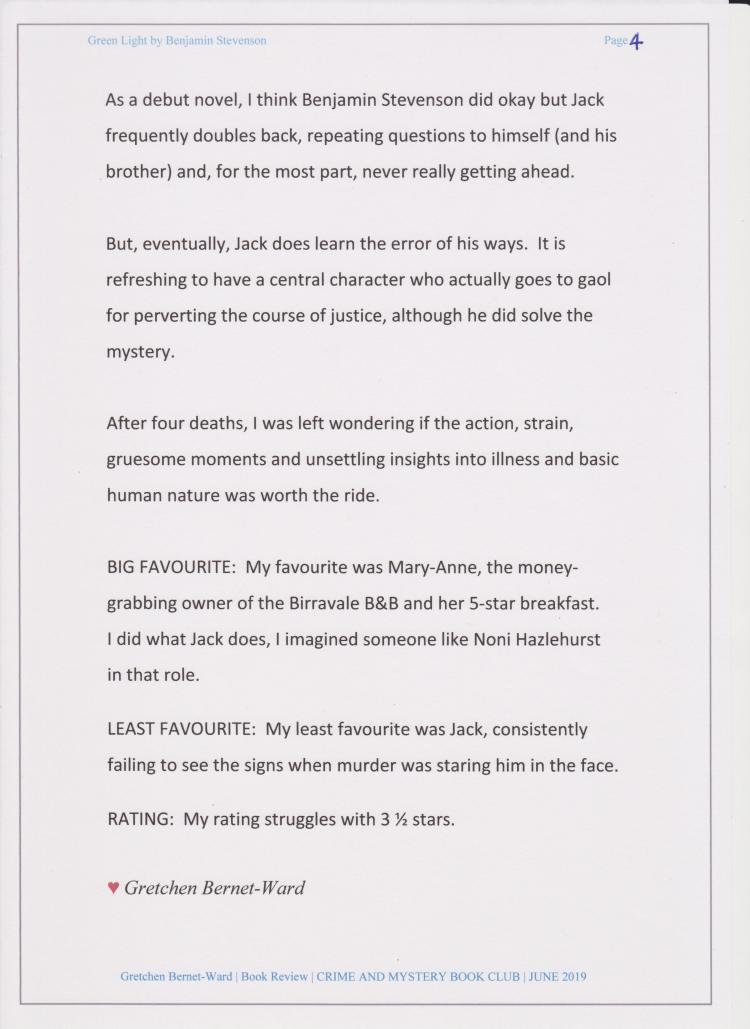
Here are my notes from the book review I presented at my local Crime And Mystery Book Club which meets once a month in our local library. Most of the participants had similar reviews. ♥Gretchen Bernet-Ward.
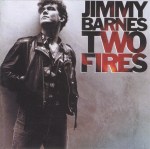
It is said Jimmy Barnes is the heart and soul of Australian rock and roll…if you like his style. His rasping voice was the sound of the Eighties and everyone knew his song lyrics. Four decades later and he’s still going strong.
James Dixon ‘Jimmy’ Barnes (né Swan) was born in Glasgow, Scotland on 28 April 1956 and raised in Elizabeth, South Australia. His career as the lead vocalist with the rock band Cold Chisel, and later as a solo performer, has made him one of the most popular and best-selling Australian music artists of all time.
From 1973–present, Barnes career has spanned singer-songwriter-musician with vocals, guitar, harmonica and flute and he has received tonnes of music awards (and two Australian Book Industry awards) been inducted twice into the ARIAHall of Fame and presented with the Order Of Australia medal.
Underneath the gravelly vocals and rough exterior, Jimmy Barnes struggled with an inferiority complex which manifested itself in alcohol and drug addiction for many years. The question on everyone’s lips was ‘How did he survive?’ Barnes wrote two autobiographies ‘Working Class Boy’ and ‘Working Class Man’ to answer this question.
I doubt his first book ‘Working Class Boy’ (published 2016) was fully edited. Raw and basic, it is a litany of hope, fear, addiction and the search for acceptance. Acceptance from his violent father, his mates and his audience. He writes about childhood abuse, how he ran amok through the towns of Elizabeth and Adelaide and later the Australian east coast, singing, drinking, finding a dealer, finding a girl and not sleeping for 24 hours or more. A son, performer David Campbell, is the result of a fling in his teenage years. Barnes’ second father, the man whose name he adopted, was a mentor of sorts until rock music became the epicentre of his life.
Barnes second book, a sequel titled ‘Working Class Man’ (published 2017) chronicles his thoughts of suicide and his continuous drug-taking and excessive alcohol consumption to the point of tedium. A horrible thing to say when I think of the mental and physical torment he was trying to escape. Still, it didn’t stop him singing—albeit clutching a Vodka bottle on stage every night—nor did it stop him gaining more and more success and greater financial stability as his music career took off. He began to live the life of a rock star.
Then Jimmy Barnes body let him down. After surgery, he tried to calm down and write his life story. It’s not a pretty read, examining old memories, but it’s honest. There are plenty of photographs and name-dropping, and Barnes talks about his wife Jane Mahoney, their children and extended family. He is now a grandfather and this shocked me the most!
“If you want to write a memoir, you’ve got to be ready to bare your soul” Jimmy Barnes
No rating because of the ‘chicken and egg’ situation, did his fame boost the books or did the books boost his fame?
Coming out of a hot dry summer, March weather is beginning to soften the sky and offer the cooler, more gentle mornings of autumn. There is no definite change of season, just a calmness, almost a feeling of relief after the insistent tropical heat.
Apart from, whack, an insect, there’s something serene and relaxing about strolling through a garden, touching leaves, sniffing flowers, following a creek and hearing the splash of a small waterfall through the trees.
To quote Rudyard Kipling “The Glory of the Garden it shall never pass away!” so…
Here’s what I experienced one lovely morning…
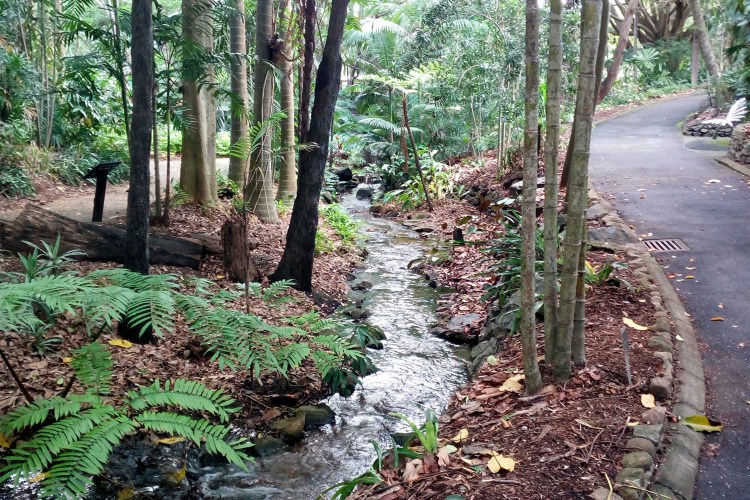
Arriving early at the Brisbane Mt Coot-tha Botanic Gardens, I strolled through a cool, green gully and thought it was strange to be in a capital city yet hear no traffic sounds. I floated along, enjoying the stillness, until my personal calm was shattered when the garden crew came on duty and the leaf- blowing brigade roared into action. I had to wait until one fellow walked out of shot to photograph Xanthorrhoea australis, the Grass-trees (below; left). The atmosphere shuffled its feathers and tranquility returned.
Wooden bridges and flowing streams…
Leisurely, I followed the meandering paths across bridges and green lawns, enjoying the mild sunshine. Strolling down a slope, I came to a bracken-lined watercourse then walked up a gentle incline towards king ferns, piccabeen palms and towering hoop pines. I’ve never fully traversed the 56 hectare (138 acre) area which displays mainly eastern Australian plants.
You can spot Eastern Water Dragons (lizards) and geckos as they scurry out of sight or get a giggle watching the many varieties of water fowl, ducking and diving in the lake. Feeding wildlife is not allowed and I couldn’t entice them into an appealing photograph.
Sculptural features are ‘casually’ placed throughout the gardens and I think the most alluring is a silver fern seat (below; left) with interesting support.
Beside the pond and beneath the trees…
The Japanese Garden (below; entrance and pond) offers soothing symmetry and a waterlily’s single bloom. Nearby the concert bandstand has grass seating surrounded by trees with foliage of different patterns and colours. Around me, there’s a multitude of subtropical shrubs, cycads and flowers with names I never remember. You will notice that I do not attempted to be horticultural! A bit further along, in the arid zone, resides a sci-fi concoction of exotic cacti. The culinary, fragrant and medicinal herb gardens are pure indulgence. But if herbs aren’t your thing, the pungent eucalypt is my favourite and walking the Aboriginal Plant Trail with its edible food plants.
Biodiversity and water reflections…
The stillness of the morning created pleasing reflections on the lagoon which is fed by rainwater captured from the hills. You can choose between typical heathland or wetland regions made easily accessible for suburban folk. The Conservation Collection includes rare and endangered species in their natural habitats and I entered the steamy, geodesic hothouse (below; left) where equatorial plants are nurtured. My face beads in sweat, it’s not a place for humans to linger too long. Time for an ice-cream!
Tropical Display Dome at Brisbane Botanic Gardens, Mt Coot-tha, is a large lattice structure (geodesic) displaying plants from the tropics. A pathway winds upwards through the dome building, wrapping around a central pond with water plants.
Look outside the Botanic Gardens…
Outside the entry are several buildings of interest: Sir Thomas Brisbane Planetarium (below; saved from extinction by a vocal community uprising) large carpark, small art studio, specialist library and auditorium providing a variety of events. I have booked a place in a workshop Monoprinting Australian Native Plants, so a blog post may be forthcoming. The new Visitor Information centre offers guided walks and Gardens Café has the ice-cream. The two white-coated fellows outside the café are entomologists, surviving statues from World Expo 88.
Pandas and children have a special treat…
The Mt Coot-tha Botanic Gardens Children’s Trail is a hide-and-seek ramble through the shady rainforest garden with special works of art dotted along the way and I couldn’t resist following it myself. Check out the wacky weathervane! And a log for native stingless Sugarbag bees. Mother and baby Panda bears enjoy the bamboo; they are a special fabrication of laser-cut aluminium by Australian sculptor Mark Andrews.
Parks and gardens change with horticultural trends. The smaller City Botanic Gardens are older and more formal, in keeping with the style of previous centuries, but I prefer the softness of Mt Coot-tha Botanic Gardens. As the world becomes more populated and natural plant life decreases, Brisbane city dwellers like me need our botanical gardens to nourish and refresh our screen-dependant interior lives.
♥Gretchen Bernet-Ward
Tropical lagoon and green algae swirls at Mt Coot-tha Botanic Gardens, Brisbane, Australia 2019
Note: Please click or tap an image to enlarge.
You may also like to read about my visit higher up the road atMt Coot-tha Lookout.
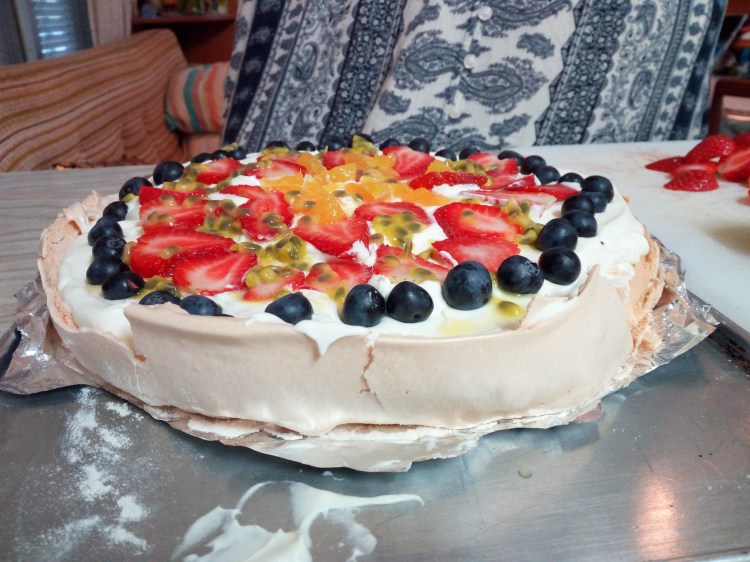
HOMEMADE AUSSIE PAVLOVA is a baked crusty meringue with a soft fluffy centre, topped with whipped cream and sweet tangy seasonal fruits. Melts in your mouth!
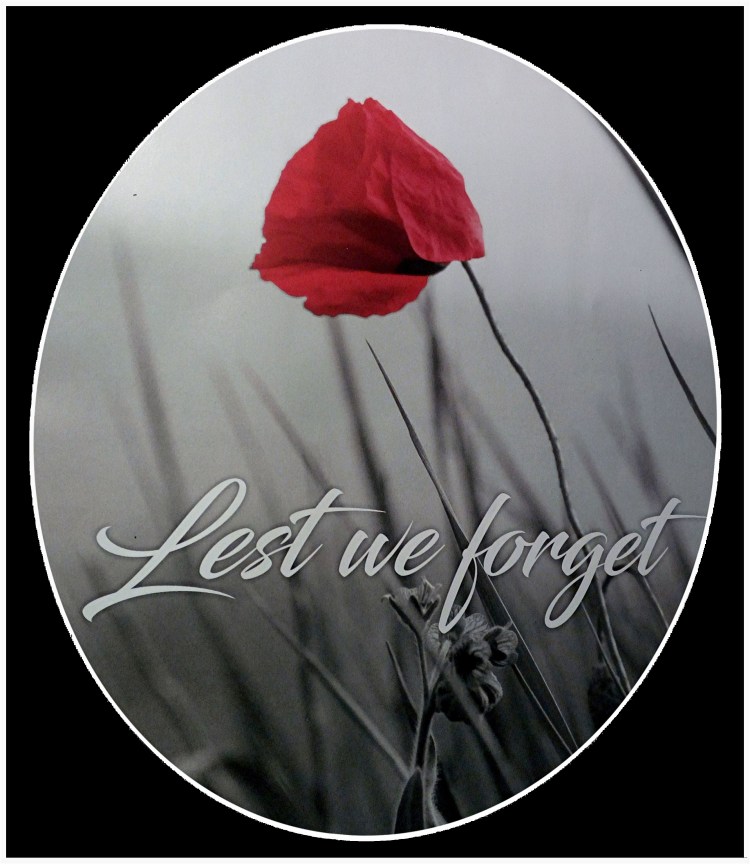
Today 11/11/2018 is the Centenary of Armistice and Remembrance Day in Australia.
We remember those who fought and those who died––
My grandfather heading off to war.
At 11am on 11 November 1918 the armistice treaty, which Germany had signed earlier that morning, came into effect. The Great War, the ‘war to end all wars’ which had begun on 28 July 1914 was finally over.
Like millions of other Australians, I’ll follow tradition and observe a two-minute silence at 11am (no matter where I am) to honour the 420,000 men who enlisted and the 62,000 who didn’t return.
In Flanders Fields
Poem by Dr John McCrae, May 1915
In Flanders fields the poppies blow
Between the crosses, row on row,
That mark our place; and in the sky
The larks, still bravely singing, fly
Scarce heard amid the guns below.
We are the Dead. Short days ago
We lived, felt dawn, saw sunset glow,
Loved and were loved, and now we lie
In Flanders fields.
Take up our quarrel with the foe:
To you from failing hands we throw
The torch; be yours to hold it high.
If ye break faith with us who die
We shall not sleep, though poppies grow
In Flanders fields.
A local newspaper notice attracted my attention. Did I read that correctly? A camel farm excursion? Here is the true story of my expedition into camel territory.
I’d heard about camel milk and wanted to know more, so I contacted the organiser National Seniors secretary. Of course, they had me at “camels” but when I see meals included, I’m there. The itinerary read “East Coast Coach depart 9am and arrive Summer Land Camel Farm, Harrisville, morning tea and guided farm tour. Lunch at Commercial Hotel (adjoining Thirsty Camel bottleshop) before travelling home via scenic route 4pm.” Hooked and booked!
On boarding the coach, I was given a warm National Seniors welcome, and on disembarking the coach 45 minutes later, the first thing I noticed was the vast blue sky over Summer Land Camel Farm. A rolling vista spread out around me. In the distance the smudged outline of the Scenic Rim, part of the Great Dividing Range, and in the foreground hundreds of camels! It was an odd sight, camels of different sizes grazing in the paddocks, until I realised they were at home in the landscape.
Now, first let’s clear up some camel falsehoods. Camels do not spit but alpacas do. Camel footpads are better suited to protect vegetation than cows and horses. Of course, it’s common knowledge that a camel can walk over a hundred kilometres without water and carry heavier loads than a horse. But did you know that they are excellent swimmers? Who’d have thought but it’s true.
We strolled to the beautiful old Queenslander homestead where a spread of fresh scones, homemade jam and cream awaited. Then we realised what we were eating. The white fromage cream I dobbed on my scones and the milk in my coffee were not from a dairy cow but a camel. Delicious! And, as we subsequently found out, very good for our digestive tract. Camel milk is like an immune boost, an anti-inflammatory which can benefit our gut, skin and hair.
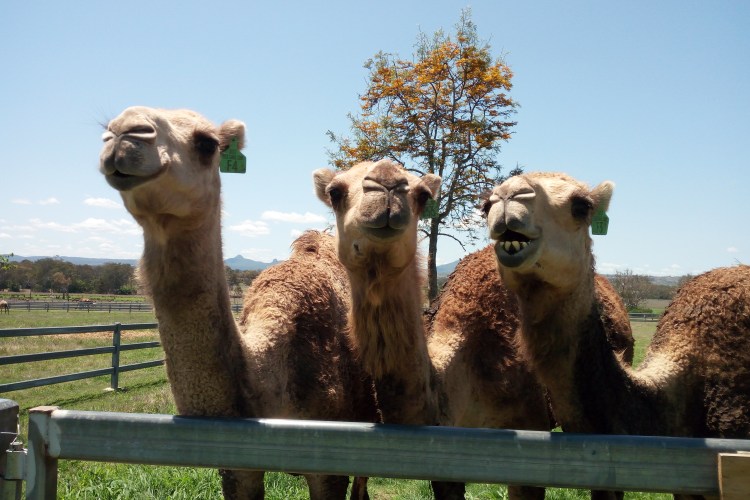
I loved meeting the camels at the fence, talking to them as they blinked their long eyelashes, obviously assessing if I had anything edible in my hand. When they saw the camera, I believe they actually posed, holding quite still while I took full advantage of this photo opportunity. See the camel on the right smiling! Everything was peaceful and the air smelt fresh. No camel aroma wafting on the breeze. Then my models wheeled away to check out an inviting dust bath.
In Australia we have dromedary camels, one hump. The dromedary is the smaller of the two species of camel and female gestation period is 13-14 months or around 410 days. I saw a baby camel, 24-hours old, all spindly legs, wobbling and flopping yet determined to stand. I asked if I could sponsor a camel, an adorable critter to watch grow up. Not yet, but one day this may be possible. In the meantime I joined the Summer Land Camels Club and harbour happy thoughts of riding a camel on my next visit.
Jeff Flood, CEO Summer Land Camel Farm, Business Strategist, Biochemist and Nutritional Immunotherapist.
Our group walked to a vast shed where the cheese, cream and milk are tested and processed. We sat in the breezeway while Jeff Flood, biochemist and immunotherapist, delivered an intelligent, informative and heartfelt talk on all things camel. Even biomes got a mention, and Jeff is very open about the farm operations. I wished my school days had involved such an absorbing field trip.
A passionate cameleer from a farming background, Jeff Flood is CEO and co-founder of Summer Land Camel Farm, the largest of its kind in Australia. Apart from playing rugby and completing several scientific degrees, he discovered that the immune protein and nutritional content of camel milk has healing benefits, showing positive results when used to treat his young son’s eczema.
Then onward to the open-air camel dairy, where we learned the long road to milking. Camel milk and by-products are not high volume in Australia but its the largest commercial-scale camel dairy operation outside the Middle East and the third largest of its kind in the world. Jeff and co-founder Paul Martin are training wild camels, breeding, researching, testing and pioneering the way. Not only for Australia but the rest of the world. Why can’t camel milk sit in the fridge next to other beverage flavourings? Camellatté has a nice ring to it.
Jeff is concerned for the welfare of camels and told us some horrible yet true stories of the brutal decimation of the wild camel population in Australia. The camel is a neglected animal among the policymakers. Incorrect data is perpetuated to this day, mainly through ignorance and government propaganda.
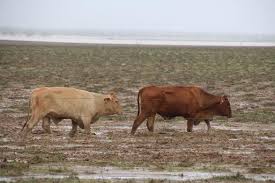
During the tour, it became obvious to me that camels have been given a raw deal. They are well-suited to our Australian climate and in some ways more beneficial than imported European farm animals. A bit of racism involved here? Camels do not have top teeth yet they like rugged food; they can eat feral weed plants such as prickly pear and they don’t need lush green pastures to thrive. During drought years, companion-herds of camels and cows survive better. Camels can act as watchdogs, they have the intelligence of a six year-old child which is greater than a dog. Plus they can take you on very, very long walks!
Back at the homestead, we enjoyed some taste-testing and Summer Land Camel Farm staff excelled with their hospitality. Unlike almond milk or soy milk, I had an instant attraction to camel milk. It suited my palate without the “I’ll get used to it” phase. Being lactose-intolerant, that’s a blessing. I perused items for sale; from camel milk and cheeses through to soap, hand-cream and artwork by Fiona. If you forget the Esky, cold bags can be purchased for a nominal amount and my Camel Persian Feta and other goodies were safely tucked away.
Time to head off down the road and partake of a pub lunch at the Commercial Hotel in Harrisville. After our meal, we strolled around the small township. I looked left and right before crossing the road but it wasn’t really necessary.
The coach swayed gently as we headed homeward, and I was pondering this enjoyable day out when my thoughts reached a conclusion. I had looked into the eyes of a camel and seen a friendly, interested gaze. I think the world needs more friendly interest in camels. And more camel milk in coffee!
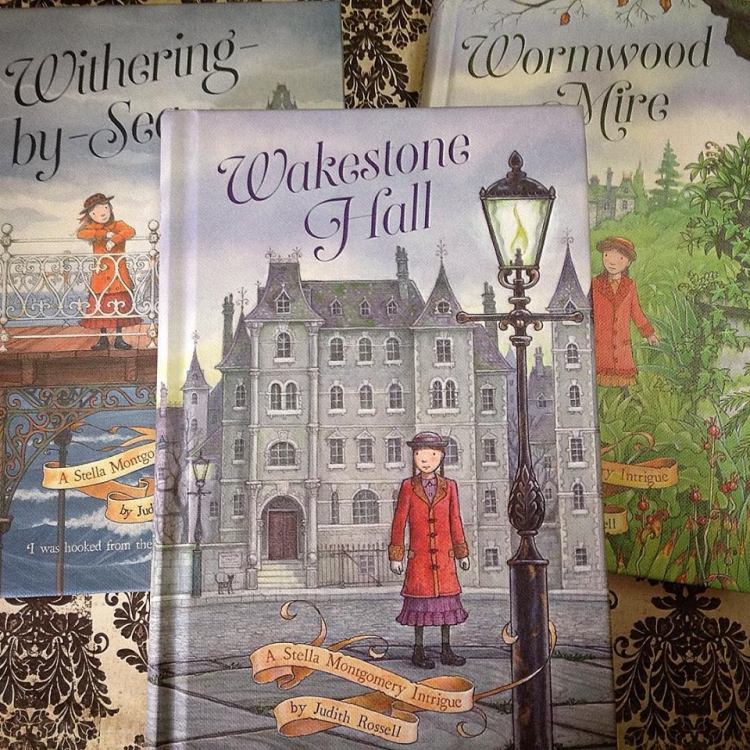
“Stella Montgomery is in disgrace. The awful aunts, Aunt Condolence, Aunt Temperance and Aunt Deliverance,have sent her to Wakestone Hall, a grim boarding school where the disobedient are tamed and the wilful are made meek. But when a friend disappears, Stella is determined to find her – no matter what danger she encounters. Soon Stella is thrown headlong into the mysteries surrounding Wakestone Hall. Will Stella save her friend in time? And will she discover – at long last – where she truly belongs?”
Stella Montgomery and Wakestone Hall – the intrigue draws to an exciting close!
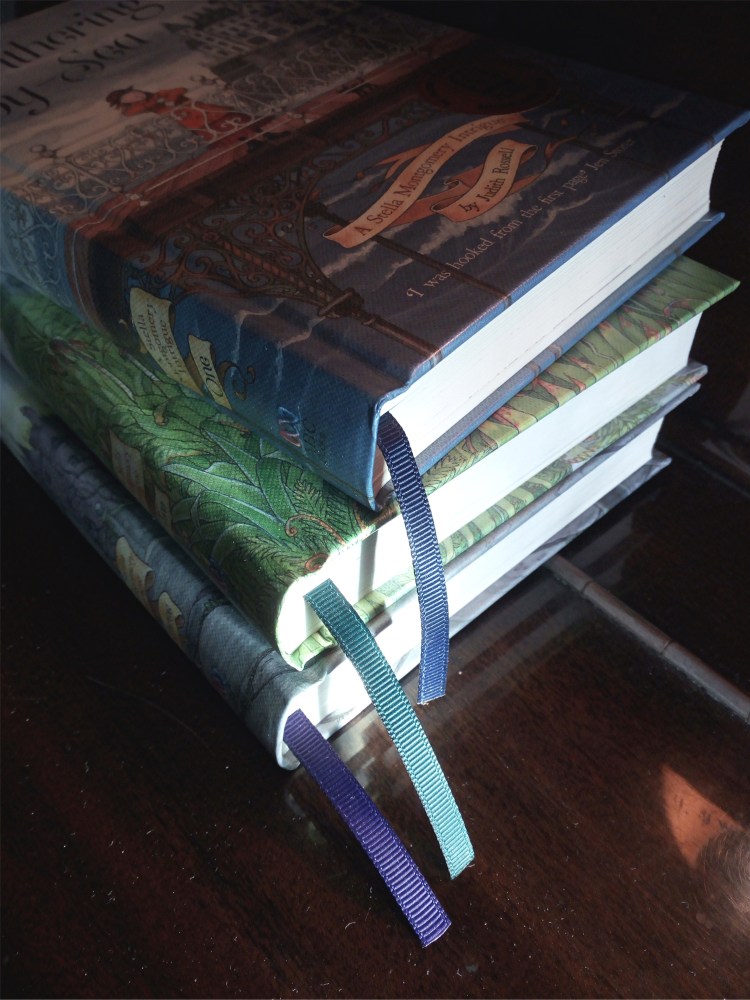
Wakestone Hall is Book 3 in the Stella Montgomery Intrigues and this series has captured my imagination. My inner child responded to the mysterious and creepy goings-on in the first two books, beautifully complemented by author Judith Rossell’s own illustrations of the Victorian era. The third book is out now with a book launch due in a couple of days. I can’t wait to read it! GBW.
On Sunday 28 October 2018 at 3pm The Little Bookroom, Melbourne, is proud to launch WAKESTONE HALL the third book in the Stella Montgomery trilogy by author and illustrator Judith Rossell.
Information: HarperCollins Publisher Published: 22 October 2018 ISBN: 9780733338205 Imprint: ABC Books – AU Number Of Pages: 280 For Ages: 8+ years old
Children’s, Teenage & educational / Fantasy & magical realism (Children’s – Teenage)


















 Thoughts Become Words