Twenty Rules for Writing Detective Stories 1928-2024
Originally published in the American Magazine (September 1928) and included in the Philo Vance Investigates omnibus. Reproduced here (September 2024) as one big scroll almost a century later.

Full credit goes to author S.S. Van Dine, AKA Willard Huntington Wright who was born 15th October 1888, Charlottesville, Virginia, USA. He died 11th April 1939 (aged 50) New York City, USA.

THE DETECTIVE STORY is a kind of intellectual game. It is more — it is a sporting event. And for the writing of detective stories there are very definite laws — unwritten, perhaps, but none the less binding; and every respectable and self-respecting concocter of literary mysteries lives up to them. Herewith, then, is a sort of Credo, based partly on the practice of all the great writers of detective stories, and partly on the promptings of the honest author’s inner conscience. To wit:

1. The reader must have equal opportunity with the detective for solving the mystery. All clues must be plainly stated and described.

2. No wilful tricks or deceptions may be placed on the reader other than those played legitimately by the criminal on the detective himself.

3. There must be no love interest. The business in hand is to bring a criminal to the bar of justice, not to bring a lovelorn couple to the hymeneal altar.

4. The detective himself, or one of the official investigators, should never turn out to be the culprit. This is bald trickery, on a par with offering someone a bright penny for a five-dollar gold piece. It’s false pretences.

5. The culprit must be determined by logical deductions — not by accident or coincidence or unmotivated confession. To solve a criminal problem in this latter fashion is like sending the reader on a deliberate wild-goose chase, and then telling him, after he has failed, that you had the object of his search up your sleeve all the time. Such an author is no better than a practical joker.

6. The detective novel must have a detective in it; and a detective is not a detective unless he detects. His function is to gather clues that will eventually lead to the person who did the dirty work in the first chapter; and if the detective does not reach his conclusions through an analysis of those clues, he has no more solved his problem than the schoolboy who gets his answer out of the back of the arithmetic book.

7. There simply must be a corpse in a detective novel, and the deader the corpse the better. No lesser crime than murder will suffice. Three hundred pages is far too much pother for a crime other than murder. After all, the reader’s trouble and expenditure of energy must be rewarded.

8. The problem of the crime must be solved by strictly naturalistic means. Such methods for learning the truth as slate-writing, ouija-boards, mind-reading, spiritualistic séances, crystal-gazing and the like, are taboo. A reader has a chance when matching his wits with a rationalistic detective, but if he must compete with the world of spirits and go chasing about the fourth dimension of metaphysics, he is defeated ‘ab initio’ ‘from the beginning’.

9. There must be but one detective — that is, but one protagonist of deduction — one ‘deus ex machina’ ‘God from the machine’ ‘contrived solution‘. To bring the minds of three or four, or sometimes a gang of detectives to bear on a problem, is not only to disperse the interest and break the direct thread of logic, but to take an unfair advantage of the reader. If there is more than one detective the reader doesn’t know who his ‘conductor’ is. It’s like making the reader run a race with a relay team.

10. The culprit must turn out to be a person who has played a more or less prominent part in the story — that is, a person with whom the reader is familiar and in whom he takes an interest.

11. A servant must not be chosen by the author as the culprit. This is begging a noble question. It is a too easy solution. The culprit must be a decidedly ‘worthwhile person’ — one that wouldn’t ordinarily come under suspicion.

12. There must be but one culprit, no matter how many murders are committed. The culprit may, of course, have a minor helper or co-plotter; but the entire onus must rest on one pair of shoulders: the entire indignation of the reader must be permitted to concentrate on a single dark nature.

13. Secret societies, camorras, mafias, et al, have no place in a detective story. A fascinating and truly beautiful murder is irremediably spoiled by any such wholesale culpability. To be sure, the murderer in a detective novel should be given a sporting chance; but it is going too far to grant him a secret society to fall back on. No high-class, self-respecting murderer would want such odds.

14. The method of murder, and the means of detecting it, must be rational and scientific. That is to say, pseudo-science and purely imaginative and speculative devices are not to be tolerated in ‘roman policier’ ‘romantic police officer’. Once an author soars into the realm of fantasy, in the Jules Verne manner, he is outside the bounds of detective fiction, cavorting in the uncharted reaches of adventure. (That’s changed!)

15. The truth of the problem must at all times be apparent — provided the reader is shrewd enough to see it. By this I mean that if the reader, after learning the explanation for the crime, should reread the book, he would see that the solution had, in a sense, been staring him in the face – that all the clues really pointed to the culprit — and that, if he had been as clever as the detective, he could have solved the mystery himself without going on to the final chapter. That the clever reader does often thus solve the problem goes without saying.

16. A detective novel should contain no long descriptive passages, no literary dallying with side-issues, no subtly worked-out character analyses, no ‘atmospheric’ preoccupations. such matters have no vital place in a record of crime and deduction. They hold up the action and introduce issues irrelevant to the main purpose, which is to state a problem, analyse it, and bring it to a successful conclusion. To be sure, there must be a sufficient descriptiveness and character delineation to give the novel verisimilitude.

17. A professional criminal must never be shouldered with the guilt of a crime in a detective story. Crimes by housebreakers and bandits are the province of the police departments — not of authors and brilliant amateur detectives. A really fascinating crime is one committed by a pillar of a church, or a spinster noted for her charities.

18. A crime in a detective story must never turn out to be an accident or a suicide. To end an odyssey of sleuthing with such an anti-climax is to hoodwink the trusting and kind-hearted reader.

19. The motives for all crimes in detective stories should be personal. International plottings and war politics belong in a different category of fiction — in secret-service tales, for instance. But a murder story must be kept ‘gemütlich’ agreeable’, so to speak. It must reflect the reader’s everyday experiences, and give him a certain outlet for his own repressed desires and emotions.

20. And (to give my Credo an even score of items) I herewith list a few of the devices which NO self-respecting detective story writer will now avail himself. They have been employed too often, and are familiar to all true lovers of literary crime. To use them is a confession of the author’s ineptitude and lack of originality:

(a) Determining the identity of the culprit by comparing the butt of a cigarette left at the scene of the crime with the brand smoked by a suspect.

(b) The bogus spiritualistic séance to frighten the culprit into giving himself away.

(c) Forged fingerprints.

(d) The dummy-figure alibi.

(e) The dog that does not bark and thereby reveals the fact that the intruder is familiar.

(f) The final pinning of the crime on a twin, or a relative who looks exactly like the suspected, but innocent, person.

(g) The hypodermic syringe and the knockout drops.

(h) The commission of the murder in a locked room after the police have actually broken in.

(i) The word association test for guilt.

(j) The cipher, or code letter, which is eventually unravelled by the sleuth.

And there you have it. Not a modern gadget in sight!

Thank you, Willard ❤ Gretchen Bernet-Ward

More information
https://en.wikipedia.org/wiki/S._S._Van_Dine
https://en.wikipedia.org/wiki/Golden_Age_of_Detective_Fiction

Willard Huntington Wright (S.S. Van Dine)
1887-1939
Fantastic Fiction
https://www.fantasticfiction.com/v/s-s-van-dine/
1. The Benson Murder Case (1926) · 2. The Canary Murder Case (1927) · 3. The Greene Murder Case (1928) · 4. The Bishop Murder Case (1928) · 5. The Scarab Murder Case (1930) 

Mary Poppins and Folks Boppin’ at Maryborough Festival

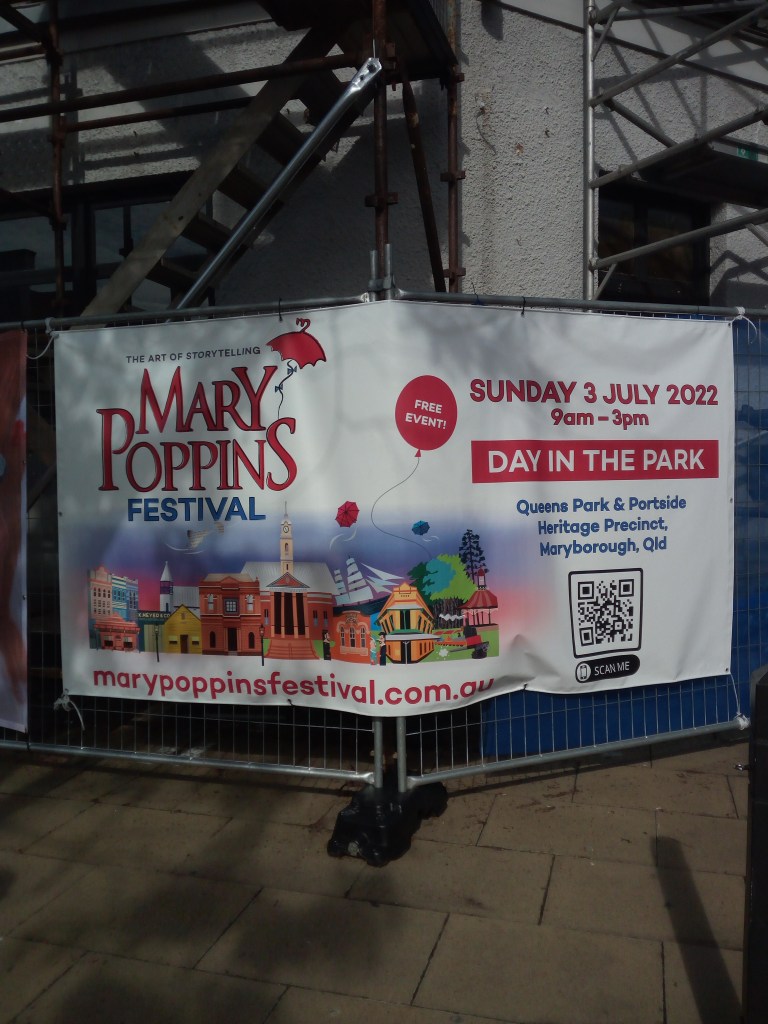
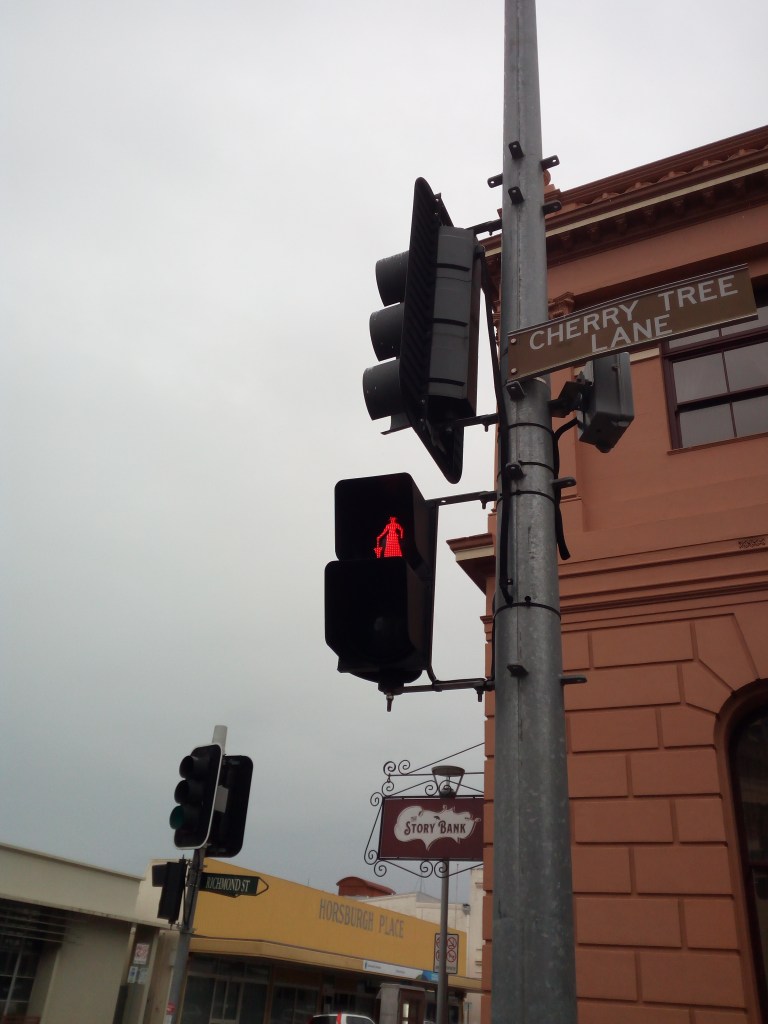
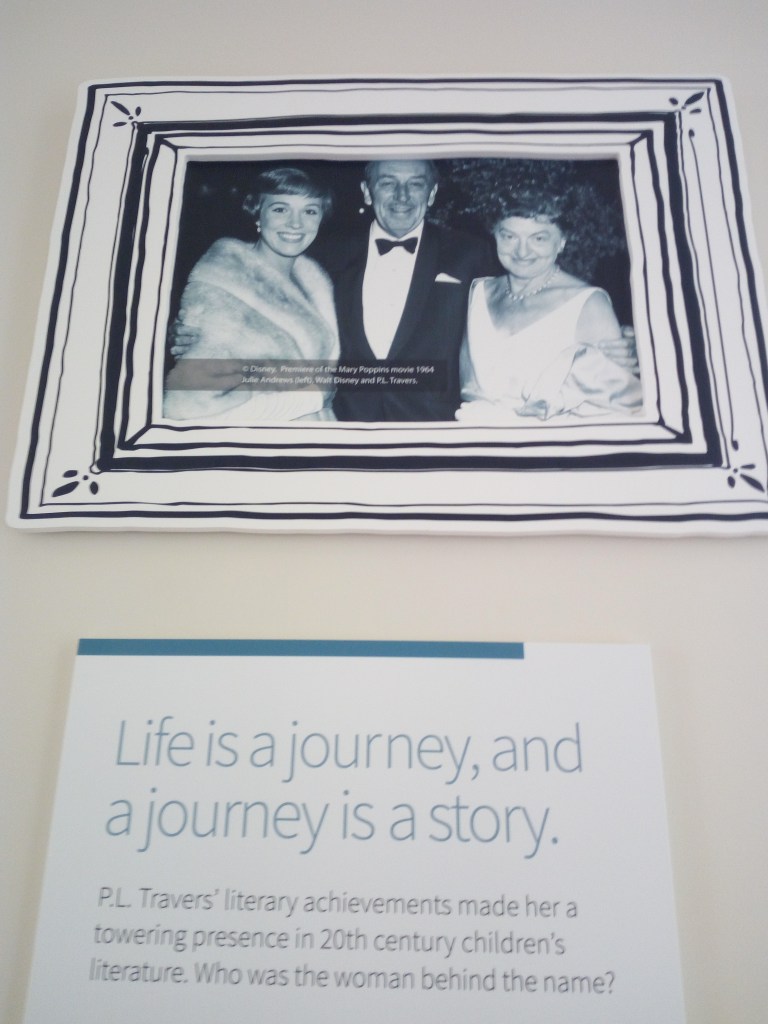
Here is my pictorial of the Mary Poppins Festival 2022 in Maryborough, Queensland, where Helen Lyndon Goff (better known as Pamela Lyndon Travers) grew up with no inkling of her wonderful life ahead as an author and creator of a children’s literary icon.

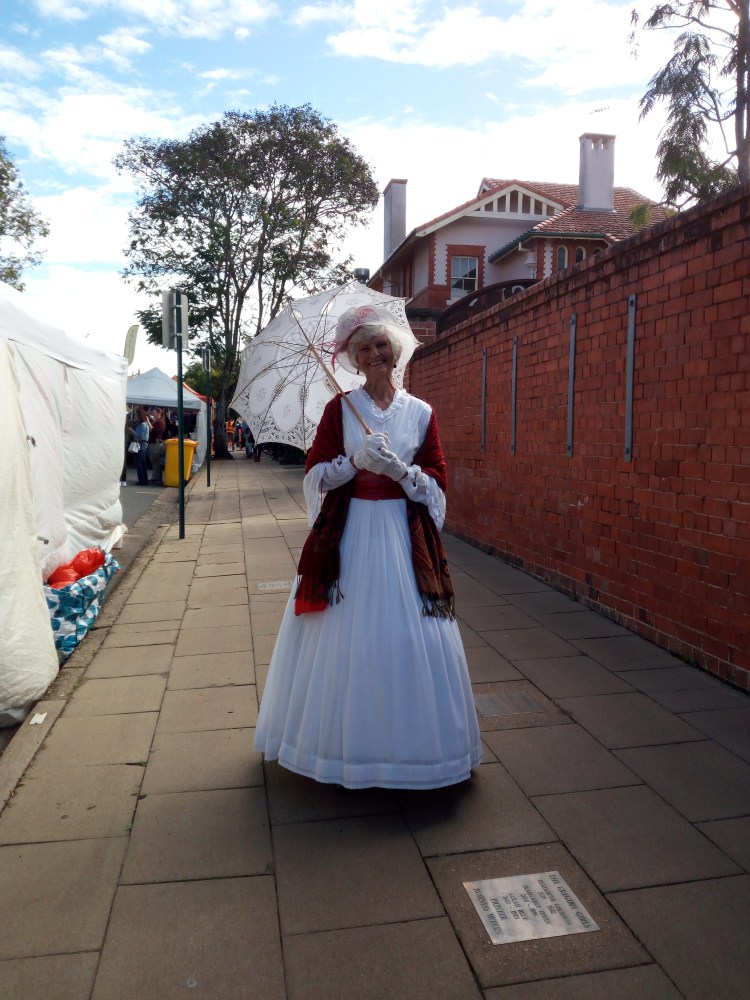
Here are some of the fabulous people who made the whole day magical and supercalifragilisticexpialidocious!

Next showing the historical side… more info on Mary Ann steam locomotive https://www.maryboroughwhistlestop.org.au/

Special buildings and ye olde shops were open, roads were closed, hot food stalls did a roaring trade, and there were nanny and chimney sweep races. The final parade was a sight to behold, everyone had happy smiles!

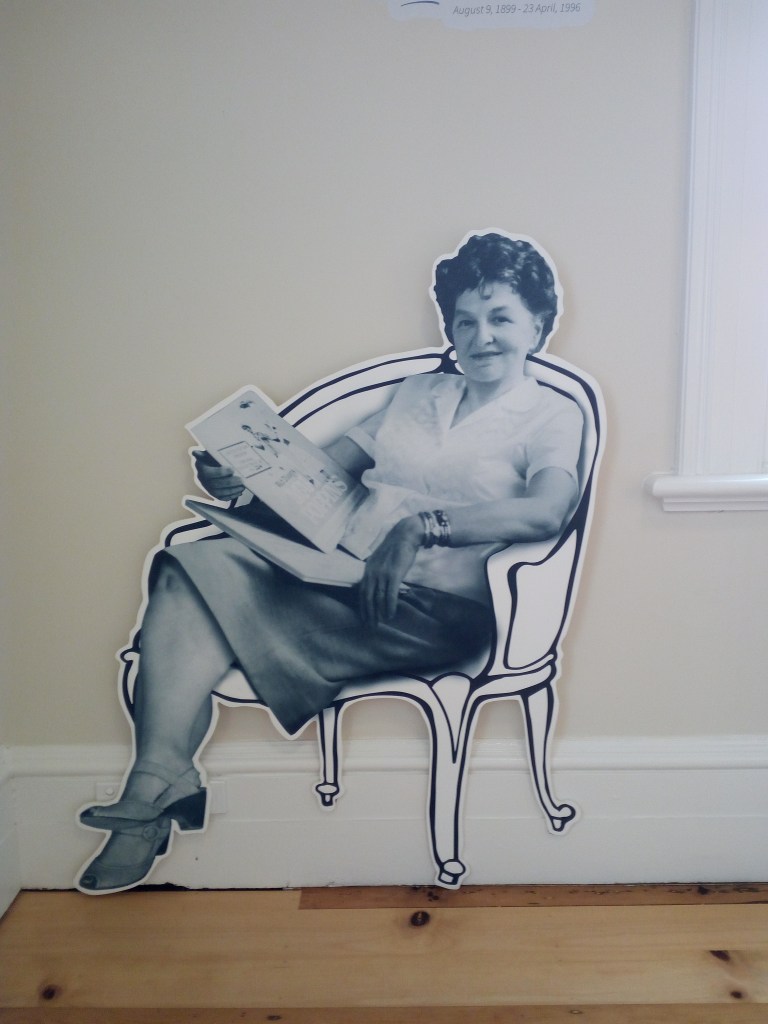
Below is the childhood home of P L Travers, formerly a bank (her father was the bank manager) which is now a beautifully preserved, interactive tribute to her writing career.

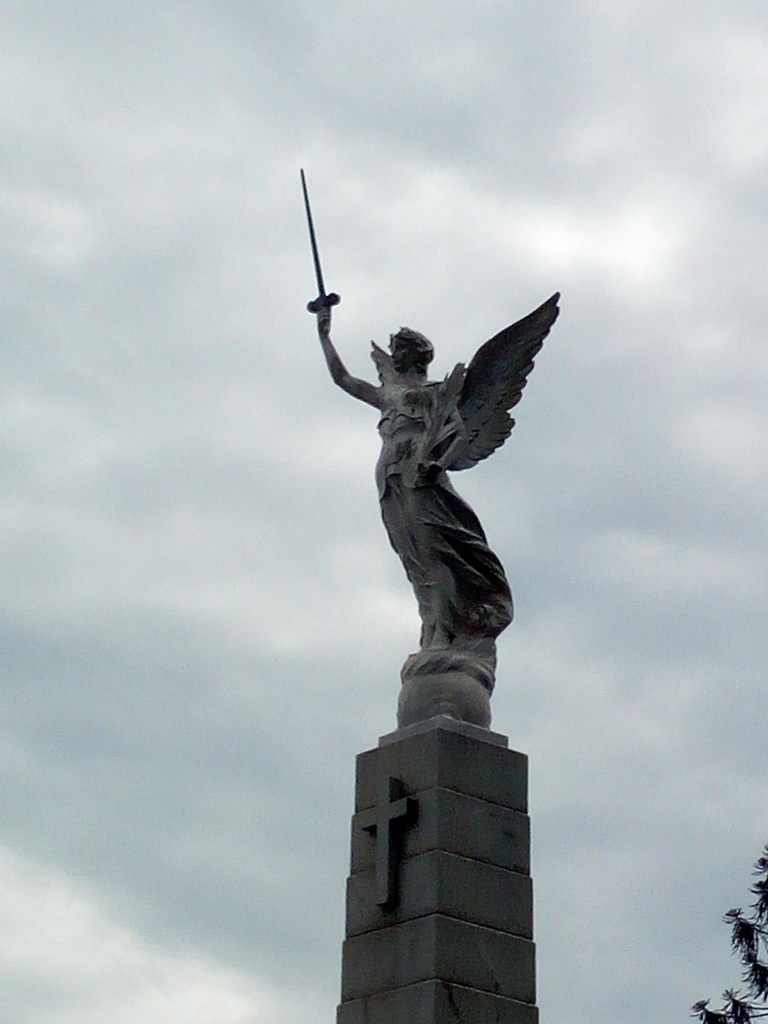
Mary Poppins Statue in Maryborough

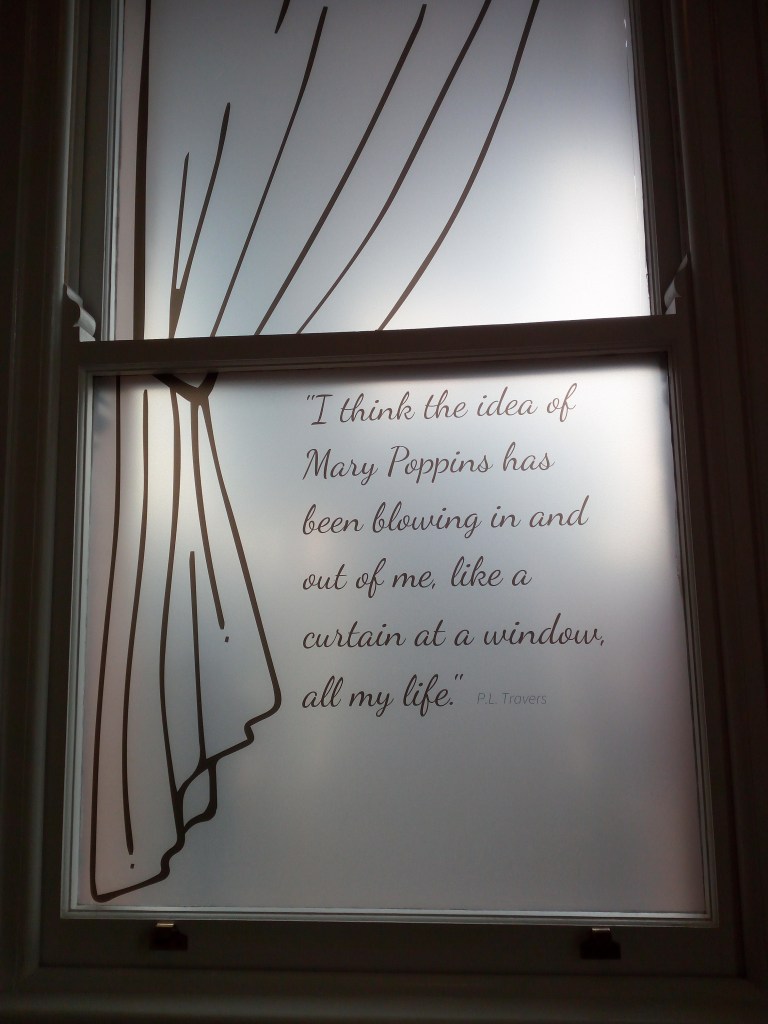
The first window below echoes the words of author P L Travels while further on is the window of the family library in the corner of the building… oh, and there’s Mary Poppins…

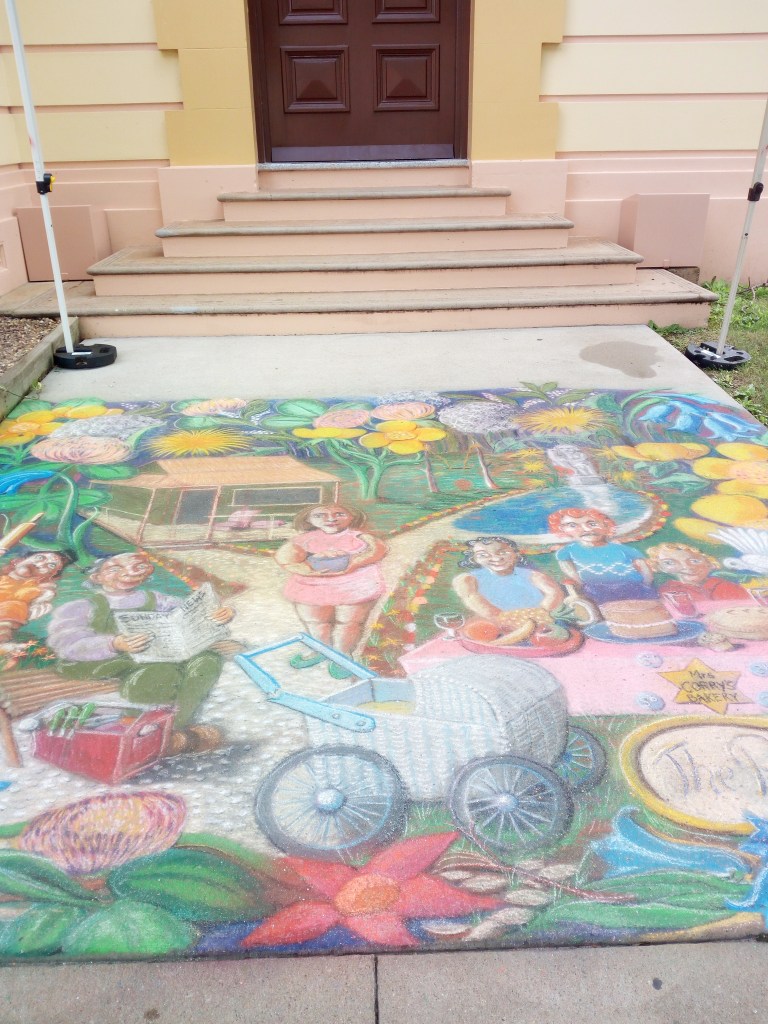
After a meal, live music and a quick look at Phillips Botanical Gardens, next came chalk street art, a visit to the calm atmosphere of the Art Gallery and a bit of history found under the paint and framed.

Landmark photos below give an idea of early Maryborough, finishing with a late afternoon stroll alongside the Mary River.

I have a great desire to return and explore further. These snapshots were taken over the course of a day and do not encompass the diversity of the event nor the city and colonial past of the Maryborough region.

Mark you calendar for next year!

My previous post has more written info
https://thoughtsbecomewords.com/2022/07/09/mary-poppins-and-five-years-of-blogging/

Just loved the poster below and had to include it…

Gretchen Bernet-Ward
https://www.marypoppinsfestival.com.au/
Detail from Mary Poppins Festival publicity showing a drawing of the Admiral’s canon. During the festival a real canon was fired. Please note the Disney movie “Saving Mr Banks” starring Tom Hanks is fabrication and, apart from being filmed entirely in California USA, in my opinion it bears little resemblance to the true facts of author P L Travers life.

Lucy V Hay ‘Criminally Good’ Advice

After reading Lucy V Hay’s two informative books “Writing and Selling Thriller Screenplays” and “How NOT to Write Female Characters” the next logical step was to subscribe to her website and learn more.

The first thing I noticed was that Lucy is very active and her site holds a plethora of information. Then I was delighted to receive a free copy of The Lynmouth Stories, three of Lucy’s short stories titled “In Plain Sight”, “Killing Me Softly” and “Hell and High Water”, twisters which certainly pack a psychological punch.

Here’s what it says on her website—

Lucy is an author and script editor, living in Devon with her husband, three children and six cats. She is the associate producer of Brit Thrillers Deviation (2012) and Assassin (2015) both starring Danny Dyer. See Lucy’s IMDB page HERE and other movies and short films she’s been involved in, HERE.

In addition to script reading and writing her own novels, Lucy also blogs about the writing process, screenwriting, genre, careers and motivation and much more at her blog Bang2write, one of the most-hit writing sites in the UK. Sign up for updates from B2W and receive a free 28 page ebook (PDF) on how NOT to write female characters, HERE or click the pic on her website.

For more scriptchat, leads and links, join Lucy’s online writing group, Bang2writers. It’s something I am going to explore further!

Gretchen Bernet-Ward

ADDENDUM—For a free copy of The Lynmouth Stories and more, join Lucy’s EMAIL LIST—My post heading comes from the title of Lucy’s email CRIMINALLY GOOD where she interviews fellow crime writers and asks them five questions.  She says “It’s fascinating to read their answers, especially as they are all so different!”  Today I have the choice of Ian Rankin, Sophie Hannah or Peter James. GBW. 

Synopsis Writing for Your Novel – Advice from Senior Editor

Synopsis

Poetry Clipart 13The agony of writing a synopsis!  For writers who find it hard to chop their synopsis down to size, this video from Nicola, senior editor of HarperCollins Publishers, steps us through a seamless 500 word synopsis.  It will grab that attention your manuscript deserves.  And, yes, a synopsis does include plot spoilers.


First Page

Poetry Clipart 08Read why the first page of a manuscript is so important.  Anna Valdinger, HarperCollins commercial fiction publisher knows – she reads a tonne of submissions every year.
Click Importance of Manuscript First Page


The Banjo Prize

HarperCollins is Australia’s oldest publisher and The Banjo Prize is named after Banjo Paterson, Australia’s first bestselling author and poet.  His first collection of poems The Man from Snowy River and Other Verses was published in 1895.  Who’s up for 2019?

The Banjo Prize is annual and open to all Australian writers of fiction, offering the chance to win a publishing contract with HarperCollins and an advance of AU$15,000.  Submit entries via HarperCollins website.  Entries opened 25 March 2019 and close 5pm AEST on Friday 24 May 2019.  Good luck!

Gretchen Bernet-Ward 


✏  Give it a go!

Quotation from Cesare Pavese

Cesare Pavese was an Italian novelist, poet and translator, and an outspoken literary and political critic.

Not well-known outside Italy, Pavese is numbered highly among the important 20th century authors in his home country.

Born in rural Santo Stefano Belbo, he often returned to the area, enjoying the solitude away from his turbulent career and heartbroken love life.  Pavese was not destined to live long, he died just before his 42 birthday.

Cesare_Pavese_Italian_Novelist_Poet_1930
Cesare Pavese (1930) rocking his Harry Potter glasses.

✨ Website Biography and Book Review

https://www.poetryfoundation.org/poets/cesare-pavese
https://1streading.wordpress.com/2018/06/24/the-beautiful-summer/

✨ Cesare Pavese Poems

  1. The Cats Will Know
  2. Ancestors
  3. Habits
  4. You Have A Face Of Carved Stone
  5. Death Will Come With Your Eyes
  6. In The Morning You Always Come Backmy favourite
  7. Passion For Solitude from ‘Disaffections: Complete Poems 1930-1950’.

Gretchen Bernet-Ward

Why Writers Write

Is acknowledgement a cherished goal?
Is reimbursement the final accolade?
Or will a writer write regardless?

On a writer’s wishlist, there would have to be the thrill of seeing their name in print.  My name under a bold heading on a hardback cover would show that I’ve made it.  Throw in a display stand, a book launch with signing table, coffee and cupcakes, and I would be in literary heaven.  No doubt hell would follow with the necessary writing of a sequel…

Recently a member of my writers group asked the question “Why do you write?” which seemed innocuous enough but there were vastly different answers—-see below.

My earnest reply went something like “Because I think in words hence the title of my blog.  Most things I experience can become a potential story.”  I am always mapping out first lines, or an introductory paragraph, or setting the scene.  This, however, does not mean I will be traditionally published.  I just keep doing it.

I believe a writer’s inner core is made of words and emotions which must be written down.

If I’m undertaking a complex household chore like chopping carrots, I may not jot down a sudden literary gem, but, no matter, I will find myself composing another while out grocery shopping.

For example “See that bloke over there, he’s uncomfortable and he’s trying to get up the nerve to...”

(1) ask the sales assistant out (2) steal that expensive car polish (3) abandon his trolley at the checkout (4) inquire about a job (5) hide behind the refrigerated cabinet to avoid his mother/parole officer/ex-boss or chatty neighbour.

See, I can’t help it!

Gretchen Bernet-Ward


I Only Need This To Write 01
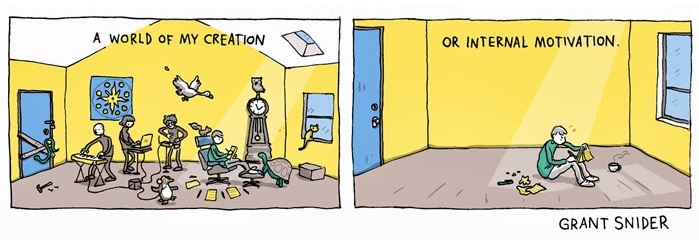
“All I Need To Write” by Grant Snider – A room with a view, No other work to do, A child-proof lock, A ticking clock, Natural light, A chair that fits just right, New paper and pens, Some animal friends, The right phase of the moon, Ambient tunes, A world of my creation, Or internal motivation – http://www.incidentalcomics.com/


GENUINE RESPONSES FROM 31 WRITERS WHEN ASKED THE QUESTION

“WHY DO YOU WRITE?”

A form of self-expression, the joy of crafting something meaningful.

I write because I can’t imagine my life without writing in it.

I started writing because I wanted to explore my creative side.

Because I can’t dance.

Mostly it’s because I have loads of inspiration and story ideas and I need to write them to get them out of my head!

It sets my soul free and my heart on fire….storytelling is an inextricable part of who I am.

I write because I want to.

I write because ideas, images and words come to me and they seem important to share.

I can’t help it, stories bubble and whirl around in my head all the time.

So I can draw the pictures, to be honest I find writing really tedious – I just want to illustrate.

I do not know why. It just is. And sometimes or often, it isn’t.

Because I like making people laugh and feel other feelings.

I’ve always imagined myself writing one day, but now that I’m finally trying to make it actually happen I’m finding it a lot harder than I expected.

If it’s any help, writing for me is mostly agony.

Starting is great fun…I love cracking the problems.

Because I know how it feels to not create.

Writing is, for me, a personal freedom.

Because I like making things.

Because I think in words, the title of my blog is Thoughts Become Words.

For me it is almost a subconscious act that I’m completely driven to do.

Because I have to, it’s not a want or a need, it’s an in-the-bones thing.

Writing is always there with me, sometimes we’re best of friends, often we’re not.

Cos I have to! I do my best to avoid it, I really do.

Can’t help it.

To put something wonderful out into the world.

It does get easier especially when you get a download in your head.

I think it’s a wonderful form of escapism.

It’s part of me.

At the moment I’d say that writing is a kind of masochism for me.

I love writing and hate it in equal measure.

Because it’s fun and because I find it impossible not to.


Pen Paper Clipart Boy Holding Pencil

EAGER FOR MORE LITERARY INSIGHTS?
Frank McKinley, author and writing coach, also raised the question—-
https://www.frankmckinleyauthor.com/54-writers-love-writing/

‘Early Riser’ Jasper Fforde Book Review

A winter nightmare in snow-bound Wales.

Imagine a world where human inhabitants must bulk-up and hibernate through brutally cold winters, watched over by armed Winter Consuls, a group of officers who diligently guard the susceptible sleeping citizens.  Or do they?

“Early Riser” is the latest novel from bestselling author Jasper Fforde.

A unique and inventive writer, Welsh resident Jasper Fforde creates a mystery novel with skewed social values, high level corruption, bureaucratic cover-ups, bad dreams, mindlessness and the ever-present fear of freezing to death, all set in a bleak yet frighteningly droll otherworld in Wales.

Perfect for the cold northern hemisphere and a cool read for the hot southern hemisphere.

SPOILER ALERT – Jasper Fforde should have his own genre, writing a review is difficult!  Please note the book contains references to real food brand names.

Jasper Fforde is known for creating strong female characters and in “Early Riser” he does not disappoint.  Aurora and Toccata immediately spring to mind but I won’t go into details.  Let’s just say they are not related to Thursday Next, although there are a couple of fan-fic moments.

In this speculative postmodern standalone, the protagonist is Charlie Worthing, a novice Winter Consul who has been trained to stay alive through the bleakest of winters.

Although rather young and innocent, Charlie is chosen to accompany notable Winter Consul and hero, Jack Logan, to the Douzey, a remote sector in the middle of snow-covered Wales.  It’s an honour but Charlie is not at all prepared for what awaits in frigid Sector Twelve.

Part of Charlie’s job is to deal with Tricksy Nightwalkers whose consciousness has been eroded by hibernation and, first up, there’s the care and delivery of a vacant Nightwalker Mrs Tiffen which causes an unexpected disaster.

Featured Image -- 8551

With a deformity which quickly earns a nickname, poor Charlie learns dreaming is not encouraged.  Especially not about a mysterious blue Buick or a large beach parasol, part of the main “Early Riser” plot.  There’s floating in and out of another Charlie’s dream, and also problems with a young woman, Jonesy, who decides to create their own backstory.

Winter Consuls carry a Thumper and a Bambi which are deadly guns or, for extra grunt, a Vortex Canon is deployed when necessary to blast snow and anything in it.  Thus Deputy Charlie begins Pantry Duty, guarding the winter pantry, under the tutelage of seasoned campaigner Fodder – and things get even weirder!

"Dark humour and entertaining pseudo geek-speak punctuate an otherwise intense novel which touches on community issues relevant today" GBW.

In “Early Riser” prominent themes are human relationships, mental health, bad coffee and sugary food as the isolated enclave carbo-load in preparation for the enforced SlumberDown.  Certain behaviour, although legal in this story, is reprehensible by our standards.  In Sector Twelve nothing is wasted, so-called Vacants become unpaid workers or body-farmed for those who have lost limbs due to rat gnawing or frost bite.

In most of Jasper Fforde’s tales, the world is run by an evil corporation and here we have HiberTech which supplies Morphenox drugs and encourages the growing of a winter “coat” for hibernation.  Charlie encounters The Notable Goodnight, shivers hearing the maybe-less-than-mythical Gronk, and has a shock meeting with posh Villains.  Snowy dangers abound, like WinterVolk and Campaigners For Real Sleep.  Classic Fforde!

First I listened to the “Early Riser” audio book and narrator Thomas Hunt does a variety of accents which keep the pacing levels high.  His Attenborough-like chapter introductions are hilarious, a blend of hushed tones and Fforde’s dry humour.  Wales comes across as a kind of decimated never-never land, and I’m sure it’s not, but thankfully snow is a rare commodity in Australia otherwise I’d be shaking in my shoes.

+ PLUS Innovative story with a world in a world, the snowbound and the dream-state.
– MINUS Some repetition and some chapters are heavy with world-building.

Book rating 5-Star and recommended for readers who can handle comprehensively quirky writing.

Gretchen Bernet-Ward

IMG_20181210_123908

“Jasper Fforde writes…authentic tales of metafictional mystery and murder most horrid lashed with literary wit and a generous helping of humour.” by Niall Alexander of tor.com Fri Aug 3, 2018 1:30pm.
https://www.tor.com/2018/08/03/book-reviews-early-riser-by-jasper-fforde/

Charlie Worthing Winter Consul by Jasper Fforde 04


STOP THE PRESS!  JASPER FFORDE WILL BE IN BRISBANE AUSTRALIA FOR BRISBANE WRITERS FESTIVAL, SOUTH BANK, FROM THURSDAY 5 SEPT TO SUNDAY 8 SEPT 2019.

https://bwf.org.au/2019/brisbane-writers-festival/artists/jasper-fforde-1

Jasper Fforde itinerary will be:

Event 1 – Workshop ‘Writing Futures’ with Jasper Fforde at QWC: Learning Centre, State Library of Queensland.

Event 2 – Panel ‘Dream Worlds’ at Cinema B, Gallery of Modern Art, South Bank.

Event 3 – Conversation ‘Early Riser’ at The Edge, State Library of Queensland.

Event 4 –  Book Club ‘Meet Jasper Fforde’ River Decks, State Library of Queensland.

Event 5 –  Lecture / Special Closing Address by Jasper Fforde, The Edge, State Library of Queensland.

Jasper Fforde at Brisbane Writers Festival Sept 2019

Yes, Margaret Atwood Has Written Children’s Books

Who’d have thought it?  Margaret Eleanor Atwood (1939- ) author of The Handmaid’s Tale, Alias Grace, The Blind Assassin and more than forty other books of fiction, poetry, critical essays and a graphic novel has written children’s books.

Margaret Atwood also wears various hats, from activist through literary critic, inventor, environmentalist and award-winner with honours and degrees, yet for me this news was surprising.  Not so surprising is the quirky nature of her children’s stories!


♦  With grateful thanks to online friend and blogger BookJotter Paula Bardell-Hedley for alerting me to these little gems within a comprehensive list of Margaret Atwood’s literary output—

Up in the Tree (1978)
Anna’s Pet (with Joyce Barkhouse) (1980)
For the Birds (1990)
Princess Prunella and the Purple Peanut (1995)
Rude Ramsay and the Roaring Radishes (2003)
Bashful Bob and Doleful Dorinda (2004)
Up in the Tree (facsimile reprint) (2006)
Wandering Wenda and Widow Wallop’s Wunderground Washery (2011)
A Trio of Tolerable Tales (illustrator Dušan Petričić) (2017)

Margaret Atwood 07


Being a kidlit fan, I immediately wanted to read several of those earlier Atwood books but found they (like this non-fiction For The Birds) were no longer in print, or libraries, but may be available through state archives or second-hand book merchants.  I will track down her first children’s book Up in the Tree (with her own illustrations and hand-lettering, quite possibly written for her young daughter) because the story intrigues me.


Along the way, Wandering Wenda and Widow Wallop’s Wunderground Washery was adapted into the children’s television series The Wide World of Wandering Wenda aimed at early readers with different adventures using words, sounds, and language.

Happily, in 2017, three of Atwood’s books were re-published, printed and bound in Canada into one compilation A Trio of Tolerable Tales.  I was able to buy a new copy with Serbian Dušan Petričić gorgeous drawings.  Atwood’s alliteration is absolutely awesome!

  Here are my reviews of these alliteration-filled, tongue-twisting tales…read on….

Margaret Atwood 05

  Rude Ramsay and the Roaring Radishes

IMG_20181026_151056

The reader follows the adventures of Ramsay and Ralph the red-nosed rat as they traverse various repulsive obstacles to find a round, Roman-vaulted rat hole leading to food nirvana – round red radishes ready to be devoured.  The radishes revolt and start to attack but thankfully owner Rillah comes on the scene.  She forgives their trespass and shows them around her romantic rectory, rotunda, rococo artworks and rumpus room.  There’s a bit of a ruckus with Rillah’s relatives Ron, Rollo and Ruby, so Ramsay & Co beat a hasty retreat back outside and romp rapturously under a radiant rainbow.  There is a very clever twist regarding the radishes and how they repel intruders!  A fun story which needs patience on the part of the reader, especially reading it out aloud for small children.  Laughs are guaranteed and you will marvel at how many ‘R’ words exist in the English language.  GBW.


  Bashful Bob and Doleful Dorinda

IMG_20181026_151019

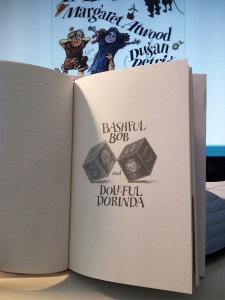
Bashful Bob was abandoned in a basket outside a beauty parlour and nobody claimed him.  There is a neglected dog park across the street and the resident dogs are Bob’s best buddies.  There is a beagle, a boxer and a borzoi who believe “We must be benevolent” and they look after young Bob.  On the next block lives Doleful Dorinda.  She’d been dumped with despicable relatives who say “Dorinda is a dope” and make her sleep beside biohazard material.  Her food is awful and she is treated like a slave.  Finally Doleful Dorinda runs away and meets Bashful Bob on the vacant block.  You will have to read this story to find out how their names were turned into Brave Bob and Daring Dorinda but it makes a jolly rollicking tale especially if you like dogs!  The plot and resolution are more conventional, even with the proliferation of ‘B’ words.  A flowing, tangible fairytale and I found it easy to absorb.  GBW.


  Wandering Wenda and Widow Wallop’s Wunderground Washery

IMG_20181026_151228

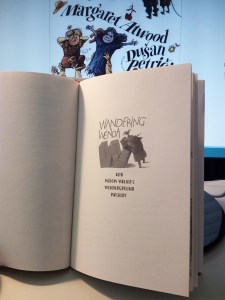
Wenda is a willowy child with wispy hair and wistful eyes.  Her parents are whisked away by a weird whirlwind and thereafter Wenda wanders aimlessly.  She makes friends with Wesley woodchuck and they share food scraps and wodges of wieners until one day they are kidnapped by Widow Wallop.  She takes them to her Wunderground Washery to “wash whites whiter than white” every day.  Between the drudgery, they feel sorry for Widow Wallop’s white Welsh ponies and three other waifs, Wilkinson, Wu and Wanapitai.  Together they plot their daring escape, only to encounter wolves along the way.  How will they evade Widow Wallop’s clutches now?  There is an unexpected reveal at the end!  I think some of the scenes may disturb younger children, particularly those with separation anxiety.  Older readers will chortle at the profuse ‘W’ words and idiosyncratic wordplay.  GBW.


Gretchen Bernet-Ward


QUOTATION:  “Comfort with reading begins in childhood, when parents or other loving adults read to children.  It creates a ‘safe’ place where — nevertheless — dangers can be explored (and, in children’s books, hopefully, overcome)…. I think my children’s books function as protected spaces for me.  I look at darker things quite a lot, but the kind of children’s books I write are light, and have happy endings…. That’s a relief, when I can manage it.”
—Margaret Atwood, author.


IMG_20181026_182604


♦  The interior of this book is printed on paper that contains 100% post-consumer recycled fibres, is acid-free and is processed chlorine-free so there’s nothing to worry about, Wenda.