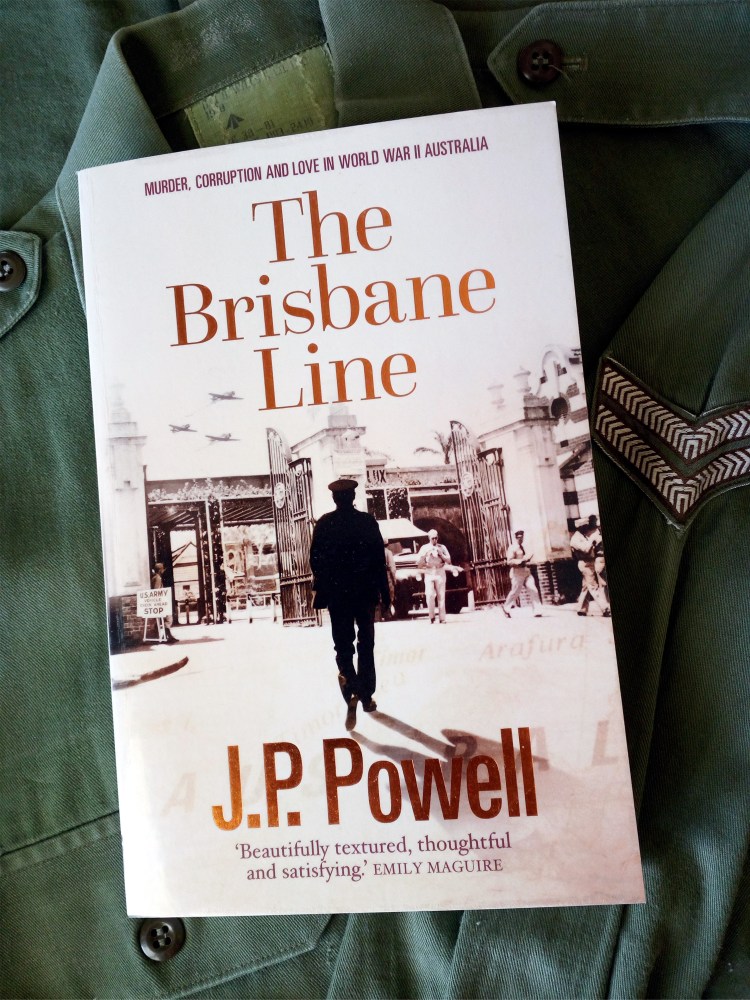
An intriguing and unsettling read from author J. P. Powell who has again fluently merged wartime fact and fiction to create an absorbing exposé of what could have happened (and may have happened) in the 1940s town of Brisbane, Queensland, during WWII. There’s American involvement in a number of events. Major deals were occurring related to underworld crime, unexplained deaths, and a range of illicit activities from several nationalities.
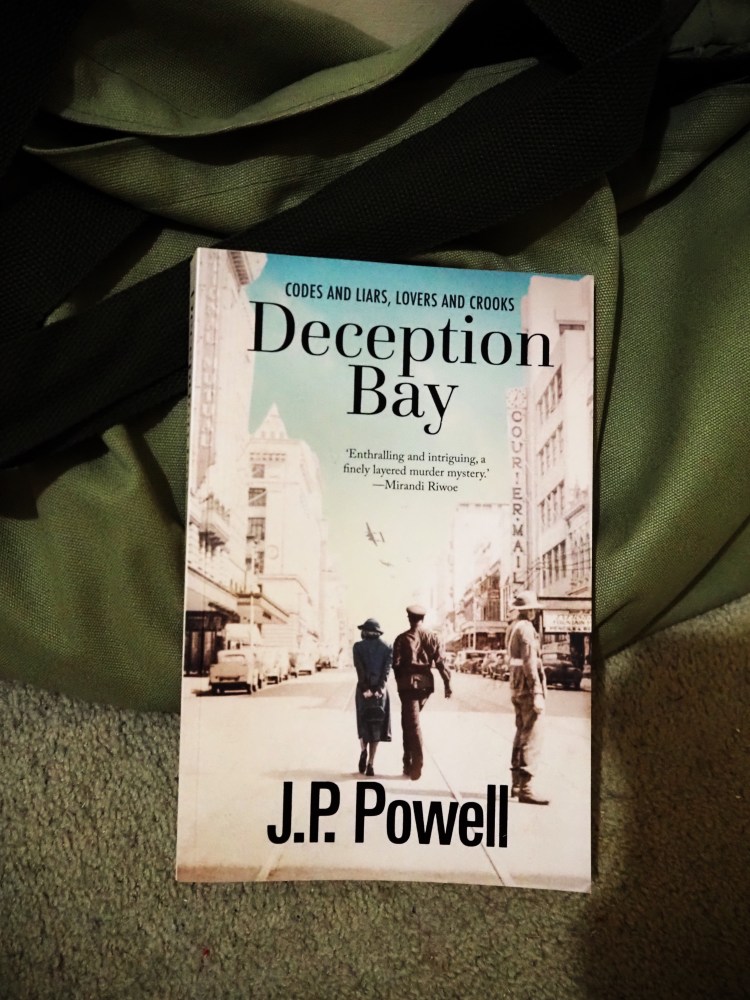
‘Deception Bay’ is the second volume which follows American investigator MP Joe Washington as he tries to solve a mystery death. Inevitably he locks horns for a second time with corrupt adversary Brisbane detective Frank Bischof, who by the way was a real person.
Powell creates characters who are believable, they come alive, and Joe’s Aussie love interest Rose McAlister reminds me of my favourite aunt who served in WAAAF. Maybe he’s softened by romance but Joe Washington’s life is made of duty, it rules him, a man on a mission to solve an alleged suicide drowning—with very little to go on.
The book ‘Deception Bay’ (Deception Bay is near Brisbane) is fascinating reading and I enjoyed the addition of old buildings I know and how they were appropriated for the war effort. I love chapter 10 and Cintra House with its fine views and the discussion about Radiophone sending photographs over a new wireless invention.
A world at war, full of deception and conmen, at a time when the infrastructure of Brisbane was weak enough to allow underworld manipulation. Mates covering for mates, paedophilia, dodgy business dealings, and illegal enterprises which flourished unchecked. Sure, the authorities knew what was going on but nobody seemed to have the courage to stamp it out; what’s the odd skirmish or tattoo? The American servicemen were seen both as saviours and sinners by differing parts of society at the time. Joe faces a difficult task!
I purchased this book at Pulp Fiction Brisbane and feel there is a rhythmic flow to the story, a river city at a time of world war when I didn’t exist but nevertheless it has reached me.
An autobiographical tale condensed into a short story for my writers group on Tuesday, and yes, you get to read it here first!
Due to the nature of my story, I have not used paragraphing or dialogue so there is one continual flow of consciousness.
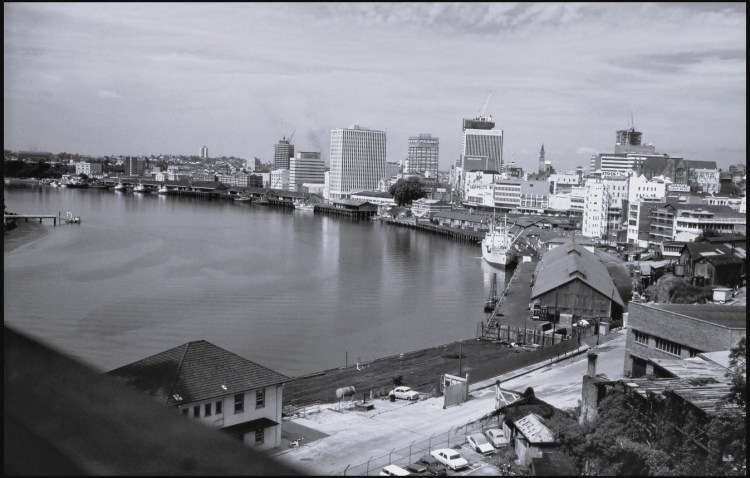
Brisbane River CBD red arrow marks the approximate area where the warehouse building in my story exposéwas located in 1970s.
One thing I disliked about doing temp work for a small city employment agency was the tedious, repetitive and uncomfortable jobs I was sent to do without so much as a ‘Would you like this assignment?’ or ‘Does this one suit you?’ No, I was just shunted off without any idea of what I was going to be doing. You could bet on it being the worst office job, the one that no staff member would touch, nor would they give any help to the newbie. Off I would trot to a dingy 1970s office with old-fashioned equipment, uncomfortable chairs and messy desks with tea mug stains which I was supposed to miraculously turn into a fully functioning, pristine work environment in eight hours. At least, I always hoped my assignments were one-off because more than a day would usually send me around the bend. Particularly if the staff were snobby or the boss was grumpy. One fellow sat like a school principal on a raised platform and watched everyone to see that they only took five minutes for tea break. I learned from other assignments to take my own snack pack of biscuits and fruit to sustain me throughout the long, long day. Once I had a manager who actually checked my waste paper basket to see if I was making mistakes and using up his precious stationery. Another time, I was assigned to a city real estate agency in a grim, gloomy warehouse office somewhere alongside the Brisbane River near the Story Bridge off-ramp to Ivory and Ann Streets, now luxury apartments. I swear that day I never saw another staff member except the front desk receptionist. Surrounded by dust motes and empty desks of the old dark wood sharp-cornered style, I was given the job of typing mail-out letters and addresses on envelopes, a task I was always particular about, and phoning the Courier Mail real estate advertisement section to place ads for forthcoming auctions. I did not understand any of the in-house jargon and I am sure they did not understand my misinformation. At lunchtime, without a briefing, I found myself substituting for the reticent front desk receptionist who may or may not have gone to lunch. This was transition time, the 1970s on the cusp of the 1980s with the 21st century looming. An office world ruled by paper, bookkeeping ledgers, staplers, hole-punchers and Liquid Paper. Also this was the era of IBM golf-ball typewriters and weird flat switchboards; plus there was a two-way radio for the real estate sales reps to call in with information on new clients, or when they were on lunch (probably the pub) or just plain going home for the day. Without a test run, I botched that two-way connectivity twice. The dusty potted plant in the corner seemed to shrug in commiseration. Whatever. I put on my best smile when a woman wearing heels and heavy make-up walked in to pay her rent money. She pulled a wad of fifty dollar notes from her handbag. Back then apparently it was all cash unless you paid with a bank cheque. And she asked for a receipt. What? How was I meant to know where the receipt book was? The searing question uppermost in my panicking brain was ‘What do I do with all this cash?’ The renter helped me muddle through, flashing her long red nails in the direction of the desk drawers and a large manilla envelope. I was very uncomfortable with the whole situation. The reception desk was closely aligned with the open front door and as I hand-wrote a carbon-copy receipt, the noise, grit and heat of the city washed across me. No ducted air-conditioning in those days, even the old pedestal fan couldn’t handle summertime. Of course, one of the selling agents called again on the two-way. Again, I fumbled the call. I have a hazy memory of what transpired next, another rent payer perhaps? One who had the good sense to say they would come back later. Subtext: when a more competent staff member was on duty. As I sat there, I could almost feel the old walls oozing the gloom of years of suffering, clerical staff clock-watching their lives away. I had an epiphany. When the real receptionist returned to her post, I showed her where I’d shoved the money, turned and clip-clopped across the wooden floor boards back to the end-row of desks where I had stowed my handbag. Without hesitation I picked up my belongings and headed for the front door. I walked passed the receptionist on a phone call and gave her a quick nod loaded with nuance. She blinked slowly then went back to the caller. I left that building never to return. I cannot remember if I was paid for half a day’s work, I did type a pile of addressed envelopes. However, there were no repercussions from my unscheduled walk-out. On that day, as the glare shimmered up from the concrete footpath, I took a deep breath of freedom knowing I would resign from the employment agency and find a permanent job, one that I could really love. Happily I did, but there was a lot of typing along the way as new equipment superseded the old. I embraced the electronic era, the internet and email connectivity, the computer functions, the fabulous formatting and home printers. And thankfully unchanged keyboards. However, I will never embrace Excel and I will always love books, pens, paper clips and days off. GBW.
ⓒ Written and compiled by Gretchen Bernet-Ward ❤ 2024.
Brisbane River Wharves 1970 viewed from Story Bridge – Original image attributed to Queensland University of Technology.
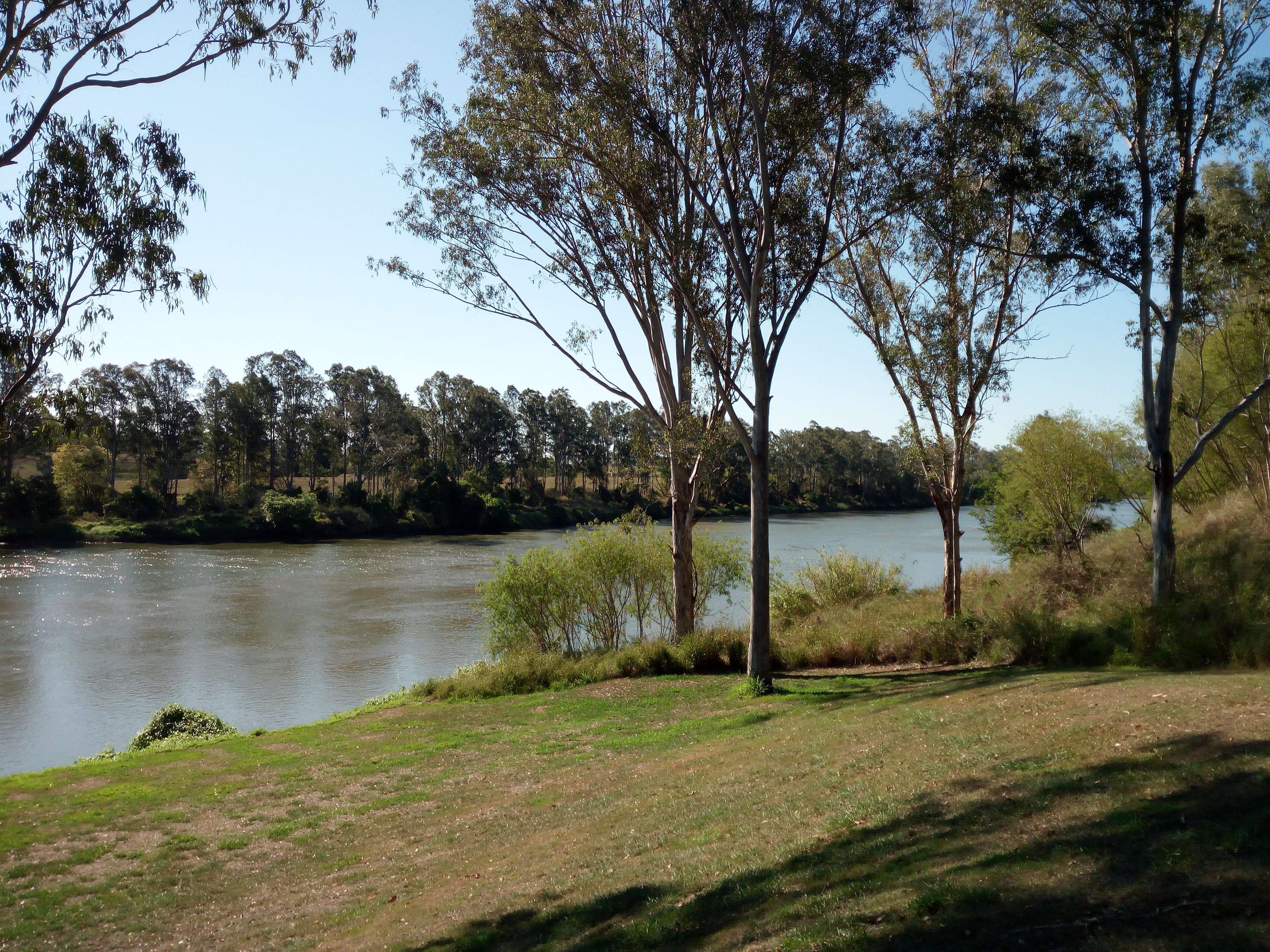
Came over the hill and the Brisbane River is to the right…
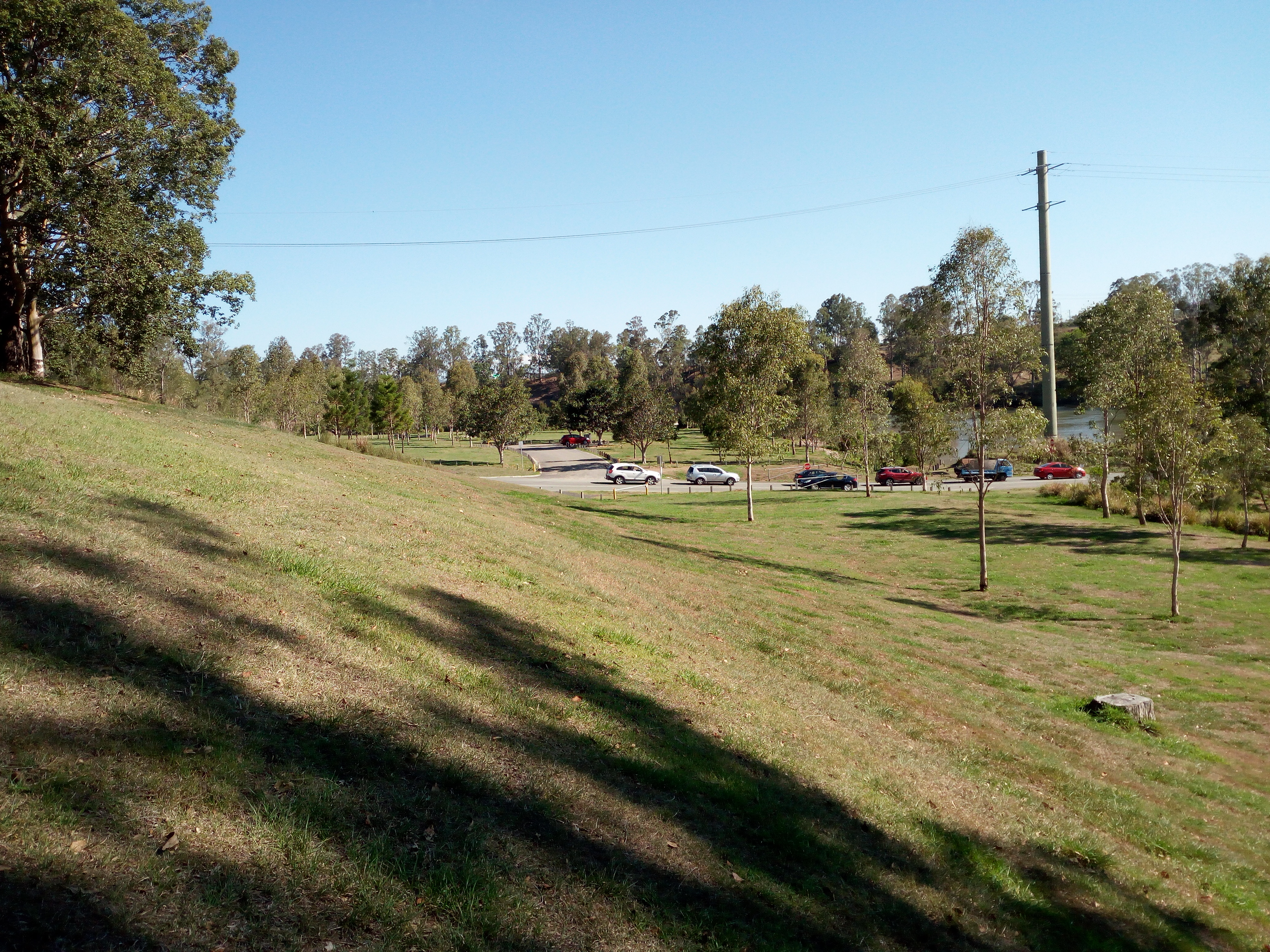
And a line of waiting cars can be seen to the left…
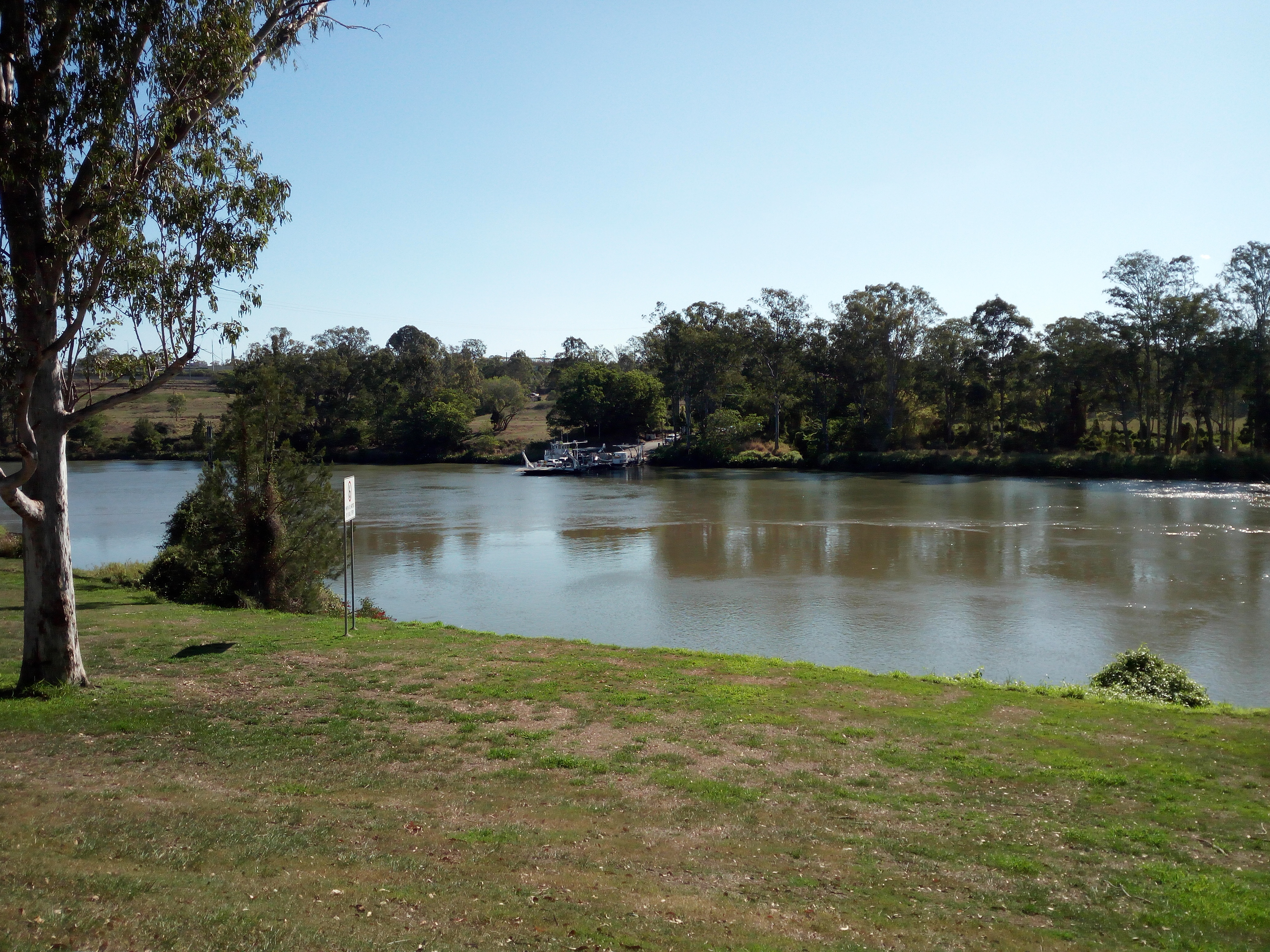
The Moggill Ferry is on the opposite bank…
Here it comes, loaded with cars…
With a clank, the metal plank is lowered and the cars drive off…
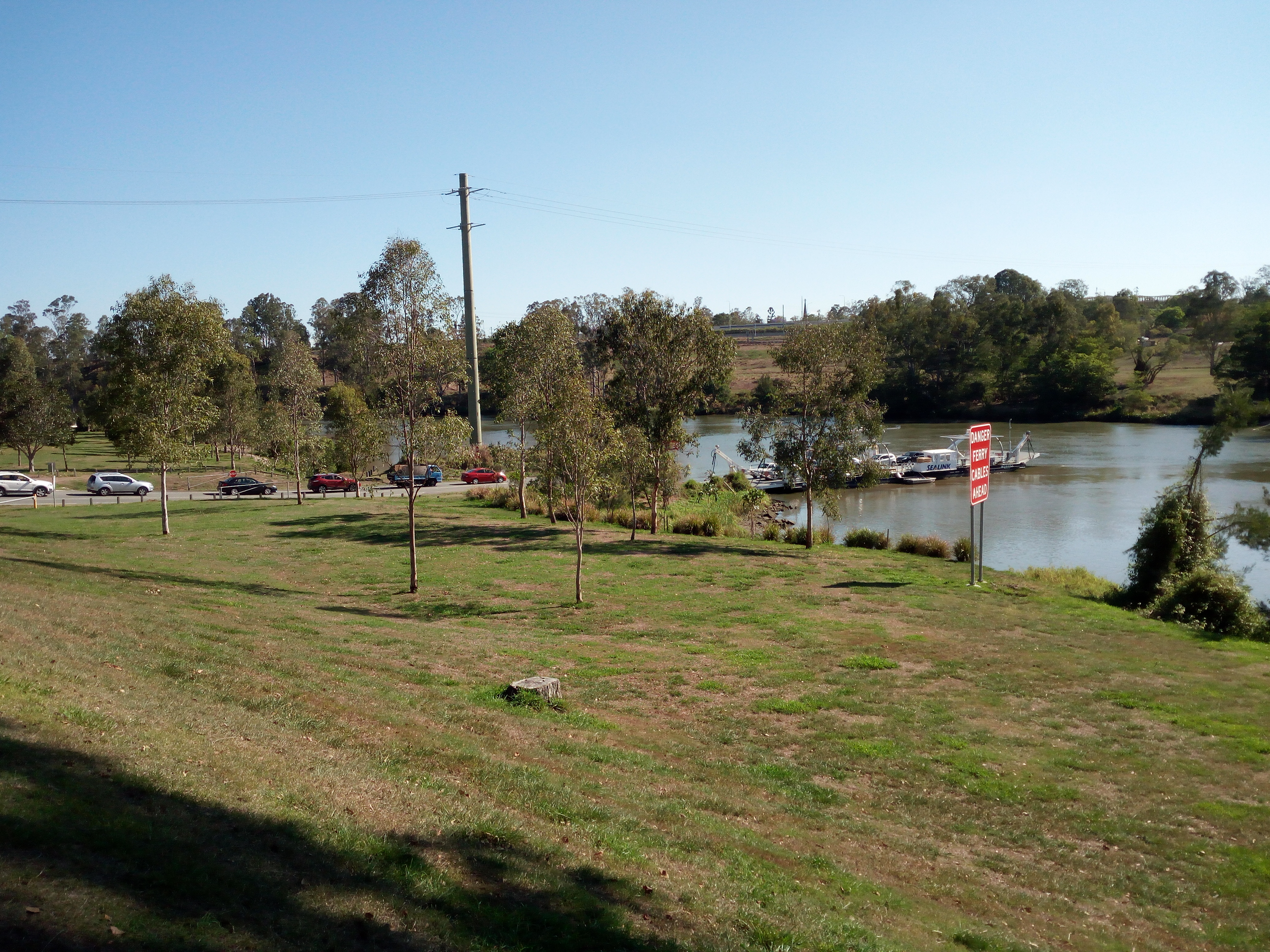
A warning to boats cruising up the river…
It is nice to sit on the river bank in the sun.
♥Gretchen Bernet-Ward
BACKGROUND INFORMATIONMoggill Ferry, a tolled vehicular cable ferry, crosses the Brisbane River between Moggill, Brisbane and Riverview, Ipswich, Queensland. It has weathered several floods since 1920s and had various replacements. The ferry was motorised in 1940s under joint control of the Ipswich and Brisbane City Councils. It can carry 20 vehicles (car AU$1.90) GVM vehicle up to 4.5 tonnes (AU$16.30) pedestrians (free) and operates between sunrise and sunset—if you miss the last ferry, you have to take the long way via Ipswich Highway. Services operate daily, except for Good Friday and Christmas Day. The journey takes approximately 4 minutes on the vehicle ferry. I think that depends on the pull of the current. During the floods of 2011, the ferry cables broke and ferry staff lashed it to the riverbank so it would not get washed away. It may look like a bygone era but it is well-used and only 19km (12 miles) from the centre of the city. GBW.




 Thoughts Become Words