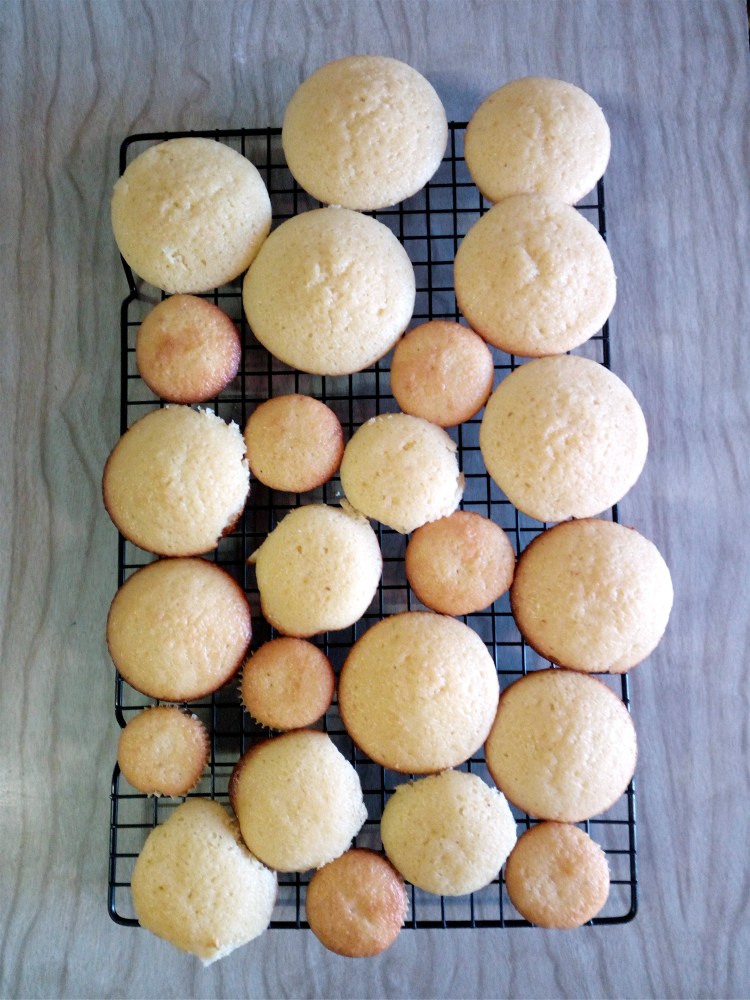
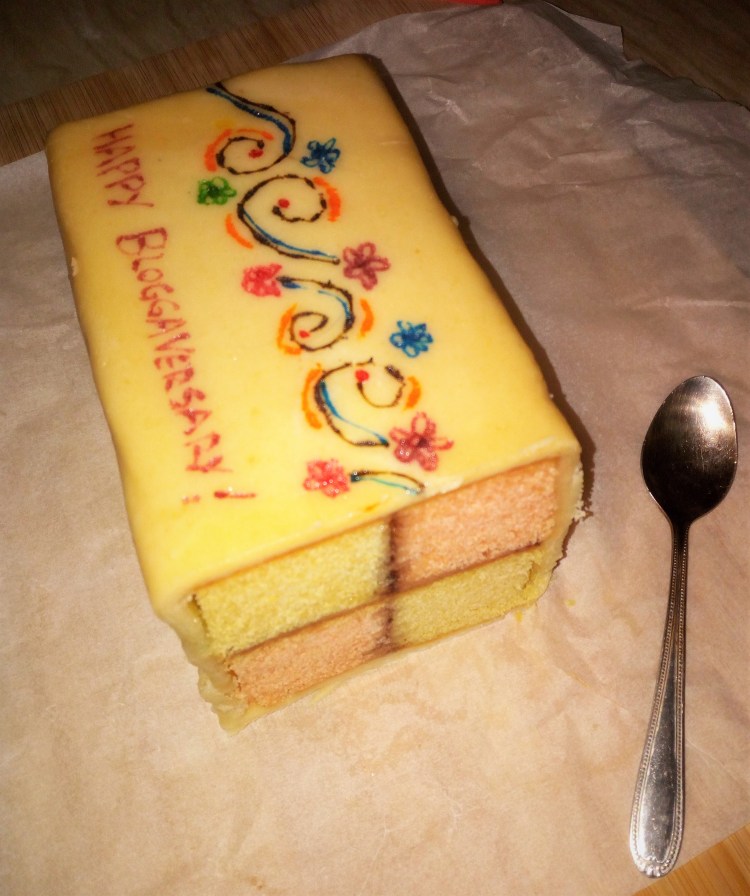
A wonderful children’s author I have known for some time, Cate Whittle, posted on her Substack page about success and failure and trying again. A cooking failure was turned around and she will experiment further to refine her recipe. Read here: https://catewhittle.substack.com/p/having-your-cake
My reply to Cate was prompted by a happy memory and perhaps an old lesson people could use more often. ‘If at first you don’t succeed, try, try, again.‘ Here is what I wrote on Cate’s July Substack page:
“Lovely, just what I needed to read with my cuppa! Your warming newsletter brought back some lovely memories of my daughter’s first foray into cooking. Initially, her first attempts were not that good and one particular dish was a disaster. I said ‘Oh well, let’s try it again and see what happens‘ and fortunately it worked. She is now an excellent cook and will try most recipes including exotic international dishes which are beyond me. We keep a photo file of my daughter’s greatest triumphs. Recently she told me that ‘Let’s try it again‘ day was a pivotal moment for her cooking skills.
Looking forward to another version of your tea cake, Cate!” Follow Cate’s literary life ‘A Cuppa With Cate’ Substackhttps://catewhittle.substack.com/
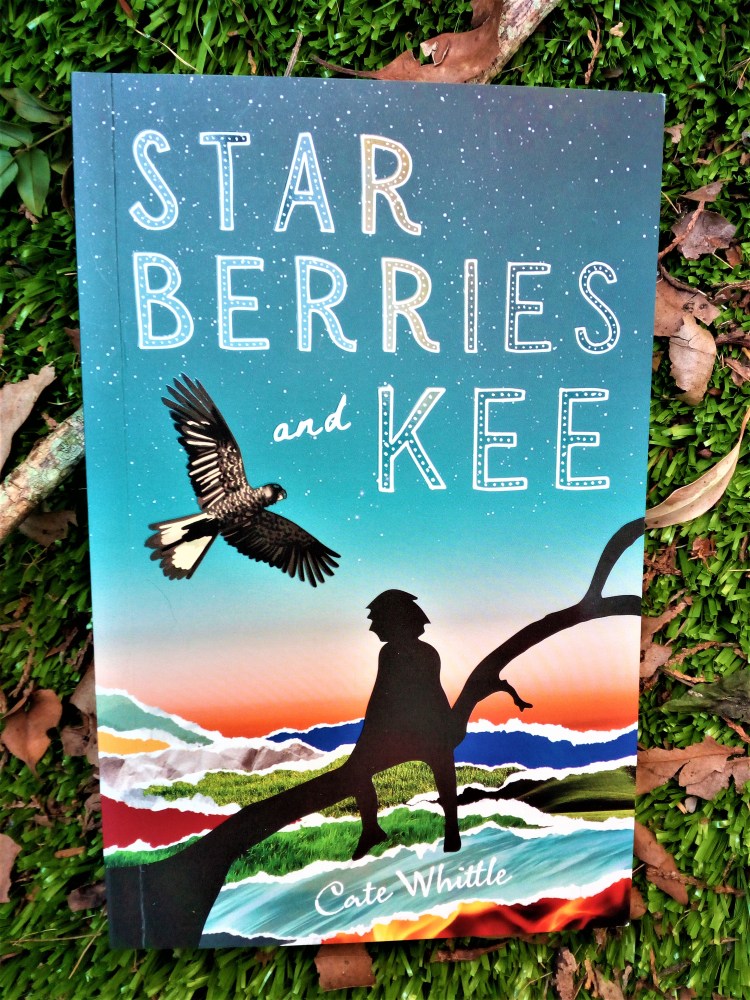
A novel of far-reaching ideas and future prediction which looks from our careless past to a positive future where climate-change has radically reshaped the way people, animals and plants of the world live and thrive. I smiled at the concept of share cars, a great idea but I think it will be another century before it catches on.
Described as Solarpunk genre (see below) so much is lost yet so much is gained in the way of solidarity, community and compassion. Hard work, healthy food, clean water, fresh air, caring and sharing and generally making-do. All shaped through dire necessity due to past global pollution, neglectful land care and disregard for consequences, although the story has no recriminatory tone and looks to future sustainability.
Young Wren is a boy of the mountains, living with mentor Old Man and learning the ways of Nature until it is time for him to leave on a quest. Kee, his totem black cockatoo follows him. Young Hannah and old Libby have to leave the Street in the City in which Hannah was born and raised; a necessary yet bitter-sweet time for all three characters as they begin the prospect of a new stage in their lives.
On arrival at South Hills Pod, Hannah walks into her new shared bedroom noticing posters on the wall “photos from Before” a time we currently take for granted, like Libby’s jam-making skills. Unfortunately Melanie, the other occupant of the room, is rude and unwelcoming. Settling in becomes a challenge for Hannah, she likes art and does her school work online while longing for her old home and friends. South Hills homes are built partially underground (think Hobbit) cooler and not as claustrophobic as it sounds.
“I took a snapshot of the book opened out because the vivid art work continues the theme so well on the back cover” GBW 2023
Around Hannah and Libby’s new share home there are ponds and hectares of covered produce gardens with shade sails and monthly market days at the Gathering-Place. “Like the home-garth, the garden was in a huge amphitheatre terraced out of the hillside facing north.”
Page 67 ‘Starberries and Kee’ Cate Whittle 2023
Meanwhile, wild-child Wren is also having a rough time. He cannot understand the strange things he sees and the weird food he sneaks from the food growing domes. He calls Hannah’s new place “wombat-people’s camp”. Suddenly their two paths collide, there is a secret pledge, and a heart-racing life-threatening drama unfolds.
Author Cate Whittle has written a speculative fiction novel for middle grade/YA readers which is approachable and relatable. My preconceived idea of Wren was cleverly altered. He has bush knowledge and yet clear speech for someone raised in rugged mountains. Perhaps a story untold? Adults are kept to a minimum, friendships are made and broken, personalities clash, and families struggle to find a happy medium when mean Melanie adds to Hannah’s homesickness.
The environmental concept is outstanding and the setting is brilliantly realised including chapter 18 and the wonderful cameo when Kee is revealed to a crowd which brought happy tears to my eyes. Living in South Hills Pod would be hard work, but when past duties are shirked that’s what is needed in the future. Also tall trees for wild birds and a safe environment for every family!
SOLARPUNK EXPLAINED—A serious yet optimistic explanation—“Solarpunk is a subgenre of speculative fiction and a collectivistic social movement that envisions the progression of technology alongside the environment. While the ‘solar’ prefix signifies the term’s relation to solar or renewable energy, the ‘punk’ suffix groups it with other aesthetic sci-fi subgenres like cyberpunk, dieselpunk and steampunk.” I think Cate Whittle’s book has “The solarpunk aesthetic which depicts…a society where the climate crisis has been resolved or is being approached with camaraderie.” From Brennan Whitfield, 05 January 2023 https://builtin.com/greentech/solarpunk
P.S. I will let you find out the meaning of Starberries and Kee 😉 GBW.
My special guest Cate Whittle, author, teacher, speaker, offers her advice and experience on how to fine-tune your manuscript before submission to a publisher.
Cate’s literary expertise covers workshops, writing courses, book launches, school visits and video tutorials—watch out below for her special MANUSCRIPT ASSESSMENT offer—but first sit back, relax, read
‘On the Fine Art of Sending Your Book Baby Out into the World’
Congratulations! You’ve made it—from those first tentative words that broke the curse of the blank page, to the carefully woven ending—you’ve finished your book!
What now?
First – bask.
This is an important moment and really deserves celebrating. So many would-be writers never get this far. So celebrate.
While you are celebrating, the manuscript is resting.
You know that.
And you know that you come back to it with fresh eyes to read through and self-edit to make it the best you possibly can. And you know that there will be a multitude of drafts before you say, ‘This is it!’
And then you send it out to the likeliest looking publisher or three?
Bzzt. Wrong.
This can be the falling point for soooo many little fledgling books.
For its first forays out of the nest, there are so many things you can do before you subject it to the scrutiny of an actual publisher.
Allow me to make some suggestions.
Let me call this Levels of Editing.
It is up to you whether you employ all or some of these levels of editing—or whether you feel happy to trust to yourself in some regards—and certainly, you will be editing with your publisher if your work is acquired by a traditional publishing house, but it is always good to be close to all the way there before you approach a publisher. And if you are self-publishing… you’d be well-advised to spend the money.
One:
Was your self-editing.
Focus in on structure and consistency, make sure your opening grabs the reader and your writing flows easily and is paced well. Look at tension and relief. Are your characters believable? Does the setting work? Is your ending satisfying—and does it work for your genre?
Two:
Might be your Mum or a Trusted Other.
This is usually good for a feel-good glow (which is great for your confidence), but do not pressure this relationship with a request for honesty. Do not. Enjoy the feel-good glow and move to the next stage.
Three:
Your critique group.
Yes, join one. Participate. I cannot recommend more highly this collegiate learning and sharing. Even J.R.R. Tolkien and C.S. Lewis (peripherally Dorothy L Sayers) and those other guys who no-one remembers, all benefited from sharing their work in their Inklings literary circle.
But be aware that this, too, has its limitations. Perhaps you do not work in the same genre so they may not understand all the tropes and symbolism in your text (I speak—lovingly—from the experience of teaching my critique group friends about fantasy). Perhaps you are all learning together. Perhaps your critique partners are unwilling or unable to offer critical feedback.
Where to from here then?
Four:
Manuscript assessment.
Strictly speaking, this is NOT editing per se. This is where a reader with some experience goes through your manuscript and offers feedback as objectively as possible (although not entirely—reading anything is a subjective and individual process).
A good manuscript assessor will provide a general commentary on:
* Voice, point of view, description, and setting
* Characters
* Plot/structure
* Punctuation, spelling, grammar, and vocabulary
* Audience/market
* Anything you have specific queries about (e.g. does my opening hook work?)
A manuscript assessment can be completed on a partial text (I offer commentary on the opening three chapters and a synopsis) to keep costs down, or on a complete text. This is your impartial reader who has some experience in the field, giving you their reaction to your book.
Manuscript assessments are often offered by editors as a first pass through your story, to let you know whether you are ready to go further. Published writers, or established teachers or librarians with a strong background in the literary process.
It’s a good starting point without investing a huge amount in the early stages of polishing your text. You should come away with some good ideas about how to develop your work further. Sometimes you can enter into a story coach arrangement with your assessor—but this is a whole extra field.
Five:
Story coach.
This is like engaging a manuscript assessor several times over a period of time, reworking and reassessing scenes together to make sure that your story is powerful and ready for the next stage of editing. Check with your manuscript assessor if they are willing to enter into such an arrangement before you start.
N.B: If you are writing non-fiction, this is the level where you might seek out a professional content editor to make sure your information is correct and presented in a way that flows.
Working with a manuscript assessor or a story coach gets you ready for the hard stuff. From hereon it can get intense!
Six:
Structural Editing.
Similar to a manuscript assessment but at a deeper level, this is usually undertaken to evaluate your characters, plot, and setting, and ensures that your narrative flows smoothly and your scenes work to move the story forward. It will look at how your chapters sit and whether they could be arranged differently to make the story more powerful.
Seven:
Line editing.
This is a skilled task that is best done by a trained professional editor. You may have already engaged an editor for your first assessment, but often this is an opportunity to let another set of eyes go through your work.
Line editing evaluates and offers corrections for the tone, style, and consistency of your work. While a good line edit will also check basic spelling, punctuation, and grammar, for a more complete overview of these mechanics of writing you would be moving to a copy edit.
Eight:
Copy editing.
Again, this is a job for a professional editor. This is all about your spelling and punctuation. This is all about getting your grammar correct. This is all about your word choices (do you need adverbs or will a stronger verb make your writing tighter?), how you lay out your text (paragraphing), minimising repetition or jargon, and weeding out redundancies.
All without losing your voice.
Nine:
Proofreading.
Except proofreading is also NOT editing. By the time you are proofreading all that is done. This is like a final going over to make sure you have dotted all your Ts and crossed all your Is…
This is checking formatting and consistency one final time, and finding those last minute, glaring typos. You can stick to your professional editor for this—or find yourself a professional reader. Your manuscript assessor might be good for this, but make sure they know it is a proofreading exercise. Now is NOT the time to come up with suggestions for a whole different structure.
Ten:
Okay, breathe.
While all this has been happening, I’m sure you have been researching your publishers for the right fit. Don’t forget to check their submission guidelines and follow their rules—and now you can press GO.
Good luck! May your fledgling fly true and straight and find a home out there (whether you go via a traditional publisher or decide to go Indie).
———————————-
Thank you, Cate, for such enlightening information! ♥ Gretchen Bernet-Ward
SPECIAL OFFER
Personal note from Cate
In the spirit of celebrating 61 Years Since 1961, I’m currently offering manuscript assessments at only 61% of my usual going price.
This offer closes on 3rd April 2022, BUT if you have something in the wings and would like to purchase an assessment at this price and take a rain check on the assessment until you are ready, just drop me a line cate@catewhittlewrites.com
I’m currently offering an assessment on the first three chapters (to 10,000 words maximum) on your Junior Fiction (which probably shouldn’t be this long!) or Middle Grade manuscript for AU$110. Alternatively you can contact me for my price schedule for a full manuscript.
Any questions? To find out more ‘On the Fine Art of Sending Your Book Baby Out into the World’ contact Cate cate@catewhittlewrites.com






 Thoughts Become Words