Exquisite Corpse Parlour Game

Scribbles Masterclass Melbourne May 2018 05
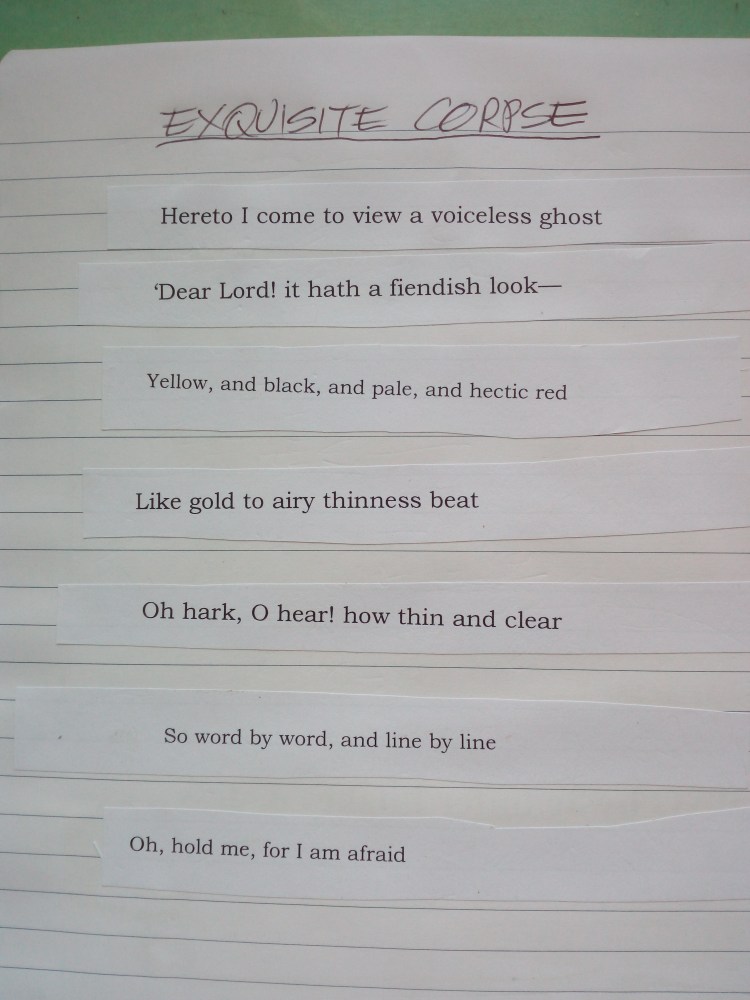
Test your memory and see if you can name any poets from the lines I picked randomly during a timed exercise (see below) “Like gold to airy thinness beat” is from Valediction, Forbidding Mourning by John Donne (1573–1631)

This game can be adapted for writers, artists, poets and movie fans!


  • There are two versions.  The version attributed to the Surrealist Movement is when the weirdest possible head, torso, legs of the Exquisite Corpse are drawn by three different players, each folding over the paper so the next person can’t see the results until it is unfolded at the end of the game.


  • “Consequences” is the original name of this literary pen and paper parlour game which has been played since the 1800s Victorian Era.  A random sentence is written near the top of the page.  The paper is folded over then passed to several other participants who add to it and fold until it reaches the last person, or the bottom of the page.  The paper is unfolded and the whole “story” is revealed––often with hilarious results.


  • Alternatively, photocopied lines from classic poems (see above) can be cut into strips and jumbled into a bowl.  Each player blindly chooses nine strips but uses only seven to form a poem.  The mind takes over, sorting and assembling into a reasonably cohesive format.  The verse pictured above is what I put together in a recent Masterclass during a timed exercise.  My Exquisite Corpse earned the comment “feels Gothic and dark”.


  • To quote Academy of American Poets: “The only hard and fast rule of Exquisite Corpse is that each participant is unaware of what the others have written, thus producing a surprising—sometimes absurd—yet often beautiful poem. Exquisite Corpse is a great way to collaborate with other poets, and to free oneself from imaginative constraints or habits.”


  • Minor changes have been added to Exquisite Corpse over time, from using a single word to including famous lines from books and movies.  For example, you can jot down your favourite movie quote, fold over the paper then pass it on.  See what you can pitch with Arnold Schwarzenegger or Hugh Jackman.  In book mode, an amalgamation of Germaine Greer and Nora Roberts could prove interesting.


  • The following formula for fun was kindly supplied by WordPress blogger Life After Sixty-Five who wrote––“Here is my favourite version of Exquisite Corpse, though I have played the version where a human body is drawn”–– 

    He (male name, fold) – someone we all knew, or someone famous
    met She (female name, fold) – could be someone famous, or someone playing the game etc.
    at (place, fold)
    He wore (description of clothes, fold)
    She wore (description of clothes, fold)
    He asked, (question, fold)
    She replied, (answers question, fold)
    And along came (person, fold)
    And so they decided to (decision, fold)
    And in the end…(finish, fold)
    “…the gales of laughter at the silly stories…”


Language Is A Virus
website has the history of Exquisite Corpse and suggested books on the subject.  They started a poem which has been running since 2000 and you can add to the silliness.

Gretchen Bernet-Ward

Exquisite Corpse Quill and Inkpot


My Elusive Career as an Aspiring Writer

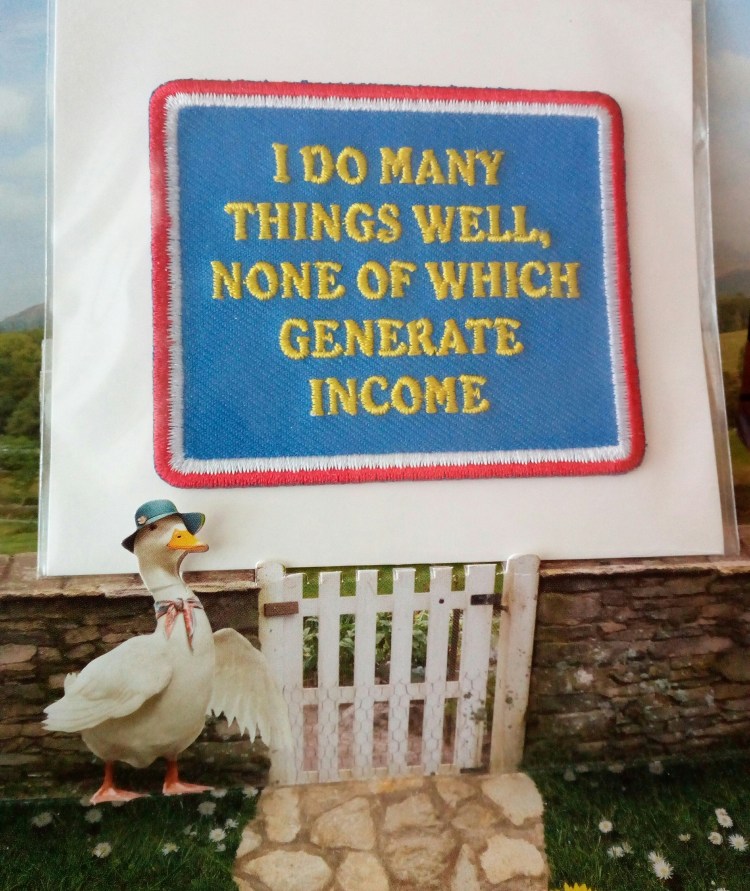
Attention span of a puppy? Pushed for time? “Publishing is a long game. As they say, you have to be a stayer if you want to be a player. Even if your book is only 500 words!” said Jen Storer, children’s author and chief inspirationalist at Girl & Duck.com when discussing the pitted path to publishing.  I intended writing a three-part posting on my literary travails but here they are in one glorious chunk.

Kids Storytime 02
PROLOGUE After reading countless children’s picture books for Storytime in a public library, it became obvious to me what worked and what didn’t with a live audience. I thought it was about time I tried to write my own children’s book.

WARNING – THIS IS A LONG BLOG POST WHICH RAMBLES OVER EIGHTEEN MONTHS OF MY WRITING LIFE – CAFFEINATED BEVERAGE RECOMMENDED.


CHAPTER ONE The Plan. Work up slowly with a picture book maximum of 500 words for age 0-5, step into small chapter books for age 6-8 with 20,000 words, graduate to a decent sized book of 25,000 for teenagers then launch myself into young adult. Well, perhaps not young adult, could get a bit messy in the emotions department. Hopefully, maybe, I could consider penning a series. Something humorous and fun, with a good plot and memorable characters. An attention-grabbing theme, a zany bookcover and before you can say Harry Potter, I’m flying high, riding the wave of published author!

Er, right.  The truth of the matter is that I knew full well I had no experience.  Career shattered before it began?IMG_20170531_184235

In steps the many writer’s workshops and online courses available to the newbie.  Or as they say in the trade “emerging author”.  Plus a local writer’s club SWWQ, State writers centre, Facebook groups and a conference or two.  (List of website links at end of page). Not forgetting the self-help books – anyone who’s ever written a book and had it published with moderate success seems to qualify as an adviser on the subject of literary rules. The do’s and don’ts, the routines, the voice, the need for originality, the best way to grab an editor’s attention, grammar, plot structure, plotter or pantser, show don’t tell, how to sell yourself, and the list goes on.

CHAPTER TWO First up, I enrolled in an expensive online course which certainly got me motivated but not by the moderator or the tutor. The other participants were withdrawn and really didn’t share. And the course notes were a little outdated. Yes, I know “Where The Wild Things Are” is a classic but hundreds of good, if not better, books have been published since then, with far more appeal. And I don’t really like the artwork.

Ah, artwork. You can write the words for a picture book but you can’t have it illustrated by an artist of your choosing. The publisher does that. And we all know we have different ideas when it comes to imagination and imagery. If you write and illustrate your own picture book, it has to be of exceptional standard. I can do pen and pencil drawings but they wouldn’t cut it. I’m much better with basic colour-in stuff. Which doesn’t sell.

Click link Saving

Tree Without Leaves 09

Grandpa’s Tree

Then came the face-to-face classroom workshops which were fun. Lots of buzzing people with buzzing ideas and questions. Isn’t it surprising that when it comes to reading out your own work, people clam up? Not me. I always read out my stuff and one story was later fleshed out into a decent read “Saving Grandpa’s Tree”. However, it hasn’t attracted anyone’s attention yet.

CHAPTER THREE The big thing among creatives is to attend a yearly conference or festival in another State, necessitating a weekend away. I think a conference is meant to be more serious than a festival with serious lectures, serious note-taking and serious editor appraisals.  I have a small green notebook riddled with notes. A festival has all manner of literary people chatting on stage, with microphone feedback, showing wonky PowerPoint slides, supplemented with drinks and nibbles and a lot of networking.

Daily Things Egg Bookmarks Kookaburra (3)
Just like anywhere else, unless you are seen as someone who has “made it” you are not worthy of a business card exchange. And bookmarks, phew, I could wallpaper my room with all the industry bookmarks floating around.
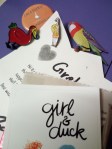
 

IMG_20171228_193003

At these displays of verbose literary knowledge (excluding The Duck Pond – see below) I always wear my name badge. Nobody remembers my name and I don’t remember theirs but we compare notes, likes and dislikes and complain about the way the event is organised and the length of the queues. Usually the food tastes as good as it looks.  Of course, the better the quality, the quicker the goodies are consumed. Never cram your mouth because someone will ask you a question, and never spill anything down your front because you will be asked to step up the front to speak.

I’m going to pen a small piece on the Judith Rossell weekend writers retreat I attended at historic Abbotsford Convent in Melbourne, Victoria.  Amazing vibe!  We don’t have many older buildings in Brisbane with such history.  I have organised, promoted and hosted author talks and, believe me, not all are created equal.  Will save that story for another time.

CHAPTER FOUR For well over a year, I submitted children’s picture book manuscripts to a myriad of publishers in Australia and overseas and have received only two rejections. I think the silence is worse than those two polite rejection letters. Surely, in this day and age, it wouldn’t take two seconds for the office junior to email a rejection to the poor, desperate writer at the other end.

RequiremeManuscripts.nts Of Submission occasionally want physical copies and I’ve gone the old A4 paper route, Times New Roman (no glitter in the envelope, big no-no) with clean easy-to-read layout and still not heard a word. Does that mean I’m no good or the publishing houses are totally swamped? Harking back to that office junior, who didn’t send me an email, I could get bitter. They are the first readers of unsolicited manuscripts which forces me to cry “What do they know? My literary reading is decades ahead of theirs.” Sadly, they know the trends. A new writer cannot predict trends. Nor can they single-handedly make them.

The scariest thing I’ve done (apart from hosting an avant-garde Shakespeare theatre troupe and judging a YA writing competition) was Literary Speed Dating; five minutes of torture in which you have to sell yourself and your manuscript.  A bell rings and, if you haven’t collapsed, you go to the next editor’s table.  And the next...and the next...A woman in my queue was eight months pregnant and the summer heat was ferocious but she coped better than all of us.  A book contract?  I hope the others were successful.  At least that woman has a baby now.

CHAPTER FIVE After becoming thoroughly disenchanted with the children’s book industry, I started up my own WordPress blog and thought “I’ll just do what I like and if anyone notices, that’s okay” but I didn’t hold my breath. Prepare to be amazed – 409 million people view more than 20.8 billion pages each month on WordPress, and users produce about 77.0 million new posts and 42.7 million new comments each month, an estimation of six new WordPress.com posts every second. Those stats have probably changed while I type, but it’s still a shedload of competition. It takes a lot to shine. Who’s going to read me and my miscellaneous Blogging Image 04ramblings? Recently I had 385 Followers but I culled the spammers and that number dropped back drastically.

I’ve discovered that personal stuff gets the most hits but specialising is not my thing.  Although I blog about many things, I still like the idea of kidlit. Notice that term? I’m getting good with the industry terms. Copy edit, structural edit, narrative arc, protagonist, antagonist … I subscribe to the newsletters of publishers, book stores, State organisations, libraries, writing groups, children’s literary charities and other book-reading bloggers like Paula Bardell-Hedley (see below). So far, I’ve come across a lot of WordPress book reviewers and enjoy their commentary. Personal opinion is a great thing, just not something I always agree with when it comes to books. Honesty compels me to admit that my leisure reading is not nursery rhymes, it’s a good crime novel.

CHAPTER SIX In between life, I volunteer at special events and displays at State Library and offer my free time closer to home in a charity shop bookroom. What an eye opener! Certainly a book for every customer, young or old; and quite a mixture of clientele. The shelves are browsed with all the fervent devotion of a high-end bookstore in the city. Without the price tag. And a few bent bookcovers and rusty pages thrown in. Behind the scenes, the staff are just as interesting. Again, will save that story for another time.

“But what of your picture book career?” Glad you asked. Confession time. Deep down my literary urge begins to lean towards writing for adults BUT I join Creative Kids Tales, an online group for emerging authors which specialises in children’s literature.  By this time I was doubtful that this was my true calling (after all, one can only take so many unsent rejection letters) and was oscillating between adult works and the perfect kids book.  I hung in there.

Truly Tan BooksEach month CKT features a different aspiring writer with a successfully published author. One author captured my imagination, Jen Storer of Girl & Duck.com An Enid Blyton lover, Jen shows an intelligent, vibrant nature, an honest, straight forward approach to writing and I like her children’s books, especially Truly Tan series.  Jen was starting a Facebook group The Duck Pond, inviting kidlit creatives to join, and the rest is magic.

CHAPTER SEVEN I’m pretty much a founding member of The Duck Pond and recently their creatives group Scribbles was added which I also joined. Membership grows weekly, and Jen does weekly Q&Q (questions and quacks) videos on YouTube. Apart from sudden Facebook drop-ins on screen, Jen does one-hour Scribbles Live Rounds and members tune in from around the world. Kidlit help is always at hand and the expertise of members is far-reaching.  The slogan “The rule is there are no rules” is true to its word. Jen says “Do the verk”.  Immersion is the only way and I’ve learned so much about writing books and the book industry generally.
Scribbles Live Round Participant 2018

An author/illustrator, Jen Storer believes is having fun and being messy, “Mess creates clarity”. The Scribblers course is for writers and illustrators and it encourages everyone to work without restrictions.  Quell that inner critic!  There are set Modules with exercises which you do at your own pace but following the easy guidelines so that your words just flow. I’ve experienced writing freely and unfettered and being surprised and pleased with the results. Honestly, with Jen’s prompts, I’ve had so many ideas I could be writing for years. Of course, submitting a manuscript isn’t messy, it has to be refined and polished. Jen is ex-publishing house so she know those ropes.

Now, the cruncher. I adore The Duck Pond group camaraderie and "doing the verk" but I am not a fan of the circus called Facebook. Nor do I participate in other social media like Twitter, Google, Instagram, etc. “Click this, view that, Like page” get lost. In a short space of time I have witnessed two great bloggers over-extend themselves to the detriment of their output.  I like to think I am not spreading myself too thinly!

CHAPTER EIGHT I’m loving my WordPress blog, the layout, the posts, changing photos, the full control I have over my content. Which reminds me, in the past I have submitted reviews and editorials to organisations who have edited or altered my work without my prior consent, which is apparently their prerogative, but that doesn’t mean I have to like it. I don’t – especially when they muck up a sentence to make it shorter or change paragraphing. So, dear reader, this leaves me in literary limbo.

Star Twinkle Twinkle 01CONGRATULATIONS – IF YOU REACHED THIS POINT WITHOUT SKIPPING BITS.

What is next in my literary journey? Will I shine? Over 18 months, and varying lengths of commitment, I have happily entered writing competitions (two Third Place awards and shortlisted) and completed a magazine writers course, travel writing course, children’s writing, crime writing, romance writers workshop, non-fiction-fest, lampooned the Australian publishing industry, and still don’t know what genre I want to pursue. I know it’s too late to become a ‘proper’ writer, contrary to what dear Jen Storer says in her passionate YouTube video A Slap Down For An Ageist Society I think I have missed the boat. I am passed my publishable prime. It’s no good lamenting the fact that I represent Gustav Freytag’s five-part story structure. I had a younger life to live and it didn’t include lonely, lengthy periods sitting at a keyboard. It does now.

EPILOGUE Sure, I can happily write to my heart’s content but who’s interested? Don’t answer that, please. Suffice to say I will dabble, making my miscellaneous Thoughts Become Words for my own pleasure because I can’t stop writing. Basically, that’s what it all boils down to, in the end we are doing it for ourselves. If someone else likes it, that’s a hefty bonus.

Gretchen Bernet-Ward


Paula Bardell-Hedley WP Book Blogger IN APPRECIATION – This post is dedicated to WordPress blogger Paula Bardell-Hedley for her great reviews, ideas, encouragement and super organisational skills
https://bookjotter.com/
https://thoughtsbecomewords.com/2018/04/02/dhq-dewithon19/
and I get a mention in Winding Up
https://bookjotter.com/2018/04/06/winding-up-the-week-13/


RELEVANT GROUPS AND ORGANISATIONS:
CKT https://www.creativekidstales.com.au/
AWC https://www.writerscentre.com.au/
QWC https://qldwriters.org.au/
BCC https://www.brisbane.qld.gov.au/facilities-recreation/libraries/opening-hours-locations/brisbane-square-library
CYA http://www.cyaconference.com/
KLV http://www.kidlitvic.com/
ILF https://www.indigenousliteracyfoundation.org.au/
SD https://www.storydogs.org.au/
FF https://www.fantasticfiction.com/
BWF http://uplit.com.au/
G&D https://girlandduck.com/
A&U https://www.allenandunwin.com/being-a-writer/getting-published/advice-from-a-publisher
SWWQ http://womenwritersqld.org.au/
The Power of Doodling

In between writing and not being published, I attempt to draw, which defaults to my basic doodle setting.  My mind slips out of gear when doodling.  I drew a curlicue doodle which ended up with a small snail at the end of it.  Significant?

Is there a better chance of being published if you illustrate your own bookcover?  Nope.  Even with children’s picture books, there’s no guarantee it will be snatched off the slush pile because of the synchronicity of your fresh-faced pictures and curlicued words.  In fact, in Australia the editors prefer to nominate an artist so forget that plan.  Still, I can’t stop myself doodling.  What use is it?  (A) tension release, (B) learning aid, (C) mind clearer, (D) mind-wanderer, or who knows what.  Ah ha, light bulb moment!  I will research the experts and see what they have to say on the subject of Doodling 101.

Prepare to be bored, please doodle among yourselves – preferably with a real pen or pencil.

First up are the good news listicles and powerful headings:
  • 4 Benefits of Doodling | Examined Existence
  • 5 Big Benefits Of Being A Doodler | HuffPost – Huffington Post
  • 7 Ways Doodling & Colouring Benefit Your Brain | Care2 Healthy Living
  • 7 Benefits of Doodling and How to Get Started – Daring to Live Fully
  • Doodling Your Way to a More Mindful Life | Psychology Today
  • How Doodling Benefits Your Brain – Kendal at Home
  • How Doodling Makes You Smarter | Reader’s Digest
  • Study: Doodling Helps You Pay Attention – TIME
  • Science: Doodling Has Real Benefits For The Brain – Fast Co. Design
  • The Power of the Doodle: Improve Your Focus and Memory – WSJ
  • The Cognitive Benefits of Doodling – The Atlantic
  • The “Thinking” Benefits of Doodling – Harvard Health Blog …..

….. had enough?

You can’t get out of it that easily!

Here’s what JournalWeek had to say in a non-scientific wayDoodling comes from the word doodle – a habit of unfocused or unconscious drawing a person makes while his attention is actually occupied by something else.  Doodles are generally simple and sometimes nonsense drawing that may have definite representational meaning.

Today, doodling is fondly considered a ‘national’ pastime mainly because it is done by a lot of people in different settings, but mostly in classrooms and offices.  <Using a pen, or more recently using laptop, tablet or smart phone apps>  Some examples of doodling are found in school notebooks, mostly in the margins, caused by a student who is either lacking interest in the class or day dreaming. Another example is when someone is having a long telephone conversation while a pen and paper are within range.

What’s interesting about it?  For many people, it’s just a typical way of occupying themselves. Not a lot of them realise that doing it does actually provide some benefits.  Let’s find out how…

Memory Link:  Admit it – you doodle perhaps in most instances where there is a chance to. Most of us could not deny it because we have developed the habit as students.  What you remember and what sticks in your mind are usually the things you doodle. For instance, it can be trees you always see outside your bedroom window, logo of your favourite team, or the name of your favourite band, singer or celebrity.

The products of doodling are the images and words coming out of your subconscious mind. Although they seem to be of no significance, they can actually be helping you in learning and grasping knowledge.

One health benefit of the habit:  According to the Applied Cognitive Psychology study, doodling allows us to be able to effectively recall information hidden within our subconscious. The same research found out that the people subjected to the experiment that filled in shapes while listening to the phone had a better memory retention or recall percentage. The different is about thirty percent compared to those people who did not doodle.

Being Productive:  Although not yet proven, the hypothesis is that the habit itself is effective in minimising and combating daydreaming and absentmindedness.  But the power of doodling is not limited within the bounds of memory and recall alone. There is a widespread belief that it, in fact, corresponds to empowering one’s intellectual prowess. As it appears, someone who’s doodling seems to be distracted or plainly unfocused.

However, this is an activity that gives the brain an awkward but beneficial exercise of engagement and processing of complicated thoughts and ideas. Likewise, those who rely on their talents of creativity also use doodling to unlock that artistry and creativity in them.

Not convinced?  Read about some of the most notable people in history who themselves admit that the habit has in fact helped them focus, recall, and literally make use of their brains. The list includes the likes of Leonardo DaVinci, Sylvia Plath, Presidents Bill Clinton, Ronald Reagan and Thomas Jefferson, as well as poet John Keats, mathematician Stanislaw Ulaw, Franz Kafka and Mark Twain.

Therefore, if you have issues about paying attention and focus, doodling will help you deal with those issues. There’s really nothing wrong or you won’t lose anything if you start to developing the habit.  <And maybe gain a small work of art>

Most of this blog post was brought to you by JournalWeek!
“Our aim and mission is to provide our readers articles on interesting facts”
http://journalweek.com/interesting-facts-about-the-power-of-doodling/

I think the saddest doodle belongs to Jorge Luis Borges, writer, essayist and poet, who drew a self-portrait after he had gone blind.

Jorge Luis Borges Self Portrait When Blind
Jorge Luis Borges self portrait when blind

“I have always imagined that Paradise will be a kind of library”
– Jorge Luis Borges (1899-1986)

Gretchen Bernet-Ward

IMG_20180331_162029

DBC Pierre Writes at Feverpitch

DBC Pierre Photo Montage 02
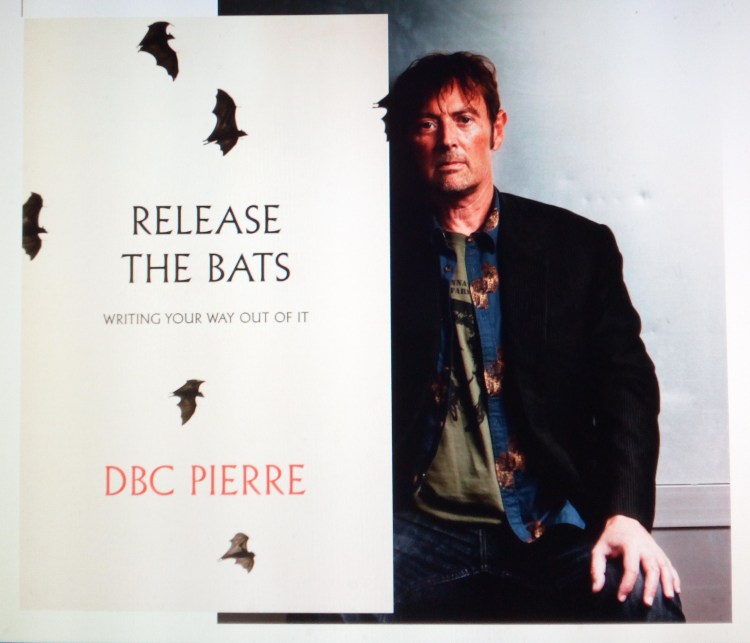
Photograph of novelist DBC Pierre by Murdo MacLeod for The Guardian.

“I wrote 300 pages in five weeks,” says novelist DBC Pierre, who made his debut with Vernon God Little, a Booker Prize winner, and delivers writing guidance in his contemporary work Release the Bats.

I enjoyed his gutsy and wildly perceptive advice which perhaps appeals to a ‘pantser’ style of writing rather than a ‘plotter’ but the quotable gems will stick with me.  Wisdom with a 21st century twist and language to match.

“A few pages into writing and find yourself drowning, as I did.”  DBC Pierre.

“When I started to write,” says self-confessed bad boy DBC Pierre in The Guardian interview, “I wasn’t particularly well-read, but I found two things critical. Together they can turn a pile of thoughts into a novel, in case you’re at a loose end next weekend, or are in prison. They’re also helpful if you’ve swum a few pages into writing and find yourself drowning, as I did.”

“The first might seem stupid but I actually found it the main hitch in getting words down and ‘letting rip’, ‘sticking with it’, and all that noble stuff we’re supposed to do. ‘The responsibility of awful writing’ was Hemingway’s twist on his own phrase ‘the awful responsibility of writing’. As the man who also said ‘first drafts are shit’, he pointed to a truth: if the key to finishing a novel is sticking with it, then the main challenge is to face writing crap.”

DBC Pierre Vernon God Little Bookcover

“All I liked after writing the first page of Vernon God Little was the voice. It had things to say about everything. I could feel it wanting to say them. But I went on to write 300 pages that didn’t make a book. I wrote them in five weeks, in a fever, without looking back. And at the end, I still liked the voice – but it hadn’t really said anything. Or rather, it had said plenty but nothing else had really happened. I soon found advantages to having done it that way.”

“Even writing 50 pages of crap gives a sense of achievement.”  DBC Pierre. 

“For one thing, I would usually find it hard to move on to page two if I didn’t like page one. I bet you could wallpaper the planet with books that never got to page two. And it’s a circular trap, in that some of the energy you need to forge ahead and push your page count up is generated by forging ahead and pushing your page count up. Even crap gives a sense of achievement when you get to 10, 20, 50 pages of it. When you don’t get past page one, you lose the spur. After that, the thing spirals into bad feeling and dies while you check email.”

“Half the problem is the expectation that we’ll see finished writing at once, more or less in its place. But I wouldn’t have written what I wrote if I’d thought about structure and form at the time. Obviously, if we’re writing about a boy going to the river, we make him go to the river. I don’t mean write without an idea – just that better ideas will come later. They attract each other and grow. We write crap in the meantime. It can work like a compost.”

“If you watch a dieter breaking their diet, you’ll see that they gobble things before they can stop themselves, before the internal arguments, before the shame. Guiltily and fast: that’s how to approach a first draft. A free writer is not something you are, but a place you can go. To start that climb: speed. Don’t look down. Keep a note of your page or word count, watch it grow like an investment. Amp yourself up. When we do things this way, a phenomenon comes to bear that justifies our approach: art. Some of what we write will crystallise for reasons we can’t explain, and the story comes into a life of its own.”

“If the job gets boring, loosen up…throw in a new character.”  DBC Pierre.

“Eventually, take that feverish pile, bravely or drunk, and read it back. Get over the cringing and find a glimmer, see what sentence or idea intrigues or excites you. Start from there and build out. If the job gets boring, loosen up, take a tangent, throw in a new character. In this process, the work begins to show itself. We show ourselves. When gems have grown into paragraphs, paragraphs into pages, look again. Find the part that works best and lift the rest up to it. This is how it climbs, by following what pleases us most.”

“We can’t compete with Shakespeare or Hemingway, nor should we try. Our particular feeling is all we can bring to this party, and our whole job should be to wrestle it into a story that works for us alone. After that we can dress it for others to read. A different job entirely. Save that for a strong coffee on a Monday.”

One of three different interviews by Chris Wiegand, Dave Simpson and Homa Khaleeli.  Wed 22 Feb 2017 06.00 AEDT “Culture” The Guardian newspaper.
https://www.theguardian.com/culture/2017/feb/21/frank-turner-dbc-pierre-creative-industry-advice
Heading : So You Want To Be An Artist? Then Let The Pros Show You How It’s Done.

You can also read my book review of Breakfast With The Borgias by DBC Pierre.

Gretchen Bernet-Ward

Book Covers Tell Too Much

Books Bookshelf Old Volumes

Can you tell a book by its cover?  Sure you can!  Just the same as an individual’s personality and clothing can tell something about them, a book lures the reader with an enticing cover image.  That visual reveal, a hint of what’s hidden within the book is a very important marketing tool.

A contemporary bookcover, no matter what the genre or category, has to be identifiable.  It has to look good on publicity material, it has to create a mood and it has to appeal to its target audience.  The font style, back cover blurb and all-important artwork join together to get you interested enough to part with your money.  Unless you are borrowing the book from your local library.  Nevertheless, you will still be interested in that lurid hardback in your hand because it promises so much…just look at that out-of-context quote from a famous author who said “chilling depth” and “sizzling romance” from a “writer with imagination”.

Millions of modern eye-catching bookcovers are perfectly serviceable and practicable and sensible and don’t mislead the intended reader.  It can be argued that bookcover images only hint at a small portion of the entire book.  But, as a person who reads books very closely, I disagree.  I like to make my own assumptions and not be misled by skewed artistry.

Thus I start my LONG bookcover show-and-tell, documenting that which has annoyed me for some time – the all-to-obvious artwork on bookcovers, those illustrations which give the game away.

  • The reveal: I loathe it when the crime bookcover shows the pivotal moment in the book. A dead giveaway!  Is that the graphic artist’s fault for reading the front and back page?  Is it the publisher’s fault for handing out the last chapter?
  • Bookcover clue giveaway: I have just finished a police procedural and the creepy black-and-white cover photo with a rundown house on the hill encircled by barbed wire is actually where the bodies are buried. No kidding, I knew every time the detective went up that hill, he was darn stupid.  Or the one with the sketch of a child on a rocking horse holding a scythe over her shoulder – storyline crumbles before it starts.  Worth mentioning that a rocking horse was not even in the story.
  • Vignettes snipped from a chapter: Like historical fiction “Golden Hill”, where a sketch of the hero is seen on the bookcover leaping across a roof top in true Hollywood style, no doubt aimed at action-loving readers, when the bulk of the story revolves around cruel social hierarchy.
  • A mystery novel: Well, murder actually because several people end up getting killed. This illustration managed to ruin the first three punchlines in the first three chapters.  Not to mention the good guy is seen working in the downstairs office window when his office is upstairs.  Plus the red motorbike heading up the road outside is meant to be him, at the same time.  Lovely drawing but couldn’t they have chosen something more accurate?
  • Overcooked Clones:  There’s the hand frozen in ice (guess how the victim dies) there’s the bridge across the river (guess how the victim dies) there’s the threat (a big dark old building) there’s a corrupt political serial killer millionaire mowing his way through rich widowed neurotic socialites on board his yacht (guess how the victims die) or bones poking out of the earth…black crow…wolf in snow…lonely highway…stark tree…dropped gun…body part…the train racing through the underground station…all overdone crime tropes.
  • To quote Tim Kreider, essayist: “The main principles of design—in books…is your product must be bold and eye-catching and conspicuously different from everyone else’s, but not too much! Which is why the covers of most contemporary books all look disturbingly the same, as if inbred.”  Which leads into––
  • Dark silhouette: I, for one, thoroughly dislike the brooding male or female silhouette in a heavy coat, head down, walking toward a menacing city skyline/bridge on a rain-soaked evening. Boring!  The stock standard photo silhouette has been on countless bookcovers for years.  Think of Lee Child.
  • Expected bookcovers or Clone II:  Why does (1) Romance have the obligatory well-developed over-muscled man and well-developed bust-overflowing woman, and (2) Literary fiction has a sedate, toned, almost elegant layout with a design which purrs good taste?  (3) Non-fiction is so varied it usually has just a colour photo with a word overlay.  (4) Historical fiction will have a woman in period costume gazing at house or hillside.  (5) Children’s books, fantasy and science fiction have a place all their own.  Renegades breaking up the predictable.
  • Flip side: An irrelevant illustration. There are obscure bookcovers like “The Midnight Promise” with two hands shaking as though in agreement when the Promise is nothing like that image.  At least it gave me something to ponder.
  • World-wide: I’m commenting on English language publications and referring to p-books and e-books. I’ve mentioned arbitrary books I have read and tried not to name them.  However, the same book published in different countries gets a different bookcover.  This is where designers and image stock can become tricksy.  I have seen translated children’s books looking very adult, young adult books looking too adult, and adult books looking sugary sweet, e.g. cosy mystery covers with blood-thirsty content between the pages.

Book Sliced Up on Plate with Knife

BONUS:  Terry Pratchett’s bookcovers by artists Josh Kirby and Paul Kidby tell a detailed story.  With fiction, decide how closely you should look.  Decide if you want to undermine the plot.  You may not even notice pictorial clues!  Ask yourself if you are exercising your own freewill, or are you conditioned by a generic bookcover image.

Link to superb 20th century bookcovers from The Paris Review:
https://www.theparisreview.org/blog/2018/02/22/twelve-illustrated-dust-jackets/

Today, the mass market book illustrators, the image makers, appear to acquire design inspiration from their clinical, perfectly sculptured computer programs.  Perhaps they should visit an art gallery, or see what’s shakin’ in the real world, then tell that miserable silhouette model to get lost.

Never stop reading!

Gretchen Bernet-Ward


Postscript : A Tiny Bit of History : Literature has changed in more ways than one over the centuries.  Illuminated manuscripts gave way to smaller volumes with dust covers/jackets in 1820s Regency, then refined in 1920s to make hardback books more attractive.  Before this the majority of bookcovers were a plain single colour with gold embossed wording and little adornment.  Swanky ones did have lithographs or a portrait frontispiece.  It is considered that 1930s paperback printing changed the course of bookcover art.

Lorna Doone by R D Blackmore

Saturday is young … then

Sebastian 003

Boredom sets in––

Think of something
Not cooking
Not cleaning
Not walking
Not tai chi
Not writing
Not doing anything

Boredom sets in––

Start a project
Ideas flow
Creativity expands
Love it
Best work ever
I can do more
Much more

Boredom sets in––

It is tricky
It is hard
It will never end
Why did I start
I don’t like it
I hate this thing
Had enough

Boredom sets in.

Gretchen Bernet-Ward


Boredom – even the explanations are boring!  Etymology and terminology:

(1) In conventional usage, boredom is an emotional or psychological state experienced when an individual is left without anything in particular to do, is not interested in his or her surroundings or feels that a day or period is dull or tedious.

(2) ‎The word boredom comes from a device called a “boring tool”, a kind of drill that works slowly and repetitively; around 1768, bore, meaning “be tiresome” became a popular slang term and the word “boredom” soon followed.


Goodbye to Facebook Again

Facebook Poke 02

After taking one year off to immerse myself in the art of writing, my time is up.

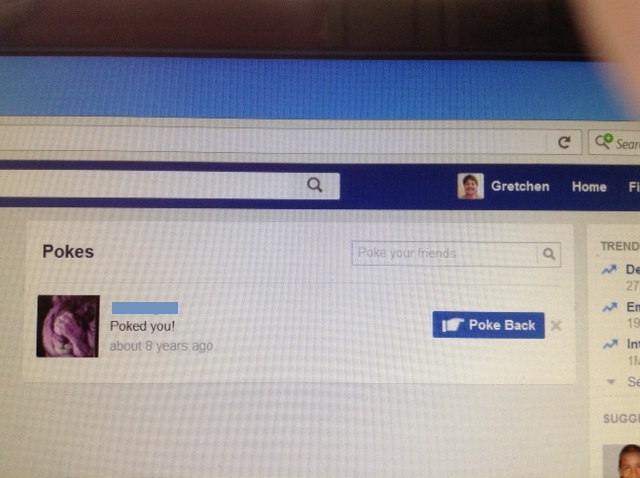
New Year’s resolution: I will no longer be posting regularly on Facebook because it is the most all-consuming part of my day and ultimately hollow.  Eight years ago I dropped out, as evidenced by the snapshot of this unanswered Poke.  Author Jen Storer of Girl & Duck, The Duck Pond and Scribbles creative groups can be pleased she was the one who drew me back into social media to nurture my writing dream – you light up my life – thank you.

My unFacebooking is not due in any way to the calibre and overall enjoyment of the wonderful ‘friends’ I made, I will miss virtually following your daily journeys in writing and illustration.  Conversely, we all are living two lives, the one on Facebook and the real one.

My departure is due to the links, Likes, highlights, comments, feeds, Facebook layout and general entanglements with people whom I do not know on a real level.  It may feel personal but it is not; and I need to grasp reality, my home, my family and my proper writing.

A visit from a little red hen named Took got me back out into our overgrown garden and I realised the computer screen is destroying my creativity rather than enhancing it.

My WordPress blog will continue https://thoughtsbecomewords.com/

“Year’s end is neither an end nor a beginning but a going on, with all the wisdom that experience can instil in us” – Hal Borland, American author.

Happy New Year 2018, everyone, and much fulfillment!

Gretchen Bernet-Ward


Postscript
: According to the 2017 Deloitte Media Consumer Survey, daily social media usage in Australia is down from 61 percent to 59 percent in 2017, and 20 percent of Australian social media users say they are no longer enjoying their time on the platforms.  Likewise, almost one third (31 percent) of survey respondents said they have temporarily or permanently deactivated one or more of their social media accounts in the past year.  Fake news is killing the media star with 58 percent of respondents agreeing that they have changed the way they access online content given the prevalence of fake news.  So, folks, I am not alone!

Let Your Heart Be Light

Jen Storer is an established Australian children’s author brimming with imagination and inspiration. This post encapsulates her talent, personality and future plans. Jump into The Duck Pond and start paddling with emerging writers and illustrators!
Gretchen Bernet-Ward

girlandduck's avatarGirl and Duck

Hello!

I like writing blog posts at Christmas. No one expects much. Do they?

IMG_3967Writing: I finally finished Truly Tan: Baffled! (book seven) and delivered it to my publisher on time (working right up until December 15, the day it was due). Phew! Next year I’ll be waaaay more organised. Ahem.

Finalising: We signed off on Danny Best: Me First! Check out the full cover. Talk about The Best! 😉 Due out in Feb 2018.

DB_MEFIRST_FC2Receiving: I received a Christmas card from a Tan reader. The letter attached said, I know you like wolves. So here’s a card with a fox on it. God, I love my readers.
IMG_3984 2

Planning and: pondering 2018. I have some lovely plans for girl and duck, including a Scribbles Boot Camp in Feb, and an IRL (in real life) Scribbles master class in Melbourne in May. We will also be launching the Girl and Duck…

View original post 518 more words

First of the Month

IMG_20171201_075041
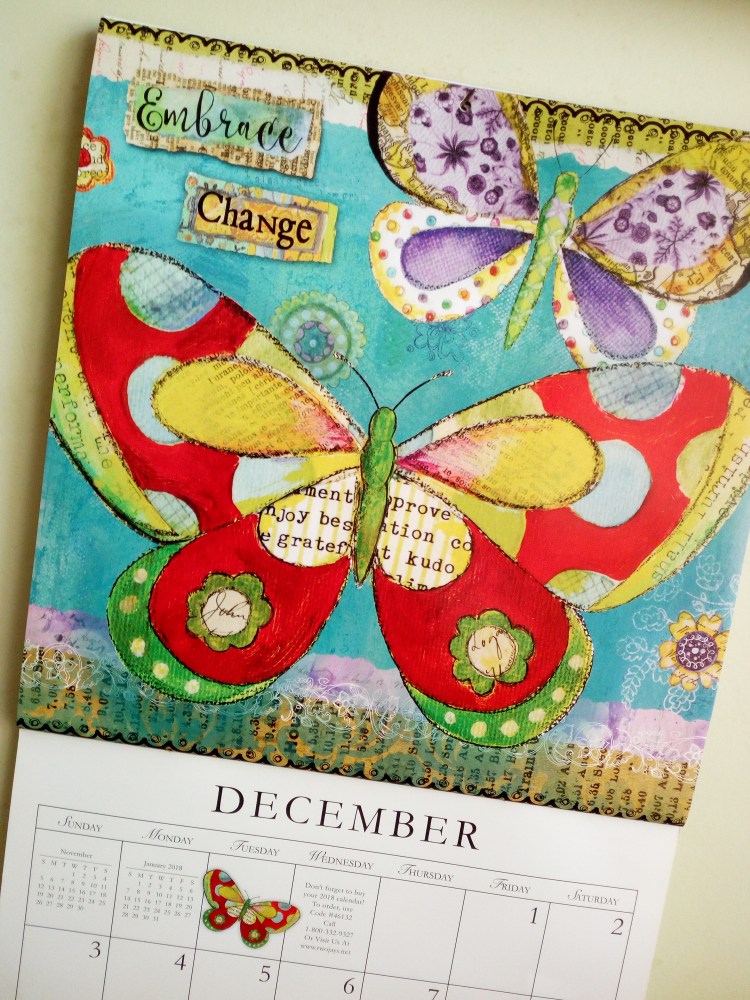
Hopper Studios, Canada, and artwork by Sue Zipkin

When I was a kid we used to say “Pinch and punch for the first of the month” and I don’t know why.  A lot of our practical jokes involved physical actions which resulted in the receiver going “Ow, ouch” and glaring fiercely while rubbing their arm.

This beautiful calendar art was created by Sue Zipkin, produced by Hopper Studios, and I will be sad to see it go.  However, its final words are encouraging “Embrace Change”.  How many of us will actually do that next year?

“A year from now you will wish you had started today.” — Karen Lamb

Gretchen Bernet-Ward