AI Found My Blog!

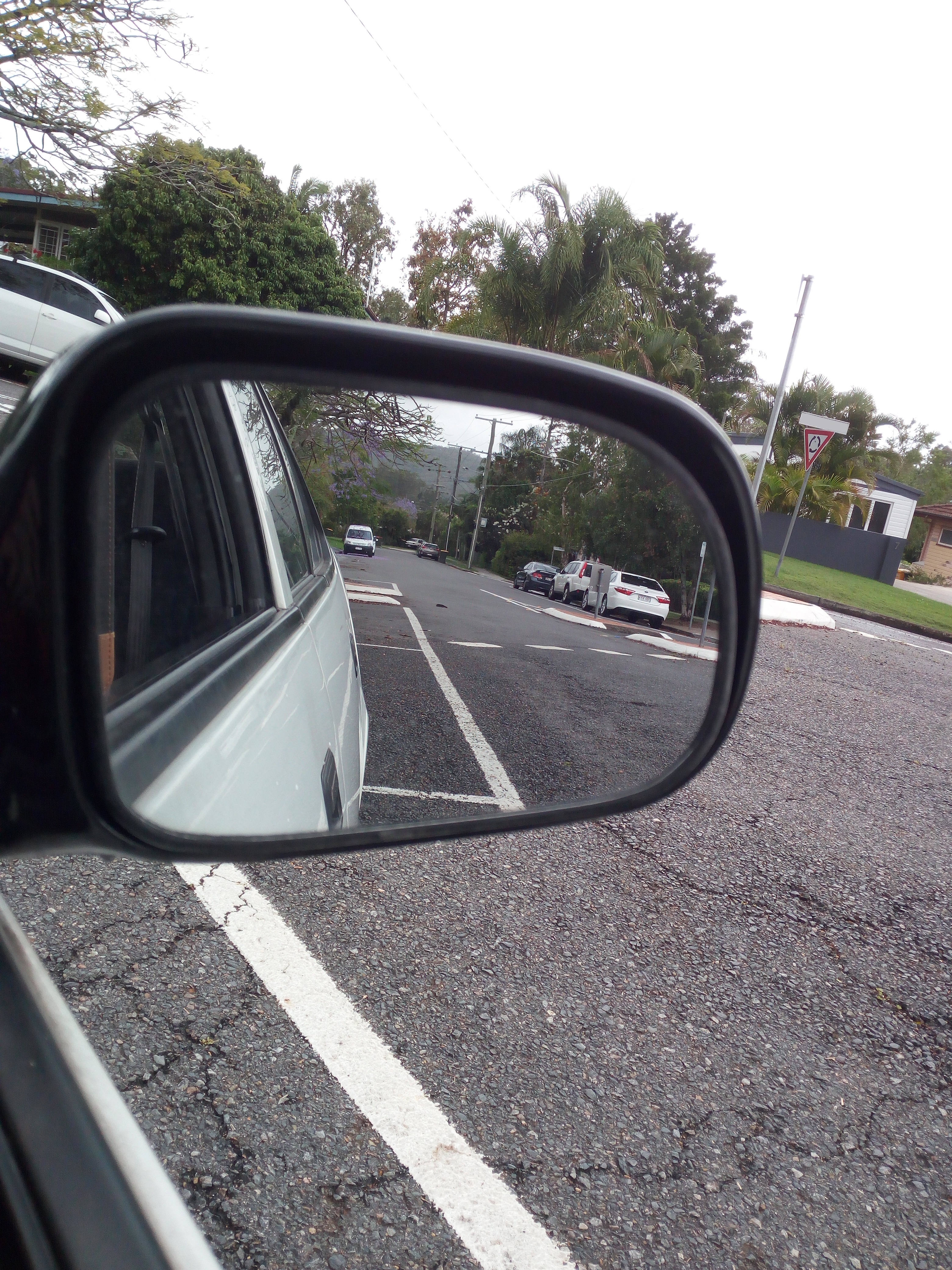
‘Searching’ Image © Gretchen Bernet-Ward 2022

Is this a good thing or a bad thing? I personally dislike AI on the grounds that it does not enhance knowledge, it takes away incentive to pursue and learn. Anyway, I was scanning my stats and noticed that twice I have been viewed and possibly, hopefully, ‘recommended’ by Artificial Intelligence as a source for two readers. Okay, that’s kind of flattering but what post of mine was viewed/recommended? Who was the reader? Will this offer any benefit to me?

Importantly, have I been acknowledged as the original source?

I guess once I put my work out there, it stands to reason it will be seen and read and maybe used, but we bloggers always acknowledge our source or include a website link especially to anything we re-post.

Artificial Intelligence (like most of the internet) has been launched on the world wide web without workable social, legal, ethical or cultural boundaries. Humankind may melt down into one homogenous mass. Perfect conditions for a maniacal dictator.

Lots of questions need to be answered, especially since an AI ‘borrower’ cannot be traced. At least not by me, so I may never know the source or where my material ends up. How can I truly know where my blog posts end up anyway? Certainly readers can cut and paste anything they like but they are genuine readers. I think a faceless nameless Artificial Intelligence is invasive until proven otherwise.

Ask a human novelist about AI rip-offs and AI non-existent royalties.
Meta allegedly used pirated books to train AI.
Jonathan Franzen, John Grisham, Jodi Picoult, George R.R. Martin and others have filed a class-action suit, still unresolved, alleging OpenAI Inc copied their works without permission or payment.
https://www.theguardian.com/books/2023/sep/20/authors-lawsuit-openai-george-rr-martin-john-grisham

Of course many people will benefit. There are quite a lot of AI sites out there, Gemini, Claude, Copilot, etc, the first being Perplexity AI. Also Character.ai is a neutral (as if!) language model chatbot service. Another human job lost? Of course, there are strong opinions on all of this and numerous disagreements for various reasons.

We humans like shortcuts more than memory retention. Ask anyone studying. Internet users can take a detour but often it can misdirect or misinform, as in the case of a person who used ChatGPT for a literary book club review and gave a dry, soulless analysis of the story. In my opinion, do your own homework.

I like to personally do my own web surfing and pick up interesting and genuinely human stuff along the way – alternatively I read words on real paper. Under my mythical (as in not real) Creepy or Could-be section, I imagine one future day an AI bot will activate a microchip implant in a school student’s brain which will find web logs (blogs) or text books and release classic volumes straight into their grey matter.

Unlike young generations before them who opened a real book and discovered the works of Charlotte Brontë, Charles Dickens, J.K. Rowling, John Marsden, Jackie French and Maurice Sendak, they will probably use an inside-head reading app. I certainly hope not but who knows!

💗 © Gretchen Bernet-Ward 2025

‘Books’ Image © Gretchen Bernet-Ward 2023

‘Mirror, Mirror on the Wall’ 10 True Facts

Winter night © Gretchen Bernet-Ward 2020

The nerd in me just loves these ten crazy true facts about mirrors!  I was actually searching for a fiction story based on a mirror but discovered Dr Ruth Searle’s website and decided her information was far more interesting.

Read on . . .

10. Mirrors And Time Travel

We know that a mirror can do more than reflect your image. And I won’t even start to document the amount of films I’ve seen or books I’ve read where the doorway to another world is through a mirror. A mirrored portal can lead you into an enchanted world of the future or the past; a doorway into a fantasy, paranormal or parallel world; a dystopian dreamscape or endless deep space—supposedly—however, with scientific know-how, Dr Ruth Searle explains HOW wormholes CAN make it possible to travel into the past.

9. Mirrors, Phantom Limbs, And The Human Brain

Experiments using mirrors on patients with phantom limbs have allowed researchers to learn a lot about the workings of our brain. Using a “smoke and mirrors” style optical illusion, researchers placed mirrors vertically on a table and used them to reflected the patient’s intact limb… there’s details on creating new neural pathways due to the plasticity of the brain and the connection between vision and touch.

8. Mirrors Cause Hallucinations

“A strange illusion is conjured up when you stare at your reflection in a mirror” writes Ruth Searle. This one slightly freaked me out because I remember as a girl I was told to stare into a mirror in the evening and soon I would see the face of my one true love. Anyway I stared and stared, and the more I stared, the more frightened I became. I never saw anything but I never did try that again.

If you are up for it, the instructions read “At first, you will find that there are small distortions in your face in the mirror. Then, gradually, after several minutes, your face will begin to change more dramatically, and look more like a waxwork, like the face doesn’t belong to you.” Shiver, no thanks!

7. Can Everyone Recognise Themselves In A Mirror?

Apparently children develop mirror self-recognition by about two years old but cultural differences can sometimes influence recognition and is not a sign that they lack the ability to separate themselves psychologically from other humans. One for those parental “aaw, cute” moments when their kid kisses the mirror.

Confident Cat
Confidence

6. Animals That Have Mirror Self-Recognition

Some researchers think certain animals are able to pass a test for recognising their own reflection. Animals which pass the traditional mirror self-recognition test naturally include chimpanzees and orangutans but several others surprised me. Killer whales anyone..?

5. Mirrors On The Moon

This sentence sounds like sci-fi but if you don’t believe me, read it yourself: “The Laser Ranging Retroreflector was left on the Moon by Apollo astronauts, and is used to calculate the distance from the Earth to the Moon. It is essentially a series of corner-cube reflectors—a special type of mirror—which reflects a laser beam back in the direction it came from… Not only can the Laser Ranging Retroreflector measure the distance from the Earth to the Moon, but it has improved our knowledge of the Moon.” There’s more on the website.

4. Mirrors Can Also Reflect Sound

Before radars were invented, mirrors which reflect sound waves were known as “acoustic mirrors” and were used in Britain during World War II to detect certain sound waves coming from enemy aircraft. It is worth checking the photo to see this almost modern art installation.

3. Reflecting Matter With Mirrors

I absolutely love this Sheldon-like paragraph “Amazingly, mirrors can also reflect matter. Such mirrors are known in physics as atomic mirrors. An atomic mirror reflects atoms of matter just as a conventional mirror reflects light. They use electromagnetic fields to reflect neutral atoms, although some just use silicon water…” Put on your Big Bang t-shirt and read the rest of it, I dare you.

2. True Mirrors

Dr Ruth Searle writes “It’s actually a myth that a mirror reverses your image—your reflection is not flipped. What you see is the left-hand side of your face on the left of the mirror, and the right-hand side on the right, giving the illusion that your reflection is reversed. However, a non-reversing mirror, or true mirror, was developed… primarily for applying cosmetics.” On Zoom, there is a function which allows you to reverse your image and I find it very disorientating.

IMG_20171016_115002
Backward and forward

1. Splitting Light With A Mirror

I did not know that mirrors not only reflect light, sound, and matter, but they can also split light beams. A basic beam splitter is a cube, made from two glass prisms connected at their base. The illustration for this one makes it look amazingly simple but the explanation says beam splitters are used in many scientific instruments including telescopes so their function would have to be precise.

So there you have it, folks, a short ramble through the never-ending joys of the internet.

Gretchen Bernet-Ward


ListVerse: 10 Crazy Facts About Mirrors | Ruth Searle | 30 December, 2013 | 80 Comments
Profile: Dr Ruth Searle is a marine biologist with a PhD in humpback whale ecology and behaviour in tropical marine environments.  She is also a freelance writer and science nut.