That Special Book Shelf
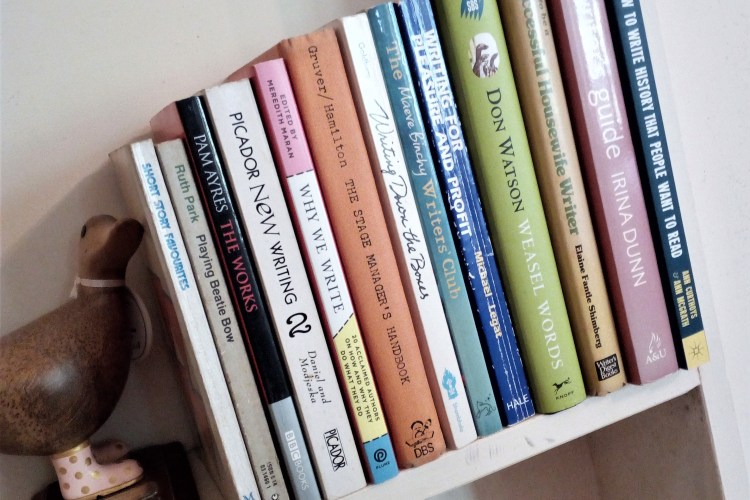
My small selection of How To Write books from various decades.

Interestingly the most handled judging by its spine is ‘Writing For Pleasure And Profit’ by Michael Legat 1992 (published Robert Hale Ltd London) with a foreword by P D James.

Chapter One says “…the obvious practical necessities for writing are pencil, pen, paper, typewriter, or get a typewriter friend to transcribe your work for you. Or have it professionally typed.” Legat used a word processor and called it a magic machine. Times have changed. Has creativity?

The book ‘Writing Down The Bones’ by Natalie Goldberg generated the most interest when I purchased it at a book fair. School’s out on this approach. In my opinion it depends on the genre.

Of course, all these books are senior citizens now, mainly due to the electronic era and the whole world on our phones. I cannot find my Stephen King ‘On Writing’ and I gave away my hardcopy of Julia Cameron’s perennial ‘The Artists Way’ but she is now live online https://juliacameronlive.com/the-artists-way/ However, I did find ‘See Me Jump: 20 things I’ve learned about writing books for children’ by the inimitable Jen Storer who has hundreds more tips now!

Books, hand-written, keyboard, paper drafts, online, speech-to-text, any format writing is writing and you just have to keep at it.

 Gretchen Bernet-Ward

© images Gretchen Bernet-Ward 2023

MY LIST:

Books on writing:
‘How to Write History that People Want to Read’ by Ann Curthoys & Ann McGrath
‘The Writer’s Guide’ by Irina Dunn
‘How to be a Successful Housewife Writer’ by Elaine Fantle Shimberg
‘Weasel Words’ by Don Watson
‘Writing for Pleasure and Profit’ by Michael Legat
‘The Maeve Binchy Writers’ Club’ by Maeve Binchy
‘Writing Down the Bones’ by Natalie Goldberg
‘The Stage Manager’s Handbook’ by Bert Gruver & Frank Hamilton
‘Why We Write’ edited by Meredith Maran (20 acclaimed authors advice)
‘Picador New Writing’ edited by Helen Daniel and Drusilla Modjeska
General inspiration:
‘The Works’ by Pam Ayres
‘See Me Jump’ by Jen Storer
‘Playing Beatie Bow’ by Ruth Park
‘Short Story Favourites’ edited by Walter McVitty
‘The Animals in That Country’ by Laura Jean McKay (shown below, adult concepts, indigenous animals not included with book)

Knowledge and Wisdom

Image © Gretchen Bernet-Ward 2022

Alfred, Lord Tennyson, in full Alfred Tennyson, 1st Baron Tennyson of Aldworth and Freshwater (born 6 August, 1809, Somersby, Lincolnshire, England — died 6 October, 1892, Aldworth, Surrey) an English poet often regarded as the chief representative of the Victorian age in poetry. He was raised to the peerage in 1884.

Source https://www.britannica.com/biography/Alfred-Lord-Tennyson

Clouds, No Daffodils

Clouds from Mt Coot-tha lookout, Brisbane © Gretchen Bernet-Ward 2022

I Wandered Lonely as a Cloud 

By WILLIAM WORDSWORTH

I wandered lonely as a cloud

That floats on high o’er vales and hills,

When all at once I saw a crowd,

A host, of golden daffodils;

Beside the lake, beneath the trees,

Fluttering and dancing in the breeze…..

Remember this poem from school days?
Complete verse on Poetry Foundation

https://www.poetryfoundation.org/poems/45521/i-wandered-lonely-as-a-cloud

Gretchen Bernet-Ward


I have been WP blogging 5 years so that is 10,000 views per year – maybe! GBW 2022

The Cat Says…

Cat quote modelled by JoJo @ Gretchen Bernet-Ward 2022

Read the card…

There are 24 quotes in The Cat’s Whiskers box (little affirmations to encourage a pawsitive life) and the next card purrs “The primary business of a cat is comfort” which surely comes under the same banner as relaxing, catnapping and sleeping.

All of which cats probably invented and certainly claim superior mastery.

Charles Dickens is reputed to have said “What greater gift than the love of a cat?” because cat-lovers around the world know that feline love is sometimes hard-won but worth it.

How easy it is for us to be smitten by a kitten.

 Gretchen Bernet-Ward

🐱 🐱 🐱 🐱 🐱


acknowledgement to
Affirmations Publishing House
Bellingen NSW Australia

IN MEMORY OF BELOVED BINAH

U3A Adds to My Life

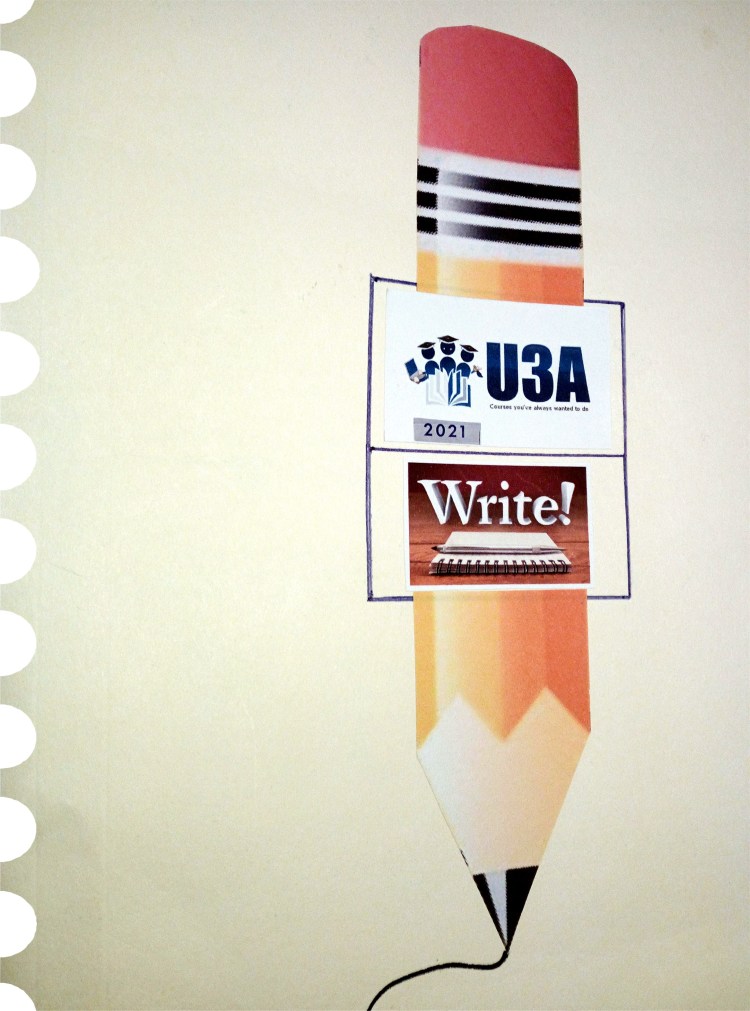
Design and photo © Gretchen Bernet-Ward 2021

I am a member of U3A, University of the Third Age, an organisation designed for retired or semi-retired people over 50.  My focus has been creative writing but U3A provides an opportunity for members to try something different, meet new people, and share and enhance their knowledge and skills in a friendly environment.

World-wide, U3A is making a substantial contribution to societies by helping members to remain healthy and active longer.

University of the Third Age promotes learning for personal enjoyment and well-being for seniors.  Keeping the brain active, doing interesting things and making new friends are essential for helping older Australians maximise their chances of independence.

U3A Brisbane is one of many similar U3A branches throughout Australia. Formed in Brisbane in 1986, they are a volunteer organisation.  Brisbane locations provide leisure, arts and educational courses to local members at low cost each term.

Classes are conducted on Zoom and in person at a number of venues subject to Covid-19 restrictions.  

CLICK A LINK! ENHANCE YOUR SKILLS OR DISCOVER A NEW ONE:   

U3A Brisbane https://www.u3abrisbane.org.au/

U3A Queensland https://www.u3aqld.org.au/

U3A Australia https://u3aaa.org/

Gretchen Bernet-Ward

* * * * *

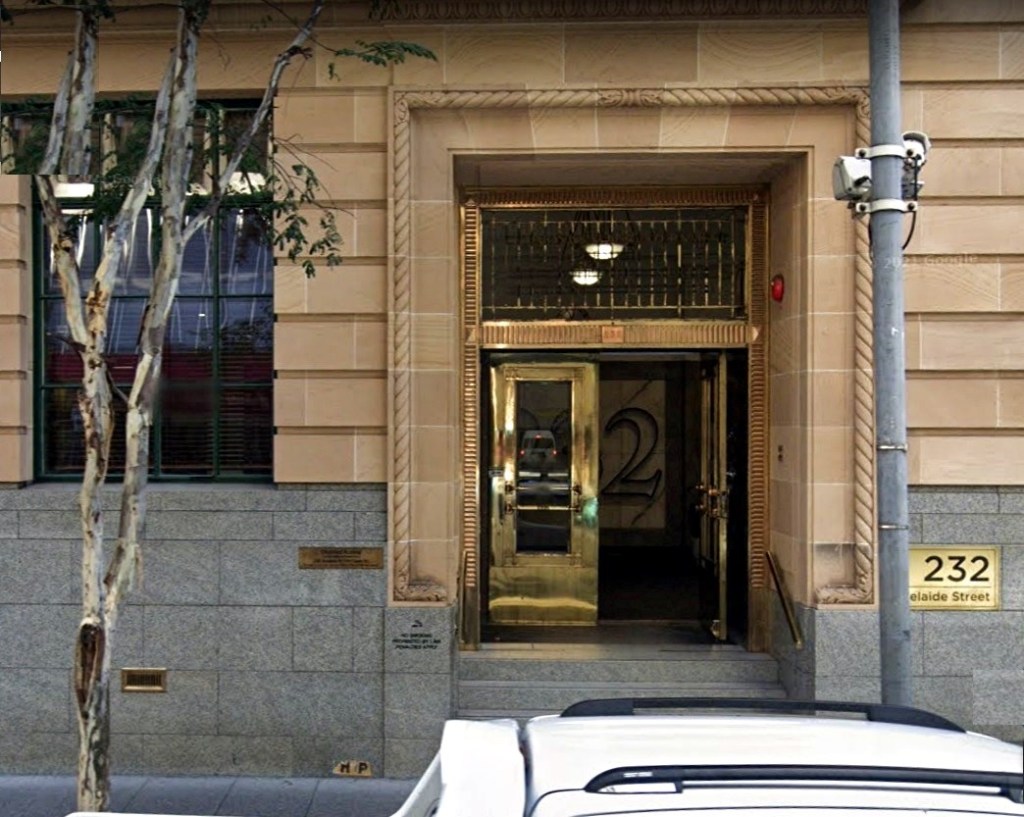
Front doors of U3A Adelaide Street, Brisbane.

What if..? Jade Hameister’s Challenge

Jade Hameister Polar Skier and Sandwich
Jade Hameister Polar Skier (Image Credit: @jadehameister)

“What if young women around the world were encouraged to be more, rather than less? What if the focus shifted from how we appear, to the possibilities of what we can do?”

Quote from Jade Hameister – world record-breaking polar skier.

When told to “make me a sandwich” by a number of male internet trolls in response to her TED talk, Hameister made one, posted a picture of herself with the sandwich at the South Pole and captioned the photo:


“I made you a sandwich (ham & cheese), now ski 37 days and 600 kilometres to the South Pole and you can eat it.”


Star Fish 02Jade Hameister OAM (born 5 June 2001) is an Australian woman who, age 16, became the youngest person in history to pull off the “polar hat-trick”, ski to the North and South Poles, and cross the second largest polar icecap on the planet: Greenland.  Wikipedia.

Quote source:
https://www.australiangeographic.com.au/topics/history-culture/2018/03/in-her-words-inspiring-quotes-from-australias-ground-breaking-women/

TED talk:
https://www.google.com/search?client=firefox-b-d&q=Jade+Hameister+TED+Talk

Facebook post:
https://www.facebook.com/jadehameister/photos/a.224825967879767.1073741829.207513589611005/524715937890767/?type=3&theater

Gretchen Bernet-Ward

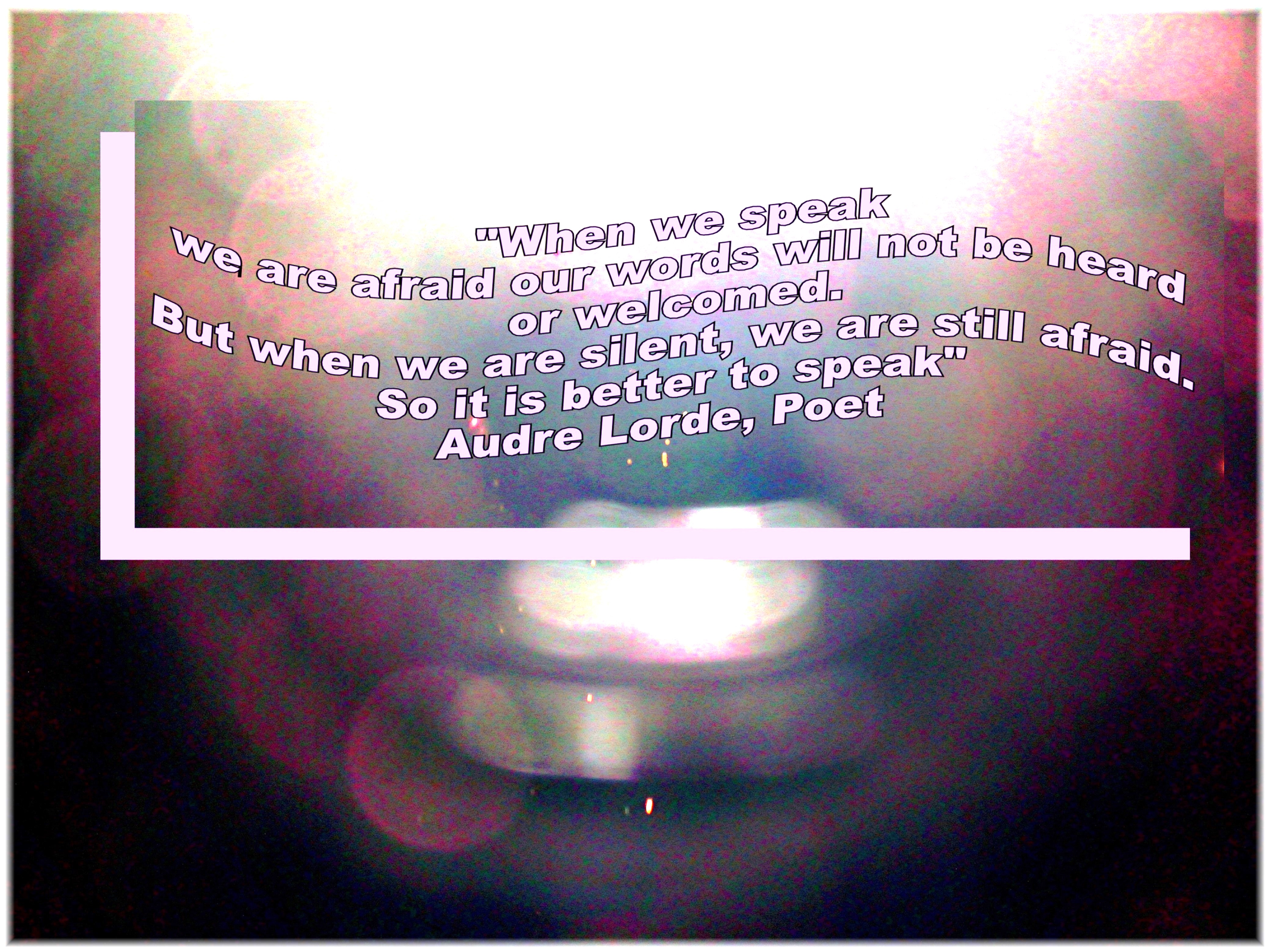
Audre Lorde, Poet

IMG_20191122_203220

Audre Geraldine Lorde was born on February 1934 in New York City, and went on to become a leading African-American poet and essayist who gave voice to issues of race, gender and sexuality.

Lorde’s love of poetry started at a young age, and she began writing as a teenager.  She attended Hunter College, working to support herself through school.  After graduating in 1959, she went on to get a master’s degree in library science from Columbia University in 1961 and was head librarian at Town School Library in New York City.

‘The Black Unicorn’ (1978), a volume in which Lorde explored her African heritage, is considered one of her greatest works by many critics.  In addition to poetry, Lorde was a powerful essayist and writer.

In terms of her nonfiction work, Lorde is best remembered for ‘The Cancer Journals’ (1980) in which she documents her own struggle with breast cancer.  She died November 1992 on the US island of St. Croix.

Information from The Biography.com website  https://www.biography.com/scholar/audre-lorde

Citation Information

Article Title
Audre Lorde Biography

Author
Biography.com Editors

Website Name
The Biography.com website

Access Date
November 27, 2019

Publisher
A&E Television Networks

Last Updated
April 16, 2019

Gretchen Bernet-Ward

Art Deco Delights on Display

IMG_20191014_130309_BURST001_COVER
 

The first photograph shows a Cloche hat (circa 1925) made of rayon, silk organza, sequins and mercerised cotton.  The designer is unknown.  I saw it displayed in the Ipswich Art Gallery exhibition ‘The World Turns Modern’.  It is from the Julian Robinson Collection on loan from National Gallery of Australia.

ART DECO is the predominant decorative art style of the 1920s and 1930s, characterised by precise and boldly delineated geometric shapes and strong colours and used most notably in household objects and in architecture.

Below is my small sample of Art Deco on display.


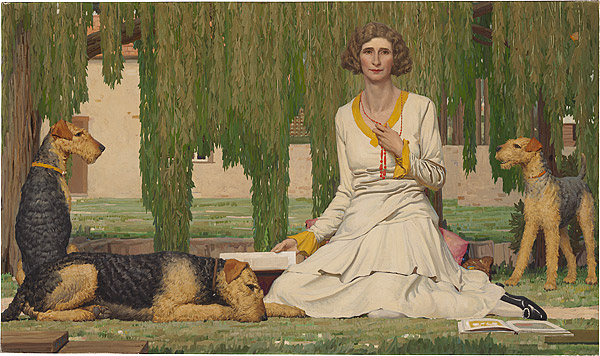
Ipswich Art Gallery Art Deco Lady with Dogs

The first painting to draw my eye was Christian Waller in her garden with her dogs.
Artist :  Napier Waller (Penshurst, Australia 1893 – Melbourne, Australia 1972)
Title :  ‘Christian Waller with Baldur, Undine and Siren at Fairy Hills 1932’
Materials and technique :  Oil and tempera on canvas mounted on hardboard.
Dimensions :  121.5 h x 205.5 w cm, overall frame 1315 h x 2165 w x 60 d mm (big!)
Purchased :  NGA 1984.

“The frieze-like formality of the painting and its cool, crisp colours underscore the demise of the Waller marriage.”  Such a sad note, and I wonder who got the Airedale terriers?


IMG_20191014_123704


Inlaid wood was all the rage and this match box (in book form) took my fancy.  As the information card states, it comprises rose mahogany, yellow wood, rose sheoak, sandpaper and red cedar.  Rare commodities nowadays.


This stunning bronze cast (in relief) features a woman wrangling two horses; I liked the strength, energy and symbolism of this piece.  Jean Broome-Norton’s renaissance woman is not life-size but the plinth gives it height and power.


The modern front doors of award-winning Ipswich Art Gallery, and inside the original building has been restored and extended.  The shipping and travel poster hints at women enjoying greater freedom, the right to vote and travelling unchaperoned.  The image of the independent woman became popular in graphic design for posters and portraiture.


Ipswich Art Gallery IMAGE Hilda Rix Nicholas Une Australienne 1926
 
 
This painting appears on gallery advertising posters and epitomises the era.
IMAGE: Hilda Rix Nicholas ‘Une Australienne’ 1926.

Oil on canvas. National Gallery of Australia, Canberra. Purchased 2014.
© Bronwyn Wright.


Ipswich Art Gallery Art Deco Red Teapot and Teacups
 

Unfortunately my photographs of etchings, square teapots and Lalique glassware did not work due to the lighting.  Pictured above is a red Art Deco tea-set of stunning design, quite petite, which may not have been easy to sip from if you were feeling nervous at a polite society soirée.


Left photo :  In a side gallery, I viewed ‘Cover Story: Queensland Arts Council Cover Art and Poster Collection 1981 to 2008’ displaying commissioned work by leading Australian artists and illustrators.  From rough sketches to finished art, it was fascinating to see such big names especially in children’s literature, for example Graeme Base, and my favourite Alison Lester and her 1991 on-tour directory cover.

Right Photo :  Upstairs in the heritage gallery, I just had to take a photo of this wonderful 1895 miner’s brooch which I presume was designed for a man but it is small and delicate.  Made of 15ct gold, it may have been used as a tie pin, and the case is about the size of a snuff box.


IMG_20191014_135211
 

Time for a cuppa at the Post Office Café.  I was impressed how the colour and table setting matched the Art Deco theme without really trying.  The proprietor of the café told us that she was sick of washing the tablecloths and they were being replaced with inlaid lacquered tabletops.  Shame, but the sweet treats were delicious.


IMG_20191014_141459
 

The view outside had interesting angles and contrasts; the Post Office Café courtyard, the umbrella, the modern buildings and above, as if floating, the original Ipswich Post Office clock tower, circa 1890.


If you are interested in the Art Deco exhibition, get in quick, it closes this weekend!


07 Sep 2019 – 27 Oct 2019

“Comprised entirely of works selected from the National Gallery of Australia collection, this exhibition provides superb examples of the diverse expressions of Art Deco.”

Gretchen Bernet-Ward

Coach Departing Now, Folks

IMG_20190729_162917
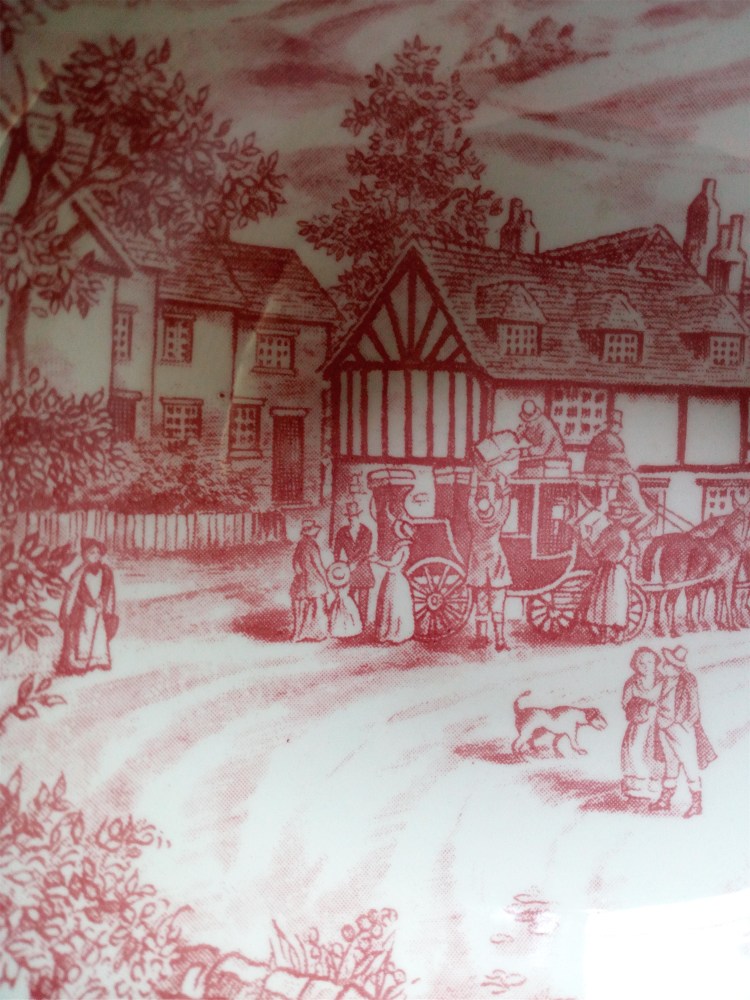
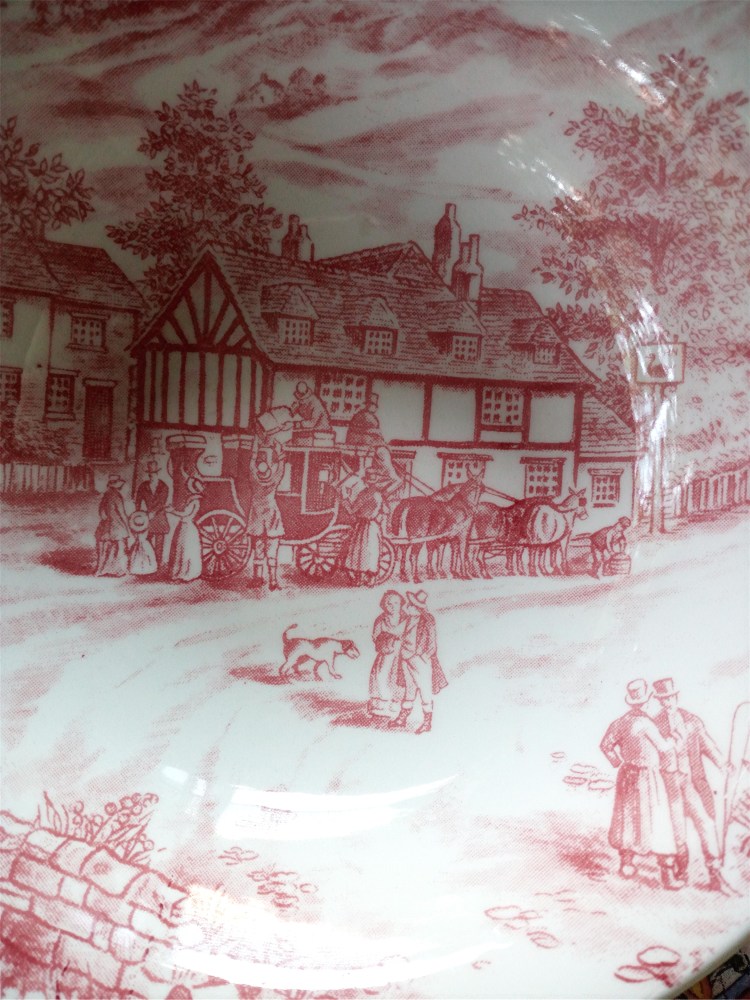
Made in England – china dessert bowl – date and manufacturer unknown.

A rather dramatic story is unfolding in my breakfast bowl.

Cereals and desserts have been eaten from this bowl for over thirty years and yet I have never properly looked at the picture on it.

A few days ago I had a shock when I scooped up the last spoonful of my Weet-Bix (similar to the UK Weetabix, both invented by Bennison Osborne, an Australian) and saw there was a castle on the hill.  I kid you not, I had never seen that castle before!

Allow me to acquaint you with some backstory.  Originally there was a set of six china bowls (15 centimetres or 6 inches across) and originally my parents owned them.  Unfortunately porridge, domestic accidents, and heating leftovers in the microwave have whittled them down.  Of the surviving two, one has a nasty looking fault line appearing.  Therefore, the bowl I have photographed may be the end of the ceramic line.  Or the end of the beginning of a coach trip.

So far, so boring—but wait.  Although this bowl is old, I have to be honest and say it is not an antique.  In fact the picture may have been embossed on like a transfer and glazed over.  Never mind, I’m getting to the point, well, ten points actually—

  First there is the brooding castle on the hill; quite a substantial pile.  A name doesn’t immediately spring to mind but I’m working on it.

  Nestled halfway down the hill is a gamekeeper or crofter’s cottage.

  In the valley at the base of the hill is a small village.  An unaccompanied lady is standing on the side of the unpaved road which runs past the Duck Inn.  She isn’t over-dressed and uses a walking cane.  Her gaze is towards the two gentlemen opposite, chatting beside the milestone.  Perhaps this marker reads “London 100 miles” but I can’t decipher it.

  One of the toffs (lord of the manor) is holding a buggy whip.  He would not have ridden a horse down from the castle in a top hat.  He could be the lady’s son and heir up to no-good, he spends too much time in the tavern.  Or she may be his old faithful nanny, instructed to keep an eye on him.  Or yet again, she could be the wife of the man canoodling in the middle of the road.

  We see two lovers canoodling in the middle of the road.  The man is keener than the woman, and a dog is either giving them a wide berth or coming around behind the man to nip him on the ankle.

  Unbeknown to the busily occupied people, a cat slinks into the rear footwell of the coach.  Earlier he had been shooed away but being a feline named Nosey…

  Outside the Duck Inn (a duck is painted on the sign) the coach boy is making final preparations for the horses’ feedbags.  He loves them ‘orses.

  The coach driver is ready and waiting.  He’s heard rumours that Dick Turpin is lurking in the vicinity (if I’m in the right century) and wants to get going well before nightfall.  The innkeeper loaned him a pistol and it digs into the small of his back.

  Seven people are milling about.  At least four are passengers judging by the loading of a trunk on the roof, a well-wrapped parcel in somebody’s hands, and a family group perhaps saying goodbye.  The husband could be off to London on business and the daughters are sad but the wife is glad he’s out of her hair for a few days.

  Lastly, a curtain twitches at one of the attic windows of the Duck Inn.

There are leafy details in the background and in the foreground the stone wall appears to be crumbling.  I have looked for birds but only managed to spy a tiny number 9 in the garden beneath the Duck Inn sign.  A maker’s mark?

And that’s it.  There are no hallmarks or stamps on base of the bowl except the words “Made in England”.  I have no idea if the picture is fake-aged or has been copied from an earlier (original) tableware design.

One thing is for sure, it has given me a good idea for an historical short story.  Visual prompts are another way to overcome writer’s slump.  Look hard at any image and you will find a story to tell.

Check your kitchen cupboards, your own crockery may have a narrative in the making!

Gretchen Bernet-Ward