Dugongs and Curlews Don’t Sleep in Beds—Save Toondah Harbour Wetlands

Eastern Curlew image : Dan Weller and ABCTV

Here is my email with additions made to a draft copy received from Greens MP Elizabeth Watson-Brown and sent to The Hon Tanya Plibersek MP, Minister for the Environment and Water:

My email heading “Dugongs and Curlews Don’t Sleep in Beds—Stop Harbour Development

Dear Minister Plibersek,

I urge you to use your powers as the Environment Minister to reject Walker Corporation’s Toondah Harbour project which will destroy globally important wetlands and a refuge for some of Australia’s most unique and threatened wildlife.

A Ramsar-listed wetland is no place to build 3600 luxury residences including high-rise apartments, commercial strips and a 220-berth marina. It is beyond belief that this project is even being considered in the twenty-first century. We have already lost so much biodiversity due to corporate greed.

This project will have significant impacts on matters of national environmental significance: an internationally listed wetland (Moreton Bay), nationally threatened shorebirds including the critically endangered Eastern Curlew, migratory marine species (dugongs and turtles) and the locally threatened koala.

The Eastern Curlew is one of the 22 priority species in the Federal Government’s new 10-year Threatened Species Action Plan. Approving this project would be completely at odds with the Albanese Government’s goal of ‘No new extinctions’. I say save and preserve because there is no rebirth after extinction.

Failing to uphold Australia’s international obligations under the Ramsar Convention to protect this wetland and the species that rely on it, would set a dangerous precedent that could allow damaging developments in other important wetlands in Australia and worldwide.

Critically endangered – How long will this small shorebird be able to continue to fly between Australasia and far-flung countries. A thousand years, a hundred years, or maybe just a few years?

Walker Corp’s claims that a vast high-rise apartment complex on sensitive wetlands would result in ‘No expected reduction in migratory bird numbers’ and ‘Deliver a positive outcome for koalas’ are beyond belief! The construction materials, vehicles and building cement run-off alone could pollute the entire bay area.

Toondah Harbour is in the Redland Bay Cleveland area of southern Moreton Bay, Queensland, Australia. There is significant opposition to this building project from the Redlands community and Australia-wide and rightly so. Once that wetland biodiversity goes, everyone and everything suffers—and it won’t grow back.

The health of local residents is already affected, they are upset and deeply concerned about the loss of already threatened wildlife; the impact on local businesses and tourism; and increased road traffic. Every single millimetre of Toondah wetlands must be preserved for a healthy future.

Thank you for reading this letter and considering my views.

Yours sincerely,
Gretchen Bernet-Ward
Brisbane 2024

Postscript: After I emailed my thoughts regarding saving Toondah Harbour wetlands from massive tourism over-development, I saw this on our Australian Parliamentary website and The Guardian:

https://minister.dcceew.gov.au/plibersek/media-releases/proposed-decision-refuse-development-toondah-harbour
and
https://www.theguardian.com/australia-news/2024/apr/09/tanya-plibersek-rejects-toondah-harbour-project-over-impact-on-globally-significant-wetlands

THEN—TOONDAH HARBOUR DEVELOPMENT STOPPED! 18/4/24 It’s official! The iconic Toondah Harbour has been saved after Walker Corporation withdrew their application to build a $1.4 billion real estate project on the internationally protected wetland site. This momentous news comes after Environment Minster Tanya Plibersek announced last week that she intended to reject the nature-wrecking project on the basis that removing 58.7 hectares was unacceptable and would affect threatened flora, fauna and migratory birds. Also thanks to the groundswell of communities throughout Queensland and Australia with close to 200,000 people having called on our Government to save Toondah. View Tanya Plibersek’s announcement:

https://www.acf.org.au/toondah-harbour-saved-a-historic-moment-for-nature-and-people-power#:~:text=It’s%20official!,the%20internationally%20protected%20wetland%20site.

Please keep our waterways clean because…

ReUse ReCycle Bag © image Gretchen Bernet-Ward 2024

My Visit to Koala Science Institute

The Koala is a laidback leaf-muncher who gets hassled by the bad boys of the Aussie bush.  Not by other native animals but tree-lopping developers and domestic pets.  Koalas are a unique marsupial which needs human protection to survive.  And eucalyptus trees, of course.

At Lone Pine Koala Sanctuary, an 18-hectare Koala conservation park in the Brisbane suburb of Fig Tree Pocket, Queensland, there is a new facility dedicated to Koala health and well-being.  I paid them a visit to learn more…

20180929_133722
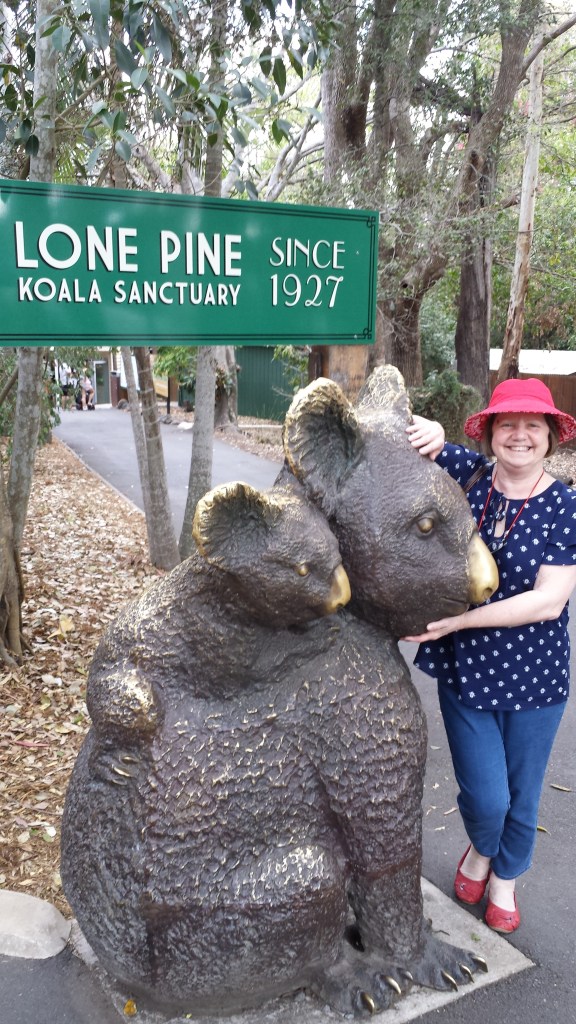
Greeted by mother and baby on arrival at Lone Pine Koala Sanctuary, Brisbane. On this visit I didn’t hug a real Koala but you can!

The Koala (Phascolarctos cinereus, not a bear) is an arboreal herbivorous marsupial native to Australia.  It is the only extant representative of the family Phascolarctidae and its closest living relatives are the wombats.

To quote the KOALA SCIENCE COMMUNITY dedicated to Research, Connect, Protect:

“United by a common purpose to conserve koalas across their range, Lone Pine Koala Sanctuary and Brisbane City Council worked together to build and establish the Brisbane Koala Science Institute, located at the sanctuary in Brisbane, Queensland. The Institute and this online community are further supported by Lone Pine’s not-for-profit organisation, the Research for Nature Foundation, which will help fund various South-East Queensland koala projects, in partnership with local scientists, researchers, and industry professionals.

Our aim is to bring together like-minded individuals in a knowledge-sharing environment to foster innovation, facilitate collaboration, and enhance accessibility, with the aim to deliver real, practical outcomes beneficial to the local wild koala populations.”  Affiliated with https://www.zooaquarium.org.au/index.php/world-class-koala-research-facility-now-open-at-lone-pine-koala-sanctuary/

At the unique Brisbane Koala Science Institute at leafy Lone Pine, I was pleasantly surprised at how much Koala information I absorbed in a short space of time.  There are interactive (and multilingual) displays, research labs with public viewing areas and a koala observation area.

♥ Koalas have special teeth for grinding down eucalyptus leaves which ferment creating sleeping patterns which mean they can sleep more than 18 hours a day.  ♥ Koalas have large, strong claws to help them climb smooth-barked eucalyptus trees.  ♥ A Koala baby, joey, lives in the mother’s pouch for six months then grows up to become a big eater, consuming about one kilogram of eucalyptus leaves per day.  ♥ Koalas front paws can grip small branches as they reach for the juiciest leaves.  ♥ Koala lifespan is between 10 to 16 years which naturally depends on environmental conditions.

20180929_133359
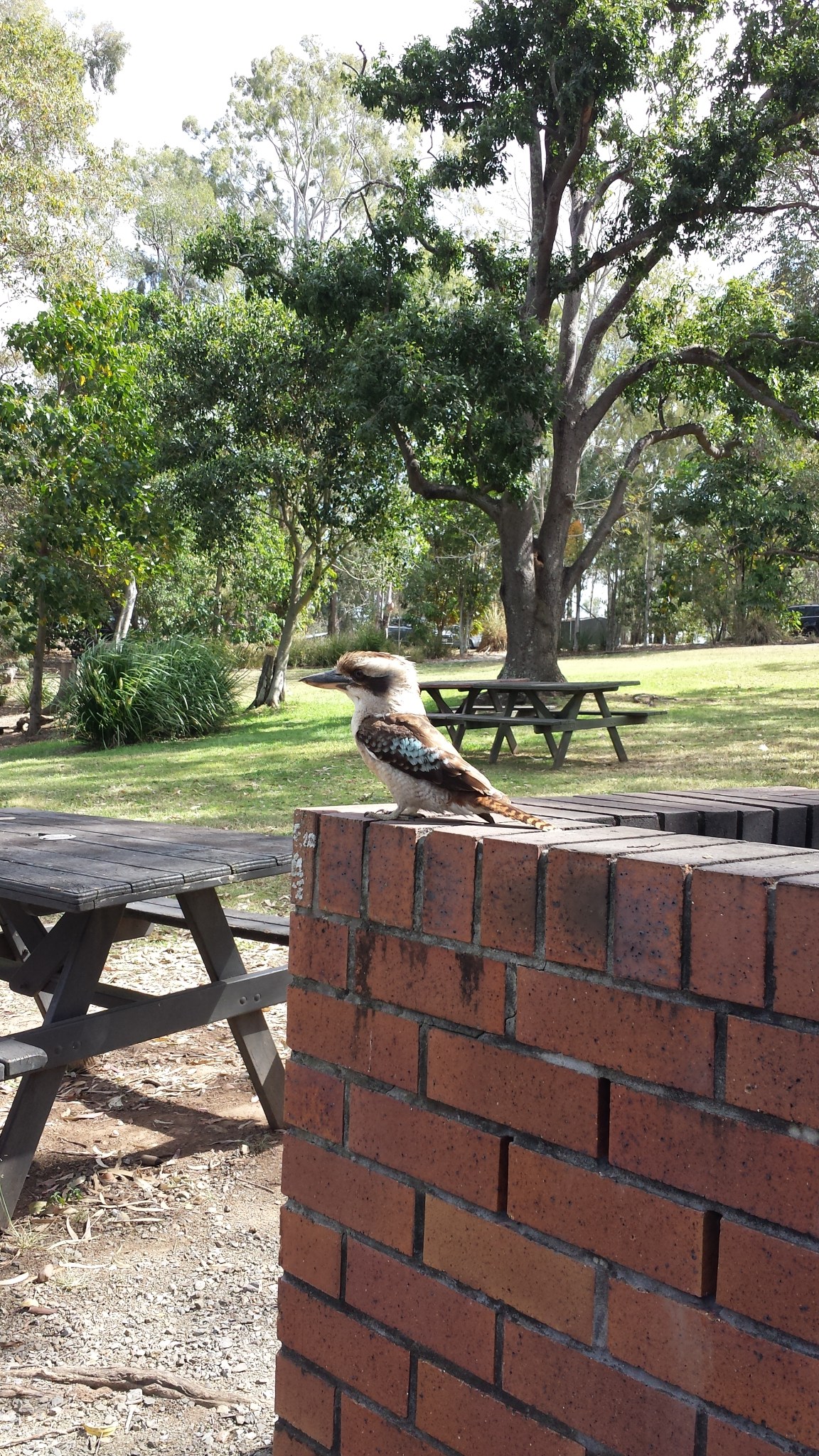
This Blue-Winged Kookaburra swooped down and kept a watchful eye on our lunch, however, it’s best not to feed human food to native wildlife.

20180929_134953
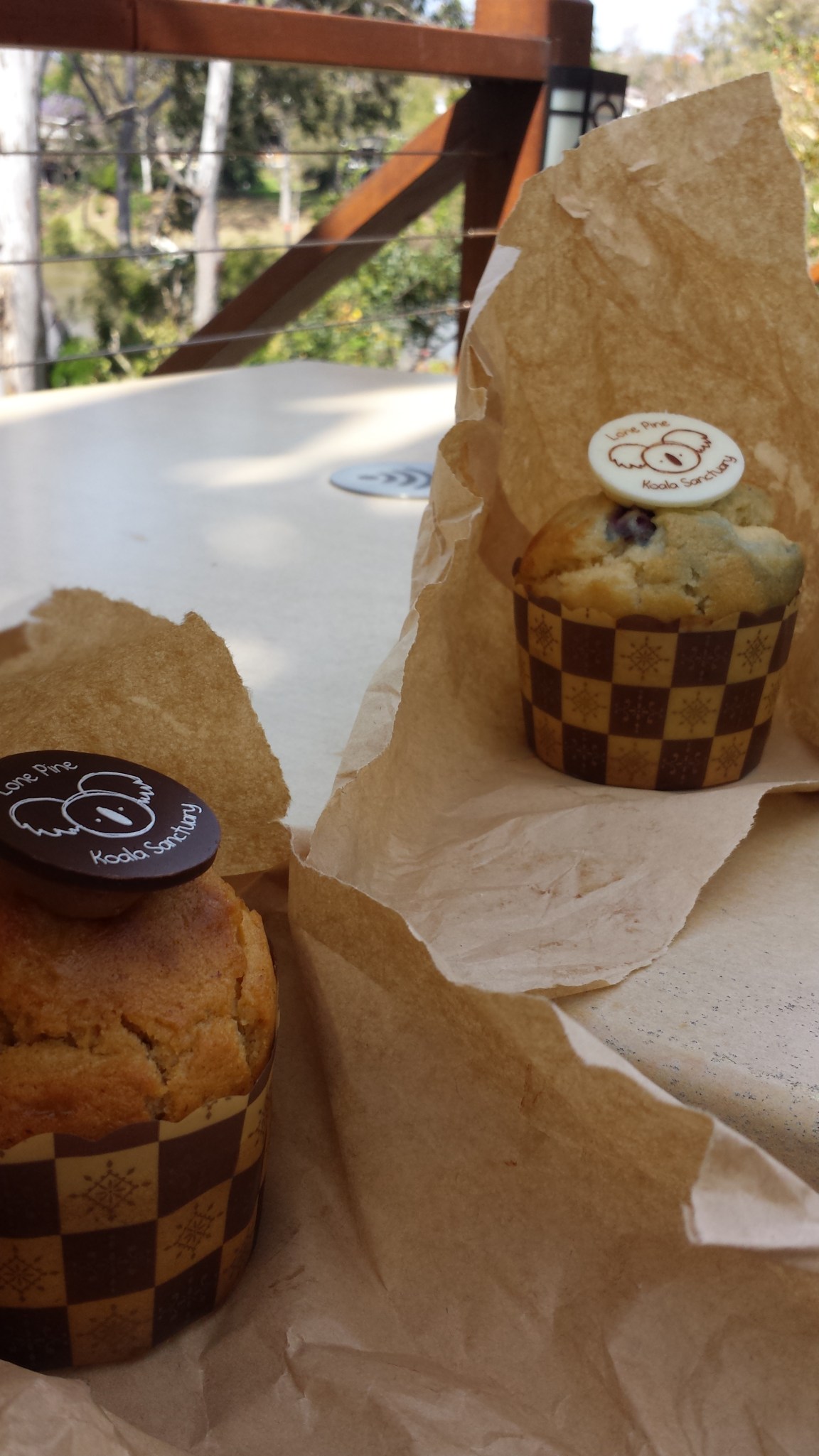
Afternoon tea, two coffees and two muffins, one caramel and the other blueberry, both with edible chocolate circles iced on top.

20180929_133858
The wishing well outside the front entrance to Lone Pine Koala Sanctuary with plenty of coins and “I Love Australia” badge.


Although I focused on the Koala, there are many more unique Australian species to see here, from kangaroos to cockatoos, eagles to emus in a beautiful bushland setting.  I recommend the following link and video highlights featuring all the wildlife residents of Lone Pine Koala Sanctuary:

https://www.koala.net/en-au/wildlife
https://www.youtube.com/watch?v=T_XXqPirJUU

20180929_134157
A quick guide to the wild birds around Long Pine Koala Sanctuary. Behind the sign, an Eastern Water Dragon lizard came out to sunbathe on the brickwork.


And here’s my link to a post I wrote last year:
https://thoughtsbecomewords.com/2017/09/01/save-the-koala/
You can adopt a Koala through Australian Koala Foundation.

Koala Adoption Certificate (3)
Adopt a Koala today! https://www.savethekoala.com/adopt-a-koala

Lone Pine Koala Sanctuary Logo

Thank you, Lone Pine Koala Sanctuary for a relaxing, informative and enjoyable visit.

Gretchen Bernet-Ward

Save the Koala

Koala Foundation Logo 05

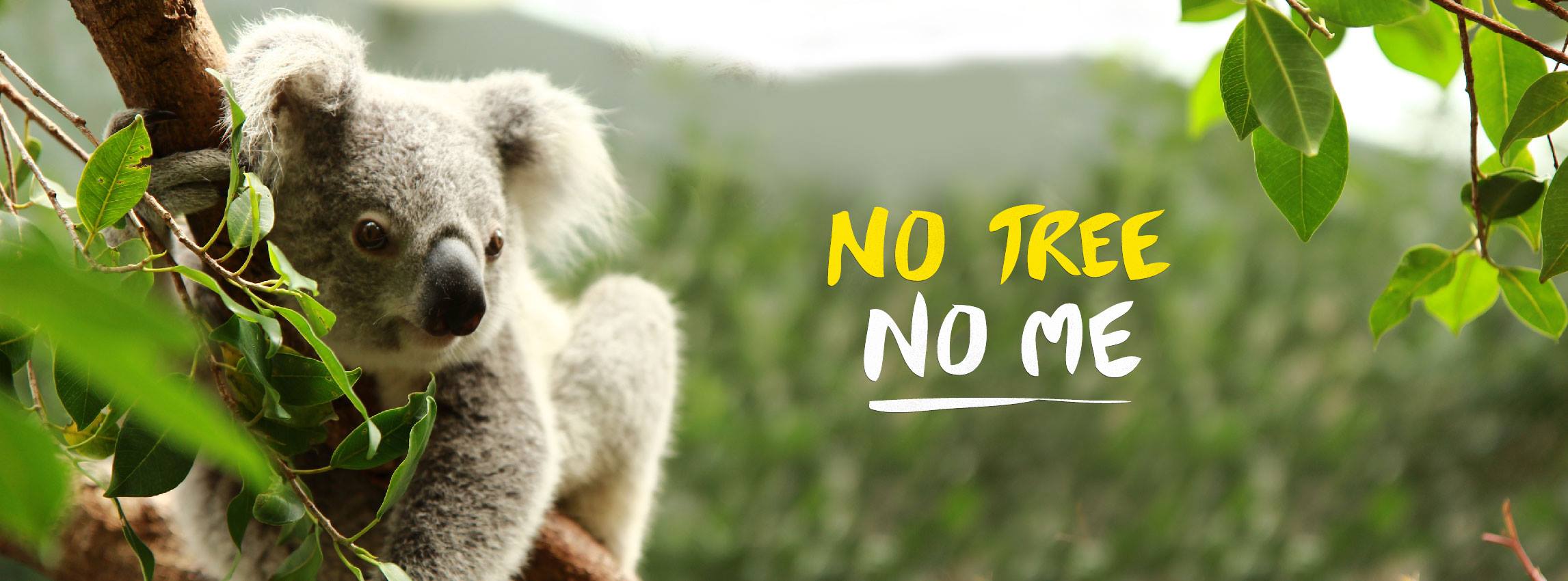
Imagine if all the food outlets in your city were destroyed in one day.

Imagine if you’re a Koala and all your food trees were destroyed in one day.

It’s unlikely to happen to you, but it’s a frightening fact of life for our Koala population.

A tree is food, shelter and safety for a Koala.

Now imagine if all that was taken away from YOU.

“No Tree No Me”

Koala Foundation Logo 04
https://www.savethekoala.com/shop

Violet Koala

“Save The Koala Month” September each year!
Website: Australian Koala Foundation Save the Koala
Follow: Facebook Australian Koala Foundation

Koala Crying in Gumtree 02

Also check website Lone Pine Koala Sanctuary, Brisbane
“World’s First and Largest Koala Sanctuary”

I visited Brisbane Koala Science Institute at Lone Pine Koala Sanctuary.
https://thoughtsbecomewords.com/2018/09/30/my-visit-to-koala-science-institute/

Gretchen Bernet-WardKoala Foundation Logo 06