Quick Crime Read ‘Building On Past Events’

Highrise © image Gretchen Bernet-Ward 2024

The construction company boss has an accident or is it something more sinister? A ten minute read, dialogue driven, no chapters, no indents or page breaks (courtesy of unwieldy formatting) and I originally wrote it for writing group. Certainly an interesting result.

Erica Brook of Brook Constructions looked across the messy building site and was not happy. Work progress was slow, money was tight. And she’d been doing some thinking. She parked the Tesla and fastened the velcro on her hi-vis jacket. Time to ditch the altruistic ideals and read the riot act to the tradies, most of whom she’d known for years.
As Erica crossed the site, the right boot of her R.M. Williams caught on unfinished paving and she sprawled sideways across half-finished brickwork which crumbled under her weight and sent her down onto an exposed foundation spike.
“Erica!” shouted bricklayer Joan Campbell. “You all right, boss?”
Erica’s stricken look betrayed her pain. Blood was leaking through the leg of her jeans, white bone jutting through the fabric. She passed out and came back to reality in the ambulance.
“Don’t worry,” Joan’s face mirrored the white of her hard-hat. “Things’ll be okay.”
Erica rasped through the oxygen mask. “Not likely, Joanie.”
She grabbed Joan’s hand firmly. “Want to become a partner in the business?”
Joan winced. “I think you’re a bit delirious.”
As the ambulance swung into the Emergency bay, Joan made a quick decision.
“Okay, I’m in.”
Outside the hospital ward, Joan diligently phoned everyone to advise of Erica’s impending leg operation.
Post surgery, she returned and sat beside Erica’s bed in a screened off cubicle, nervously twisting her hard-hat in her hands. Opposite her sat Erica’s wafer-thin wife Michelle who trilled “Trieste needs the vet for a nail clip.”
Erica managed a groan through her swollen jaw.
A light-footed nurse in a blue Covid mask entered holding a glass of water and medication. The charged glance the nurse shot Joan took her breath away.
Michelle sat stiffly, gazing out the window, while the nurse neatly administered pills to Erica then left the cubicle.
“Erica,” Joan asked, “Want anything to eat? Chiko Roll from the cafeteria?”
Erica’s glazed eyes managed to look hopeful.
“No,” snapped Michelle, “she’s on a diet.” 
Disconcerted, Joan muttered “Okay, the site manager should phone soon, I’ll be off then.”
She scrambled to leave ahead of Michelle. At the nurses station she leaned over the counter towards Erica’s nurse and read her name tag. “Annalise”.
Keeping a blank face she asked Annalise if Erica was going to be okay.
Annalise replied in a low voice “She’s suffering from external symptoms.”
Realisation dawned on Joan. “Oh, her wife, I get it…”
Annalise put a finger to her lips to shush Joan and pointed towards the lift doors.
Already wearing sunglasses, Michelle prodded furiously at the buttons, saw a plaque on the wall, and almost tripped through the opening doors.
Joan broke the silence “I’m going down to the cafeteria, want anything?”
“No thanks.” Annalise grimaced. Joan wondered if that was directed at her or the food.
Over lunch Joan checked the news reports and came back thirty minutes later to ask Annalise if she’d seen her hard-hat. “Under the chair where you sat, silly.”
Joan walked the squeaky linoleum floor, entered the ward and stopped at the wrong cubical. “Sorry,” she said, backing out.
She found her hard-hat and bid poor Erica’s taped and tubed body a sombre goodbye.
At home, Joan Campbell was detained by police and told that she and nurse Annalise would be taken to Central police headquarters to be interviewed separately regarding the unexpected death of construction billionaire Erica Brook.
Their second interview was together, without legal representation, in a windowless room at a police detention centre. Joan wanted answers but the only response from a tall uniformed constable was a paper cup of water and his advice to wait patiently.
Drumming her fingers, Annalise stared blankly at the pockmarked white wall until finally it was confirmed that Erica had been murdered.
“Murdered!” Joan stared at Patricia Ruben, the incumbent Senior Detective with small yet stunning earrings no doubt frowned upon by her boss.
“How?” asked Annalise.
Detective Ruben sat down and glanced at her papers. “Death from suffocation.”
She turned to Joan. “Ms Campbell, tell me your movements from when you arrived to when you left the hospital.”
“Well, there was the site accident, an ambulance ride, a chat around Erica’s bedside, I spoke to Annalise, had lunch, went back to get my hard-hat, and left.”
Annalise shrugged. “Standard treatment. The patient was stable and resting.”
Ruben turned again to Joan. “Ms Campbell, I must warn you that building on past events, your return to the cubicle makes you a suspect.
Joan flared up. “No way.”
“And,” Ruben held up a long straight finger, “you inherit the Brook Constructions company.”
“Totally not right.” Joan felt weak and slouched back in the chair.
Ruben passed her the water cup. “You had a discussion in the ambulance.”
“Erica was emotional with pain. It wasn’t some high-powered business transaction.”
“From her hospital bed Ms Brook had informed her wife Michelle of company changes, best to check with her.” Ruben shuffled documents. “Meanwhile did you notice anything odd?”
Joan sighed.
Annalise gazed at the ceiling, arms folded across her pale blue uniform.
“The whole day was screwed,” she said and continued when the detective tilted her head. “There were patients, visitors, couriers, cleaners, florists and maybe small Paul.”
At that name, Ruben frowned. “Elaborate.”
“He’s short and gets mistaken for a child.”
Joan straightened up. “Just remembered! I went to the wrong cubicle, there was a youngster in the bed.”
“Nobody was in there all day,” snapped Annalise dismissively.
“There was, I saw him.” Joan was adamant.  
Detective Ruben scribbled furiously. “Is he likely to still be there?”
“Check the discharge papers at the hospital,” drawled Annalise.
Overlooking this remark, Ruben asked if anything else had occurred.
“Michelle, er, Mrs Brook certainly left in a hurry,” said Joan.
Annalise jabbed her finger in recollection. “She was pushing the lift buttons as if her life depended on it.”
Ruben made another quick file notation.
“I went back for my hard-hat,” Joan mused. “My work clothes had left dust on the chair seat. I noticed a shoe print.”
“Describe the imprint.” The expensive midnight blue pen scrawled across the page.
“Smallish, not a boot, more casual.”
“I’ll be right back.” Ruben left the solid door ajar.
The constable closed the door and blocked it with his looming presence.
Joan crushed the empty paper cup without thinking. The warm interview room thrummed, making her sweat uncomfortably. She missed her phone and became mesmerised by Annalise finger-grooming her balayage hair but the seductive gestures were spoiled by a what-are-you-looking-at scowl.
Joan leaned forward when a paper-rustling Ruben and the constable regrouped.
“Forensics are still checking,” Ruben advised, “but nobody had seen or heard a youngster.”
She opened a spiral bound notepad, wrote quickly, ripped out the page and showed it to Annalise and then Joan.
Turning it around, she read “One of you is lying.” She scrunched the paper. “And what are you going to do about it?”
Annalise stood up. “I’m not speaking any further.”
Joan felt a stab of despair. How could she have been so blind? She launched herself out of the chair and grabbed Annalise by the shoulders.
The alert constable stepped forward but Detective Ruben raised her palm. 
“Why?” shouted Joan, shaking Annalise who flinched and twisted away.
“Enjoy your broken building company.”
“You killed a good friend!” shrieked Joan.
“She used you like she used everyone,” mocked Annalise.
Ruben checked that she had left the audio recorder running. She gestured Joan to sit and pinned Annalise with a glare.
“Tell me how you knew Ms Brook?”
“By her lousy reputation. Brook and brainless here never cleaned up their work place, never fixed broken equipment or fences or filled deep holes even though council specified it.”
“That’s not right.” Joan squirmed at her lie. “What harm did she cause you?”
Annalise clenched her fists, eyes glazed. “It was a case of sooner or later. I waited until she eventually came into Emergency.”
She refocussed. “Remember the child who got run over by one of your site vehicles?”
“Y-yes,” Joan hesitated. “I had just started, but I did see a plaque near the hospital lift.”
Detective Ruben obviously knew where this was going. She wrote quickly, documenting a nightmare as Annalise marked off items on her fingers.
“No security, no hazard warning signs, no site training, no first aid post.”
Joan’s stomach lurched again. “That plaque. Your child.”
Raising her folder, Ruben read “Legal wrangles dragged on. Erica offered no settlement or financial assistance although she was the mother of Annalise’s adopted son.”  
“Her workplace negligence killed my boy Paul,” Annalise screamed. “She blamed me but I got even.”
Joan’s thoughts were spinning as Detective Ruben read out the arresting procedure. Another uniformed officer arrived and Annalise was steered out of the interview room.
She was held by both arms and lead down the corridor, her piercing shrieks echoing back to them. “Erica Brook was easy to smother, I’m glad the bitch is dead!”
A heavy door slammed shut.
“Off to be processed.” Ruben stacked paperwork and glanced at her phone before noticing Joan’s stunned expression. “Forensics already had a match on the shoe print. Maybe she checked for witnesses.”
“There was a child in the next bed.” Joan was quite sure of that.
“Hospital staff didn’t see anyone.” Ruben slowly capped her pen. “That memorial plaque isn’t detailed but allegedly her son used to detour through the worksite on his way to visit the hospital.”
“Poor kid,” thought Joan feeling light-headed, “he saw her retribution.”
Guilt gnawed at her stomach. Instead of confronting Erica about the construction site mess, her obstacle course prank had backfired and caused another deadly outcome.

© Gretchen Bernet-Ward 2024
© GBW2024
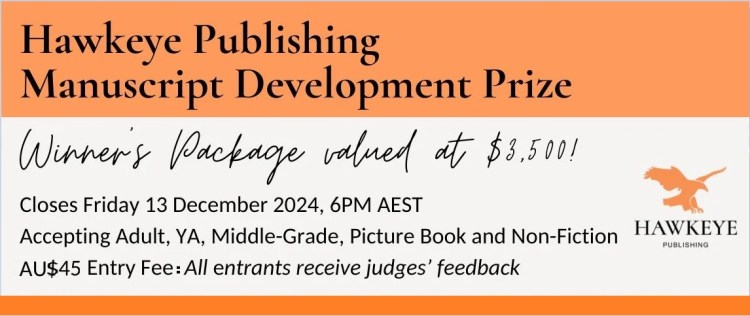
https://hawkeyebooks.com.au/pages/hawkeye-publishing-manuscript-development-publication-prize
Start building your story and cement your character in readers minds.

https://www.facebook.com/groups/writersgroupslisting

Twenty Rules for Writing Detective Stories 1928-2024

Originally published in the American Magazine (September 1928) and included in the Philo Vance Investigates omnibus. Reproduced here (September 2024) as one big scroll almost a century later.

Full credit goes to author S.S. Van Dine, AKA Willard Huntington Wright who was born 15th October 1888, Charlottesville, Virginia, USA. He died 11th April 1939 (aged 50) New York City, USA.

THE DETECTIVE STORY is a kind of intellectual game. It is more — it is a sporting event. And for the writing of detective stories there are very definite laws — unwritten, perhaps, but none the less binding; and every respectable and self-respecting concocter of literary mysteries lives up to them. Herewith, then, is a sort of Credo, based partly on the practice of all the great writers of detective stories, and partly on the promptings of the honest author’s inner conscience. To wit:

1. The reader must have equal opportunity with the detective for solving the mystery. All clues must be plainly stated and described.

2. No wilful tricks or deceptions may be placed on the reader other than those played legitimately by the criminal on the detective himself.

3. There must be no love interest. The business in hand is to bring a criminal to the bar of justice, not to bring a lovelorn couple to the hymeneal altar.

4. The detective himself, or one of the official investigators, should never turn out to be the culprit. This is bald trickery, on a par with offering someone a bright penny for a five-dollar gold piece. It’s false pretences.

5. The culprit must be determined by logical deductions — not by accident or coincidence or unmotivated confession. To solve a criminal problem in this latter fashion is like sending the reader on a deliberate wild-goose chase, and then telling him, after he has failed, that you had the object of his search up your sleeve all the time. Such an author is no better than a practical joker.

6. The detective novel must have a detective in it; and a detective is not a detective unless he detects. His function is to gather clues that will eventually lead to the person who did the dirty work in the first chapter; and if the detective does not reach his conclusions through an analysis of those clues, he has no more solved his problem than the schoolboy who gets his answer out of the back of the arithmetic book.

7. There simply must be a corpse in a detective novel, and the deader the corpse the better. No lesser crime than murder will suffice. Three hundred pages is far too much pother for a crime other than murder. After all, the reader’s trouble and expenditure of energy must be rewarded.

8. The problem of the crime must be solved by strictly naturalistic means. Such methods for learning the truth as slate-writing, ouija-boards, mind-reading, spiritualistic séances, crystal-gazing and the like, are taboo. A reader has a chance when matching his wits with a rationalistic detective, but if he must compete with the world of spirits and go chasing about the fourth dimension of metaphysics, he is defeated ‘ab initio’ ‘from the beginning’.

9. There must be but one detective — that is, but one protagonist of deduction — one ‘deus ex machina’ ‘God from the machine’ ‘contrived solution‘. To bring the minds of three or four, or sometimes a gang of detectives to bear on a problem, is not only to disperse the interest and break the direct thread of logic, but to take an unfair advantage of the reader. If there is more than one detective the reader doesn’t know who his ‘conductor’ is. It’s like making the reader run a race with a relay team.

10. The culprit must turn out to be a person who has played a more or less prominent part in the story — that is, a person with whom the reader is familiar and in whom he takes an interest.

11. A servant must not be chosen by the author as the culprit. This is begging a noble question. It is a too easy solution. The culprit must be a decidedly ‘worthwhile person’ — one that wouldn’t ordinarily come under suspicion.

12. There must be but one culprit, no matter how many murders are committed. The culprit may, of course, have a minor helper or co-plotter; but the entire onus must rest on one pair of shoulders: the entire indignation of the reader must be permitted to concentrate on a single dark nature.

13. Secret societies, camorras, mafias, et al, have no place in a detective story. A fascinating and truly beautiful murder is irremediably spoiled by any such wholesale culpability. To be sure, the murderer in a detective novel should be given a sporting chance; but it is going too far to grant him a secret society to fall back on. No high-class, self-respecting murderer would want such odds.

14. The method of murder, and the means of detecting it, must be rational and scientific. That is to say, pseudo-science and purely imaginative and speculative devices are not to be tolerated in ‘roman policier’ ‘romantic police officer’. Once an author soars into the realm of fantasy, in the Jules Verne manner, he is outside the bounds of detective fiction, cavorting in the uncharted reaches of adventure. (That’s changed!)

15. The truth of the problem must at all times be apparent — provided the reader is shrewd enough to see it. By this I mean that if the reader, after learning the explanation for the crime, should reread the book, he would see that the solution had, in a sense, been staring him in the face – that all the clues really pointed to the culprit — and that, if he had been as clever as the detective, he could have solved the mystery himself without going on to the final chapter. That the clever reader does often thus solve the problem goes without saying.

16. A detective novel should contain no long descriptive passages, no literary dallying with side-issues, no subtly worked-out character analyses, no ‘atmospheric’ preoccupations. such matters have no vital place in a record of crime and deduction. They hold up the action and introduce issues irrelevant to the main purpose, which is to state a problem, analyse it, and bring it to a successful conclusion. To be sure, there must be a sufficient descriptiveness and character delineation to give the novel verisimilitude.

17. A professional criminal must never be shouldered with the guilt of a crime in a detective story. Crimes by housebreakers and bandits are the province of the police departments — not of authors and brilliant amateur detectives. A really fascinating crime is one committed by a pillar of a church, or a spinster noted for her charities.

18. A crime in a detective story must never turn out to be an accident or a suicide. To end an odyssey of sleuthing with such an anti-climax is to hoodwink the trusting and kind-hearted reader.

19. The motives for all crimes in detective stories should be personal. International plottings and war politics belong in a different category of fiction — in secret-service tales, for instance. But a murder story must be kept ‘gemütlich’ agreeable’, so to speak. It must reflect the reader’s everyday experiences, and give him a certain outlet for his own repressed desires and emotions.

20. And (to give my Credo an even score of items) I herewith list a few of the devices which NO self-respecting detective story writer will now avail himself. They have been employed too often, and are familiar to all true lovers of literary crime. To use them is a confession of the author’s ineptitude and lack of originality:

(a) Determining the identity of the culprit by comparing the butt of a cigarette left at the scene of the crime with the brand smoked by a suspect.

(b) The bogus spiritualistic séance to frighten the culprit into giving himself away.

(c) Forged fingerprints.

(d) The dummy-figure alibi.

(e) The dog that does not bark and thereby reveals the fact that the intruder is familiar.

(f) The final pinning of the crime on a twin, or a relative who looks exactly like the suspected, but innocent, person.

(g) The hypodermic syringe and the knockout drops.

(h) The commission of the murder in a locked room after the police have actually broken in.

(i) The word association test for guilt.

(j) The cipher, or code letter, which is eventually unravelled by the sleuth.

And there you have it. Not a modern gadget in sight!

Thank you, Willard ❤ Gretchen Bernet-Ward

More information
https://en.wikipedia.org/wiki/S._S._Van_Dine
https://en.wikipedia.org/wiki/Golden_Age_of_Detective_Fiction

Willard Huntington Wright (S.S. Van Dine)
1887-1939
Fantastic Fiction
https://www.fantasticfiction.com/v/s-s-van-dine/
1. The Benson Murder Case (1926) · 2. The Canary Murder Case (1927) · 3. The Greene Murder Case (1928) · 4. The Bishop Murder Case (1928) · 5. The Scarab Murder Case (1930) 

Review ‘Old God’s Time’ by Sebastian Barry

Bookcover and Dalkey Harbour

This was going to be a St Patrick’s Day post so it is a little late. However, it’s superlative Irish storytelling from Sebastian Barry. A restless novel about love, this is cruel life, and this is an ageing retired police officer who sinks in and out of memories, reality and daydreams. Tom Kettle lives in a small dwelling added onto the side of a castle on a stretch of Irish coastline overlooking granite jetties and a rather fetching island “skulking in the near distance.”

Tom’s past may or may not come to haunt him regarding a murder case he was involved in many years ago. He still has his policeman wits about him when the cops come a-knocking and he goes along with the re-opening of a cold case, the death of a well-known priest which seemed an accident and was logged as an accident but modern forensics has reopened the evidence file and started testing old DNA results.

A touch of the surreal here, words weave in and out of Tom’s mind like an hypnotic dance of discomfort, me thinking How did the priest die? Who was involved? What will the DNA testing reveal?

Gradually, old God’s time exposes the past…

The background story ebbs and flows recounting the past and present of Tom’s life, adored wife June and their two children Winnie and Joe. I puzzled over the things he sees, reality or illusions? Who lives, who has died? Mr Tomelty must be his landlord, but the mother, the mysterious others? What is past, what is present, what is true? There are some quite graphic retellings as well. The paedophile priest who horribly abused and traumatised young children. Not a novel for immature or sensitive readers, it does contain adult experiences, thoughts and flashbacks. It would certainly make a strong addition to any book club discussion.

My Favourite Quote
Tom musing “Enough time goes by and it is as if old things never happened.
Things once fresh, immediate, terrible, receding away into old God’s time,
like the walkers walking so far along Killiney Strand that,
as you watch them,
there is a moment when they are only a black speck,
and then they’re gone.”

Page 166 “Old God’s Time” by Sebastian Barry 2023    

The mind of author Sebastian Barry must be a complex thing. I cannot describe the intense settings and the lyrical descriptions Barry has used, the language of description I think many Irish writers seem to instinctively master. Page 104 “On remembering towns, Tom thought every single place would be a peg with a memory hanging from it.” Further along, his flight to Mexico was odd but grimly relevant.

This book reminds me of, but is not similar to, “Under Milkwood” by Dylan Thomas and “One Moonlit Night” by Caradog Prichard, both use human strength, sadness and suffering taken almost to an art-form. I also enjoyed the modern twist in “Himself” by Jess Kidd and “Love and Summer” by humanist William Trevor (yes, mixing Irish and Welsh authors) who mastered that dark troublesome inner voice, that unforgettable undercurrent which makes a good story excellent.

On the whole, I wanted Tom to stay safe in his little room overlooking the sea but the direction and pace of this novel had other ideas. It enchanted me. If you like mystery fiction with a twist, you will be swept along by remarkable literary undercurrents with this one.

Gretchen Bernet-Ward

Review ‘Silks’ by Hugh McGinlay

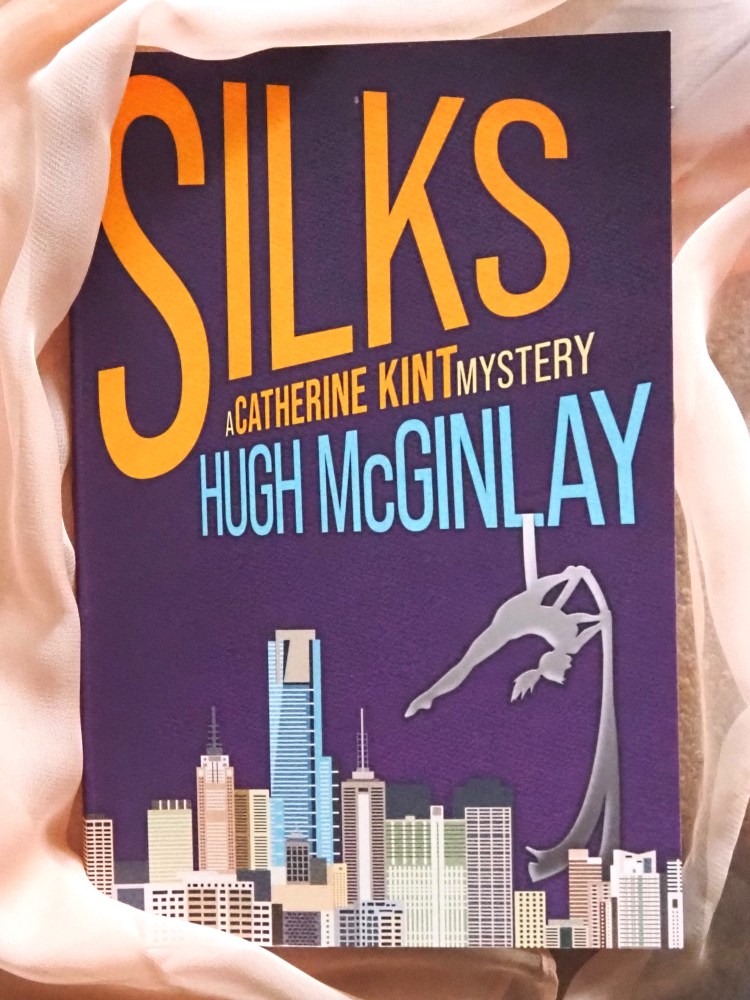
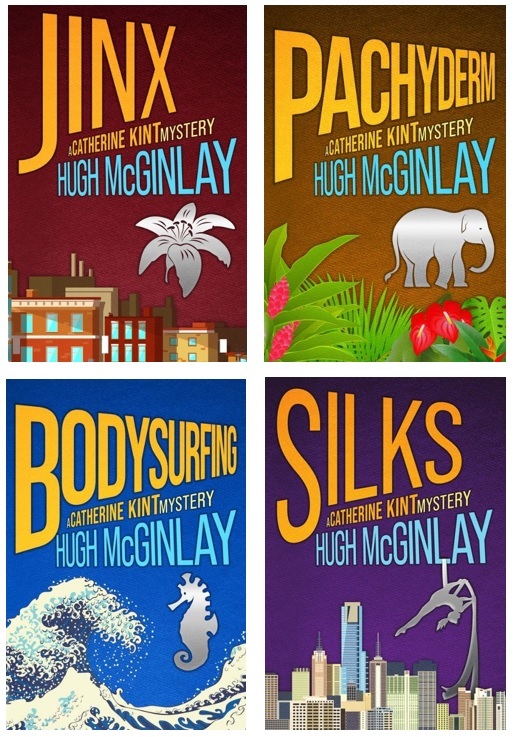
After reading Hugh McGinlay’s first book “Jinx” I snapped up a copy of “Silks” from Clan Destine Press with many thanks for such a great read set in the southern city of my birth.

An entertaining author and musician, Hugh McGinlay says he’s surprised that readers accept his imaginary friends. Imaginary or not, I was right there with them every step of the way. This is book four about intermittent milliner (hat-maker) PI Catherine Kint and her offsider barman Boris Shakhovskoy. They witness the death of aerial circus performer, Silver, during her silks (or ribbon/tissu) performance but was it accidental or murder?

Vespa-riding Catherine “felt cold and sad and couldn’t stop thinking about the sound.” Boris felt the same, and he’s shaping up to be my favourite character, right from the start showing his multi-talented skills. I am not really sure I like Catherine calling him “dear” because she sounds like a mother-in-law. But between examining leads and serious allegations their dialogue is often laugh out loud; and this time Boris has two romantic interests.

Experience palpable tension walking home after the late shift, Boris continually looking over his shoulder, checking corners, concerned about being followed by the bad guys seemingly as interested in Silver’s death as the police. And naturally it involves her missing mobile phone. At one point Catherine and Boris escape detection by literally hanging by their finger tips. Later Boris hangs around as Catherine is lured into a life-threatening encounter.

Earlier, Silver’s distraught father Anthony Barwick says to Catherine “You don’t have many rules, and you’re smart. That’s what I’ve been told.” He wants her to investigate his daughter’s death. Can he be trusted? Silver, or Mia, by all accounts was an enigmatic wildchild. A family in crisis, a culture of secrecy and this plot kept me reading far into the night.

The location is again firmly set in Brunswick, Melbourne (Australia) with rainy day scenes and several digs at the cold weather.

“The rain might be cold, but I only notice because I’m living.”

Ciara Beretta Silks chapter 2 page 13

Author Hugh McGinlay writes believable crime fiction and pragmatic lead characters with unexpected traits, edgy yet loveable, cool yet kind. Remaining true to its roots, this series can be habit-forming for crime readers.

Gretchen Bernet-Ward

Illustration only © Circa Academy performance https://circa.org.au/

Fiona McIntosh ‘Dead Tide’ Review

Audio book read by Jerome Pride for Penguin 2023

The best audio crime book I have listened to for some time. Plot, setting and narration come together in an absorbing story which I couldn’t stop listening to. Every spare moment I had, I would tune in and be transported to Adelaide, South Australia, with DCI Jack Hawksworth as he investigates a crime scam which originally involved one of his London university students. He is an attractive character, a man with charisma and morals and, according to the women he meets, sex appeal. Flirtation certainly makes a nice change from grumpy Inspector John Rebus or grouchy private investigator Cormoran Strike.

The premise revolves around illegal trafficking of women’s oocyte (eggs) for IVF and shows three sides; the financial greed, the sadness of childless women, and the unethical way the ovum is obtained and unlawfully shipped around the world. At times I was hoping the details were not too gruesome because I find audio books can seem a bit more graphic when listening to the flow of words. Reading text I can avert eye-danger and skip ahead. Happily this was not the case and I enjoyed listening due to clever scene setting (often tourism info) and Jerome Pride’s skilful dialogue interpretations.

As some reviewers may know, I am against writers writing their novels (no matter what genre) as though they were a film script. Obviously chasing that lucrative yet elusive screenplay offer. They tend to skip over finer details, the ambiance is lost in a blur of speech and hand gestures. In Dead Tide, author Fiona McIntosh has managed to get all senses into play here. She deftly writes the sight, sound, smell, touch, taste (coffee flat white) atmosphere and tense inner monologues which bring together fallout for a courier, pain for a donor, an instable marriage, murder and the many evils of human manipulation.

Gretchen Bernet-Ward  

And the flirtation you ask? See book for details 😉 The coastline setting of South Australia’s Yorke Peninsula and Wallaroo shine. The Wallaroo Jetty is real, as is a ‘dead tide’—see image below.

In my Goodreads reviews, I often add a small quotation which takes my fancy while reading. I always find this difficult with an audio book! Therefore this is an observation not a quotation—I was amused by Jack Hawksworth sitting with a lovely woman as he explained the meaning of the Medieval term ‘short shrift’ (I heard you yawn).

In the audio book, the term ‘short shrift’ is not exactly unknown today but rarely used. I recall my elderly aunt grumbling ‘I’m giving you short shrift, out of my kitchen until dinner time!’ So it means little sympathy and scant attention. I know this because I went to the bookshelves, took down the big old family dictionary and looked it up. I inherited this dictionary, and its frayed spine is held together with aged tape. But, oh, the wonders inside, the little treasures which have been pressed between its pages for over ninety years. Each section, the start of each letter of the alphabet, is embossed on a small indented leather pad to make it easy to find.

There will be no word relics from the 21st century generation. It is hard to muse over an obsolete, battery-dead, glass screened plastic/metallic sender/receiver information disseminator. The ever-changing WWW, internet, wi-fi, digital converters-and-containers of more false and ethereal information than ever recorded in the entire evolution of human history. (See, I just gave modern technology short shrift!) GBW.

Wallaroo Jetty South Australia Tourism Board 2023

Scarlet Stiletto Writing Awards Now Open!

Sisters in Crimes Scarlet Stiletto Awards 2023 for best short crime and mystery stories turn 30 this year and the first prize winner takes home $2,000 donated by Swinburne University of Technology, plus the coveted trophy, a scarlet stiletto shoe with a steel stiletto heel plunging into a mount. The shortlist will be announced in October, with the awards being presented at a gala ceremony in Melbourne in late November.

In the lead-up to the ceremony, all of the winning stories over the past 30 years are being narrated by Susanna Lobez for Sisters in Crime’s very first podcast – Scarlet Stiletto Bites: Scintillating Stories by Australian women. The podcast is free and a new episode is available weekly on Fridays on Apple, Spotify, Amazon, Google, and other services.

Christina Lee, judges’ coordinator and winner of two trophies, said that the Scarlet Stiletto Awards were remarkable in their ability to uncover outstanding criminal talent.

“Winning a Scarlet Stiletto Award has often launched literary careers. To date, 4,332 stories have been entered with 33 (soon to be 34) Scarlet Stiletto Award winners–including category winners – going on to have novels published,” she said.

“Well-known authors who got their start with the Scarlet Stiletto Awards include Cate Kennedy, Tara Moss, Aoife Clifford, Ellie Marney, Angela Savage, and Anna Snoekstra. For Dervla McTiernan, just being shortlisted in 2015 gave her the impetus to finish five drafts of her first novel, The Ruin, and put her on the road to becoming a global publishing sensation.”

Former police officer, TJ Hamilton, says that winning the shoe in 2015 was “a huge turning point” in her career. In the eight years since, she has worked in various script departments across a wide variety of Australian dramas and is now in LA working on two crime shows.

Like many of Sisters in Crime’s best ideas, Scarlet Stiletto Awards sprang from a well-lubricated meeting in St Kilda in 1994, when the convenors debated how they could unearth the female criminal talent they were convinced was out there.

“Once a competition was settled on, it didn’t take long to settle on a name – the scarlet stiletto, a feminist play on the traditions of the genre. The stiletto is both a weapon and a shoe worn by women. And of course, the colour scarlet has a special association for us as women. And they were right – talent is lurking everywhere, sometimes in the most unlikely places!” Lee said.

Allen & Unwin is now offering the Best Young Writer Award ($1000). It previously offered a youth award for over two decades. Every Cloud Productions has boosted its Best History with Mystery Award to $1000. Overall, 30th Scarlet Stiletto Awards are offering a record $12,720 in prizes.

Monash University, which previously offered the Emerging Writers’ Award, is now offering an award for Best Campus Crime Story ($600). The only proviso is that it has to be set on the campus of a university, TAFE College, or vocational institution. The award draws on a long history of crime stories set at universities, such as Amanda Cross’ novel, Death in a Tenured Position, and Unable by Reason of Death and Not in Single Spies, set at Redmond Barry College (a thinly disguised RMIT University) by Lee herself and Felicity Allen, under pseudonyms.

Images supplied Sisters In Crime Australia Scarlet Stiletto Awards 2023

List of Award Categories:

Swinburne University Award: 1st Prize: $2000

Simon & Schuster Award: 2nd Prize: $1000

Sun Bookshop & Fremantle Press Award: 3rd Prize: $750

Allen & Unwin Award for Best Young Writer (under 19): $1000

Melbourne Athenaeum Library ‘Body in the Library’ Award: $1250 ($750 runner-up)

Every Cloud Award for Best Mystery with History Story: $1000

HQ Fiction Award for Best Thriller: $1000

Clan Destine Press Award for Best Cross-genre Story: $750

Kerry Greenwood Award for Best Malice Domestic Story: $750

Viliama Grakalic Art and Crime Award: $750

Monash University Award for Best Campus Crime Story: $600

ScriptWorks Award for a Great Film Idea: $500

Liz Navratil Award for Best Story with a Disabled Protagonist Award: $400

Writers Victoria for the story with the Most Satisfying Retribution: Choice of online course, prize worth $250

CLOSING DATE for the Awards is Thursday 31 August 2023
ENTRY FEE is $25 or $20 for Sisters in Crime members.
MAXIMUM LENGTH is 5,000 words.
The competition is open to all women, whether cisgender, transgender or intersex, who are citizens/residents of Australia.

30th Scarlet Stiletto Awards 2023

To download INFORMATION and a list of FAQs, go here.

To pay the ENTRY FEE go here.

A hardcopy Scarlet Stiletto collection of the first-prize winning stories will be launched at the Award ceremony along with Scarlet Stiletto: The Fifteenth Cut, a collection of the 2023 winning stories.
Also fourteen collections of winning stories are available: www.clandestinepress.net

Sisters in Crime 2023

Media comment: Christina Lee; 0424 003 285; c.lee@psy.uq.edu.au

Additional information: Carmel Shute, Secretary and National Convenor; 0412 569 356 

admin@sistersincrime.org.auwww.sistersincrime.org.au

Carmel Shute
Secretary & National Co-Convenor
Sisters in Crime Australia
PO Box 357 Balaclava Vic 3183 Australia
admin@sistersincrime.org.au
www.sistersincrime.org.au

Above information supplied by Sisters in Crime Australia.

 Gretchen Bernet-Ward

P.S. I am going to dig out my Half-Finished file and try again—

TRANSLATION “START WRITING NOW, DON’T WAIT”

‘Death in the Sauna’ Dennis Altman Book Leak

“Imagine Agatha Christie parachuting into the heady world of gay saunas and HIV research, and you’re getting close to this delicious, camp and tightly-plotted murder mystery” – Benjamin Law, Writer and Broadcaster.

Death in the Sauna by Dennis Altman 2023

Melbourne-based author and academic Dennis Altman is a giant in academia and the gay rights movement. He has written and spoken widely on sexuality, politics, and culture both in Australia and internationally. With over 17 published non-fiction works up his sleeve, this is Dennis’s first foray into crime fiction.

“I grew up reading Agatha Christie and see murder stories as both elaborate games and a very useful genre for satire. I know of no other crime book that takes place in the international AIDS/HIV world, which I know very well” – Dennis Altman.

SynopsisDeath in the Sauna – On the eve of a major international AIDS Conference in London, the Conference chair is found dead in suspicious circumstances. Tracking down how he died reveals layers of deception, rivalry, and danger for those close to him.

“There could be no better author to take us into this story of secret lives, sexuality, politics and competing agendas. A searing and enjoyable read”
Tara Moss, bestselling author.

EVENT: MELBOURNE. Hares & Hyenas and Australian Queer Archives ‘Life and Death in the Sauna’ – Dennis Altman and Andrea Goldsmith + the workers from Wet on Wellington – amazing chat and panel. Pride Centre 31 May 7.00pm
EVENT: SYDNEY. The Bookshop Darlinghurst with mystery guest. 6 June – from 5.30pm. info@thebookshop.com.au
EVENT: SYDNEY. Dennis Altman in conversation with Sue Turnbull. Better Read Than Dead 26 June 6.30pm
EVENT: BRISBANE. Avid Reader Bookshop 25 July 6.00pm Dennis Altman and Myles McGuire. An IAS 2023 affiliated event.

https://cloudsofmagellanpress.net/death-in-the-sauna-by-dennis-altman/

Dennis is available for interview
Please contact: Laura Benson, BENSON PR
Website: https://bensonpr.com/

Author Bio: Dennis Altman is the son of Jewish refugees, and a writer and academic who first came to attention with the publication of his book Homosexual: Oppression & Liberation in 1972. His book, Global Sex (Chicago U.P, 2001), has been translated into five languages. Recent books include Queer Wars (co-authored with Jonathan Symons), Unrequited Love: Diary of an Accidental Activist, and God Save the Queen: the strange persistence of monarchies.

Altman is a Vice Chancellor’s Fellow at LaTrobe University in Melbourne, Australia. He was President of the AIDS Society of Asia and the Pacific (2001-5) and has been a member of the Governing Council of the International AIDS Society. He was listed by The Bulletin as one of the 100 most influential Australians ever and was appointed a Member of the Order of Australia in 2008.

Publication: “Death in the Sauna” by Dennis Altman—

ISBN-13:9780645732801
Publisher:Clouds of Magellan
Publication date:May 2023
Pages:216
Thanks to sources who supplied this information ♥ Gretchen Bernet-Ward

Review ‘Consolation’ by Garry Disher

IMG_20210126_125655

When I read a good book by an author whose work I always enjoy, it is hard for me to express my thoughts without going overboard so I tried to apply self-restraint with Garry Disher’s ‘Consolation’ and hope I convey my message.  For the full impact, I suggest you read the first two books but Tiverton’s only police officer Constable Paul ‘Hirsch’ Hirschhausen conveys his job and lifestyle with great clarity so this story can stand alone.

Constable Hirsch does a huge amount of driving given the vast distances of his country South Australian beat.  He is calm, diplomatic, intelligent, sensitive, and has a lovely woman in his life.  Several threads run throughout the story; Hirsch gets stalked, good characters die, ordinary people are murdered and baddies steal money.  Not as mundane as it sounds.  For starters who are the goodies and who are the baddies?  There is more going on than I first thought.

This story is populated by a fair amount of unstable people, at the very least people with problems.  The Ayliffe family are atop the big-problems tree.  They snake in and out of the plot, stealing from homesteads, frightening farmers, bent on their own personal rampage.  Hirsch moves ever forward, ever thinking, trying to stay one step ahead, or picking up the pieces after another tragic crime has been committed.

Redruth Burra South Australia 02

Hirsch knows the land better than the city cops sent to help in their black SUVs with matching attitudes.  A high wind chill factor features throughout, rain turns the roads to mud and cars bog, naturally conditions are not conducive to high speed chases.  Also, someone is nicking knickers from ladies clotheslines, and elaborate extortion schemes are in play with devastating repercussions, each investigated by Hirsch with Redruth police back-up.

There are tough themes: child abuse, parental negligence, childcare system.  The abuse of the elderly, not so much physical but extortion, dishonesty and controlling behaviour.  The harsh reality of criminal behaviour, and its impact on Constable Hirsch’s rural beat, is an immersive experience.  He combats the weather on his early morning foot patrols.  Quote “There was ice everywhere on Thursday morning. Hirsch tramped the streets of Tiverton in the saw-teeth of another frost.”

Author Disher’s rural characters have personality, and naturally not all are good honest citizens so it is gratifying when they are caught.  The master of Hirsch’s POV, Garry Disher is also the master of the neat transition.  Instead of slowing down the action, backstory came when “As Hirsch reconstructed it later…” so important, so human.

An absorbing story with everything unfolding in an almost lyrical flow of actions and emotions, and a series well worth reading.

Gretchen Bernet-Ward


“Consolation”
Format: Paperback
Extent: 400pp
Text publication date: 3rd November 2020
ISBN: 9781922330260
AU Price: $32.99
NZ Price: $38.00
Categories: Crime & Thriller, Rural Police, Australian, Fiction
https://www.textpublishing.com.au/books/consolation

Happily I only spied one typo on page 368 when “Vikki Bastian, who’d had been on her knees flicking…” GBW.

Author Info:
Garry Disher has published fifty titles across multiple genres. He has won multiple German Crime Prize and Ned Kelly awards, including the Ned Kelly Lifetime Achievement Award. To quote from Text Publishing interview “The dryness, the heat, the sense of space and the sparseness of human presence inform every page and drive every action. It is a quintessentially Australian setting for a quintessentially Australian subgenre of crime – it’s been dubbed ‘rural noir’ and Garry Disher is one of its pioneers. In fact, without him, it might not exist at all.  Farming country in the mid-north of South Australia is where Garry Disher grew up, and although he hasn’t lived there for years, the area still holds a special place in his heart…”

Read more:
https://www.textpublishing.com.au/blog/this-place-won-t-let-me-go-the-importance-of-landscape-in-garry-disher-s-crime-fiction

IMG_20210126_115008
My book review of CONSOLATION by Garry Disher was posted on Australia Day (as it is currently named) so I was eating a lamington shown in lower left corner © Gretchen Bernet-Ward 2021

Three Australian Flags 2021

Book Review ‘Trust’ by Chris Hammer

IMG_20201229_121821
“Millie the Money Box” from Westpac Bank in conjunction with Sydney Olympic Games 2000. Used for illustration purposes only. My tie-in with the crime novel “Trust” which involves a bank and lost millions. Millie is not only memorabilia, she once held pocket money in the form of 50cent pieces. I wonder if coins, pocket money and piggy banks will exist in the future? © Gretchen Bernet-Ward 2020

—Review—

Martin Scarsden is the central character but in “Trust” he shared the limelight.  His girlfriend Mandalay Blonde’s story was just as valid as Martin’s but I found events lacked drama when it came to poor-girl-makes-good-gets-stuck.  She did get her act together when a group discussion propelled her into action.  Unbeknown to Mandy she would soon face major problems from an old-boy network, creepy co-worker, money laundering and large scale corruption.  Two major questions swirled around Mandy regarding her former fiancé and her place of employment, viz, “What was Tarquin Molloy playing at?” and “Where are Mollisons missing millions?”

Backstory is not the story and I started to lose interest in author Chris Hammer’s exposé on Mandalay and her stressful life.  She arrived in Sydney and quote “She wants to flee, to get back to her son, to protect him.  And yet the past is coming, it’s here, she can’t carry it back to Port Silver; she can’t risk it getting a trace of her boy…”  The ship had sailed on that one.  In previous books, she and Martin were in the media, the talk of the town, easily found by adversary Zelda Forshaw.

Halfway in, I wanted to shake up the action and indirectly Mandy obliged even though she was on an emotional rollercoaster.  She met a dodgy cop in a dingy café in a tunnel under Central Railway station without a companion, without telling anyone where she was going.  I said “Organised crime, Mandy, people were being murdered!”  Thus the script-writing elements showed with Chris Hammer’s talking heads and scene-setting rather than people who moved through their surroundings.  Ancillary characters were great, from the homeless to corporate high-flyers, a computer geek to a retro assassin and, of course, ruthless newspaper men. 

Poetry Clipart 04

Anomalies were Australian judge Elizabeth Torbett with Tory politics; Martin, a seasoned journo who relied on technology and a laptop but made novice mistakes; Mandy did not regularly check on son Liam in Port Silver; Martin had coffee with Montifore in Chapter 33 but “Goffing returns with the drinks…” Oops.

“Trust” the perfect title, and Chapter 28 and Chapter 29 alone were worth the price of the book.  Martin visited Justice Clarence O’Toole of the New South Wales Land and Environment Court and asked him a few questions.  The old judge was very ill but talked at length about his membership with The Mess, a private club, and the sudden death of Martin’s mentor and friend.  Afterwards Martin thought about his journalistic career and the slow agonising demise of print newspapers.  I went straight out and bought an edition of The Courier Mail.

Chris Hammer future-proofed his crime novel with coronavirus, and mentioned the pandemic several times, but it flopped for me.  Covid-19 was not over when I read the book.  At this point in time, Sydney still has coronavirus outbreaks and restrictions.  “Wash your hands, wear a mask, keep your distance”.

Martin and Mandy’s ordeal took place over seven days and I would not have enjoyed being in their shoes, but I enjoyed the Australian setting and frontispiece map of Sydney.  There was a wonderful iffy, dicey feel to the plot which at times stretched tropes and credibility, like the ASIO meet-up, or the dance of death, however a clever twist enhanced the story and the ending was unexpected.  On the whole, I liked this third instalment, quote “some huge story, some grand conspiracy” so cheers to more books and great reading in 2021 New Year.

Gretchen Bernet-Ward

“Smartphones on and life-cancelling earbuds in”

From Trust Martin Scarsden crime series
by Chris Hammer 2020

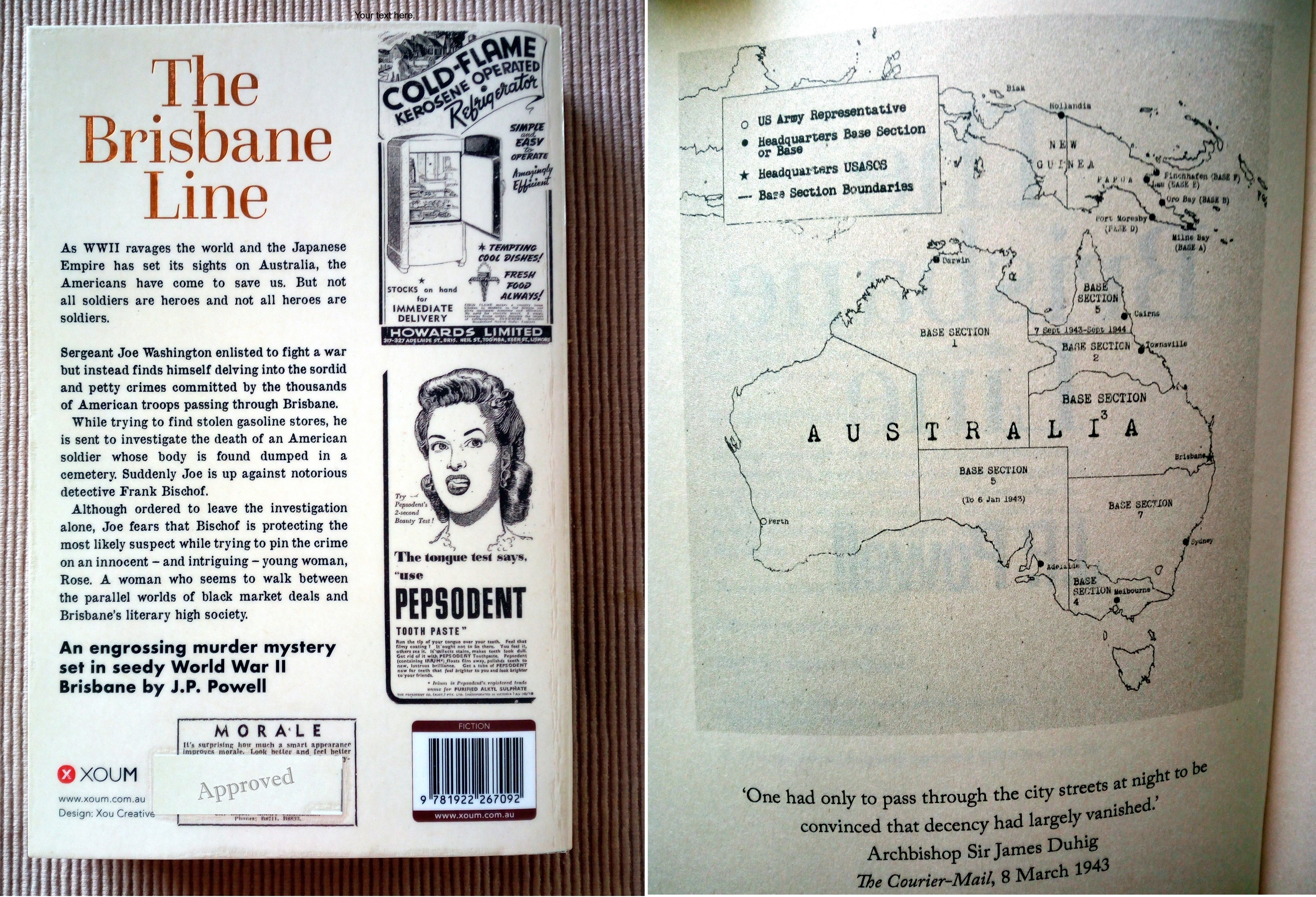
Review ‘The Brisbane Line’ by J P Powell

IMG_20200811_124224

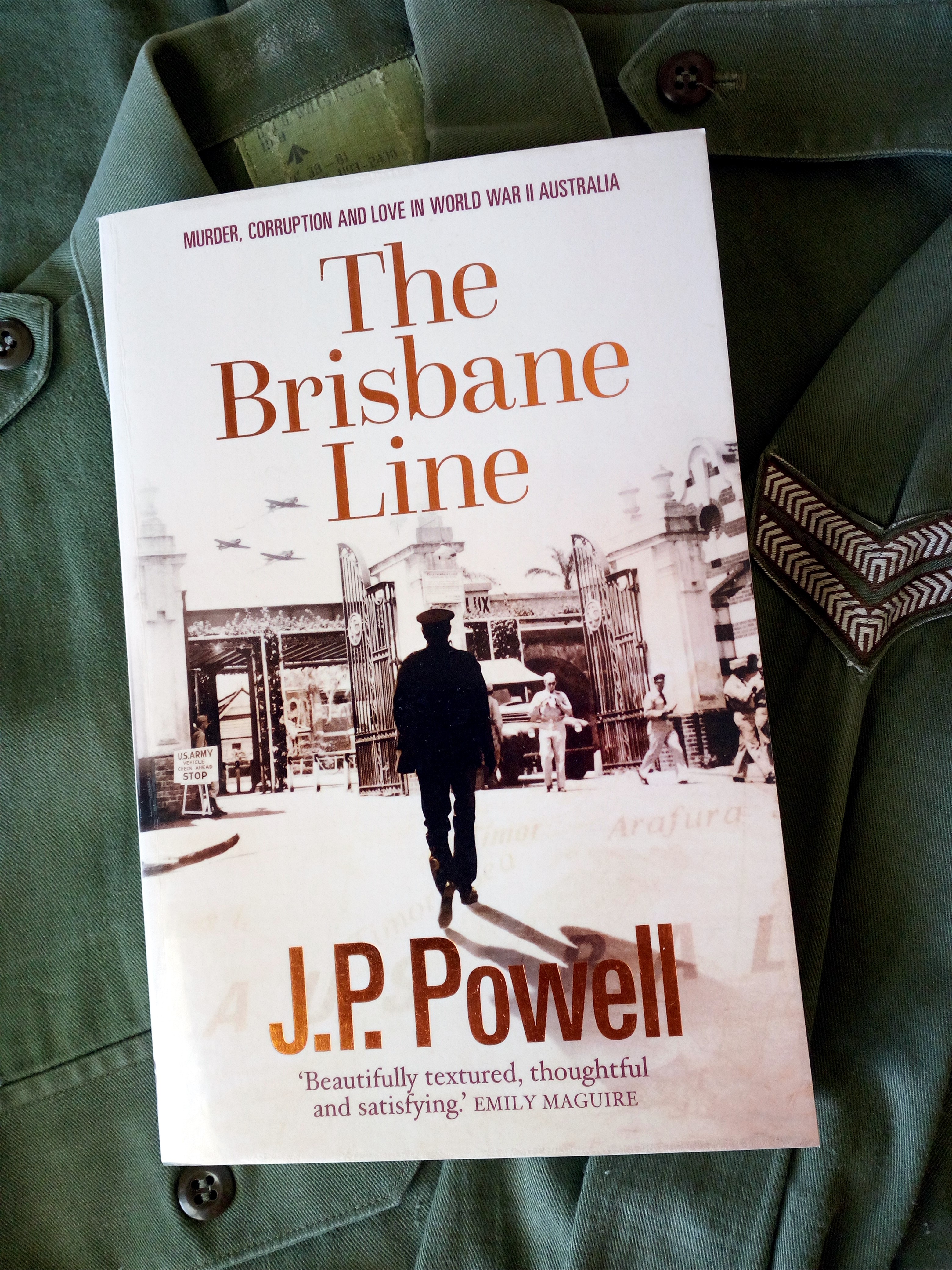
This is a book I had to read.  The name is derived from “an alleged 1942 WWII government plan to abandon Northern Australia in the event of a Japanese invasion”—there is nothing alleged about it.  My father was a young soldier in WWII based in Melbourne when his division received the command to form The Brisbane Line.  It made such an impression on him that later, when he was married, he relocated the family to Brisbane where I currently live.

I dearly wish I could discuss this novel with my late father but I do remember him reminiscing about the off-duty times and leave in tropical Far North Queensland where hi-jinks often lead to a soldier’s death.   I am sure there was tension, corruption and murder among the thousands of American troops stationed in Brisbane, but on the other hand I know families of young women who married GI Joe’s and went to live in US never to return.

Enigmatic protagonist, Rose, has a boyfriend who is a prisoner-of-war and she says “It’s men who cause the trouble in the first place.  It’s just another hypocrisy.”

IMG_20200820_122715

Suitable for crime readers and historians, this well-researched yet fictionalised novel is based on a real person and his original paperwork.  It is more interesting than a text book and follows Sergeant Joe Washington, a US Military Police officer and amateur photographer who joins local police in battling crime and black market corruption.  Joe also has grave suspicions of a murder cover-up.

The humid atmosphere is laced with grunge and irritability offset by guys and gals dancing the night away at the Trocadero Dance Hall.  Well-known landmarks and people make an appearance, for example notorious cop Frank Bischof, author Thea Astley and General Douglas MacArthur, an American who in WWII commanded the Southwest Pacific region. 

The book is gritty and at times the inequality upset my 21st century sensibilities but it is based on true events.  Powell has recreated a vibrant town which embraced a huge influx of cashed-up strangers in uniform and the repercussions this had on Brisbane society, some of which still lingers today.

In “The Art of War” Chinese military strategist Sun Tzu wrote “All warfare is based on deception” and “The greatest victory is that which requires no battle” so I think Judy Powell’s book shows there was no battle—but plenty of deception closer to home.  

Gretchen Bernet-Ward


Author Profile

Briobooks
http://briobooks.com.au/authors/jppowell
YouTube Avid Reader Books interview
https://www.youtube.com/watch?v=SbE0v3Yhkx0

Brisbane Line JP Powell Author Photo 2020 (5)Judy Powell is an archaeologist and historian with a passion for bringing the past to life.  She has worked as a high school teacher, an academic, a National Parks officer, a museum administrator and has excavated in Jordan, Cyprus and Greece as well as leading historical archaeology projects in Australia.  Powell, who lives outside Brisbane, was awarded a QANZAC Fellowship by the State Library of Queensland to pursue research into, and writing of, a series of crime novels set in Brisbane during World War II.