Tropical Rain, Break Time and Poetry Class
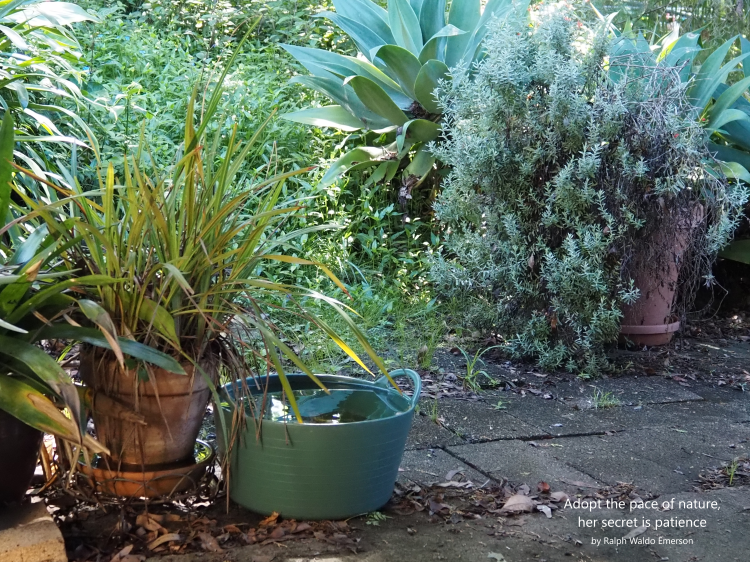
My backyard after continual rain © styling Gretchen Bernet-Ward 2024

I guess every blogger at some time or another decides to take a break, whether it is because of lifestyle changes, work pressures or just that nothing seems to jump out and say “Blog me!” My recent lackadaisical approach is due to high tropical heat and incredibly torrential downpours which have played havoc with both inland regions and coastal towns of Queensland, Australia.

Here in subtropical Brisbane we have had massive plant growth (and soggy lawns, water under the house, humidity which is exhausting) and my photograph is proof of Nature’s unequivocal love of water. The lawn (grass really) is up to my knees; overnight the lavender grew out of its pot, and you can see by the rainwater bucket (used on potted indoor plants) keeps replenishing day and night. Instead of high heating bills, this summer the electricity source is working hard on air-con and ceiling fans.

Still, there is always something to do and life does go on, and on, and on, helped or hindered by weather cycles. Perhaps this time next year Brisbane City Council will introduce hand-watering and I will probably be doling out cupful’s of the precious liquid. Water is really survival itself!

Something which has been taking a bit of my attention away from blogging is poetry.
A quote from Fishing for Lightning explains why—
“In defence of difficulty in poetry I would say this: poetry tries, as best it can, to wrestle with our most complex and ineffable emotions,
and in order to do so the poet must forge a language that is equal to the task.”

Sarah Holland-Batt
‘Fishing for Lightning’ Page 94 Published UQP First Edition 2021
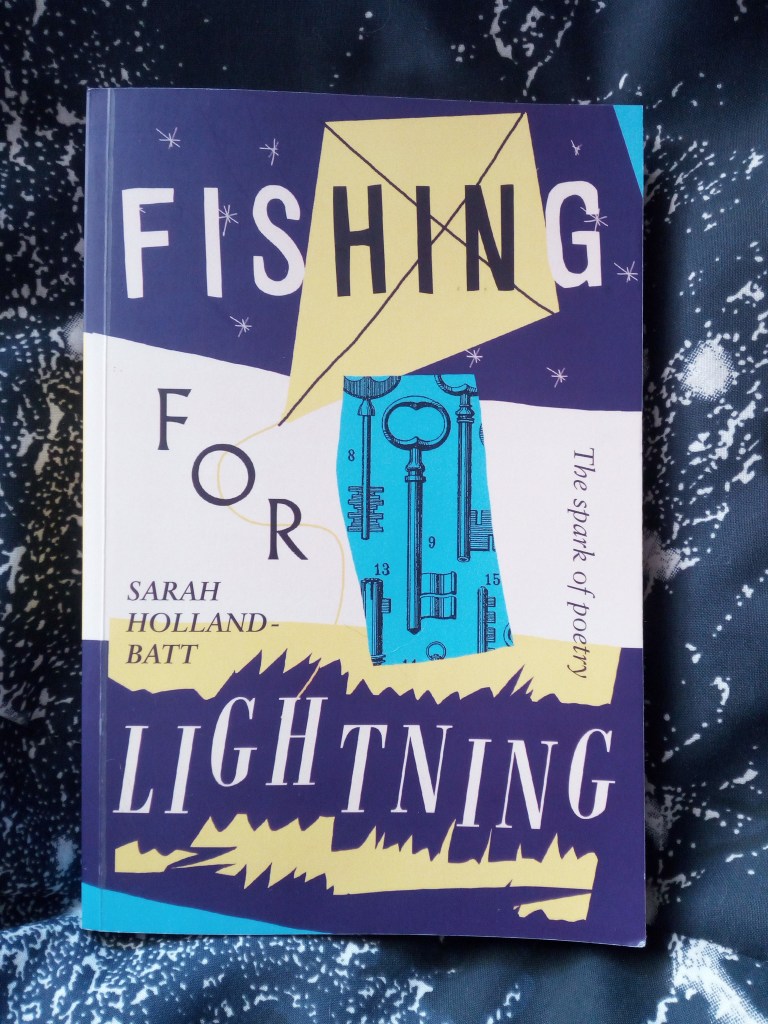
The title is indirectly related to the book © styling Gretchen Bernet-Ward 2024

Soon, I will blog post about a U3A Zoom poetry class I am attending online – due to the heat and rain – and confidently tell you that I am slowly grasping the concept. The book I am studying is titled ‘Fishing for Lightning’ compiled by Sarah Holland-Batt, I won’t divulge the story behind the title, subtitled ‘The Spark of Poetry’. The only poem spark I remember grasping was William Wordsworth’s daffodils in ‘I Wandered Lonely as a Cloud’ but as an adult I am prepared to give it another go. Stay tuned!

Oh, now just a self-indulgent notation: Due to this year’s phenomenal plant growth, all gardening clean-up services (and lawnmower men) are fully booked. Even a local lad who works on weekends is not returning calls. Some ute-and-whipper-snipper operators are charging grossly inflated prices because it is an industry which is not regulated. This strange turn of events prompted me to request a Green Bin from our city council; it’s like a normal rubbish bin except it’s green and clean and recycles garden waste. Just wait until the weekend!

And finally, a little nudge to all those lazy, off-hand, patronising and sometimes whingey gardener guys who came to quote and never rang back, ignoring my pleas and cash; just you wait until the weather cycle changes and everything turns to drought. Will the work be there? Or will we lawnmower-challenged suburbanites shrug and say “Sorry, the lawn and garden are totally dried out, no need of your services, I can hand-trim the odd blade of grass myself.” (Ah, the power, cue evil laughter 😀)

Gretchen Bernet-Ward

‘Nobody Knows This Little Rose’ Poem

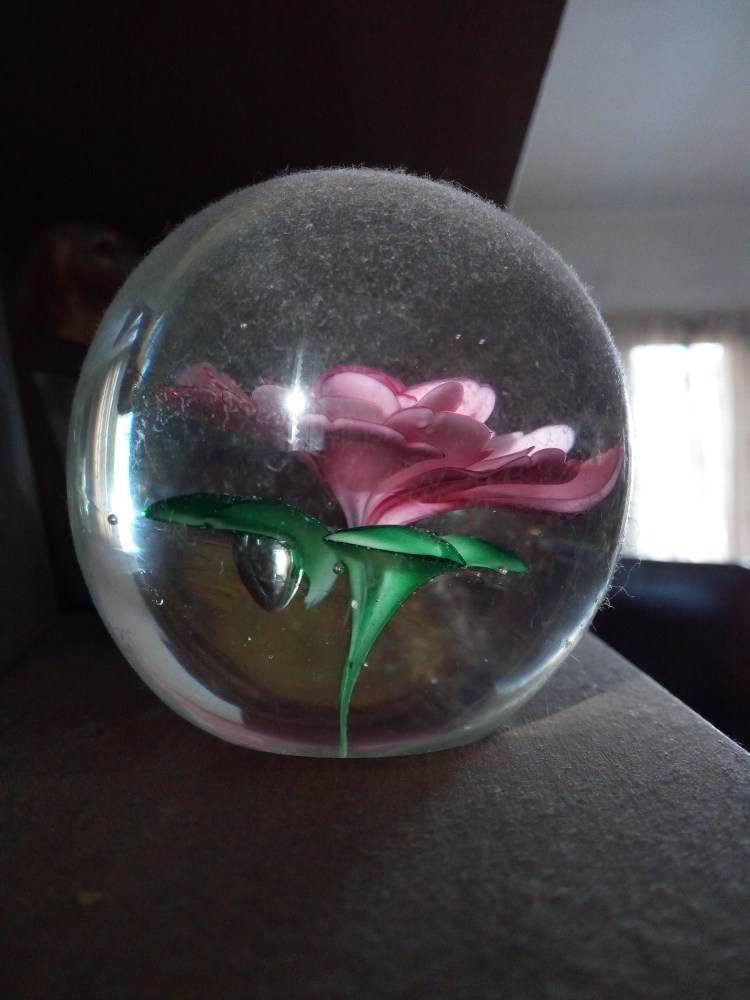
Emily Dickinson plucked a rose and wrote a poem…

A flower forever © image Gretchen Bernet-Ward 2023

Nobody knows this little Rose—

It might a pilgrim be

Did I not take it from the ways

And lift it up to thee.

Only a Bee will miss it

Only a Butterfly,

Hastening from far journey—

On its breast to lie—

Only a Bird will wonder

Only a Breeze will sigh

Ah, Little Rose how easy

For such as thee to die!

by Emily Dickinson

Literary Ladies Guide
AN ARCHIVE DEDICATED TO CLASSIC WOMEN AUTHORS AND THEIR WORK

Emily Dickinson (10 December 1830 – 15 May 1886) was a prolific American poet. Though she wrote more than 1,800 poems by some estimates, only a few were published during her lifetime. She is still something of a mystery, which fuels the continued fascination with her work and life.

https://www.literaryladiesguide.com/author-biography/emily-dickinson/

I Hate Poetry or Poetry Hates Me

Poetry is insidious
Subtle words weaving
Verse so perfidious
Cunning and teasing

It twines like string
Snagging each thought
And every cruel thing
twisted and wrought

Sad tales retold
Children cry animals die
Love lost to the bold
And partners who lie

Past battles fought
A punishing word said
Harsh lessons taught
Buzzing in my head

Nightmares surface in bed
He loves me not
He chose her instead
Let them both rot

Poetry churns sentiment
I’d rather forget
So I prefer contentment
Over bitter regret

Kudos to all composers
And each poetry writer
Life ain’t sweet roses
But it will get brighter

Poem © Gretchen Bernet-Ward 2023

Visit palpable poetry
The Lighthouse poems by Tom Alexander

 Gretchen Bernet-Ward

Ode to Buttons

Buttons, buttons everywhere,

they’re on this and over there.

They’re on clothes and touch-screens.

They’re on phones and washing machines

They can be found in boxes or jars,

or in neat rows on planes and cars.

Being on the button is good,

pushing peoples, you never should.

Some buttons are big, some are small.

Some buttons do nothing at all,

some are outies others innies,

silly buttons on our bellies.

You may have a cute button nose,

to enjoy the smell of sweet rose.

While buttoned up or buttoned down,

in the rain or strolling in town.

Buttons in all shapes, any size,

having a spare is always wise.

Buttons for eyes on our stuffed friends.

Uses for buttons never ends.

We glue them on paper plates,

making gifts for special dates.

Add string then sprinkle glitter on,

next curly yarn, name in crayon.

Some are toggles, some are switches.

Some like snaps to hold up breeches.

No zippers for me, I prefer,

buttons to hold all together.

Glad to share my buttons with you,

we’re all buttoned up, story through.

Rhyme’s done, time to button my lip,

I’ll say goodbye, have a safe trip.

By Steve Kittell

https://www.childrens-stories.net/poems-and-rhyming-stories/buttons_steve~kittell.htm

© images Gretchen Bernet-Ward 2023

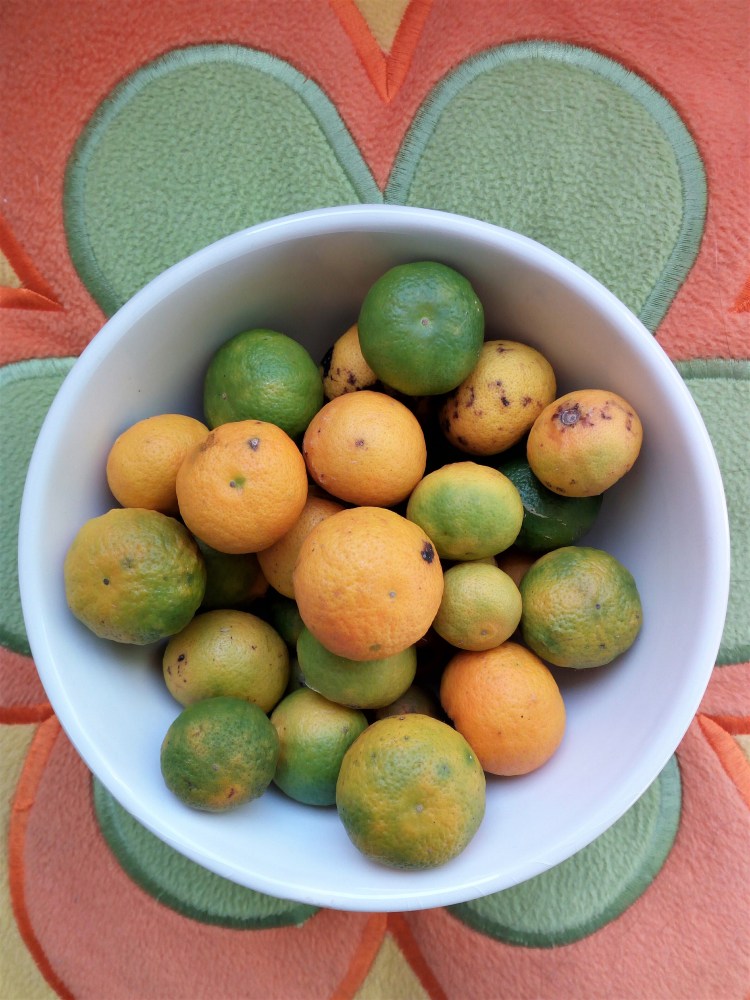
Not buttons but bowl of baby mandarins just for fun © image Gretchen Bernet-Ward 2023

The Elephant

Elephants heading upstream © Gretchen Bernet-Ward 2021

The Elephant

“When people call this beast to mind,

They marvel more and more

At such a little tail behind,

So large a trunk before”

Hilaire Belloc

Joseph Hilaire Pierre René Belloc (1870 – 1953) was an Anglo-French writer and historian and one of the most prolific writers in England during the early twentieth century. Belloc was also an orator, poet, sailor, satirist, writer of letters, soldier, and political activist.

Gretchen Bernet-Ward

John B Tabb was Ahead of His Time…

Image © Gretchen Bernet-Ward 2021

… or have we gone backwards?

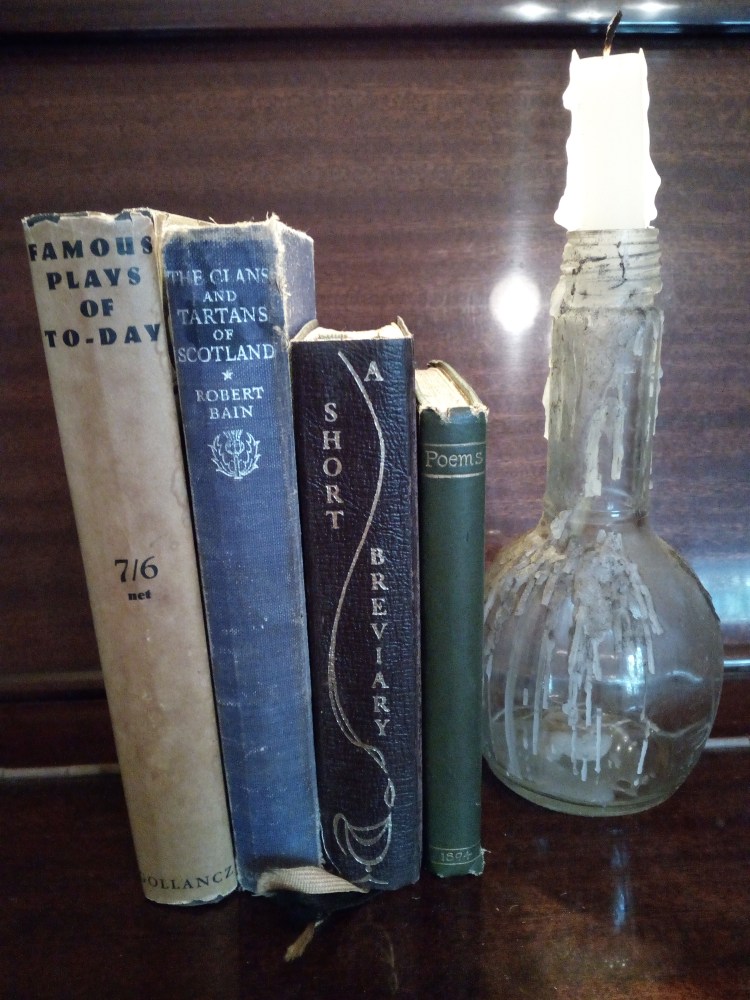
The small green book nearest the candle is simply titled “Poems”, a volume of verse by John B Tabb. Each poem is on a single page and has been written in similar length to Twitter and Instagram. All the way from 1894—I had to share it with you!

There are 172 pages, one short poem per page, extolling nature, love, life and death. I guess Tabb wanted only his poetry to shine because there is nothing personal inside.

The first page has an important red logo with lilies and Latin written on it, not for the poet but the company insignia of Copeland and Day, Boston, MDCCCXCIV (1894)

The second page states “Entered according to the Act of Congress, in the year 1894, by Copeland and Day, in the Office of the Librarian of Congress at Washington.”

The back page reads “This first edition of poems by John B. Tabb is limited to five hundred copies, which have been printed during the autumn of 1894 by John Wilson and Son, Cambridge, Massachusetts.”

A slim volume which appears to have been well handled over many years, and the pale deckle parchment is showing its age—see below.

The big question is “How did this volume arrive at a book fair in Brisbane Australia 127 years later?”

GBW 2021

After the formality of the front pages comes a seven page index (in tiny print) which has intriguing titles listed under headings. I guess the first are general rhymes, the next Quatrains and then Sonnets.

Here are some of my favourites—

The Phonograph

Hark! What his fellow-warblers heard
And uttered in the light,
Their phonograph, the mocking-bird,
Repeats to them at night.

Imagination

Here Fancy far outdoes the deed;
So hath Eternity the need
Of telling more than Time has taught
To fill the boundaries of Thought.

The Dandelion

With locks of gold to-day;
To-morrow, silver gray;
Then blossom bald. Behold,
O man, thy fortune told!

Evolution

Out of the dusk a shadow,
Then, a spark;
Out of the cloud a silence,
Then, a lark;
Out of the heart a rapture,
Then, a pain;
Out of the dead, cold ashes,
Life again.

Compensation

How many an acorn falls to die
For one that makes a tree!
How many a heart must pass me by
For one that cleaves to me!

“We may use different words but emotions are eternal”

Who was this man John B Tabb? Well, his full name and title was Father John Banister Tabb (22 March 1845 – 19 November 1909) and he was an American poet, Roman Catholic priest, and professor of English Contents. He was born into a wealthy family in Amelia County, Virginia, was a blockade runner for the Confederacy during the Civil War, converted to the Roman Catholic Church in 1872, taught Greek and English at Saint Charles College (Ellicott City, Maryland) and was ordained as a priest in 1884. Among his other works, Father Tabb published eight poetry books and was widely published in prestigious magazines of the day including Harper’s Monthly and The Cosmopolitan. The Tabb Monument in Amelia County, Virginia, is dedicated to his memory.
Source https://en.wikipedia.org/wiki/John_B._Tabb

Gretchen Bernet-Ward

——oooOOOooo——

Image © Gretchen Bernet-Ward 2021

Your Precious Life

IMG_20200913_122610
Photo Gretchen Bernet-Ward 2020 — Quote from poem The Summer Day by Mary Oliver https://www.loc.gov/poetry/180/133.html

The Summer Day

Who made the world?

Who made the swan, and the black bear?

Who made the grasshopper?

This grasshopper, I mean-

the one who has flung herself out of the grass,

the one who is eating sugar out of my hand,

who is moving her jaws back and forth instead of up and down-

who is gazing around with her enormous and complicated eyes.

Now she lifts her pale forearms and thoroughly washes her face.

Now she snaps her wings open, and floats away.

I don’t know exactly what a prayer is.

I do know how to pay attention, how to fall down

into the grass, how to kneel down in the grass,

how to be idle and blessed, how to stroll through the fields,

which is what I have been doing all day.

Tell me, what else should I have done?

Doesn’t everything die at last, and too soon?

Tell me, what is it you plan to do

with your one wild and precious life?

Mary Oliver

Mary Oliver (1935-2019) author and Pulitzer Prize winning poet.
https://www.poetryfoundation.org/poets/mary-oliver

Gretchen Bernet-Ward

Poetry Clipart 09

Mother’s Day Stories & Poems Wanted

Valentine's Day 11

Exactly what we need in these days of social-distancing!

Gretchen Bernet-Ward

yellowlancer's avatarPositive Words Magazine

I’m looking for story and poetry submissions for the May issue. A nice way to honour a special person at a time when we might not be able to visit…

Mothers, grandmothers, daughters who have children of their own, special aunts and friends…send them in 🙂

Positive Words magazine

PO Box 798

Heathcote 3523 Victoria

View original post

Fire and Rain from Poet Kate Llewellyn

Kate Llewellyn is a hidden treasure.  I had not read any of her works before today but she is reaching the age of legend status and should be acknowledged for her beautiful poetry now rather than in retrospect.

In ‘Blue Mountains Christmas’ Kate Llewellyn explores the particular delight of summer rain which breaks a dry spell:

Yesterday, smoke from the valley-–

I thought it was mist

until I smelt it-–

and today, each leaf holds water drops,

shining – it rained in the night.

Kate Llewellyn expresses wonder in the capacity of nature for regeneration in the face of disaster, and nature’s opportunism.  In ‘Magpies’ she defines the summer heat and leaving a garden sprinkler on while a bushfire rages:

It had been hot for days,

the garden sprawled-–

hit like a cricketer.

I left a hose on,

hanging in the apple tree,

and went indoors and slept.

Magpies found this fountain

and stalked around.

They made a midsummer opera

and gargled water-–

it became their song.

They sang as if to praise

the fountain in the tree.

While all this was happening

a hundred fires swept the State.

Great trees exploded,

birds and animals caught fire.

People died and houses burnt,

yet still these magpies sang

around the fountain in the tree.

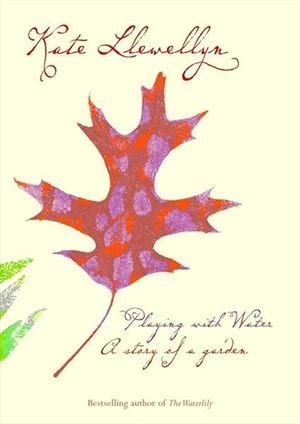
Poet Kate Llewellyn Playing With Water book
‘Playing with Water’ (Pymble NSW HarperCollins 2005) creates a meditation on nature, on community, on the cycle of life. A lyrical memoir that is a celebration of the senses and the seasons.

Australia is the driest inhabited continent on the planet.  It is natural that drought and the regeneration which comes from bushfires and drought-breaking rains are timeless subjects in our poetry and evocatively captured by Kate Llewellyn.

Gretchen Bernet-Ward

PROFILE

Kate Llewellyn is an award-winning Australian poet, author, diarist and travel writer.  She is the author of twenty-four books comprising eight of poetry, five of travel, journals, memoir ‘The Dressmaker’s Daughter’, letters and essays.  “Kate Llewellyn is naturally poetic, naturally personal, and uniquely generous with it.” writes Australian Book Review’s South Australian State Editor Peter Goldsworthy.  Further reading Poetry Library.

ABC Radio National transcript:
https://www.abc.net.au/radionational/programs/saturdayextra/kate-llewellyn/3288742

Poetry ‘Deep Into the Heart of Wales’

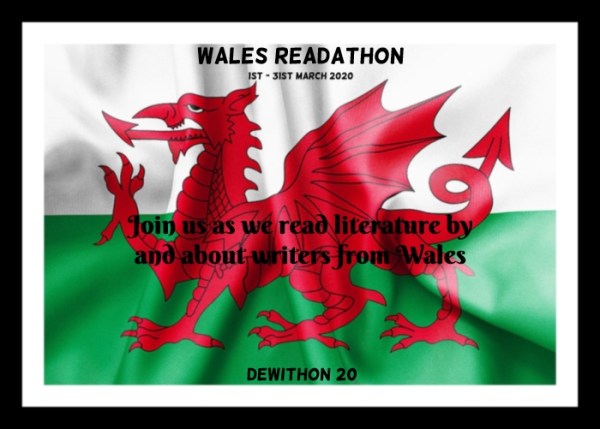
Sunday 1st March 2020 the Wales Readathon and Dewithon20 begins!  To get fired up, read Gareth Evans emotive poem, one of many he penned on a trek across Wales.

“In the summer of 2003, Gareth Evans walked the length of Wales from Cardiff to Holyhead, taking 28 days to cover over 500km and 18000m of ascent.  Twenty-eight poems were inspired by the journey.  Some are humorous, some are philosophical, some are descriptive and all are the product of quiet, solitary observation.  Join Welshman Gareth as he probes deep into the heart of Wales.”

Here is one of his poems—

“The Dragon’s Back”

Turned to motionless stone by a great Welsh wizard

His red scaly back turned to a silvery grey

The most powerful dragon that ever lived

Is harnessed by a mysterious, magical spell

His elongated head peers down on the Llanberis lakes

His massive body full of spikes is a fearsome sight

His rock-studded spine slumped high above Ogwen

Gashes line his steep sides like old war wounds shooting down to Idwal

Gullies and arêtes form the webs of his folded wings

A bristly tail drops down suddenly, decorated by spectacular pinnacles

Before flicking up again with one last majestic sweep

To its triple-pronged tip soaring towards the heavens

The roar that once filled the valleys preserved forever

In the howl of the wind and the scream of the jets in Nant Ffrancon

His beauty is held in the eagles that now circle above him

He lives on in the spirit of the people of Wales

Courage and passion are mirrored in their eyes

And his fire still burns in the depths of their hearts

By Gareth L Evans 2003

Poetry from “Deep Into the Heart of Wales”
http://www.authorsden.com/visit/viewPoetry.asp?AuthorID=8106

Wales Readathon 2020
https://bookjotter.com/2020/02/03/are-you-ready-for-wales-readathon-2020/

My Dewithon20 post
https://thoughtsbecomewords.com/2020/02/21/are-you-ready-for-wales-readathon-2020/

‘One Moonlit Night’ by Caradog Prichard is currently winging its way to me via Booktopia.  It is the book chosen by Dewithon20 as a group read.  Or pick your own book and join us!

Gretchen Bernet-Ward

Welsh Flag

Dewithon Logo Daffs