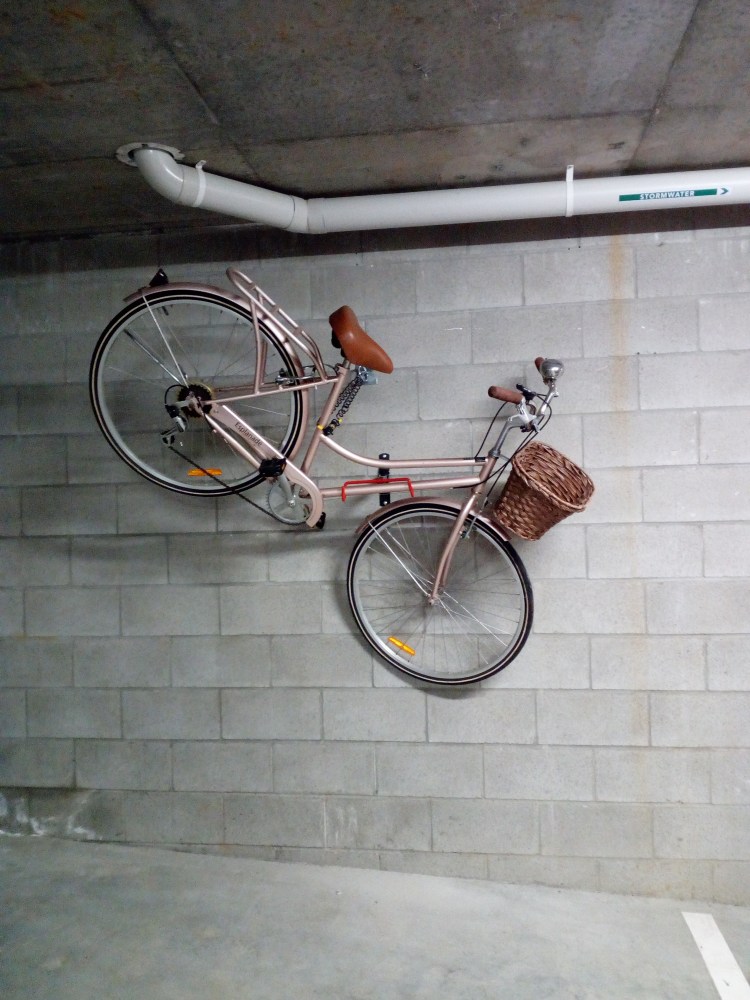
Poet notation:“If a bicycle could have a soul this is a poem that my favourite bike ‘Loretta’ would have written to me after a long period of neglect as I recovered from some injury or other.” July 2014
This 1908 poem extract from William Blocksidge captures the mood.
“And, interspersed among the spangled sheen, Looks out in differing shades the darkened green— A background whereupon, in outline bold, Stands the rich mintage, silver mixed with gold.”
For all its floridness, this poem is quite cutting and the topics are quite revealing. Our modern sensibilities tend to forget the trials and trauma of establishing a town in a new land. Not to mention the brutality towards convict labour and the rightful Indigenous population. Interestingly this is the year the Victorian Government passed the Adult Suffrage Bill 1908 granting female suffrage for the first time. Women’s suffrage is the right of women to vote in elections. Australia was the first nation in the world to grant women these dual rights.
For those keenly interested in the entire version of this past century’s rather long yet insightful poem from a man whose real estate family is well-known in Brisbane, Queensland, below is a copy from AIC for your reading pleasure. Strong billy tea is recommended with damper and golden syrup if you have it handy.
Brisbane, thou art a city of the sun, A forest queen, a sea-nymph, joined in one! Here Summer loves to spin her lengthened rule, While Winter’s care is but the earth to cool; Here golden wealth, from many a distant plain, Is piled in ships, to swim the billowy main — Here Commerce floods the tides, and minions toil To prove the measure of her mounting spoil!
How often, perched above the hilly bounds That wrap thee as a nest its brood surrounds, Wooing the wind that bears the ocean’s breath, And many a tale to such as listeneth — How often have I lovingly surveyed The scene before my wondering gaze displayed — The lengthening spires, that point the lofty way While yet the soul is idling in its clay; The spacious pile that lifts its stately head; The winding river, to its lover wed; The hills that rise above to kiss the sky; The valleys that within their shadows lie; The shipping crowding on the silver stream; The living threads that through the mazes teem!
And when soft Night, in sable vestment gown’d, Has wrapped her stole thy tranquil form around, ’Tis then, in panoramic splendour viewed, Thou’d be by fond Imagination wooed; For then, fair Brisbane, when thy fading bowers, Tipped with their beacons, turn to fairy towers, Thy beauty scorns the bounds of words, for dumb Are these, and ’neath the burden soon succumb! Now myriad lamps, upon its margin’s crest, With gleaming pennons light the river’s breast; And where the city’s constellation lies The glimmering haze ascends to gild the skies. The villas blazing on the craggy hills Augment the golden flood the night that fills; The bridge displays, above the Garden Bend, Its fiery lines, that in the cluster blend.
And, interspersed among the spangled sheen, Looks out in differing shades the darkened green — A background whereupon, in outline bold, Stands the rich mintage, silver mixed with gold. Now sound (for Night has giv’n the magic key) The pregnant chords of heavenly harmony; And softly floats across, in mingling rhyme, The mellowing cadence of the pealing chime — Such tones as wake the soul’s celestial lyre When pensive memories the theme inspire; And, each with each in concord blending true, With holy rapture flood the heart anew.
Ah, was it but a century ago When thou did’st in the womb of earth lie low, And yet unborn to bear the shame of men, And, rising, throw the burden off again? — When down the hollow gale, that trembling fled, At dusk and dawn, the wailing for the dead In eerie numbers woke the echoes weird, Till, floating down the vale, it disappeared? And was it where those stately buildings stand, Where lofty Art displays her lavish hand, That plenteous game before the huntsmen sped? Or down the maze the dusky dancer led? That round the turrwan, with his magic stone, The sick revived by simple faith alone; Or, failing this, full-toothsome morsels made To tempt their brothers to the festal shade?
Ah, yes, those primal scenes, with plenty crown’d, Made all the wooded valley hallowed ground, Till came the time — ill-omened, true, for them — When, first by truce and then by stratagem, The settlement unfolded in the vale, ’Neath Logan’s iron rule to fret and quail!
What curses now the trembling wretches spend As ’neath the blows their bleeding bodies bend — As, shackled to the rude triangle’s lines, The gory flood th’ adjoining ground defines! I seem to hear again the clanking chain, The creaking treadmill grinding small the grain; And see the convict turn the stubborn clod, Or, ’neath the pine, the sluggard bear the rod.
But why dilate? Those cruel days are done: Time’s ceaseless round has blotted every one: A fairer scene now meets the favoured eye — Thou, smiling city, ’neath my gaze dost lie. What though land-hungry Gipps thought passing fit To cripple where he lacked improving wit! Among the first of Austral fair will stand The one disfigured by his vandal hand!
And while the ages roll their waning round, Till earth’s but mortal mould the shades confound, May Plenty’s best thine every call attend, And smiling Peace her priceless treasure lend! May noble sons thy benison e’er bless, And daughters fair thy tender claims confess; And thus may every tongue conspire to name Thee and thine offspring heirs to Honour’s fame!
Hope you made it this far. William touched on a nerve, quite the fascinating poet. ❤ Gretchen Bernet-Ward 2024
The Turrbal and Yuggera peoples have lived in the Brisbane area for more than 32,000 years and their ancestors go back more than 60,000 years. The Turrbal and Jagera people speak Yuggera and their name for Brisbane is Meanjin. Written on Sunday 26th May 2024 National Sorry Day
I guess every blogger at some time or another decides to take a break, whether it is because of lifestyle changes, work pressures or just that nothing seems to jump out and say “Blog me!” My recent lackadaisical approach is due to high tropical heat and incredibly torrential downpours which have played havoc with both inland regions and coastal towns of Queensland, Australia.
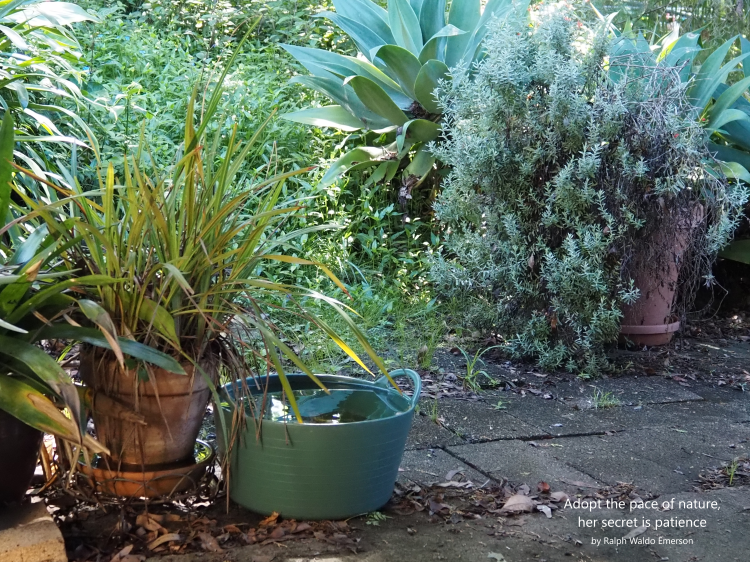
Here in subtropical Brisbane we have had massive plant growth (and soggy lawns, water under the house, humidity which is exhausting) and my photograph is proof of Nature’s unequivocal love of water. The lawn (grass really) is up to my knees; overnight the lavender grew out of its pot, and you can see by the rainwater bucket (used on potted indoor plants) keeps replenishing day and night. Instead of high heating bills, this summer the electricity source is working hard on air-con and ceiling fans.
Still, there is always something to do and life does go on, and on, and on, helped or hindered by weather cycles. Perhaps this time next year Brisbane City Council will introduce hand-watering and I will probably be doling out cupful’s of the precious liquid. Water is really survival itself!
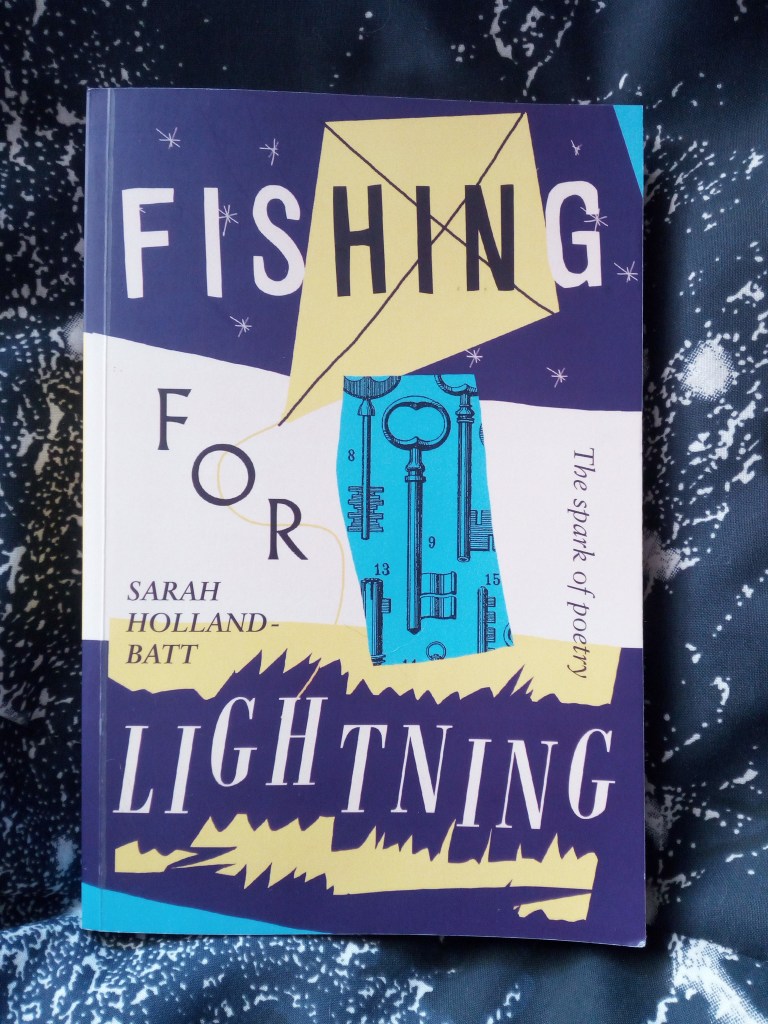
Something which has been taking a bit of my attention away from blogging is poetry. A quote from Fishing for Lightning explains why— “In defence of difficulty in poetry I would say this: poetry tries, as best it can, to wrestle with our most complex and ineffable emotions, and in order to do so the poet must forge a language that is equal to the task.”
Soon, I will blog post about a U3A Zoom poetry class I am attending online – due to the heat and rain – and confidently tell you that I am slowly grasping the concept. The book I am studying is titled ‘Fishing for Lightning’ compiled by Sarah Holland-Batt, I won’t divulge the story behind the title, subtitled ‘The Spark of Poetry’. The only poem spark I remember grasping was William Wordsworth’s daffodils in ‘I Wandered Lonely as a Cloud’ but as an adult I am prepared to give it another go. Stay tuned!
Oh, now just a self-indulgent notation: Due to this year’s phenomenal plant growth, all gardening clean-up services (and lawnmower men) are fully booked. Even a local lad who works on weekends is not returning calls. Some ute-and-whipper-snipper operators are charging grossly inflated prices because it is an industry which is not regulated. This strange turn of events prompted me to request a Green Bin from our city council; it’s like a normal rubbish bin except it’s green and clean and recycles garden waste. Just wait until the weekend!
And finally, a little nudge to all those lazy, off-hand, patronising and sometimes whingey gardener guys who came to quote and never rang back, ignoring my pleas and cash; just you wait until the weather cycle changes and everything turns to drought. Will the work be there? Or will we lawnmower-challenged suburbanites shrug and say “Sorry, the lawn and garden are totally dried out, no need of your services, I can hand-trim the odd blade of grass myself.” (Ah, the power, cue evil laughter 😀)
OLD SCOTTISH NURSERY RHYME. MY PARENTS QUOTED THIS POEM TO ME WHEN I WAS A CHILD BUT IT DID NOT HELP ME SLEEP…
Wee Willie Winkie runs through the town,
Upstairs and downstairs, in his nightgown;
Rapping at the window, crying through the lock,
“Are the children in their beds?
It’s past eight o’clock.”
Penned by Glaswegian poet William Miller, it originally appeared as a fiveverse rhyme written in the Glasgow UK vernacular in 1842.
Perhaps you know it. Over the years the wording and ending has varied, for example the original poem is longer and specified ten o’clock. See Quora for information:
Here’s the beginning of the extended version – “Wee Willie Winkie rins through the toon, Up stairs and doon stairs in his nicht-goon, Tirling at the window, cryin’ at the lock, Are the weans in their bed, for it’s now ten o’clock?”
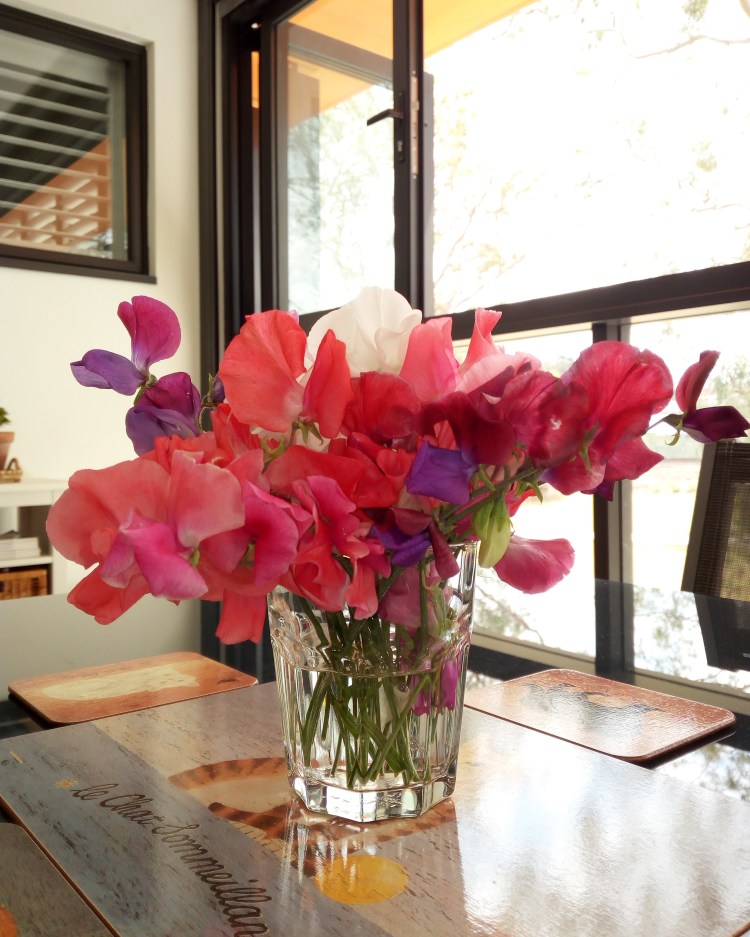
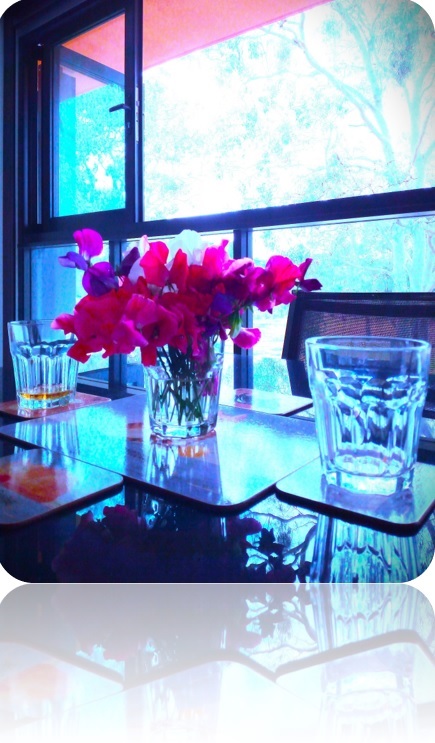
Under the sweet-peas I stood And drew deep breaths, they smelt so good. Then, with strange enchanted eyes, I saw them change to butterflies.
Higher than the skylark sings I saw their fluttering crimson wings Leave their garden-trellis bare And fly into the upper air.
Standing in an elfin trance Through the clouds I saw them glance… Then I stretched my hands up high And touched them in the distant sky.
At once the coloured wings came back From wandering in the zodiac. Under the sweet-peas I stood And drew deep breaths. They smelt so good.
By Alfred Noyes
Alfred Noyes was a British poet. He was born 16th September, 1880, Wolverhampton, Staffordshire, UK. He passed away 28 June, 1958, on the Isle of Wight. A traditional English poet, mainly remembered for his lyrical verse. The heart-wrenching “The Highwayman” and “Drake” are his best known works and illustrate his love of the sea.
It is said that the Romantic poets such as Tennyson and Wordsworth greatly influenced him. In 1949, due to his increasing blindness, Noyes dictated all his subsequent works. He also wrote for children and in 1952 he published a very popular children’s book “Daddy Fell into the Pond” and other poems. Info: https://www.poetryfoundation.org/poets/alfred-noyes
🌺 An annual plant of the pea family, sweet-pea flowers are cultivated throughout the world for their beautiful petals and soft perfume. Their rather unflattering botanical name is Lathyrus odoratus but the meaning comes from the Greek word lathyros meaning pea and the Latin word odoratus, meaning fragrant. Alfred certainly liked them!
Henry Van Dyke (born 10 November 1852, Germantown, Pennsylvania, USA, and died 10 April 1933, Princeton, New Jersey USA) He was a Presbyterian minister, short-story writer, poet and essayist popular in the early decades of the 20th century. Van Dyke married Ellen Reid in 1891 and they had nine children.
A leading writer of his age, Henry van Dyke wrote profusely in the fields of religion, literature, diplomacy, education, nature and public service. He was an admirer of Alfred, Lord Tennyson and met him while overseas.
Van Dyke’s great love of the outdoors was a crucial part of his Christianity, and in the early twentieth century he became a conservationist speaking out for the preservation of Yellowstone. His belief in nature and religion drove his literary criticism and other writings throughout his life.
Emily Dickinson (10 December 1830 – 15 May 1886) was a prolific American poet. Though she wrote more than 1,800 poems by some estimates, only a few were published during her lifetime. She is still something of a mystery, which fuels the continued fascination with her work and life.
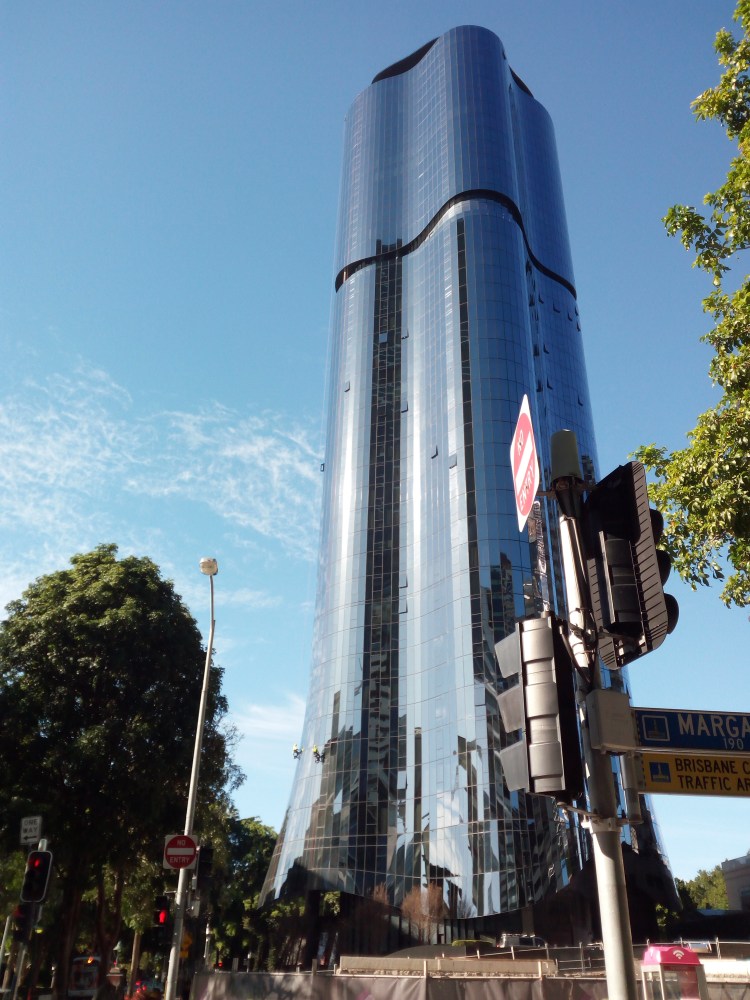
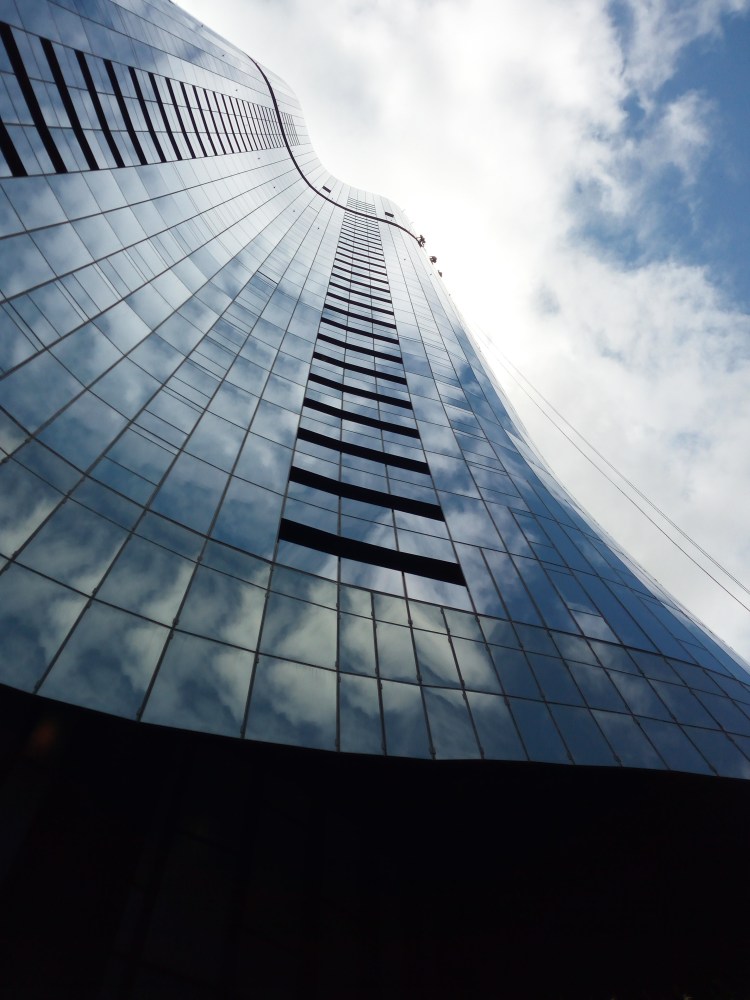
As a latecomer to the cryptic art of Haiku, I am fascinated by this collection I came across after I photographed the amazing window cleaners of Abian residential apartments in Brisbane, Queensland.
skyscrapers orchestrate the wind window cleaners sing
Carol Jones, Wales
penthouse window the cleanerman washes the dirt from the sky
Serhiy Shpychenko, Ukraine
I quote from The Haiku Foundation and Kathy Munro “Haiku Windows—In the book Haiku: The Art of the Short Poem, editors Yamaguchi and Brooks quote David Lanoue ‘A haiku is a window’…” and an expressive compilation was born from a wide range of poets.
window washer a drop away from eternity
Peter Jastermsky
sunny morning man’s shadow on my desk
Slobodan Pupovac, Croatia
These beautiful, descriptive, short and humorous haiku poems gave me a look into the world of workers who have no need of an office. Their work is perhaps of a voyeuristic nature, they keep fit, can see completed job satisfaction—and obviously they are not afraid of heights.
perfect synchrony the kitten’s head and window cleaner’s sponge
Ingrid Baluchi, Uganda
window cleaner in the museum pauses – a Monet painting
Tomislav Maretic
There is a cute Haiku from an Aussie but I will let you find that one yourself—full compilation here:
The poem by Paul Thomas Galbally ‘A Café on My Street’ struck a cord with me as I sat in my local café towards closing time while the chairs and tables were being wiped, floors swept, stock covered and perishables put in the refrigerator. The barista and wait staff moved slowly with end-of-the-day tiredness.
My experience is not as poignant as Galbally’s but I can well imagine that my local café owner will not want to stay for years in the one spot. He’s too young to have the desire to grow old and create a poetic backstory like this for people in the suburbs. Read on…
This is my street An old street, In an old Irish town The people come And then they go In the soft rain Of a short Irish summer
When the mood is on me I let my feet walk And they always Seem to bring me here The café at the end of the street And sure, Where else would they go?
Many is a time I had a hearty steak sandwich Or fishcakes with potatoes Or just a coffee and scuffin To beat the cold outside And it’s many the friend I found in there Aye, and lovers too.
It’s face is green and black Milanese style So the owners tell me With a striped green and white awning And simple tables and chairs And all the love in the world
Music has been had there And poetry, and just craic Long Scrabble Saturdays Taken very seriously We even bought the dictionary To stop the heated Word exchanges
So I know most of the people There is always a smile Headed in my direction When I am blue It brings me to life Somewhat And needless to say The food is always good
It is funny, how Friends and family Merge sometimes As happens In the Café at the end of the street Where friends are family And family are friends
They told me They are closing in September A loss like a family bereavement I can only hope that I find another place to go Or maybe a new street to live on Where I can Walk out my door, and feel Home
“Think of them as a cross between scones and muffins or as I like to call them scuffins. These Irish muffins can be enjoyed in many ways. Straight out of the oven for a warm breakfast treat, as a quick snack with butter, or part of your bread basket at mealtime”









 Thoughts Become Words