Grey Winter hath gone, like a wearisome guest, And, behold, for repayment, September comes in with the wind of the West And the Spring in her raiment! The ways of the frost have been filled of the flowers, While the forest discovers Wild wings, with the halo of hyaline hours, And the music of lovers.
September, the maid with the swift, silver feet! She glides, and she graces The valleys of coolness, the slopes of the heat, With her blossomy traces; Sweet month, with a mouth that is made of a rose, She lightens and lingers In spots where the harp of the evening glows, Attuned by her fingers.
The stream from its home in the hollow hill slips In a darling old fashion; And the day goeth down with a song on its lips, Whose key-note is passion. Far out in the fierce, bitter front of the sea I stand, and remember Dead things that were brothers and sisters of thee, Resplendent September.
The West, when it blows at the fall of the noon And beats on the beaches, Is filled with a tender and tremulous tune That touches and teaches; The stories of Youth, of the burden of Time, And the death of Devotion, Come back with the wind, and are themes of the rhyme In the waves of the ocean.
We, having a secret to others unknown, In the cool mountain-mosses, May whisper together, September, alone Of our loves and our losses. One word for her beauty, and one for the grace She gave to the hours; And then we may kiss her, and suffer her face To sleep with the flowers.
High places that knew of the gold and the white On the forehead of Morning Now darken and quake, and the steps of the Night Are heavy with warning! Her voice in the distance is lofty and loud Through the echoing gorges; She hath hidden her eyes in a mantle of cloud, And her feet in the surges!
On the tops of the hills, on the turreted cones – Chief temples of thunder – The gale, like a ghost, in the middle watch moans, Gliding over and under. The sea, flying white through the rack and the rain, Leapeth wild at the forelands; And the plover, whose cry is like passion with pain, Complains in the moorlands.
Oh, season of changes – of shadow and shine – September the splendid! My song hath no music to mingle with thine, And its burden is ended; But thou, being born of the winds and the sun, By mountain, by river, Mayst lighten and listen, and loiter and run, With thy voices for ever.
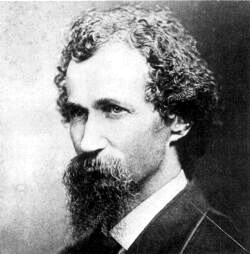
Henry Kendall (1839 – 1882)
‘Leaves from Australian Forests’ Poems of Henry Kendall – with Prefatory Sonnets.
Third poem – Page 7 of original book.
Pages 163 – with Dedication.
Published 1869 by George Robertson, Melbourne, Australia.
Printed by Walker, May & Co, Melbourne, Australia.
Poet Henry Kendall – painting ‘Bush Burial’ by Frederick McCubbin (1890)
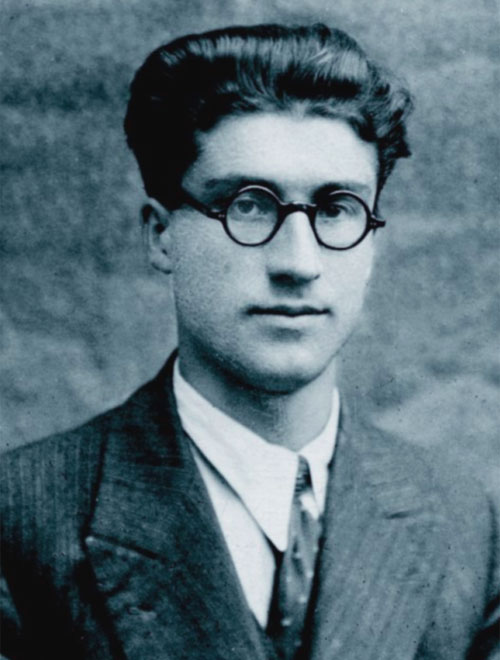
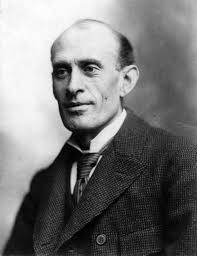
Cesare Pavese was an Italian novelist, poet and translator, and an outspoken literary and political critic.
Not well-known outside Italy, Pavese is numbered highly among the important 20th century authors in his home country.
Born in rural Santo Stefano Belbo, he often returned to the area, enjoying the solitude away from his turbulent career and heartbroken love life. Pavese was not destined to live long, he died just before his 42 birthday.
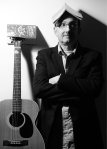
Cesare Pavese (1930) rocking his Harry Potter glasses.
One post with three acts READING LOOKING THINKING based on the format started by innovative blogger Paula Bardell-Hedley of Book Jotter.
Her invitation to participate offers a change from THINKING to DOING if that suits your purpose but my TBR is backing up and I need to list seven of the books I desperately WANT TO READ—which, er, goes over the Three Things limit. I just want to blab about these great books 😃 GBW.
These two books are side-by-side because they involve food and drink.
Todd Alexander
has written a humorous memoir of his escape to the country. I did hear him at an author talk but he didn’t divulge the full story. ‘Thirty Thousand Bottles of Wine and a Pig Called Helga’is sometimes sad, sometimes gruesome but I’m hoping it’s an uplifting story of the joys of living on the land. http://www.toddalexander.com.au/
Maria Donovan
set her novel ‘The Chicken Soup Murder’ against the backdrop of real events in 2012, a time in Michael’s life when everything is turned upside down. Cricket, football and the seaside are woven through the story as he strives to make sense of the changes involving death, suspicious neighbours and a school bully. https://mariadonovan.com/
This is a mixed bag of goodies sharing the same photographic background.
Sally Piper
has golden wattle on her bookcover (I’m allergic to pollen) but the inside of ‘The Geography of Friendship’ greatly appeals to me. The blurb reads ‘We can’t ever go back, but some journeys require walking the same path again’. I won this novel at UQP behind-the-scenes publishing event. http://www.sallypiper.com/
David Malouf
is an Australian icon. I couldn’t begin to details his many and varied works here but his poetry is brilliant. The ‘An Open Book’ flyleaf reads ‘Malouf reminds us of the ways poetry, music and creativity enrich our lives . . . about the dynamics of what escapes and what remains’. https://en.wikipedia.org/wiki/David_Malouf
Simon Cleary
lives in my city of Brisbane. He has written two novels about war and its devastation. ‘The War Artist’ . . . ‘tackles the legacy of the Afghanistan war and the crippling psychological damage of PTSD’ and follows the shattered life of Brigadier James Phelan when he returns to Australia. http://www.simoncleary.com/
Katherine Battersby
writes the most adorable children’s picture books. I have been a fan of Squish Rabbit since his first appearance and assisted Katherine at one of her library book launches. Forty children were expected and 140 turned up! ‘Squish Rabbit’s Pet’ is my favourite so far; profound and endearing. https://katherinebattersby.com/
I love bold bookcovers which alone tell a tiny bit of the story.
Hank Green
was recommended to me by a librarian with hair dyed pink, orange and green. A reader of quirky books like me (although my hairstyle is more conservative) she advised that this book is a bit different. And, yes, he’s the brother of John.
I have to say I have no idea what is in store for me with ‘An Absolutely Remarkable Thing’so I will just leave you with the quote ‘In Hank Green’s sweeping, cinematic debut novel, a young woman becomes an overnight celebrity when her YouTube video goes viral . . . but there’s something bigger and stranger going on’. https://www.hankgreen.com/
Right, that’s it, the seven books I’m going to read—not counting those on my ereader—now comes the wait until I post my book reviews. Ciao for now!
The personal experiences of poet Kate O’Neil offer a diverse and interesting look into the creative world of poetry.
After chatting to Kate over our shared memories of the old poem ‘Wynken, Blynken and Nod’ she kindly showed me her ‘waking up’ version (excerpt below) which fits beautifully with the original. Kate then agreed to answer some tricky questions for me and her responses are both thoughtful and revealing.
Welcome, Kate!
Thank you so much for your time.
My favourite poem of yours is short and sweet; ‘Paragliders Bald Hill Lookout’ invokes in my mind’s eye vivid colour, movement and summer days at the beach.
Talking of short and sweet, I recall asking you which would you choose ‘Lollipop or Cake?’ and you immediately said ‘Cake’, supplying a recipe with almonds smothered on top. I can identify with that! I had read your work on Australian Children’s Poetry under Kate O’Neil and recently discovered your real name is Dianne Cook. You explain why in our Q&A, and give readers a peek behind the scenes of your poetry life.
Okay, let’s get those thoughts into words…
What highlights stand out in your poetry journey?
I’ve been hanging out with poetry for most of my life, so there have been lots of decades for highlights to happen in.
Highlights of poetry reading still happen with amazing frequency. They began when I first realised what magical particles words and sounds are, and what selection, arrangement, combination – even omission, can play in shaping and delivering meaning. There were the ‘greats’ I studied at school – some fantastic stuff there, and I’ve stored many riches from them. But the thing is – poetry keeps on coming. There are poets all over the world publishing collections, submitting to competitions and anthologies and magazines – and sharing a way of seeing. Some poems have knocked me flat, left me breathless. Some have lifted me to heaven; it’s a great ride.
There have been highlights of poetry writing, too. For years the only public airing of my poems was in eisteddfod performances by drama students for whom I had written them (but who did not know this – hence my use of a pen-name). There have been lovely moments hearing something performed well.
A major ‘highlight’ was having my submission to the inaugural (and only)Manchester Writing for Childrenprize short-listed. This competition was set up by Poet Laureate Carol Ann Duffy’s team at Manchester Uni.
There have been some wonderful outcomes from this. These poems were published in‘Let in the Stars’, the competition anthology, and one of them has since been chosen for inclusion by Roger McGough in his anthology‘Happy Poems’. AND I have kept in touch with several other poets in the book. I love the book. I love so many of the poems in it, and the illustrations (by Manchester art students) are wonderful.
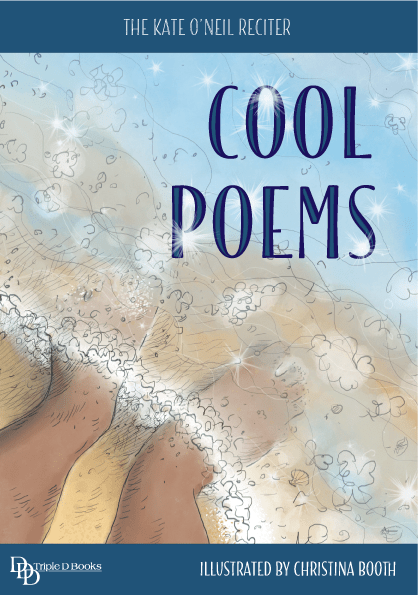
Since then I’ve made successful submissions to several magazines and anthologies – for adults and children. See ‘Cool Poems’ information further down. And I keep on submitting – (loads of rejections, of course).
See OOPS! at the end of Q&A for more book details.
Is there a significant thread through your creativity?
I would say not. If anyone ever notices one I‘d like to be told. At the Manchester Prize event, Mandy Coe (one of the judges) commented that I write in a variety of voices / styles. She suggested it might be the influence of drama teaching. I don’t know if that was praise or not. Aren’t we writers meant to ‘find our voice’?
What challenges do you face when beginning a poem?
Nothing like the challenges of finishing it. If a beginning (or middle) pops into my head at an inconvenient moment, I fear it will vanish if I don’t get it down on paper or in the notes on my phone. This makes my amount of ‘screen time’ look dangerous.
Are you inspired or influenced by another poet?
Inevitably, and I could never know how many. I’ve done some online workshops recently with UK poet Wendy Pratt, whose work I admire. She, and others in the group, have helped me tighten my writing. Lots of deleting went on.
Can you name just one of your favourite poems?
James Carter UK Children’s Poet
You are asking this of someone whose word files are loaded with favourites! If they are in the cloud, it will rain my favourite poems one day. What if I narrow this to ‘favourite poem for children’? Or better still, ‘favourite concrete / shape poem for children’? I can do that. It’s ‘The Moon Speaks!’ by James Carter. It’s on his website:
This is getting difficult. There are so many ways in which a poem can succeed (or fail). I think I’d rate a poem’s success (for me) by the state I’m in after reading it.
How did you feel about poetry when growing up?
I’ve probably answered this in the first question. I had no discrimination, but anything with rhyme, rhythm, sound patterns, imagery caught my attention. Hymns, advertising jingles, greeting cards, bush ballads…
Do you draw on your own childhood memories?
Yes, at times, but much of that grist is still very much in the mill.
Excerpt from Kate O’Neil verse expanding on the traditional children’s poem.
Have you experienced an awkward poetry moment?
Mostly private ones. (‘What? Did I really write that?’)
Are you a day dreamer or do you plan significant goals?
Genetically inclined to dreaming, but I try to impose goals to counter this. (Hence the Wendy Pratt courses which involved writing on a prompt a day for four of the past six months).
Can you give us a hint about your work-in-progress?
‘Progress’ plays tricks on me? I have drafts of picture books, a chapter book, jottings for poems – ALL OVER THE SHOP! Sometimes something gets finished, usually unexpectedly, usually when I think I am working on something else – and I send it somewhere. Results are mixed. This morning, for instance, I learned I have TWO poems long-listed in a comp (adult) and they will be published in an anthology. Last week I sent off a poem I quite liked to The School Magazine just before I left for Sydney. By the time I got there it had been rejected.
Do you have some guiding words for emerging poets?
I think it better to share another poet’s words that have guided me. The main one is READ.
Jo Bell web image credit Lee Allen
Jo Bell quote: “If there is one thing I want you to take from this book, it is this: Nobody writes good poetry without reading good poetry. Those who don’t take this seriously invariably write cliched, derivative and unoriginal work – just what we all want to avoid – because they aren’t aware of the context in which they are writing.”
OOPS! I haven’t mentioned the publication last year of my ‘Cool Poems’. This was a major highlight! The book belongs in a series published by Triple D Press, Wagga Wagga NSW. It was a nail-biting thing to have a book which would sit alongside collections by Australians Bill Scott, Anne Bell, Colin Thiele, Christobel Mattingley and Max Fatchen. Many thanks to Zita Denholm (Triple D) and Christina Booth (illustrator) for helping it happen.
Di Bates, editor of Buzz Words Magazine, wrote a lovely review on 23 December 2018 ‘Buzz Words: Cool Poems’.
It has been delightful making your acquaintance and learning more about the workings behind your poetry. I look forward to reading many more of your beautiful poems. ♥Gretchen Bernet-Ward
Childhood can come crashing back when you read something from your past. I saw the words ‘Wynken, Blynken and Nod’ and instantly I was about five years old.
Unwilling to stay in bed, sleep seemingly a million miles away, I knew as soon as my mother recited this magic poem, I would drift off into dreamland.
Eugene Field may not have known the children around the world who fell asleep under the spell of his words, but I’m pretty sure his own kids were good examples. Did they know the entire poem? Every line, every verse, every nuance? I certainly did not.
If you are in the same shoe-boat, read on to discover the complete original while you sip strong coffee…
Wynken, Blynken and Nod
Wynken, Blynken, and Nod one night Sailed off in a wooden shoe — Sailed on a river of crystal light, Into a sea of dew. “Where are you going, and what do you wish?” The old moon asked the three. “We have come to fish for the herring fish That live in this beautiful sea; Nets of silver and gold have we!” Said Wynken, Blynken, and Nod.
The old moon laughed and sang a song, As they rocked in the wooden shoe, And the wind that sped them all night long Ruffled the waves of dew. The little stars were the herring fish That lived in that beautiful sea — “Now cast your nets wherever you wish — Never afraid are we”; So cried the stars to the fishermen three: Wynken, Blynken, and Nod.
All night long their nets they threw To the stars in the twinkling foam — Then down from the skies came the wooden shoe, Bringing the fishermen home; ‘Twas all so pretty a sail it seemed As if it could not be, And some folks thought ’twas a dream they’d dreamed Of sailing that beautiful sea — But I shall name you the fishermen three: Wynken, Blynken, and Nod.
Wynken and Blynken are two little eyes, And Nod is a little head, And the wooden shoe that sailed the skies Is a wee one’s trundle-bed. So shut your eyes while mother sings Of wonderful sights that be, And you shall see the beautiful things As you rock in the misty sea, Where the old shoe rocked the fishermen three: Wynken, Blynken, and Nod.
By Eugene Field (1850 – 1895) poet and journalist.
Eugene Field was born in St Louis, Missouri, on 2 September 1850 and by all accounts was a great practical joker.
In 1875 he married Julia Comstock and eventually they had eight children. In 1883 he moved to Chicago, Illinois, to write a column for the Chicago Daily News.
His columns occasionally featured light verse for children and he became known as the ‘Poet of Childhood’. These imaginative poems were both happy and sad (‘Little Boy Blue’ is a well-known tearjerker) and later published in collections including ‘The Tribune Primer’ in 1900 and ‘A Little Book of Western Verse’ in 1903. Eugene Field died on 4 November 1895 in Chicago, Illinois.
Maxfield Parrish and other artists illustrated his earlier books, and artwork changed to reflect 20th century styles over the years while the eponymous characters remained constant.
What is strength without a double share of wisdom? Strength’s not made to rule, but to subserve, where wisdom bears command.
John Milton (December 1608 – November 1674) was an English poet of the late Renaissance period. He is particularly noted for his epic poem on the fall of Satan and Adam and Eve’s ejection from the Garden of Eden ‘Paradise Lost’ which he composed in blank verse after going blind.
Allow yourself plenty of time to read this legendary poem!
Today 11/11/2018 is the Centenary of Armistice and Remembrance Day in Australia.
We remember those who fought and those who died––
My grandfather heading off to war.
At 11am on 11 November 1918 the armistice treaty, which Germany had signed earlier that morning, came into effect. The Great War, the ‘war to end all wars’ which had begun on 28 July 1914 was finally over.
Like millions of other Australians, I’ll follow tradition and observe a two-minute silence at 11am (no matter where I am) to honour the 420,000 men who enlisted and the 62,000 who didn’t return.
In Flanders Fields
Poem by Dr John McCrae, May 1915
In Flanders fields the poppies blow
Between the crosses, row on row,
That mark our place; and in the sky
The larks, still bravely singing, fly
Scarce heard amid the guns below.
We are the Dead. Short days ago
We lived, felt dawn, saw sunset glow,
Loved and were loved, and now we lie
In Flanders fields.
Take up our quarrel with the foe:
To you from failing hands we throw
The torch; be yours to hold it high.
If ye break faith with us who die
We shall not sleep, though poppies grow
In Flanders fields.
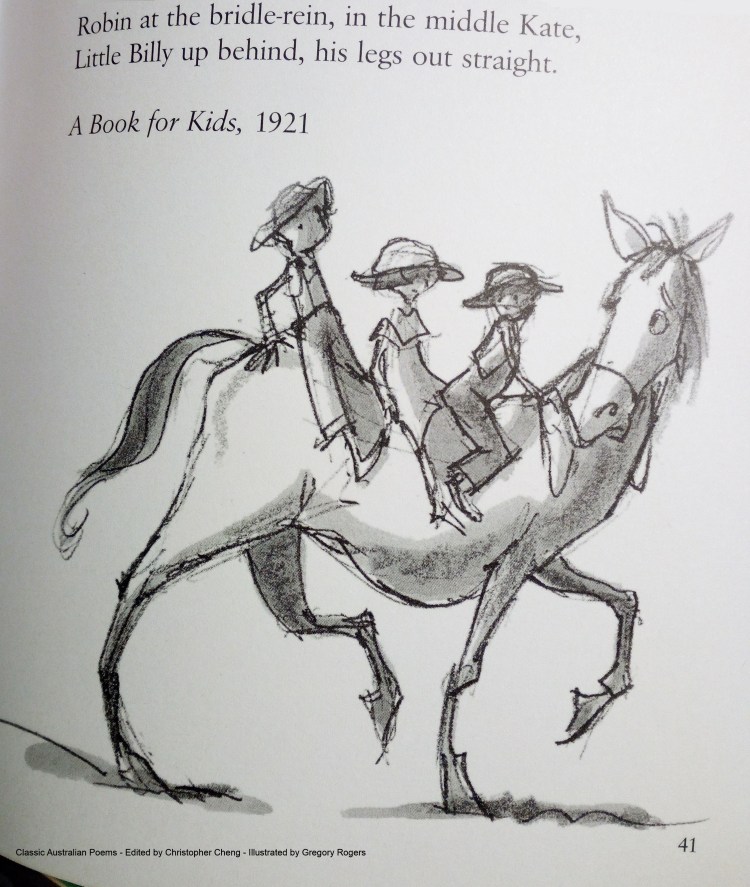
Did you see them pass today, Billy, Kate and Robin,
All astride upon the back of old grey Dobbin?
Jigging, jogging off to school, down the dusty track––
What must Dobbin think of it––three upon his back?
Robin at the bridle-rein, in the middle Kate,
Billy holding on behind, his legs out straight.
Now they’re coming back from school, jig, jog, jig.
See them at the corner where the gums grow big;
Dobbin flicking off the flies and blinking at the sun––
Having three upon his back he thinks is splendid fun:
Robin at the bridle-rein, in the middle Kate,
Little Billy up behind, his legs out straight.
Poem originally published in ‘A Book for Kids’ 1921
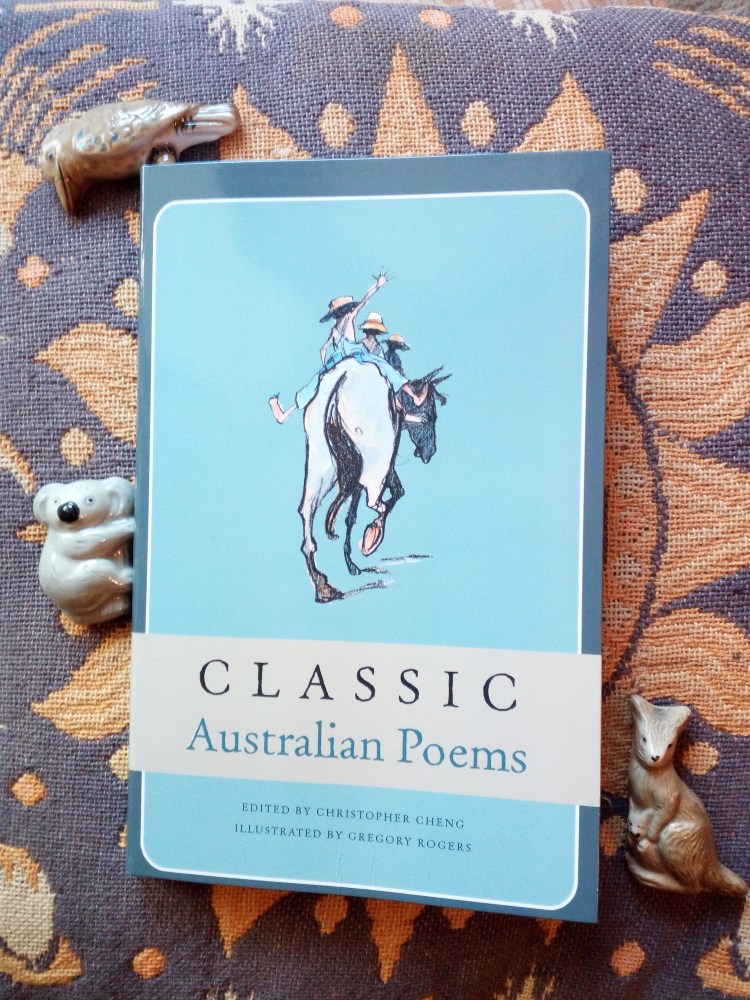
Poem by Clarence Michael James Dennis, better known as Australian poet C J Dennis (Sept 1876 – June 1938) who had a variety of jobs, from bar tender, secretary to a senator, to publisher and editor. He is fondly remembered for the humorous stories and verse he wrote for big city newspapers and was dubbed ‘laureate of the larrikin’ which means he penned prose about boisterous, unruly people. GBW.
Ever get poetry nostalgia? Australian school children learn poems by C J Dennis, Henry Lawson, Banjo Paterson and many more. Often a particular poet’s verse follows them through life, even though their lives are nothing like the rough and tumble era in which these pioneer poets wrote.
Changes were afoot in Australia in late nineteenth/early twentieth century and were reflected in the country’s poetry. In the evening, after dinner, someone would recite a poem or two. Years later, I grew up with Banjo Paterson’s ‘The Man From Snowy River’, a rollicking ode to bush men, stock riders, the dangerously rugged land and the great value of horses.




 Right, that’s it, the seven books I’m going to read—not counting those on my ereader—now comes the wait until I post my book reviews.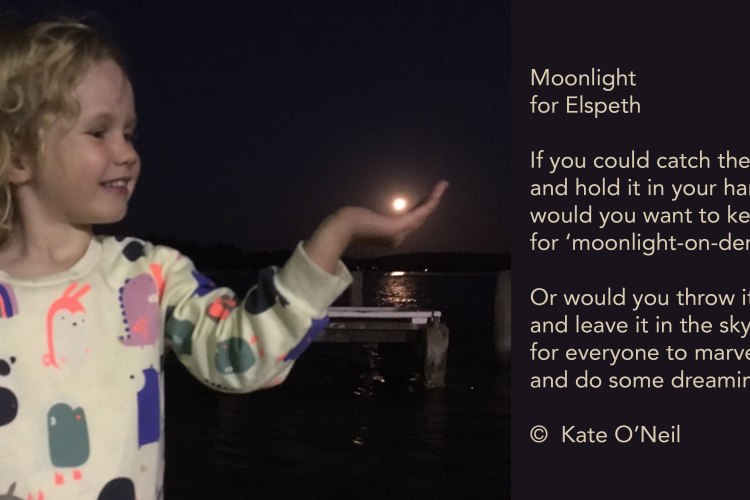






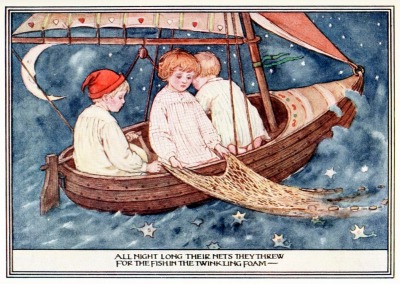


 Maxfield Parrish and other artists illustrated his earlier books, and artwork changed to reflect 20th century styles over the years while the eponymous characters remained constant.




 Thoughts Become Words