William Trevor ‘Love and Summer’ Review
My Thoughts:
A beautiful story of ordinary life and love with extraordinary depth. Author William Trevor invited me into the pages so I could gently and thoughtfully read my way through the summer months in an Irish village named Rathmoye and learn about those who lived there in varying degrees of peace, comfort, toil and hardship. So different from today’s way of living, except our emotions never change, human nature is what it is.

I read this novel for ‘A Year With William Trevor’ Reading Challenge (info below). I could see the countryside, the characters. William Trevor captures the very essence of humanity with ease. His style of writing is deceiving, he makes it look simple but every sentence is meaningful.
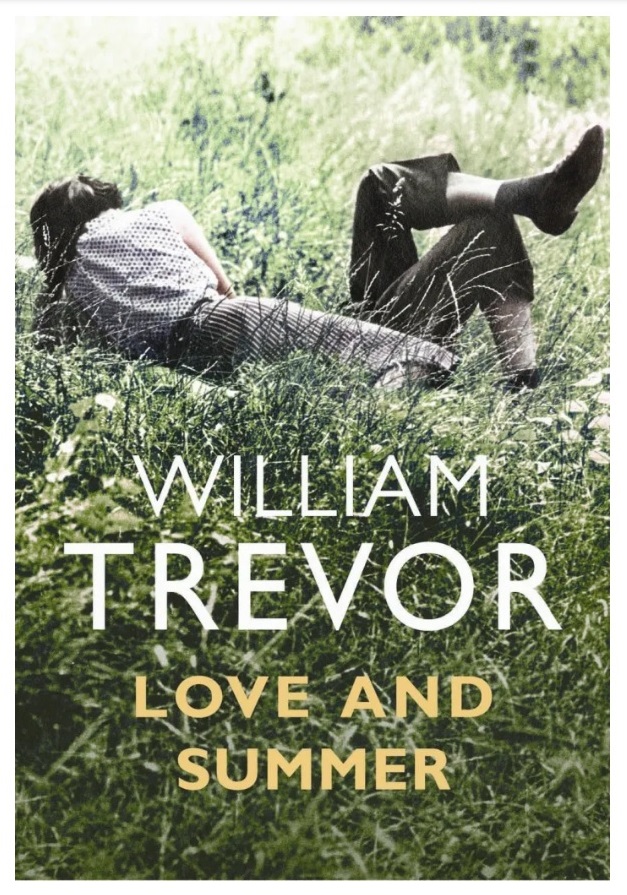
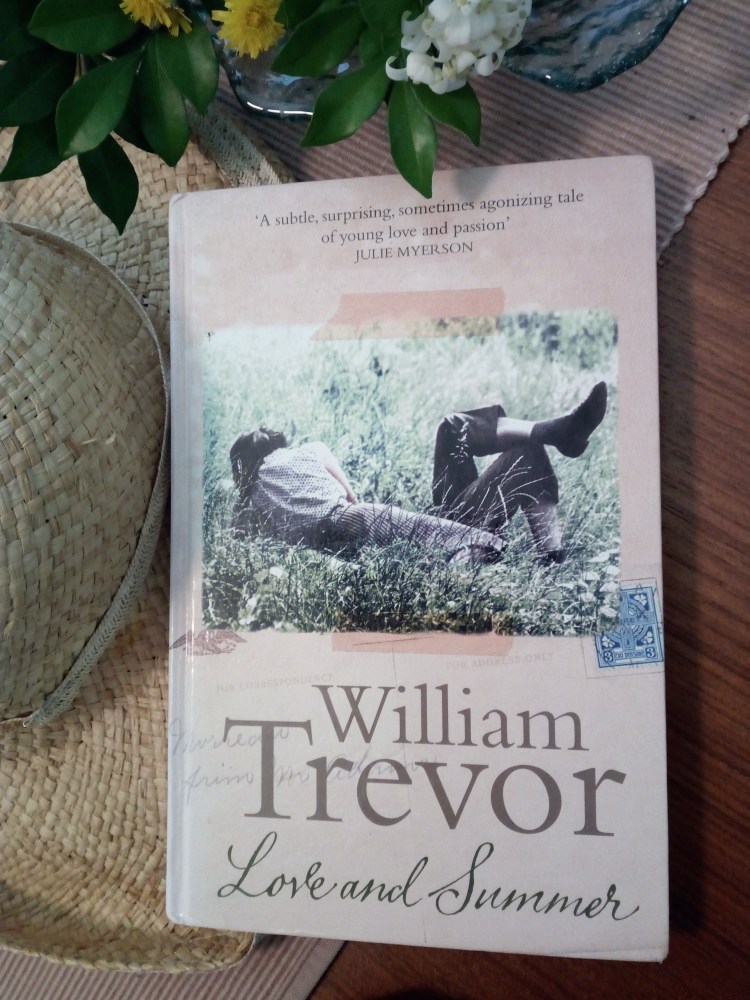
William Trevor Love and Summer 2009

Gradually rural mid-century characters show the reader their world, from joy to sorrow, their hidden thoughts amid the daily grind. Making do ‘just because’ the majority of things are hard to come by.

There are the not-so-hidden thoughts from people in the village about the visiting stranger from Castledrummond, Florian Kilderry, and local lass Ellie Dillahan who are the two main characters on a collision course. Among others, we have Miss Connulty with secret desires, wearing mother’s jewellery, wondering if she is jealous of Ellie. There is advice from Sister Ambrose, and old Orpen Wren who wanders about with his hopeful memories and tragic past.

FOUNDLING QUOTE: Ellie “We were always there. The nuns pretended our birthdays, they gave us our names. They knew no more about us than we did ourselves. No, it wasn’t horrible, I didn’t hate it.”

Everyone and everything has a part to play; woven through the story is a decaying estate; dogs, sheep and Ellie delivering farm fresh eggs on a bicycle; sewing a summer dress on the kitchen table. Amid the endless toil of farm life, Ellie’s husband battles his own demons after losing his first wife and child. Most of all, religion and the Irish nuns who cared for and raised Ellie from a baby, the lessons they taught her never forgotten.
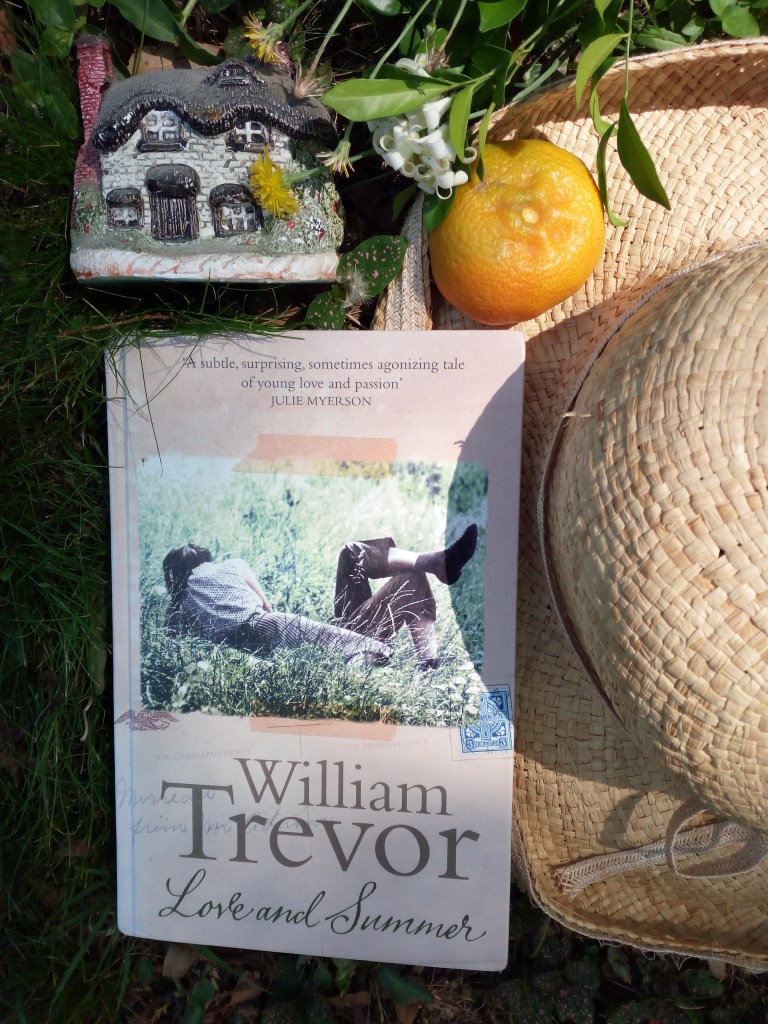
‘But she saw Florian…’
Ellie watches him, she is captivated. He stirs her in strange and mysterious ways, slowly drawing her onto forbidden ground. Florian is both accessible and distant. They come from different and difficult backgrounds, they both have the vestiges of abandonment. Not getting too close, searching for something, they don’t really know what that something is—Ellie is smitten but she also has a strong conscience.

Florian Kilderry starts off photographing a funeral with his old Leica camera but later feels that photography would fail him like everything else. We know that he has other plans but he cannot get the lovely Ellie out of his thoughts as he prepares to sell the family estate.

They pass notes in a niche in a stone wall, go walking, talking. In between times, Florian is literally burning everything from inside his family home, it seemed such a waste to me but his memories are bitter-sweet. A charming flashback has Florian and cousin Isabella reading some of his short stories written by hand in an old field journal years before. I wondered if they were really William Trevor’s when he was young?

The ending is powerful and actually crept up on me. It is three-pronged and at first I wondered if I’d interpreted it correctly. Snappy vignettes of speech and thought are used to heighten the denouement. Also a tantalising question is left hanging in the air. Great stuff!

Conclusion: I finished this book and wanted to meet the characters, sit and chat with them in the sunshine. To ask questions and maybe visit the village pub; walk through the fields, splash across streams, eat a farmhouse meal. So much of this tale is real and true but mostly vanished from the universal landscape. Domesticity, societal rules and etiquette, that time immemorial quality of hard, tedious tasks being done by hand, without grumbling, because there was no other way.

For better or worse, close-knit farming communities are changing and moving on from villages like Rathmoye in many ways except for emotions, our deep desire for love and tenderness and a partner to walk beside us.

Gretchen Bernet-Ward

________________________________

READING CHALLENGE

‘A YEAR WITH WILLIAM TREVOR’
https://746books.com/category/irish-literature-2/

A Note from the Creators

William Trevor (1928-2016) was an Irish writer who left behind an amazing legacy—dozens of novels, novellas, short stories and plays—for us to enjoy. In 2023, on the occasion of the 95th anniversary of his birth, what better way to celebrate his work than by spending a year reading it?

That’s why I (Kim) have joined forces with Cathy from 746 Books to spend ‘A Year with William Trevor’. Between the two of us, we think we can cover a good chunk of his writing over the course of 12 months—and we’d love you to join in!

We have come up with a proposed reading schedule and we’ll be posting our reviews in the first week of every month between January and December 2023. #williamtrevor2023

Biography William Trevor
Ireland (1928 – 2016)
William Trevor was born in County Cork in 1928 and spent his childhood in various provincial Irish towns. He went to Trinity College, Dublin and then to England in 1953. In 1977 William Trevor received an honorary CBE in recognition of his services to literature, and in 1998 he was awarded the prestigious David Cohen British Literature Prize for a lifetime’s achievement in writing. He wrote novels, plays, essays and short stories, appeared in anthologies and won many literary awards.

https://www.irishcentral.com/culture/william-trevor-irish-writer-interview

Book List:

   A Standard of Behaviour (1958)

   The Old Boys (1964)

   The Boarding-House (1965)

   The Love Department (1966)

   Mrs Eckdorf in O’Neill’s Hotel (1969)

   Miss Gomez and the Brethren (1971)

   Last Lunch of the Season (1973)

   Elizabeth Alone (1973)

   The Children of Dynmouth (1976)

   Old School Ties (1976)

   Other People’s Worlds (1980)

   Fools of Fortune (1983)

   Nights at the Alexandra (1987)

   The Silence in the Garden (1988)

   Reading Turgenev (1991)

   Juliet’s Story (1991)

   Felicia’s Journey (1994)

   Death in Summer (1998)

   The Hill Bachelors (2000)

   The Story of Lucy Gault (2002)

   My House in Umbria (2003)

   A Bit on the Side (2004)

The Dressmaker’s Child (2005)

   Cheating at Canasta (2007)

   Love and Summer (2009)

   Selected Stories (2010)

   The Mark-2 Wife (2011)

   Last Stories (2018)

Postscript: At the time of writing this book review, I did not know that ‘Love and Summer’ was the last NOVEL William Trevor wrote. (My review posted on St Valentine’s Day)
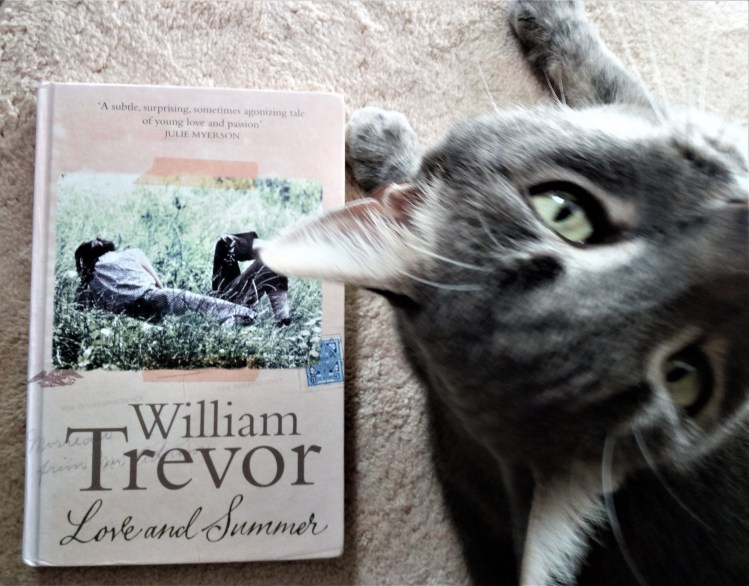
Photography: My book-styling image was hijacked by JoJo who insisted that I use it in my ‘Love and Summer’ review. Apparently all other William Trevor novels had flown off the shelves, so I borrowed a large print edition from my local library. It has an odd front and back cover design as though someone has scribbled postcard graffiti to match an element in the story. Happy reading!
GBW.

Yes, Margaret Atwood Has Written Children’s Books

Who’d have thought it?  Margaret Eleanor Atwood (1939- ) author of The Handmaid’s Tale, Alias Grace, The Blind Assassin and more than forty other books of fiction, poetry, critical essays and a graphic novel has written children’s books.

Margaret Atwood also wears various hats, from activist through literary critic, inventor, environmentalist and award-winner with honours and degrees, yet for me this news was surprising.  Not so surprising is the quirky nature of her children’s stories!


♦  With grateful thanks to online friend and blogger BookJotter Paula Bardell-Hedley for alerting me to these little gems within a comprehensive list of Margaret Atwood’s literary output—

Up in the Tree (1978)
Anna’s Pet (with Joyce Barkhouse) (1980)
For the Birds (1990)
Princess Prunella and the Purple Peanut (1995)
Rude Ramsay and the Roaring Radishes (2003)
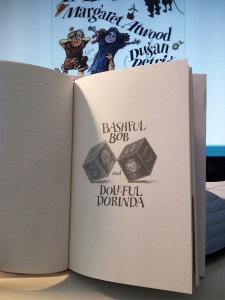
Bashful Bob and Doleful Dorinda (2004)
Up in the Tree (facsimile reprint) (2006)
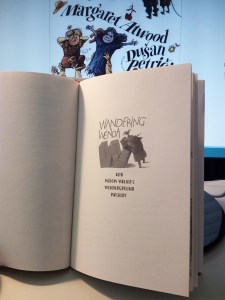
Wandering Wenda and Widow Wallop’s Wunderground Washery (2011)
A Trio of Tolerable Tales (illustrator Dušan Petričić) (2017)

Margaret Atwood 07


Being a kidlit fan, I immediately wanted to read several of those earlier Atwood books but found they (like this non-fiction For The Birds) were no longer in print, or libraries, but may be available through state archives or second-hand book merchants.  I will track down her first children’s book Up in the Tree (with her own illustrations and hand-lettering, quite possibly written for her young daughter) because the story intrigues me.


Along the way, Wandering Wenda and Widow Wallop’s Wunderground Washery was adapted into the children’s television series The Wide World of Wandering Wenda aimed at early readers with different adventures using words, sounds, and language.

Happily, in 2017, three of Atwood’s books were re-published, printed and bound in Canada into one compilation A Trio of Tolerable Tales.  I was able to buy a new copy with Serbian Dušan Petričić gorgeous drawings.  Atwood’s alliteration is absolutely awesome!

  Here are my reviews of these alliteration-filled, tongue-twisting tales…read on….

Margaret Atwood 05

  Rude Ramsay and the Roaring Radishes

IMG_20181026_151056

The reader follows the adventures of Ramsay and Ralph the red-nosed rat as they traverse various repulsive obstacles to find a round, Roman-vaulted rat hole leading to food nirvana – round red radishes ready to be devoured.  The radishes revolt and start to attack but thankfully owner Rillah comes on the scene.  She forgives their trespass and shows them around her romantic rectory, rotunda, rococo artworks and rumpus room.  There’s a bit of a ruckus with Rillah’s relatives Ron, Rollo and Ruby, so Ramsay & Co beat a hasty retreat back outside and romp rapturously under a radiant rainbow.  There is a very clever twist regarding the radishes and how they repel intruders!  A fun story which needs patience on the part of the reader, especially reading it out aloud for small children.  Laughs are guaranteed and you will marvel at how many ‘R’ words exist in the English language.  GBW.


  Bashful Bob and Doleful Dorinda

IMG_20181026_151019

Bashful Bob was abandoned in a basket outside a beauty parlour and nobody claimed him.  There is a neglected dog park across the street and the resident dogs are Bob’s best buddies.  There is a beagle, a boxer and a borzoi who believe “We must be benevolent” and they look after young Bob.  On the next block lives Doleful Dorinda.  She’d been dumped with despicable relatives who say “Dorinda is a dope” and make her sleep beside biohazard material.  Her food is awful and she is treated like a slave.  Finally Doleful Dorinda runs away and meets Bashful Bob on the vacant block.  You will have to read this story to find out how their names were turned into Brave Bob and Daring Dorinda but it makes a jolly rollicking tale especially if you like dogs!  The plot and resolution are more conventional, even with the proliferation of ‘B’ words.  A flowing, tangible fairytale and I found it easy to absorb.  GBW.


  Wandering Wenda and Widow Wallop’s Wunderground Washery

IMG_20181026_151228

Wenda is a willowy child with wispy hair and wistful eyes.  Her parents are whisked away by a weird whirlwind and thereafter Wenda wanders aimlessly.  She makes friends with Wesley woodchuck and they share food scraps and wodges of wieners until one day they are kidnapped by Widow Wallop.  She takes them to her Wunderground Washery to “wash whites whiter than white” every day.  Between the drudgery, they feel sorry for Widow Wallop’s white Welsh ponies and three other waifs, Wilkinson, Wu and Wanapitai.  Together they plot their daring escape, only to encounter wolves along the way.  How will they evade Widow Wallop’s clutches now?  There is an unexpected reveal at the end!  I think some of the scenes may disturb younger children, particularly those with separation anxiety.  Older readers will chortle at the profuse ‘W’ words and idiosyncratic wordplay.  GBW.


Gretchen Bernet-Ward


QUOTATION:  “Comfort with reading begins in childhood, when parents or other loving adults read to children.  It creates a ‘safe’ place where — nevertheless — dangers can be explored (and, in children’s books, hopefully, overcome)…. I think my children’s books function as protected spaces for me.  I look at darker things quite a lot, but the kind of children’s books I write are light, and have happy endings…. That’s a relief, when I can manage it.”
—Margaret Atwood, author.


IMG_20181026_182604


♦  The interior of this book is printed on paper that contains 100% post-consumer recycled fibres, is acid-free and is processed chlorine-free so there’s nothing to worry about, Wenda.

Top 10 Cool Quirky Authors with a Difference

When I discover an author with a quirky style, a neo-noir writing streak, I rejoice in their words.  It’s a delight to get away from mundane formats, tired classics and generic phrases so overworked in today’s writing scene.

I can remember when ‘dust motes’ were all the rage, not mere dust, it had to be motes floating in the sunlight.  Goodness knows why, padding perhaps.  I think it’s beneficial for both writer and reader to veer off in another direction occasionally.  Leave those tropes behind!

For bookish readers, I will list some of the absurdist fiction writers who have given me a literary lift and added a bit of sparkle to my jaded memory banks.  These 10 books impressed me with their originality and unique take on adult life, some with remarkable page layouts.

Numbered but NOT rated in order of preference:


Kelly Link Bookcover 04

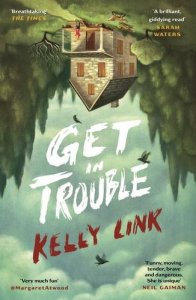
1    Get In Trouble by Kelly Link

Quote “Richly imagined, intellectually teasing: these are not so much small fictions as windows on to entire worlds. A brilliant, giddying read” said Sarah Waters and I definitely agree.


Zane Lovitt The Midnight Promise

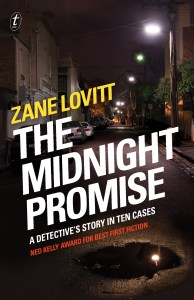
2    The Midnight Promise by Zane Lovitt

John Dorn is a private investigator solving human puzzles.  Complex and beautifully observed characters lead John towards his moment of truth as he strives to keep his promise.


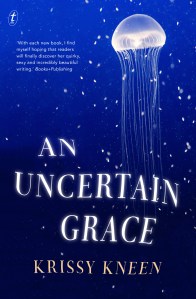
An Uncertain Grace by Krissy Kneen

3    An Uncertain Grace by Krissy Kneen

Speculative erotica showing the best and worst of human nature through Liv as she ages alongside high technology innovation.  The transition to a state beyond age, to transcend the corporeal…


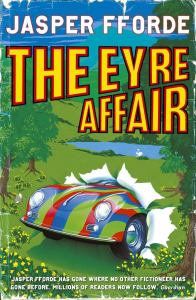
Jasper Fforde The Ayre Affair

4    The Eyre Affair Series by Jasper Fforde

Thursday Next, a fearless woman who traverses a parallel universe inside books.  Created with breathtaking ingenuity, her literary world is more believable than most peregrinations.


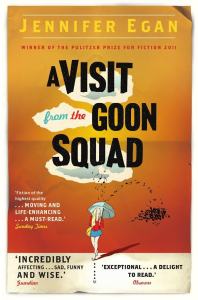
A Visit From The Goon Squad

5    A Visit from the Goon Squad by Jennifer Egan

Self-destruction with music in the background.  Intimate lives of several characters who reconnect again and again trying to escape the past, delay the future and defy their fate.


Don't Tell Mum I Work On Oil Rigs

6    Don’t Tell Mum I Work on the Rigs…She Thinks I’m a Piano Player in a Whorehouse by Paul Carter

Gritty, masculine and rather shocking true story of working on oil rigs in the ocean.  Horrible, humorous happenings written down in easily digestible form so that you can’t stop reading.


Atomic City by Sally Breen

7    Atomic City by Sally Breen

A stylised contemporary story set on the glittering Gold Coast, Queensland.  Chameleon Jade gets a new identity and with her grifting partner she dares to swindle the Casino swindlers. 


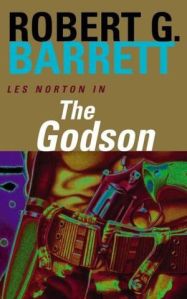
The Godson by Robert G Barrett

8    Les Norton Series by Robert G. Barrett

Les Norton, a red-headed country lad, works in the big city, fights men, wows women, loves the beach, is either an Aussie icon or a yobbo but each adventure guarantees a twist.


The Lucky Galah Bookcover

9    The Lucky Galah by Tracy Sorensen

Lucky, a galah in a remote coastal town, receives transmissions from a satellite dish beaming messages between Apollo 11 and Houston, Texas, which co-mingle with the community psyche.


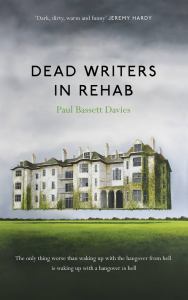
Dead Writers in Rehab by Paul B Davies

10    Dead Writers in Rehab by Paul Bassett Davies

Foster James is supposedly in rehab but he’s probably dead.  A dystopian must-read, loaded with satire, dark humour, sexual tension and famous writers like Coleridge and Hemingway.


I think my Top 10 list will suffice . . . oops, I just have to add ‘A Dirty Job’ by Christopher Moore and ‘Insomniac City: New York, Oliver Sachs and Me’ by Bill Hayes and ‘Lincoln in the Bardo’ by George Saunders and ‘Human Croquet’ by Kate Atkinson and ‘Himself’ by Jess Kidd.  I love any book by Terry Pratchett and DBC Pierre and there are further ingenious authors I could name (and so could you!) but I will stop here.

Gretchen Bernet-Ward

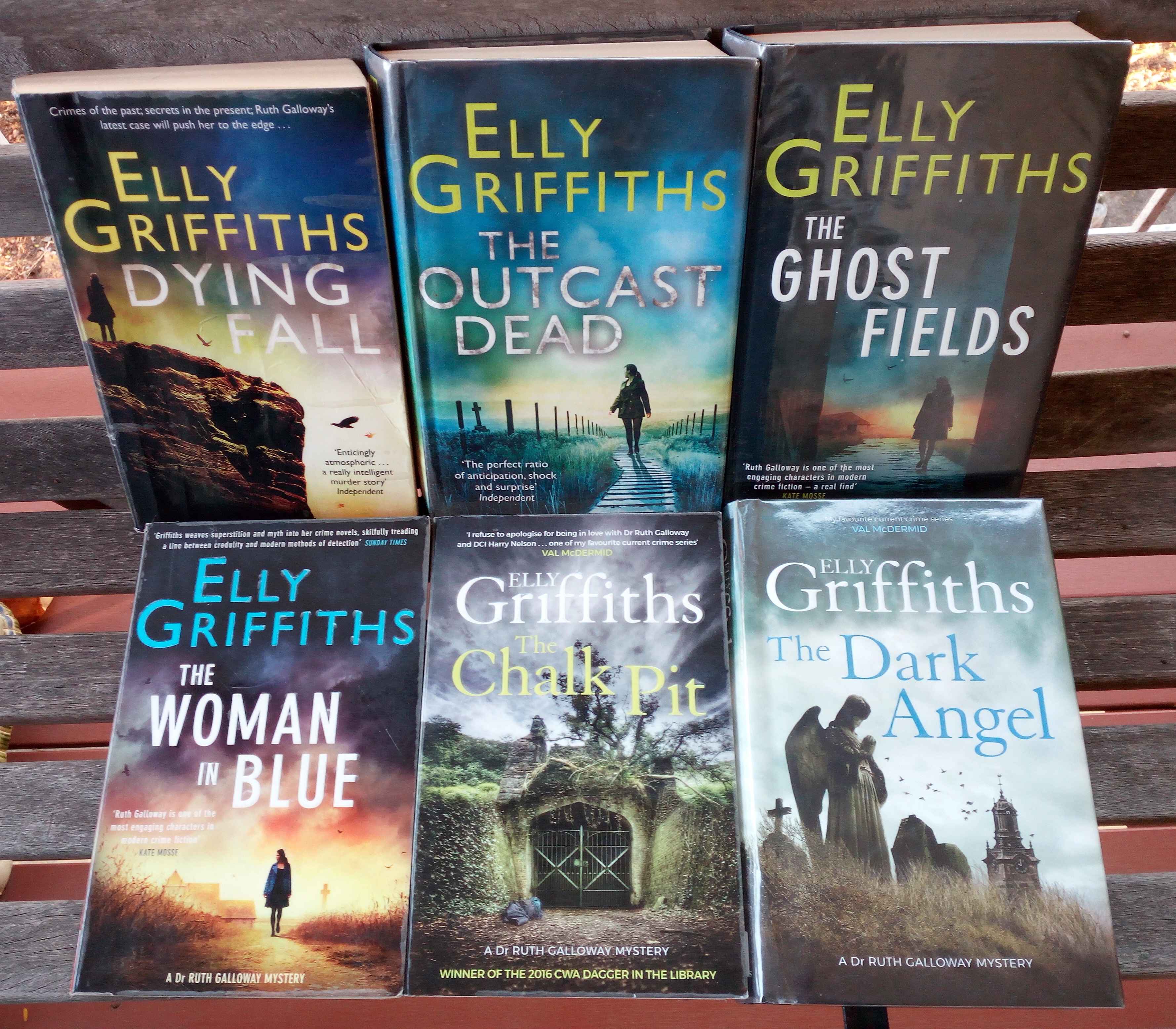
Elly Griffiths Forensic Archaeology Series

IMG_20180816_162457
Sample of this 10-book series with book 11 The Stone Circle due 2019.

I love binge-reading!  When I discover a good author like Elly Griffiths who has ten books in her crime oeuvre, I am ready, willing and able to read all.  The archaeologist Dr Ruth Galloway mystery series fits the bill nicely.  To quote the Independent ‘The perfect ratio of anticipation, shock and surprise’.

Elly Griffiths is the pen name of Domenica de Rosa; she has written other novels under her real name.  I like the historical and archaeological authenticity of this series which could be due to the fact that she’s married to Andrew Maxted, curator of archaeology at Brighton Museum.

I enjoyed the earlier books and then the later ones shown above.  I loved ‘The Ghost Fields’ WWII story and found award-winning ‘The Chalk Pit’ quite fascinating.  I struggled with ‘The Outcast Dead’ subject matter although it is fitting.  I must mention the clever yet sneaky outcome of ‘The Dying Fall’ which has a touch of Hollywood about it.

The stories mainly revolve around Norfolk UK, tidal marshlands, excavations (with an occasional nod to ‘Time Team’) coastal regions and fictional University of North Norfolk where Ruth Galloway works.  She is also a police adviser.  The relationships of the key players are intriguingly tricky because of love triangles, children, 21st century parenting, murder and mystical goings-on.

Rather than a book review, I thought I’d do a quick character overview:

  • Dr Ruth Galloway lives on the Saltmarsh, lectures in forensic archeology, makes ground-breaking discoveries, and likes old bones and her cat Flint.
  • Fast-driving policeman DCI Harry Nelson moved with his family from Blackpool to Norfolk and doesn’t really like the place but he’s a born copper.
  • Two glamorous women, Michelle Nelson is wife of DCI Nelson, and Shona MacLean is Ruth’s bestie.
  • Michael Malone (aka Cathbad) brings enjoyable highlights to each plot with his spiritual insights, Druid instincts and flowing cloak.
  • Part of Nelson’s team are police officers DS David Clough ‘old school’ and DS Judy Johnson ‘graduate’ who don’t always share the same views.
  • Phil Trent, professor of archaeology at UNN, worries about funding but loves TV cameras, publicity and himself.

As I dug and sifted through the series, I noticed less archeology and gradual changes to the main characters but that’s the grit which makes these books human and relatable.  There’s drama in their lives; a rocky layer or two over a conspiracy waiting to be uncovered.

Elly Griffiths has a nice knack of getting you up-to-speed with each book while revealing a ‘fresh’ crime involving the living and the desiccated.  At one stage I quibbled over her use of Anglo male names like Max, Dan, Tim, Tom, Ted, Bob, well, you get my drift…but this has improved and the VIP reviews keep on coming:

"I refuse to apologise for being in love with Dr Ruth Galloway and DCI Harry Nelson, one of my favourite current crime series . . . a pleasure from start to finish"
Val McDermid.

"I adore the Elly Griffiths series and have eagerly read each book. I love seeing how the recurring characters are living and working out their relationships"
Joyce of joycesmysteryandfictionbookreviews

I’m waiting for book No.11 ‘The Stone Circle’ but don’t you hang around, start reading!

Gretchen Bernet-Ward


—NEWS FLASH NEW BOOKS—

Elly Griffiths UK Author
Elly Griffiths ‘The Chalk Pit’ and something evil is waiting in the dark tunnels under Norwich – forensic archaeologist Dr Ruth Galloway had better watch her step https://www.hachette.com.au/elly-griffiths/the-chalk-pit

Extra List: Ruth Galloway Mystery series book No.12 ‘The Lantern Men’ (2020) and book No.13 ‘The Night Hawk’ (2021) then Book No.14 ‘The Locked Room’ (2022) and finally book No.15 ‘Final Remains’ (2023).  

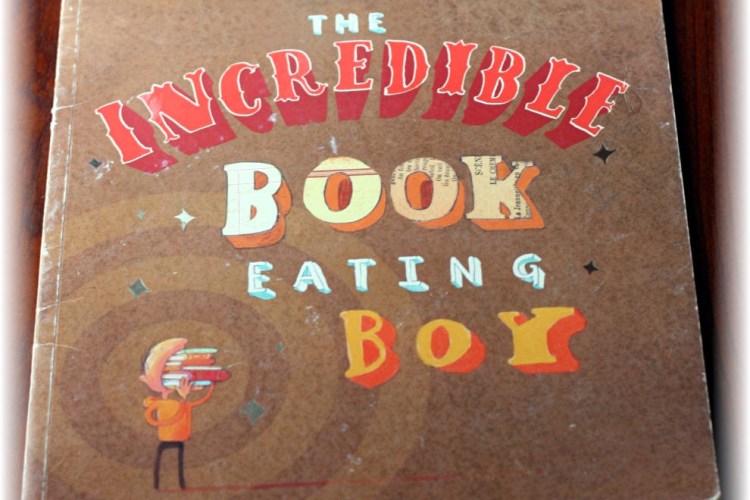
‘The Incredible Book Eating Boy’ by Oliver Jeffers

My picture book review
My bonus picture book lesson
My link to Just Awesome Picture Books


THE REVIEW:

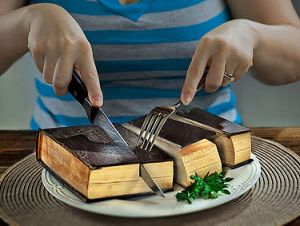
Book Sliced Up on Plate with KnifeHenry is a boy who likes eating books.  He absorbs knowledge as he happily munches his way to becoming the smartest boy on earth.  Everything goes well until there’s an internal rebellion.  Share Henry’s journey as he discovers something better than eating books.

Award-winning Oliver Jeffers’ concept is clever and I found his plot madly appealing.  The illustrations are unique and show creative grunge like an old diary or well-used notebook.  For me, although the story has the potential to be scary, it is handled in an adventurous way with Henry supported by believable characters which adds intertextuality to an otherwise imprudent tale.

I think The Incredible Book Eating Boy is best suited for small group readings or child-and-parent because there’s a lot happening and the visual literacy may need some explanation for younger children.

All in all, a praiseworthy picture book with a good message for 4 – 8 years range to which I give a 5-Star rating.  GBW.


The Incredible Book Eating Boy 01
I discovered this book on Just Awesome Picture Books! Check the website https://justawesomepicturebooks.com/


THE LESSON:

In my opinion, less is more!  Wordy picture books tire the reader and the listener.  The illustrations should highlight the uncluttered wording.  The words push the narrative forward and the child uses their imagination from the visual cues.

It’s a common fallacy that picture books are easy to write.  This is far from the truth because the very minimalist nature of picture books means that every single word has to be perfectly rendered.  Learn more about writing for children from author Jen Storer of Girl & Duck.

As a general guide, here are some basics:

A children’s picture book is 32-pages but 8 pages are used for endpapers and book information.  The story is over 24 pages or 12 spreads of text and illustrations which span two opened pages at a time.  These pages can be half-page spreads, single-page spreads, double-page spreads or vignettes.  A number of vignettes are used in The Incredible Book Eating Boy.

There is symmetrical, complementary and contradictory illustration approaches and I think The Incredible Book Eating Boy is approached in a complementary manner.  Oliver Jeffers plays around with the location of text to good effect.

Board books, pop-ups and novelty may have no words, just illustrations.
Young picture books are aimed at 2 to 5-year-olds with 200 to 400 wordcount.
Trade (general readership) picture books are suitable for 3 to 8-year-old children with 500 to 600 wordcount.
Picture story books for older children 6 to 10-year-olds with 1000 to 3000 words are often non-fiction.
Chapter book fiction over 3500 words are suitable for competent readers, with a sliding age range due to small sketches and quirky touches often added between the pages to enhance the reading experience.
YA (young adult) are the more tailored books suitable for older teenagers.

Something different.  A theatre performance video of the book at The Joan, Penrith’s premier performing arts centre The Incredible Book Eating Boy production.  The cast use song, movement and puppetry to bring Oliver Jeffers’ much loved story to life on stage.

Enjoy eating, er, reading this picture book with that special little someone.

Gretchen Bernet-Ward

Jane Milburn Slow Clothing Advocate

Slow Clothing reflects author and refashion advocate Jane Milburn’s own unique style, independent of “fast fashion” trends.  Upcycled from denim jeans, the dress Jane wore during her talk at a local BCC library had the potential to look strange but was distinctive and quite beguiling.

Jane, sustainability consultant and founder of Textile Beat, touched on several key elements during her talk––environmentally unfriendly fabrics and dyes; sweat shop labour; landfill; passive fashion; synthetic vs natural fibre; signature style and minimal wardrobe.  Hot topics included recycle by exchange, shopping tips, Sew It Again mending and creating new from old.  Jane tends to hoard fabric offcuts and used buttons, and has a passion for real cotton thread.

Rethinking clothing culture doesn’t mean wearing your clothes until they fall apart at the seams, it means mindful immersion, repairing and refashioning your garments.

An attentive audience, Jane encouraged us to make thoughtful, ethical, informed choices to reduce our clothing footprint on the world.  Until recently, she regularly visited charity shops for secondhand garments but is currently resisting the temptation and working with what she’s got.  “We believe secondhand is the new organic and mending is good for the soul.  In return, we are liberated and satisfied.”

In her book Slow Clothing: finding meaning in what we wear Jane shares insights and upcycling advice.  She has created templates like Upcycled Collar and History Skirt, guiding home sewing conversion of a beloved garment to reflect the changes in our lives.

To provide meaning and story to her own favourite pieces, Jane Milburn restyles and sews her clothing by hand.  Currently testing t-shirt cotton drawstrings as an alternative to underwear elastic (elastic is made from synthetics) Jane stitches everything by hand.

Help! I can hear you say, nobody has hand-sewn an outfit since the mid-twentieth century––except maybe Vivienne Westwood––but don’t panic, Jane’s book provides testimonials, illustrations and clear instructions for eco-dyes and upside-down jumper skirts through to sewing on a button.  Eco-fashionistas unite!

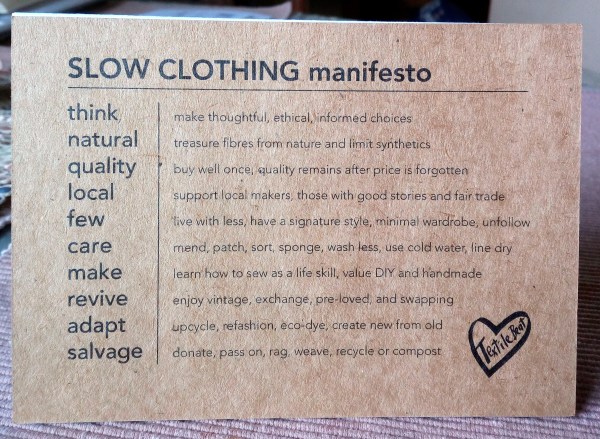
Although Slow Clothing is a multifaceted, easy-to-read book with positive chapter headings (Purpose, Authenticity, Creativity, Action, Autonomy, Reflection) amid the ingenious apparel, I am missing a frivolous note, perhaps a ball gown?  On a serious mission, Jane has created a Slow Clothing Manifesto with ten tags to keep in mind when out shopping: think, natural, quality, local, few, care, make, revive, adapt, salvage.

IMG_20180723_091617Quotes from Jane embody the Slow Clothing philosophy “Slow Clothing brings wholeness through living simply, creatively and fairly” and “We buy thoughtfully, gain skills, and care for what we wear as an embodiment of ourselves.”  Personally I am hoping to see people clutching their Slow Clothing Manifesto cards at an op shop near me.

The current trail Jane Milburn is blazing makes fascinating reading.  Arts Queensland, meeting VIPs, War on Waste ABCTV, visiting 103-year-old Misao Jo in Osaka, hosting a Clothing Repair Café, conducting workshops and championing natural-fibre, Jane says “It has been personally satisfying to see the uptake of upcycling as a conscious practice with many young people interested in its potential for customising their clothes.”

Unfortunately I didn’t get to ask Jane Milburn how we go about combating the greed of designer labels.  But the clear message is––help reduce landfill by upcycling your clothes to reflect your own unique style.

Gretchen Bernet-Ward

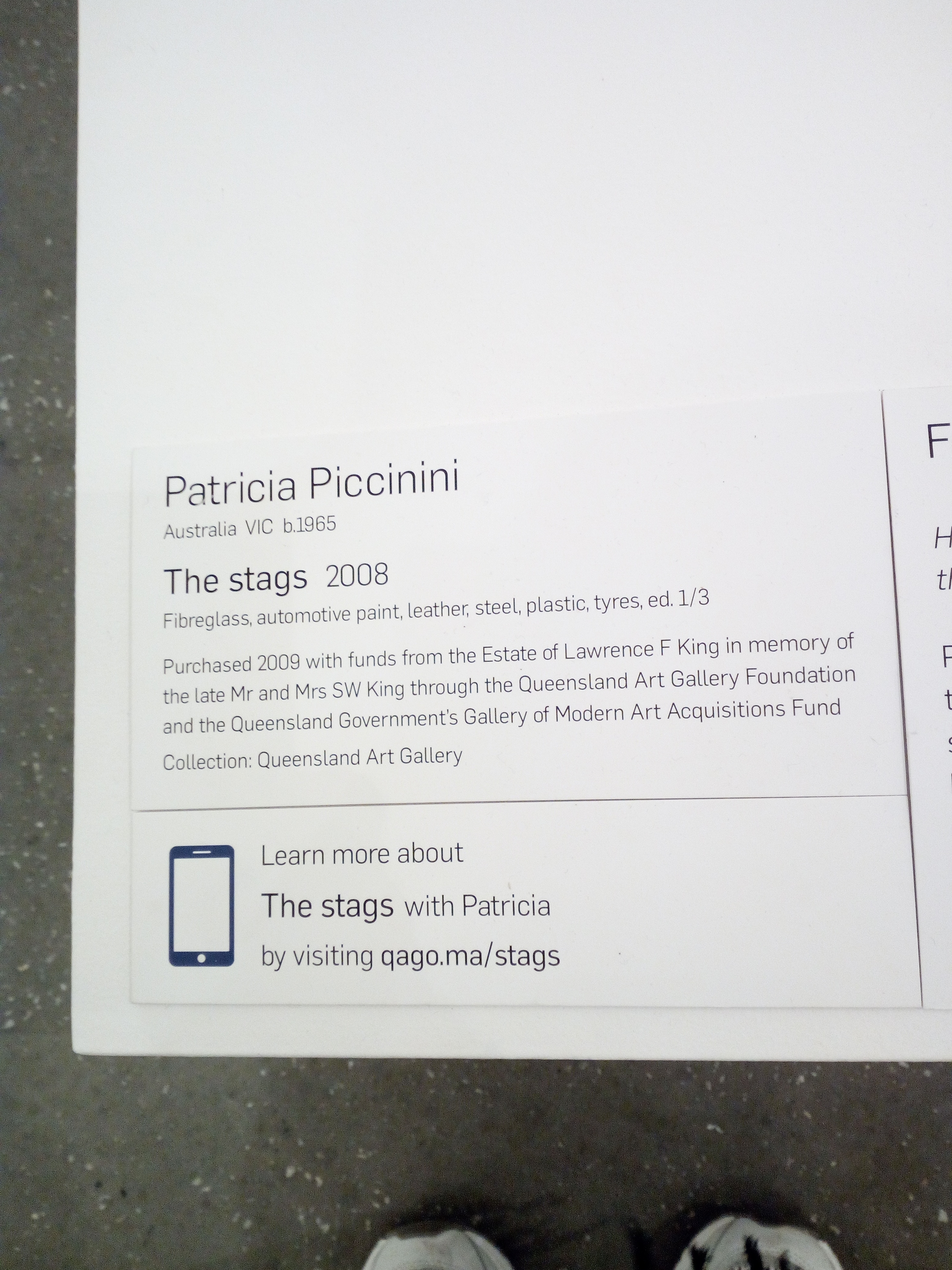
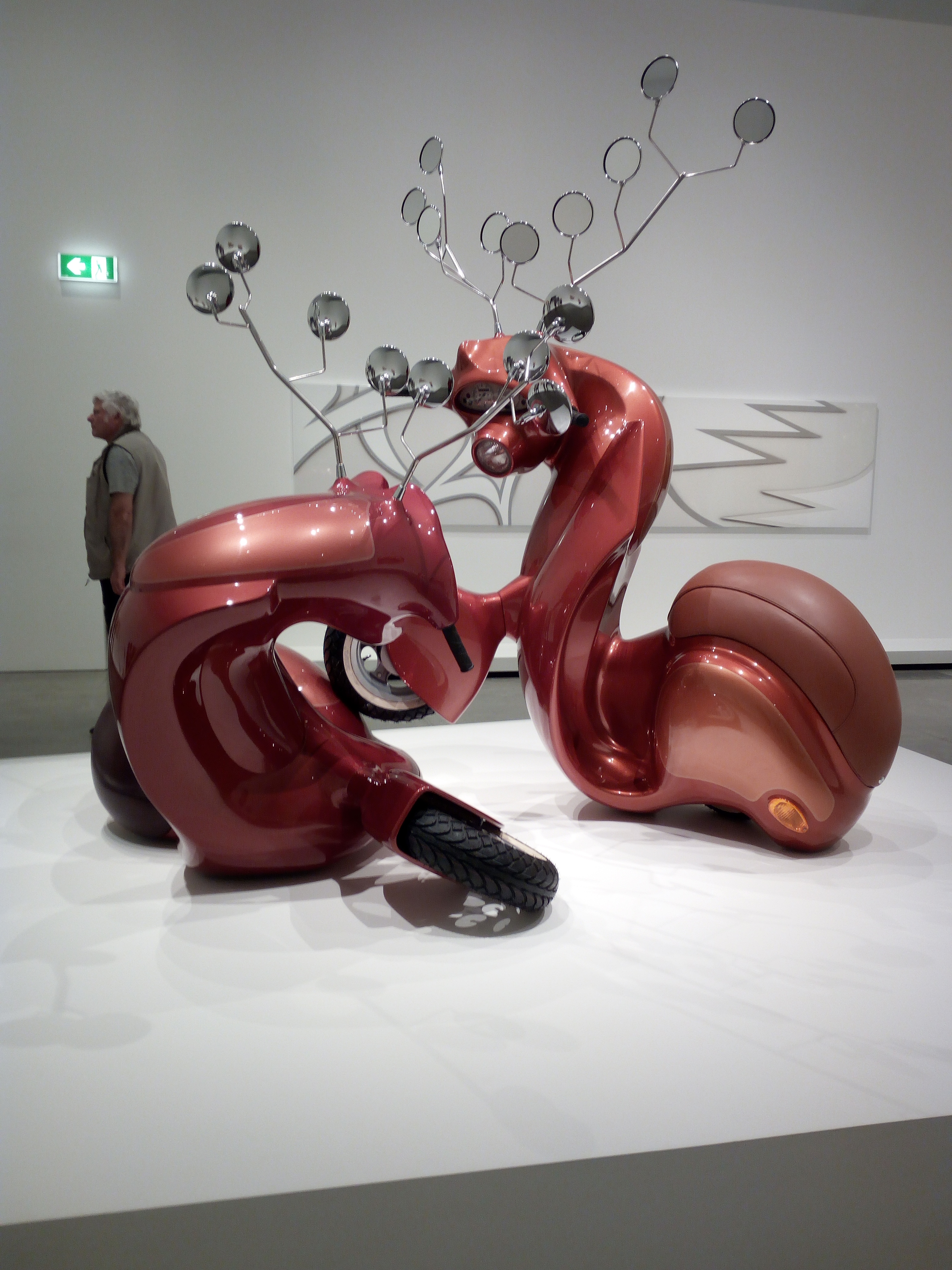
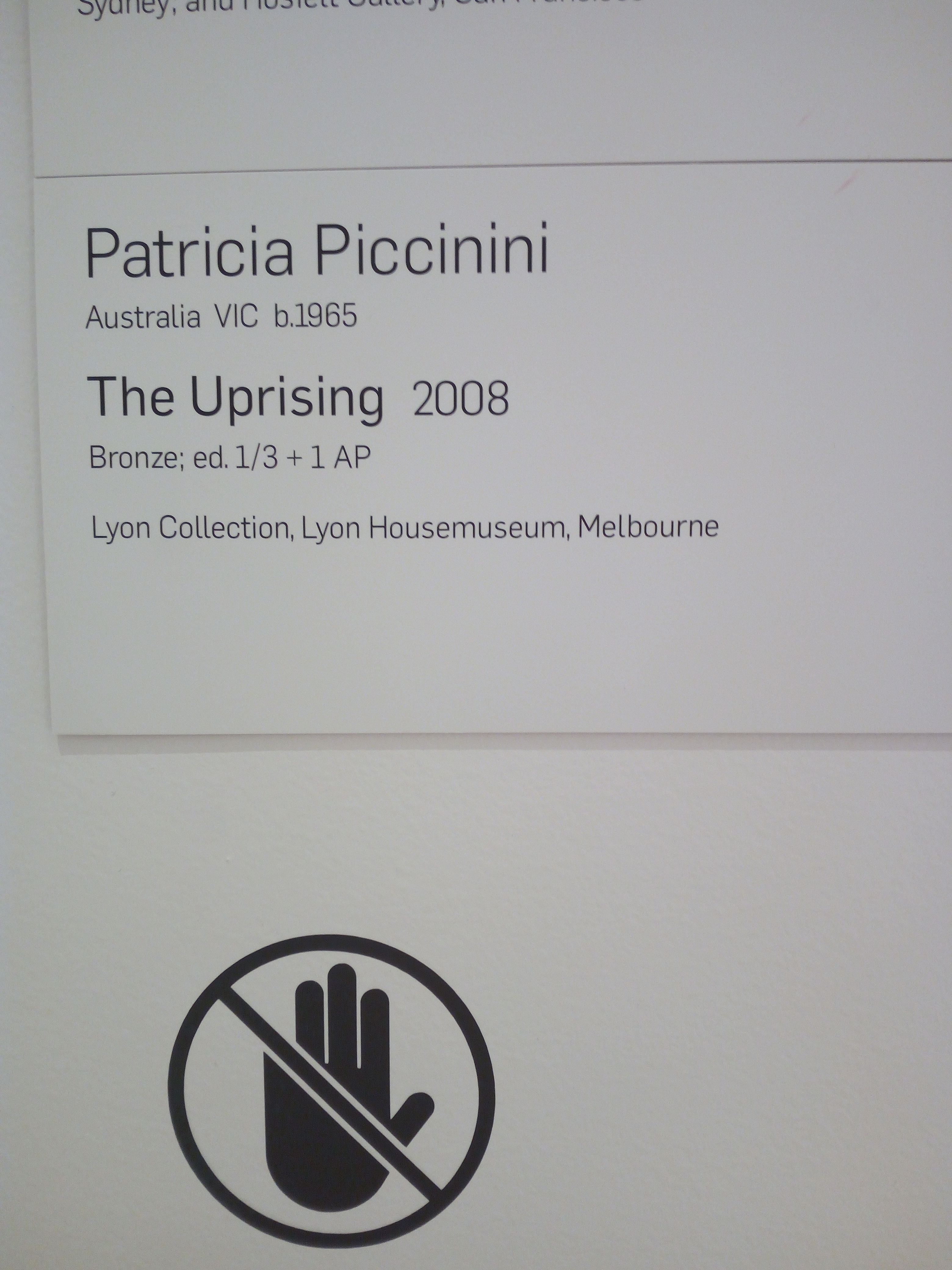
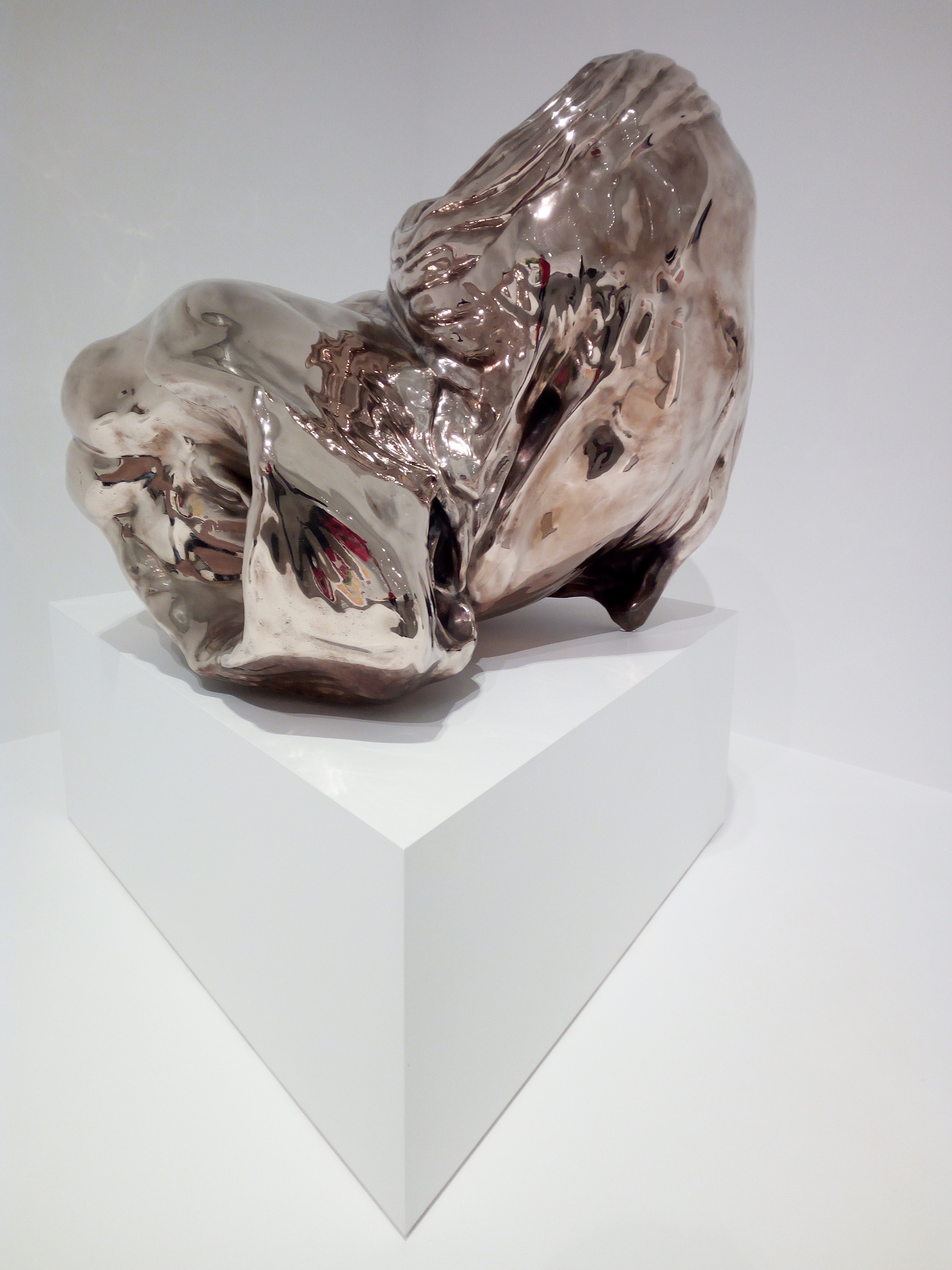
‘Curious Affection’ Hybrids of Patricia Piccinini’s Biotechnology Art

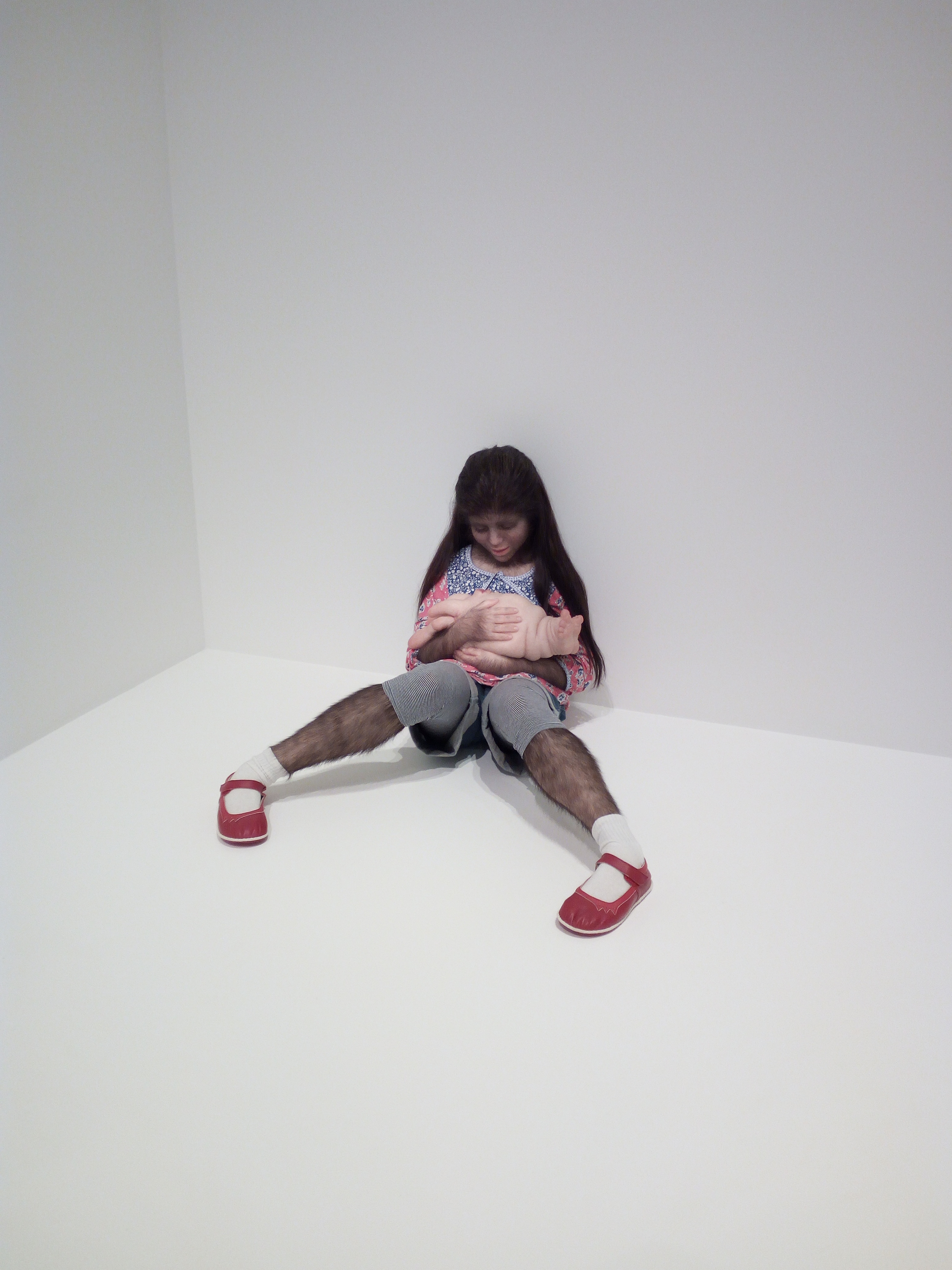
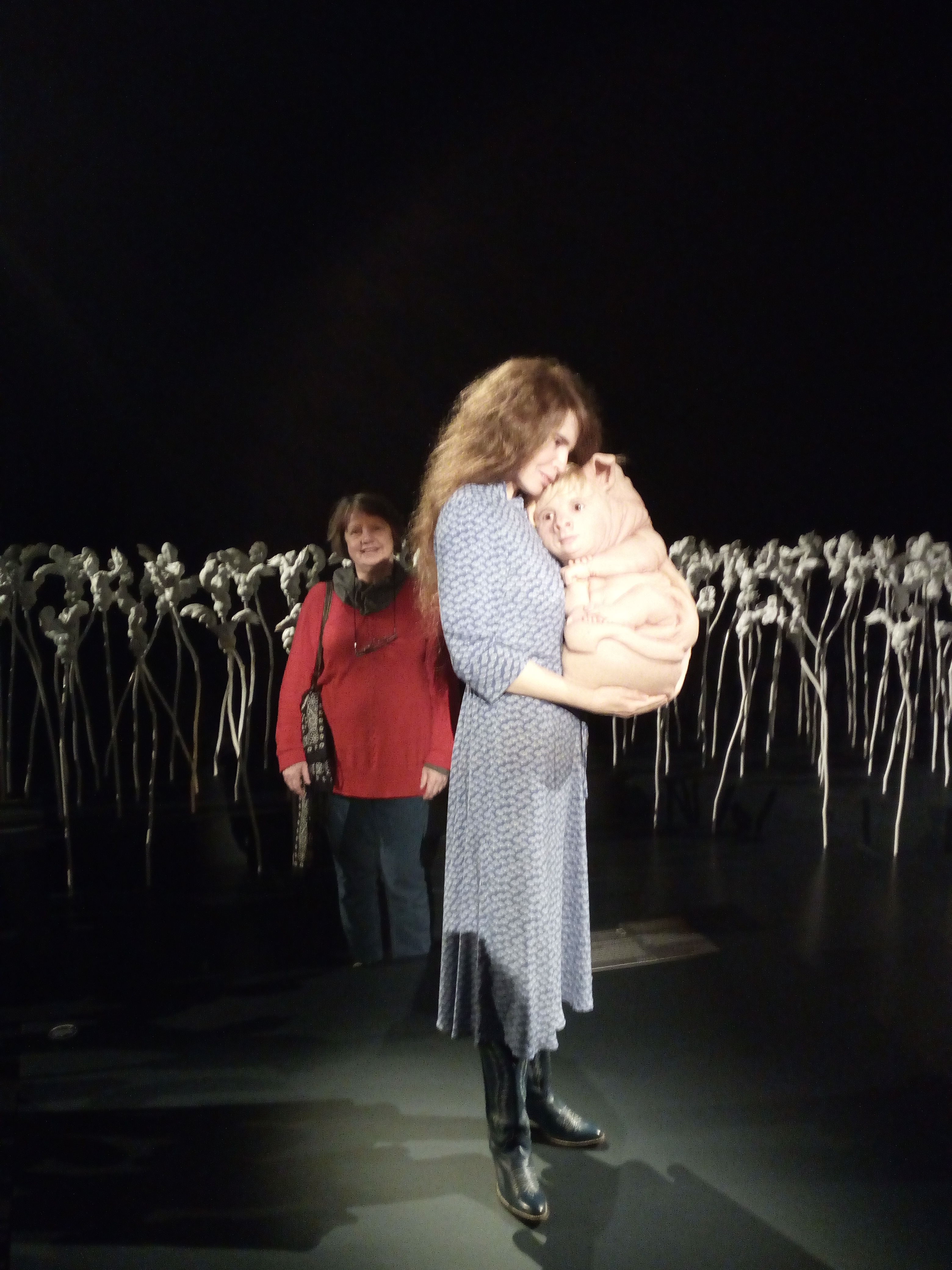
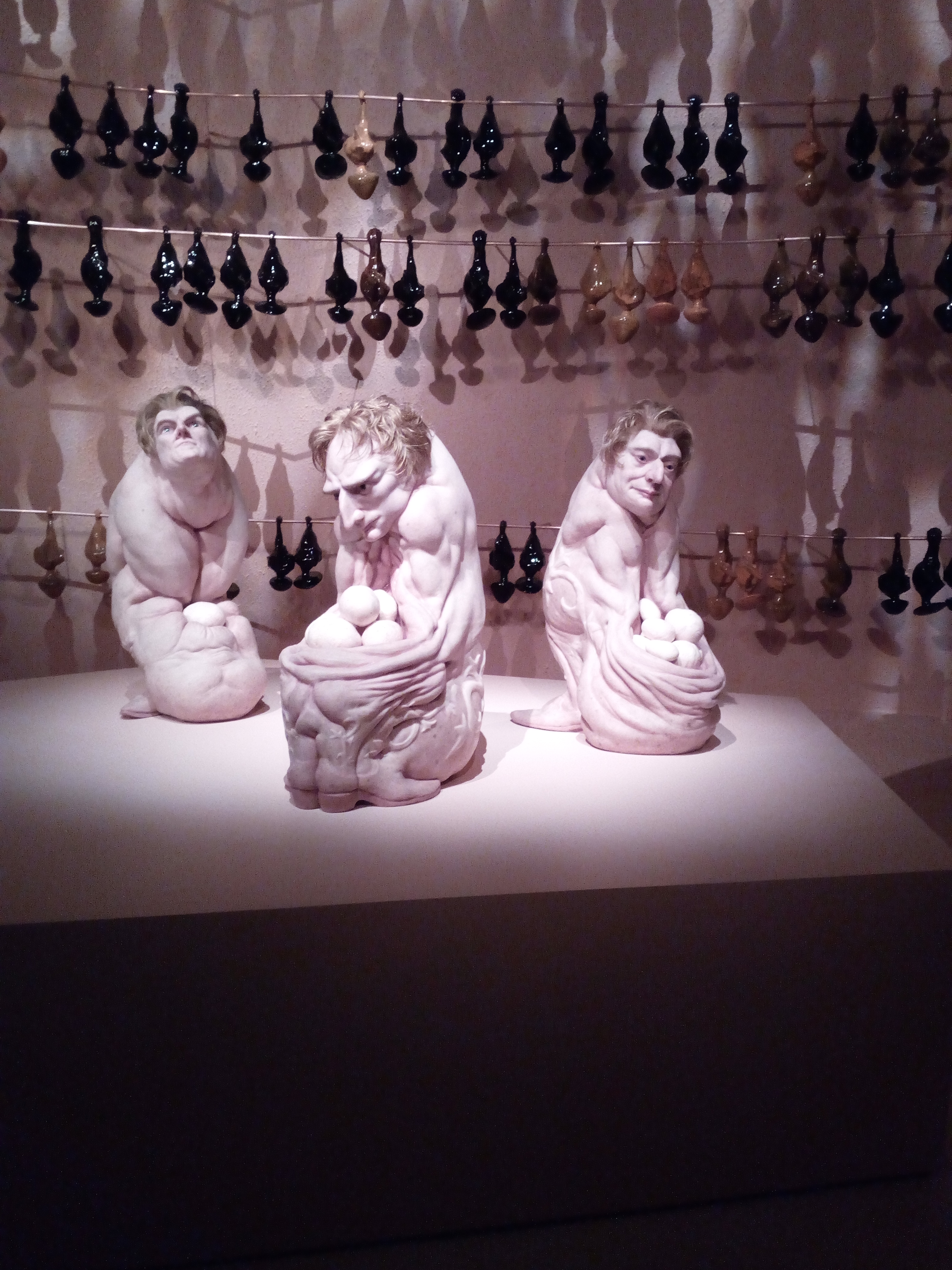
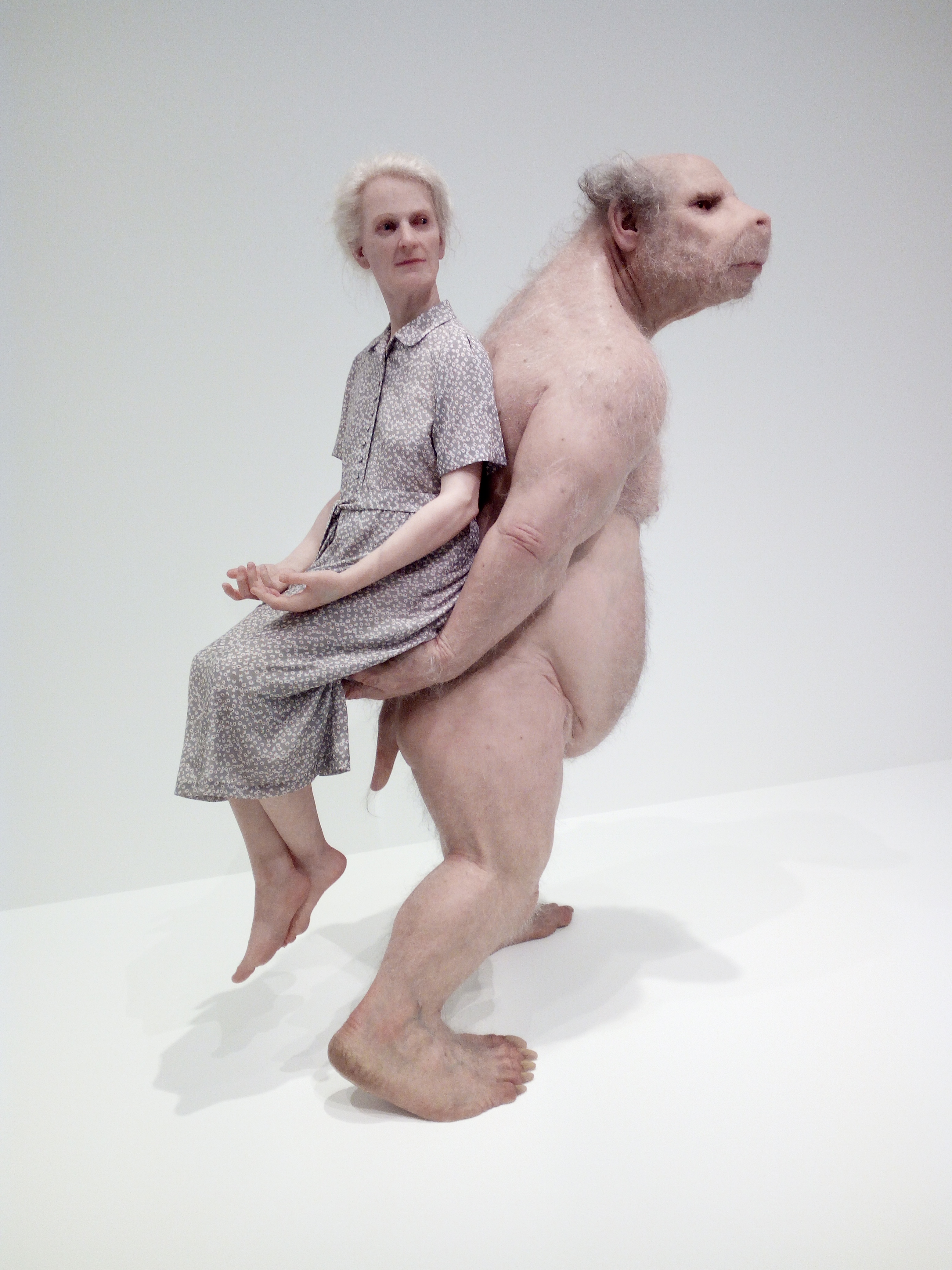
In her “Curious Affection” exhibition, world-renowned artist Patricia Piccinini and her DNA modified beings, credible and strangely familiar, invite us to find beauty in a transgenic social order not ruled by ideas of normality or perfection.  I was hesitant about visiting this curious collection but enjoyed the experience.

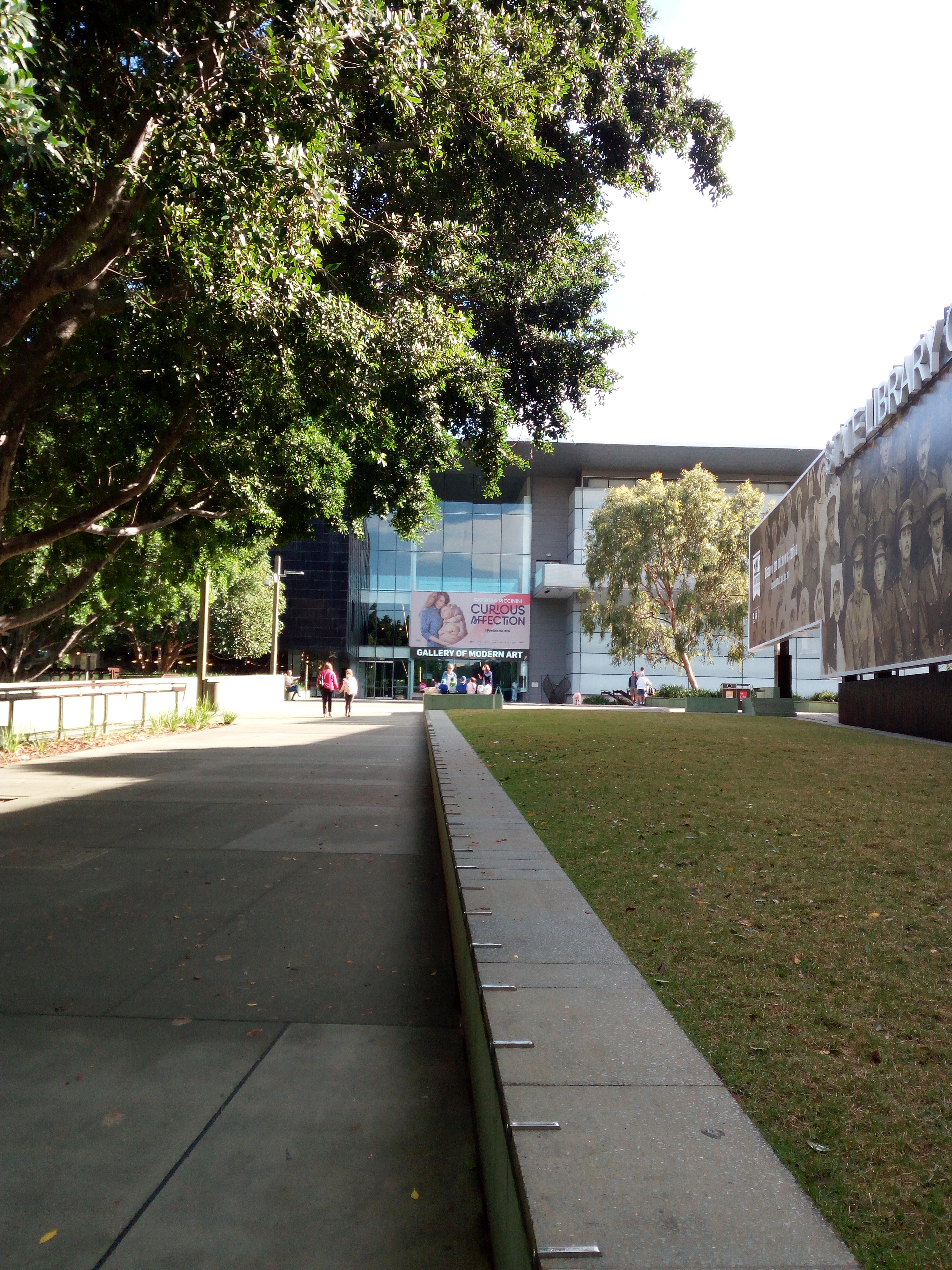
INTRODUCTION:  On a grand scale, the creations of Patricia Piccinini occupy the entire ground floor of Gallery Of Modern Art, Brisbane Australia, with a retrospective of her most recognisable works from the past 20 years.  It is Piccinini’s most ambitious solo exhibition to date, running from March to August 2018, with a collection of wall art and immersive multisensory installations – including new works like Heartwood (featured above) and a large-scale inflatable sculpture Pneutopia (not shown) exclusively conceived for the Gallery which rises effortlessly through an opening to the floor above.

* SOME VIEWERS MAY FIND THESE IMAGES DISTURBING *

TAP OR HOVER OVER IMAGES TO READ MY PICTORIAL COMMENTS.  Of course, this doesn’t convey lighting or sound effects!  My photographs are by no means exhaustive, there were many more art works and hybrid creations going about their daily lives.

Our guide explained most models are made of silicone, fibreglass, polyurethane and human hair – for a deeper understanding, Patricia Piccinini has recorded video stories and GOMA blog shows the exhibition conception to completion.

CLOSING:  Like most art, there is more to it than meets the eye.  Patricia Piccinini’s works are complex.  We are asked to think about our place in a world where advances in biotechnology, genetic engineering, organ harvesting and digital technologies are challenging the boundaries of humanity.

The more I learned about this exhibition, the more I understood the science, the pathos and the dangerous waters we may sail into one day, much the same as the internet was launched on a naïve world.  With intelligence and compassion we may learn to create something new without destroying the old.

Gretchen Bernet-Ward

24 Stories: of Hope for Survivors of the Grenfell Tower Fire

My emotions overcame me when I read this piece…read for yourself…

Paula Bardell-Hedley's avatarBook Jotter

by Kathy Burke (Editor)

24 STORIES COVERMy routine was much as usual on the morning of Wednesday 14th June 2017: I arose early for work, fed the chickens, settled myself at the kitchen table for my first cuppa of the day and switched the TV on to watch BBC News.

For several seconds I stared vacantly at the screen, unable to comprehend the shocking nature of the images I was seeing. There was a man sobbing incoherently to a reporter and then emergency services vehicles were shown illuminating huddles of grim-faced onlookers in their flickering lights. It began to make sense when the picture jumped to a high-rise block of flats of the sort you find in cities throughout the UK, except this one had taken on the appearance of an immense Chinese lantern burning uncontrollably over a sleeping city.

This was Grenfell Tower, a 24-storey Brutalist-style construct in North Kensington…

View original post 543 more words

Ridiculum ‘Plebs’ TV Series

Salve!  Three young men in Ancient Rome doing what three young men would be doing today except with more crudity, nudity and ribald humour.  Given my age and TV viewing preferences, it does seem unlikely that I would fall for such juvenile behaviour in a bawdy sit-com like ‘Plebs’.  However, you doubters, I have fallen for it.

Promo blurb reads “Whilst others revel in the grandeur, opulence and splendour of Rome, low-on-the-totem-pole Marcus (Tom Rosenthal), Stylax (Joel Fry), their apathetic slave Grumio (Ryan Sampson) and cheeky Jason (Jonathan Pointing) are more interested in doing what lads the world over do – which usually involves women.”  More often than not, the desire to earn money gets them into some funny situations.  It works for me, I even sing the theme music!

The actors, the location, the storylines, oh, the storylines!  Any writer looking for inspiration will get it from ‘Plebs’.  The circumstances in which Grumio, Stylax, Marcus and Jason find themselves are anchored in reality but always contain a twist – a comical and clever twist.  I think ‘Plebs’ has similarities to earlier episodes of ‘Seinfeld’ when the world was young and fresh and madcap.  ‘Seinfeld’ language was polite contemporary but ‘Plebs’ is uncouth contemporary.

Extract from The Guardian TV & Radio interview in which Roman historian Dr Anna Clark is surprised there are quite a few accuracies.  "It's set in 27BC, when Rome really did feel like the centre of the universe (to the Romans at least).  The main characters – Marcus, Stylax and their slave Grumio – live cheek by jowl in rented rooms, overseen by a dodgy landlord.  From what the ruins of Pompeii tell us, this seems to be how many people lived, though I suspect actual Roman landlords were much less pleasant."

Working well together with differing comedic styles (think ‘Upstart Crow’) the permanent actors are Tom Rosenthal, Ryan Sampson, Joel Fry (replaced by Jonathan Pointing) Tom Basden and Karl Theobald, whereas Doon Mackichan, Sophie Colquhoun, Lydia Rose Bewley and the supporting cast change accordingly.  To quote the executive producers Caroline Leddy and Sam Leifer “As has become ‘Plebs’ tradition, a host of dazzling adversaries will be stepping into the Roman arena, with special cameos coming from top acting and comedic talent.”

An early IMDb reviewer, Niki Timpson, hit the nail on the head with these comments:

“Loving this – it’s pretty much The Inbetweeners do Ancient Rome.  Class.  The story focuses around three guys living in a pretty dull area of Rome – not Gladiators, nor Senators, just blokes – hence the title.  Tom Rosenthal plays the very straight Marcus, who has the most resentful slave ever in the fabulous Grumio (Ryan Sampson, rocking a hairdo like Howard from Big Bang, and pretty much channelling Baldrick with a grumpy attitude) They live with the over-sexed Stylax (Joel Fry), next door to the gorgeous but dim Cynthia (Sophie Colquhoun) and her scary and whip smart slave, Metella (Lydia Rose Bewley) – both from Briton.  A must-see for Inbetweeners fans, do not miss the second episode with Danny Dyer being a very macho but sensitive Gladiator.  Brilliant.”

There’s been a lot of water along the Roman aqueduct since that review (four series, in fact) but the quality of ‘fortitudinem et honorem’ remains.

Over the course of 30 episodes I have spied familiar British actors, always excellent in their roles.  However, if pressed, I would have to say tetchy food-obsessed Grumio is my favourite character.  Actor Ryan Sampson undergoes a complete change to play the role.  It’s worth watching the show for his subtle underplaying of Grumio’s antics, especially the snail racing and chicken episodes.

Here are the stats if you want to track it down––

Executive producers:  Caroline Leddy, Sam Leifer
Producers:  Tom Basden, Caroline Leddy, Sam Leifer, Teddy Leifer
Location:  Nu Boyana Studios, Bulgaria
Running time:  25 minutes
Production company:  Rise Films
Original network:  ITV2
Distributor:  Universal Pictures

ADDENDUM:  Should you decide to view ‘Plebs’ on DVD, remember it’s NOT suitable for children.  If you are a sensitive type, I suggest you leave your prim, more formal self outside in the garden sipping tea.

Gretchen Bernet-Ward

What is Bureau of Meteoranxiety?

As I read the posters on the Degraves Street subway wall, I wondered if BoMa is fact or fiction.  You see, I may have hot weather meteoranxiety.  Then I discovered that Perth-based multimedia artists Olivia Tartaglia and Alex Tate ran their ‘public wellness program trial’ at Blindside Gallery, Melbourne––so possibly both fact and fiction.

Incorporating clever posters and cutting-edge technologies including a virtual forest, an immersive storm simulation and an AI counsellor named Gail (developed by Howard Melbyczuk), BoMa offered its meteoranxious clients a means to manage their ‘symptoms’.

The Bureau of Meteoranxiety program ran from 10 - 19 May 2018 at Blindside Gallery as part of Next Wave Festival and unProjects.

Image 04: Olivia Tartaglia and Alex Tate, Bureau of Meteoranxiety (propaganda posters) 2018, A3 posters. Photo credit: Jess Cockerill.

Interviewer Jess Cockerill asks “Are you worried about the weather? Feel like the seasons are out of sync? Fretting about longer summers, strange storms or rising sea levels?  Fear not; the Bureau of Meteoranxiety (or BoMa) may have the appropriate therapy to calm your climate concerns”.  Read on––

Jess Cockerill
How did the Bureau of Meteoranxiety come about?
Alex Tate
Our original idea was definitely set more in the future, where climate change has happened, it’s devastated earth. But as we went through Next Wave’s artist development program, sincerity became more important, particularly present-day sincerity.
Olivia Tartaglia
We were thinking about how we deal with this thing that’s already upon us. You could talk about so many different ways of how it will happen, but we thought it could be more interesting to look at how it is happening right now, and how we’re dealing with that, which, in some respects, is not very well.
JC
I am curious about your choice of terminology: why meteoranxiety, and not ecoanxiety?
OT
Ecoanxiety was a starting point. We were doing a lot of research and we discovered Glenn Albrecht, who is a Western Australian ecophilosopher, and he coined the term meteoranxiety … it just seemed like a more specific definition.

It’s the feeling of being anxious about weird weather, or suddenly-changing weather, due to climate change. Glenn Albrecht talks about it as an anxiety we have but we wouldn’t necessarily know that we’re feeling it. The main point of the work is to make people aware of what they’re feeling, to put a word to the feeling.

AT
The feeling of ecoanxiety is much more closely linked to climate change, whereas with meteoranxiety, even if climate change is real or not, you still feel it. The media will just say ‘weird weather!’ ‘strange weather event!’ ‘record temperatures!’. They avoid saying climate change, because they don’t want to politically-charge these articles, but they still want to get the clicks.

And of course, it’s a play on the Bureau of Meteorology. People already have that association with bureaucracy and government policy.
JC
What are some instances where you have felt meteoranxiety?
AT
I see it in the day-to-day. You see bananas on special because there’s a bumper crop, because of unusual weather. We just moved into a new place and watched the tree at the park shed its leaves three months early.

I think we’re hypersensitive to it now we’ve done this project. We were looking for articles and research to source material, so I kinda see it in everything.

JC
To what extent do you feel growing up in Western Australia has informed this work?
OT
I always would go down south WA, once a year or even more, and I think that’s why we featured the Boranup Karri Forest in the Virtual Reality, because it’s so beautiful. We both love it there and have such a connection to that space; we want people to experience it.
AT
In Western Australia we have the Fremantle Doctor, and all these other features in our weather, that it was a given they’d be a part of BoMa.1 And in the southwest of WA, there’s so many unique plants and animals that rely on consistency, and exist because of it, that are at risk due to the weather.

We live on that point of the earth where we feel it. It will hit us closer to home sooner than other states, except probably the Northern Territory. When we get a 40°c day in autumn, I notice it, other people notice it.

OT
It’s everywhere! On the news, social media, you talk about it to like five people you see, you can’t escape it.
JC
Having created this work, what do you think: do we need to just accept these changes and adapt? Or should we still be pushing against it?
OT
Of course we need to stop climate change but I also don’t think that’s going to happen. I think people are just going to try again and again to adapt.
AT
The heavy use of technology in the work is a way of bringing up the common notion that technology will save us, that we can just use technology to solve the problem. It’s kind of a really sad waiting game, where something really terrible seems to have to happen before the government will do anything. And there’s an anxiety in that. But even once that happens, maybe it’ll be passed off as just an anomaly, just weird weather. Or even just a condition we can manage using technology.

But I really hope that BoMa serves as a starting point for people thinking about the real world … if the Bureau of Meteoranxiety fails in one aspect – which it will, because these therapies are not real – and they don’t feel that it meets their requirements, then maybe they can relate it to our real government not meeting their needs, and see the connection there.

Interview by Jess Cockerill

Image 06: as above.

Image: Olivia Tartaglia and Alex Tate, Bureau of Meteoranxiety 2018, multimedia. Photo credit: Michael Tartaglia.


  1. The ‘Fremantle Doctor’ is local Western Australian slang for the cool afternoon sea breeze that occurs during summer in the south-west of the state.
  2. Read the full BoMa article with images and credits here
  3. Review by Hannah Francis of The Age newspaper.
  4. Quote “Perhaps a future treatment for Facebookfomophobia” GBW.

Gretchen Bernet-Ward