Fiona McIntosh ‘Dead Tide’ Review

Audio book read by Jerome Pride for Penguin 2023

The best audio crime book I have listened to for some time. Plot, setting and narration come together in an absorbing story which I couldn’t stop listening to. Every spare moment I had, I would tune in and be transported to Adelaide, South Australia, with DCI Jack Hawksworth as he investigates a crime scam which originally involved one of his London university students. He is an attractive character, a man with charisma and morals and, according to the women he meets, sex appeal. Flirtation certainly makes a nice change from grumpy Inspector John Rebus or grouchy private investigator Cormoran Strike.

The premise revolves around illegal trafficking of women’s oocyte (eggs) for IVF and shows three sides; the financial greed, the sadness of childless women, and the unethical way the ovum is obtained and unlawfully shipped around the world. At times I was hoping the details were not too gruesome because I find audio books can seem a bit more graphic when listening to the flow of words. Reading text I can avert eye-danger and skip ahead. Happily this was not the case and I enjoyed listening due to clever scene setting (often tourism info) and Jerome Pride’s skilful dialogue interpretations.

As some reviewers may know, I am against writers writing their novels (no matter what genre) as though they were a film script. Obviously chasing that lucrative yet elusive screenplay offer. They tend to skip over finer details, the ambiance is lost in a blur of speech and hand gestures. In Dead Tide, author Fiona McIntosh has managed to get all senses into play here. She deftly writes the sight, sound, smell, touch, taste (coffee flat white) atmosphere and tense inner monologues which bring together fallout for a courier, pain for a donor, an instable marriage, murder and the many evils of human manipulation.

Gretchen Bernet-Ward  

And the flirtation you ask? See book for details 😉 The coastline setting of South Australia’s Yorke Peninsula and Wallaroo shine. The Wallaroo Jetty is real, as is a ‘dead tide’—see image below.

In my Goodreads reviews, I often add a small quotation which takes my fancy while reading. I always find this difficult with an audio book! Therefore this is an observation not a quotation—I was amused by Jack Hawksworth sitting with a lovely woman as he explained the meaning of the Medieval term ‘short shrift’ (I heard you yawn).

In the audio book, the term ‘short shrift’ is not exactly unknown today but rarely used. I recall my elderly aunt grumbling ‘I’m giving you short shrift, out of my kitchen until dinner time!’ So it means little sympathy and scant attention. I know this because I went to the bookshelves, took down the big old family dictionary and looked it up. I inherited this dictionary, and its frayed spine is held together with aged tape. But, oh, the wonders inside, the little treasures which have been pressed between its pages for over ninety years. Each section, the start of each letter of the alphabet, is embossed on a small indented leather pad to make it easy to find.

There will be no word relics from the 21st century generation. It is hard to muse over an obsolete, battery-dead, glass screened plastic/metallic sender/receiver information disseminator. The ever-changing WWW, internet, wi-fi, digital converters-and-containers of more false and ethereal information than ever recorded in the entire evolution of human history. (See, I just gave modern technology short shrift!) GBW.

Wallaroo Jetty South Australia Tourism Board 2023

NonFiction Reader Challenge ‘Little Cornwall’ Philip Payton

Pictorial History of Australia’s Little Cornwall by Philip Payton © Styling Gretchen Bernet-Ward 2023

I have decided to accept the Non-Fiction Reader Challenge from Book’d Out and make non-fiction part of my regular reading. I am currently reading ‘Pictorial History of Australia’s Little Cornwall’ by Philip Payton.

Why this particular book? Do I have Cornish connections?

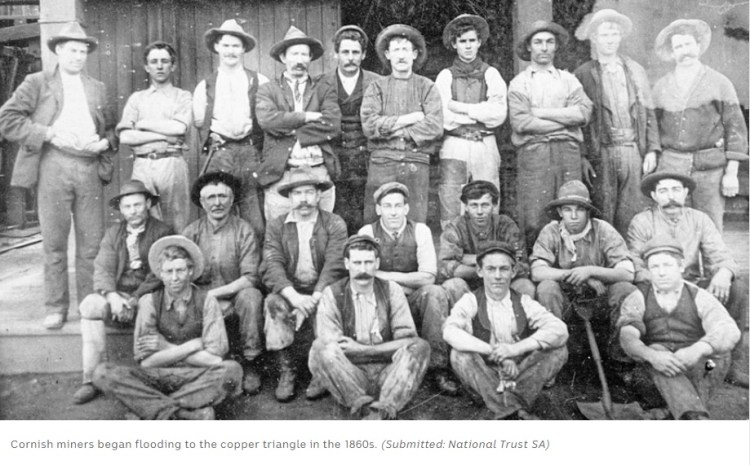
Well, I chose this book because I attend Cheryl Hayden’s U3A classes on Cornish History and all that entails. Cheryl has a passion for Cornishman Tristram Winslade and she studied with author Philip Payton. On the first day, the first thing I recognised were the names of towns and places because Cornish miners came to Australia around 1840s and left their mark on the South Australian landscape.

Miners and their families came to South Australia to take part in the new colony’s great copper boom from 1845 to 1877. These skilled men used their expertise to extract the rich ore which gave Australia world-wide acclaim as the Copper Kingdom. Mining was a grim life for everyone and added to that physical toil was the mental toll of being thousands of miles away from home.

Statue Dedicated to Kapunda Cornish Miners of South Australia Bruce Elder Aussie Towns

And, no, I don’t have a family connection to Cornwall. But I am fascinated by the strength, courage and determination of those Cornish pioneers who travelled to the other side of the world for work.

The motto of Cornwall is ‘Onan hag Oll’ which in English means ‘One and All’ a sentiment of unity that pervades the Cornish spirit and has defined its character over centuries.

My mantra would have been ‘Damn dirt and dust’. They were religious people so perhaps did not swear. If you’ve read about the Prayerbook Rebellion and King Edward VI part in it back in 1549, they took that pretty seriously.

Book photographs show grim, hardworking Cornishmen above and below ground. Of course, in those days the people being photographed had to keep very, very still otherwise the image blurred. These blokes changed the fortunes of Australia.

QUOTE: The Cornish steam engine was revolutionary when it was introduced into Australia in the mid-19th century, enabling mining of metals at depths not previously possible. This new form of deep, hard rock mining required new skills and technology not then present in Australia. Mining for copper required the skills of miners who knew how to establish mines and systematically work them in a way that gave the best return for the effort and cost required to access the ore body.

Australian Government Parks and Heritage National Heritage Places – Australian Cornish Mining Sites

Due to my claustrophobia I don’t know how men could go down a shaft and work in tunnels underground. I get palpitations and cold sweats just looking at the B&W photos of mining accomplished hundreds and hundreds of metres—Moonta as deep as 762 metres (2,500 feet)—below the surface in low lighting with little ventilation… sorry, have to stop and take some deep breaths…

Copper Mining South Australia Burra Mine Site c1900s

Death and infant mortality would have been regular visitors, coupled with irregular supplies of food and clothing necessities. For example, Burra is 164km from the city of Adelaide and two hours travel by car now. Back then it would have taken several days, if not a week, allowing for the weather. What consideration was given to housing, health, education and even entertainment? It seems like it was all work, work, work for mining families. But I bet it wasn’t!

I certainly hope those intrepid miners were well paid with bonus credits because I reckon they deserved every penny they earned and more. In conjunction, the Moonta Mines women on the Yorke Peninsula deserved gold medals for their Cornish Pasties, continual scrubbing of clothes and the ability to produce a home-life as normal as possible under the harsh conditions.

When the mines were closed in 1923 many Cornish families stayed in Australia. By then ‘Little Cornwall’ and its Cornish heritage had achieved legendary status. Festivals and parades were held Kernewek Lowender and Gorsedh Kernow. There are early photographs of Chapels, brass bands and street parades with proud banners. This tradition still exists in South Australia today.

Kapunda Copper Mining Mounds and Pond, South Australia

It’s easy to say nothing really remains of the old mines but it does. It’s there in the engine house, the rocks, the mounds and mineral ponds; the names of Cornish descendants and, of course, the original town names like Redruth, Burra, Kapunda and the ‘Copper Triangle’ of Wallaroo, Moonta and Kadina. Today Burra and Moonta are of outstanding national heritage significance as two places in Australia where Cornish mining technology, skills and culture are demonstrated to a high degree.

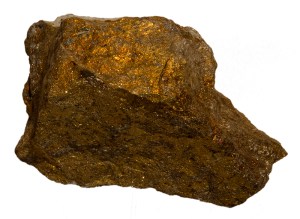
Mining continues in Australia; minerals are a finite resource yet presently unrecycled copper products are widely used in building construction, electrical grids, electronic products, transportation equipment and home appliances.

Image GeoScience Australia https://www.ga.gov.au/education/classroom-resources/minerals-energy/australian-mineral-facts/copper

One hundred years from closing in 1923 to 2023 today, those Cornish miners had no inkling of the controversy, dilemma and great debate earth mining is causing in Australia right now. Benjamin Franklin said ‘No nation was ever ruined by trade.’ But whose bank account does it fill and at what cost to the environmental future of our country?

Now I am going for a walk, very conscious of what could lie beneath the grassy parkland.

Gretchen Bernet-Ward  

Pictorial History of Australia’s Little Cornwall
By Philip Payton
Format: Paperback
Size: 265 x 218 mm
ISBN: 9781743056554
Extent: 96 pages
Wakefield Press is an independent book publishing company based in Adelaide, South Australia.
Opinion Piece GBW March 2023