My Short Story Rejections
Most writers at some time or another, usually early in their literary career, enter a writing competition. It gives you a reason to write when you think you have lost the plot. There is exposure and the bonus of possibly getting a monetary reward. Occasionally there are the perks of receiving feedback from the judges and maybe your work appearing on the relevant website. Not all writing competitions do this, especially if they specify a word/theme which is only used as a one-off with no ongoing relevancy other than it being a writing exercise to aid your creative thinking.
Never put your name on the actual story, write it on the submission form. If A4 size paper is requested (e.g. Word.doc, email attachment, PDF) – if font is requested – if the line spacing is requested – if any other requirements are requested please do it for best results. Another necessary thing you must do is wordcount. Absolutely stick to the specified wordcount. This does not guarantee you will win but it will leave a good impression.
Okay, I know you may have already entered some writing competitions, and perhaps none of this is new to you, but that should not stop you from fully reading the competition rules and guidelines and sticking with them. Be aware that there may be an entry fee for some of the bigger writing challenges. Usually if you are a member of a local writers group you can enter free. Note, I have never been given money as a prize and once a story is published is cannot be used again in competitions.
If you are reading this far, I have included two of my most recent short stories (below) which were written for two key-words supplied by a writers centre prompt. ‘Fragment’ and my piece is titled ‘Rocky Horror.’ Allow me to offer a critique and say the winning entry for ‘Fragment’ was predictably sentimental. The prompt and title for my second tale is ‘One Room Story’.
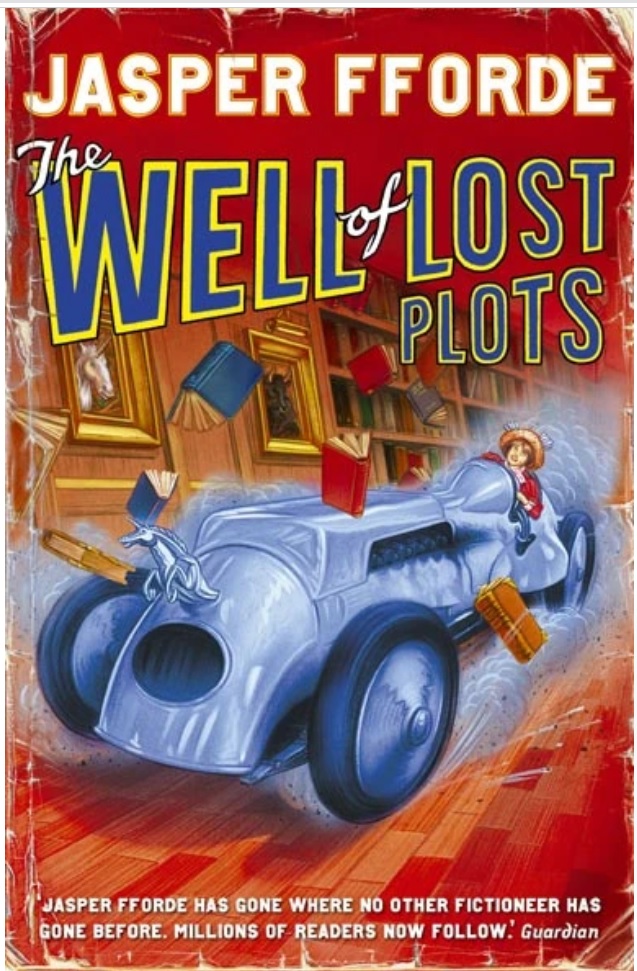
Anyway, my two stories are short, both are well within the 500 wordcount limit and as you can see they are different styles. Although rejected I did have a sense of achievement writing them. So don’t fall into that Well of Lost Plots.
Great book title, thanks Jasper!
——ROCKY HORROR——
By Gretchen Bernet-Ward 2025
The pavement fractured under her feet and fissures formed. A fragment of rock flew down from a dark sky then bounced back up. Annie fled for the house – fast.
Felicia sniffed, her author brain unimpressed.
“Too much alliteration,” she reasoned, and ducked a meteorite as Annie reached out for the front door handle. The molten mass smashed a jagged hole straight through the door and landed on Annie’s new carpet. It choked the air with sulphurous intent, which caused Annie to wail uncontrollably.
Felicia glanced upward. “That’s not rain.”
Sharp shards showered down onto the rooftop shingles. She held grave fears for their resilience under the rapid assault.
“Cut it out,” she yelled in her head. It stopped.
Now feeling foolish and faintly ridiculous, she quickly wrote down fragments of what had just happened as another gritty fissure crackled towards the house. It wasn’t looking good, she still had an imagination too wild for pre-school books.
Annie shrieked “Help me, please!” a fraction too late as Felicia swiftly drew a thick black line across the previous paragraph.
The workshop lecturer looked up and raised an elegant eyebrow.
“Having trouble with this exercise?” she asked.
Unnoticed by group members, a light sprinkle of insect-like shale bounced and pinged off her neatly groomed head.
“No, no,” replied Felicia, “just trying to control my fractured thoughts.”
She smoothed her notepaper as a resurrected Annie tipped over a metal bin, sending granite boulders rolling silently across the meeting room floor towards the unsuspecting lecturer.
“Actually,” Felicia mused, “I seem to have hit a rocky patch.”
——ONE ROOM STORY——
By Gretchen-Bernet Ward 2025
The waiting room chair had a cracked leather seat which pressed through her summer dress like a blunt knife. She tried to move slightly, knowing mother would hiss, do not fidget. Maybe her button-up shoes could reach the floor, maybe that would ease the pressure on her insides. Heels swung, mother glared.
Only two other people sat in the doctor’s waiting room, the nurse at a desk and an old man with wire-framed spectacles who breathed in and out like a faulty balloon.
Why was she here? It hadn’t been said at breakfast, only that she would miss school for the morning. Like a gift given and snatched away, her stomach churned with what might be waiting for her behind that big brown polished door with its fancy gold lettering. That slow, slow rotation of the brass door knob. She hoped the old man would live long enough to go through first.
The front sash window was slightly ajar but didn’t allow for an escape.
An idea, perhaps she could bolt out the front door while everyone was looking at the surgery door?
No, her mother was fast, even catching squawking hens.
Glancing around she studied the glass fronted cabinet beside the nurse’s desk. Medicine in small bottles made of brown glass with paper labels and cork stoppers. Bill Beans Laxatives also in their family medicine chest. Saltrates, Alkia, Nitrate of Amyl and her grandmother’s stomach powder. Like medicine daddy gave her at night.
Her body shivered. Time to move. She slid and jumped, the seat tore at her dress.
A black and white tiled dash to the front door but the shiny door handle was unyielding. She tugged hard, memories rose, she whimpered as mother pulled her back.
The nurse steered her to the uncomfortable seat, not to worry, the doctor was a nice man. She remembered daddy had whispered, be good. A special treat tonight.
A quick glance, the hem of her dress torn, she felt bad as her mother quietly wept.
Now it’s your turn to start plotting! Write something wild about the Blue Geese photograph. Or follow through and blog your own prompt and short story. I promise not to critique them. Send me a link to your latest short story and I will post your link below where I have mentioned *Ekphrastic Writing. Whether it be writing or frantically editing to meet a deadline, make something great from those 26 letters of the English alphabet.
You know you can!
📚 Gretchen Bernet-Ward 2025
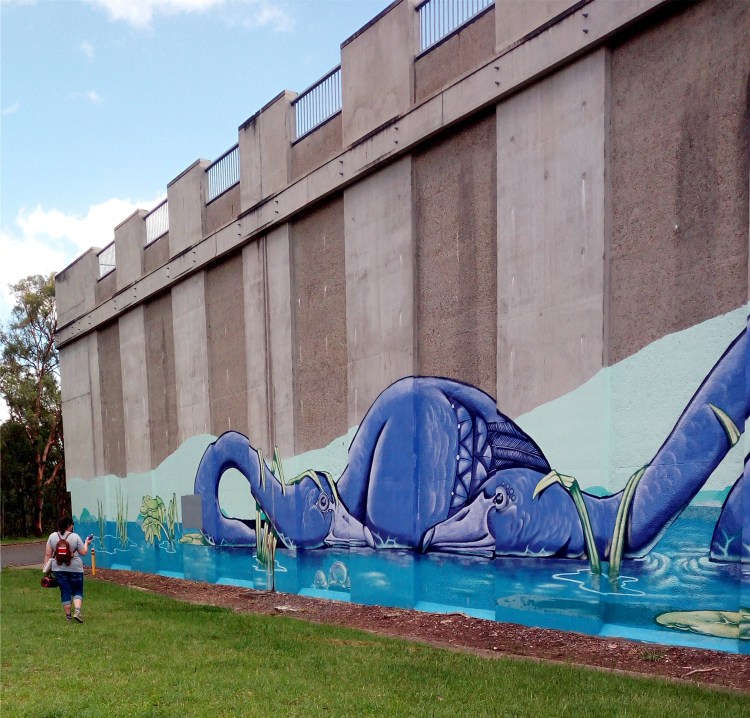
© image Gretchen Bernet-Ward 2021
Don’t forget to look at my Photo of the Week every Saturday on my home page.
STOP THE PRESS: This information may be of interest!
The AWR has sourced information from other websites
AUSTRALIAN WRITERS’ RESOURCE
https://www.austwriters.com/competitions
A seriously long list of writing competitions around the world!
and no assurance can be given as to its current accuracy.
*Ekphrastic writing is a literary description of a work of art
such as a painting, sculpture, or performance
BUT IT CAN BE USED FOR EVERYDAY ITEMS within a story.
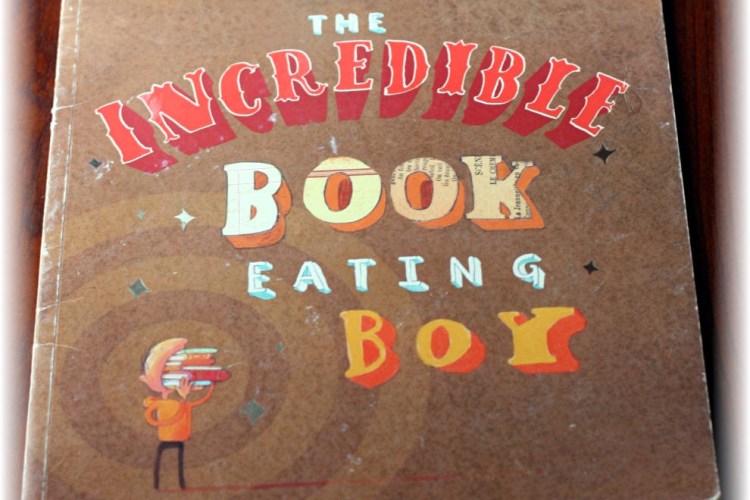
 Henry is a boy who likes eating books. He absorbs knowledge as he happily munches his way to becoming the smartest boy on earth. Everything goes well until there’s an internal rebellion. Share Henry’s journey as he discovers something better than eating books.


 Thoughts Become Words