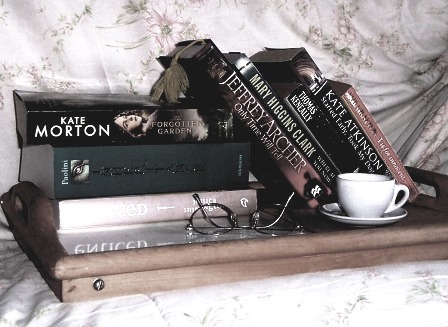
Over the years I have read a handful of self-help books aimed at emerging authors, including the iconic Artist’s Way by Julia Cameron and famous memoir On Writing by Stephen King, but recently I came across these two quite diverse publications which really gave me a nudge in the right direction.
“Use Your Words” by Catherine Deveny 2016 published by Black Inc. “See Me Jump” by Jen Storer 2016 published by Girl And Duck.
Catherine Deveny’s book is written in plain straight forward language, and she gets right to the heart of the matter. There’s no place to hide once the momentum starts rolling. Be warned, this book is for adults. Catherine uses impolite language and bad manners to push you forward, sometimes against your will. Then you see that glowing light at the end of the tunnel, er, book. Well worth reading this boot-camp style book.
Jen Storer’s book is slim yet informative with small sketches dotted through the pages. Her style is easy, encouraging, friendly and humorous. It’s a book for adults but those with a yearning to write good books for children. Note the chapter 4 heading “Don’t let adults fix your character’s problem” which is a must for kids literature. Many of Jen’s sentences make memorable quotes, my favourite “Be brave. Don’t wait to create.”
Wobble Jellyfish was wobbling along under the sea when Swoosh, whoosh, splash! A wave stranded her on a sandy beach.
It was midday and it was hot.
A seagull eyed her suspiciously.
Wobble Jellyfish hardly had time to take a breath when Swoosh, whoosh, splash! She was slopping along in the bottom of a plastic bucket. Wobble slowly blubbed her way up and peeked over the side. The water park was full of wet, squealing children.
She saw a huge swimming pool ahead and got ready to slip overboard.
With a squeeze of her tentacles, she oozed up and over the edge. Plop! She missed the swimming pool.
This water was cold and bubbly and swirled Wobble up, up and over.
The fountain tossed her around and around like a washing machine.
Wobble waved her tentacles helplessly then plopped back into the water.
She grasped hold of a long purple ribbon dangling in the foam.
The person wearing the long purple ribbon stood up. Aagh! The young girl swung her long plait to get rid of Wobble.
Wobble soared high and fell with a splat on the hard ground.
A water canon spray hosed Wobble off the pathway into the gutter.
The force of the water swished her straight down the stormwater drain.
It was dark and stinky and slimy in the drain.
Wobble wrapped her tentacles tightly around her body.
“Oh, ooh, oooh, I want to get out of here,” said Wobble Jellyfish.
Many empty water bottles floated past and she grabbed one.
It was a bouncy ride, up and down through the pipes.
The bottle got jammed between the bars of a stormwater grate.
Wobble sucked in her jelly belly and squeezed through.
Now the water was quieter and flowed more smoothly.
Grass lined the bank and the sun shone on a long stretch of clear water.
It made Wobble feel relaxed but the water was not salty.
She longed for the tang of the ocean, the surge and swell of the current.
A boy’s face loomed above her and another plastic bucket scooped her up.
The ride was sloppy and jerky hanging from the handlebars of his bike.
Wobble heard lots of voices talking and saw cheerful colours flash overhead. Swoosh, whoosh, splash! Wobble was sluiced over the side of the bucket into a square glass tank.
The first thing she saw was another jellyfish. He was very small.
“Hi,” he said. “I’m Irukandji, or Iru for short.”
Wobble thought his smile was unfriendly.
She didn’t like his long, quivering tentacles and backed away.
Something sharp poked her side and she wobbled around to look.
It was a large starfish. He said “My name is Spike.”
Wobble slubbed and blubbed “I’m not surprised.”
She introduced herself and peered closely at Spike “You’re a beautiful colour.”
Spike showed her around the glass tank.
He was proud of the rocks and the seaweed and a tiny pirate ship.
“But they are not real,” said Wobble.
“They are to me,” said Spike.
That made Wobble cry but nobody saw her tears because of the clean tap water.
“We have to get back to the sea!” she said.
Wobble saw blurry people lift the fish tank “Up ya go!” and “In ya go!”
The light dulled as a heavy canvas was pulled over the back of the ute.
Water slopped everywhere as the old ute bucked back and forth along the track.
The canvas was lifted and Wobble, Spike and Iru blinked at the bright sun.
The tank was hoisted up and carried along the beach towards tall cliffs.
At the base of the cliffs, the blurry figures stopped.
Wobble could see large rock pools and waves splashing over them.
Spike and Iru were very quiet, hardly daring to move.
Wobble rose to the top of the fish tank and blub blubbed excitedly.
The fish tank moved again, closer to the waves and the sea.
A huge sparkling wave rose up, curling and churning towards the rock pools.
The blurry figures leaned over and tipped the tank. Swoosh, whoosh, splash! Wobble, Spike and Iru caught the wave and rode it high into the air.
They tumbled and mingled with the fresh, cool, salty water. Whoo hoo! shouted Wobble and Spike and Iru.
Seaspray carried them higher and higher until the wave rolled back into the sea.
Briefly they touched, careful of Iru’s stingers, then turned towards home.
Wobble Jellyfish had the tiny pirate ship wrapped in one of her tentacles.
She was going to show it to a real sunken pirate ship.
“The Empty Beach” is about private investigator Cliff Hardy’s routine investigation into a supposed drowning. Beautiful client Marion Singer wants to find out the truth behind the mysterious disappearance of her wealthy husband John Singer.
The truth about John Singer, illegal trader and poker machine guru, is hard to find among the drug addicts, alcoholics and ashrams of Bondi Beach in Sydney NSW. Not to mention the hindrance of PhD rich girl Ann Winter and creepy jailer Mary Mahoud. Hardy soon finds himself fighting for his life when his search for the truth involves some nasty venues controlled by an underworld of violent people and lead by kingpin Freddy Ward who does not appreciate his inquisitive nature.
Being an earlier novel, Hardy is ex-army, a law student dropout, insurance company investigator turned private eye who lives by a solid set of values. And he’s seen many gruesome murders in his time. Throughout Hardy shows understanding and tolerance of people from all walks of life, he embraces the city sprawl and the rural ethos, and doesn’t start a fight. But he can be tough and not play nice when it comes to his own survival. He has a habit, when in a tight situation, of jesting at the bad guy’s expense and consequently coping a beating. This is well illustrated in the chapter where Hardy is imprisoned inside a squash court.
My suggestion is read “The Dying Trade” the first Cliff Hardy book in Peter Corris 42-book series even though a later book “The Empty Beach” was made into an Australian movie in 1985 and remains his archetypal crime story. Based on Peter Corris 1983 novel of the same name, this movie starred Bryan Brown as Cliff Hardy and such notables as Belinda Giblin, Ray Barrett, John Wood, Joss McWilliam and Nick Tate as the ill-fated Henneberry.
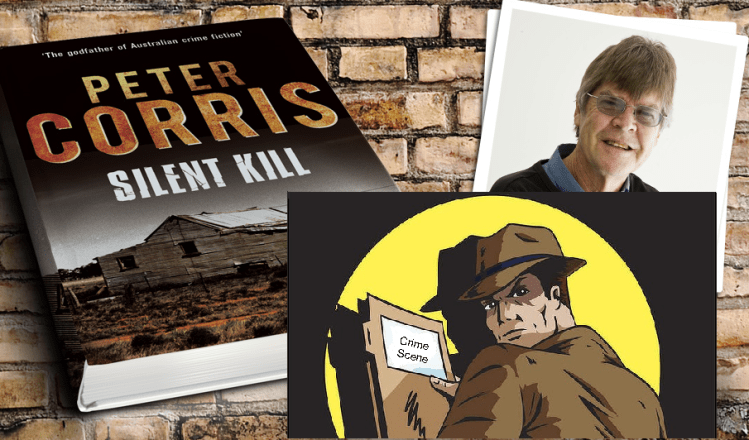
While you may like to read the more current books like “Silent Kill” (above) the earlier ones are classic Australia in the 80s and 90s and my favourite is “Wet Graves”. They have changed with the times, think internet and iPhones, and contain physical changes to Cliff Hardy at the same time they happened to the author. For example, smoking habits or the triple bypass heart surgery Peter Corris underwent and kindly passed on to Cliff Hardy. The relationship breakdowns do not appear to apply too much to real life. Corris didn’t pass on his diabetes, however, the easy-going narrative speaks volumes, both men having a genuine affection for their family, the city of Sydney, and its diverse citizenry.
Now I’ve got that out of the way, let me say that one of the most enduring (and for me, best loved) of Australian crime fiction characters is Cliff Hardy.
Fast forward to future ‘Spoilers’ and Hardy is deregistered and operates on his own initiative but still maintains a rock-solid sense of fair play in the 21st century. To date, Hardy’s longtime friend Frank Parker is now a retired senior police officer and married to Hilde, Hardy’s ex flatmate. The reader watches this friendship evolve through a chain of novels and it’s just as interesting as following Hardy’s love life and family expansion. Although he still holds a torch for his late ex-wife Cyn, there’s even grandchildren. And there’s cameos from characters like tattooist Primo Tomasetti with his graphic artwork and sleazy patter.
Cliff Hardy represents the kind of bloke many law-abiding citizens would like to have on their side, a blemish yet dependable man who’d share a joke or reminisce over a cold beverage. When it comes to Aussie mystery solving, Hardy gets my vote every time.
♥Gretchen Bernet-Ward
POSTSCRIPT: Peter Corris, journalist, historian and author of the best-selling Cliff Hardy detective series, died on 30 August 2018, aged 76. Over 37 years, from 1980 to 2017, Corris wrote 42 Cliff Hardy novels making it the longest running series in Australia. The final installment is titled ‘Win, Lose or Draw’.
The old lady across the road died alone but at a good age after a good life, well, that’s what the family said as they stripped her house of all its fixtures, fittings and 1960s furniture. They singled me out from the group of neighbours on the front verandah and asked me if I would like anything from Mary’s junk, er, they cleared their throats, her mementos and stuff. I raced home to my mother and being politely greedy I raced back with her message that we’d take anything they didn’t want, and also Mary was a lovely old gal. She was too, she used to worked at the university and was clever, always keeping up with radio bulletins and had newspapers delivered from London and New York.
Mrs Anglesea and her toddler were standing at their front gate, wiping eyes and sniffing about poor Mr Roberto gone, gone forever. No more bark-bark said the toddler. Mary’s terrier Mr Roberto had been bundled into a pet carrier and taken to the local vet. The carrier came back empty. Even my mother blinked at that. But to help the family with their clear-out, she gave them a load of flattened cardboard boxes from a high-end removalist company. My mother didn’t know they cost money so it wasn’t until she saw them in the back of some bloke’s ute did she twig that they’d sold them on.
So, it was with the feeling of recompense that we were offered, and graciously received said my mother, a framed drawing of a grey English village, a chrome-legged brown laminated table and an old armchair. I was pretty annoyed we hadn’t been given the choice of some of the good things like her TV or bookcase or favourite figurines but I had already spotted a woman trundling them out to her white van. I knew she sold stuff on eBay and sent them a million miles away. I wondered if Mary had followed her belongings or left her soul in the house like my mother said she would have . . .
AUTHOR NOTE This story has been temporarily withdrawn . . . it was rewritten, submitted, and subsequently awarded Third Place (and won a cash prize) in a short story writing competition with the option for publication.
“What I do for my work is exactly what I would do if nobody paid me”…
Gretchen Rubin is an American author, blogger and speaker and has written several books including “The Happiness Project”, “Happier At Home” and “Better Than Before”.
The only thing Gretchen Rubin and I have in common is our first name. When I was growing up, my name was a burden among all the Anglo-Saxon children during my school years. I was never ashamed of my first name, just upset with people when they couldn’t come to grips with it, and I didn’t understand why people had so much trouble pronouncing it. Now, thanks to the global village, it’s a cinch.
As for working, I’ve always worked for financial reasons and if the job was a good one that was a bonus. From insurance, travel, advertising, promotions, administration and library positions, I am now at the stage where I am free to pursue my writing career. I can sit and pound away on the keyboard to my heart’s content and nobody pays me.
“It’s like a luxury hotel in here,” said Penny to Cleo, who was draped across a chair in the lounge room of Pandanus Palms psychiatric hospital, a pink hibiscus tucked behind her ear. They were discussing the merits of combining tropical plants and plush furniture with the plastic chandelier.
“It’s done on movie sets to create an illusion of opulence,” said Cleo. She sat up and stretched her arms. She gave a yelp. “That new guy Tom grabbed me too hard in the final scene last night.”
Penny knew Tom. “I’m sure he didn’t mean to,” she said.
Cleo surveyed the bruises on her arms. She noticed marks on her wrists. “The make-up people forgot to remove my scars.”
Penny was going to change the subject but fortunately Cleo yawned.
“You’re getting tired, dear.” Penny began to gather her things. “I’d better go.”
Cleo rubbed her eyes and blinked rapidly. “Did you see him?”
Penny spun around but there was no-one else in the room. The air was still and heavy with the perfume from a flowering orchid. “Who?”
“The producer. He looked in the window.” Cleo sat stiffly in the chair, staring at the window like an unblinking cat.
Penny readied herself for an outburst. “I’ll buzz for the––” she began.
Suddenly Cleo jumped up and ran to the window.
“I won’t go back into his hell-hole of a studio.” She tugged frantically at the heavy, brocade curtains. Once closed, the dimness appeared to satisfy her but she paced up and down with clenched fists. “He was checking the spot where the stunt man fell. They don’t know why he toppled out the window. It wasn’t in the rehearsal script.”
She went to the curtains and peeked out. “Thank God, he’s gone.”
Penny leaned over and pushed the nurse’s call buzzer. “You can buzz all you want, the waiter service is atrocious,” said Cleo. “When they do come, they hold you down and force you to eat.” She started to twirl around the room, knocking into furniture. Her medication is wearing off fast, thought Penny. She felt unsafe. “Stop it!” she shouted.
Cleo sat down on the floor, a dazed look on her face. “It’s dark in here,” she said, wrapping her arms around her ribcage. “This is what that lady in the buckled up jacket does.”
Penny went to the window and opened the curtains. Summer sunlight flooded back into the room. Cleo winced. “That spotlight is too bright.”
“I’ll tell the lighting technician,” Penny said. She hurried from the room and saw that the long white hallway was empty. The staff must be at the press conference, she thought.
After straightening a painting with shaking fingers, Penny had an idea and returned to the lounge room.
“The director says the cast can take a break,” she told Cleo.
“About time. Scene after scene and none of them mine. I’m freezing my butt off waiting for my audition cue and it never comes. Boredom and suicide are the same thing.” Cleo again paced the floor.
Penny recognised the first signs of her hourly ritual. Cleo went through the motions of taking an imaginary cigarette from its packet, putting it in her mouth and lighting it. With a noise of disgust, she tossed the cigarette on the carpet. Quickly, she stamped it out. “Have to save oxygen,” she said. “The door shouldn’t be closed. It’s the stunt man’s idea. ‘Get off me,’ I tell him. He knows I don’t like small spaces. The door is made of steel. Hey, HEY, can anyone hear me? This isn’t funny, guys. The sound of nothing is pressing into my ear drums. The silence will squash my head. Let me OUT!”
Penny made cutting actions with her finger across her throat. “The cameras have stopped rolling.”
“I need warm soup,” said Cleo, her teeth chattering. “Where’s the c-catering van?”
“Think about something else, dear,” Penny said, hoping a nurse was on the way.
“Remember when you were little? You said if something went wrong, you’d make-believe. It’s fun to pretend you’re another person. You can be anything you set your mind to.”
“That box room was too strong, it over-powered my mind.” Tears started to form in Cleo’s eyes. “I didn’t want to play a dead person. The box was trying to kill off my character––it wanted to be my coffin.”
“You lasted a lot longer than most people would, given the circumstances.” Penny lead Cleo to a couch and sat with her, gently smoothing her hair. After awhile, two people entered the room, Cleo’s doctor and a new clinical nurse. Penny surreptitiously made the sign of the cross.
The nurse checked Cleo’s pulse then injected her in the middle of a bruise on her upper arm. Cleo pulled back, slowly rubbing her skin. “More pain.”
The nurse pointed to a bluish lesion and said, “I hope you gave as good as you got.”
“One of my better performances,” said Cleo, tossing her head.
With a weak smile, the doctor said, “Ready to meet your fans, Cleo?”
“No.” Cleo turned her back and toyed with a palm frond. They coaxed her into leaving the room and walked down several corridors until they reached an unmarked door. When it was opened, Penny hugged Cleo and left. She hated to watch that door close and wanted to be out of earshot before it slammed. In the foyer of the hospital, Penny wondered how far she should carry Cleo’s delusion. The hospital portico was swarming with staff and media representatives.
With one hand on her heart and the other on the door handle, Penny opened the front door.
A reporter pounced.
“What happened on the set of Cleo’s new movie?”
Before Penny could reply, Tom, the psychiatric nurse, ran over and grabbed her arm.
“Come with me, Penelope,” he said. “It’s time for your medication.”
♥Gretchen Bernet-Ward
AUTHOR NOTES:
Cleo is a mentally disturbed woman. She talks in riddles and, due to an apparently traumatic event on a movie set, she cannot
separate fact from fiction. She confuses the Pandanus Palms
psychiatric hospital with a film location. We are lead to believe she
has once tried suicide and that the stunt man may have caused her
latest breakdown.
Penny has “adopted” Cleo and calls her “dear”. She cares about
her and understanding her moods but is not able to help in a positive
way. She has her own set of unseen demons.
Tom is a bit player with an important part. Did he cause the bruising on Cleo’s arms?
The setting is a room with lavish décor but Cleo becomes cold and
hungry. Is she reliving an incident or just acting the part?
Is the box a padded cell or a prop gone wrong?
Does Cleo see the truth wrapped up in theatrical guise? Is she driven
by revenge to murder? When the “reveal” comes at the end, can we
guess at what was truth and what was the swirling of a delusional
mind, aided and abetted by Penny.
As I sit on our small balcony with the French doors open behind me, I can see a front view over the trees, over the shallow valley and up the opposite hillside. Roof tops gleam here and there and a council bus grinds its way up the steep incline of a street still named ‘lane” from way back when it took farm traffic up and over the hill.
To my right are the wooden chamfer boards which line the house, in this instance making the wall of our home office, or, as it was nicknamed many years ago, The Den. To the left is an open view over rooftops and trees and I’m right in line with a big fluffy white cloud. This cloud is probably bigger than an ocean liner. It is floating slowly through the blue sky.
To the side I hear the roar of a jet engine and a shiny aerodynamic form cruises past, heading towards the fluffy cloud. For the first time, I wonder what it must be like for the pilot, drawn inexorably into this massive expanse of whiteness. From experience I know that clouds can be bumpy rides but the unspeakable horror of something else flying into it from the other direction…nah, that’s not possible in this day and age…
The plane gets smaller and smaller until the sun glints off a tiny silver speck. I wait for it to be swallowed by the white cloud when, ever so gracefully, it curves away and downward, heading for the airport and out of my view.
I jump as suddenly a screeching white cockatoo cuts across my line of vision. It is closer but follows the same flight path as the jet. Still screeching to scare both friends and enemies, the cockatoo turns and mirrors the same downward arc, disappearing from sight.
Perhaps a philosophical parallel could be made, a bit of literary prose penned to suit the occasion. However, it is just an illustration of everyday life and I can still hear the highway rumble, the neighbour’s dog barking and the postman on a small motorbike with squeaky brakes. Nothing magical, no cheque in the mail, just suburban routine.
When Jessie was small the table was tall. She had to sit in a highchair to eat her meals. One day she crawled on to the table. But that was not a good idea. Another time she pulled the tablecloth. That was not a good idea. As Jessie grew, she helped Tiny the dog on to a chair. That definitely was not a good idea. After dinner on Saturday, Jessie had a very good idea. She didn’t need a chair cushion now, And her feet could almost touch the floor. So she helped clear the table. She helped to wash the dishes. Then Jessie went into her bedroom. She tugged the top sheet off the bed. She grabbed her favourite toys. Jessie was tall enough to pull the sheet over the table. It made a tent, it made a cave, it made a cubby,
and Jessie played until bedtime.
♥ Words : Gretchen Bernet-Ward ♥ Video : Mere Modicum
The two-storey farmhouse was at the top of a bare hill. The long gravel driveway wound upwards from the road, through dry, patchy grass until it reached the front door. As Susan drove to the top, she saw a dam in the valley beyond, surrounded by trees. The view impressed her with its undulating hills and differing shades of green, framed by a cloudless blue sky. Is this my escape, a comfortable home? she wondered.
Susan parked the car on level ground and looked at the unimposing entry of dull brickwork and unpainted wood. She walked across weeds growing between uneven flagstones to the porch and weather-beaten front door. She knocked as loudly as she dared without getting a splinter rammed into her knuckles. It had taken an hour to drive from the nearest town. The hurly-burly of market day was replaced by this rural solitude, the kind of serenity where sounds are muted by immeasurable distance.
She knocked again. No dogs barked and nobody stuck their head out of a window to ruffle the stillness. As the real estate agent had predicted, the part-time caretaker was not on duty today. The key, thought Susan and went back to the car to collect it. Her daughter, Audrey, was stirring and finally woke up. She looked around, stretched and asked if they’d reached the right property.
“Finally,” confirmed Susan. “We’re going to let ourselves in.” Audrey peered upward from the car window. “The place looks creepy”. “No,” said Susan, “just unloved.” She found the door key in her bag. Audrey hopped on one foot, pulling on a shoe, as they walked to the door. The big old key fitted perfectly and the solid door swung open.
Inside the house, the air was dry and cool. To Susan’s surprise the entry foyer was small but, as she expected, empty. After a debate on direction, they decided to head to the right into an unfurnished, echo-filled living room with faded remnants of mauve wallpaper. “Tiny flowers.” Audrey spoke in a whisper. “It must have been pretty once.”
“Such wonderful windows,” said Susan. She decided to call out in case the caretaker happened to be lurking nearby. “Hey––anyone here?” Her daughter jumped. “Give me some warning next time!”
Susan headed towards an archway at the back of the room, in the direction of what she presumed was the dining room and kitchen beyond. Audrey pulled her back. “Let’s go upstairs.” They went back to the staircase located unassumingly in the foyer. It was narrow and went straight up without a curve. The treads were worn and uncarpeted. On each step, dust rose from under their shoes.
Once upstairs, they split up and walked quietly from bedroom to bedroom, each imagining what the rooms must have been like fully furnished. Susan glanced into a bathroom situated on the corner of the house, hoping for a hint of décor. Sunlight struggled through gritty windows and filled the room with diffused warmth. A large bath dominated the corner and looked out over the landscape. Susan could almost see clouds of steam and fluffy towels and smell the hint of lavender soap. The beige tiling around the bath was unstained. “That’s a good thing,” she said to a beetle on the edge of the hand basin.
Audrey called to her from another room. Susan almost tiptoed down the hallway as it resonated around her, boards creaking. On the way, she noted a single, closed door before locating her daughter through a small doorway into the toilet. “It’s positively ancient,” said Audrey. “What a scream.” Susan stepped inside.
The plumbing was exposed and badly fixed into the sloping floor. A watery noise came from the cistern. The porcelain, off-white and topped by a cracked wooden seat, had a window behind it that was so large it allowed expansive views of the countryside. “That vision works both ways, doesn’t it?” Audrey said. “I wouldn’t want anyone watching me.” Susan laughed “They’d need binoculars.” Audrey said doubtful “A nice curtain would fix it.”
Susan moved aside to let Audrey leave the dismal space and tried to gauge the size of the window. Suddenly the room began to slip. The sloping floor moved under her feet, causing her to slid towards the window. She was unnerved at how quickly the momentum grew. Susan felt as though she was now being sucked towards the glass panes. The pitch of the floor became steeper and steeper until she was hanging on to the metal door handle, desperate to save herself from falling.
Susan scrabbled frantically, breathless and unable to shout for help. She pulled herself up until she found a firm foothold against the doorframe and the hallway floor. With a heave, she pushed herself back through the threshold and stumbled into the hallway. The door swung back and forth a few times as if laughing before it slammed shut.
With a pounding heart and blood was rushing through her body, roaring in her ears, Susan dusted herself off with shaking hands. She was unsure if she’d imagined it. She couldn’t force herself to look back, afraid of what might spring out from behind the door.
Audrey came back. “You look awful. What happened?” “Heaven knows,” gasped Susan and bent double. “I don’t think that toilet likes me.” Audrey’s eyes widened as she peered around the door. “The floor is on a terrible slope.” Susan wrinkled her forehead. “More to the point, why?” Her daughter had a vivid imagination. “I’m going to wait in the car.”
Susan waited until she heard Audrey walk downstairs then watched her through a front window as she got into the car. As she recovered from her slippery encounter, an inquisitive streak in Susan overtook her common sense. She dismissed the toilet’s poor carpentry under the heading of old age. She wanted to see if any rooms at the back of the house were habitable. Without deliberation, Susan turned the knob on the only unopened door in the grimy passage.
Inside, the air was warm and fragrant. There was a riot of colour throughout the room. Rainbows sparked out from a crystal lamp shade. Floral drapes trailed across the floor and plump cushions surrounded children who played on woven purple rugs, unaware of her presence. A large stone fireplace glowed at the far end of the room and, to the side, a cat slept in a sagging armchair.
A man was talking to a woman while he carved roasted meat at a table covered by a velvet cloth and laid with silver cutlery. The woman, wearing a vivid red blouse, saw Susan first and waved cheerfully. She beckoned at Susan to enter. A jolly couple nearby chorused the woman’s cries of “Come in, come in.” The first thought to enter Susan’s mind was that she had intruded. “I didn’t mean to interrupt your meal.”
“Nonsense,” they said and waved steaming mugs of drink. The man carving the roast waved his knife, gesturing her into the room. Better not join them, thought Susan, anything could happen. She looked longingly at the food-laden table then backed out of the room, smiled as politely as she could and shut the door. She hurried out of the house, confused over what had occurred. She locked the front door, slipped the key into her pocket and patted it for good measure.
“You look funny again,” said Audrey and brushed a cobweb off her hair. “I think,” Susan paused. “I think I just met the original owners.” Audrey groaned “Not again?” She pouted and said she didn’t believe her mother this time. As far as she was concerned, except for the toilet, there was nothing out of the ordinary in the old house. Susan rose to the challenge and gave her a lucid description. “They’ve never spoken to me like this before.”
After listening and thoughtfully tapping her chin, Audrey picked up the real estate prospectus and quickly thumbed through it. She held it up and read aloud, “The premises has facility for oil heating.” She snapped the brochure “There’s one way to find out if they are ghosts or not. We can look for smoke coming from a real chimney.” Audrey had jumped out of the car and was walking around the corner of the house before Susan could gather her wits and follow.
Apart from several outbuildings, the back of the house was as barren as the front with no evidence that a garden may have grown there. In an artistic way, Susan found its uncluttered drabness pleasing. She imagined lavender bushes growing here, out of the wind. With a nudge, Audrey brought her out of her landscaping reverie. “Nothing!”
Susan looked up. Between the blank walls and windows, the trace of a thick scar ran down from the upper wall to the ground where brick masonry had been patched with concrete. “Removed?” she said. “I’m almost disappointed.” Audrey gave her a lopsided smile. “You’re either going mad or someone is trying to scare us off.”
“Why don’t you go back inside and have a look?” said Susan. “You are mad.” Audrey tossed her hands in the air. “I wouldn’t go back inside if you paid me.” She stomped back in the direction of the car. “That’s another property crossed off our list.”
“We’ll just have to stay in the house your Dad built,” sighed Susan, “if he’ll let us.” Audrey’s look eloquently conveyed the words fat chance.
Susan guessed the real estate agent would be starting to get exasperated with her. Every old house they had inspected and all the auctions they had attended, finished in the same way. The first owners still occupied their premises. Strangely, except for Susan, no-one else could see these deceased residents. In the beginning, she had thought she could live around them but that didn’t seem right. It was like house-sharing, not home-ownership.
Susan started the engine. “I’ve had enough of intruding on these people, going into their homes uninvited and catching them off-guard.” Audrey pointed her thumb over her shoulder at the house. “From what you said, that lot seemed okay.” With a grimace, Susan said “Forget it, tomorrow we’re looking at brand new townhouses.”
Susan swung the car around and drove slowly down the dusty driveway back onto the bitumen road. That room had such a happy feel, she mused, perhaps the house isn’t unloved after all. As the trees in the valley closed ranks, the house began to disappear from view until only the rooftop was visible. Susan took one last look and noticed a thin trail of smoke rising into the still air.
*
AUTHOR NOTE:For those readers who like a possibly more romantic ending, the second part of “Home Comfort” follows:
Susan did not want to be drawn into a lengthy discussion with the real estate agent over the suitability of the old farmhouse. She rehearsed her opening line. “It’s obvious why we rejected it.” Her voice lacked conviction. “Decrepit,” said Audrey and gave her a sideways glance.
To Susan’s relief, the real estate agent took the house key without a word. He was ducking and diving between filing cabinets and stationery drawers, hunting for a pen. In the absence of his receptionist, he was attempting to enter data into an unwilling computer and answer the phones. Audrey took pity on him and answered a call, taking a message. Susan was mortified but the realtor took it in his stride.
“We’re returning to the city tomorrow,” said Susan and thanked him. “I regret the unsuccessful outcome,” he said, parrot-fashion but not without sincerity. “Did you see the local caretaker?”
“I saw a family.” With a hint of a smile, Susan added “I’ll let them rest in peace.” The agent was not listening. “It is rather quiet up there, isn’t it?” He started searching for a paper clip and sent a sheaf of papers cascading onto the floor. Audrey cried out and pounced onto a pale grey sheet of paper. It had been folded and unfolded many times and was fuzzy around the edges. “Townhouses,” she read. “Just what we’re after!”
“Selling like hotcakes,” mumbled the real estate agent. “I’ll give Ben a call. He can give you a guided tour.” Within an hour, Susan and Audrey were standing on the lawn outside a new townhouse built in the style of a much older terrace house. The wrought iron lacework would look great with a flowering vine, thought Susan.
Ben was tall and friendly and had a disarming way of staring deeply into Susan’s eyes as he spoke. Nothing else existed while he told her about the suburb and mod cons of the townhouse, the last one at the end of the terrace row. “It’s the only one left for sale,” he said. His smile made her feel absurdly warm. Also, he looked vaguely familiar. Susan blinked a few times. “I’m sorry, what did you say?”
“Have we met before?” Ben’s tanned face looked as though he was having difficulty pigeon-holing her and he rubbed his jawline. “Did you go to the furniture auction at Lavender Lane farm?” Susan wondered if this was his favourite pick-up line. “That name doesn’t sound familiar.” She tried not to catch Audrey’s eye because she was fairly sure Audrey was winking furiously and just short of nudging her in the ribs. “Do you live there?” she asked.
“Generations of my family used to own it.” Ben described the route they had driven earlier in the day. He outlined a house on a hill. His description of a hillside once covered in lavender bushes made tears form in Susan’s eyes.
“She’s going all mushy,” said Audrey. Ben shuffled his feet. “Are you allergic to lavender?” Susan gave a weak smile and tried to quell her emotions as she searched through her handbag for a tissue. “I’ve got a bad case of ESP.” Ben gestured towards an outdoor seat. It reinforced Susan’s vision of another beckoning man. Audrey let out a squeal. “Oh, you mean the ghost house!” Ben’s face lightened. “They do reckon it’s haunted.”
“Your relatives still live there,” said Susan. Weak-kneed, she sat on the bench. She grasped an old tissue and, as she pulled it out, the much-folded piece of paper flipped out onto the mown grass. As before, Audrey swooped down and picked it up, only this time it was blank. In a hushed voice, she explained to Ben that it was a leaflet advertising the townhouses, “But the words have faded away.” Ben frowned “We didn’t print leaflets.”
Susan reacted by slapping her own knee. It broke the sombre mood and cleared her head. “I think we’ve been set up,” she said. Ben turned the ragged piece of paper over and over in his hands. “By my family?” He appeared sceptical, unsure about the motive behind Susan’s words. “By a set of coincidences,” replied Susan. “Let’s go on that guided tour.”
Audrey was on the doorstep before she had finished speaking. Ben ushered them down the corridor, through the freshly-painted townhouse. “First, I have to show you the rear garden.” The curtains were drawn so he took them to the back door. “Normally you can walk straight into the garden through the French doors.” Audrey sighed and stared at the back of Ben’s head. “How romantic.”
With a flourish, Ben stood back so they could precede him. His smile was as radiant as the rows of fragrant young lavender bushes lining the path in the cottage garden. “Cultivated from the original farm plants,” he said with obvious pride.
Susan was momentarily lost for words. Her mind was in turmoil, alternating between the real and the imagined. Slowly the distinctive perfume wafted around her. She breathed deeply and let the lavender soothe her. An inner calmness gradually infused her muscles and she relaxed. As they stood quietly in the warm sun, Susan tapped her shoe on the paving. “I recognise the brickwork.” Ben smiled “It’s from the old farmhouse chimney.”
Audrey moved between Susan and Ben and linked arms. Her look was innocent. “Did we follow Lavender Lane to a dead end?” Susan laughed. “I think it lead us home.”
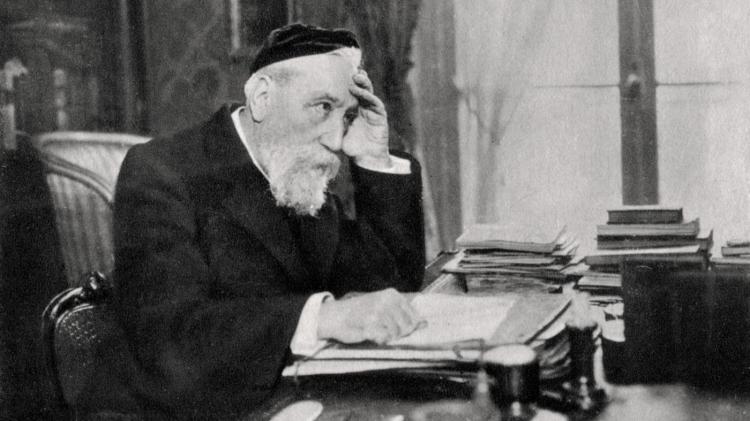
…the famous French poet, journalist and novelist said “If fifty million people say a foolish thing, it is still a foolish thing.” I guess social media has compounded that figure.
Anatole certainly looks worried about the situation…













 Thoughts Become Words