The System

Allora Queensland
Allora Township

Angus shuffled through a pile of bills and sent one fluttering to the floor.  His son Steve stood beside the dining room table, arms folded, watching him.  Every week Angus misplaced an important piece of paperwork.
“Told you it wasn’t far away.”  Angus held up an electricity account.
“You should have a proper filing system, Dad,” Steve said.  “One day the electricity will be cut off and you’ll wonder why you’re in the dark.”
“It’s you who’s in the dark, my lad.”  Angus tapped his nose, an obscure family joke.
Steve gave a brief smile.  “Let me buy you a three-drawer filing cabinet with suspension files and alphabetical tabs.”
“My manila folder is just fine,” said Angus, holding up a battered cream folder with various names crossed out and a succession of dates which finished at 1998.
“You’re damn lucky I haven’t forced you into owning a computer,” said Steve, stacking old invoices, “otherwise I’d make you pay bills online.”
“The only line I like is a fishing one,” said Angus, his mouth twitching at the corners.  He couldn’t resist adding “Just ‘cos you program computers doesn’t mean I have to like ‘em.”
Steve gave a good-natured harrumph and went in search of his mobile phone.  He gave a whistle and his dog Fancy raced in from the garden with her tongue lolling and eyes gleaming.  “Come on, girl, it’s time to take the old bloke shopping.”
Angus knew that Fancy had been foraging in the garden by the dirt clinging to her paws.  “Glad someone likes my little courtyard,” he said.  She placed a paw on his bony knee and he ruffled her ears.  “No treats yet.”
Before they left, Angus surreptitiously swallowed a blood pressure tablet.
They took Steve’s car and drove into town, parking on a broken two-hour meter.  At the shopping centre, Angus went straight to the rawhide-smelling pet store and bought a packet of dog treats.
“One hundred percent pure beef,” he read.
“You spoil the dog,” said Steve.
Angus jutted his jaw but said nothing.
At the next stop, Angus purchased postage stamps and talked with the postmaster.
“Steve’s going to make me a grandfather in a couple of week’s time.”  His thoughts strayed and he said quietly, “That will certainly change things.”
Steve tapped his watch and mouthed the word “Coffee”.  Angus knew he had just two minutes to pay the electricity bill.  He said to the postmaster, “Can’t miss out on my Café Bijou treat.”
Leaving the post office, they walked a short distance to the café, pausing once for Angus to catch his breath.
“When can we eat at a healthy place?”  Steve sounded like a five year old child.
“When I’m gone,” said Angus, taking off his sweaty Akubra and fanning himself.  The steps going into the café were uneven and he tripped.
“Steady.”  Steve offered his arm but Angus shook his head.
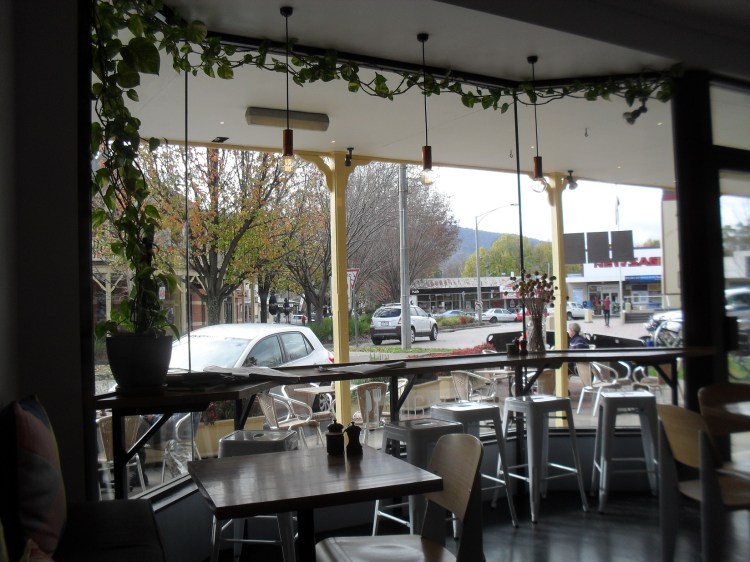
Café Bijou served a wide range of high fat, carb-loaded meals and well sweetened desserts.   Angus enjoyed the never-ending cups of coffee served by the eighty year old waitress Dita.  Her hands had started to shake but she didn’t spill their coffees.
“Dita, you’re a living treasure,” said Angus.  He took a swipe at her apron bow as she ambled away.
“Ah, ha,” Dita crowed, “you never could hit me backside.”
“Don’t know why––it’s broad enough,” said Angus in an aside to Steve, who hung his head and started tapping on his phone.  Angus handed the menu to him.  “I bet you’ll check which sandwiches have the least amount of red meat.”
“Do you have the slightest idea what cholesterol is?” asked Steve.
Angus ignored him and leaned over to take a newspaper off the top of a bundle.  “Same stories, just a different way of writing ‘em.  If sporting heroes stopped screwing up their lives, the media would be stumped for ideas.  Look, one of them died from a health-nut overdose.”  Steve rolled his eyes.
As they were leaving, the treasurer of the bowls club halted Angus in the doorway, asking for a donation for their sponsored charity.  Angus obliged but the chitchat got to him.  Shifting his weight from foot to foot, he said “I’m going shopping with my boy Steve.  He’s pretty busy these days.  Every moment counts.”  With apologies, he pursued Steve’s figure down the street, heading in the direction of the supermarket, his least favourite place.
Fancy had been asleep in the car but woke when she heard their voices returning.  They loaded the grocery bags into the boot.
“We’ve got time to look at a new filing system,” said Steve.
“Let’s do it another time.”
“It would help keep your records more organised, Dad.”
“It’s just how I like it,” said Angus and slipped a dried treat to Fancy.
Once on the road, they travelled in silence until Angus saw Steve glance at him in a melancholy way.
“The doc said my new pills are working just fine,” said Angus, aware that his illness hung between them, an unseen yet active enemy.  “I don’t have another appointment until next month.”
Steve nodded. “Good.”
Angus didn’t add that the surgeon had said he may not be allowed to drive again.
He watched Steve negotiate a corner.  “You’re a good driver, Steve.  Shame I never taught you how to drive a ute across a furrowed paddock.”
“I was too young.  Then the farm was sold.”  Steve toyed with the digital controls on the dashboard.  “You did more for me in other ways.”
After awhile, Angus said, “Can we take a different route home?”
“That sounds ominous,” said Steve but obliged by turning off the main highway.
The rural landscape was sparsely treed with very few farm buildings.
Without warning, Angus said “Stop!”  He asked Steve to pull over outside an old barn-like warehouse with an adjoining timber yard.
“I reckon we could make our own filing cabinet, don’t you?” said Angus.

Gretchen Bernet-Ward

Bright Cherry Walk Cafe 01
Cosy

Council Meeting


IMG_0078
Happy
Lightning Bolt
Sad

REPORT

It is going to be an uncomfortable meeting.  The aluminum-lined tin roof of the old scout hut has Christmas lights still hanging from the beams but no ceiling fans.  In the slowly increasing heat, city council employees stand around fanning themselves with official paperwork, sweat running into the collars of their creased jackets.

A gathering of various ages and nationalities, husbands, wives, old friends milling about, young children already fidgeting, and teenagers comparing notes about being awake so early on a Saturday.  And me, taking notes for a writing class.

My brief:  Go to an unusual place and observe people and surroundings then write about it.

I tread the worn linoleum flooring, past bare walls, seeking a vacant chair.  Instead being lured by chilled water jugs, beaded with droplets.  The moisture runs onto trestle tables covered with plastic cloths and neatly stacked glassware.  On a corner table, ignored, a tea urn, china cups and sugar.  “Too hot for a cuppa,” hisses a woman “but a biscuit would be nice.”  No such luck, it looks like it will be all business.

I chose this council meeting, billed as a Community Centre Public Consultation, hoping for a good cross-section of individuals.  The focus is an old disused council depot just up the street from the scout hall which is ripe for redevelopment.  Possibly a venue for arts and crafts, retired folk or out-of-work men with carpentry skills.  Doesn’t sound too threatening but you never know with hot tempers and hotter weather.

There are not enough white plastic chairs so a frantic search gets underway to find more seats for late arrivals.  By now, attendance hovers around 45 humidity-affected people.  Craggy old veterans, highly-perfumed women, groups in casual shirts and shorts, retired types perhaps looking forward to the proposed construction.  One woman commands attention with a loud voice, passionate about protecting her home from noise and extra traffic.  A male voice tells her “It hasn’t started yet so shut up.”

Registration sheets are handed around and duly completed, information leaflets handed out, a welcome speech, introductions all round and the meeting starts.  The Councillor and various council departments take turns talking about the proposed community centre site and how it will benefit the general public.  A white board and black pens are used to draw proposed plans, stressing that existing trees will remain and more planted.

I put my reading glasses on as a slide presentation illuminates but some gruff local residents butt in with irrelevant queries.  A young, flushed council assistant is hassled by senior homeowners out to protect their land values, citing added burdens on the already strained infrastructure.  “Traffic is bad enough now, this street can’t cope with extra cars.”  And “If an event was on, numbers would treble and we couldn’t get out of our driveways!”  There is a smattering of applause and a red-faced toddler starts to cry.

The Councillor is getting agitated, stern faced and unhappy about these interruptions to her pet project.  She rises, retorts in a firm, concise manner “Questions and answers will be held at the end of this session.  Please refrain from interrupting” then she sits down and furiously scribbles a note.

Feeling overheated and drowsy as the meeting drags on, I’m shaken from my lethargy by an unusual break in the proceedings.  Oh dear.  A plus-size young lady on a wobbly plastic chair is starting to slip.  Slowly, her chair sinks as the legs buckle and she gracefully slides to the floor.  Plop!  The Council officials gasp as one.  Embarrassed, she rolls over and stands up.  Everyone is fussing, offering her sympathy and cold water.  The weakened chair is quickly replaced and a sturdier one supplied.

More words, blurring in, old ground is covered then comes audience input time.  An outpouring of emotion from local residents, more fervent than factual, practical comments are overruled by zealous objections.  Limp council staff organise the tables and chairs into groups and hand out sheets of butcher’s paper and pens for the audience to scrawl down comments about traffic, parking issues and the type of structure they would like to see near their homes.  I don’t attempt a drawing, unlike the person next to me who is lavishly embellishing a castle-like structure.  Hardly acceptable but she is about six years old.  My hand melts the thin paper and the felt-tip pen smudges as I write a couple of comments.

The Councillor stands, looking strained, and addresses the gathering with a formal thank-you.  Her politeness is wasted.  It’s time to go and already people are moving towards the rear doors.  Outside the air is heavy with the smell of eucalyptus.  I fold my notes, not looking forward to my hot car and a long drive home.

AFTERWORD:  Jump ahead in time, eight years to be precise, and the derelict sheds are revitalised and re-purposed into a community centre, a thriving hub for group activities.  Men’s Shed displays are held yearly, artisans can be commissioned for special projects.  The perceived threat to peace and tranquility did not materialise due to sensible planning and a carpark.  Feathers were hardly ruffled … unlike the storm brewing over old homes being demolished and their sites redeveloped for high density box-like dwellings.  Now that really will affect their suburban infrastructure …

Gretchen Bernet-Ward
Community Connection
People Power

‘Breakfast With The Borgias’ by DBC Pierre

Bookcover DBC Pierre 03
Author interview March 2011 http://www.thewhitereview.org/feature/interview-with-dbc-pierre/

Correct thinking and clear vision are applied to wunderkind Ariel Panek, a computer scientist and associate professor but he is powerless when heavy fog sees him stranded overnight in the rambling, dilapidated Cliffs Hotel on the Suffolk coast.  Without connectivity, Ariel is tormented by the “no network” signal because he is overdue to talk at a conference in Geneva where he will meet his undergraduate girlfriend Zeva Neely.

Meanwhile the odd hotel staff and weird guests are making Ariel feel uncomfortable.  A bizarre set of circumstances conspire to prevent him leaving the hotel.  He must fend off unwanted attention, cut through the Borgia family secrets and subterfuge, and try to battle his way back to normality.

Reclusive, modernist Booker prize-winning author DBC Pierre has loaded this eerie Hammer Films-inspired novella with his trademark blend of social, scientific and spiritual matters.  Gradually the layers are peeled back to reveal the chilling truth behind this unsettling tale.

Gretchen Bernet-Ward

Reviewer Notes:
1.  The woman in the story who shares my first name is definitely not me!
2.  If you are reading this, Peter, I’d love you to autograph my copy of the above.
3.  My review of “Release the Bats: Writing Your Way Out Of It” by DBC Pierre.
4.  Synopsis quotation: “You can be insecure and be a writer.  You can be unsuccessful and be a writer.  You can be a bad person and be a writer … You just have to write.  That’s where it gets tricky”.

Bookcover DBC Pierre 02
Writer’s Guide

Jessica Blair is Actually Bill Spence

Yorkshire Country Lass
Young Lady

Historical romance author Jessica Blair was unmasked as 93 year-old British grandfather Bill Spence.  In the past, female writers like Charlotte Brontë had to adopt male pen names in order to get their books published. But the tables were turned for former war hero Bill Spence after he wrote a series of romance sagas.

The grandfather from Ampleforth, North Yorkshire, was told his books would need to be printed under a feminine moniker if he wanted them to sell – and so his pseudonym Jessica Blair was born.

Bill has various genres published under another name but has written 26 novels under the female pen name.  In 1993, his first book was “The Red Shawl”.  In 2017 his current title is “The Life She Left Behind” about a young widow, with futures to secure for her two daughters, who is torn between remaining at her beloved estate Pinmuir in the Scottish Highlands or following the plans her deceased husband made to join his brother in America.  Hmm, that outcome could go either way.

My congratulations, Bill, on longevity in both writing and living!

Gretchen Bernet-Ward

Bill Spence Author
Bill Spence Authorhttps://www.jessicablair.co.uk/biography.shtml


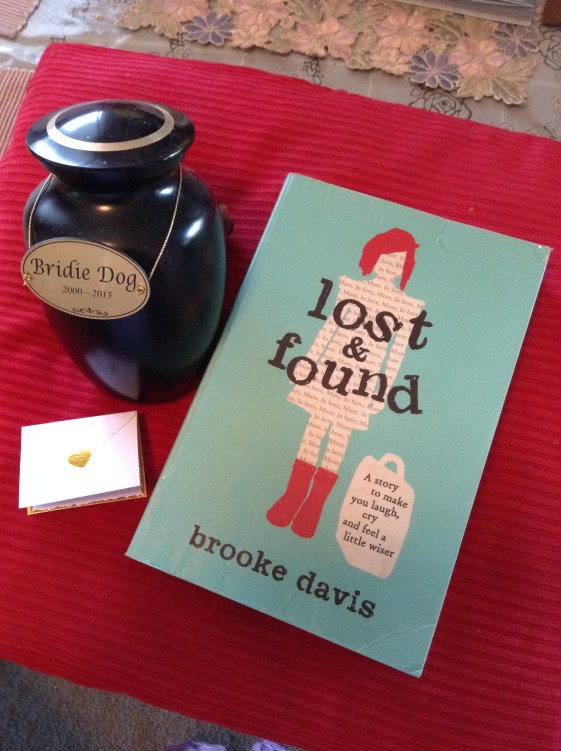
‘Lost and Found’ by Brooke Davis

IMG_3601
Millie

Millie knows that everything must die and keeps a record of assorted creatures in her Book Of Dead Things.  Sadly someone close to her becomes a dead thing too, which causes her mother to do something wrong.

Since Agatha’s husband died, she never leaves the house and shouts at people in the street as they walk by her window.  Until she sees Millie across the street.

Karl has lost his beloved wife and just moved into an aged care home.  He feels bereft as he watches his son leave.  Then he has a light-bulb moment and walks out in search of something.

All three are lost until they find each other and embark on a very unusual journey of discovery, reconciliation and acceptance.  A book with sadness, humour and eye-opening revelations as seven year old Millie Bird, eighty-two year old Agatha and eighty-seven year old Karl slowly but surely reveal what lies deep within their hearts.

Lost And Found is the debut novel of Australian author Brooke Davis which caused a literary sensation at the London Book Fair and sparked a bidding war overseas.  Davis, who suffered a deeply personal loss, said her ideas coalesced during a long train trip to Perth “A lot of the plot in my novel is based around that trip across the Nullarbor,” Davis said.  “The whole novel I think became a process of me trying to work through that loss.”

It is not written in the conventional manner, it does take a couple of pages to assimilate, but then this is half the book’s charm.  The funny bits are outrageous, the sorrowful times brought tears to my eyes especially reading about the older characters, and the outback backdrop is superb.  Millie is a delight throughout the road trip, a trip which is illogically undertaken yet surprisingly exciting.

The trio endure a bumpy ride but it comes out loud and clear that You Are Never Too Late and You Are Never Too Old.  I give it 5-star rating and hope you agree.

Gretchen Bernet-Ward

Emily Brontë Overview

Wuthering Heights Romance?

Yorkshire Country House 03
Homeward
I was a huge fan of the Brontë sisters, Emily, Anne and Charlotte.  Now I’m older, wiser and had a couple of love affairs, I see that their work, in particular Emily Brontë’s novel “Wuthering Heights”, reflects their own thwarted love lives.

Due to society, etiquette, the parsonage, limited opportunities for women in 1847, and through no fault of her own, Emily Brontë was greatly restricted when it came to writing about doomed male/female relationships.  To me, “Wuthering Heights” mirrors a lack of follow through, this inability to write a believable mental and physical connection between two people doesn’t come about because there’s no inherent knowledge behind it.  Although it could be argued that it’s a fictitious story, even in her sheltered life as a clergyman’s daughter, I think the themes of domestic upheaval, male aggression and marrying for prestige was something she may have encountered.  One man I almost felt sorry for in the novel is Edgar Linton, the second-best husband with good prospects.  To quote from Catherine “Whatever our souls are made of, his (Heathcliff) and mine are the same, and Linton’s is as different as a moonbeam from lightning or frost from fire.”

Nevertheless, I have re-read this novel and could just about smack the protagonists heads together and say “get real, guys!”  If I were Catherine I would have stayed well away from Heathcliff, walked off without a backward glance.  Either that or suggest he has counselling; obsessive and vengeful man that he is.  No, wait, they both needed counselling!  Catherine certainly had issues. She says of Heathcliff “I’d as soon put that little canary into the park on a winter’s day, as recommend you to bestow your heart on him!…He’s not a rough diamond, nor a pearl-containing oyster of a rustic; he’s a fierce, pitiless, wolfish man” but she doesn’t heed her own warning.  To add to the angst, her brother Hindley is a nasty fly-in-the-ointment with his uppity treatment of adopted Heathcliff.  Gotta have someone to abuse, hey Hindley, especially Heathcliff with his uncontrollable gypsy blood, right?

The sense-of-place is strong for me, dark, brooding Yorkshire, and I shiver when reading some of the almost poetic descriptions.  But from my viewpoint, to say Catherine and Heathcliff were passionately in love is overstating their affair when they caused each other so much misery.  Their families are destroyed and their agonising love does not redeem them in the end.  This novel is billed ‘romance’ but for me, from my modern perspective, it seems a turmoil of mixed emotions between two foolish individuals who should have known when to call it quits.

It’s a pity that Emily Brontë died young and this is the only book she wrote, published under the pseudonym of Ellis Bell.  Today we know that she could have elaborated and perhaps gone beyond the ill-fated Earnshaw family.

Yorkshire Country House 07
Dales

I want to rate “Wuthering Heights” highly but even allowing for the fact it was written in another time, another era, I can’t bring myself to go past three stars.  Don’t let me put you off, if you are into Gothic torment and unrequited love, this is the book for you!

Gretchen Bernet-Ward

Yorkshire Country House 02
Heights
Yorkshire Country House 08
Farm

Writer’s Self-Help

My Reading Tray 05
Afternoon Tea

Over the years I have read a handful of self-help books aimed at emerging authors, including the iconic Artist’s Way by Julia Cameron and famous memoir On Writing by Stephen King, but recently I came across these two quite diverse publications which really gave me a nudge in the right direction.

“Use Your Words” by Catherine Deveny 2016 published by Black Inc.
“See Me Jump” by Jen Storer 2016 published by Girl And Duck.

Catherine Deveny’s book is written in plain straight forward language, and she gets right to the heart of the matter.  There’s no place to hide once the momentum starts rolling.  Be warned, this book is for adults.  Catherine uses impolite language and bad manners to push you forward, sometimes against your will.  Then you see that glowing light at the end of the tunnel, er, book.  Well worth reading this boot-camp style book.

Jen Storer’s book is slim yet informative with small sketches dotted through the pages.  Her style is easy, encouraging, friendly and humorous.  It’s a book for adults but those with a yearning to write good books for children.  Note the chapter 4 heading “Don’t let adults fix your character’s problem” which is a must for kids literature.  Many of Jen’s sentences make memorable quotes, my favourite “Be brave. Don’t wait to create.”

Gretchen Bernet-Ward

Catherine Deveny Writer
Self-Help
Jen Storer Writer
KidLit

Wobble Jellyfish

Pirate Ship 02
Wrecked

Wobble Jellyfish was wobbling along under the sea when
Swoosh, whoosh, splash!
A wave stranded her on a sandy beach.
It was midday and it was hot.
A seagull eyed her suspiciously.
Wobble Jellyfish hardly had time to take a breath when
Swoosh, whoosh, splash!
She was slopping along in the bottom of a plastic bucket.
Wobble slowly blubbed her way up and peeked over the side.
The water park was full of wet, squealing children.
She saw a huge swimming pool ahead and got ready to slip overboard.
With a squeeze of her tentacles, she oozed up and over the edge.
Plop!  She missed the swimming pool.
This water was cold and bubbly and swirled Wobble up, up and over.
The fountain tossed her around and around like a washing machine.
Wobble waved her tentacles helplessly then plopped back into the water.
She grasped hold of a long purple ribbon dangling in the foam.
The person wearing the long purple ribbon stood up.
Aagh!  The young girl swung her long plait to get rid of Wobble.
Wobble soared high and fell with a splat on the hard ground.
A water canon spray hosed Wobble off the pathway into the gutter.
The force of the water swished her straight down the stormwater drain.
It was dark and stinky and slimy in the drain.
Wobble wrapped her tentacles tightly around her body.
“Oh, ooh, oooh, I want to get out of here,” said Wobble Jellyfish.
Many empty water bottles floated past and she grabbed one.
It was a bouncy ride, up and down through the pipes.
The bottle got jammed between the bars of a stormwater grate.
Wobble sucked in her jelly belly and squeezed through.
Now the water was quieter and flowed more smoothly.
Grass lined the bank and the sun shone on a long stretch of clear water.
It made Wobble feel relaxed but the water was not salty.
She longed for the tang of the ocean, the surge and swell of the current.
A boy’s face loomed above her and another plastic bucket scooped her up.
The ride was sloppy and jerky hanging from the handlebars of his bike.
Wobble heard lots of voices talking and saw cheerful colours flash overhead.
Swoosh, whoosh, splash!
Wobble was sluiced over the side of the bucket into a square glass tank.
The first thing she saw was another jellyfish.  He was very small.
“Hi,” he said.  “I’m Irukandji, or Iru for short.”
Wobble thought his smile was unfriendly.
She didn’t like his long, quivering tentacles and backed away.
Something sharp poked her side and she wobbled around to look.
It was a large starfish.  He said “My name is Spike.”
Wobble slubbed and blubbed “I’m not surprised.”
She introduced herself and peered closely at Spike “You’re a beautiful colour.”
Spike showed her around the glass tank.
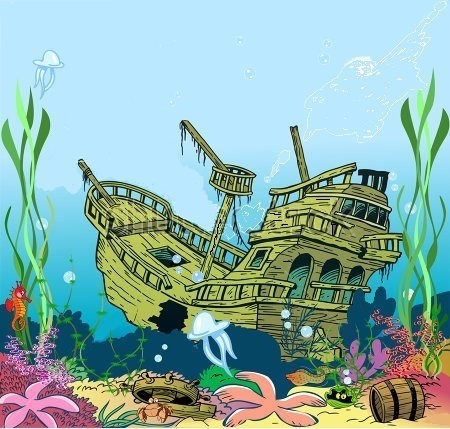
He was proud of the rocks and the seaweed and a tiny pirate ship.
“But they are not real,” said Wobble.
“They are to me,” said Spike.
That made Wobble cry but nobody saw her tears because of the clean tap water.
“We have to get back to the sea!” she said.
Wobble saw blurry people lift the fish tank “Up ya go!” and “In ya go!”
The light dulled as a heavy canvas was pulled over the back of the ute.
Water slopped everywhere as the old ute bucked back and forth along the track.
The canvas was lifted and Wobble, Spike and Iru blinked at the bright sun.
The tank was hoisted up and carried along the beach towards tall cliffs.
At the base of the cliffs, the blurry figures stopped.
Wobble could see large rock pools and waves splashing over them.
Spike and Iru were very quiet, hardly daring to move.
Wobble rose to the top of the fish tank and blub blubbed excitedly.
The fish tank moved again, closer to the waves and the sea.
A huge sparkling wave rose up, curling and churning towards the rock pools.
The blurry figures leaned over and tipped the tank.
Swoosh, whoosh, splash!
Wobble, Spike and Iru caught the wave and rode it high into the air.
They tumbled and mingled with the fresh, cool, salty water.
Whoo hoo!  shouted Wobble and Spike and Iru.
Seaspray carried them higher and higher until the wave rolled back into the sea.
Briefly they touched, careful of Iru’s stingers, then turned towards home.
Wobble Jellyfish had the tiny pirate ship wrapped in one of her tentacles.
She was going to show it to a real sunken pirate ship.

Gretchen Bernet-Ward

Jellyfish 03
Wobble
Star Fish
Spike

‘The Empty Beach’ by Peter Corris

Peter Corris Cliff Hardy Banner 01
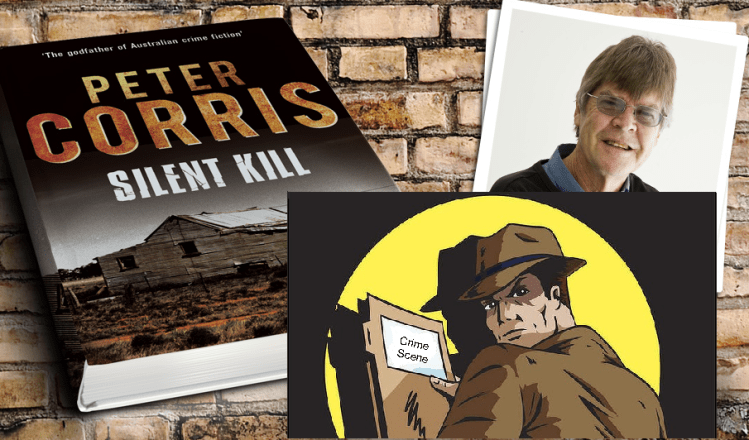
Author Peter Corris

“The Empty Beach” is about private investigator Cliff Hardy’s routine investigation into a supposed drowning.  Beautiful client Marion Singer wants to find out the truth behind the mysterious disappearance of her wealthy husband John Singer.

The truth about John Singer, illegal trader and poker machine guru, is hard to find among the drug addicts, alcoholics and ashrams of Bondi Beach in Sydney NSW.  Not to mention the hindrance of PhD rich girl Ann Winter and creepy jailer Mary Mahoud.  Hardy soon finds himself fighting for his life when his search for the truth involves some nasty venues controlled by an underworld of violent people and lead by kingpin Freddy Ward who does not appreciate his inquisitive nature.

Being an earlier novel, Hardy is ex-army, a law student dropout, insurance company investigator turned private eye who lives by a solid set of values.  And he’s seen many gruesome murders in his time.  Throughout Hardy shows understanding and tolerance of people from all walks of life, he embraces the city sprawl and the rural ethos, and doesn’t start a fight.  But he can be tough and not play nice when it comes to his own survival.  He has a habit, when in a tight situation, of jesting at the bad guy’s expense and consequently coping a beating.  This is well illustrated in the chapter where Hardy is imprisoned inside a squash court.

Crime Scene Tape 08

My suggestion is read “The Dying Trade” the first Cliff Hardy book in Peter Corris 42-book series even though a later book “The Empty Beach” was made into an Australian movie in 1985 and remains his archetypal crime story.  Based on Peter Corris 1983 novel of the same name, this movie starred Bryan Brown as Cliff Hardy and such notables as Belinda Giblin, Ray Barrett, John Wood, Joss McWilliam and Nick Tate as the ill-fated Henneberry.

While you may like to read the more current books like “Silent Kill” (above) the earlier ones are classic Australia in the 80s and 90s and my favourite is “Wet Graves”.  They have changed with the times, think internet and iPhones, and contain physical changes to Cliff Hardy at the same time they happened to the author.  For example, smoking habits or the triple bypass heart surgery Peter Corris underwent and kindly passed on to Cliff Hardy.  The relationship breakdowns do not appear to apply too much to real life.  Corris didn’t pass on his diabetes, however, the easy-going narrative speaks volumes, both men having a genuine affection for their family, the city of Sydney, and its diverse citizenry.

Now I’ve got that out of the way, let me say that one of the most enduring (and for me, best loved) of Australian crime fiction characters is Cliff Hardy.

Fast forward to future ‘Spoilers’ and Hardy is deregistered and operates on his own initiative but still maintains a rock-solid sense of fair play in the 21st century.  To date, Hardy’s longtime friend Frank Parker is now a retired senior police officer and married to Hilde, Hardy’s ex flatmate.  The reader watches this friendship evolve through a chain of novels and it’s just as interesting as following Hardy’s love life and family expansion.  Although he still holds a torch for his late ex-wife Cyn, there’s even grandchildren.  And there’s cameos from characters like tattooist Primo Tomasetti with his graphic artwork and sleazy patter.

Cliff Hardy represents the kind of bloke many law-abiding citizens would like to have on their side, a blemish yet dependable man who’d share a joke or reminisce over a cold beverage.  When it comes to Aussie mystery solving, Hardy gets my vote every time.

Gretchen Bernet-Ward

POSTSCRIPT:  Peter Corris, journalist, historian and author of the best-selling Cliff Hardy detective series, died on 30 August 2018, aged 76.  Over 37 years, from 1980 to 2017, Corris wrote 42 Cliff Hardy novels making it the longest running series in Australia.  The final installment is titled ‘Win, Lose or Draw’.

Cliff Hardy booklist https://www.allenandunwin.com/authors/c/peter-corris
Author website http://www.petercorris.net/petercorris.net/Home.html

Empty Beach
Beachside – Vale Corris and Hardy.

Remnants of Mary

Arm Chair 03
Mary’s Chair

The old lady across the road died alone but at a good age after a good life, well, that’s what the family said as they stripped her house of all its fixtures, fittings and 1960s furniture.  They singled me out from the group of neighbours on the front verandah and asked me if I would like anything from Mary’s junk, er, they cleared their throats, her mementos and stuff.  I raced home to my mother and being politely greedy I raced back with her message that we’d take anything they didn’t want, and also Mary was a lovely old gal.  She was too, she used to worked at the university and was clever, always keeping up with radio bulletins and had newspapers delivered from London and New York.

Mrs Anglesea and her toddler were standing at their front gate, wiping eyes and sniffing about poor Mr Roberto gone, gone forever.  No more bark-bark said the toddler.  Mary’s terrier Mr Roberto had been bundled into a pet carrier and taken to the local vet.  The carrier came back empty.  Even my mother blinked at that.  But to help the family with their clear-out, she gave them a load of flattened cardboard boxes from a high-end removalist company.  My mother didn’t know they cost money so it wasn’t until she saw them in the back of some bloke’s ute did she twig that they’d sold them on.

So, it was with the feeling of recompense that we were offered, and graciously received said my mother, a framed drawing of a grey English village, a chrome-legged brown laminated table and an old armchair.  I was pretty annoyed we hadn’t been given the choice of some of the good things like her TV or bookcase or favourite figurines but I had already spotted a woman trundling them out to her white van.  I knew she sold stuff on eBay and sent them a million miles away.  I wondered if Mary had followed her belongings or left her soul in the house like my mother said she would have . . .

AUTHOR NOTE This story has been temporarily withdrawn  . . .  it was rewritten, submitted, and subsequently awarded Third Place (and won a cash prize) in a short story writing competition with the option for publication.

Gretchen Bernet-Ward

Old Woman Sitting Reading