Review ‘A Very Unusual Pursuit’ by Catherine Jinks

Book review

Birdie McAdam is a bogler’s assistant, a stout defender of Alfred Bunce and his unusual profession.  The ‘unusual’ relates to luring and eradicating child-eating bogles by using Birdie as bait.  Her songs sometimes quaver when a foul bogle monster leaves its lair but she holds firm.  A spear and split second timing is needed and old Alfred is the man for the job.

Before reading Catherine Jinks adult novel ‘Shepherd’ I read her children’s trilogy City of Orphans.  These stories captured my interest from the first page and held it to the last.  Following the adventures of young orphan Birdie McAdam, a lively, focused girl with a beautiful singing voice, I soon blended into the damp, grimy streets of 1870s London.

After the messy demise of a chimney bogle in a fancy parlour, the story kicks up a notch with overlapping events; Fagan-like Sarah Pickles with her young thieves and no scruples; well-to-do Miss Eames with an interest in mythology and rehabilitating young Birdie; and evil Dr Morton, a man with a heart as ugly as a bogle.  And, of course, the markets and docklands of London.

I love the levels of intrigue, grim deeds, and disagreeable behaviour which surround Birdie and Alfred.
As true protagonists, they rise to every challenge.
Birdie has entertaining friends, although she wouldn’t admit that to rascals Ned or Jem.
These lads get to shine in books two and three.
Characters are clearly and consistently written.
Together they overcome hardship and show concern for each other.
There is great strength of purpose when adversity strikes.

The fast-moving chapters are vividly written and although I am not the target audience, each time the tension rose I held my breath.  This plot builds and moves forward with fortitude, the second book in sight.  All three books are well worth reading, and while the mood may get darker and the bogles may get messier, the sequence of events lead to a very satisfying conclusion.

Gretchen Bernet-Ward 

My postscript

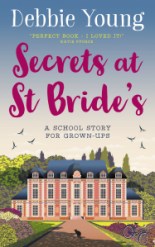
Poetry Clipart 08Bookcovers, like those beauties above, hold a certain fascination for me.  Way back I did a blog post about it.  In this instance, the publication of different titles and different artwork in overseas countries let me down.  They are nothing like the bookcovers shown here, their titles don’t capture the atmosphere of the era nor do the illustrations recreate how the bogles are described.  Gotta love marketing.  GBW.


About the author

Catherine Jinks, Australia (b.1963)  http://catherinejinks.com/

Catherine is a four-time winner of the Children’s Book Council of Australia Book of the Year award, and has also won a Victorian Premier’s Literature Award, the Adelaide Festival Award for Literature, the Ena Noel Award for Children’s Literature and an Aurealis Award for Science Fiction.  In 2001 she was presented with a Centenary Medal for her contribution to Australian Children’s Literature.

Catherine Jinks Author Photograph 02Catherine Jinks was born in Brisbane and grew up in Sydney where she studied medieval history at the University of Sydney.  She became a writer because she loves reading, as well as history, films and television.  She gets her ideas for her novels from everywhere, particularly good science fiction films.

The author of over thirty books for children and adults, including the award-winning Pagan Chronicles series, Catherine writes whenever she gets a spare moment, and could write for eight hours straight if she had the chance.  She lives in the Blue Mountains NSW with her Canadian husband and daughter Hannah.

Series

City of Orphans trilogy

  1.  A Very Unusual Pursuit (2013)
    or  How to Catch a Bogle
  2.  A Very Peculiar Plague (2013)
    or A Plague of Bogles
  3.  A Very Singular Guild (2013)
    or The Last Bogler

Pagan Chronicles

  1. Pagan’s Crusade (1994)
  2. Pagan in Exile (2004)
  3. Pagan’s Vows (2004)
  4. Pagan’s Scribe (2005)
  5. Pagan’s Daughter (2006)

Allie’s Ghost Hunters

  1. Eglantine (2002) – very quirky story.
  2. Eustace (2003)
  3. Eloise (2005)
  4. Elysium (2007)

Genius

  1. Evil Genius (2005)
  2. Genius Squad (2008)
  3. The Genius Wars (2010)

Winter in the Subtropics

IMG_20200601_173006
Cold and frosty morning 2020 © Gretchen Bernet-Ward

In the depths of a July winter here in Brisbane, Queensland, I am sitting with a cold nose and knees, contemplating warmer weather.  Our winters probably seems mild to those countries with ice and snow.  We have misty mornings then clear blue skies and by lunchtime some clothing layers can be removed for a couple of hours before the cold creeps in again.

The issue is home heating.  Of course, I am not talking about the hermetically sealed grey boxes of the millennium.  This older house is built like thousands of others—for the heat.  We don’t have a fireplace, we don’t have insulation, we don’t have ducted heating, but we do have reverse cycle air-conditioning.  Problem is the unit swirls the air around at the edges so it never feels warm enough.

Brrr!  This is where an old three-bar radiator and a portable column oil heater come in handy for three months of the year.

So saying, we human beings are a contrary lot—I enjoy the wintertime.

Winter is more conducive to a brisk walk before settling down to writing.  Cold weather calls for cosy pursuits.  In a hot, humid summer, it’s more a case of lying around gasping after foolishly thinking some physical exercise like gardening was a good idea.  The lush, rampant growth of a subtropical summer is a sight to behold but right now the garden lacks happy vegetation; the leaves are brown, the grass is sparse, the earth is hard and dry.

This morning the temperature is currently 8 degrees Celsius, the sun is shining but the air is freezing.  Well, maybe not.  We don’t really do freezing, more on the chilly side.  I am going to make a hot beverage and pull on an extra pair of socks.

Gretchen Bernet-Ward

IMG_20190626_091837
Cold winter, warm room © Gretchen Bernet-Ward

Pumpkin Chia Mini Muffins

IMG_20200617_181800
Pumpkin Chia Mini Muffins 2020

Following on from our large home-grown pumpkin and Grandma’s Pumpkin Scone Recipe, every cookery book containing a pumpkin formulation now comes under scrutiny.  Our most recent addition is Pumpkin Chia Mini Muffins.

Here’s the recipe if you feel like something tasty for lunch – with or without an accompaniment – and you can make them any size you wish!

Pumpkin Chia Mini Muffins

I N G R E D I E N T S 

80g ( ⅓ cup) Butter

1 Spring Onion, thinly sliced

2 Garlic Cloves, crushed

250g (1 cup) Pumpkin, peeled, seeded, coarsely grated

375g (2 ½ cups) Self-Raising Flour

½ tsp Salt

120g (1 cup) Cheddar Cheese, coarsely grated

2 tbs Chia Seeds

1 Egg, lightly whisked

310ml (1 ¼ cups) Buttermilk

Chia Seeds, to sprinkle

Butter/Condiment, to serve

M E T H O D 

Preheat oven to 190°C  (374° F)

Grease a 12-hole (80ml) Muffin Pan (or 2 x 12-hole Mini Muffin Pans)

Heat 1 tbs of butter in a medium flying pan over medium heat.

Add spring onion and garlic and cook, stirring 3 mins until spring onion softens.

Add pumpkin and cook, stirring 5 mins or until pumpkin softens.

Set aside to cool.

Melt remaining butter into a saucepan over medium heat.

Combine flour and salt in a bowl.

Stir in cheddar cheese and chia seeds.

Whisk egg, buttermilk and melted butter in a bowl.

Season with salt.

Pour the egg mixture over the flour mixture.

Add pumpkin mixture.

Use a large spoon to stir until just combined.

Spoon mixture into prepared pans.

Sprinkle with extra chia seeds on top.

Bake approx 20-25 minutes, depending on your oven.

Insert skewer to check, should come out clean.

Cool muffins in pan for 5 mins before turning onto wire rack.

N O T A T I O N S

Eat Pumpkin Chia Mini Muffins with soup, plain or with savoury topping.

Can be baked in muffin pans or paper patty pans for children.

Next time I would add corn or diced capsicum or chopped green herbs.

Using buttermilk seemed to make a difference.

Chia seeds taste is not very noticeable, but apparently is very good for you.

Gretchen Bernet-Ward

Draw-a-Soup Bowl
Pumpkin Soup

Wild Flamingos in Australia?

IMG_20200510_170134
Flamingos swamped by cheesecake topping 2020

Australia was once a continent graced by flamingos.  These tall pink birds are more associated with Africa and the Americas, but a long time ago they called Australia home.  For at least 20 million years, flamingos thrived on vast Australian inland lakes, until a drying of the outback ended their reign, perhaps a million years ago.

The Lake Eyre region in South Australia once had three species, more than Africa today.  Altogether Australia had at least six flamingo species, including the Greater flamingo – the main flamingo in Africa.  Australian museums have accumulated more of their fossils than of some regular Australian birds such as parrots.  At some sites their remains lay near those of outback crocodiles, dolphins and lungfish.

Flamingos are still regarded as Australian birds, for a very tenuous reason.  In 1988 a Greater flamingo dropped in on North Keeling Island, a remote Australian territory 2750km north-west of Perth, staying a couple of months.  Greater flamingos are found in Asia and southern Europe as well as Africa and this one had wandered over from India or Sri Lanka.

In Adelaide Zoo you could have seen the only flamingo left in Australia, a Chilean flamingo known warmly as ‘Chile’.  She was thought to have been imported in the late 1970s.  For quarantine reasons flamingos are now forbidden imports, which means that Australia is destined to become a flamingo-free zone unless another long-legged pink nomad wanders over from Asia.

FlamingoSource Australian Geographic by Tim Low February 6, 2017

More flamingo facts and fabulous photographs:
https://www.australiangeographic.com.au/topics/wildlife/2017/02/australia-was-once-full-of-flamingos/

Gretchen Bernet-Ward

Laugh in the Bath

IMG_20200508_143520
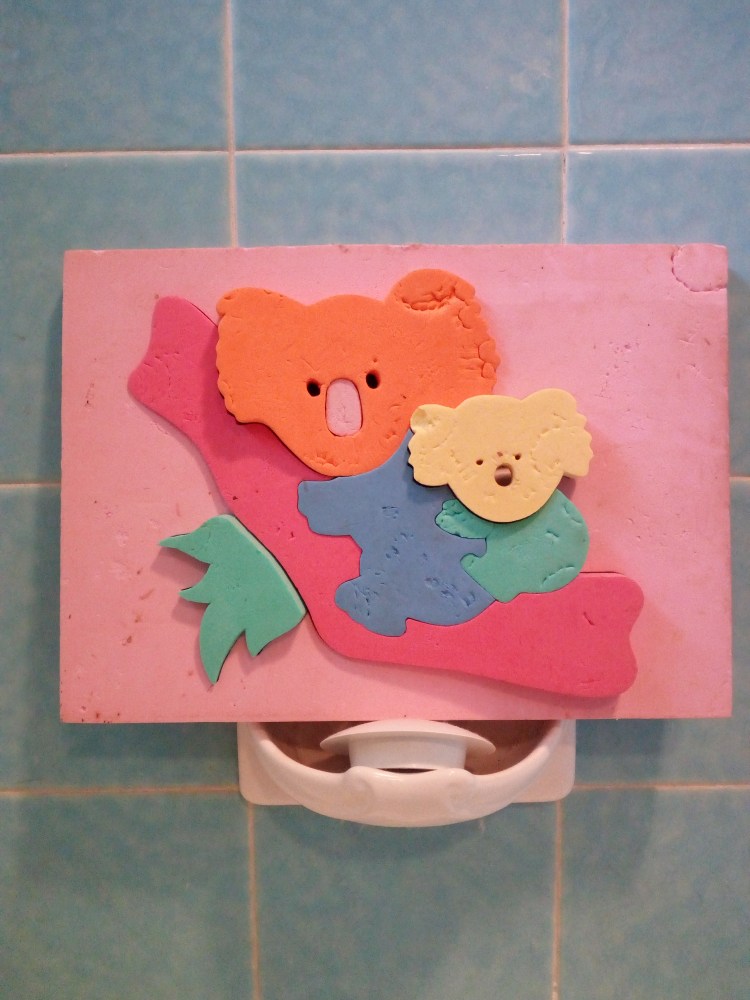
Aussie Koala bath toy 2020 © Gretchen Bernet-Ward

Bath Laugh 3

Sitting in my bath I heard a great big glug

Followed by a bubble followed by the plug

I must have pulled it out but I didn’t know

The water in my bath it began to go

It was getting lower way below my knees

I was getting colder and I began to freeze

I put a towel round me to try and get some heat

There I saw the plug lying at my feet

Then I picked it up off the bathroom floor

Put it back into the bath and filled it up once more.

Poem
by
William Worthless

“I like writing poems for everyone and try to bring enjoyment and make people feel happy after reading.”

March 2010 © William Worthless

More poems https://hellopoetry.com/william-worthless/

Raindrop

Winter Pumpkin Scone Recipe

IMG_20200606_160101
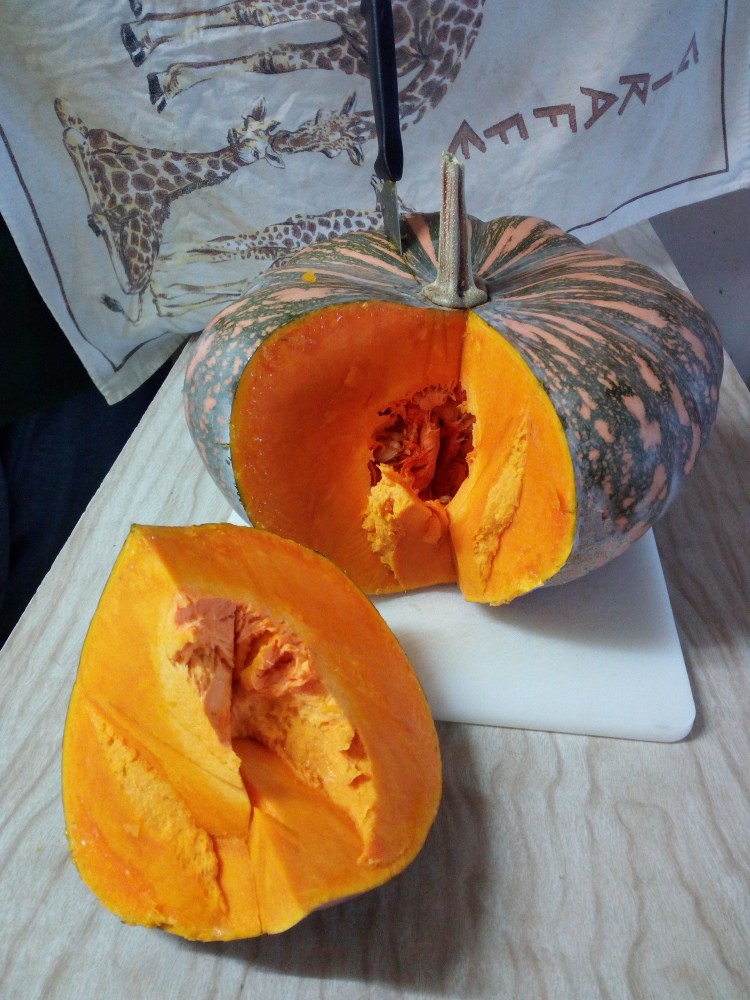
Home-grown Kent Jap Pumpkin ready for cooking – June 2020

Pumpkin scones are a traditional morning tea favourite in Queensland.  Unsophisticated yet delicious, these golden scones were much-loved by the late Lady Flo Bjelke-Petersen, politician and wife of former Premier Sir Joh Bjelke-Petersen, and she often baked them for public occasions.

Seen as tea-time treats, they are available by the half dozen in bakeries and displayed in the cookery section of annual shows and exhibitions.  For home cooking, pumpkin scones have stood the test of time due to their quick preparation and adaptability.  They can be eaten sweet with strawberry jam and whipped cream, or savoury with cheddar cheese and chutney.

For full flavour, pumpkin scones are best eaten warm from the oven, but they store well and a quick turn in the microwave gives them a boost on a chilly morning.

IMG_20200611_130000
Packed and ready for visiting family – June 2020

Grandma’s Pumpkin Scones

3 cups self raising flour

pinch salt

½ cup sugar

1 tablespoon butter

1 cup mashed pumpkin – cooled

1 egg

milk

Cream butter and sugar.  Add egg, add mashed pumpkin.  Sift in flour alternately with enough milk to make soft, light dough.  Pat out or roll on floured board to desired thickness.  Cut with round cutter.  Place on tray and brush with milk or lightly dust with flour.  Bake in a hot oven.  Serve warm; plain or with topping.

Above recipe is adapted from Jenny Purvis, “Kilmarnock” Clermont, Queensland.
Courtesy of “Country Hospitality: A Comprehensive Cookery Book” compiled by the Clermont Branch of Isolated Children’s Parents’ Association 1984 edition.

IMG_20200606_181544
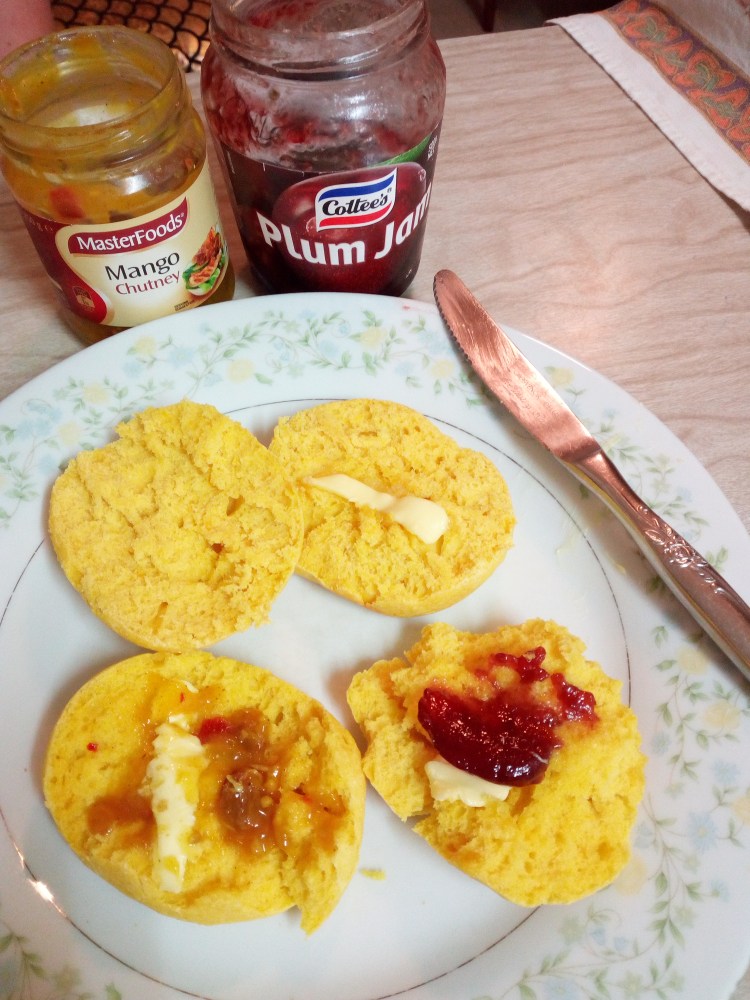
Plain, buttered, chutney or jam topping?

A prayer follows the foreword by former Executive Officer, Queensland Council ICPA, Mr E C Powne MBE, and reprinted below:

My Kitchen Prayer

Bless my little kitchen, Lord,
I love its every nook,
And bless me as I do my work,
Wash pots and pans and cook.

May the meals that I prepare,
Be seasoned from above,
With thy blessing and thy grace,
But most of – thy Love.

As we partake of earthly food,
T
hy table Thou has spread,
We’ll not forget to thank thee, Lord,
For all our daily bread.

So bless my little kitchen, Lord,
And those who enter in,
May they find nought but joy and peace,
And happiness therein.          Amen.


IMG_20200611_163708
Nature’s winter bounty brightens our day – June 2020

Gretchen Bernet-Ward


ADDENDUMKent pumpkin (also known as Jap pumpkin) has ribbed, grey-green mottled skin and golden yellow flesh.  This pumpkin is of the sweeter variety, perfect for pumpkin scones, salads and baked dishes.  Great mashed, roasted or steamed and mixed with a variety of sweet or savoury foods.  Pumpkin is an excellent source of beta carotene and contains dietary fibre, potassium, and vitamins C and E for good health.

Favourite School Story – Helen Hollick on Ruby Ferguson’s Jill Series

After reading two of Debbie Young’s Sophie Sayers mystery novels out of order, I decided to savour the series and start from the beginning with ‘Best Murder in Show’.  Debbie also writes St Brides, a British girls’ boarding school series for grown-ups, and in that vein she has interviewed award-winning historical and fantasy novelist Helen Hollick about her favourite childhood books.

Please read on…. Gretchen Bernet-Ward

Debbie Young's avatarDebbie Young's Writing Life

The fourth in my occasional series of interviews with author friends who love school stories

First in my own series of school stories for grown-ups
When I launched my St Bride’s series set in a British girls’ boarding school, I asked some author friends which school stories they’d most enjoyed when they were growing up and invited them to share their enthusiasm on my blog. So far I’ve run posts by Jean Gill talking about Anne of Green Gables, Helena Halme on Pippi Longstocking, and Clare Flynn on The Prime of Miss Jean Brodie – all very different books set in different countries: Canada, Sweden and Scotland.

Now at last it’s time for my home country to get a look in, as historical novelist Helen Hollick explains her passion for a classic English series: the Riding School stories by Ruby Ferguson.

Helen Hollick writes:

First in my own series…

View original post 1,502 more words

Shells and Summer Days

IMG_20200518_181650

I started to add tags to my photo and realised that most things associated with the beach start with the letter ‘S’ and I’d barely scratched the surface.  Sand, sea, swimming, shells.  I paused at shells because a sunbeam tinged my glass bowl of seashells which holds countless memories.

… I drifted away… the smell of sunscreen and the feel of sand sifting through my fingers… one day I will take those shells back to the ocean…

In case you missed my front page Photo Of The Week, below I have reproduced the wording which accompanied a close-up photo of my shell collection.  More scientific than personal but nonetheless I found it fascinating:


SHELLS are made of calcium carbonate, in the mineral form of calcite or aragonite.  Animals build their shells by extracting the necessary ingredients—dissolved calcium and bicarbonate—from their environment.  As the animal grows, its home—the protective shell that surrounds it—must get bigger, and so they grow their shells layer upon layer, creating ‘growth-bands’, or growth increments, within the shell.

“Some of these growth increments are visible on the external surface of the shell, while others are only visible in the internal structure.  But the interesting thing about the growth increments is that their width, or thickness, is affected by environmental conditions, like temperature.  Some growth increments are a reflection of tidal cycles, some show annual periodicity.

“So the series of growth increments within a shell are essentially a record of the animal’s lifetime and, similar to the study of tree-rings, some scientists study them to make interpretations about the environment where that animal lived and grew.  The oldest known individual animal lived in a shell—a specimen of the shellfish Arctica islandica has been documented to be 507 years old.”

For colours, shapes, biodiversity visit Academy of Science
https://www.science.org.au/curious/earth-environment/sea-shells

FOSSIL collector, dealer and palaeontologist Mary Anning (1799 –1847) was the inspiration for the tongue twister “She sells sea shells by the sea shore” from the original song written in 1908 by Terry Sullivan relating to Mary Anning’s beach-combing lifestyle.  Anning is known for the important finds she made in Jurassic marine fossil beds in the cliffs along the English Channel at Lyme Regis in the county of Dorset in Southwest England.

The fascinating truth behind the old tongue twister
https://www.littlethings.com/she-sells-seashells-meaning

Gretchen Bernet-Ward

IMG_20200518_182427

Shortbread Surprise in Self-Isolation

When you are stuck at home for weeks on end, the stuff and junk around your home can become unbearable.

It does at my place.

Shelves seem crowded, cupboards appear to bulge, clothes hang on available doorknobs, and too many cardboard boxes hold bits and pieces of my memories.

IMG_20200518_154505

During my Covid-inspired clean-up, I unearthed one particular item decades old.

DRUM ROLL PLEASE, MAESTRO…


IMG_20200504_105537

McKENZIE’S RICE FLOUR SHORTBREAD RECIPE

225g plain flour
1 pinch salt
115g rice flour
115g castor sugar
225g butter

Sieve flour, rice flour, sugar into basin, rub in butter and knead until smooth paste formed.  Turn on to floured board, make shape or shapes as desired, prick with a fork.  Place on cold greased slide, cook in a slow oven ¾ hour to an hour, until a pale brown.

MY FATHER’S FAVOURITE SHORTBREAD RECIPE

Reproduced in original style from my mother’s PWMU Cookery Book 1976
Printed in Australia by Simpson Halligan Co Pty Ltd
Distributed by Jolly Book Supplies, Brisbane
Twenty-first edition revised and enlarged with over 200,000 copies issued

Mix 227g (1/2 lb) butter and 113g (1/4 lb) fine white sugar or icing sugar; add pinch salt and .45kg (1 lb) plain flour; knead all well together; roll out to the thickness of about half an inch, cut into rounds or finger lengths; prick with fork.  Note 340g (¾ lb) flour and 113g (1/4 lb) rice flour may be substituted for .45g (1 lb) flour.  Bake in slow oven about 40 minutes until fawn colour.

IMG_20200528_150249

Bought new rice flour

Put the kettle on

Time for a cuppa!

Gretchen Bernet-Ward