Bad to Worse ‘Good Girl Bad Girl’ by Michael Robotham

I haven’t written a negative book review for a while but I need to express my rebellious thoughts on “Good Girl Bad Girl” by Michael Robotham.  I would have liked to give this seasoned author a pat on the back, but it won’t happen.  He (and dare I say his publisher) goofed up, disappointing me with this latest offering.  As a supporter of the Australian writers scene, it pains me to say I have even compiled a list of unwanted gaffes.  And I’m disillusioned by such a rudimentary storyline, further dragged down by Robotham putting believability ahead of plausibility.

First, I’m not keen on psychologist Cyrus Haven, with his generic nightmares and ridiculous spontaneity when it comes to young Evie Cormac, aka Angel Face.  Plots, eh, you need to drive them forward.  Evie lived a feral existence in a secret room with a dead body outside the door and after rescue she was incarcerated in Langford Hall, Nottingham, a secure children’s home.  Being of indeterminate age, she appears mature yet lapses into teenage obviousness as inexperienced Cyrus soon finds out.  Her dubious, er, gift, is an attempt at originality until Robotham trots out tropes and formulaic predictability.

Maybe hackneyed phrases could be revised in another edition, do a bit of showing instead of continual telling, and jumping in and out of a character’s head doesn’t necessarily strengthen the story or boost the tension.  In “Good Girl Bad Girl” the title hints at naughtiness and a girl dies yet the suspects aren’t new, just the usual line-up.  When it comes to fiction, I don’t think crime scene minutia or yet another clichéd pathologist/priest/politician enhances a plot.

“Good Girl Bad Girl” is a ropey book launched into the world too soon.

I noticed these gaffes—

(1)  Cyrus Haven does not own a mobile phone.  He only has a pager and uses a telephone at the local shop, even DCI Lenny Parvel has to track him down while jogging.  How come when he’s at home looking at DVDs of suspect Craig Farley, he has a bright idea and “I punch out her number.  She doesn’t answer.  It goes to her messages. Beep!”
(2)  When Cyrus goes to an old church to talk to the murdered girl’s mother, he can’t get in the front doors because they are locked but when the priest asks him to leave he exits via the front doors.
(3)  Poor proof-reading, fluctuating spelling like practice/practise, repeat words not edited out.
(4)  Flight risk Evie’s electronic tracker on her ankle must vaporise.
(5)  Evie’s POV couldn’t hear both sides of that phone conversation.
(6)  I guess that Uber driver drove away fast.
(7)  DCI Lenny Parvel is a woman yet “Lenny is signalling me from the road.  Aiden is with him.”
(8)  Cyrus has his hands taped to a vertical wooden stair spindle so how could “Cyrus grabs my arm” when later Evie frees him?
(9)  Reader thinks “Am I missing some kind of joke?”
(10) Reader thinks “Is this an uncorrected proof?”

….. there are more blemishes, I got tired of it but you can easily find them.

A crime reader’s curse but I can also see the mechanics at work, the primary sentences, the leading questions, the verbal punches ready to be pulled, the transparent taunts and retorts used many times before, and I don’t mean just by Robotham.  I include contemporary middle-of-the-road crime writers and television scriptwriters all using the same imagery.  They must yearn for a movie deal.  Unfortunately not even banter escapes the mundane repetition seen in current crime stories.

The arthritic white rabbit is still being pulled out of the narrative hat.  Give it a rest!

I have not read any related book reviews so this is my unbiased honest opinion.  With more polish “Good Girl Bad Girl” could have risen above the ranks of ordinary.  New readers will be supportive, Australian fans will be supportive, but I think it’s a monotonous book and I say that with genuine regret.

Gretchen Bernet-Ward


Blog Webpage Banner 31

Brisbane Writers Festival Notes Part 1

Hi there, a diary entry to say that I am locked into five events over four days at the Brisbane Writers Festival and have attended session ‘Workshop: Writing Futures’ with UK author Jasper Fforde in QWC rooms which I thought ran for one hour, instead it turned out to be three hours.  Value for money!

Jasper Fforde’s takeaway tip for writers: Plausibility Not Believability.  There ain’t nuthin’ that bloke don’t know about writing parallel worlds and alternate futures.

Luckily I had tucked a muesli bar and bottle of water into my bag which helped stave off hunger as I listened avidly to every enlightening word.  Jasper Fforde is humorous, full of helpful advice and open to questions.  I was bold enough to asked a question or two about his ‘The Last Dragonslayer’ trilogy—although Spec-Ops and Thursday Next will always be my favourite.  During the Festival there will be plenty of time for book signings.

Brisbane Writers Festival 2019 03
https://bwf.org.au/

Roll on Saturday and a panel discussion ‘Dream Worlds’ in Cinema B Gallery of Modern Art, being recorded by ABC Radio National, with Australian author Krissy Kneen, American author Karen Thompson Walker and UK author Jasper Fforde.  They are followed by ‘Early Riser’ Conversation at The Edge, State Library of Queensland, South Bank, then Sunday ‘Book Club’ chat with Jasper Fforde on SLQ River Deck.  There is a closing address on Sunday evening ‘This Way Humanity’ and in the meantime I can avail myself of a Festival freebie or two.

Springtime here, it’s dry and unseasonably hot in Brisbane followed by bushfire smoke and dusty high winds so I’ve had to rework my wardrobe.  My bus GoCard is topped up, I have the BWF tickets printed, I am good to go.  Hopefully I will post more in-depth snippets next week.  In the meantime, type Jasper Fforde into my search bar to view my past posts.

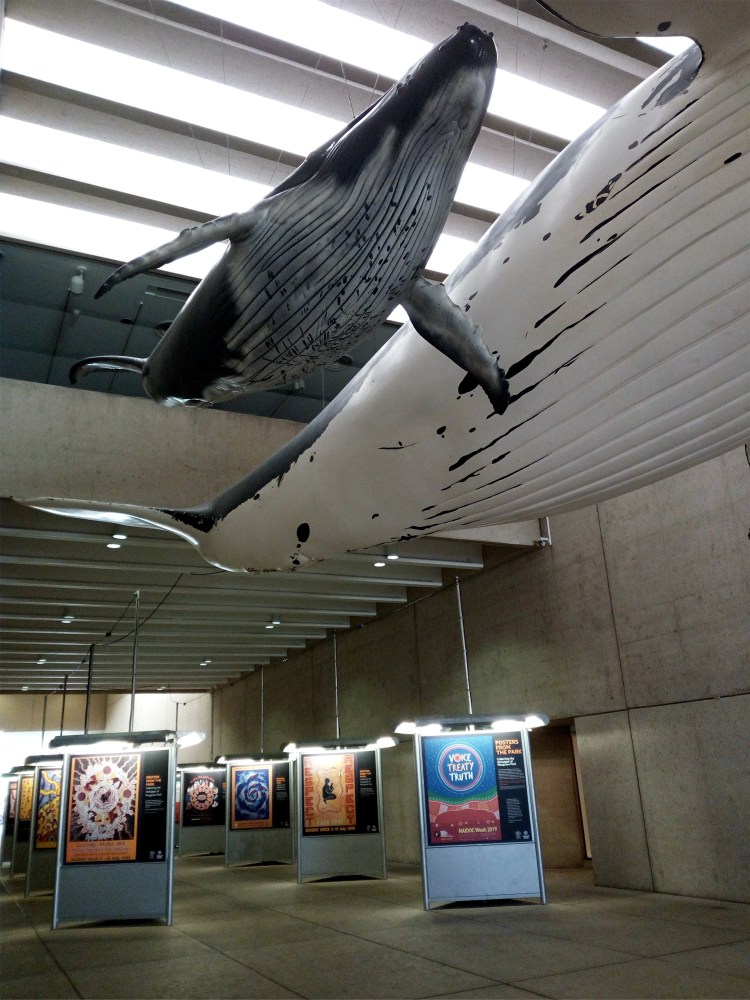
The photograph (below) shows the way I walk to State Library of Queensland, underneath the singing whales in the roof outside the Queensland Museum.  Always reminds me of the whale in Douglas Adams ‘Hitchhikers Guide to the Galaxy’.

Bye for now . . . to be continued.

Gretchen Bernet-Ward

IMG_20190905_122005_BURST001_COVER
Life-size whale calf in the roof outside Queensland Museum, Brisbane.

‘September in Australia’ Poem by Henry Kendall

‘September in Australia’ by Henry Kendall

Grey Winter hath gone, like a wearisome guest,
And, behold, for repayment,
September comes in with the wind of the West
And the Spring in her raiment!
The ways of the frost have been filled of the flowers,
While the forest discovers
Wild wings, with the halo of hyaline hours,
And the music of lovers.

September, the maid with the swift, silver feet!
She glides, and she graces
The valleys of coolness, the slopes of the heat,
With her blossomy traces;
Sweet month, with a mouth that is made of a rose,
She lightens and lingers
In spots where the harp of the evening glows,
Attuned by her fingers.

The stream from its home in the hollow hill slips
In a darling old fashion;
And the day goeth down with a song on its lips,
Whose key-note is passion.
Far out in the fierce, bitter front of the sea
I stand, and remember
Dead things that were brothers and sisters of thee,
Resplendent September.

The West, when it blows at the fall of the noon
And beats on the beaches,
Is filled with a tender and tremulous tune
That touches and teaches;
The stories of Youth, of the burden of Time,
And the death of Devotion,
Come back with the wind, and are themes of the rhyme
In the waves of the ocean.

We, having a secret to others unknown,
In the cool mountain-mosses,
May whisper together, September, alone
Of our loves and our losses.
One word for her beauty, and one for the grace
She gave to the hours;
And then we may kiss her, and suffer her face
To sleep with the flowers.

High places that knew of the gold and the white
On the forehead of Morning
Now darken and quake, and the steps of the
Night Are heavy with warning!
Her voice in the distance is lofty and loud
Through the echoing gorges;
She hath hidden her eyes in a mantle of cloud,
And her feet in the surges!

On the tops of the hills, on the turreted cones –
Chief temples of thunder –
The gale, like a ghost, in the middle watch moans,
Gliding over and under.
The sea, flying white through the rack and the rain,
Leapeth wild at the forelands;
And the plover, whose cry is like passion with pain,
Complains in the moorlands.

Oh, season of changes – of shadow and shine –
September the splendid!
My song hath no music to mingle with thine,
And its burden is ended;
But thou, being born of the winds and the sun,
By mountain, by river,
Mayst lighten and listen, and loiter and run,
With thy voices for ever.

Henry Kendall (1839 – 1882)

‘Leaves from Australian Forests’
Poems of Henry Kendall – with Prefatory Sonnets.
Third poem – Page 7 of original book.
Pages 163 – with Dedication.
Published 1869 by George Robertson, Melbourne, Australia.
Printed by Walker, May & Co, Melbourne, Australia.

Leaves from the Australia Bush Henry Kendall 02
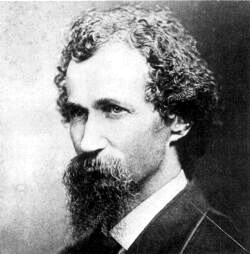
Poet Henry Kendall – painting ‘Bush Burial’ by Frederick McCubbin (1890)

Website https://books.google.com.au/books/about/Leaves_from_Australian_Forests.html?id=D5UuAAAAYAAJ&printsec=frontcover&source=kp_read_button&redir_esc=y#v=onepage&q&f=false

Gretchen Bernet-Ward

Happy Paws Happy Hearts – Pet Power

There are health benefits to your human-animal interactions!  Studies suggest that pets are good for your heart and stress levels in more ways than one.  Caring for an animal has shown to lower blood pressure and cortisol (stress-related hormone) levels, reduce loneliness and boost your mood.

To find out more, we arrived at University of Queensland Healthy Living headquarters in Toowong at one o’clock for an informative talk from Dr Nancy A. Pachana, clinical geropsychologist and neuropsychologist—and cupcake maker—accompanied by the team from Happy Paws Happy Hearts.

As you would have guessed, the highlight was two adorable and bouncy puppies, Timon and Rafiki, who carried out their pats-and-cuddles duty in admirable fashion.  The blurry photos attest to their eagerness.

Happy Paws Happy Hearts foundation offers an Animal Basics Program, Animal Care Program and Animal Handling Program for individuals and groups.  Participants learn to interact with a variety of animals waiting to be adopted from RSPCA by using well-established animal interaction methods to increase confidence in both humans and critters.

Depending on the program and availability, interaction could be with puppies, kittens, dogs, cats, wildlife and farm animals.  Volunteers support attendees to reach their goals while working with these rescue animals within the shelter.

Research supports dogs and other animals assisting with physical, mental and emotional symptoms as well as supplement therapy for PTSD, anxiety and depression plus a range of psychiatric disorders.  They are particularly important for older people.

Over 60% of older community-dwelling adults cited pets as a key source of emotional support, while dog therapy reduced age care residents loneliness and depression as well as improved cognitive impairment in those with dementia.   The presence of animals provided avenues for active behaviour, decision-making and increased socialisation in nursing home residents.

Dr Pachana spoke about greater acknowledgement of the positive impact of animals in other contexts, such as the workplace and courtrooms.  I have seen encouraging signs in classrooms where children have difficulty with peer activities or reading aloud but respond with a calm dog beside them.

Can Do Canines train shelter dogs for therapy purposes and there are organisations like Guide Dogs, Assistance Dogs, Hearing Dogs, Story Dogs, and of course Happy Paws Happy Hearts doing a wonderful job.

We enjoyed our sociable and informative visit and send a special woof to Timon and Rafiki for being good boys.

Gretchen Bernet-Ward


IMG_20190504_213404RSPCA, Wacol https://www.rspcaqld.org.au/

Happy Paws Happy Hearts, Wacol https://hphhfoundation.org/

University of Queensland, Toowong https://habs.uq.edu.au/uqhealthyliving

Thinking Controlled by Machines

Gears and Cogs 19
Franklin Patrick Herbert (1920-1986) was an American science fiction author best known for the 1965 novel Dune and its five sequels although he wrote other books and short stories and worked as a newspaper journalist. https://www.fantasticfiction.com/h/frank-herbert/

Book Backlog and Being ‘Beswitched’

Every reader has book backlog.  If we didn’t, there would be no such thing as the TBR, or stacks of unread ARCs, neither shelves groaning with books nor e-readers crammed with downloads.  My bedside table is piled high with enticing yet unread novels and, well, you get the idea.  You have book backlog, too.

There are so many excellent books in the world that I know I will never catch up—so I’m being choosy and will read what I want, when I want.  And taking the sinful route of skipping pages if it’s not up to scratch.

My reading material may not be literary, it may not be controversial, it may not be popular, it may not be the latest or greatest, however, it will be a book I’m interested in from cover-to-cover.  An occasional blog post is sure to come out of it, no matter how fluffy or deep the content.

‘Okay, okay, enough!’ I hear you cry.  ‘When does time travel come into this?’


Beswitched by Kate Saunders 01“A ripping English boarding-school story with a perceptive heroine and time-travel twist guaranteed to appeal to modern schoolgirls.”—Kirkus Reviews


BESWITCHED BY KATE SAUNDERS
is the kind of story which I would have loved when I was a girl.  Well paced and absorbing, it is eerily accurate of all those Famous Five and Girls Own Annual stories I read yonks ago.  Saunders tight writing style easily pulled me into the dilemma which rather spoilt young schoolgirl Flora Fox finds herself, viz, she gets fobbed off to boarding school and never arrives.

Actually she does arrive, but she’s zapped back in time.  Instead of luxurious Penrice Hall, she arrives at St Winifred’s in pre-war 1935 where all the ‘gels’ are ever-so-British-upper-class, the underwear is scratchy and the food is awful.

As you can imagine this is a personal growth tale, cut through with humorous chronological comparisons, nightmare teachers, ripping seaside hols, scary bonding adventures and a neat twist to the enlightening finale.  Jolly. Good. Fun.

I won’t go into the logistics of time travel but suffice to say the elements meld together well.  Recommended for 8 to 12 year olds, although anybody can read it for a look at life when steely friendships were forged by facing boarding school adversity together.

My kidlit rating soars above five stars!

Gretchen Bernet-Ward

Kate Saunders Author
Kate Saunders won the Costa Children’s Book Award for ‘Five Children on the Western Front’ published 2014. Photo by Clara Molden. Review https://www.kirkusreviews.com/book-reviews/kate-saunders/beswitched/

Coach Departing Now, Folks

IMG_20190729_162917
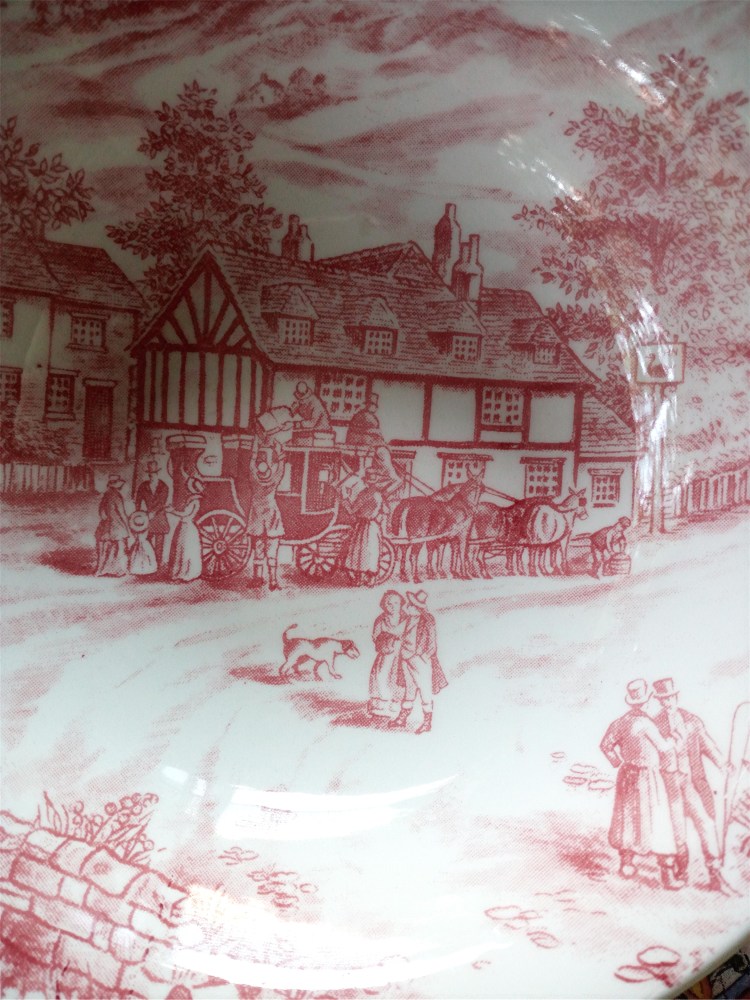
Made in England – china dessert bowl – date and manufacturer unknown.

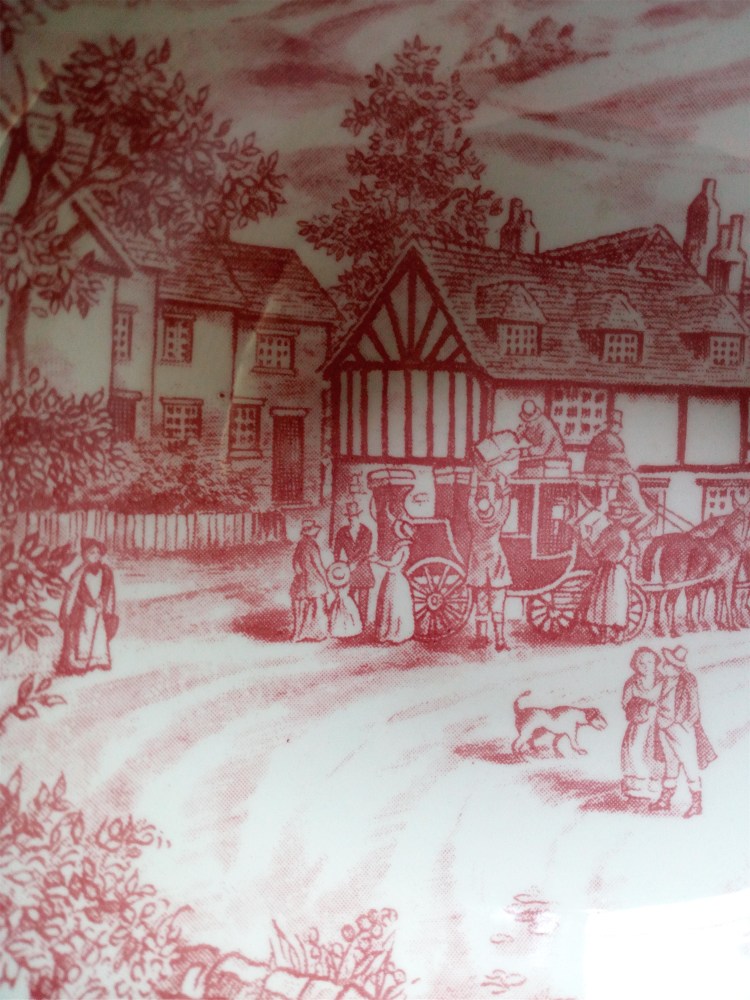
A rather dramatic story is unfolding in my breakfast bowl.

Cereals and desserts have been eaten from this bowl for over thirty years and yet I have never properly looked at the picture on it.

A few days ago I had a shock when I scooped up the last spoonful of my Weet-Bix (similar to the UK Weetabix, both invented by Bennison Osborne, an Australian) and saw there was a castle on the hill.  I kid you not, I had never seen that castle before!

Allow me to acquaint you with some backstory.  Originally there was a set of six china bowls (15 centimetres or 6 inches across) and originally my parents owned them.  Unfortunately porridge, domestic accidents, and heating leftovers in the microwave have whittled them down.  Of the surviving two, one has a nasty looking fault line appearing.  Therefore, the bowl I have photographed may be the end of the ceramic line.  Or the end of the beginning of a coach trip.

So far, so boring—but wait.  Although this bowl is old, I have to be honest and say it is not an antique.  In fact the picture may have been embossed on like a transfer and glazed over.  Never mind, I’m getting to the point, well, ten points actually—

  First there is the brooding castle on the hill; quite a substantial pile.  A name doesn’t immediately spring to mind but I’m working on it.

  Nestled halfway down the hill is a gamekeeper or crofter’s cottage.

  In the valley at the base of the hill is a small village.  An unaccompanied lady is standing on the side of the unpaved road which runs past the Duck Inn.  She isn’t over-dressed and uses a walking cane.  Her gaze is towards the two gentlemen opposite, chatting beside the milestone.  Perhaps this marker reads “London 100 miles” but I can’t decipher it.

  One of the toffs (lord of the manor) is holding a buggy whip.  He would not have ridden a horse down from the castle in a top hat.  He could be the lady’s son and heir up to no-good, he spends too much time in the tavern.  Or she may be his old faithful nanny, instructed to keep an eye on him.  Or yet again, she could be the wife of the man canoodling in the middle of the road.

  We see two lovers canoodling in the middle of the road.  The man is keener than the woman, and a dog is either giving them a wide berth or coming around behind the man to nip him on the ankle.

  Unbeknown to the busily occupied people, a cat slinks into the rear footwell of the coach.  Earlier he had been shooed away but being a feline named Nosey…

  Outside the Duck Inn (a duck is painted on the sign) the coach boy is making final preparations for the horses’ feedbags.  He loves them ‘orses.

  The coach driver is ready and waiting.  He’s heard rumours that Dick Turpin is lurking in the vicinity (if I’m in the right century) and wants to get going well before nightfall.  The innkeeper loaned him a pistol and it digs into the small of his back.

  Seven people are milling about.  At least four are passengers judging by the loading of a trunk on the roof, a well-wrapped parcel in somebody’s hands, and a family group perhaps saying goodbye.  The husband could be off to London on business and the daughters are sad but the wife is glad he’s out of her hair for a few days.

  Lastly, a curtain twitches at one of the attic windows of the Duck Inn.

There are leafy details in the background and in the foreground the stone wall appears to be crumbling.  I have looked for birds but only managed to spy a tiny number 9 in the garden beneath the Duck Inn sign.  A maker’s mark?

And that’s it.  There are no hallmarks or stamps on base of the bowl except the words “Made in England”.  I have no idea if the picture is fake-aged or has been copied from an earlier (original) tableware design.

One thing is for sure, it has given me a good idea for an historical short story.  Visual prompts are another way to overcome writer’s slump.  Look hard at any image and you will find a story to tell.

Check your kitchen cupboards, your own crockery may have a narrative in the making!

Gretchen Bernet-Ward

Three Things #7

THING ONE  Reading—The Chain by Adrian McKinty
THING TWO  Looking—A Lemon in Disguise
THING THREE  Thinking—Don’t Rush the Little Wild Ramblers


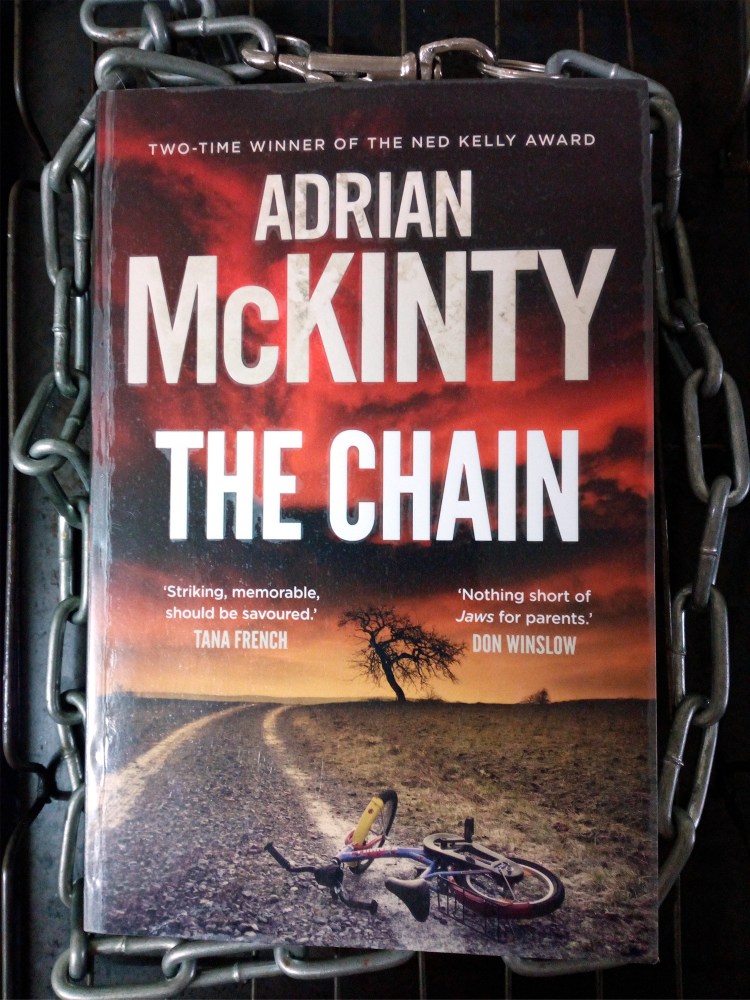
THING ONE—READING—The Chain by Adrian McKinty—

The Chain took me by surprise.  I had no idea what the title referred to until nice normal cancer patient Rachel O’Neill turns into a desperate, frenzied, tigress of a woman ready to kill to protect her cub Kylie.

Adrian McKinty has written 14 books and I’ve read them all, so I know he can write ‘other stuff’.  Guns, cops, drugs and tricky, desperate situations.  But never with the strong emotion which The Chain evoked in me.

The sequence of events is based on real bandits who kidnap people and hold them to ransom until their families pay to have them released.  Not very nice, and neither is what happens to Rachel and Kylie.  This sophisticated version of The Chain involves snatching a child and holding them prisoner to save your own child who has been captured and the next person snatches a child and holds them prisoner until their child is released, etc…with brutal consequences for broken links.

IMG_20190813_161920
Hachette Australia bookcover 2019

The winners in all of this are The Chain initiators who demand that huge sums of money be paid into their off-shore account otherwise they will force the family to kill your child.  The fear, panic and high stress levels are well realised and the pressure applied to Rachel and her ex-army drug addicted brother-in-law Pete (he goes into Bruce Willis mode) never lets up.

Half way through the plot, things take a sharp u-turn (Australian version is chuck-a-youie) but the reader has to trust the writer to follow-through.  Trust him I did.  And the result was definitely worth it.  As always, McKinty writes in his own unique style.  There are warnings of social media over-exposure which ring true and even though this suspense thriller is set well and truly on American soil, it holds a universal truth ‘Watch over your children’.

A poetic excerpt from The Chain, Chapter 40, Sunday 11.59 p.m.
“She merges with the traffic.
The highway hums.  The highway sings.  The highway luminesces.
It is an adder moving south.
Diesel and gasoline.
Water and light.
Sodium filament and neon.
Interstate 95 at midnight. America’s spinal cord, splicing lifelines and destinies and unrelated narratives.
The highway drifts.  The highway dreams.  The highway examines itself.
All those threads of fate weaving together on this cold midnight.”
Author Adrian McKinty 2019

WordPress link to my previous post reviewing McKinty’s Rain Dogs.
I am wrestling with my new Goodreads account.


THING TWOLOOKING—A Lemon in Disguise—

IMG_20190806_160745
Saw this lemon doing undercover surveillance in an abandoned fruit bowl. He looked a bit out of place with his onion skin hair.

THING THREETHINKING—Don’t Rush the Little Wild Ramblers—

This beautiful quote from Wilder Child Nicolette Gowder struck a cord with me.  I thought about young family members who were forever picking up small objects and bringing them home after school.  Everything was of interest when out walking, items had to be investigated for smoothness, brightness, weight or lightness.  The best treasures were those which once were alive, like a crab claw, rat skull or insect exoskeleton.

I thought about my mother who used to point out the delicate things in nature, things which tend to get overlooked.  I inherited her spy-eye for detail especially seed pods.  She was more of a beachcomber…but always putting those glistening seashells back where she found them Gretchen Bernet-Ward

Wilder Child The Dawdlers The Inquisitive Ones
Nicolette Gowder nature-connected parenting https://wilderchild.com/ and blog Sweet Breathing https://sweetbreathing.com/blog/

Wales Readathon Dewithon 2019 08One post in three parts, Reading Looking Thinking, a neat idea started by blogger Paula Bardell-Hedley. Check out Book Jotter her informative, interesting and book-related website!

Re-reading Old Stuff

It was a nice surprise to discover an older piece of writing I’d forgotten, particularly when it still holds up.

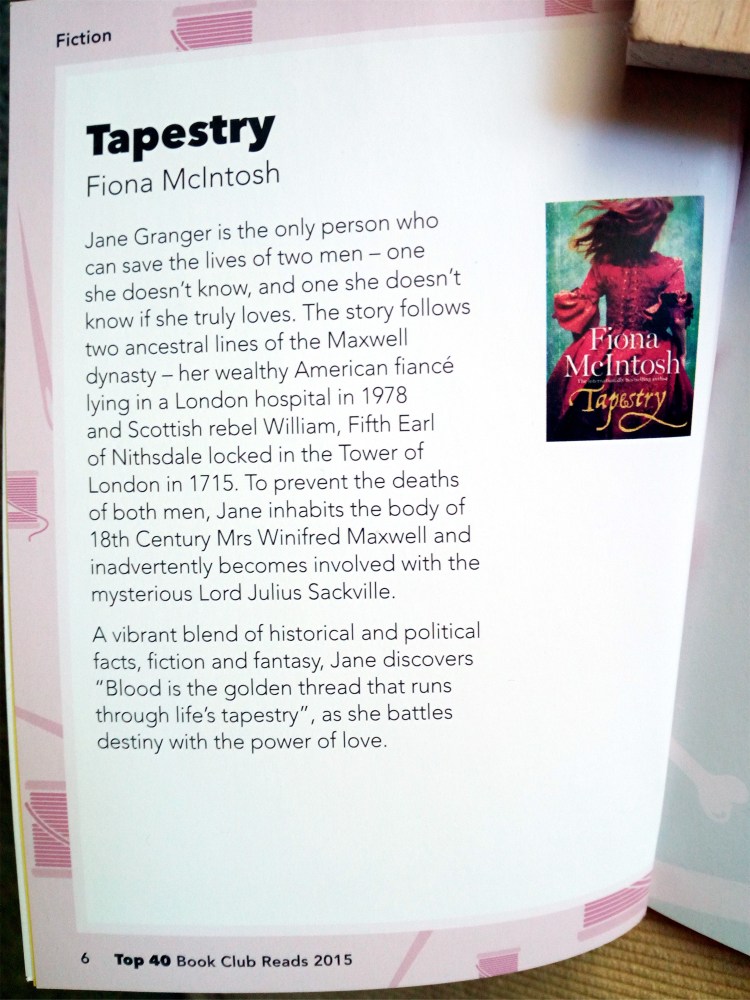
My overview of Fiona McIntosh’s historical fiction “Tapestry” was penned for Top 40 Book Club Reads 2015, a regular Brisbane City Council Library Service booklet written and compiled by unacknowledged library staff.

The book—billed as timeslip fiction—has a layered plot and it was hard to write a 100 word description without sounding too stilted.  McIntosh chose settings in two countries, Australia and Britain, in two different eras of history.  I particularly liked the second half in 1715 within the Tower of London.

IMG_20190809_111031
Synopsis by Gretchen Bernet-Ward

After visiting the Tower of London to research her book, McIntosh had “An unforgettable day and I attribute much of the story’s atmosphere to that marvellous afternoon and evening in the Tower of London with the Dannatts when the tale of Lady Nithsdale and my own Tapestry came alive in my imagination.”

Author Fiona McIntosh has written quite a stack of books set in many parts of the world, and in different genres: Non-Fiction, Historical Romantic-Adventure, Timeslip, Fantasy – Adult, Fantasy – Children, and Crime.

Check your local library catalogue in person or online.

Gretchen Bernet-Ward


In order of appearance, the Brisbane Libraries Top 40 book club recommendations for 2015—I have not read Poe Ballantine’s chilling tale “Love and Terror on the Howling Plains of Nowhere” and I may never read it—See how many titles you’ve read!

The Visionist;  Moriarty;  Tapestry;  The Bone Clocks;  California; Z – Novel of Zelda Fitzgerald;  The Mandarin Code;  Merciless Gods;  Upstairs at the Party;  Friendship;  Birdsong;  Heat and Light;  Time and Time Again;  What Was Promised;  The Austen Project;  The Paying Guests;  The Exile – An Outlander Graphic Novel;  Lost and Found;  Amnesia;  Cop Town;  Mr Mac and Me;  Nora Webster;  The Girl Who Saved the King of Sweden;  Inspector McLean – Dead Men’s Bones;  The Soul of Discretion;  We Were Liars;  Stone Mattress – Nine Tales;  Family Secrets;  South of Darkness;  The Claimant;  This House of Grief;  She Left Me the Gun;  Mona Lisa – A Life Discovered;  The Silver Moon;  Revolution;  Love and Terror on the Howling Plains of Nowhere;  What Days Are For;  Mistress;  Warning – The Story of Cyclone Tracy;  The Birth of Korean Cool.

Indrani Ganguly ‘The Rose and The Thorn’ Book Review

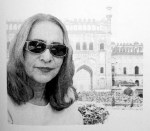
Author Indrani Ganguly based her historical novel in Lucknow, India, a city renowned as the most refined of the Muslim kingdoms where she, her mother and grandmother were born.  In 1857 the Siege of Lucknow was also the scene of some of the most brutal fighting during the country’s uprisings.

Lucknow India 002

Indrani Ganguly’s novel is an illuminating blend of fact and fiction.  Twins Mukti and Lila Chatterjee—the eponymous rose and thorn compared to a black rose in their garden—are the heart and soul of the story.  Ganguly’s research is comprehensive thanks to an academic background, and her foreword mentions some family memories.  She explains the book is not a personal history of her family, although I think there are insights which add to the charm of the narrative.

Two parallel movements emerged in India in the 19th and 20th centuries, the national movement of Independence and the social reform to uplift the most vulnerable sections of society.  During this time of national and social upheaval, the role of Indian women makes enlightening reading.

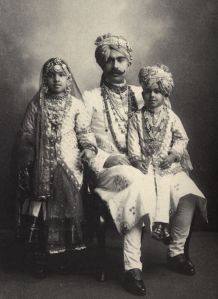
India Father and Children 1930sLucknow Rose and Thorn

There are six families in “The Rose and The Thorn”.  The main characters are Jai Chatterjee, history professor, his wife Shanti and their twin daughters Mukti and Lila.  Then follows The Mukherjees, The Alis, The Johnsons, The Banerjees, and The Maharajas.  It is easy to keep track as the years unfold, events develop in clear progression and the tension builds.

Young Mukti innocently reads the signs of civil unrest in a 1922 pamphlet calling for a boycott on foreign clothing, and the event is witnessed by her British friend Elizabeth and father Alan when riding in a tanga (horse-drawn transport).  Protesters burn clothes on a huge bonfire, quickly followed by police aggression.  One of the police inspectors, Anil, is a Chatterjee family member.

India horse-drawn Tanga

India Mahatma GandhiAround this time, non-violent resistance advocate Mahatma Gandhi is arrested and imprisoned for two years for publishing seditious material.

The twins Lila and Mukti grow up, marriages are arranged and their resilient personalities emerge to deal with life; the loss of loved ones, writing for radical newspaper Chandpur Barta, social work at a women’s centre, and an eventful protest march for women’s rights.

As a young woman in 1970s I was woven into the women’s liberation movement but did not realise how long Indian women had faced their own battles.  They were invisible, they survived as long as they had a man, otherwise they were classed as nothing.  From a 21st century stance, I find it difficult to comprehend the household dictates of that time and the shocking treatment of widows.

The character portrayals of the men and women in the story are strong, and they have firm opinions on the subjects of politics and political activism—handsome Rashid Ali spices things up!  His mother Ruksana is also a driving force.  Mosquito-hating Krishna Banerjee and the Maharaja are men not to be underestimated.  Societal revolutions are brewing but the big question is ‘Will Congress win?’  If women had the vote things may have been different.

Lucknow India 001

I was interested in the chapters dated March 1923 because that was the year my mother was born.  As my mother grew up, I wonder how much she and her Australian contemporaries knew of the Partition turmoil in India?  I knew India was part of the British Commonwealth but certainly didn’t learn about their struggles.  To quote the prologue “There are no martyrs’ monuments or eternal burning flames…” for the ordinary women who led extraordinary lives.

On a lighter note, Chapter 25, March 1923 “The Governor’s Ball” has an outrageous encounter with the Governor’s wife.  And during a family visit to the Taj Mahal, a wandering minstrel strolls by, strumming his ektara (traditional one-stringed musical instrument) singing a saucy song:

There was a rose and a thorn in my life
One was my lover and one was my wife.
Which was which I could not tell
It changed day-by-day and as night fell . . .

. . . I don’t want to give too much away, dear reader, but I will say there is a secret.

Author Ganguly explains that representing the dialogue in English was a challenge.  The two languages used in the book are Hindi and Bengali which have very different grammar syntax.  She overcame this and the result is flowing dialogue containing a smattering of Indian words which enhance the story.

India Food Luchi Eggplant 01The woven cloth khadi, and sweet and savoury food references enticed me to look for translations.  I found a recipe for Mukti’s favourite dish, freshly fried luchi and eggplant.

My curiosity was piqued by the influential roles of India’s royals, the Maharaja and Maharani, in the story.  I read a quote from modern-day Princess Shivranjani of Jodhpur who doesn’t have a problem with only male heirs inheriting but aptly retorts “If you say a boy is everything and a girl is nothing, well, I have a problem with that!”

Indian Goddess Maa Durga Devi 03Powerful Goddess Durga, whose name is spoken several times in the book, also got me researching.  “Durga” in Sanskrit means “invincible” and numerous Mantras are chanted for her throughout the year.
The era of Indian history from 1916 to 1947 is brought alive by Indrani Ganguly through the eyes of Mukti and Lila, and the wise and courageous women who supported them.  While I did not choose a favourite between the rose and the thorn, I enjoyed their journey and learned a lot about the faith and endurance of families in India during those turbulent times.

The epilogue narrator says “I myself travelled many different paths till I joined my father in Delhi but that is another story.”  I look forward to reading it!

Gretchen Bernet-Ward


AUTHOR PROFILE

IMG_20190802_140349
Author Indrani Ganguly

Indrani Ganguly was born of Bengali parents in Lucknow, India.  Her parents imbued her with a strong sense of Indian and world history and culture, and a great appreciation of  diversity in all its forms.  Indrani studied English Honours and sociology in India and did her PhD on the impact of British occupation on revolution and reform in West Bengal from the Australian National University.  In 1990, Indrani married an Australian with whom she now lives in Brisbane, Queensland.  They have a son, daughter and grandson.
Indrani’s website: https://indraniganguly139.wordpress.com/blog/

Published by Boolarong Press
https://www.boolarongpress.com.au/product/the-rose-and-the-thorn/
NOTE General photographs (above) are for illustration purposes only.

Here is the YouTube link to BBC’s Great Indian Railway Journeys video which documents the history and scenes of Lucknow, and shows the buildings which Indrani Ganguly writes about in her book.
https://www.youtube.com/watch?v=CckjZafH0vI