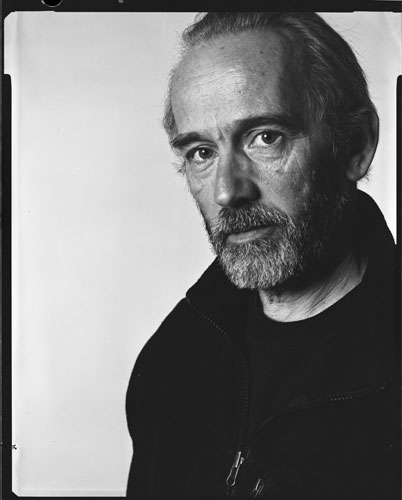
DBC Pierre Writes at Feverpitch
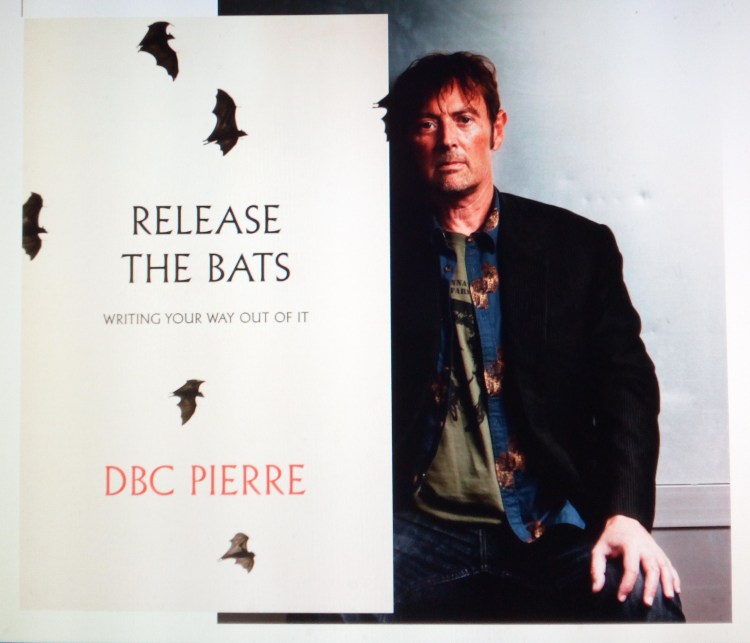
DBC Pierre Photo Montage 02
Photograph of novelist DBC Pierre by Murdo MacLeod for The Guardian.

“I wrote 300 pages in five weeks,” says novelist DBC Pierre, who made his debut with Vernon God Little, a Booker Prize winner, and delivers writing guidance in his contemporary work Release the Bats.

I enjoyed his gutsy and wildly perceptive advice which perhaps appeals to a ‘pantser’ style of writing rather than a ‘plotter’ but the quotable gems will stick with me.  Wisdom with a 21st century twist and language to match.

“A few pages into writing and find yourself drowning, as I did.”  DBC Pierre.

“When I started to write,” says self-confessed bad boy DBC Pierre in The Guardian interview, “I wasn’t particularly well-read, but I found two things critical. Together they can turn a pile of thoughts into a novel, in case you’re at a loose end next weekend, or are in prison. They’re also helpful if you’ve swum a few pages into writing and find yourself drowning, as I did.”

“The first might seem stupid but I actually found it the main hitch in getting words down and ‘letting rip’, ‘sticking with it’, and all that noble stuff we’re supposed to do. ‘The responsibility of awful writing’ was Hemingway’s twist on his own phrase ‘the awful responsibility of writing’. As the man who also said ‘first drafts are shit’, he pointed to a truth: if the key to finishing a novel is sticking with it, then the main challenge is to face writing crap.”

DBC Pierre Vernon God Little Bookcover

“All I liked after writing the first page of Vernon God Little was the voice. It had things to say about everything. I could feel it wanting to say them. But I went on to write 300 pages that didn’t make a book. I wrote them in five weeks, in a fever, without looking back. And at the end, I still liked the voice – but it hadn’t really said anything. Or rather, it had said plenty but nothing else had really happened. I soon found advantages to having done it that way.”

“Even writing 50 pages of crap gives a sense of achievement.”  DBC Pierre. 

“For one thing, I would usually find it hard to move on to page two if I didn’t like page one. I bet you could wallpaper the planet with books that never got to page two. And it’s a circular trap, in that some of the energy you need to forge ahead and push your page count up is generated by forging ahead and pushing your page count up. Even crap gives a sense of achievement when you get to 10, 20, 50 pages of it. When you don’t get past page one, you lose the spur. After that, the thing spirals into bad feeling and dies while you check email.”

“Half the problem is the expectation that we’ll see finished writing at once, more or less in its place. But I wouldn’t have written what I wrote if I’d thought about structure and form at the time. Obviously, if we’re writing about a boy going to the river, we make him go to the river. I don’t mean write without an idea – just that better ideas will come later. They attract each other and grow. We write crap in the meantime. It can work like a compost.”

“If you watch a dieter breaking their diet, you’ll see that they gobble things before they can stop themselves, before the internal arguments, before the shame. Guiltily and fast: that’s how to approach a first draft. A free writer is not something you are, but a place you can go. To start that climb: speed. Don’t look down. Keep a note of your page or word count, watch it grow like an investment. Amp yourself up. When we do things this way, a phenomenon comes to bear that justifies our approach: art. Some of what we write will crystallise for reasons we can’t explain, and the story comes into a life of its own.”

“If the job gets boring, loosen up…throw in a new character.”  DBC Pierre.

“Eventually, take that feverish pile, bravely or drunk, and read it back. Get over the cringing and find a glimmer, see what sentence or idea intrigues or excites you. Start from there and build out. If the job gets boring, loosen up, take a tangent, throw in a new character. In this process, the work begins to show itself. We show ourselves. When gems have grown into paragraphs, paragraphs into pages, look again. Find the part that works best and lift the rest up to it. This is how it climbs, by following what pleases us most.”

“We can’t compete with Shakespeare or Hemingway, nor should we try. Our particular feeling is all we can bring to this party, and our whole job should be to wrestle it into a story that works for us alone. After that we can dress it for others to read. A different job entirely. Save that for a strong coffee on a Monday.”

One of three different interviews by Chris Wiegand, Dave Simpson and Homa Khaleeli.  Wed 22 Feb 2017 06.00 AEDT “Culture” The Guardian newspaper.
https://www.theguardian.com/culture/2017/feb/21/frank-turner-dbc-pierre-creative-industry-advice
Heading : So You Want To Be An Artist? Then Let The Pros Show You How It’s Done.

You can also read my book review of Breakfast With The Borgias by DBC Pierre.

Gretchen Bernet-Ward

Your House, Your Story

Red Tractor Designs Rachael Flynn

I love the homey words and clean, familiar lines of Rachael Flynn’s artwork.  She lives on a cattle and sheep farm in a locality called Piambong which is about 25km north-west of Mudgee, NSW, Australia.  Her calendar (above) features rural farm life with a quirky theme and seasonal recipe each month.
Website http://www.redtractor.com.au/

Gretchen Bernet-Ward

IMG_20171218_083228

Jasper Fforde 2018-2019 Author Events

Excited beyond belief when I found out Jasper Fforde, my all-time favourite post-modern author, has some cool events coming up!  Including another book.  And the eponymous Fforde Ffiesta rolls around again next year.

If any reader attended a US event, or may be attending a future UK event, I’m jealous but hoping I will read your WordPress review.  Of course, I will be writing about Jasper Fforde’s Brisbane Writers Festival 2019 special guest appearances in September!  See itinerary below—

Gretchen Bernet-Ward

Photos by Mari Fforde (hover to see date)
Information from Jasper Fforde website (see below)


APPEARANCES

 Jasper Fforde says:  As usual, please call the venue to check times and dates before you set out just in case I am kidnapped by badgers, eager to promote their dangerous monochrome agenda.
Gretchen says: New book “Early Riser” is now available.  Read my review here
https://thoughtsbecomewords.com/2018/12/14/early-riser-jasper-fforde-book-review/\


2018


Feb 21st-22nd, Casper, Wyoming:
Wyoming Humanities Festival 2018

Book signing and lectures. I’ve never been to Wyoming, and the frightfully pleasant people at Casper have been asking me for a while. Talk and Book Signing Courtesy of Windy City Books, and a lecture plus Q&A the following day. Full details at the Humanities Festival website.


1-2nd March 2018, Cardiff Library:
Crime & Coffee Festival, Cardiff

First Crime and Coffee Festival at Cardiff Library. More details to follow, but I am assured the coffee is the crime, and there will be no actual murders of crimes taking place. Either days, or both, details to follow. Cardiff Library Website.


24th May-3rd June 2018
Hay Festival, Hay-on-Wye, Wales:
May or may not be attending this year––One of the UK’s most imaginative and entertaining authors creates hilarious, often absurd but always compelling adventures within bizarre and zany worlds.  Jasper Fforde’s hugely popular The Last Dragonslayer series is packed with trademark magic and invention.”
Information brochure Hay Festival, Wales.
Gretchen’s book review The Last Dragonslayer.


August 2018
Launch of Early Riser in the UK:

About bloody time too, say I.  Likely 1st to 12th August.  More details to follow.


August 13th – 18th, 2018, Wales:
Ty Newydd writing retreat, Wales

With Belinda Bauer, the course is called: Crime Fiction: A Twist in the Tale and from their website: “This course is designed for those who would like to write best-selling crime fiction – with a twist. Whether you’re writing your first novel, are switching from another genre, or have only dreamed of being a published author, we hope you’ll enjoy this down-to-earth, fun, and practical course. In workshops and one-to-one mentoring sessions, we will be sharing our tried and tested methods of creating character, plot and tension, while helping you to avoid some common pitfalls. We’ll offer advice on a range of issues, from writer’s block and the art of pitching, to how to cope with bad reviews!”
For more details, please mouse you way to the Ty Newydd Website.


2019


Early Riser Tour Jasper Fforde


25th-26th May 2019, Swindon, UK:
Fforde Ffiesta VIII, Swindon, UK

These Festivals are held biannually and oh, what ffun we have – and hopefully a lot more to talk about this year as I will have at least one more book published… Their website is here.


NEWS FLASH !!

THURS 5 SEPTEMBER TO SUN 8 SEPTEMBER 2019, BRISBANE, AUSTRALIA

VENUE: BRISBANE WRITERS FESTIVAL, SOUTH BANK, QUEENSLAND
https://bwf.org.au/2019/brisbane-writers-festival/artists/jasper-fforde-1

Jasper Fforde itinerary will be:

Event 1 – Workshop ‘Writing Futures’ with Jasper Fforde at QWC: Learning Centre, State Library of Queensland.

Event 2 – Panel ‘Dream Worlds’ at Cinema B, Gallery of Modern Art, South Bank.

Event 3 – Conversation ‘Early Riser’ at The Edge, State Library of Queensland.

Event 4 –  Book Club ‘Meet Jasper Fforde’ River Decks, State Library of Queensland.

Event 5 –  Lecture / Special Closing Address by Jasper Fforde, The Edge, State Library of Queensland.

Jasper Fforde at Brisbane Writers Festival Sept 2019


FUTURE ENGAGEMENTS


March 02031:   Asteroid belt and Saturn (technology permitting) More details TBA.

October 02042:   81-year-old Fforde talks to other members of old people’s home: “I used to be a novelist, no really, I did. Is it lunchtime?” More details TBA.

July 02175:   Semi-lifelike cloned Ffordesque replicant to tour Gamma Quadrant in the Cygnus Cluster. More details TBA.

Setember 03431:   Much improved Fforde cloned back to life to face execution for sedition; all works consigned to erasure.

Janfebry 008910:   Last evidence of Fforde’s books vanish forever with the removal of the ‘Formerly Thursday Street’ plaque from what is now W23-61 Rd in the conurbation known as EuroWest-79.

00012972:    Visiting archaeologists from Thraal-7 discover incomplete copy of Well of Lost Plots from excavation in landfill. Deciphering takes seven hundred years and a further four hundred years of academic scrutiny before being accepted as historical fact.


More ffun, books, merchandising, photos  Jasper Fforde Grand Central
For those who like a bit of backstory  Wikipedia – Author Jasper Fforde
Twitter  @jasperfforde
Instagram  Jasper Fforde
Facebook   Jasper Fforde Writer

NEWS FLASH 2020

JASPER FFORDE HAS CONFIRMED FORTHCOMING BOOKS!

“Dark Reading Matter”  Bookworld and Thursday Next – adult
“Dragonslayer IV”           Ununited Kingdom and Jennifer Strange – young adult
“Shades of Grey II”         Colours and Eddie Russett – adult
“The Constant Rabbit”   Racism and Mrs Constance Rabbit – adult – available now


A Friend Pops Up 24 Years Later

Have you received an email, text message, Facebook request or card in the letterbox which made you wince?  Me too.  And it was today.  I guess I should be grateful that the sender did not phone me.  I would have spluttered my way through the conversation and tried to weasel out of giving this person any information about myself since I last saw them 24 years ago.

Do I feel annoyed, upset or beguiled by their surprise appearance on Facebook?  I’m not sure.  First, I wondered what prompted this bolt-from-the-blue contact.  Second, I wrote down our backstory to get my head straight:

We worked together before our children were born, she was going into a new marriage and I was leaving an old one.  This woman’s role was administration manager or something like that, she did a lot of accounts and moaned about the way forms were filled incorrectly.  She had a corner office with a big desk and spent a lot of time talking to staff in an over-friendly, mocking way that unpopular people have when they are trying to be popular.Wedding 13

As a matter of fact, I’m ashamed to admit, I became part of her bridal party.  I succumbed to pressure and involuntarily became a bridesmaid.  Her friend or her sister was matron-of-honour and I think there may have been another bridesmaid but maybe I replaced someone who wasn’t up to task.  Anyhow, I remember the gown fittings, the diamanté jewellery, the shoes, the bouquets, the whole rigmarole was exhausting.  On the Big Day I had professional make-up applied (trowelled on) and I thought it looked hideous.  My hair was whooshed back and I felt as stiff as a Barbie doll.  A close-up photograph of me doesn’t look too bad – gosh, I was young.

OLYMPUS DIGITAL CAMERA

Now, dear reader, I was in a relationship with an army sergeant at the time and the wedding photographer was an ex-boyfriend.  I don’t remember feeling tense about them being in the same ballroom.  Maybe I blotted out that part of the evening.  I do remember my ex-boyfriend wilfully snapping a photo of me dancing with my new partner.  I’m not a dancer.  It was an okay wedding ceremony with theme colours of pink and maroon which were quite tastefully done.  As befits the centre of attention, the bride played her part but the groom was a bit quiet, e.g. rather inanimate character.  Predictably over the intervening years, the cake, food, groomsmen and speeches left no impression.

Wedding 11

Not long after the Big Day, I resigned from the corporation where we both worked and I started another life.  I briefly met the woman in question about two years later outside a local video store (remember videos, overnight rental, tape jams?) and she was with her husband and six months pregnant.  From what Facebook will let me see, she has a couple of children now.  With no family news or information, she perceptively called me ‘Stranger’, asked me if I was still living in the same place and did I want to meet up?  Why, and why now?  Truth must be told; I was uncomfortable around the woman.  She had the knack of grating on me, especially when she initiated ‘jokes’ with co-workers.

A long-time friend, a dear person who lives in the countryside, says he has been contacted by various ‘friends’ he hasn’t seen in years and feels they are freeloading in their desire to drop in on his rural idyll, taking advantage of a convenient escape to the country.  I, too, have had similar occurrences in suburbia but I tell people that I do not entertain at home and we don’t have a spare bed.  And that is true enough, depending on the visitor.  With this mystery reappearance of a workmate (as opposed to friend) who made no contact with me after the wedding, much to my relief, and now wants to buddy up as if 24 years is no time at all – I don’t get it.

Is she divorced?  Is she retiring?  Is she thinking kind thoughts about me?  Or is she bored with her life and Facebooking randoms from her past?  Another truthful moment; I don’t think we would have one single thing in common.  Possibly she has changed, possibly I’m anti-social, possibly infinite variables.

Wedding 14

Am I tempted?  Sure, I’m tempted.  I could click Accept or Decline on that Messenger button.  Click Accept and, hey presto, all will be revealed.  Also, it would expose a lot of stuff I don’t want to remember very closely.  Then there’s the difficulty of worming my way out of it.  I don’t want an added extra to my social life right now.  As previously posted, I am cutting back on my social media.  I want to move forward…write and relax…my way…I guess I could just say ‘hello’ and not get involved…I guess…

Gretchen Bernet-Ward
N.B. Apologies to friends and followers who would like a Comment box.

Pixel Girl says…

Pixel Girl Artificial Intelligence 02

Interpreted Programming Languages    Functional Programming Languages

Compiled Programming Languages    Procedural Programming Languages

Scripting Programming Languages    Mark-up Programming Languages

Logic-Based Programming Languages    Concurrent Programming Languages

Object-Oriented Programming Languages

Bender Futurama

Gretchen Bernet-Ward
Book Covers Tell Too Much

Books Bookshelf Old Volumes

Can you tell a book by its cover?  Sure you can!  Just the same as an individual’s personality and clothing can tell something about them, a book lures the reader with an enticing cover image.  That visual reveal, a hint of what’s hidden within the book is a very important marketing tool.

A contemporary bookcover, no matter what the genre or category, has to be identifiable.  It has to look good on publicity material, it has to create a mood and it has to appeal to its target audience.  The font style, back cover blurb and all-important artwork join together to get you interested enough to part with your money.  Unless you are borrowing the book from your local library.  Nevertheless, you will still be interested in that lurid hardback in your hand because it promises so much…just look at that out-of-context quote from a famous author who said “chilling depth” and “sizzling romance” from a “writer with imagination”.

Millions of modern eye-catching bookcovers are perfectly serviceable and practicable and sensible and don’t mislead the intended reader.  It can be argued that bookcover images only hint at a small portion of the entire book.  But, as a person who reads books very closely, I disagree.  I like to make my own assumptions and not be misled by skewed artistry.

Thus I start my LONG bookcover show-and-tell, documenting that which has annoyed me for some time – the all-to-obvious artwork on bookcovers, those illustrations which give the game away.

  • The reveal: I loathe it when the crime bookcover shows the pivotal moment in the book. A dead giveaway!  Is that the graphic artist’s fault for reading the front and back page?  Is it the publisher’s fault for handing out the last chapter?
  • Bookcover clue giveaway: I have just finished a police procedural and the creepy black-and-white cover photo with a rundown house on the hill encircled by barbed wire is actually where the bodies are buried. No kidding, I knew every time the detective went up that hill, he was darn stupid.  Or the one with the sketch of a child on a rocking horse holding a scythe over her shoulder – storyline crumbles before it starts.  Worth mentioning that a rocking horse was not even in the story.
  • Vignettes snipped from a chapter: Like historical fiction “Golden Hill”, where a sketch of the hero is seen on the bookcover leaping across a roof top in true Hollywood style, no doubt aimed at action-loving readers, when the bulk of the story revolves around cruel social hierarchy.
  • A mystery novel: Well, murder actually because several people end up getting killed. This illustration managed to ruin the first three punchlines in the first three chapters.  Not to mention the good guy is seen working in the downstairs office window when his office is upstairs.  Plus the red motorbike heading up the road outside is meant to be him, at the same time.  Lovely drawing but couldn’t they have chosen something more accurate?
  • Overcooked Clones:  There’s the hand frozen in ice (guess how the victim dies) there’s the bridge across the river (guess how the victim dies) there’s the threat (a big dark old building) there’s a corrupt political serial killer millionaire mowing his way through rich widowed neurotic socialites on board his yacht (guess how the victims die) or bones poking out of the earth…black crow…wolf in snow…lonely highway…stark tree…dropped gun…body part…the train racing through the underground station…all overdone crime tropes.
  • To quote Tim Kreider, essayist: “The main principles of design—in books…is your product must be bold and eye-catching and conspicuously different from everyone else’s, but not too much! Which is why the covers of most contemporary books all look disturbingly the same, as if inbred.”  Which leads into––
  • Dark silhouette: I, for one, thoroughly dislike the brooding male or female silhouette in a heavy coat, head down, walking toward a menacing city skyline/bridge on a rain-soaked evening. Boring!  The stock standard photo silhouette has been on countless bookcovers for years.  Think of Lee Child.
  • Expected bookcovers or Clone II:  Why does (1) Romance have the obligatory well-developed over-muscled man and well-developed bust-overflowing woman, and (2) Literary fiction has a sedate, toned, almost elegant layout with a design which purrs good taste?  (3) Non-fiction is so varied it usually has just a colour photo with a word overlay.  (4) Historical fiction will have a woman in period costume gazing at house or hillside.  (5) Children’s books, fantasy and science fiction have a place all their own.  Renegades breaking up the predictable.
  • Flip side: An irrelevant illustration. There are obscure bookcovers like “The Midnight Promise” with two hands shaking as though in agreement when the Promise is nothing like that image.  At least it gave me something to ponder.
  • World-wide: I’m commenting on English language publications and referring to p-books and e-books. I’ve mentioned arbitrary books I have read and tried not to name them.  However, the same book published in different countries gets a different bookcover.  This is where designers and image stock can become tricksy.  I have seen translated children’s books looking very adult, young adult books looking too adult, and adult books looking sugary sweet, e.g. cosy mystery covers with blood-thirsty content between the pages.

Book Sliced Up on Plate with Knife

BONUS:  Terry Pratchett’s bookcovers by artists Josh Kirby and Paul Kidby tell a detailed story.  With fiction, decide how closely you should look.  Decide if you want to undermine the plot.  You may not even notice pictorial clues!  Ask yourself if you are exercising your own freewill, or are you conditioned by a generic bookcover image.

Link to superb 20th century bookcovers from The Paris Review:
https://www.theparisreview.org/blog/2018/02/22/twelve-illustrated-dust-jackets/

Today, the mass market book illustrators, the image makers, appear to acquire design inspiration from their clinical, perfectly sculptured computer programs.  Perhaps they should visit an art gallery, or see what’s shakin’ in the real world, then tell that miserable silhouette model to get lost.

Never stop reading!

Gretchen Bernet-Ward

Postscript : A Tiny Bit of History : Literature has changed in more ways than one over the centuries.  Illuminated manuscripts gave way to smaller volumes with dust covers/jackets in 1820s Regency, then refined in 1920s to make hardback books more attractive.  Before this the majority of bookcovers were a plain single colour with gold embossed wording and little adornment.  Swanky ones did have lithographs or a portrait frontispiece.  It is considered that 1930s paperback printing changed the course of bookcover art.

Lorna Doone by R D Blackmore

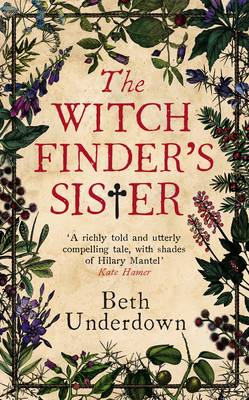
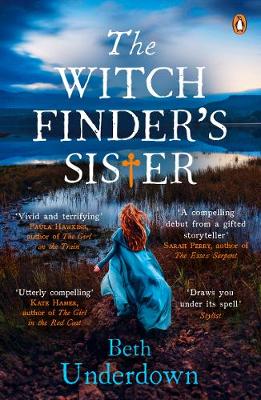
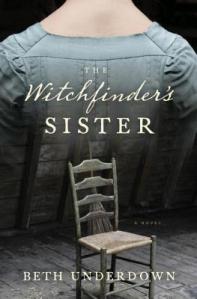
‘The Witch Finder’s Sister’ by Beth Underdown

A witch-finder compiles his list … To me, prologues are an unnecessary extension of the backcover blurb and I often don’t read them.  Resistance is futile when it comes to Beth Underdown’s deep dark 17th century historical novel based on the real witch-finder Matthew Hopkins.

When I read the prologue to The Witch Finder’s Sister I tried not to become smitten with the words, tried not to be intrigued by the premise nor overcome with a desire to read what sister Alice has to say, but I am already into Chapter 8 even though historical fiction is not my preferred genre.

As absorbing as I’m finding this tale, this is not a proper book review and “no correspondence will be entered into”.  But I will say Chapter 1 is claustrophobic and tension-filled, a classic example of how thoughts become words to become other people’s thoughts.  There is an epilogue under the guise of Author’s Note which I can live without reading.  If you wish to pursue the Prologue & Epilogue debate, check out  WordPress Blogger theryanlanz A Writer’s Path

The Witchfinder's Sister Bookcover 03

I will leave the review to Suzi Feay of esteemed The Guardian newspaper:

The Witch Finder’s Sister by Beth Underdown review – puritan or serial killer?
The Guardian Review of The Witch Finder’s Sister by Beth Underdown


The Witchfinder's Sister Bookcover 01

Gretchen Bernet-Ward

Here is the prologue to The Witch Finder’s Sister by Beth Underdown––
“1645, and the Civil War in England has begun its fourth year.  It is a war about God, and how best we should worship Him.  It is a war about who should govern, and why; whether the Parliament should rule, or whether the ousted King.  It is a war of thoughts, of words printed or hurled in anger: but this is also a war of guns.  Last year, at Marston Moor, more than four thousand men were killed.  Before this, women have seldom been hanged for witchcraft – one or two, every five years, or ten.  Eight were sentenced in Pendle, thirty years ago, when the land still knew peace.  But now this country is falling apart at the seams.  Now, all England is looking the other way: so there is nothing to stop Matthew Hopkins stepping forward.  Starting to make his list of names.”

Coffee Shop Wisdom

Platitudes, rather hippy dippy and old hat, short sugar-coated sentences designed to bolster the ‘feels’ of a younger generation.  Look again.  Each line creates an emotion, a memory jog, that tingle of happiness to the down-surge of sadness.  Regret is there, the wince for things done wrong, then the smile for laughing out loud when you get it right.  Basic universal rules for living.

Gretchen Bernet-Ward

IMG_20171214_133048

‘Work-Life Balance is a Myth’ Review

Integrate by John Drury
Whole-of-life plan

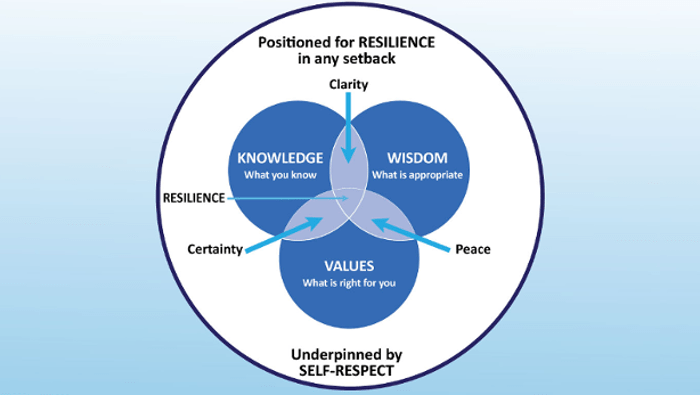
Traditional work-life balance means separate compartments in our lives, but lines can become blurred, pressure can build and conflicts emerge.  Instead of working against each other, integration means all parts can work together to achieve a positive outcome for our lifestyle expectations.  Then realisation that your work-life balance is “out of kilter” will no longer apply.  I wish I had read this book before my divorce!

John Drury is a presenter, trainer, facilitator, and author of new book “Integrate” which challenges busy people to rethink their approach to life and work.  “The demands of work have never been greater.  A balancing act is not the answer.  Work-life integration is the only way forward in a 24/7 world” says Drury, whose painful personal experience with burnout, and subsequent recovery while in a senior leadership role, motivated him to start helping other high achievers create and maintain a realistic lifestyle.

In his book, Drury outlines a way to align all the parts of your life so they work in unison.  He says “This takes effort, but it’s well worth it and the end result will give you a schedule far easier to work with than just a big juggling act which no-one ever seems to make work.”  He believes that you must look after yourself at your very core; respect your health, your wellness, your relationships and your work commitments.

In John Burfitt’s interview, Drury explains that self-care and implementing achievable self-management strategies are essential.  Drury goes on to say that once important areas are defined and outlined, it becomes a matter of making decisions and planning goals “And you must do that, as a goal without a plan is just a wish.”

Integrate by John Drury 02
Image is an edited extract from Chapter 3 of “Integrate: Why work-life balance is a myth and what you need to create a fulfilling lifestyle” by John Drury  John Drury.biz

Further reading: “Integrate” by John Drury

Gretchen Bernet-Ward
Saturday is young … then

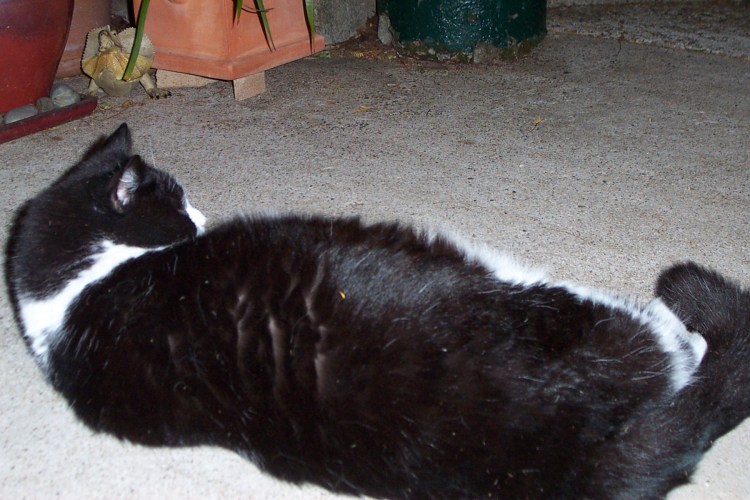
Sebastian 003

Boredom sets in––

Think of something
Not cooking
Not cleaning
Not walking
Not tai chi
Not writing
Not doing anything

Boredom sets in––

Start a project
Ideas flow
Creativity expands
Love it
Best work ever
I can do more
Much more

Boredom sets in––

It is tricky
It is hard
It will never end
Why did I start
I don’t like it
I hate this thing
Had enough

Boredom sets in.

Gretchen Bernet-Ward


Boredom – even the explanations are boring!  Etymology and terminology:

(1) In conventional usage, boredom is an emotional or psychological state experienced when an individual is left without anything in particular to do, is not interested in his or her surroundings or feels that a day or period is dull or tedious.

(2) ‎The word boredom comes from a device called a “boring tool”, a kind of drill that works slowly and repetitively; around 1768, bore, meaning “be tiresome” became a popular slang term and the word “boredom” soon followed.