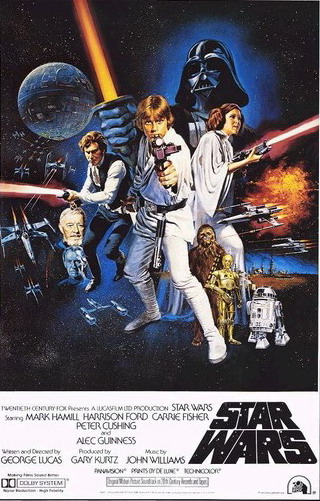
I was listening to the audio recording of “The Princess Diarist” by actress Carrie Fisher, read by Carrie Fisher, when she passed away. I was already freaked hearing her true tales from the first Star Wars movie so the news bulletin got to me.
Carrie Fisher delivers a robust narration of her early acting career and famous mother Debbie Reynolds, whose death followed her own within days. Admittedly Carrie’s use and abuse of a variety of substances had ruined her voice and it could not be likened to that of youthful Princess Leia, but her naïve discontent and vitriolic humour pepper the story.
A frank look at the early life of a young woman shaped by Hollywood and eventually defined by George Lucas and his sci-fi series. The extraordinary 1977 Star Wars movie launched her fame, hair buns and an affair with Harrison Ford, making this book a slice of Tinseltown history with big appeal for fans of the first Star Wars production.
“The future generations deserve clear water and clean air that will sustain their bodies and sustain their souls…”attributed to Barack Obama, former US President.
Water Rates
Chart supplied by Queensland Urban Utilities 2017.
Statistics may vary according to region.
“It’s like a luxury hotel in here,” said Penny to Cleo, who was draped across a chair in the lounge room of Pandanus Palms psychiatric hospital, a pink hibiscus tucked behind her ear. They were discussing the merits of combining tropical plants and plush furniture with the plastic chandelier.
“It’s done on movie sets to create an illusion of opulence,” said Cleo. She sat up and stretched her arms. She gave a yelp. “That new guy Tom grabbed me too hard in the final scene last night.”
Penny knew Tom. “I’m sure he didn’t mean to,” she said.
Cleo surveyed the bruises on her arms. She noticed marks on her wrists. “The make-up people forgot to remove my scars.”
Penny was going to change the subject but fortunately Cleo yawned.
“You’re getting tired, dear.” Penny began to gather her things. “I’d better go.”
Cleo rubbed her eyes and blinked rapidly. “Did you see him?”
Penny spun around but there was no-one else in the room. The air was still and heavy with the perfume from a flowering orchid. “Who?”
“The producer. He looked in the window.” Cleo sat stiffly in the chair, staring at the window like an unblinking cat.
Penny readied herself for an outburst. “I’ll buzz for the––” she began.
Suddenly Cleo jumped up and ran to the window.
“I won’t go back into his hell-hole of a studio.” She tugged frantically at the heavy, brocade curtains. Once closed, the dimness appeared to satisfy her but she paced up and down with clenched fists. “He was checking the spot where the stunt man fell. They don’t know why he toppled out the window. It wasn’t in the rehearsal script.”
She went to the curtains and peeked out. “Thank God, he’s gone.”
Penny leaned over and pushed the nurse’s call buzzer. “You can buzz all you want, the waiter service is atrocious,” said Cleo. “When they do come, they hold you down and force you to eat.” She started to twirl around the room, knocking into furniture. Her medication is wearing off fast, thought Penny. She felt unsafe. “Stop it!” she shouted.
Cleo sat down on the floor, a dazed look on her face. “It’s dark in here,” she said, wrapping her arms around her ribcage. “This is what that lady in the buckled up jacket does.”
Penny went to the window and opened the curtains. Summer sunlight flooded back into the room. Cleo winced. “That spotlight is too bright.”
“I’ll tell the lighting technician,” Penny said. She hurried from the room and saw that the long white hallway was empty. The staff must be at the press conference, she thought.
After straightening a painting with shaking fingers, Penny had an idea and returned to the lounge room.
“The director says the cast can take a break,” she told Cleo.
“About time. Scene after scene and none of them mine. I’m freezing my butt off waiting for my audition cue and it never comes. Boredom and suicide are the same thing.” Cleo again paced the floor.
Penny recognised the first signs of her hourly ritual. Cleo went through the motions of taking an imaginary cigarette from its packet, putting it in her mouth and lighting it. With a noise of disgust, she tossed the cigarette on the carpet. Quickly, she stamped it out. “Have to save oxygen,” she said. “The door shouldn’t be closed. It’s the stunt man’s idea. ‘Get off me,’ I tell him. He knows I don’t like small spaces. The door is made of steel. Hey, HEY, can anyone hear me? This isn’t funny, guys. The sound of nothing is pressing into my ear drums. The silence will squash my head. Let me OUT!”
Penny made cutting actions with her finger across her throat. “The cameras have stopped rolling.”
“I need warm soup,” said Cleo, her teeth chattering. “Where’s the c-catering van?”
“Think about something else, dear,” Penny said, hoping a nurse was on the way.
“Remember when you were little? You said if something went wrong, you’d make-believe. It’s fun to pretend you’re another person. You can be anything you set your mind to.”
“That box room was too strong, it over-powered my mind.” Tears started to form in Cleo’s eyes. “I didn’t want to play a dead person. The box was trying to kill off my character––it wanted to be my coffin.”
“You lasted a lot longer than most people would, given the circumstances.” Penny lead Cleo to a couch and sat with her, gently smoothing her hair. After awhile, two people entered the room, Cleo’s doctor and a new clinical nurse. Penny surreptitiously made the sign of the cross.
The nurse checked Cleo’s pulse then injected her in the middle of a bruise on her upper arm. Cleo pulled back, slowly rubbing her skin. “More pain.”
The nurse pointed to a bluish lesion and said, “I hope you gave as good as you got.”
“One of my better performances,” said Cleo, tossing her head.
With a weak smile, the doctor said, “Ready to meet your fans, Cleo?”
“No.” Cleo turned her back and toyed with a palm frond. They coaxed her into leaving the room and walked down several corridors until they reached an unmarked door. When it was opened, Penny hugged Cleo and left. She hated to watch that door close and wanted to be out of earshot before it slammed. In the foyer of the hospital, Penny wondered how far she should carry Cleo’s delusion. The hospital portico was swarming with staff and media representatives.
With one hand on her heart and the other on the door handle, Penny opened the front door.
A reporter pounced.
“What happened on the set of Cleo’s new movie?”
Before Penny could reply, Tom, the psychiatric nurse, ran over and grabbed her arm.
“Come with me, Penelope,” he said. “It’s time for your medication.”
♥Gretchen Bernet-Ward
AUTHOR NOTES:
Cleo is a mentally disturbed woman. She talks in riddles and, due to an apparently traumatic event on a movie set, she cannot
separate fact from fiction. She confuses the Pandanus Palms
psychiatric hospital with a film location. We are lead to believe she
has once tried suicide and that the stunt man may have caused her
latest breakdown.
Penny has “adopted” Cleo and calls her “dear”. She cares about
her and understanding her moods but is not able to help in a positive
way. She has her own set of unseen demons.
Tom is a bit player with an important part. Did he cause the bruising on Cleo’s arms?
The setting is a room with lavish décor but Cleo becomes cold and
hungry. Is she reliving an incident or just acting the part?
Is the box a padded cell or a prop gone wrong?
Does Cleo see the truth wrapped up in theatrical guise? Is she driven
by revenge to murder? When the “reveal” comes at the end, can we
guess at what was truth and what was the swirling of a delusional
mind, aided and abetted by Penny.
As I sit on our small balcony with the French doors open behind me, I can see a front view over the trees, over the shallow valley and up the opposite hillside. Roof tops gleam here and there and a council bus grinds its way up the steep incline of a street still named ‘lane” from way back when it took farm traffic up and over the hill.
To my right are the wooden chamfer boards which line the house, in this instance making the wall of our home office, or, as it was nicknamed many years ago, The Den. To the left is an open view over rooftops and trees and I’m right in line with a big fluffy white cloud. This cloud is probably bigger than an ocean liner. It is floating slowly through the blue sky.
To the side I hear the roar of a jet engine and a shiny aerodynamic form cruises past, heading towards the fluffy cloud. For the first time, I wonder what it must be like for the pilot, drawn inexorably into this massive expanse of whiteness. From experience I know that clouds can be bumpy rides but the unspeakable horror of something else flying into it from the other direction…nah, that’s not possible in this day and age…
The plane gets smaller and smaller until the sun glints off a tiny silver speck. I wait for it to be swallowed by the white cloud when, ever so gracefully, it curves away and downward, heading for the airport and out of my view.
I jump as suddenly a screeching white cockatoo cuts across my line of vision. It is closer but follows the same flight path as the jet. Still screeching to scare both friends and enemies, the cockatoo turns and mirrors the same downward arc, disappearing from sight.
Perhaps a philosophical parallel could be made, a bit of literary prose penned to suit the occasion. However, it is just an illustration of everyday life and I can still hear the highway rumble, the neighbour’s dog barking and the postman on a small motorbike with squeaky brakes. Nothing magical, no cheque in the mail, just suburban routine.
The Personal System/2 was IBM’s third generation personal computer released over 30 years ago on April 1987. Recognise the actors advertising the product?
The cast of the long-running TV series M*A*S*H set during the Korean war and, if you are old enough, you can surely name their characters.
Alan Alda (Hawkeye), Gary Burghoff (Radar), William Christopher (Father Mulcahy), Jamie Farr (Klinger), Mike Farrell (B.J.), Loretta Swit (Major Margaret Houlihan), Larry Linville (Frank), Harry Morgan (Colonel Potter), Wayne Rogers (Trapper),McLean Stevenson (Colonel Blake), David Ogden Stiers (Charles Emerson Winchester III) and many more.
Larry Gelbart was the man responsible for developing M*A*S*H for television from the 1970 feature film M*A*S*H which was adapted from Richard Hooker’s 1968 novel “MASH: About Three Army Doctors”.
When Jessie was small the table was tall. She had to sit in a highchair to eat her meals. One day she crawled on to the table. But that was not a good idea. Another time she pulled the tablecloth. That was not a good idea. As Jessie grew, she helped Tiny the dog on to a chair. That definitely was not a good idea. After dinner on Saturday, Jessie had a very good idea. She didn’t need a chair cushion now, And her feet could almost touch the floor. So she helped clear the table. She helped to wash the dishes. Then Jessie went into her bedroom. She tugged the top sheet off the bed. She grabbed her favourite toys. Jessie was tall enough to pull the sheet over the table. It made a tent, it made a cave, it made a cubby,
and Jessie played until bedtime.
♥ Words : Gretchen Bernet-Ward ♥ Video : Mere Modicum
The two-storey farmhouse was at the top of a bare hill. The long gravel driveway wound upwards from the road, through dry, patchy grass until it reached the front door. As Susan drove to the top, she saw a dam in the valley beyond, surrounded by trees. The view impressed her with its undulating hills and differing shades of green, framed by a cloudless blue sky. Is this my escape, a comfortable home? she wondered.
Susan parked the car on level ground and looked at the unimposing entry of dull brickwork and unpainted wood. She walked across weeds growing between uneven flagstones to the porch and weather-beaten front door. She knocked as loudly as she dared without getting a splinter rammed into her knuckles. It had taken an hour to drive from the nearest town. The hurly-burly of market day was replaced by this rural solitude, the kind of serenity where sounds are muted by immeasurable distance.
She knocked again. No dogs barked and nobody stuck their head out of a window to ruffle the stillness. As the real estate agent had predicted, the part-time caretaker was not on duty today. The key, thought Susan and went back to the car to collect it. Her daughter, Audrey, was stirring and finally woke up. She looked around, stretched and asked if they’d reached the right property.
“Finally,” confirmed Susan. “We’re going to let ourselves in.” Audrey peered upward from the car window. “The place looks creepy”. “No,” said Susan, “just unloved.” She found the door key in her bag. Audrey hopped on one foot, pulling on a shoe, as they walked to the door. The big old key fitted perfectly and the solid door swung open.
Inside the house, the air was dry and cool. To Susan’s surprise the entry foyer was small but, as she expected, empty. After a debate on direction, they decided to head to the right into an unfurnished, echo-filled living room with faded remnants of mauve wallpaper. “Tiny flowers.” Audrey spoke in a whisper. “It must have been pretty once.”
“Such wonderful windows,” said Susan. She decided to call out in case the caretaker happened to be lurking nearby. “Hey––anyone here?” Her daughter jumped. “Give me some warning next time!”
Susan headed towards an archway at the back of the room, in the direction of what she presumed was the dining room and kitchen beyond. Audrey pulled her back. “Let’s go upstairs.” They went back to the staircase located unassumingly in the foyer. It was narrow and went straight up without a curve. The treads were worn and uncarpeted. On each step, dust rose from under their shoes.
Once upstairs, they split up and walked quietly from bedroom to bedroom, each imagining what the rooms must have been like fully furnished. Susan glanced into a bathroom situated on the corner of the house, hoping for a hint of décor. Sunlight struggled through gritty windows and filled the room with diffused warmth. A large bath dominated the corner and looked out over the landscape. Susan could almost see clouds of steam and fluffy towels and smell the hint of lavender soap. The beige tiling around the bath was unstained. “That’s a good thing,” she said to a beetle on the edge of the hand basin.
Audrey called to her from another room. Susan almost tiptoed down the hallway as it resonated around her, boards creaking. On the way, she noted a single, closed door before locating her daughter through a small doorway into the toilet. “It’s positively ancient,” said Audrey. “What a scream.” Susan stepped inside.
The plumbing was exposed and badly fixed into the sloping floor. A watery noise came from the cistern. The porcelain, off-white and topped by a cracked wooden seat, had a window behind it that was so large it allowed expansive views of the countryside. “That vision works both ways, doesn’t it?” Audrey said. “I wouldn’t want anyone watching me.” Susan laughed “They’d need binoculars.” Audrey said doubtful “A nice curtain would fix it.”
Susan moved aside to let Audrey leave the dismal space and tried to gauge the size of the window. Suddenly the room began to slip. The sloping floor moved under her feet, causing her to slid towards the window. She was unnerved at how quickly the momentum grew. Susan felt as though she was now being sucked towards the glass panes. The pitch of the floor became steeper and steeper until she was hanging on to the metal door handle, desperate to save herself from falling.
Susan scrabbled frantically, breathless and unable to shout for help. She pulled herself up until she found a firm foothold against the doorframe and the hallway floor. With a heave, she pushed herself back through the threshold and stumbled into the hallway. The door swung back and forth a few times as if laughing before it slammed shut.
With a pounding heart and blood was rushing through her body, roaring in her ears, Susan dusted herself off with shaking hands. She was unsure if she’d imagined it. She couldn’t force herself to look back, afraid of what might spring out from behind the door.
Audrey came back. “You look awful. What happened?” “Heaven knows,” gasped Susan and bent double. “I don’t think that toilet likes me.” Audrey’s eyes widened as she peered around the door. “The floor is on a terrible slope.” Susan wrinkled her forehead. “More to the point, why?” Her daughter had a vivid imagination. “I’m going to wait in the car.”
Susan waited until she heard Audrey walk downstairs then watched her through a front window as she got into the car. As she recovered from her slippery encounter, an inquisitive streak in Susan overtook her common sense. She dismissed the toilet’s poor carpentry under the heading of old age. She wanted to see if any rooms at the back of the house were habitable. Without deliberation, Susan turned the knob on the only unopened door in the grimy passage.
Inside, the air was warm and fragrant. There was a riot of colour throughout the room. Rainbows sparked out from a crystal lamp shade. Floral drapes trailed across the floor and plump cushions surrounded children who played on woven purple rugs, unaware of her presence. A large stone fireplace glowed at the far end of the room and, to the side, a cat slept in a sagging armchair.
A man was talking to a woman while he carved roasted meat at a table covered by a velvet cloth and laid with silver cutlery. The woman, wearing a vivid red blouse, saw Susan first and waved cheerfully. She beckoned at Susan to enter. A jolly couple nearby chorused the woman’s cries of “Come in, come in.” The first thought to enter Susan’s mind was that she had intruded. “I didn’t mean to interrupt your meal.”
“Nonsense,” they said and waved steaming mugs of drink. The man carving the roast waved his knife, gesturing her into the room. Better not join them, thought Susan, anything could happen. She looked longingly at the food-laden table then backed out of the room, smiled as politely as she could and shut the door. She hurried out of the house, confused over what had occurred. She locked the front door, slipped the key into her pocket and patted it for good measure.
“You look funny again,” said Audrey and brushed a cobweb off her hair. “I think,” Susan paused. “I think I just met the original owners.” Audrey groaned “Not again?” She pouted and said she didn’t believe her mother this time. As far as she was concerned, except for the toilet, there was nothing out of the ordinary in the old house. Susan rose to the challenge and gave her a lucid description. “They’ve never spoken to me like this before.”
After listening and thoughtfully tapping her chin, Audrey picked up the real estate prospectus and quickly thumbed through it. She held it up and read aloud, “The premises has facility for oil heating.” She snapped the brochure “There’s one way to find out if they are ghosts or not. We can look for smoke coming from a real chimney.” Audrey had jumped out of the car and was walking around the corner of the house before Susan could gather her wits and follow.
Apart from several outbuildings, the back of the house was as barren as the front with no evidence that a garden may have grown there. In an artistic way, Susan found its uncluttered drabness pleasing. She imagined lavender bushes growing here, out of the wind. With a nudge, Audrey brought her out of her landscaping reverie. “Nothing!”
Susan looked up. Between the blank walls and windows, the trace of a thick scar ran down from the upper wall to the ground where brick masonry had been patched with concrete. “Removed?” she said. “I’m almost disappointed.” Audrey gave her a lopsided smile. “You’re either going mad or someone is trying to scare us off.”
“Why don’t you go back inside and have a look?” said Susan. “You are mad.” Audrey tossed her hands in the air. “I wouldn’t go back inside if you paid me.” She stomped back in the direction of the car. “That’s another property crossed off our list.”
“We’ll just have to stay in the house your Dad built,” sighed Susan, “if he’ll let us.” Audrey’s look eloquently conveyed the words fat chance.
Susan guessed the real estate agent would be starting to get exasperated with her. Every old house they had inspected and all the auctions they had attended, finished in the same way. The first owners still occupied their premises. Strangely, except for Susan, no-one else could see these deceased residents. In the beginning, she had thought she could live around them but that didn’t seem right. It was like house-sharing, not home-ownership.
Susan started the engine. “I’ve had enough of intruding on these people, going into their homes uninvited and catching them off-guard.” Audrey pointed her thumb over her shoulder at the house. “From what you said, that lot seemed okay.” With a grimace, Susan said “Forget it, tomorrow we’re looking at brand new townhouses.”
Susan swung the car around and drove slowly down the dusty driveway back onto the bitumen road. That room had such a happy feel, she mused, perhaps the house isn’t unloved after all. As the trees in the valley closed ranks, the house began to disappear from view until only the rooftop was visible. Susan took one last look and noticed a thin trail of smoke rising into the still air.
*
AUTHOR NOTE:For those readers who like a possibly more romantic ending, the second part of “Home Comfort” follows:
Susan did not want to be drawn into a lengthy discussion with the real estate agent over the suitability of the old farmhouse. She rehearsed her opening line. “It’s obvious why we rejected it.” Her voice lacked conviction. “Decrepit,” said Audrey and gave her a sideways glance.
To Susan’s relief, the real estate agent took the house key without a word. He was ducking and diving between filing cabinets and stationery drawers, hunting for a pen. In the absence of his receptionist, he was attempting to enter data into an unwilling computer and answer the phones. Audrey took pity on him and answered a call, taking a message. Susan was mortified but the realtor took it in his stride.
“We’re returning to the city tomorrow,” said Susan and thanked him. “I regret the unsuccessful outcome,” he said, parrot-fashion but not without sincerity. “Did you see the local caretaker?”
“I saw a family.” With a hint of a smile, Susan added “I’ll let them rest in peace.” The agent was not listening. “It is rather quiet up there, isn’t it?” He started searching for a paper clip and sent a sheaf of papers cascading onto the floor. Audrey cried out and pounced onto a pale grey sheet of paper. It had been folded and unfolded many times and was fuzzy around the edges. “Townhouses,” she read. “Just what we’re after!”
“Selling like hotcakes,” mumbled the real estate agent. “I’ll give Ben a call. He can give you a guided tour.” Within an hour, Susan and Audrey were standing on the lawn outside a new townhouse built in the style of a much older terrace house. The wrought iron lacework would look great with a flowering vine, thought Susan.
Ben was tall and friendly and had a disarming way of staring deeply into Susan’s eyes as he spoke. Nothing else existed while he told her about the suburb and mod cons of the townhouse, the last one at the end of the terrace row. “It’s the only one left for sale,” he said. His smile made her feel absurdly warm. Also, he looked vaguely familiar. Susan blinked a few times. “I’m sorry, what did you say?”
“Have we met before?” Ben’s tanned face looked as though he was having difficulty pigeon-holing her and he rubbed his jawline. “Did you go to the furniture auction at Lavender Lane farm?” Susan wondered if this was his favourite pick-up line. “That name doesn’t sound familiar.” She tried not to catch Audrey’s eye because she was fairly sure Audrey was winking furiously and just short of nudging her in the ribs. “Do you live there?” she asked.
“Generations of my family used to own it.” Ben described the route they had driven earlier in the day. He outlined a house on a hill. His description of a hillside once covered in lavender bushes made tears form in Susan’s eyes.
“She’s going all mushy,” said Audrey. Ben shuffled his feet. “Are you allergic to lavender?” Susan gave a weak smile and tried to quell her emotions as she searched through her handbag for a tissue. “I’ve got a bad case of ESP.” Ben gestured towards an outdoor seat. It reinforced Susan’s vision of another beckoning man. Audrey let out a squeal. “Oh, you mean the ghost house!” Ben’s face lightened. “They do reckon it’s haunted.”
“Your relatives still live there,” said Susan. Weak-kneed, she sat on the bench. She grasped an old tissue and, as she pulled it out, the much-folded piece of paper flipped out onto the mown grass. As before, Audrey swooped down and picked it up, only this time it was blank. In a hushed voice, she explained to Ben that it was a leaflet advertising the townhouses, “But the words have faded away.” Ben frowned “We didn’t print leaflets.”
Susan reacted by slapping her own knee. It broke the sombre mood and cleared her head. “I think we’ve been set up,” she said. Ben turned the ragged piece of paper over and over in his hands. “By my family?” He appeared sceptical, unsure about the motive behind Susan’s words. “By a set of coincidences,” replied Susan. “Let’s go on that guided tour.”
Audrey was on the doorstep before she had finished speaking. Ben ushered them down the corridor, through the freshly-painted townhouse. “First, I have to show you the rear garden.” The curtains were drawn so he took them to the back door. “Normally you can walk straight into the garden through the French doors.” Audrey sighed and stared at the back of Ben’s head. “How romantic.”
With a flourish, Ben stood back so they could precede him. His smile was as radiant as the rows of fragrant young lavender bushes lining the path in the cottage garden. “Cultivated from the original farm plants,” he said with obvious pride.
Susan was momentarily lost for words. Her mind was in turmoil, alternating between the real and the imagined. Slowly the distinctive perfume wafted around her. She breathed deeply and let the lavender soothe her. An inner calmness gradually infused her muscles and she relaxed. As they stood quietly in the warm sun, Susan tapped her shoe on the paving. “I recognise the brickwork.” Ben smiled “It’s from the old farmhouse chimney.”
Audrey moved between Susan and Ben and linked arms. Her look was innocent. “Did we follow Lavender Lane to a dead end?” Susan laughed. “I think it lead us home.”
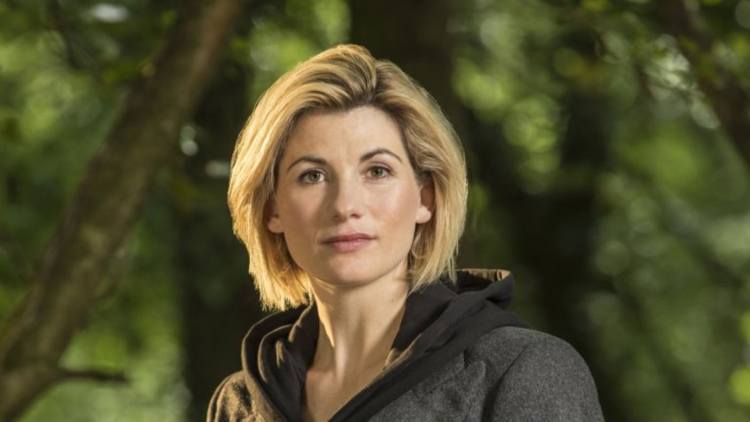
Doctor Who number thirteen is Jodie Whittaker. After media speculation and BBC misdirection for several years, the first female Doctor has been revealed. The newly appointed Doctor, Jodie Whittaker, has been quoted as saying:
Doctor Who
“To be asked to play the ultimate character, to get to play pretend in the truest form: this is why I wanted to be an actor in the first place. To be able to play someone who is literally reinvented on screen, with all the freedoms that brings: what an unbelievable opportunity. And added to that, to be the first woman in this legendary role.”
Note: The series “Doctor Who” is a British time-travelling science-fiction television programme produced by the BBC since 1963.
Quote: Rolling Stone magazine Monday 17 July 2017 : Photo BBC
“Facebook and other platforms should be classed as publishers”
Stephen Fry
British actor and author Stephen Fry, speaking at Hay Literary Festival, accuses “aggregating news agencies” of not taking responsibility for their content. Fry has called for Facebook and other “aggregating news agencies” to be reclassified as publishers in order to stop fake news and online abuse spreading by making social media subject to the same legal responsibilities as traditional news websites.
Outlining his “reformation” for the internet, as part of the Hay literary festival’s programme to mark the quincentenary of Martin Luther’s Ninety-Five Theses in 1517, Fry accused social media platforms of refusing to “take responsibility for those dangerous, defamatory, inflammatory and fake items whose effects will have legal consequences for traditional printed or broadcast media, but which they can escape”. Facebook is flooded with “sextortion” and revenge porn, files reveal leaked documents which show the site struggles with the mammoth task of policing content.
“One thesis I could immediately nail up to the tent flag is to call for aggregating news agencies like Facebook to be immediately classified as publishers. At the moment, they are evading responsibility for their content as they can claim to be platforms, rather than publishers. Given that they are now a major source of news for 80% of the population, that is clearly an absurd anomaly,” Fry said.
“If they, and Twitter and like platforms recognised their responsibilities as publishers, it would certainly help them better police their content for unacceptable libels, defamations, threats and other horrors, that a free belief in the value of the press would, as a matter of course, be expected to control.”
Last week, it was announced that Facebook, Twitter and YouTube were facing tough new pan-European laws, forcing them to remove hate speech and sexually explicit videos or face steep fines. Fry said he also believed they would soon be forced into new legal responsibilities, and deemed the issue “frankly small potatoes” compared with “some huge potatoes [that] are looming.”
Citing the failure at British Airways IT system on Saturday that led to BA flights being grounded at Heathrow and Gatwick airports, Fry cautioned that the world’s reliance on digital systems would also inevitably prompt a cataclysmic cyber-attack and bring on a “digital winter for humankind”. He went on to say “An extinction-level event … will obliterate our title deeds, eliminate our personal records, annul our bank accounts and life savings, delete all the archives and accumulated data of our existences and create a kind of digital winter for humankind,” Fry warned.
During the talk, Fry also addressed the rise of big data, which has seen private companies competing for and using the personal data of millions for corporate gain, the gig economy of Uber and Deliveroo; the inability of governments worldwide to keep up with technological progress; and live-streaming services like Facebook Live allowing people to broadcast acts of violence and self-harm. Using the myth of Pandora’s Box – where opening a container unleashed evils on the world but left hope trapped inside – as an analogy for the development of online abuse and trolling, Fry said the speed of technological development meant that problems associated with technology were now irreversible.
“The dark side of the rise of machines and the sudden obsolescence of so many careers and jobs; the potential for crime, exploitation, extortion; suppression and surveillance; and even newer forms of cyber-terrorism, give us the collywobbles and are challenges for certain. But we must understand that it is going to happen, collywobbles or not, because the lid is already off the jar. So the best we can do is keep the lid of the jar and let hope fly out.”
Acknowledgement: The Guardian Monday 29 May 2017 04.38 AEST Last modified on Thursday 1 June 2017 01.50 AEST Reporter: Sian Cain@siancain, Photograph: Anna Goldberg.
Note: Having bought his first computer in 1982, Stephen Fry is considered an enthusiast of computer technology, being an early adopter of the internet and social media.
Dear Diary, it’s a calm, warm July day, almost like an early Spring, but there are no butterflies or buzzing insects. The crows call to each other across the back garden and noisy miners flit back and forth like feathered investigators on an important assignment. The children in the house behind my suburban block are jumping on a netted trampoline and soon there will be a cry and a parent will take them off. The towels have been on the Hills Hoist clothes line for two days. A dried-out agapanthus head is sticking straight up out of the perennial foliage, a reminder that I am not a conscientious gardener.
TomatoesRosellaPoinsettiaAgave
So saying, in a green square pot I have grown a very tall tomato plant with fat green tomatoes (above) emerging every day. The old mandarin tree has a yearly crop of pale orange-coloured mandarins, and my rosella plants are flowering (above) while the spring onions and ginger roots carry on regardless. There are non-native plants like a small pomegranate, poinsettia bright red and blooming (above) and our huge native gum tree towers over all of us; blossom for the parrots and fruit bats. Special mention goes to our agave family. These Mexican beauties (above) love our subtropical climate and we’ve given away more young plants than I can remember.
Hoya
Coffee FlowerNest
Of course, there’s the herbs, for better or worse, always trying so hard … The trailing hoya (above) was a joy with its pink waxy flowers but recently it decided it had had enough and shrivelled up. The ancient mulberry tree went the same way, dying in the drought a few years back, followed by the peach and avocado trees. The coffee bean tree (above) survives anything. We live on a sloping hill with poor soil which is interesting because many years ago cows grazed on the lush hillsides around us. My father once said “All your good top soil has been washed downhill”. Not so long ago the rich alluvial earth along the creek at the bottom of our street was plundered and no doubt sold for landscaping.
When I first lived here, the suburb was casual with a leafy roughness about it which made for a relaxed, friendly vibe. Indeed, every home was owner/builder and most residents chose not to erect fences nor were there any footpaths. Trees were planted to shade homes from the fierce western afternoon sun and if you were lucky you had a ceiling fan. Ah, the 70s, a time of emerging from the past and forging ahead with little regard for past cultural or community identity but, in so doing, it created a unique city. Strangely, if not surprisingly, it has taken about 40 years for the people of Brisbane, Queensland, to appreciate our subtropical city. The past is now nostalgically and fondly remembered as the concrete is poured for yet another highrise apartment block.
If real estate developers would let us, we would return to our friendly, informal way of life instead of building cement block homes and painting them grey like every other capital city in Australia. To take my mind off the screeching of chainsaws as they hack down another leopard tree (above) I will write a little bit about our front garden.
Date PalmFlame TreeOrchidJacaranda
Fern
In the front garden, and I use the term loosely, there is structure and visions of edging and all, but I have let that slip. Two tall palm trees (above) on either side of the house echo early Queensland-style seen in rural areas. Tough-as-old-boots golden cane palms dot the area while I think our camellia is a Melbourne throwback. The stocky Illawarra flame tree with its pink orchids (above) was planted to complement the purple jacaranda nextdoor (viewed from balcony). I will not describe the weeds like camphor laurel, monstera or umbrella trees always springing up between the lemon scented tea-trees and more civilised shrubs. Does anyone still grow ‘mother-in-law tongue’ and ‘cast-iron’ plants? Cast iron is an unkillable broad leafed low-growing plant and I think it was beloved of early Victorians as either a hothouse or indoor plant in brass pots on wooden stands.
In the back garden, what there is left of our lawn is covered in bindii prickles thanks to lawn mowing contractors who disperse them willy-nilly via their lawn mower tyres. You can read my screed on Lawn Mower Men. There is a shallow bird bath under the eucalyptus tree for the enjoyment of noisy miner birds. On a tiled outdoor table, I have my inherited maiden hair fern (above) in a small pretty terracotta pot. The pot was thrown and fired by a neighbour and friend over thirty-five years ago. This little fern is hardier than most!
Apart from hedging bushes of murraya, or mock orange, there is no strong scent in the garden and no ornamental plantings with fragrance except a straggly French lavender potplant. Our forebears had a bit of foresight when it came to planting leafy, sheltering greenery in an otherwise hot landscape. It’s our trees which stand out, they, and others like them, represent our suburban streetscape. Long may they tower over us!





















 Thoughts Become Words