Take A Detour…

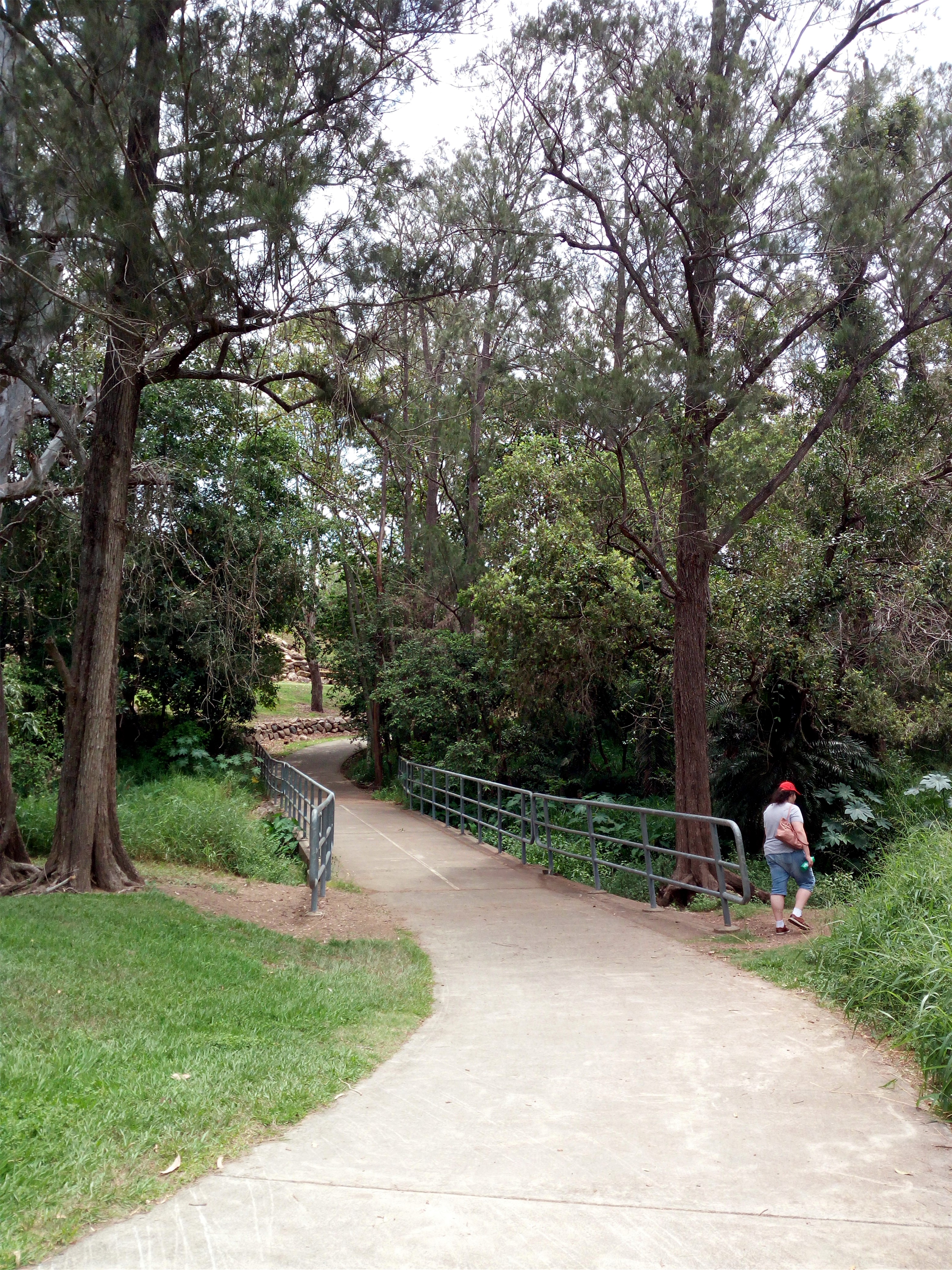
IMG_20201118_123239
Take a detour © Gretchen Bernet-Ward 2021

“The Road Not Taken” is a narrative poem by Robert Frost, published in 1916 as the first poem in the collection Mountain Interval.

The Road Not Taken

Two roads diverged in a yellow wood,
And sorry I could not travel both
And be one traveller, long I stood
And looked down one as far as I could
To where it bent in the undergrowth;

Then took the other, just as fair,
And having perhaps the better claim,
Because it was grassy and wanted wear;
Though as for that the passing there
Had worn them really about the same,

And both that morning equally lay
In leaves, no step had trodden black.
Oh, I kept the first for another day!
Yet knowing how way leads on to way,
I doubted if I should ever come back.

I shall be telling this with a sigh
Somewhere ages and ages hence:
Two roads diverged in a wood, and—
I took the one less travelled by,
And that has made all the difference.

By American poet Robert Lee Frost (March 1874 – January 1963)

Condamine River Sheep Shearers on the Track

Condamine River sheep shearers on the Track 1800s Queensland Australia

Your Precious Life

IMG_20200913_122610
Photo Gretchen Bernet-Ward 2020 — Quote from poem The Summer Day by Mary Oliver https://www.loc.gov/poetry/180/133.html

The Summer Day

Who made the world?

Who made the swan, and the black bear?

Who made the grasshopper?

This grasshopper, I mean-

the one who has flung herself out of the grass,

the one who is eating sugar out of my hand,

who is moving her jaws back and forth instead of up and down-

who is gazing around with her enormous and complicated eyes.

Now she lifts her pale forearms and thoroughly washes her face.

Now she snaps her wings open, and floats away.

I don’t know exactly what a prayer is.

I do know how to pay attention, how to fall down

into the grass, how to kneel down in the grass,

how to be idle and blessed, how to stroll through the fields,

which is what I have been doing all day.

Tell me, what else should I have done?

Doesn’t everything die at last, and too soon?

Tell me, what is it you plan to do

with your one wild and precious life?

Mary Oliver

Mary Oliver (1935-2019) author and Pulitzer Prize winning poet.
https://www.poetryfoundation.org/poets/mary-oliver

Gretchen Bernet-Ward

Poetry Clipart 09

Your inner light still shines

This poem touched a chord within me . . .

Multi-talented storyteller, author and freelancer Chris Hall of luna’s on line says “Basically, I love writing in all its forms.  I tell stories – short fiction pieces, even poetry – maybe from a writing prompt or a piece of artwork I’ve seen, or maybe something topical which I’ve read.  For the past few months I’ve been writing serials on my blog e.g. Sinead’s Final Quest and Alys and Sparky.”

Gretchen Bernet-Ward

Read on . . .

Chris Hall's avatarluna's on line

The image shows face of a woman. It is painted with luminous glitter paint and the features are highlighted with bright yellow lines, ending in a question mark on the forehead.Imprisoned inside a fragile façade

yet your inner light still glimmers

hope leaks out from every pore

and your smile still shines from deep within.

Confined within the corporeal

plagued by withering pain

yet the force that the fans your flame

is fuelled by a sharper source.

Your spark will not be extinguished

your spirit will not be crushed

not yet, while there’s hope

for another, better day.


Written in response to Sadjes What Do You See #42 photo prompt.
Image credit: Lucas Pezetaon Pexels

View original post

‘Trophy’ Poem

IMG_20200629_115807
Long forgotten heroes … or maybe not …

TROPHY

1st place

Legitimate

The first time I’ve won a

Trophy

In my entire life

And you weren’t there.

I was so excited

My body

SHOOK!

I never expected to win anything

At all

And

When I told you, I got

“Good job”

You encourage me to do this

Begged

Pleaded

Anything you could do

To make me join you in it

And then

I got

Everything

But not

Your joy

Poem by Alice Julia Miller
October 2013
https://hellopoetry.com/poem/497020/trophy/

Poetry Clipart 09 Gretchen Bernet-Ward

‘Ode to the Cat’ by Pablo Neruda

IMG_20200706_185218
Rescue cat JoJo does not want to sleep © Gretchen Bernet-Ward

EXTRACT FROM ‘ODE TO THE CAT’

by Pablo Neruda

… Oh independent wild beast

of the house

arrogant

vestige of the night,

lazy, gymnastic

and alien,

very deep cat,

secret policeman

of bedrooms,

insignia

of a

disappeared velvet,

surely there is no

enigma

in your manner,

perhaps you are not a mystery,

everyone knows of you

and you belong

to the least mysterious inhabitant,

perhaps everyone believes it,

everyone believes himself the owner,

proprietor,

uncle

of a cat,

companion,

colleague,

disciple

or friend

of his cat …

READ THE FULL POEM

https://www.librarything.com/topic/26410
Listed Number 8 but originally from ‘Odes to Common Things’ by poet Pablo Neruda 

There are several different translations from Chilean Spanish to English:
https://leonarddurso.com/2013/07/22/from-ode-to-a-cat-by-pablo-neruda/
http://unmasking.tripod.com/poemless/pn20.htm
https://amiracarluccio.com/2017/10/19/long-poems-ode-to-a-cat-by-pablo-neruda-oda-al-gato/
https://www.poemhunter.com/poem/ode-to-the-cat/

Poetry Clipart 14PROFILE

Pablo Neruda (1904–1973) born Parral, Chile.
Attended Chile University and became a poet, politician, activist, diplomat.
National Prize for Literature Chile (1945)
International Peace Prize (1950)
Lenin Peace Prize (1953)
American Academy of Arts and Letters (Foreign Honorary ∙ Literature ∙ 1968)
Nobel Prize in Literature (1971)
Golden Wreath (1972)

He was perhaps the most important Latin American poet of the 20th century and for a deeper look at his intriguing life I recommend https://www.wikiwand.com/en/Pablo_Neruda

‘AS EVERY CAT OWNER KNOWS, NOBODY OWNS A CAT’ — Ellen Perry Berkeley

Gretchen Bernet-Ward

Laugh in the Bath

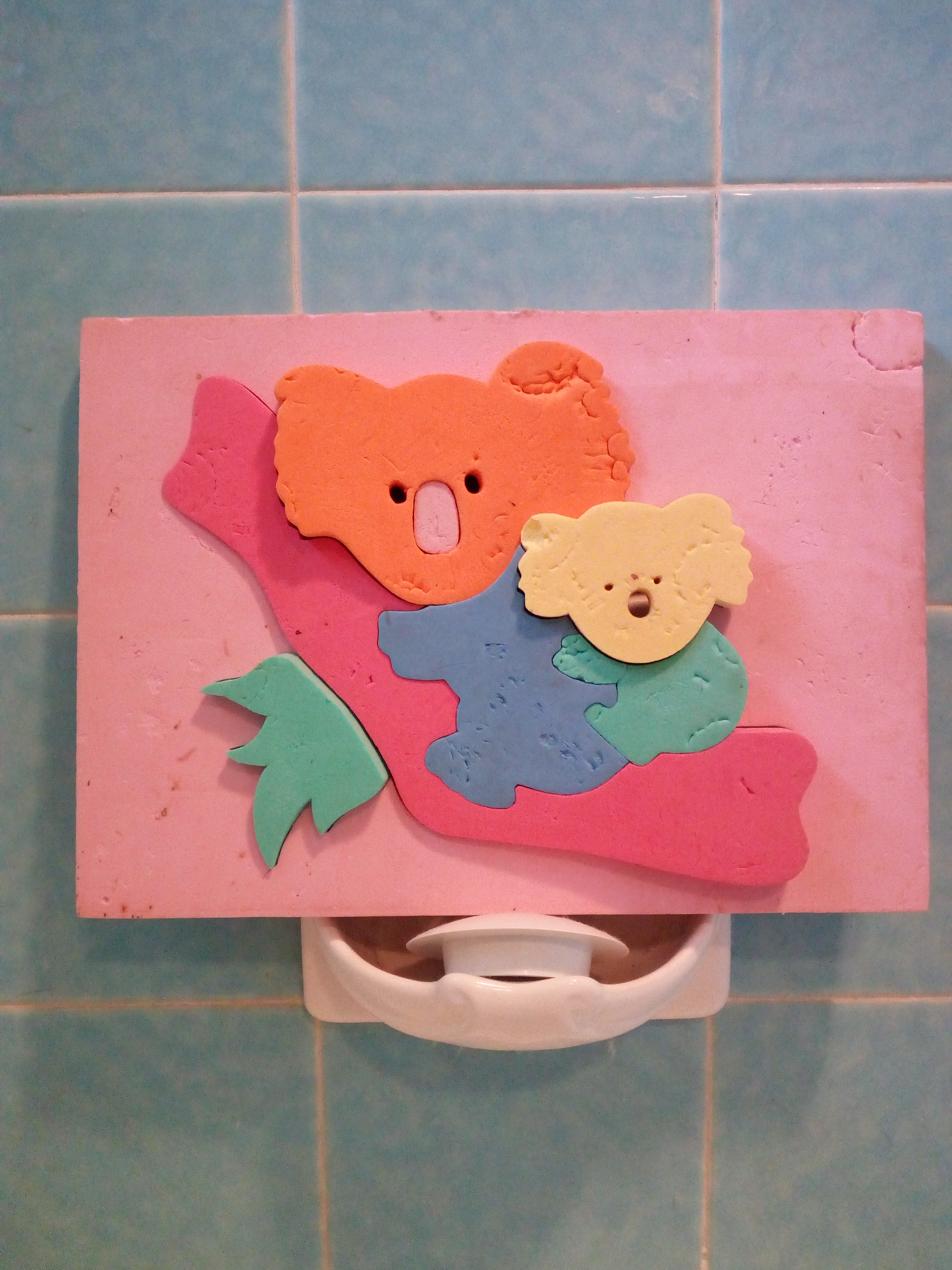
IMG_20200508_143520
Aussie Koala bath toy 2020 © Gretchen Bernet-Ward

Bath Laugh 3

Sitting in my bath I heard a great big glug

Followed by a bubble followed by the plug

I must have pulled it out but I didn’t know

The water in my bath it began to go

It was getting lower way below my knees

I was getting colder and I began to freeze

I put a towel round me to try and get some heat

There I saw the plug lying at my feet

Then I picked it up off the bathroom floor

Put it back into the bath and filled it up once more.

Poem
by
William Worthless

“I like writing poems for everyone and try to bring enjoyment and make people feel happy after reading.”

March 2010 © William Worthless

More poems https://hellopoetry.com/william-worthless/

Raindrop

Bush Ballad ‘The Banks of the Condamine’

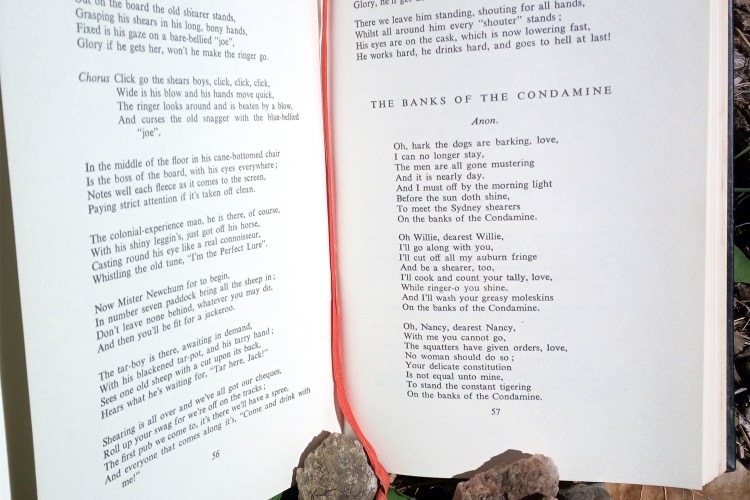
The Banks of the Condamine


Oh, hark the dogs are barking, love,

I can no longer stay,

The men are all gone mustering

And it is nearly day.

And I must be off by the morning light,

Before the sun doth shine,

To meet the Roma shearers,

On the banks of the Condamine.


Oh Willie, dearest Willie,

I’ll go along with you,

I’ll cut off all my auburn fringe

And be a shearer, too.

I’ll cook, and count your tally, love,

While ringer-o you shine,

And I’ll wash your greasy moleskins

On the banks of the Condamine.


Oh, Nancy, dearest Nancy,

With me you cannot go,

The squatters gave us orders, love,

No woman should do so;

Your delicate constitution

Is not equal unto mine,

To withstand the constant tigering

On the banks of the Condamine.


Oh Willy, dearest Willy,

Then stay back home with me,

We’ll take up a selection,

And a farmer’s wife I’ll be.

I’ll help you husk the corn, love,

And cook your meals so fine.

You’ll forget the ram-stag mutton

On the banks of the Condamine.


Oh, Nancy, dearest Nancy,

Please do not hold me back,

Down there the boys are waiting,

And I must be on the track.

So here’s a goodbye kiss, love,

Back home here I’ll incline

When we’ve shorn the last of the jumbucks

On the banks of the Condamine.


Anonymous.


From ‘Bush Songs, Ballads and Other Verse’ selected by Douglas Stewart and Nancy Keesing and published 1967 by Angus & Robertson Ltd, printed by Discovery Press.

The following information from—
https://music.stevetowson.com/track/the-banks-of-the-condamine-2

Poetry Clipart 08

Australian traditional music has a dearth of love songs, but here is one from our home state of Queensland.  The English folk singer and collector A.L. Lloyd wrote about this song—

“Throughout the fifty years from 1820 to 1870, broadside printers in London, Newcastle, Dublin and elsewhere did a good trade with the stall-ballad called ‘Banks of the Nile’, a song from the Napoleonic Wars.  The song spread to America and Australia, and in Queensland it became parodied as ‘The Banks of the Condamine’, with the hero no longer a soldier but a horse-breaker or a shearer.  It has turned up in sundry shapes, to various tunes, many times over, mostly in Queensland.”

FOOTNOTE:

  1. This bush ballad was first published under another name in The Queenslander, the literary edition of the Brisbane Courier in 1894.
  2. The Condamine River in southeast Queensland is 657 kilometres long and starts below Cons Plain and ends at the Balonne River.
  3. It was named in honour of Lieut. Thomas De La Condamine (1797-1873) the A.D.C. to Governor Ralph Darling who also has a river named after him.  But the Darling River has been known as the Baaka by the Barkindji people for thousands of years.  https://en.wikipedia.org/wiki/Condamine_River

Gretchen Bernet-Ward

Condamine River Sheep Shearer Demo

Fire and Rain from Poet Kate Llewellyn

Kate Llewellyn is a hidden treasure.  I had not read any of her works before today but she is reaching the age of legend status and should be acknowledged for her beautiful poetry now rather than in retrospect.

In ‘Blue Mountains Christmas’ Kate Llewellyn explores the particular delight of summer rain which breaks a dry spell:

Yesterday, smoke from the valley-–

I thought it was mist

until I smelt it-–

and today, each leaf holds water drops,

shining – it rained in the night.

Kate Llewellyn expresses wonder in the capacity of nature for regeneration in the face of disaster, and nature’s opportunism.  In ‘Magpies’ she defines the summer heat and leaving a garden sprinkler on while a bushfire rages:

It had been hot for days,

the garden sprawled-–

hit like a cricketer.

I left a hose on,

hanging in the apple tree,

and went indoors and slept.

Magpies found this fountain

and stalked around.

They made a midsummer opera

and gargled water-–

it became their song.

They sang as if to praise

the fountain in the tree.

While all this was happening

a hundred fires swept the State.

Great trees exploded,

birds and animals caught fire.

People died and houses burnt,

yet still these magpies sang

around the fountain in the tree.

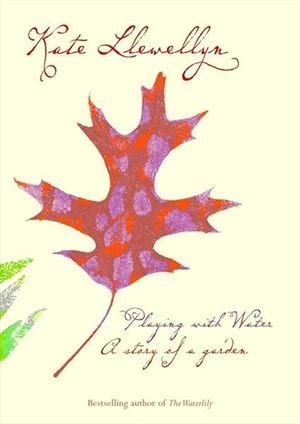
Poet Kate Llewellyn Playing With Water book
‘Playing with Water’ (Pymble NSW HarperCollins 2005) creates a meditation on nature, on community, on the cycle of life. A lyrical memoir that is a celebration of the senses and the seasons.

Australia is the driest inhabited continent on the planet.  It is natural that drought and the regeneration which comes from bushfires and drought-breaking rains are timeless subjects in our poetry and evocatively captured by Kate Llewellyn.

Gretchen Bernet-Ward

PROFILE

Kate Llewellyn is an award-winning Australian poet, author, diarist and travel writer.  She is the author of twenty-four books comprising eight of poetry, five of travel, journals, memoir ‘The Dressmaker’s Daughter’, letters and essays.  “Kate Llewellyn is naturally poetic, naturally personal, and uniquely generous with it.” writes Australian Book Review’s South Australian State Editor Peter Goldsworthy.  Further reading Poetry Library.

ABC Radio National transcript:
https://www.abc.net.au/radionational/programs/saturdayextra/kate-llewellyn/3288742

Poetry ‘Deep Into the Heart of Wales’

Sunday 1st March 2020 the Wales Readathon and Dewithon20 begins!  To get fired up, read Gareth Evans emotive poem, one of many he penned on a trek across Wales.

“In the summer of 2003, Gareth Evans walked the length of Wales from Cardiff to Holyhead, taking 28 days to cover over 500km and 18000m of ascent.  Twenty-eight poems were inspired by the journey.  Some are humorous, some are philosophical, some are descriptive and all are the product of quiet, solitary observation.  Join Welshman Gareth as he probes deep into the heart of Wales.”

Here is one of his poems—

“The Dragon’s Back”

Turned to motionless stone by a great Welsh wizard

His red scaly back turned to a silvery grey

The most powerful dragon that ever lived

Is harnessed by a mysterious, magical spell

His elongated head peers down on the Llanberis lakes

His massive body full of spikes is a fearsome sight

His rock-studded spine slumped high above Ogwen

Gashes line his steep sides like old war wounds shooting down to Idwal

Gullies and arêtes form the webs of his folded wings

A bristly tail drops down suddenly, decorated by spectacular pinnacles

Before flicking up again with one last majestic sweep

To its triple-pronged tip soaring towards the heavens

The roar that once filled the valleys preserved forever

In the howl of the wind and the scream of the jets in Nant Ffrancon

His beauty is held in the eagles that now circle above him

He lives on in the spirit of the people of Wales

Courage and passion are mirrored in their eyes

And his fire still burns in the depths of their hearts

By Gareth L Evans 2003

Poetry from “Deep Into the Heart of Wales”
http://www.authorsden.com/visit/viewPoetry.asp?AuthorID=8106

Wales Readathon 2020
https://bookjotter.com/2020/02/03/are-you-ready-for-wales-readathon-2020/

My Dewithon20 post
https://thoughtsbecomewords.com/2020/02/21/are-you-ready-for-wales-readathon-2020/

‘One Moonlit Night’ by Caradog Prichard is currently winging its way to me via Booktopia.  It is the book chosen by Dewithon20 as a group read.  Or pick your own book and join us!

Gretchen Bernet-Ward

Welsh Flag

Dewithon Logo Daffs


‘Ebb’ Poem by Edna St. Vincent Millay

Birdbath IMG_20200123_125042 (12)
‘Ebb’ by Edna St. Vincent Millay (1892-1950)

Edna St. Vincent Millay was born in Rockland, Maine USA, on 22 February 1892.  Edna’s poetry and playwright collections include The Ballad of the Harp-Weaver (Flying Cloud Press 1922) winner of the Pulitzer Prize, and Renascence and Other Poems (Harper 1917)

Edna St Vincent Millay Poet 02

Edna won a scholarship to Vassar College and became famous during her lifetime for her poetry with its passionate, formal lyrics, her flame-red hair, outspoken political views and unconventional lifestyle.  She died on 18 October, 1950, in Austerlitz, New York.

Poets https://poets.org/poem/ebb
Poetry Foundation https://www.poetryfoundation.org/poems/55993/renascence

Gretchen Bernet-Ward