Camel Milk Coffee at Summer Land Camel Farm

A local newspaper notice attracted my attention.  Did I read that correctly?  A camel farm excursion?  Here is the true story of my expedition into camel territory.

I’d heard about camel milk and wanted to know more, so I contacted the organiser National Seniors secretary.  Of course, they had me at “camels” but when I see meals included, I’m there.  The itinerary read “East Coast Coach depart 9am and arrive Summer Land Camel Farm, Harrisville, morning tea and guided farm tour.  Lunch at Commercial Hotel (adjoining Thirsty Camel bottleshop) before travelling home via scenic route 4pm.”  Hooked and booked!

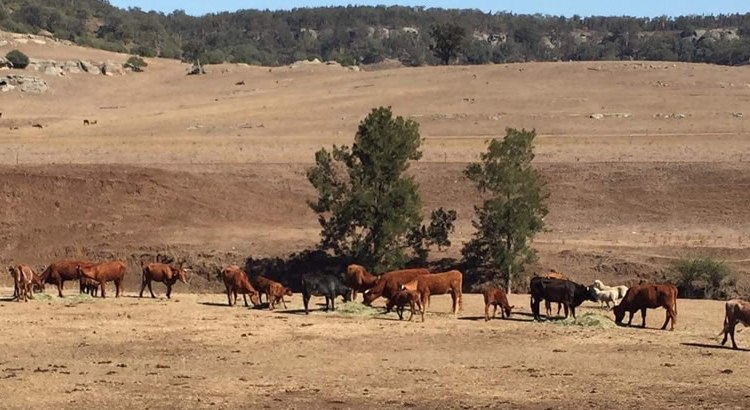
On boarding the coach, I was given a warm National Seniors welcome, and on disembarking the coach 45 minutes later, the first thing I noticed was the vast blue sky over Summer Land Camel Farm.  A rolling vista spread out around me.  In the distance the smudged outline of the Scenic Rim, part of the Great Dividing Range, and in the foreground hundreds of camels!  It was an odd sight, camels of different sizes grazing in the paddocks, until I realised they were at home in the landscape.

Now, first let’s clear up some camel falsehoods.  Camels do not spit but alpacas do.  Camel footpads are better suited to protect vegetation than cows and horses.  Of course, it’s common knowledge that a camel can walk over a hundred kilometres without water and carry heavier loads than a horse.  But did you know that they are excellent swimmers?  Who’d have thought but it’s true.

We strolled to the beautiful old Queenslander homestead where a spread of fresh scones, homemade jam and cream awaited.  Then we realised what we were eating.  The white fromage cream I dobbed on my scones and the milk in my coffee were not from a dairy cow but a camel.  Delicious!  And, as we subsequently found out, very good for our digestive tract.  Camel milk is like an immune boost, an anti-inflammatory which can benefit our gut, skin and hair.

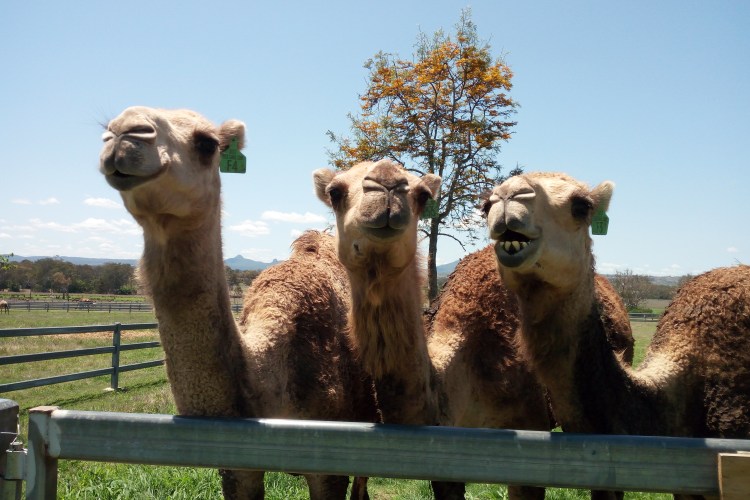
I loved meeting the camels at the fence, talking to them as they blinked their long eyelashes, obviously assessing if I had anything edible in my hand.  When they saw the camera, I believe they actually posed, holding quite still while I took full advantage of this photo opportunity.  See the camel on the right smiling!  Everything was peaceful and the air smelt fresh. No camel aroma wafting on the breeze.  Then my models wheeled away to check out an inviting dust bath.

In Australia we have dromedary camels, one hump.  The dromedary is the smaller of the two species of camel and female gestation period is 13-14 months or around 410 days.  I saw a baby camel, 24-hours old, all spindly legs, wobbling and flopping yet determined to stand.  I asked if I could sponsor a camel, an adorable critter to watch grow up.  Not yet, but one day this may be possible.  In the meantime I joined the Summer Land Camels Club and harbour happy thoughts of riding a camel on my next visit.

Summer Land CEO Jeff Flood
Jeff Flood, CEO Summer Land Camel Farm, Business Strategist, Biochemist and Nutritional Immunotherapist.

Our group walked to a vast shed where the cheese, cream and milk are tested and processed.  We sat in the breezeway while Jeff Flood, biochemist and immunotherapist, delivered an intelligent, informative and heartfelt talk on all things camel.  Even biomes got a mention, and Jeff is very open about the farm operations.  I wished my school days had involved such an absorbing field trip.

A passionate cameleer from a farming background, Jeff Flood is CEO and co-founder of Summer Land Camel Farm, the largest of its kind in Australia.  Apart from playing rugby and completing several scientific degrees, he discovered that the immune protein and nutritional content of camel milk has healing benefits, showing positive results when used to treat his young son’s eczema.

Then onward to the open-air camel dairy, where we learned the long road to milking.  Camel milk and by-products are not high volume in Australia but its the largest commercial-scale camel dairy operation outside the Middle East and the third largest of its kind in the world.  Jeff and co-founder Paul Martin are training wild camels, breeding, researching, testing and pioneering the way.  Not only for Australia but the rest of the world.  Why can’t camel milk sit in the fridge next to other beverage flavourings?  Camellatté has a nice ring to it.

Jeff is concerned for the welfare of camels and told us some horrible yet true stories of the brutal decimation of the wild camel population in Australia.  The camel is a neglected animal among the policymakers.  Incorrect data is perpetuated to this day, mainly through ignorance and government propaganda.

IMG_20181023_104129

During the tour, it became obvious to me that camels have been given a raw deal.  They are well-suited to our Australian climate and in some ways more beneficial than imported European farm animals.  A bit of racism involved here?  Camels do not have top teeth yet they like rugged food; they can eat feral weed plants such as prickly pear and they don’t need lush green pastures to thrive.  During drought years, companion-herds of camels and cows survive better.  Camels can act as watchdogs, they have the intelligence of a six year-old child which is greater than a dog.  Plus they can take you on very, very long walks!

Back at the homestead, we enjoyed some taste-testing and Summer Land Camel Farm staff excelled with their hospitality.  Unlike almond milk or soy milk, I had an instant attraction to camel milk.  It suited my palate without the “I’ll get used to it” phase.  Being lactose-intolerant, that’s a blessing.  I perused items for sale; from camel milk and cheeses through to soap, hand-cream and artwork by Fiona.  If you forget the Esky, cold bags can be purchased for a nominal amount and my Camel Persian Feta and other goodies were safely tucked away.

Time to head off down the road and partake of a pub lunch at the Commercial Hotel in Harrisville.  After our meal, we strolled around the small township.  I looked left and right before crossing the road but it wasn’t really necessary.

The coach swayed gently as we headed homeward, and I was pondering this enjoyable day out when my thoughts reached a conclusion.  I had looked into the eyes of a camel and seen a friendly, interested gaze.  I think the world needs more friendly interest in camels.  And more camel milk in coffee!

Gretchen Bernet-Ward

FARM & CAFE OPENING HOURS:
Mon-Sat: 9am – 3pm
Sun: 9am – 4.30pm
Closed Public Holidays

LOCATION:
8 Charles Chauvel Drive
Harrisville QLD 4307
AUSTRALIA

Website:       https://summerlandcamels.com.au/
Facebook:    https://www.facebook.com/summerlandcamelfarm/
Contact:       admin@summerlandcamels.com.au
Instagram:  @summerlandcamels
Café menuhttps://summerlandcamels.com.au/wp-content/uploads/2018/07/SLC-Homestead-Cafe-MENU-FEB-2018.pdf
Investor enquiriesinfo@wildcamelcorp.com.au
Further reading:      https://camel4all.blog/2018/05/15/the-camel-milk-story-theme-of-the-world-camel-day-2018/

Stop the Press – My camel post has been used online and print issue by Your Time 55+ Magazine – Read below!

IMG_20190207_090138

The Year of Living Duckishly

Did you know that?  In the spirit of The Duck Pond, here’s a heads up from author Jen Storer of Girl & Duck.

Exciting times!  Jen’s SCRIBBLES CREATIVE GROUP (writing and illustration) is having a FLASH SALE on 30th September 2018.  Join now!

Yay! That’s 30% off their signature online course – 30% off on the 30th.  Ink it in, okay?

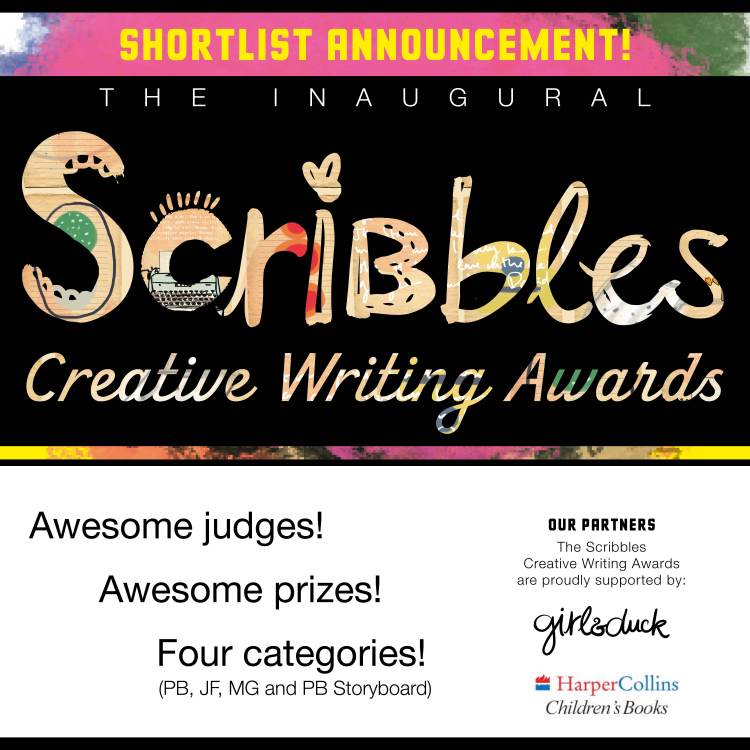
 Then the SCRIBBLES CREATIVE WRITING AWARDS open on 1st October 2018.

Have you got an awesome picture book manuscript or a junior fiction story you think might fly in the competition?  Middle grade?  An exciting storyboard?  There are FOUR categories and I bet you’ve got something creative worth entering!

To read all about the inaugural SCRIBBLES CREATIVE AWARDS plus prizes and how you can win a manuscript assessment and one-hour Skype coaching call with published author Jen Storer of Girl & Duck CLICK HERE.

Clarrie's Pig Day OutJen, creator of Truly Tan series and other children’s books, says “I hope this post flips your lid.  But only in a good way!”

#keepscribbling  #stayinspired
To keep up with all the news (and all the pretty pictures) follow Jen on Instagram.

Visit the website Girl & Duck and ask to join Jen, Zoe, Dulcie, Geek Duck (and me, and the other Duckies from around the world, talking children’s literature and stuff) in The Duck Pond, the most unique and supportive online kidlit group around – then join SCRIBBLES for even more fun!  I will definitely be entering the Awards competition!

All the links you’ll ever need to write and illustrate brilliant kids books:

https://girlandduck.com/
https://girlandduck.com/online-courses/scribbles/
https://girlandduck.com/scribbles-creative-writing-awards/
https://girlandduck.com/online-courses/the-girl-duck-institute/

Gretchen Bernet-Ward

Reading Hour – One Lousy Hour!

How pathetic!  We have 24 glorious hours in a day and only one is chosen!  And it’s not even held simultaneously around the country!  Have you read your one hour today?

Australian Reading Hour Bookshop Logo

This year Australian Reading Hour falls on Thursday 20 September 2018 and the nominal time in the evening is 6pm to 7pm.  But individual reading and group reads will be happening all day to avoid important sporting fixtures, special events and venue opening hours, and to accommodate the different time zones in Australia.

Fair enough, however, it’s still one lousy hour!  What is the Australian Reading Hour committee thinking?  There are 8760 hours in one year, so use some more of them.

If more hours aren’t forthcoming next year, why not (1) disrupt your sporting fixtures (2) put the special event on hold (3) pause during venue opening hours (4) delay that visit to the gym and (5) forget a few things to stop and READ for ONE lousy hour!

Meanwhile, find a really quiet, cosy place and settle down alone.  Betcha read for longer than an hour!

Or gather a group together at school, work, bookshops like Avid Reader, the library, the park or get the family together in your own home and read, read, read for one lousy hour.

One hour isn’t going to kill you, the world won’t crumble around you – but you and the adults and children of Australia will visit another place through the pages of a book.  For one lousy hour…

Gretchen Bernet-Ward

Books Book Shelf 18

WordPress Likeable Post Tally 01
Thank you!


Linked to my other post https://thoughtsbecomewords.com/2018/09/16/your-reading-hour-countdown/

Your Reading Hour Countdown

Australian Reading Hour ReminderAustralian Reading Book Stack 2018Australian Reading Hour BoyAustralian Reading Hour Girl

On Thursday 20 September 2018 all Australians across the country are encouraged to pick up a book and read for one hour Gretchen Bernet-Ward

Linked to my other post https://thoughtsbecomewords.com/2018/09/20/reading-hour-one-lousy-hour/

Indigenous Literacy Day


Indigenous Literacy Day 2018


You have the month of September to sign up to the new Indigenous Literacy Day fundraising campaign and fill your virtual shelf with books for children in remote communities.  Participate in the launch on Wednesday 5 September and discover how to fill a bookshelf for children in the remote Australian outback.

It’s something new, something a little different, something the Indigenous Literacy Foundation believes you’ll enjoy sharing with your friends and family, and something that gives you the opportunity of ensuring kids in remote communities have access to quality, new books.

Commencing on Indigenous Literacy Day (5 September 2018) the new ‘Fill a Bookshelf’ fundraising campaign aims to raise $300,000 to help ILF gift 30,000 new books to schools and service organisations in remote communities where books are scarce.

How does it work? The idea is simple…

  1. Sign up online to create a fundraising page and receive an empty virtual bookshelf.
  2. Ask family, friends, colleagues to donate a virtual book to your page (in the form of a donation)
  3. Fill your virtual bookshelf!
  4. Change the lives of Indigenous children.

Your donations will help buy new, carefully selected books for children who have none.  To put it quite simply – without your support, in a very real sense – bookshelves in remote Indigenous communities are empty.

All children in Australia deserve the same opportunities – in education, employment, health and wellbeing.  Evidence shows that literacy is the pathway to CHOICE for these opportunities, and BOOKS are the building blocks for literacy.  If you believe this too, sign up today!

I BELIEVE – SIGN ME UP  ‘Fill a Bookshelf’ and celebrate Indigenous Literacy Day!

The Indigenous Literacy Foundation
PO Box 663 Broadway NSW 2007
AustraliaIndigenous Literacy Foundation


Indigenous Literacy Day is a national celebration of Indigenous culture, stories, language and literacy.  Indigenous Literacy Day aims to raise awareness of the need to support literacy in remote and isolated Indigenous communities of Australia.


Indigenous Childrens Book Moli Det BigiBigi
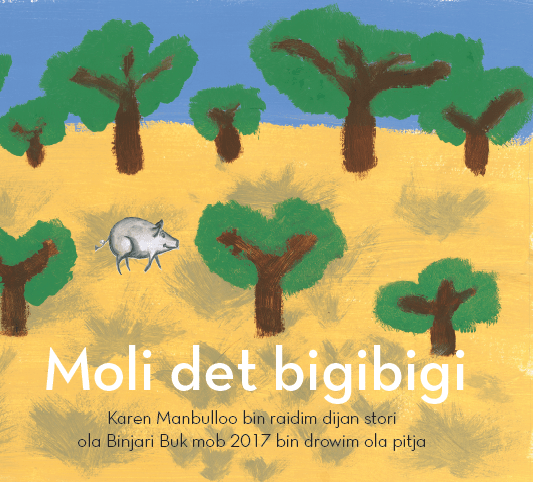
‘Moli det bigibigi’ (Molly the Pig) a new children’s picture book written by Karen Manbulloo, from the remote Binjari community near Katherine in the Northern Territory. Written in Kriol and English, ‘Moli det bigibigi’ is a story based on a real-life pet pig of the Binjari community, found in the bush by Karen’s brother.

Gretchen Bernet-Ward

The Ekka: Agricultural Extravaganza

On arrival, I did the obligatory Ekka walk through the Cattle Pavilion, holding my nose but still loving those pretty Ayrshire dairy cows.  I recall turning a corner and stumbling upon a huge Brahman bull standing on a concrete slab while the farmer hosed shampoo off his shiny hide.  However fascinating, I bet it’s out-of-bounds now.  Other memories waft through, of sitting in the Woodchop Arena, the thunk of the axe and the smell of pine as I eat a Chiko roll with hot chips and drink cold lemonade.  Where are the jam doughnuts?  Afterwards, the lengthy queue for the toilets becomes a good opportunity to study the Ekka guide.
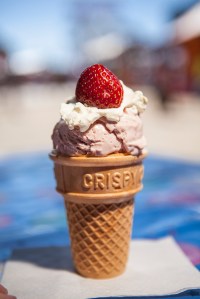
Ekka Strawberry IceCream ConeApart from retaining the obvious things like farm livestock, sideshow alley and wood-chopping events, the Ekka has changed greatly over the years.  It shrunk in size yet the slide expanded and just when the drought-stricken man on the land needs the most support he takes a back seat to fashion parades, Fine Art and strawberry sundae ice-cream cones.  Time to reflect…

A Brisbane institution since 1876, the Ekka (a slang term for Exhibition) is officially known as Royal Queensland Show run by RNA The Royal National Agricultural and Industrial Association of Queensland.  It is held in Brisbane for ten days each year at the beginning of August.  Dates at the time of writing are 10-19 August 2018.  The permanent Brisbane Showgrounds venue is situated in Bowen Hills and the State Library of Queensland holds an extensive collection of materials from past exhibitions which show many changes around the old grandstand building.  Still, it does hold a special place in the hearts of Brisbanites.

  I make no apologies for the length of this retrospective, my stream-of-consciousness dictated the terms, I’m satisfied with what I have written and I hope you understand my sentiments.

A long-held tradition is a visit to the Showbag Pavilion which is always packed to capacity and resembles an apocalyptic movie set.  Staring eyes seeking Valhalla, the perfect showbag, the one packed with the most goodies at the lowest price.  Showbags are half-full of sample merchandise in small packets, mainly chocolate and unhealthy food, with a plastic kids game, latest movie trivia or blow-up hammer to whack your friend over the head with every two minutes until he agrees to go on a ride.  In Sideshow Alley, instead of dodgem cars you choose a huge twisty, jerky ride.  Ultimately it’s not a good idea because he vomits over the side of the ride, down onto a girl trying to score a prize with a wonky tennis ball.

Ekka Poultry Bird PavilionVarious outbuildings to explore; one overheated and smelling of sawdust accommodates Poultry, aisles of chickens and fancy birds in wire cages, biding their time until they are awarded a ribbon or packed off home to the henhouse.  Outside there are flocks of people from all walks of life, all ages and every nationality clutching the latest silly novelty.  Or wearing the latest silly hat, the ultimate in fast fashion, only ever worn once––thank goodness.

Babies in prams sleep through the pushing and shoving and manoeuvring to get into the Animal Nursery and, rudely awakened by a squealing piglet, find themselves eye to eye with a billy goat.  The pedigree dog and cat judging is amazing, especially the cats because they actually like being groomed within an inch of their lives and they fluff up like puffer fish.  I seem to remember sheep shearing rivalry, big blokes welding buzzing clippers, denuding a sheep in a couple of well-placed blows.  The sheep is pushed outside and its woolly coat is flung onto a pile of other woolly oily off-white fleece.

If you can’t wrangle a seat in the Fashion Pavilion or would prefer not to ride a swaying gondola on the Ferris Wheel, there’s usually adequate seating on wooden benches around the Main Arena.  Animals are good at ignoring schedules so this is where most of the unscripted action takes place.  There’s high-speed chariot races, tent pegging, beef cattle judging, showjumping, Clydesdale draught horses and children with Shetland ponies––a recipe for disaster every Ekka and always good for a shocked squeal or belly laugh.  A disgruntled animal can pull away, chariots have scraped walls and riders have fallen off their horses.  Alternatively, breakaway sheep from the sheep dog trials have been known to bolt for the exit.

Ekka JetPack ManYears ago, with the space race wasting trillions of dollars, another venture wasted trillions of dollars; the Jet Pack.  A man dressed like an astronaut strapped on a jet backpack with handles (not actual image) revved it and rose into the air.  He cruised from one side of the arena to the other and then slowly landed.  The noise was horrendous!  The sound decibels of a jet engine taking off.  Unfortunately the power was nothing like it.  The hype wasn’t worth the wait and I can understand why jet packs never became a form of transport for the daily commute.  It guzzled more fuel than V8 Utes and monster trucks arena race.

Ekka Fireworks

The nightly fireworks spectacular creates a photographer’s paradise and teenagers cuddle in the grandstands, saying ooh and aah at each burst of light but feeling queasy from all the Caramello Koalas they’ve consumed.  Behind them sits giggling siblings who always want to tag along.  The announcer’s comments jar, hardly necessary and often distorted, until the music takes over and tries to conquer the exploding light show.  I feel a pang for the beasties trying to get comfortable in a strange stall so far from home.

Ekka People's Day CrowdThe Wednesday in the middle of Ekka week is an official public holiday known as ‘People’s Day’.  It is best to avoid Wednesday if you hate crowds.  School children are granted alternate days off in the vain attempt to stop truancy although, more often than not, families take a long weekend.  The side pavilions are busy on Wednesday, 550 exhibitor stands, and they house agricultural equipment and all manner of things like the latest farmhouse gadgets, trucks, harvesters, even fish tanks.  Displays change with trends, one year healing crystals, next year heat packs and another organic drinks.  Face-painting is perennial yet the children cannot see the artwork on themselves.

Horticultural garden displays are magnificent, themed and fragrant, and it’s taken for granted everyone haggles over which one should have won the Grand Prize.  Actually, all blue ribbons throughout the Ekka are haggled over by crowd upon crowd of weary viewers with their own ideas of a prize-winner.  In search of a favourite, people used to trudge passed stalls, either declining a leaflet or, in the case of the beekeeping section, taking a free honey sample.  Then they would head to the Dairy Hall and the Butcher’s sausage-making display for a bit more sampling.  Is that still going?

One of my favourite displays, and possibly the most spectacular, was the Produce section of fruit and vegetable art.  Stacked high to the ceiling of a huge brick and corrugated iron shed sat row upon row of themed green-grocery: fruit ‘n’ veg in pictorial format.  From the front to the back, bleachers sloped up and away, loaded with colourful mosaics of farm produce, patterns featuring a banana grower, a town or shire, an historic area or rural landscape in Queensland where produce is grown.  Not all regions were represented and some were mixed goods, like pineapples and cotton and ubiquitous Bundaberg Rum sugar cane.

Throughout this kaleidoscope of colour, items of interest had been planted to explain a viewpoint, a nod to the growers or transporters of fresh food.  It wasn’t all that fresh by the end of ten days but it was auctioned off or given away.  I recollect struggling home on the train with a weighty pumpkin.  Silly really…however, I will mention my Pumpkin Fruit Cake

Last century, people ate things like plain fruit cake, a solid dried-fruit filled affair which makes a great base for wedding cake white icing.  Alternatively, fruit cake was popular baked loaf-style in a bread tin with glacé cherries and almonds on top.  A rich dark slice of home-made fruit cake was enough to sustain you throughout the afternoon or hiking for hours in the mountains.  Baking runs in my family, I tried my hand at a dense fruit cake moistened with mashed pumpkin.  It was a huge round thing, placed in a glass cabinet with an Entry Number plaque, surrounded by other Ekka cooking exhibits until heat and bright lighting eventually dried them out.  It earned me a ‘Commended’ and I was proud of its success.  Some cakes were sunken in the middle and I wondered why they were even entered.

Competition is fierce in the ‘domestic’ Craft exhibitions; patchwork quilting, floral arranging, cake decorating, painting and drawing.  There’s also a Children’s Section with displays of school-made arts, crafts and beautifully hand-penned documents.

The Photography section always captured my imagination, so much so that I entered a Kodak Ektachrome slide (a small cardboard-framed transparency) taken while on holiday in England.  It appeared in slideshow format on a huge screen in a darkened room and I was so pleased.  In any photography competition, it was always disappointing when a perfect photo won First Prize.  Deep down I knew it was taken by either a professional photographer or someone with heaps of money and expensive darkroom equipment.  Digital has certainly altered that scene.

When gawping at human endeavour grew tiring, or you had ten showbags in each hand and had to catch the train, there was an overhead chair lift which transported you from one side of the Ekka to the other.  This was scary fun, swinging way above the crowd; tempting too.  A good time to forage in showbags for Bertie Beetles, fairy floss and toffee apples, and I guess many a sticky glob was accidentally dropped.  Due to safety issues, or perhaps an uncool image, the chair lift was recently dismantled and removed.  I’ve got to admit I was disappointed but I never liked walking underneath it.

Umbrella The Adelaide Show BagsAugust is the end of winter in Brisbane and during the daytime the Ekka weather is warm and mainly dry, often with westerly winds, but at night the temperature drops considerably.  A hat, a jacket and a water bottle are necessary items.  If you’re so inclined, you can chill out at the Stockmen’s Bar and Grill, but parents and caregivers are usually seen overloaded with supplies to the point of distraction.  I found a ladies wallet left behind on a low wall and handed it over to the police Lost Property room.  It’s one of those things you later hope had been claimed.  At the time I didn’t give it a second thought––nearby was the Fire Brigade display with handsome fire fighters selling their latest hot-bod calendar.

A day at the Ekka is tiring yet it leaves you with an exuberant feeling and plenty to chat about next day.

A closing thought:  Is the 21st century bringing improvements as the older generation fades away?  On a new map, I notice a technology precinct, gourmet plaza, music stage and retail store; a bit like a shopping centre.  The Ekka land adjoins the central business district, a situation which makes it a very valuable piece of real estate.  The concept of ‘where the country meets the city’ shrinks each year, overtaken by commercialisation and globalisation, no longer a rare holiday for country families or a slice of wonderment for city children.  Will I be visiting the Ekka this year?  Perhaps the lure of an Ayrshire dairy cow or Caramello Koala showbag will tempt me.

Gretchen Bernet-Ward


Ekka RNA Show Logo
DEDICATION
:  To all my Ekka-loving friends past and present.  Special mention goes to blogging buddy Life After Sixty-Five who also has Ekka memories.

‘Curious Affection’ Hybrids of Patricia Piccinini’s Biotechnology Art

In her “Curious Affection” exhibition, world-renowned artist Patricia Piccinini and her DNA modified beings, credible and strangely familiar, invite us to find beauty in a transgenic social order not ruled by ideas of normality or perfection.  I was hesitant about visiting this curious collection but enjoyed the experience.

INTRODUCTION:  On a grand scale, the creations of Patricia Piccinini occupy the entire ground floor of Gallery Of Modern Art, Brisbane Australia, with a retrospective of her most recognisable works from the past 20 years.  It is Piccinini’s most ambitious solo exhibition to date, running from March to August 2018, with a collection of wall art and immersive multisensory installations – including new works like Heartwood (featured above) and a large-scale inflatable sculpture Pneutopia (not shown) exclusively conceived for the Gallery which rises effortlessly through an opening to the floor above.

* SOME VIEWERS MAY FIND THESE IMAGES DISTURBING *

TAP OR HOVER OVER IMAGES TO READ MY PICTORIAL COMMENTS.  Of course, this doesn’t convey lighting or sound effects!  My photographs are by no means exhaustive, there were many more art works and hybrid creations going about their daily lives.

Our guide explained most models are made of silicone, fibreglass, polyurethane and human hair – for a deeper understanding, Patricia Piccinini has recorded video stories and GOMA blog shows the exhibition conception to completion.

CLOSING:  Like most art, there is more to it than meets the eye.  Patricia Piccinini’s works are complex.  We are asked to think about our place in a world where advances in biotechnology, genetic engineering, organ harvesting and digital technologies are challenging the boundaries of humanity.

The more I learned about this exhibition, the more I understood the science, the pathos and the dangerous waters we may sail into one day, much the same as the internet was launched on a naïve world.  With intelligence and compassion we may learn to create something new without destroying the old.

Gretchen Bernet-Ward

NAIDOC Week ‘Because of Her, We Can’

NAIDOC Week 2018 Poster

Artwork:  tarmunggie-woman
Artist:  Cheryl Moggs

The 2018 National NAIDOC Poster was designed by Cheryl Moggs, a Bigambul woman from Goondiwindi, Queensland.  Cheryl drew on the history, courage and resilience of Aboriginal and Torres Strait Islander women to educate others.  The artwork (tarmunggie – woman) has three overlaying images, connecting dreamtime, culture and knowledge.

BECAUSE OF HER, WE CAN!

Theme:  NAIDOC Week 2018 celebrates the invaluable contributions that Aboriginal and Torres Strait Islander women have made – and continue to make – to our communities, our families, our rich history and to our nation.

“This artwork portrays the courage and resilience of Aboriginal and Torres Strait Islander women.  From the ripples of fresh water and salt water, across the travel pathways and song lines of our traditional lands and skies”.

NAIDOC WEEK 8-15 JULY 2018

Background:  NAIDOC Week celebrations are held across Australia each July to celebrate the history, culture and achievements of Aboriginal and Torres Strait Islander peoples.  NAIDOC is celebrated not only in Indigenous communities, but by Australians from all walks of life.  The week is a great opportunity to participate in a range of activities and to support your local Aboriginal and Torres Strait Islander community.

Origin:  NAIDOC originally stood for ‘National Aborigines and Islanders Day Observance Committee’.  This committee was once responsible for organising national activities during NAIDOC Week and its acronym has since become the name of the week itself.  Find out more about the origins and timeline history of NAIDOC Week.  Find out the history of the Australian Aboriginal flag and the Torres Strait Islander flag under Australian Flags.

Awards:  Each year there is a different focus city for the National NAIDOC Awards Ceremony.

  • Lifetime Achievement Award
  • Person of the Year
  • Female Elder of the Year
  • Male Elder of the Year
  • Caring for Country Award
  • Youth of the Year
  • Artist of the Year
  • Scholar of the Year
  • Apprentice of the Year
  • Sportsperson of the Year

This year the focus city of Sydney will start NAIDOC Week with the 2018 National NAIDOC Awards announced at a black tie ceremony and ball.  National NAIDOC Poster Competition and the NAIDOC Awards recipients are selected by the National NAIDOC Committee.

Websitenaidoc.org.au
Facebook:  facebook.com/@NAIDOC
Twitter:  #NAIDOC2018 #BecauseOfHerWeCan

To learn more about NAIDOC Week activities in your area, contact your nearest Regional Office.

Gretchen Bernet-Ward

NAIDOC Poster Facebook Banner 2018

NAIDOC Week Statement 01

Sisters in Crime 25th Scarlet Stiletto Awards

The 25th Scarlet Stiletto Awards have been launched – with a body or two in the library – and I have reblogged the exciting news:

Sisters in Crime Australia’s 25th Scarlet Stiletto Awards were launched by Dr Angela Savage at Melbourne’s Athenaeum Library on 27 April, 2018. Almost $10,000 is on offer in prize money.

The event included dramatic readings of three winning “body in the library” stories – “Jane” by Narrelle M Harris (read by Jane Clifton), “Caught on Camera” by Jenny Spence (read by Susanna Lobez) and “Brought to Book” by Kath Harper (read by Leigh Redhead).

Dr Savage (below), the 2011 shoe winner and now Director of Writers’ Victoria, declared the awards “a milestone for Australian crime – at least of the literary persuasion”.

The awards, she said, had “spring-boarded the careers of many writers, including myself. To date, 3084 stories have been entered with 23 Scarlet Stiletto Award winners –including category winners – going on to have novels published.

“Like many of Sisters in Crime’s best ideas, it sprang from a well-lubricated meeting in St Kilda when the convenors debated how they could unearth the female criminal talent they were convinced was lurking everywhere.

“Once a competition was settled on, it didn’t take long to settle on a name – the scarlet stiletto, a feminist play on the traditions of the genre. The stiletto is both a weapon and a shoe worn by women. And of course, the colour scarlet has a special association for us as women. And they were right – talent is lurking everywhere, sometimes in the most unlikely places!”

MASTER-175-LOGO

The success and longevity of the Awards have been hugely dependent on the generosity of Australian publishers, booksellers, the film and television industry, authors and other parties.

Sisters in Crime had been uncertain that the launch would go ahead because, at the eleventh hour, the First Prize Sponsor, Bonnier/Echo Publishing, was closed down by its overseas arm. Luckily, Swinburne University and the ever-resourceful Dr Carolyn Beasley, Acting Chair of the Department of Media and Communication, stepped into the breach.

Sisters in Crime spokesperson, Carmel Shute, said, “We were also lacking a Young Writer Award sponsor because Allen & Unwin pulled out last year after more than 20 years of sponsorship. We were chuffed to get support at the last minute from Fleurieu Consult run by South Australian member Jessie Byrne, who is researching her creative PhD exegesis on Sisters in Crime Davitt Awards for best books.”

There are two brand-new awards on offer this year: Writers Victoria Crime and Punishment Award ($660) for the story with the most satisfying retribution (the winner gets a three-month spell in prison in the guise of a studio residency at Old Melbourne Gaol) and the International Association of Forensic Linguistics (IALF) Award for Best Forensic Linguistics Story ($1000).

IALF President, Dr Georgina Heydon (left) from RMIT, told the crowd that the award was designed to foster understanding of forensic linguistics which uses a scientific approach to language analysis in legal and criminal investigations.

“Typically, a forensic linguist is engaged to analyse the authorship of an anonymous document, to determine what was said and by whom in a covert recording, to identify coercive or oppressive questioning by police, or to determine the need for an interpreter. It’s not to be confused with the analysis of hand-writing styles.”

The full list of awards is:

  • The Swinburne University Award: 1st Prize: $1500
  • The Simon & Schuster Award: 2nd prize: $1000
  • The Sun Bookshop Award: 3rd Prize: $500
  • The Fleurieu Consult Award for Best Young Writer (18 and under): $500
  • The Athenaeum Library ‘Body in the Library’ Award: $1000 ($500 runner-up)
  • International Association of Forensic Linguists Award: $1000 for Best Forensic Linguistics Story
  • The Every Cloud Award for Best Mystery with History Story: $750
  • Kerry Greenwood Award for Best Malice Domestic Story: $750
  • Writers Victoria Crime and Punishment Award: $660 (studio residency, Old Melbourne Gaol) for the Story with the Most Satisfying Retribution
  • HarperCollins Publishers Award for Best Romantic Suspense Story: $500
  • Scarlet Stiletto Award for Best Financial Crime Story: $500
  • Clan Destine Press Award for Best Cross-genre Story: $500
  • Liz Navratil Award for Best Story with a Disabled Protagonist Award: $400
  • ScriptWorks Award for a Great Film Idea: $200

Nine collections of winning stories are available from Clan Destine Press.

Closing date for the awards is 31 August 2018. Entry fee is $20 (Sisters in Crime members) or $25 (others). Maximum length is 5000 words. The awards will be presented at a ceremony in Melbourne in late November.

To download an entry form, pay the entry fee and read the FAQs, click here

Sisters in Crime Awards Judith Rossell 01
Recent winners of the affiliated Davitt Women’s Crime Book Awards https://www.sistersincrime.org.au/the-davitt-awards/

Media comment: Carmel Shute, Secretary and National Co-convenor, Sisters in Crime Australia:
0412 569 356 or
admin@sistersincrime.org.au

Visit the Sisters in Crime website and sign up for their newsletter.
It would be criminal to miss out on this great opportunity!

Gretchen Bernet-Ward