You have the month of September to sign up to the new Indigenous Literacy Day fundraising campaign and fill your virtual shelf with books for children in remote communities. Participate in the launch on Wednesday 5 September and discover how to fill a bookshelf for children in the remote Australian outback.
It’s something new, something a little different, something the Indigenous Literacy Foundation believes you’ll enjoy sharing with your friends and family, and something that gives you the opportunity of ensuring kids in remote communities have access to quality, new books.
Commencing on Indigenous Literacy Day (5 September 2018) the new ‘Fill a Bookshelf’ fundraising campaign aims to raise $300,000 to help ILF gift 30,000 new books to schools and service organisations in remote communities where books are scarce.
How does it work? The idea is simple…
Sign up online to create a fundraising page and receive an empty virtual bookshelf.
Ask family, friends, colleagues to donate a virtual book to your page (in the form of a donation)
Fill your virtual bookshelf!
Change the lives of Indigenous children.
Your donations will help buy new, carefully selected books for children who have none. To put it quite simply – without your support, in a very real sense – bookshelves in remote Indigenous communities are empty.
All children in Australia deserve the same opportunities – in education, employment, health and wellbeing. Evidence shows that literacy is the pathway to CHOICE for these opportunities, and BOOKS are the building blocks for literacy. If you believe this too, sign up today!
The Indigenous Literacy Foundation
PO Box 663 Broadway NSW 2007
Australia
Indigenous Literacy Day is a national celebration of Indigenous culture, stories, language and literacy. Indigenous Literacy Day aims to raise awareness of the need to support literacy in remote and isolated Indigenous communities of Australia.
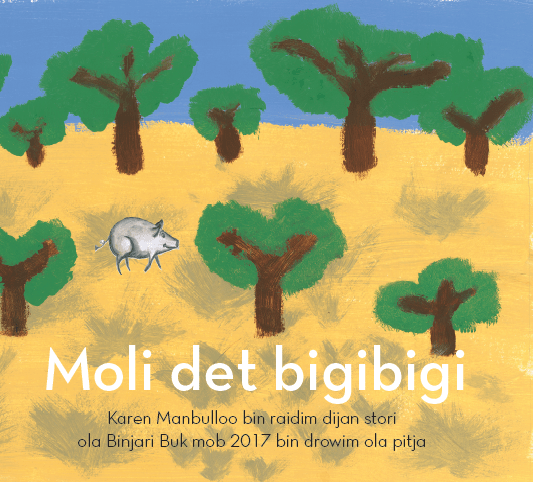
‘Moli det bigibigi’ (Molly the Pig) a new children’s picture book written by Karen Manbulloo, from the remote Binjari community near Katherine in the Northern Territory. Written in Kriol and English, ‘Moli det bigibigi’ is a story based on a real-life pet pig of the Binjari community, found in the bush by Karen’s brother.
This fun tag was brought to my attention by productive book blogger Paula Bardell-Hedley of BookJotter fame. Originally created by Beth of Bibliobeth the idea is to share a picture (aka ‘shelfie’) of your favourite bookshelf and then answer ten questions related to the titles displayed.
Visit Beth’sblog to see more info, the logo and tag and view posts by participating bloggers. Then launch your own unique Q&A Shelfie by Shelfie.
I think many readers will find these titles unfamiliar…
Part of Gretchen’s book shelves.
1. Is there any reason for this shelf being organised the way it is or is it purely random?
Short answer is ‘subliminally shelved’. Long answer is there are many bookshelves in our home and until I decided to participate in Shelfie by Shelfie I didn’t realise that most of my books are grouped. Either when they arrived or over a period of time, I’m not sure. There are clumps like non-fiction, poetry, humour, crime, fantasy and (not all shown) Australian content.
2. Tell us a story about one of the books on this shelf that is special to you, i.e. how you got it / a memory associated with it, etc.
Hard to pick just one. I know some of the authors (or received uncorrected bound proofs to review prior to publication) but my all-time special one would have to be ‘My Beachcombing Days: Ninety Sea Sonnets’ by Brisbane poet John Blight. His daughter, a family friend, gave it to me as a birthday gift in the same year as disastrous flooding hit the city. The flood waters also coincided with me securing a glam job in a travel agency which had 12 inches of river mud throughout the ground floor office.
3. Which book from this shelf would you ditch if you were forced to and why?
No contest! It would be Tom Keneally’s ‘Shame and the Captives’ a semi-factual diatribe about World War II prisoners-of-war from Italy and Japan who are held in a compound in Gawell, New South Wales, but allowed to work on a local farm. It does have its altruistic moments but there’s bloodshed aplenty and the ‘uncertainty and chaos’ never worked for me.
4. Which book from this shelf would you save in an emergency and why?
‘Withering-by-Sea’ written by children’s author and illustrator Judith Rossell. Young heroine Stella Montgomery is the epitome of someone I would have loved to have known when I was a child. I did read a lot of British kids books! Set in Victorian England, the story is both adventurous and creepy. Apart from dressing up as a mature-age Stella Montgomery for library Book Week, two years ago I had my copy of the book signed by Judith Rossell when I attended her writers workshop in historic Abbotsford Convent, Melbourne.
5. Which book has been on this shelf for the longest time?
Hmm, that would be a toss-up between Nobel Prize for Literature winner Patrick White ‘The Cockatoos’ and Miles Franklin ‘My Brilliant Career’ both yellowing reprints dated 1974 and 1979 respectively. I guess Mr White wins.
6. Which book is the newest addition to this shelf?
Another toss of the coin. ‘Truly Tan Hoodwinked!’ (Book 5) kids chapter book written by Jen Storer, and ‘Care of Australian Wildlife: For Gardeners, Landholders and Wildlife Carers’ by Erna Walraven, a 2004 revised edition but in mint condition and recently purchased in a second-hand bookshop. The most adorable teeny tiny Koala baby is on the front cover. The Koala wins by a nose.
7. Which book from this shelf are you most excited to read (or re-read if this is a favourites shelf?)
I have a ‘thing’ for DBC Pierre, expat Aussie writer, and admire his off-kilter books. I own two of his novels (the rest were loans) and love ‘Breakfast with the Borgias’ which I willingly re-read; and I’m usually not a re-reader. Perhaps the fact that one of the characters is named Gretchen has something to do with it.
8. If there is an object on this shelf apart from books, tell us the story behind it.
There is a small cardboard cut-out figure of Lisa Simpson from TV series The Simpsons which probably came with a McDonalds meal deal. Lisa is holding an armload of books and in the show she is the lone advocate of literacy and learning. I always like to think she influenced a generation of TV viewers to read. And that she’s happy on this shelf.
9. What does this shelf tell us about you as a reader?
It doesn’t tell you that I borrow hugely from my local library; or that I read too many e-books; nor that my current audio book is, ironically, ‘The Book Case’ by Dave Shelton narrated by Colleen Prendergast. It does shout that I’m an Australian reader.
I read most genres and most writers regardless of nationality (translated helps!) but I keep coming back to Australian authors. In an online book forum, I recall an American reader saying he only read American books because he understood them. He didn’t mean the language, he meant emotional ties, recognition, connection. That’s what I get from Australian books, nevertheless, I do think we have to step outside our comfort zone.
10. Choose other bloggers to tag or choose a free question you make up yourself.
A free question I can make up sounds good. NOTE I do not activate Comments, you will have to answer it in your own Shelfie by Shelfie blog post.
BONUS QUESTION: Do you discuss the books you read in a face-to-face situation, online book reviews, or clutch your latest read to your chest saying ‘my precious, my precious’?
Happy reading, blog stars!
♥Gretchen Bernet-Ward
For modern Australian book reviews I can recommend blogger and bookseller Simon McDonald https://writtenbysime.com/ while this list contains notably mature Australian authors: Thea Astley
Bruce Beaver
Geoffrey Blainey
Martin Boyd
Christopher Brennan
David Campbell
Peter Carey
Marcus Clarke
James Clavell
Bryce Courtenay
Geoffrey Dutton
Len Evans
John Farrow
R.D. FitzGerald
Miles Franklin
Joseph Furphy
Helen Garner
Germaine Greer
Kate Grenville
Charles Harpur
Alexander Harris
Shirley Hazzard
Xavier Herbert
Dorothy Hewett
A.D. Hope
Janette Turner Hospital
Robert Hughes
Joseph Jacobs
Colin Johnson
Elizabeth Jolley
Henry Kendall
Thomas Keneally
Jill Ker Conway
Henry Kingsley
C.J. Koch
Leonie Judith Kramer
John Dunmore Lang
Ray Lawler
Henry Lawson
Norman Lindsay
Ern Malley
David Malouf
Furnley Maurice
James Phillip McAuley
Hugh McCrae
Colleen McCullough
Les Murray
Oodgeroo Noonuccal
Bernard Patrick O’Dowd
Vance Palmer
Eric Partridge
Hal Porter
Peter Porter
Katherine Susannah Prichard
Henry Handel Richardson
Steele Rudd
Nevil Shute
Peter Singer
Kenneth Slessor
Christina Stead
Alfred George Stephens
Douglas Stewart
Kylie Tennant
P.L. Travers
Ethel Turner
Arthur William Upfield
Morris West
Patrick White
David Williamson
Tim Winton
Judith Wright
Markus Zusak
Remember when adult colouring between the lines was all the rage? Pages and pages of black and white sketches bound in bright covers which swept the world and swamped book retailers.
Themes were many and varied from new age, retro, zen, buildings, abstracts, swirls, flora and fauna, all cleverly pitched at adults without the 'adults only' content. It was certainly a fad and the biggest publishing push since Harry Potter hit the shelves.
The idea was that it should calm and relax anyone over 30 but it seemed to be a bigger hit with the over 60s especially those with grandchildren. In the library during craft time, youngsters would often wander off as one or two monopolists relived their kindergarten days with intense concentration. So, perhaps there was logic behind the publication frenzy.
In 2015, I was given the pocket-size publication ‘The Little Book of Calm Colouring – Portable Relaxation‘ which has beautiful quotes to accompany each drawing. I dug out a variety of pencils and doodled when the mood took me. I must admit that I can’t finish a full picture in one sitting so I return later to give it an abstract expressionist tweak here and there.
This kit travels with me on long weekends and the odd holiday but I’m not sure if I will ever complete the book. What I have completed was very enjoyable – here’s a small selection of my pencil handiwork.
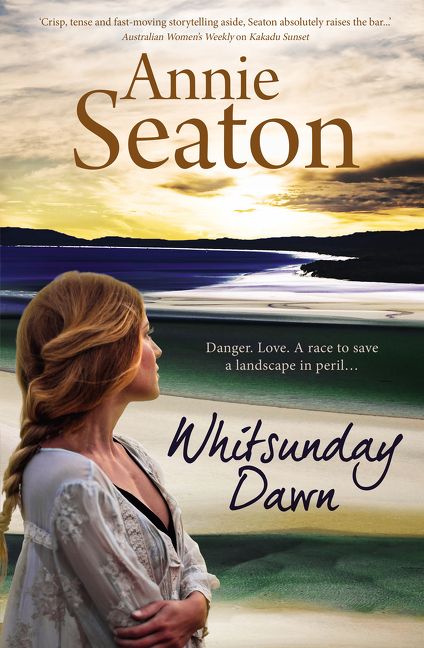
Don’t you love being on the verge of discovering a new author, that feeling of anticipating! Look at the beautiful location where romance writer Annie Seaton is holding the book launch for her latest release Whitsunday Dawn––in the Whitsunday Islands at beautiful Coral Sea Resort.
“Ecological impact, divided loyalties and the pristine beauty of the Whitsundays under threat, can mining spokesperson Olivia Sheridan expose the truth in time?” Author Annie Seaton brings to life a new era of romance and eco-adventure. Perfect for fans of Di Morrissey and a sun-kissed tropical lifestyle.
As WP readers will know, I’m not usually a romance reader but I’m rather taken by the beautiful location of this all-Australian story. Watch out for my review.
On her website Annie says “I am truly blessed to live by the beach on the east coast of Australia. I am following my lifelong dream of writing, and discovering that readers love reading my stories as much as I love writing them is awesome. It’s what keeps me at my desk each day when the garden and the beach are calling to me!
“You can read of the topical human and social issues I explore in Kakadu Sunset, Daintree and Diamond Sky. My latest release with Harlequin Mira WHITSUNDAY DAWN (August 2018) is an historical/contemporary story set in the Whitsunday Islands in 1943 and 2017.
“My inspiration comes from the natural beauty of our Australian landscapes and I’m passionate about raising awareness of the need to preserve the pristine areas that surround us.”
Will you be in the vicinity of the wonderful Whitsundays? Visit the launch of Annie Seaton’s newest book WHITSUNDAY DAWN being held on Friday 7 September 2018 at Coral Sea Resort Jetty, Airlie Beach, Queensland. A welcome drink then cash bar will be available with complimentary gourmet nibbles and canapes from the Coral Sea Resort kitchen. RSVP via Facebook https://www.facebook.com/AnnieSeatonAuthor/
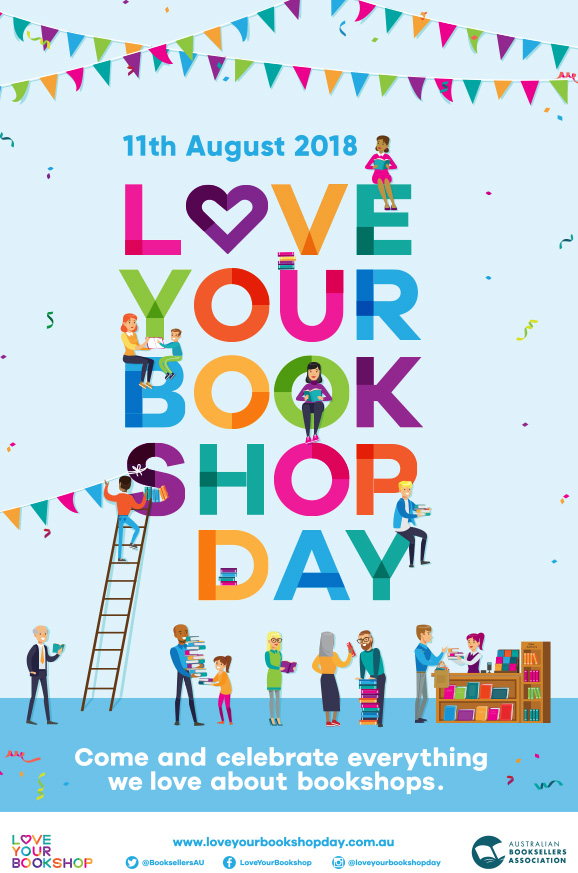
This year bookshops across Australia are throwing a party and you are invited!
Here’s what their invitation says––
Love Your Bookshop Day is a chance to celebrate what makes your local bookshop great. Whether it’s for their amazing staff, their carefully curated range or specialisation, a book launch or a must-see events program, we encourage you to visit your favourite bookshop on Saturday 11th August 2018 and join in with the celebrations.
Don’t forget to use the tag #loveyourbookshopday and share why your bookshop is special using the hash tag #whyIlovemybookshop
DESTINATION: I’m definitely going to visit Where The Wild Things Are, a wonderfully absorbing children’s bookshop in groovy West End, Brisbane. See ya!
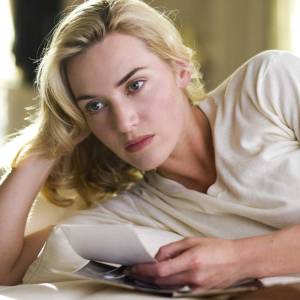
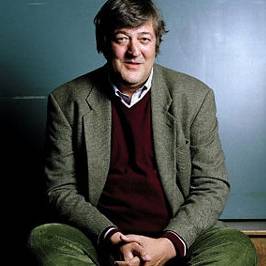
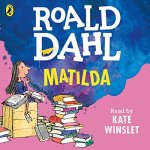
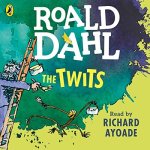
Fabulous stage and screen actors reading gloriously fun books. I listened to eight beautifully narrated sound clips by Kate Winslet, Hugh Laurie, Richard Ayoade, Miriam Margolyes, Stephen Fry, Andrew Scott, Chris O’Dowd––and I’ve just drooled over Dan Stevens short reading of Roald Dahl’s famous ‘Boy’. What a selection!
Reviewed by Rachel Smalter Hall for Book Riot way back in 2013 who gushed:
“Rioters, I’m so excited. I just can’t hide it. I’ve been holding my breath to share this with you for weeks! The new upswing in audiobook publishing has sent lots of publishers to their backlist to record beloved classics, and one of my favorite projects in this vein is from Penguin Audio, who just released several Roald Dahl audiobooks in July and will release several more this September. The series features some of the UK’s best known screen and stage actors. Here are sound clips from eight of the narrations that have got me squealing like a thirteen-year-old at a slumber party.”
I SAY IT’LL MAKE YOUR EARS HAPPY––SMILES GUARANTEED
TAP ON EACH INDIVIDUAL TEASER WHICH I HAVE CAREFULLY SELECTED FOR YOU FROM A LOVINGLY CURATED ROALD DAHL SOUNDCLOUD PLAYLIST
I found their voices soothing, hypnotic and hilariously infectious.
What more can be said except ENJOY!
♥Gretchen Bernet-Ward
I do reviews not advertisements but––Thanks to Penguin Books Ltd and Book Riot who say “Sign up for our newsletter to have the best of Book Riot delivered straight to your inbox every two weeks. No spam. We promise. To keep up with Book Riot on a daily basis, follow us on Twitter, like us on Facebook, , subscribe to the Book Riot podcast in iTunes or via RSS. So much bookish goodness––all day, every day.”
My picture book review
My bonus picture book lesson
My link to Just Awesome Picture Books
THE REVIEW:
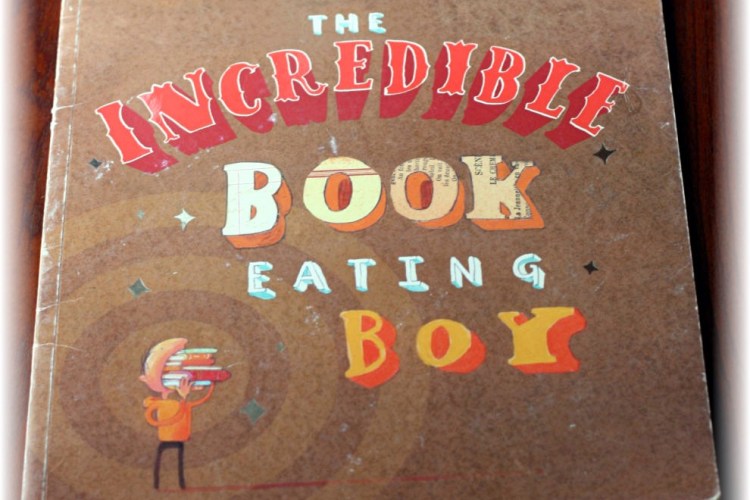
Henry is a boy who likes eating books. He absorbs knowledge as he happily munches his way to becoming the smartest boy on earth. Everything goes well until there’s an internal rebellion. Share Henry’s journey as he discovers something better than eating books.
Award-winning Oliver Jeffers’ concept is clever and I found his plot madly appealing. The illustrations are unique and show creative grunge like an old diary or well-used notebook. For me, although the story has the potential to be scary, it is handled in an adventurous way with Henry supported by believable characters which adds intertextuality to an otherwise imprudent tale.
I think The Incredible Book Eating Boy is best suited for small group readings or child-and-parent because there’s a lot happening and the visual literacy may need some explanation for younger children.
All in all, a praiseworthy picture book with a good message for 4 – 8 years range to which I give a 5-Star rating. GBW.
In my opinion, less is more! Wordy picture books tire the reader and the listener. The illustrations should highlight the uncluttered wording. The words push the narrative forward and the child uses their imagination from the visual cues.
It’s a common fallacy that picture books are easy to write. This is far from the truth because the very minimalist nature of picture books means that every single word has to be perfectly rendered. Learn more about writing for children from author Jen Storer of Girl & Duck.
As a general guide, here are some basics:
A children’s picture book is 32-pages but 8 pages are used for endpapers and book information. The story is over 24 pages or 12 spreads of text and illustrations which span two opened pages at a time. These pages can be half-page spreads, single-page spreads, double-page spreads or vignettes. A number of vignettes are used in The Incredible Book Eating Boy.
There is symmetrical, complementary and contradictory illustration approaches and I think The Incredible Book Eating Boy is approached in a complementary manner. Oliver Jeffers plays around with the location of text to good effect.
Board books, pop-ups and novelty may have no words, just illustrations. Young picture books are aimed at 2 to 5-year-olds with 200 to 400 wordcount. Trade (general readership) picture books are suitable for 3 to 8-year-old children with 500 to 600 wordcount. Picture story books for older children 6 to 10-year-olds with 1000 to 3000 words are often non-fiction. Chapter book fiction over 3500 words are suitable for competent readers, with a sliding age range due to small sketches and quirky touches often added between the pages to enhance the reading experience. YA (young adult) are the more tailored books suitable for older teenagers.
Something different. A theatre performance video of the book at The Joan, Penrith’s premier performing arts centre The Incredible Book Eating Boy production. The cast use song, movement and puppetry to bring Oliver Jeffers’ much loved story to life on stage.
Enjoy eating, er, reading this picture book with that special little someone.
Slow Clothing reflects author and refashion advocate Jane Milburn’s own unique style, independent of “fast fashion” trends. Upcycled from denim jeans, the dress Jane wore during her talk at a local BCC library had the potential to look strange but was distinctive and quite beguiling.
Jane, sustainability consultant and founder of Textile Beat, touched on several key elements during her talk––environmentally unfriendly fabrics and dyes; sweat shop labour; landfill; passive fashion; synthetic vs natural fibre; signature style and minimal wardrobe. Hot topics included recycle by exchange, shopping tips, Sew It Again mending and creating new from old. Jane tends to hoard fabric offcuts and used buttons, and has a passion for real cotton thread.
Rethinking clothing culture doesn’t mean wearing your clothes until they fall apart at the seams, it means mindful immersion, repairing and refashioning your garments.
An attentive audience, Jane encouraged us to make thoughtful, ethical, informed choices to reduce our clothing footprint on the world. Until recently, she regularly visited charity shops for secondhand garments but is currently resisting the temptation and working with what she’s got. “We believe secondhand is the new organic and mending is good for the soul. In return, we are liberated and satisfied.”
In her book Slow Clothing: finding meaning in what we wear Jane shares insights and upcycling advice. She has created templates like Upcycled Collar and History Skirt, guiding home sewing conversion of a beloved garment to reflect the changes in our lives.
To provide meaning and story to her own favourite pieces, Jane Milburn restyles and sews her clothing by hand. Currently testing t-shirt cotton drawstrings as an alternative to underwear elastic (elastic is made from synthetics) Jane stitches everything by hand.
Help! I can hear you say, nobody has hand-sewn an outfit since the mid-twentieth century––except maybe Vivienne Westwood––but don’t panic, Jane’s book provides testimonials, illustrations and clear instructions for eco-dyes and upside-down jumper skirts through to sewing on a button. Eco-fashionistas unite!
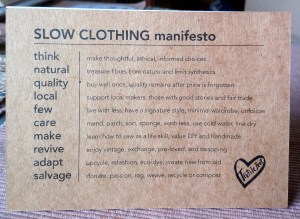
Although Slow Clothing is a multifaceted, easy-to-read book with positive chapter headings (Purpose, Authenticity, Creativity, Action, Autonomy, Reflection) amid the ingenious apparel, I am missing a frivolous note, perhaps a ball gown? On a serious mission, Jane has created a Slow Clothing Manifesto with ten tags to keep in mind when out shopping: think, natural, quality, local, few, care, make, revive, adapt, salvage.
Quotes from Jane embody the Slow Clothing philosophy “Slow Clothing brings wholeness through living simply, creatively and fairly” and “We buy thoughtfully, gain skills, and care for what we wear as an embodiment of ourselves.” Personally I am hoping to see people clutching their Slow Clothing Manifesto cards at an op shop near me.
The current trail Jane Milburn is blazing makes fascinating reading. Arts Queensland, meeting VIPs, War on Waste ABCTV, visiting 103-year-old Misao Jo in Osaka, hosting a Clothing Repair Café, conducting workshops and championing natural-fibre, Jane says “It has been personally satisfying to see the uptake of upcycling as a conscious practice with many young people interested in its potential for customising their clothes.”
Unfortunately I didn’t get to ask Jane Milburn how we go about combating the greed of designer labels. But the clear message is––help reduce landfill by upcycling your clothes to reflect your own unique style.
Plaque by the H. G. Wells Society at Chiltern Court, Baker Street in the City of Westminster, London, where Wells lived between 1930 and 1936.
“No compulsion in the world is stronger than the urge to edit someone else’s document” said Herbert George Wells, and I know the feels––Herbert is better recognised as H. G. Wells, an exceptional English author, satirist and biographer (21 Sept 1866 – 13 Aug 1946) who famously wrote The Invisible Man, War of the Worlds and The Time Machine.
I can understand how the fingers of Mr Wells must have itched, his brain must have misfired and his breath must have been shallow as he read a paragraph which badly needed editing. Indeed, I often wonder how some books (or e-books) get into print when it is glaringly obvious they need a bit of trimming and correction.
Just recently I read an e-book with blurb announcing an award, author kudos and high sales. Undeserved as far as I’m concerned. Why? The author had no idea of descriptive body language. The best he could do was “He frowned”, “She frowned”, and for variety “He scowled”, “She scowled” until I deleted the book at “She wrinkled her brow”.
How did this get loose and launched on the general reading public? I’m sure Rule 101 is “If in doubt, substitute ‘said’ and let the dialogue do the work”. Don’t repeat yourself. Unpublished as I am, I guess the writer can sneer and say “Well, I got the pay cheque and you didn’t” but I can retort with “Have some integrity.” Or go back to writing classes.
It’s easy to think “Not all publishing houses are that blind” but, oh, many are. If you haven’t read a book with an error, you haven’t read enough books. Pathetically, hardly a week goes by without my subconscious editing a typo or tidying a sentence. I will never know how efficient I am, whether I am always right, but, man, it makes me feel better!














 Henry is a boy who likes eating books. He absorbs knowledge as he happily munches his way to becoming the smartest boy on earth. Everything goes well until there’s an internal rebellion. Share Henry’s journey as he discovers something better than eating books.