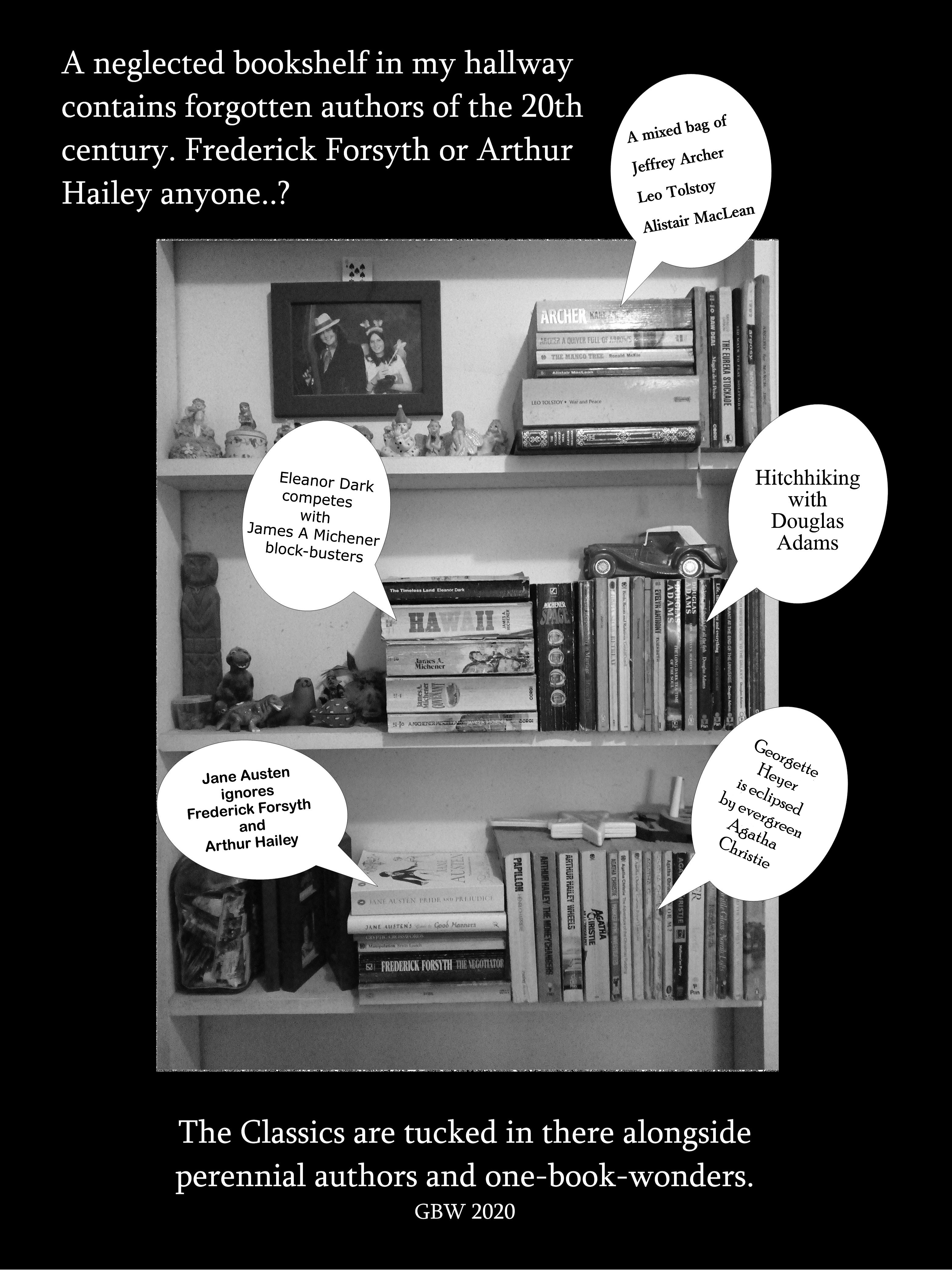
Don’t look too closely, there’s plenty of dust on them thar bookshelves. These books have sentimental value but may be destined for the University of Queensland Alumni Book Fair 2021 at St Lucia Campus, Brisbane— Link https://alumni.uq.edu.au/uq-alumni-book-fair
I wasn’t ready for this book. I wanted to enjoy it as much as I enjoyed Catherine Jinks other books but it didn’t work for me right from the start. The setting was vivid but the raw, brutish behaviour and sheer masculinity of the story overwhelmed me. Does that make me a sexist, a bigot, a wimp when it comes to macho bravado? I don’t know. I turned the pages with trepidation, not interest. Maybe the colonial frontier loneliness affected me and I didn’t want to go on.
On my second reading
the story felt less crushing. I concentrated on young English convict Tom Clay, a former poacher transported in chains to Australia, and now a shepherd. I willed him to be okay, to learn and survive intact. His country assignment in New South Wales works well, he didn’t steal from landowner Mr Barrett so he was never flogged and he works hard. Through his eyes, I saw the strangeness of a harsh new land, the vast differences, and the cruel pitiless men he is forced to live and work with guarding sheep against theft and wild dogs.
Tom has a jaundiced eye
when it comes to things like Australian native wildlife and his comment on first seeing kangaroos is less than flattering. I was disappointed with the header on the bookcover which reads “The wolf is not the only hunter”. There are no wolves in Australia, there are dingoes (wild dogs) and that should have been apparent.
and Tom’s fight for life against his arch nemesis Dan Carver is harsher still. These chapters are tightly written. The knock down drag ‘em out battles are horrific, the ghastly metal trap, the shootings, the human and animal deaths… but Tom dearly loves his sheep dogs.
I am not a fan
of an undefined location nor overused nonlinear narrative. Tom’s past comes out in this way. Flashback to eight year old Tom at his mother’s funeral, his former life almost as bad as his current one. He learns “No matter what a convict’s situation might be, he’ll never persuade a trooper that he’s telling the truth.” Flashback to when Tom first met convict Rowdy Cavanagh, a con man who joked, laughed and teased his way to success until he was caught “A single misstep and it ruined me life.”
The age rating
for this tense, chilling, thrilling story eludes me, but it is a tale I did not fully enjoy. I do respect it wholeheartedly for the screenplay fear and fascination it instilled in me regarding the rough and thoroughly inhumane life early convicts were forced to endure.
A sequel?
Tom’s situation could lead to listening and learning from the Indigenous custodians of this ancient land, and perhaps encourage a new phase in his life.
Catherine Jinks(Australia b.1963) is a four-time winner of the Children’s Book Council of Australia Book of the Year award, and has also won a Victorian Premier’s Literature Award, the Adelaide Festival Award for Literature, the Ena Noel Award for Children’s Literature and an Aurealis Award for Science Fiction. In 2001 she was presented with a Centenary Medal for her contribution to Australian Children’s Literature.
Catherine Jinks, author of over thirty books for children and adults, including the award-winning Pagan Chronicles series, was born in Brisbane and grew up in Sydney where she studied medieval history at the University of Sydney.
She became a writer because she loves reading, as well as history, films and television. Catherine gets ideas for her novels from everywhere, particularly good science fiction films. She lives in the Blue Mountains NSW with her Canadian husband and daughter Hannah.
This Alan Bradley story is deserving of 10 stars. The irony, the wit and the revealing portrayal of 1950s English village life, is both hilarious and horrible. Events are seen through the eyes of young Flavia de Luce, an implausibly precocious 11 year old girl who lives with her family in genteel decline.
Young Flavia’s encounters turn into forensic investigations and she has an inherent love of chemistry, brewing dangerous concoctions in her late grandfather’s lab.
The village of Bishop’s Lacey appears to be close-knit, yet even gossipy Mrs Mullet didn’t seem to know who or what killed young Robin Ingleby at Gibbet Hill. The story really kicks off when well-known BBC puppeteer and bully Rupert Porson gives his last performance. The scene-setting is brilliantly done and I felt immersed in the story from the beginning right through to the end.
Perhaps not a book for younger readers because they may get tired of the mid-20th century writing style. Mature readers who like a quirky character will enjoy this tale. I have never encountered the likes of Flavia de Luce, a strange mixture of Wednesday Addams and Bones.
But she certainly knows how to snoop or turn on the charm when necessary.
Generally the main players are conventional but it’s what I expected, having been raised on a diet of British books, magazines and television series. Their dialogue and the descriptions of village society in post-war Britain were familiar to me – at least fictionally – and it’s clever how the tension and Flavia’s ‘fluctuations’ from girl to grown-up and back again is established.
Question: Apart from the shock value, what is the significance of Jack’s puppet face? And I don’t mean who it represents.
‘The Weed that Strings the Hangman’s Bag’ is book 2 in the current 10 book Flavia de Luce mystery series, and takes its title from Sir Walter Raleigh. With my thanks to Goodreads friend and writer Chris Hall for recommending this delightfully different book.
♥Gretchen Bernet-Ward
Author profile
Alan Bradley is a mystery writer known for his Flavia de Luce series featuring this pre-teen sleuth with a passion for chemistry. The series began with the acclaimed ‘The Sweetness at the Bottom of the Pie’. See more books in the series at Penguin Random House. Bradley is also a New York Times bestselling author of many short stories, children’s stories, newspaper columns, and the memoir ‘The Shoebox Bible’. More about Alan Bradley
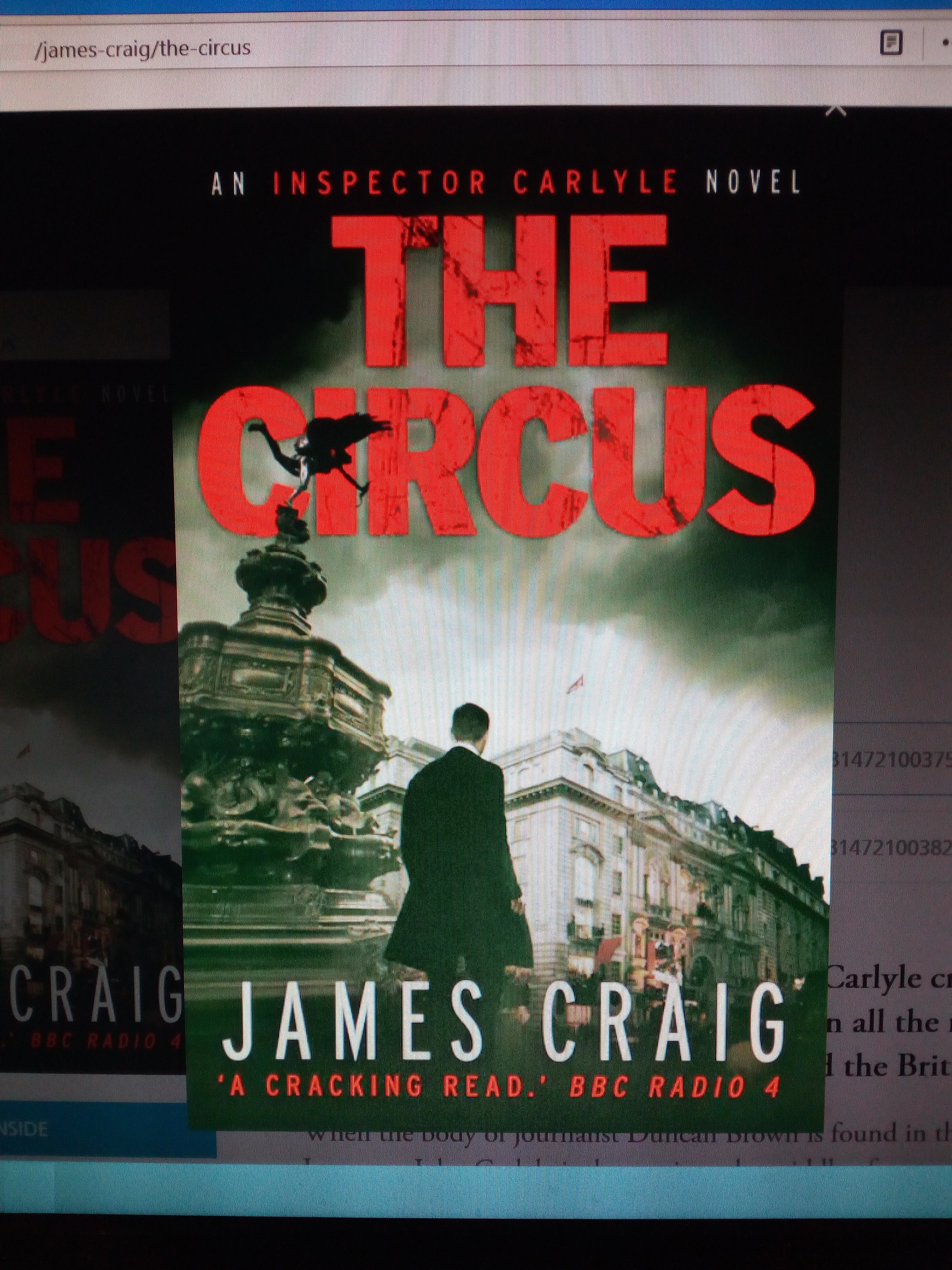
Not so much a circus as a train. Or a circus on a train. Not a speeding train, not the Orient Express, not even a suburban train. This book is a fully loaded interstate train heading inexorably towards a broken bridge over a river. Along the way, passengers are jostled around, some jump out the doors, most get drunk in the dining carriage, several are angry and the rest are bemused.
Inspector John Carlyle is the most bemused of them all
This series has an arresting array of bookcovers
I love a criminal book, you can comment hard!
Somewhere along a distant track I had stopped reading James Craig’s Inspector Carlyle series and this fourth book refreshed my memory. It contains such a high level of macho rubbish, female exploitation and smarmy politics that it is well past the read-by date.
It is astounding that the book doesn’t run off the rails with the ludicrous amount of murders
If Inspector Carlyle didn’t have off-sider Joe Szyszkowski and other sensible police personnel to back him up, he would still be floundering for answers at the end of the ill-fated journey. Maybe he’s on the wrong train? He gets cranky and often causes ‘accidents’ to himself and others due to his own dullness. Yes, he gets bashed up but never thinks his nemesis and ugly thug Trevor Miller knows where he lives – operative words ‘never thinks’. Miller is now the Prime Minister’s security adviser and totally out of control.
When it comes to using high-end brand names, from beer to clothes, watches to furniture and a plethora of cafés, this story takes the cake. Or biscuit if you are Carlyle who pays more attention to topping up his blood sugar levels and imbibing strong coffee than policing. The ending will have you spluttering in your coffee, it is beyond contrived.
Published in 2013, the political issues and phone tapping scandal is old. The dialogue is old, most characters give a neutral “Hm” when asked to respond. There are too many hands placed on arms, too many raised eyebrows; and the plentiful white males POV often switches to an omnipotent narrator.
For me, the best character is the City of London
Without alcohol the stratagem would flounder, trim the sexual abuse and the chapters would be less, without repeat paragraphs like Carlyle whining about the declining standards of UK newspapers this book would be blessedly shorter. And without packing in umpteen suspects from the Prime Minister to residents of greater London, this whole book would not have dragged on and could have been more effective.
“When the body of journalist Duncan Brown is found in the back of a rubbish truck, Inspector John Carlyle is thrown into the middle of a scandal that threatens to expose the corrupt links between the police, the political establishment and the hugely powerful Zenger media group.
Hunting down Brown’s killer, Carlyle finds himself going head-to-head with his nemesis, Trevor Miller. A former police officer turned security adviser to the Prime Minister, Miller has dirty money in his pockets and other people’s blood on his hands. Untouchable until now, he is prepared to kill again to protect his position – having failed once already to dispose of Carlyle he is not prepared to slip up again.”
Birdie McAdam is a bogler’s assistant, a stout defender of Alfred Bunce and his unusual profession. The ‘unusual’ relates to luring and eradicating child-eating bogles by using Birdie as bait. Her songs sometimes quaver when a foul bogle monster leaves its lair but she holds firm. A spear and split second timing is needed and old Alfred is the man for the job.
Before reading Catherine Jinks adult novel ‘Shepherd’ I read her children’s trilogy City of Orphans. These stories captured my interest from the first page and held it to the last. Following the adventures of young orphan Birdie McAdam, a lively, focused girl with a beautiful singing voice, I soon blended into the damp, grimy streets of 1870s London.
After the messy demise of a chimney bogle in a fancy parlour, the story kicks up a notch with overlapping events; Fagan-like Sarah Pickles with her young thieves and no scruples; well-to-do Miss Eames with an interest in mythology and rehabilitating young Birdie; and evil Dr Morton, a man with a heart as ugly as a bogle. And, of course, the markets and docklands of London.
I love the levels of intrigue, grim deeds, and disagreeable behaviour which surround Birdie and Alfred.
As true protagonists, they rise to every challenge.
Birdie has entertaining friends, although she wouldn’t admit that to rascals Ned or Jem.
These lads get to shine in books two and three.
Characters are clearly and consistently written.
Together they overcome hardship and show concern for each other.
There is great strength of purpose when adversity strikes.
The fast-moving chapters are vividly written and although I am not the target audience, each time the tension rose I held my breath. This plot builds and moves forward with fortitude, the second book in sight. All three books are well worth reading, and while the mood may get darker and the bogles may get messier, the sequence of events lead to a very satisfying conclusion.
♥Gretchen Bernet-Ward
My postscript
Bookcovers, like those beauties above, hold a certain fascination for me. Way back I did a blog post about it. In this instance, the publication of different titles and different artwork in overseas countries let me down. They are nothing like the bookcovers shown here, their titles don’t capture the atmosphere of the era nor do the illustrations recreate how the bogles are described. Gotta love marketing. GBW.
Catherine is a four-time winner of the Children’s Book Council of Australia Book of the Year award, and has also won a Victorian Premier’s Literature Award, the Adelaide Festival Award for Literature, the Ena Noel Award for Children’s Literature and an Aurealis Award for Science Fiction. In 2001 she was presented with a Centenary Medal for her contribution to Australian Children’s Literature.
Catherine Jinks was born in Brisbane and grew up in Sydney where she studied medieval history at the University of Sydney. She became a writer because she loves reading, as well as history, films and television. She gets her ideas for her novels from everywhere, particularly good science fiction films.
The author of over thirty books for children and adults, including the award-winning Pagan Chronicles series, Catherine writes whenever she gets a spare moment, and could write for eight hours straight if she had the chance. She lives in the Blue Mountains NSW with her Canadian husband and daughter Hannah.
Series
City of Orphans trilogy
A Very Unusual Pursuit (2013) or How to Catch a Bogle
A Very Peculiar Plague (2013) or A Plague of Bogles
Did not think I would get to number ten on my Three Things list! One post in three parts “Reading Looking Thinking” a clever idea started by Book Jotter blogger Paula Bardell-Hedley for those little things in life. I have posted TT irregularly since June 2018.
READING
‘The Strings of Murder’ by Oscar de Muriel
This lurid Gothic treat took me by surprise!
For starters, I didn’t exactly click with the protagonists Inspector Ian Frey and Inspector Nine-Nails McGray.
Londoner Frey is foppish and fastidious about his clothes, and Scottish McGray is the opposite, a rough tough fellow who believes in the supernatural. McGray has formed Elucidation Of Unsolved Cases Presumably Related To The Odd And Ghostly subdivision within Edinburgh CID. This goes against the grain for scientific Frey who resents being posted to Edinburgh under the pretext of hunting a copycat Jack The Ripper. Animosity and resentment bounces between the two men most of the time, especially when McGray gives Frey an effeminate name.
Frey and McGray investigate the ghastly slaughter of prominent violin players in Edinburgh who used beautiful old violins prior to their death. Clues range from an ancient curse, a Will, madness, and the work of the devil himself. What is that shadowy apparition the townsfolk see at night?
This is the first book in the series (four other books) so I overlooked many of the author’s foibles in relation to the Victorian era, but will mention these:
Characters regardless of status say ‘erm’ before they hesitantly speak.
Characters, particularly Frey, continually raise or arch their eyebrows in surprise.
Characters blush visibly; flush with fury; go red-faced; red with rage, etc.
People are described as fat or thin and most are ‘coarse’ in looks or behaviour.
Female characters are secondary and written as lowly, crazy, slovenly, weird, etc.
The unwarranted inclusion of horses for the Inspectors.
Regardless of the above, I did enjoy the paranormal plot with its clever use of clairvoyance and chemistry. It has some gruesome yet original chapters, with the occasional clue more obvious than others, but it’s written in a way that lead me through the story at a fast pace. I wanted to find out what was going on!
The author Oscar de Muriel was born in Mexico City. He lives in Manchester after moving to UK to complete his PhD in Chemistry. Oscar is a violinist and chemist, and both professions are used to great effect in his Frey and McGray series. GBW.
LOOKING
Of course I am looking at a screen!
Today, two of the main things holding my world together are the internet and my computer screen.
GBW.
THINKING
My current thoughts!
◊Thought One
Since my forays out into the real world have been curtailed by The Pandemic, my writing has suffered. As mentioned above, a screen has replaced real human contact (except for family) to the extent that my ideas and creative stimulation have been subdued. Yes, I can Zoom and watch as much as I like online—more than ever before—but it’s not enough, it’s not the same as laughing and chatting in a coffee shop with best friends. Okay, yes, I know I’m an introvert who enjoys ‘stay home days’. However, there is a limit. It’s not necessarily tolerance, or intolerance, more a case of suspended animation. Australia has done well facing the COVID-19 challenge, we have done all that was asked of us as a nation. Now, as the country slowly grinds back into action, we are wondering how much has changed, how much will never be the same again. GBW.
◊ Thought Two
I have long believed that everyone should read anything they like and that includes comic books. The more we read, the more we discover what we like to read, and sooner or later we become aware of the good authors and the not-so-good authors. Then it’s not long before we realise there are divisions in the reading world. We falter, we question our choices in literature. The Guardian article (below) says do not let snobbish separatists stop you from enjoying your favourite books. GBW.
“What we have done for ourselves alone dies with us; what we have done for others and the world remains and is immortal.” Attributed to US author poet Albert Pike
It is time to attack my bookberg. Book sorting! Only another book lover will know this task is emotional, dusty work with frequent trips back and forth to the reject box to retrieve a volume you just can’t live without.
I did not factor in the impact of nostalgia. As I sifted and culled, I was overwhelmed by the memories which came flooding back.
Relating to the photograph above, here’s a small sample of the tip of my bookberg:
Those aching muscles as I tried to emulate actress and fitness guru Jane Fonda using her inspiring 1981 ‘Workout Book’. The less said about the front cover the better.
My 1986 major motion picture tie-in ‘Out Of Africa’ by Karen von Blixen was purchased after I saw the movie because I wanted to see how much the movie had altered the book. Well, let’s just say it was movie mush.
‘Finest Moments’ the hilarious 1975 antics of Norman Gunston (Australian TV comedian Garry McDonald) were clever but now make me cringe. Gunston dared to go where no journo had gone before. McDonald was a good scriptwriter but.
I tried and tried to read this 1984 paperback of Aldous Huxley’s ‘Brave New World’. Even now as I look at its yellowing pages (it cost me $4.50 back then) I don’t think I will ever read it. Most of it has come true, right?
The small yet 383-page book ‘Angels & Fairies’ written 2005 by Iain Zaczek was a surprise. A gift, seemingly unread, it contains works of art from famous British painters in 1800s Victorian era. Such luminous illustrations, if ever there was a misnamed book, it’s this one! Nothing cutesy about it. A serious study for art aficionados.
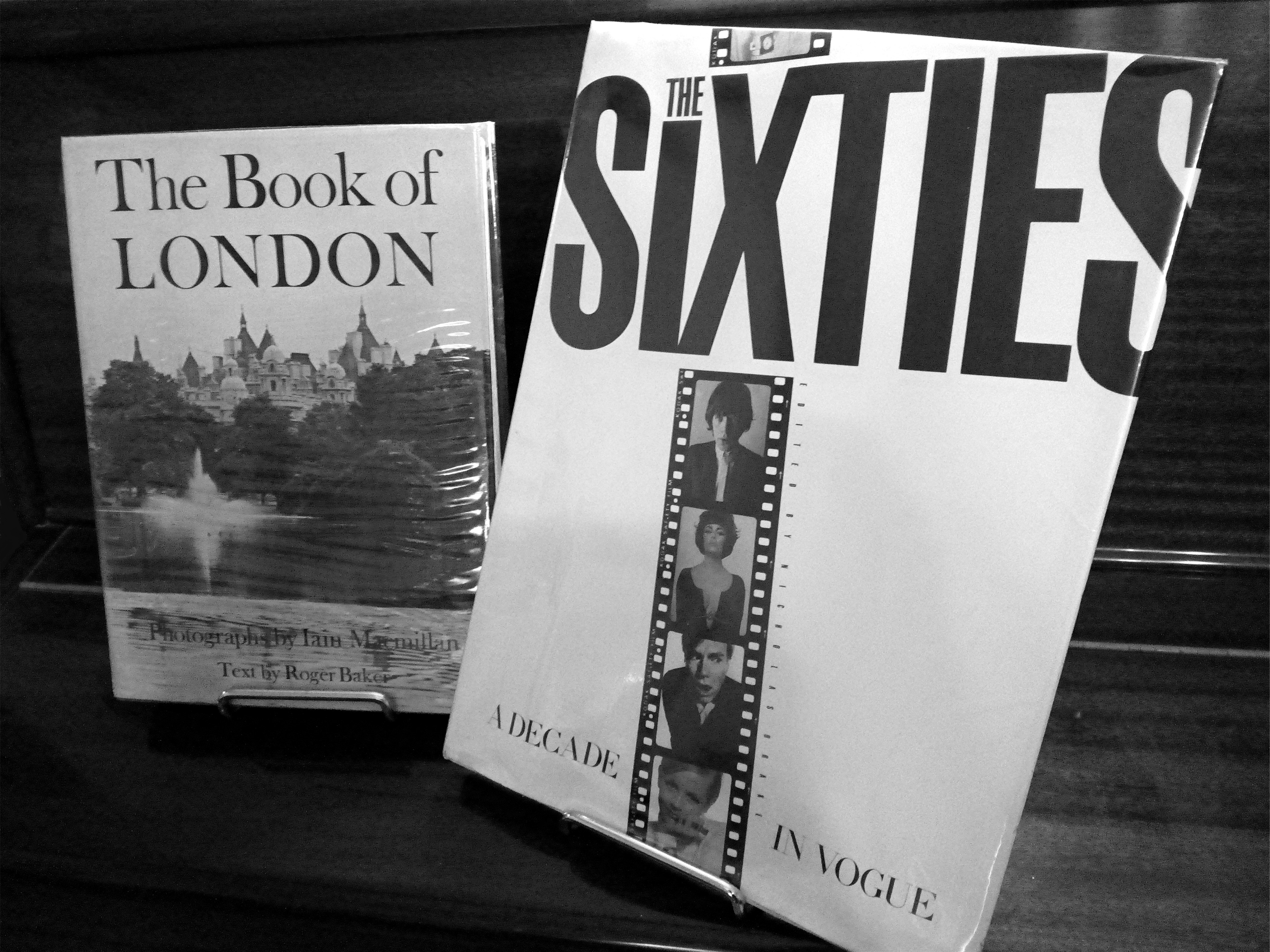
Need I say more? Heavy old coffee-table books, classic black and white photographs with depth and clarity, each one telling a story.
During re-reading and culling, three things struck me immediately.
The smallness of the paperbacks.
The density of the print.
The amount of information.
I guess smaller books meant cheaper to print, easier to handle.
Because I now need reading glasses, the print looks tiny to me.
Does excessive screen time influence the way we read off screen?
We read less content, larger font and wider spaces today, because of what?
Several of my earlier paperbacks have bios, dedications, illo plates, notes, etc.
Or a pull-out page so you could fill in your details and mail to the publisher to receive the author’s complete booklist.
Fortunately the only thing which hasn’t changed is real bookshops.
They may be fewer in certain countries but they are alive and well where I live.
Getting back to those rejected books, I have cardboard boxes (ah, that smell of cardboard) to pack them in and send off to University of Queensland for their Book Fair.
I was mightily impressed with UQ book wrangling skills, particularly after I visited their Book Auction and saw frantic bidders making the value of old books rise higher and higher until the final bid, the hammer fall, the cry of delight from the successful bidder.
My three-part series of UQ Book Fair visits last year—brilliant photos—
This post is pure procrastination. But look at this book on Rome, I was a little bit in love with the professor…
♥Gretchen Bernet-Ward
ROME OF THE CAESARS by Leonardo B. Dal Maso, Professor of Archaeology and Ancient History, Roma. An autographed copy September 1983. Bonechi-Edizioni ‘Ill Turismo’ Via dei Rustici, 5-50122 Firenze. FRONT COVER shows reconstruction model of the centre of Rome in the age of Constantine by architect Italo Gismondi. GOLDEN COIN was issued by Emperor Hadrianus. WAX STATUE personal collection.
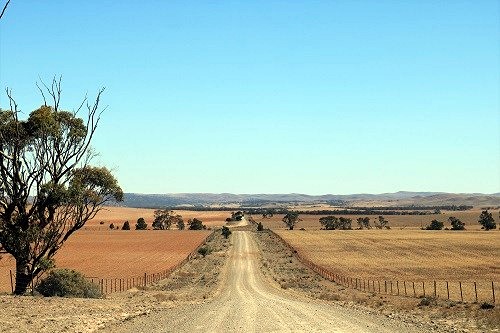
Hypnotic, laconic writing from Garry Disher. Another superb story featuring lone country Constable Paul Hirschhausen. In his 4WD police Toyota, Hirsch patrols hundreds of kilometres through a vast dusty landscape around the small town of Tiverton in South Australia.
The plot weaves in and out of his long days on duty encountering misdemeanours ranging from wayward teenagers to rural theft and murder where nothing is as it seems.
The first killings are shocking (not telling who or what but it’s emotional) and expertly told through the eyes of Hirsch and his inner monologue. I love this single POV approach. The next murders involve a family, and two young girls disappear. In steps sensible Sergeant Brandl of Redruth HQ as well as Sydney’s Organised Crime Squad senior sergeant Roesch and Homicide Squad senior constable Hansen, two insensitive characters, and things get very tricky indeed.
The hot dry rural atmosphere seeps into every chapter, and unforced dialogue runs throughout the story. The town’s characteristics and characters are spot-on, for example annoying citizen Martin Gwynne, and recluse Craig Washburn who lives in a caravan near a dried-up creek bed. And who is spray-painting graffiti on an historical woolshed?
There’s a bit of romance with girlfriend Wendy Street although I do find her background role passive and uncomfortably supportive of Hirsch without any commitment on his part. I would like to see her become more prominent in future books in the series.
On a positive note, ‘Peace’ does cover community matters and domestic welfare, all part of Hirsch’s extensive remit.
I enjoyed the touches of wry humour and Christmas festivities including Hirsch’s role as Santa. The book title comes from “In the end he found three generic snowscapes with the single word Peace inside. That’s all a cop wants at Christmas, he thought.” If only he could be warned of what’s to come…
Certain people seem to think Hirsch bungles everything he touches. Well, he does bungle a couple of things and gets hauled in to explain, but when it comes to detective work he has a keen eye. Hirsch knows that nothing is random, everything means something.
See if you can untangle the threads before he does, bearing in mind that you are reading in a nice comfortable chair.
So far, my favourite read for new year 2020!
♥Gretchen Bernet-Ward
AUTHOR PROFILE: Garry Disher was born in Burra, South Australia, in 1949 and he’s the author of over fifty books, from crime fiction and children’s literature to non-fiction text books and handbooks.
Disher graduated with a Masters degree in Australian History at Monash University and was awarded a creative writing fellowship to Stanford University in California. He later taught creative writing before becoming a full-time writer, winning numerous awards both in Australia and overseas.
TRIVIA: Redruth Gaol exists in Burra, South Australia, but author Garry Disher could possibly have named Tiverton after a homestead on the Yunta Creek or the town of Riverton in South Australia.
From UK author Debbie Young’s original Sophie Sayers Village Mysteries comes ‘The Natter of Knitters’, the first book in a new spin-off series set in Wendlebury Barrow. And I’m keen to enter the draw to win a hand-knitted scarf associated with the launch of The Tales from Wendlebury Barrow series—read on for details.
Debbie Young says the title of each new tale will be a collective noun, whether a well-known phrase such as ‘The Pride of Peacocks’ (which I’ve read) or one she has invented to suit her own purposes like ‘The Natter of Knitters’ which I think is very appropriate.
Catalogued as quick reads (novelette or short novella) Debbie comments “The Tales from Wendlebury Barrow series contains intrigue, humour and romance but no murder—just gentle crime and misdemeanours.” I am very interested to see what a gentle crime is!
In ‘The Natter of Knitters’, Sophie Sayers is keen to take part in a secret yarn-bombing campaign. The definition of yarn-bombing is when a group of knitters surprises its local community by covering something in colourful knitted items, such as a statue. In this case, an historic tree.
In walks mysterious new arrival, Ariel Fey. ‘What is she up to?’ I ask myself.
Enter the Prize Draw associated with ‘The Natter of Knitters’ new release. The prize is the scarf Sophie knits in the book, created in four floral shades of blue (forget-me-not, hyacinth, bluebell, cornflower) using a soft warm mix of merino, cashmere and silk. See Debbie’s website for details.
Sign up for Debbie’s newsletter via her website to become a member of her Readers’ Club and you will automatically be entered in the Prize Draw to be held on Friday 14th February 2020.
As a welcome gift, Debbie will send the ebook ‘The Pride of Peacocks’, a short novella she’s written especially for new members of her mailing list.
Debbie has written several titles—and writing more
Quote “I’m putting the finishing touches to ‘Murder Your Darlings’, the sixth Sophie Sayers Village Mystery, and I’m writing the second Staffroom at St Bride’s novel ‘Stranger at St Bride’s’. The second tale from Wendlebury Barrow is also bubbling…”
Such a noteworthy crop of cosy crimes with comfortable characters and Cotswold village mysteries to solve. Don’t wait! ‘The Natter of Knitters’ is now available in ebook formats (Kindle, Kobo, Apple, GooglePlay, etc) and also in a cute compact paperback the size of a picture postcard.
Put the kettle on, or brew the beans, then settle back for an enjoyable read.
♥Gretchen Bernet-Ward
QUICK GLIMPSE FROM DEBBIE YOUNG:
“As a freelance, I’ve written for Cotswold Life and Country Garden & Smallholding (now Country Smallholding) on subjects such as organic box schemes, poultry keeping and country crafts, and I very much enjoy writing regular columns for the two magazines closest to my home. You can find these articles among my blog posts, tagged Hawkesbury Parish News and Tetbury Advertiser.
“In 2010, I started blogging, and book projects and ambitions started to materialise as if by magic. From 2013, I was commissioning editor of the Authors’ Advice Centre at the Alliance of Independent Authors, before giving it up to write full-time in 2019.”