Goodbye to Facebook Again

Facebook Poke 02

After taking one year off to immerse myself in the art of writing, my time is up.

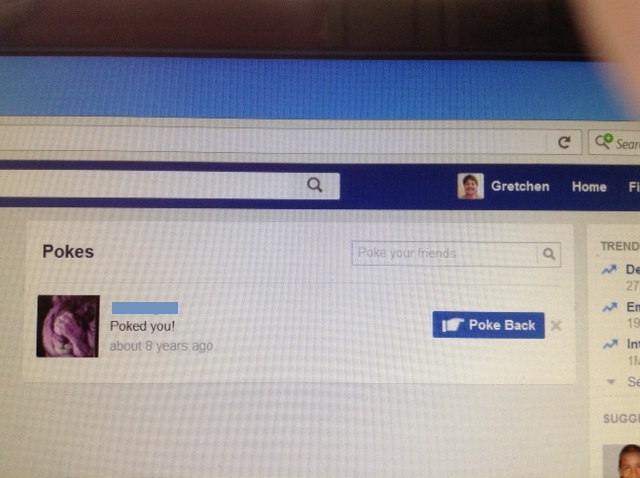
New Year’s resolution: I will no longer be posting regularly on Facebook because it is the most all-consuming part of my day and ultimately hollow.  Eight years ago I dropped out, as evidenced by the snapshot of this unanswered Poke.  Author Jen Storer of Girl & Duck, The Duck Pond and Scribbles creative groups can be pleased she was the one who drew me back into social media to nurture my writing dream – you light up my life – thank you.

My unFacebooking is not due in any way to the calibre and overall enjoyment of the wonderful ‘friends’ I made, I will miss virtually following your daily journeys in writing and illustration.  Conversely, we all are living two lives, the one on Facebook and the real one.

My departure is due to the links, Likes, highlights, comments, feeds, Facebook layout and general entanglements with people whom I do not know on a real level.  It may feel personal but it is not; and I need to grasp reality, my home, my family and my proper writing.

A visit from a little red hen named Took got me back out into our overgrown garden and I realised the computer screen is destroying my creativity rather than enhancing it.

My WordPress blog will continue https://thoughtsbecomewords.com/

“Year’s end is neither an end nor a beginning but a going on, with all the wisdom that experience can instil in us” – Hal Borland, American author.

Happy New Year 2018, everyone, and much fulfillment!

Gretchen Bernet-Ward


Postscript
: According to the 2017 Deloitte Media Consumer Survey, daily social media usage in Australia is down from 61 percent to 59 percent in 2017, and 20 percent of Australian social media users say they are no longer enjoying their time on the platforms.  Likewise, almost one third (31 percent) of survey respondents said they have temporarily or permanently deactivated one or more of their social media accounts in the past year.  Fake news is killing the media star with 58 percent of respondents agreeing that they have changed the way they access online content given the prevalence of fake news.  So, folks, I am not alone!

Australian Editors and Publishers Set Bar Too High

I have come to the conclusion that the Australian publishing industry and its associated editors and reviewers have set the bar way too high for Australian writers.  Emerging authors have a pretty slim chance of being published with huge odds against hitting the big time.

Strong-willed literature-controlling gurus rule our domestic market like school teachers from the 1950s.  They seek perfection, the best book of the year, often cerebral stuff ignored by half the population, and they disregard perfectly serviceable down-to-earth Aussie authors.  Also, when did parochialism creep in, e.g. Melbourne is the hub of all things literary?  Let’s focus on inclusive Australian content.  Oh, and stop changing words to suit international readers, they’re cool, they can work it out.

Publishing houses receive thousands of unsolicited manuscripts each year and the selection process is fierce.  Only a handful of authors are chosen, gather a following, write more books and hopefully make money.  The untried crime writer, for example, may not appeal to the literati judges, but, hey, there’s always that coterie of readers who will love them.  The way it is now, their work may never see the light of day.  Dive deep into that slush pile!

Book Publishing 04
Sure, there’s always the internet, WordPress, e-books, self-publishing, writing competitions (see below) and a gazillion non-traditional ways to be seen but nirvana is a publishing deal with a real-deal publishing house.


“Relax,” I say to publishers from my seat of ignorance.  “The shock of ebooks has faded, so forget micro-niche and churn out those books, get those names in print.”  What?  Too much of a risk, not financially viable?  Yeah, I guess that’s right.  Nobody wants risk in business.  I say “Lighten up, people, offer a broader spectrum of books to the general public”.  Stop book snobbery because, meanwhile, mediocre books with typos are flooding in from overseas and I’m getting a bit sick of it.

Did I hear our aspiring authors cannot compete with the overseas calibre?  Our readers are not savvy, interested or sincere enough to try a reasonably good newbie?  Come off it!  Peel back those layers.  An Australian author or reader is as good as the next person but needs the exposure, the push, the shove, the necessary connections and circumstances to make it work.

Chips on shoulders, the need to prove we Australians are well-read, has past. Forget the Cultural Cringe, dismiss ‘benchmark’ literary awards and too perfect prose and embrace the mass production of typically Australian-written and illustrated books and be proud of them.

Gretchen Bernet-Ward
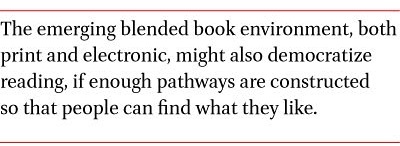
FURTHER READING:  https://journals.uic.edu/ojs/index.php/fm/article/view/3353/3030  with quote taken from “Non-Traditional Book Publishing” by Jana Bradley, Bruce Fulton,  Marlene Helm, Katherine A Pittner in “First Monday” Journal and, although somewhat passé, it shows foresight.  EVEN FURTHER READING:  https://www.theliftedbrow.com/liftedbrow/2017/11/22/keep-your-eyes-on-the-prize-unpublished-manuscript-competitions-and-you  The Lifted Brow is a not-for-profit literary publishing organisation based in Melbourne, Australia, and Martin Shaw’s article explains an awful lot about the hidden terms and conditions of competition entry.

{NB. Gretchen has reviewed books, worked in the library industry and reads extensively.  As an aspiring writer, she may have shot herself in the foot}

Am I Sharing With The World Or Just Getting Stuff Out Of My Head?

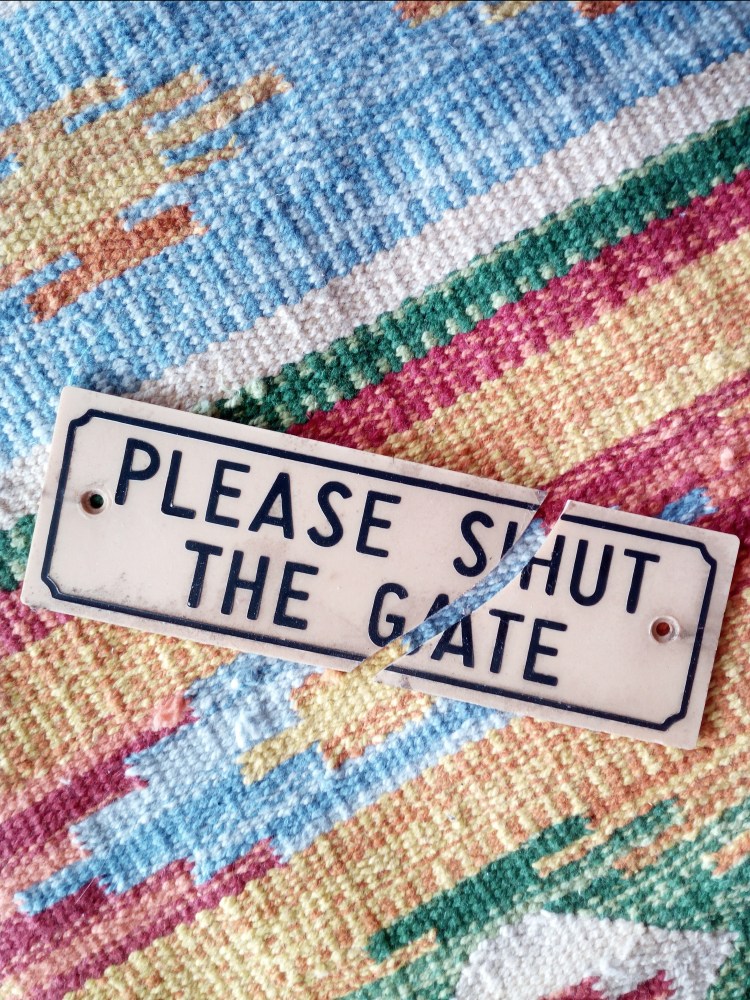
Please Shut The Gate Sign

Writers need to write but do readers need to read?

From early on I made the decision not to Like a post unless I had read it.  As you can guess, its hard to do.  Every day millions of posts circulate around the world on countless blogging platforms and social media sites to such an extent that most of them will NEVER be read.  At least, not fully.  I think I am pretty safe in saying that.  We are doing the modern equivalent of shutting the gate after the horse has bolted.

Which brings me to the heading of my post.  I will answer my own question.  It is preferable to get things out of your head and onto a page for personal satisfaction rather than thinking you are making a useful contribution to the world.  Plenty of specialists are making useful contributions but I guarantee they are writing to a niche audience, not the world.

Another decision (note I use the word ‘decision’ because we are given choices then have to make one decision) I made is not to seek Likes and Followers and not to maintain a prolific output to pursue a high profile.  I have not activated my Comments because the majority of blogging sites appear not to have worthwhile comments or replies and, if they do, the bulk of them are from fans bordering on sycophant behaviour.

I’m not a tortured genius nor do I have a singular agenda so I am way down the favourites listicle.  I am happy doing my own thing and don’t pine for kindly Likes.  However, I am very grateful for those Likes and Followers I do have because I feel confident they have actually read my blog posts.  You can tell by my Home page that I am not going to stick to a theme, although I do have Photo Of The Week and I’m loosely hung up on the importance of literacy.

Why did I write this post?  I will probably feel differently tomorrow but today I wanted to get it out of my head.

Gretchen Bernet-Ward

Silent Reading and Socio-Cultural Development

Reading Readers 04

Among scholars, says Thu-Huong Ha, there is a surprisingly fierce debate around when European society transitioned from mostly reading aloud to mostly reading silently.  Thu’s latest article for Quartzy shines a light on the evolution of reading silently––

Finding Space
“The beginning of silent reading changed Westerners’ interior life”
By Thu-Huong Ha
Tuesday 19 November 2017

People think of reading as the introvert’s hobby: A quiet activity for a person who likes quiet, save for the voices in their head.  But in the 5,000 or so years humans have been writing, reading as we conceive it, an asocial solo activity with a book, is a relatively new form of leisure.

For centuries, Europeans who could read did so aloud.  The ancient Greeks read their texts aloud.  So did the monks of Europe’s dark ages.  But by the 17th century, reading society in Europe had changed drastically.  Text technologies, like moveable type, and the rise of vernacular writing helped usher in the practice we cherish today: taking in words without saying them aloud, letting them build a world in our heads.

Among scholars, there is a surprisingly fierce debate around when European society transitioned from mostly reading aloud to mostly reading silently—some even say the ancients read silently just as much as they read aloud—but there is one scene in literature they agree is crucial.  In St. Augustine’s Confessions, the titular professor describes the reading habits of Ambrose, the bishop of Milan:

“But when Ambrose used to read, his eyes were drawn through the pages, while his heart searched for its meaning; however, his voice and tongue were quiet. Often when we were present—for anyone could approach him and it was not his habit that visitors be announced to him—we saw him reading in this fashion, silently and never otherwise.”

The fact that this was so remarkable to Augustine, some scholars argue, is because in the 400s, silent reading wasn’t really a thing.

Other researchers say that this passage is meant more to point out Ambrose’s rudeness.  “It’s really that Ambrose would go on reading silently while he was there, like someone going on texting while you’re trying to talk to them,” says D. Vance Smith, a medievalist in the Princeton English department.  “[Augustine is] surprised by his rudeness at not reading out loud to share with him.”

Reading Readers 05

“The default assumption in the classic period, if you were reading around other people, you’d read aloud and share it,” says Smith. “For us, the default is we’ll read silently and keep it to ourselves.”

If silent reading was in fact rare or rude in ancient times, then at some point the expectation of readers in society shifted.  As late as the 1700s, historian Robert Darnton writes, “For the common people in early modern Europe, reading was a social activity.  It took place in workshops, barns, and taverns.  It was almost always oral but not necessarily edifying.”

But by the time Marcel Proust was writing in the late 1800s, his narrator hoping for time to read and think alone in his bed, reading privately had become more of a norm for wealthy, educated people who could afford books and idle bedroom rumination.

This came with the spreading of literacy and diverse kinds of reading material.  Writes Darnton, records from until as late as 1750 showed that people who could read had only a few books: perhaps the Bible, an almanac, and some devotionals, that they read and re-read. But by 1800, he writes, people were reading more voraciously—newspapers and periodicals—and by the late century they had branched out into children’s literature and novels.

Reading Guy 06

As reading shifted away from the social, some researchers believe this helped create what we now call an interior life.

Writes Alberto Manguel in his 1996 book, A History of Reading:

“But with silent reading the reader was at last able to establish an unrestricted relationship with the book and the words.  The words no longer needed to occupy the time required to pronounce them.  They could exist in interior space, rushing on or barely begun, fully deciphered or only half-said, while the reader’s thoughts inspected them at leisure, drawing new notions from them, allowing comparisons from memory or from other books left open for simultaneous perusal.  And the text itself, protected from outsiders by its covers, became the reader’s own possession, the reader’s intimate knowledge, whether in the busy scriptorium, the market-place or the home.”

“Psychologically, silent reading emboldened the reader because it placed the source of his curiosity completely under personal control,” librarian Paul Saenger writes in his 1997 book, Space between Words.  “In the still largely oral world of the ninth century, if one’s intellectual speculations were heretical, they were subject to peer correction and control at every moment, from their formulation and publication to their aural reception by the reader.”  As Saenger writes, asocial reading helped facilitate intellectual rigor, introspection, criticism of the government and religion, even irony and cynicism that would have been awkward to read aloud.

This strange new trend of reading to oneself naturally had its detractors.  Sceptics thought silent reading attracted day-dreamers and the “sin of idleness,” as Manguel writes.  And worse: it let people learn and reflect without religious guidance or censure.  Silent reading by the late 19th century was so popular that people worried that women in particular, reading alone in bed, were prone to sexy, dangerous thoughts.

Reading Girl 57

There isn’t much consensus between historians on why people would have started reading silently.  Saenger hypothesizes that a shift in the way words were laid out a page facilitated the change.  Latin words once ran all together, makingithardtoparsethem. Saenger argues that Irish monks, translating Latin in the seventh century, added spaces between words to help them understand the language better.  This key design change, he argues, facilitated the rise in silent reading.

M. B. Parkes, in his 1992 book “Pause and Effect: Punctuation in the West” argues something similar.  He writes that a “grammar of legibility”—the visual changes made to texts, like punctuation and word spaces—changed the way we read.  This early book technology was premised on the idea that the scribes, the people writing, didn’t know who their readers would be, or how fluent they might be in reading Latin, and so had to find a standardised way of telling them how to read: pause here; these are two separate words; this is a long “a.”

This scholarship applies for the most part to the Latin-based writing and reading of Europe.  In other major reading cultures of the world like Chinese, whose script doesn’t have spaces between words, and whose literature depends heavily on prosody, silent reading may have developed differently.

Mainstream historical accounts would have us think that the end of oral reading in the Middle Ages was part of the Renaissance, a new European preoccupation with the individual.  But it’s possible humans’ desire for privacy, the carving out of a little pocket in which to escape by way of a book, was there all along.  We just needed a little help getting there.

Written by Thu-Huong Ha for Quartzy newsletter, a weekly dispatch about living well in the global economy.  Original webpage The Beginning of Silent Reading was also the Beginning of an Interior Life.

Gretchen Bernet-Ward
Let Your Heart Be Light

Jen Storer is an established Australian children’s author brimming with imagination and inspiration. This post encapsulates her talent, personality and future plans. Jump into The Duck Pond and start paddling with emerging writers and illustrators!
Gretchen Bernet-Ward

girlandduck's avatarGirl and Duck

Hello!

I like writing blog posts at Christmas. No one expects much. Do they?

IMG_3967Writing: I finally finished Truly Tan: Baffled! (book seven) and delivered it to my publisher on time (working right up until December 15, the day it was due). Phew! Next year I’ll be waaaay more organised. Ahem.

Finalising: We signed off on Danny Best: Me First! Check out the full cover. Talk about The Best! 😉 Due out in Feb 2018.

DB_MEFIRST_FC2Receiving: I received a Christmas card from a Tan reader. The letter attached said, I know you like wolves. So here’s a card with a fox on it. God, I love my readers.

IMG_3984 2

Planning and: pondering 2018. I have some lovely plans for girl and duck, including a Scribbles Boot Camp in Feb, and an IRL (in real life) Scribbles master class in Melbourne in May. We will also be launching the Girl and Duck…

View original post 518 more words

Portraits of Readers Part Two

Initially I was gathering images for a compilation to promote reading but, instead, my gallery became a montage of book-reading men and boys over the last two centuries, photographed and painted, famous or otherwise.  With every viewing, the images reshuffle.  A montage of book-reading women and girls can be found under Part One.

Reading is rightness!

Gretchen Bernet-Ward

Portraits of Readers Part One

Initially I was gathering images for a compilation to promote reading but, instead, my gallery became a montage of book-reading women and girls over the last two centuries, photographed, painted, and one carved in marble.  With every viewing, the images reshuffle.  A montage of book-reading men and boys can be found under Part Two.

Reading is rightness!

Gretchen Bernet-Ward

Mystery, Mayhem & Magic adventures for young readers!

The Ten Penners, a children’s author collective, launched their blog tour to coincide with the release of their exciting new anthology Mystery, Mayhem & Magic.  Follow the tour, read about Julie Baythorpe, book giveaway and more—

Mystery, Mayhem & Magic is an anthology of amazing adventures for young readers!

Take a path through the forest of imagination into mysterious journeys filled with mayhem and a kaleidoscope of magical creatures.

From the authors of Shock! Horror! Gasp! and Fan-Tas-Tic-Al Tales emerges Mystery, Mayhem & Magic, a new anthology written by The Ten Penners, a paperback novel-size book which is jam-packed with thirty-six stories, poems and novellas suitable for children aged 8 to 12 and early readers.  Stories can be read to younger children too …

… So come and explore!

the_ten_penners_Nov16[1]
The Ten Penners children’s author group

The Ten Penners Profile Photo 02


Follow the fascinating Mystery,
Mayhem & Magic
Blog Tour any time—

DATES

15/10/17
Sunday
 – Marion Martineer – https://marionmartineer.wordpress.com/
Dimity Powell – author “The Fix-It Man” – http://dimswritestuff.blogspot.com.au/
Content : Marion Martineer

16/10/17
Monday
Yvonne Mes – www.yvonnemes.com
Content : The Ten Penners
Elaine Ouston – author “Mystery of Nida Valley” – https://elaineoustonauthor.com/ 
Content : Lindy Standage

17/10/17
Tuesday
 – Jill Smith – https://authorjillsmith.wordpress.com/
Candice Lemon-Scott, author – https://candicelemonscott.com.au/
Content : Jill Smith

18/10/17
Wednesday
– Kate Russell – https://katharinerussell.wordpress.com/
Teena-Rafa Mulligan – In Their Own Write – https://intheirownwrite.wordpress.com 
Content : Kate Russell

19/10/17
Thursday
 – Julie Baythorpe – https://juliebaythorpeauthor.wordpress.com/
Gretchen Bernet-Ward – Thoughts Become Words https://thoughtsbecomewords.com
Content : Julie Baythorpe (see interview below)

20/10/17
Friday
– Robin Adolphs – http://www.robinadolphs.com/
Content : Louisa Wright
Artelle Lenthall – www.journeygirlontheroadtopublication.com
Content : Sharron Alexiou

21/10/17
Saturday Gold Coast Writers’ Association meeting to announce book launch
The Ten Penners – https://thetenpenners.wordpress.com/
(Library book launch Gold Coast Libraries Calendar of Events poster below)

23/10/17
Monday – Aleesah Darlison – author of “Fox and Moonbeam”
Greenleaf Press – http://www.greenleafpress.net/
Content : Elli Housden

the_ten_penners_sept17_2_cropped[1]
The Ten Penners launch their children’s anthology

PLINKO
The Ten Penners Plinko Colouring Comp 2017 02
Check out Plinko, official The Ten Penners mascot, on their website under Media Kit.  The Plinko-Colouring-In-Competition-2017_Booklaunch has closed.

“But wait,” says Plinko, “there’s more!”

  Scroll down for further INFORMATION—

The Ten Penners August 2017
The Ten Penners ready for Mystery Mayhem & Magic

BE THE LUCKY WINNER … 

MMM_cover[1]

SPECIAL ANNOUNCEMENT  –  BOOK GIVEAWAY COMPETITION CLOSED!

There will be a giveaway of a copy of Mystery, Mayhem & Magic!
At the end of the blog tour, those who have left a comment on this page, or on any of the other hosts’ pages during the blog tour, will be in the running to receive a free copy!
The announcement of the winner will be at our book launch at Broadbeach Library on Saturday 4 November 2017.
So, please make a comment below to be in the running.

Q & A  

Today I am delighted to welcome one of the authors, Julie Baythorpe, who has kindly put her literary thoughts into words:                                              

The Ten Penners
Julie Baythorpe
julie_at_her_book_launch_Sept17[1]
Julie at her book launch

ABOUT THE AUTHOR

Julie Baythorpe was born in Sydney and moved to Brisbane where she attended Brisbane Central State School.  She loved every minute of school life so much so she never left the education system.  In 1985 she moved to the Gold Coast.  Julie has written all her life.  For many years, she taught creative writing, both as a Teacher and Principal in classrooms across Queensland.  When she retired from teaching she started writing full-time.  She has written and published numerous short stories, poems, journal articles and has developed many Curriculum documents for Education Queensland.  She is currently organising and presenting writing workshops for the Gold Coast Writers’ Association.  Her books include the Reid Devron murder mystery series and several short story anthologies.  Julie also enjoys creating watercolour paintings … when she’s not writing!


Q1.
When did you start writing?

A.  I started when I was very young … five or six years old.  I loved it.  I had a vivid imagination (still have) which transported me to mystical and magical places.  As I grew older I began writing poems and stories for the children I taught in primary school. I also wrote strategic documents … curriculum documents, behaviour management programs and planning outlines for Education Queensland.  I started writing fiction full-time when I retired from teaching.

Q2. Which genres do you enjoy writing?

A.  I enjoy writing in most genres, however, I feel most comfortable writing novels in the murder mystery category.  As a member of The Ten Penners writing group, I’ve dabbled in short story writing for children again.  It’s been a while since I did this, however, I enjoyed creating the character ‘Plinko’ and I loved the adventures of Jock, Davo and Birch in ‘Birch the Dinosaur and the Bogan Penguins’.  A lot of fun!

Q3. Have you published any books?

The Ten Penners Julie Baythorpe 03A.  Yes, I’ve published three books in the Reid Devron murder mystery series. ‘The Lavender Principal’, ‘Silo Deadfall’, and ‘Under the Fig Tree’, all set in schools where I’ve worked.  In collaboration with the Southern Short Story Group (another sub-group of Gold Coast Writers’ Association) I wrote a number of fictional short stories.  The title of that book is ‘Love, Lies, Laughter and a Few Little Tears’.

Q4. Have you won any writing competitions?

A.  Only one … when I was about nine years old.  They asked me to read it to the whole school.  I’ve been traumatised ever since!  But it didn’t stop my love of writing!

Q5. Do you have a plan/schedule for your writing?

A.  Early in the morning is a great time for my writing sessions.  I fade by the afternoon.  I usually collect ideas in my head and jot down notes … Firstly, in a scribbled, illegible mess.  To tidy my ramblings, I develop a timeline for two or three pages then add chapters and scenes.  For example, Chapter One … a body is found, police arrive, description of setting and some characters.  In a rough outline, I write down scenes in each chapter.  I use a scrapbook for pictures and details of my characters.  Lastly, I organise a folder for research, the book cover ideas, similes/metaphors, poems, and editing notes and pages.  Then it gets cracking!

Many thanks, Julie, for your time and inspiration.

The Ten Penners July17
Smiles all round for The Ten Penners

The Ten Penners Bookcover 03The Ten Penners Library Booklaunch Poster 4Nov2017

ten_penners_part_group[1]
The Ten Penners sub group of Gold Coast Writers’ Association

Don’t forget!  Post a comment below (or on any one of the blog tour sites) to be in the running for a giveaway copy of The Ten Penners new anthology Mystery, Mayhem & Magic!  IMPORTANT:  THE BOOK GIVEAWAY COMPETITION HAS CLOSED.

The Ten Penners Logo by Starla

Gretchen Bernet-Ward

The Ten Penners Book Launch 02
Plinko dropped in for the book launch!

Gilbert Keith Chesterton

“An adventure is only an inconvenience rightly considered.  An inconvenience is only an adventure wrongly considered.”

Father Brown 02

Quote from G. K. Chesterton who was an early 20th century British writer, poet, philosopher, dramatist, journalist, orator, lay theologian, art and literary critic and biographer.  Apart from many literary works, Chesterton is well known for his book series of Catholic priest-detective Father Brown.  These books were produced for television by BBC One with Mark Williams in the lead role.

Here is a small selection of Chesterton novels:

The Napoleon of Notting Hill (1904)
The Man Who Was Thursday (1908)
The Ball and the Cross (1910)
Man Alive (1912)
The Flying Inn (1914)
The Return of Don Quixote (1927)

Chesterton once said “Education is simply the soul of a society as it passes from one generation to another.”

Gretchen Bernet-Ward

‘I Went Walking’ by Sue Machin

I Went Walking Picture Book
Quack

This is my first children’s picture-book book review.  Legions of preschool storytime fans are hanging out for this one!  Of course, you will have to read it to them.  I could have bored you with reams (remember reams?) of lucid, erudite adult book reviews but I’ve decided to revisit an all-time rollicking favourite “I Went Walking”.

In my no-holds-barred, honest-to-goodness style, I will explore the deeper meaning of taking a walk through a farmyard.  Or maybe it’s all just good fun.

“I Went Walking” written by Sue Machin and illustrated by Julie Vivas
An Omnibus Book from Scholastic Australia
First published 1989, reprinted approx 23 times, sometimes twice in one year.

My softcover copy of this slim 32-page volume celebrates 25 years of publication so that means at the time of writing it’s now 28 years old.  I am sure the book’s huge following of under 5s will be planning a suitable 30th shindig, perhaps everyone invited to come as their favourite barnyard animal.  There could be hay bales to sit on while devouring plate-loads of themed food.  The country and western band would…sorry, got a bit off-topic there…

The front cover artwork displays a young boy talking to a quacking duck.  Open to the second page and this young boy is putting on his coat.  Pay attention to this coat, and other parts of his apparel.  Naturally the page reads “I went walking” with the response on the next page “What did you see?” and thereafter.  Without going into too much detail, he sees a black cat, a brown horse, an apple tree, a red cow who offers him a ride, a green duck and the boy sheds his first piece of clothing.

“I went walking” and “What did you see?” other sidelines like a sack of potatoes but in this instance it’s a muddy pink pig which is hosed down, necessitating the removal of wet shoes, then socks and t-shirt.  The gang of farm animals is following the boy when he bumps into a friendly yellow dog.  He marches off with all six animals following.  They do a wild dance together and that’s the end of the story.

You really have to see the pictures in this picture book to appreciate it.  The clear, colourful drawings and uncluttered storyline combine to make a five-star bedtime reading experience.

Gretchen Bernet-Ward

Draw-a-Duck 02