My friend and fellow writer Maud Fitch tilted her head at me and said “Everything is fine for the first three months then the rot sets in and the wheels fall off. Or, for a modern analogy, your reception drops out.” She checked to see if I was listening. “You are left high and dry and feeling cheated, let down, out of sorts, tired, jaded or basically unmotivated. The first three months of anything are the best, then comes the worst three months.” As she took a breath, I gave her a querying look. “Why?” she responded, “Well, who knows? This is my take on human nature.”
I was perched on a wooden stool while Maud had settled herself down in an easy chair, cardigan wrapped tightly and slippers wedged firmly on her small feet. She coughed delicately and adjusted her spectacles before continuing. “A new career, a new car, exercise workout, bonsai class, creative writing, artistic pursuit, second marriage, an extended holiday, all seemingly wonderful for those crucial three months. Then, bam, a total train wreck. Worse, it’s a total bore! Then you wish you had never started.” I opened my mouth to protest but she ploughed ahead. “Of course, this phenomenon can work in reverse. The first three months of a new baby, the first three months of post-operative surgery, or worse, the first three months of giving up smoking. Two words – mindset.” I stifled a laugh. “Okay, one word. But keep an open mind because nothing stays the same for long.”
Uncomfortable, I stretched my shoulders. “Don’t thrash around,” Maud shouted, startling me. She waved her arm dangerously close to her favourite cat figurine. “Look up, look ahead, search for those footholds and handholds to help move you forward again. Work your way out of the slump, not by changing direction (although you might, she hissed in an aside) but by forging through the undergrowth on that overgrown path until you reach a reasonable destination where you can relax, regroup and start again – when you are good and ready! It may not be the perfect spot to wait, nevertheless, it will do until you reinvigorate.”
Maud slumped back. “Do you think that’s too strong for them?” I laughed. “Maud, I am sure the ladies luncheon committee has heard stronger things than that.” She eyed me dubiously, unsmiling, the inference being that she knew them better than I ever could. I was sure her delivery would win them over and if it didn’t, just like seasonal change, there was always another one.
After some shuffling, Maud pulled out a crumpled sheet of paper from down the side of her chair. “I was going to reference motivationalist Julia Cameron when she says ‘Sometimes these U-turns are best viewed as recycling times’ but I’m going to read this genuine job advertisement first and say ‘Ladies, be thankful you are relaxing here today’ then launch straight into my talk.” Maud cleared her throat and read loudly:
“About you – Highly motivated, you possess excellent listening and strong customer service skills. You have proven ability to build rapport with customers, key partners and management. You possess strong problem solving and resolution capabilities. Resilient, flexible, literate, you have the ability to work under pressure, deal with rapid change and work to strict time frames. Self-motivated, available at short notice, you are currently looking to embark on your next career challenge and add value to a growing organisation. If this sounds like you APPLY today! Previous exposure dealing with print/sales/retail is desirable however not essential.”
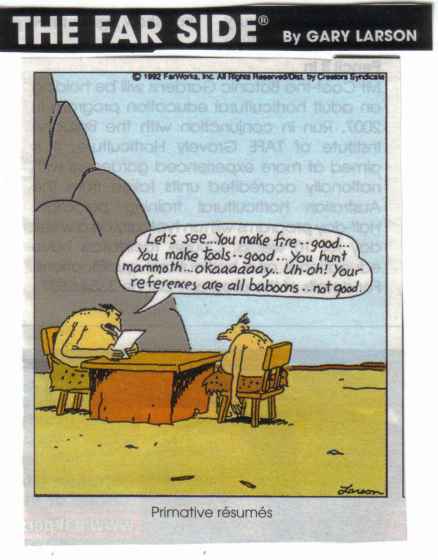
With a snap of fingers on paper, Maud whooped “Burnout dead ahead” which I thought was a bit unfair. “Oh, Maudie” I said, a nickname she disliked, “you make me want to grab a coffee and start scrolling endless, mindless amusements across my screen.” I picked up my phone. I don’t think that was quite the incentive she had in mind and may have misinterpreted my gesture. She frowned and started flipping through the pages of her speech, obviously keen to memorise more text. “Look.” I offered her the phone. On the screen was an old Gary Larson “The Far Side” cartoon. Now, that really did make her laugh.
The Ten Penners, a children’s author collective, launched their blog tour to coincide with the release of their exciting new anthology Mystery, Mayhem & Magic. Follow the tour, read about Julie Baythorpe, book giveaway and more—
Mystery, Mayhem & Magic is an anthology of amazing adventures for young readers!
Take a path through the forest of imagination into mysterious journeys filled with mayhem and a kaleidoscope of magical creatures.
From the authors of Shock! Horror! Gasp! and Fan-Tas-Tic-Al Tales emerges Mystery, Mayhem & Magic, a new anthology written by The Ten Penners, a paperback novel-size book which is jam-packed with thirty-six stories, poems and novellas suitable for children aged 8 to 12 and early readers. Stories can be read to younger children too …
… So come and explore!
The Ten Penners children’s author group
Follow the fascinating Mystery, Mayhem & Magic
Blog Tour any time—
SPECIAL ANNOUNCEMENT – BOOK GIVEAWAY COMPETITION CLOSED!
There will be a giveaway of a copy of Mystery, Mayhem & Magic! At the end of the blog tour, those who have left a comment on this page, or on any of the other hosts’ pages during the blog tour, will be in the running to receive a free copy! The announcement of the winner will be at our book launch at Broadbeach Library on Saturday 4 November 2017. So, please make a comment below to be in the running.
Q & A
Today I am delighted to welcome one of the authors, Julie Baythorpe, who has kindly put her literary thoughts into words:
Julie BaythorpeJulie at her book launch
ABOUT THE AUTHOR
Julie Baythorpe was born in Sydney and moved to Brisbane where she attended Brisbane Central State School. She loved every minute of school life so much so she never left the education system. In 1985 she moved to the Gold Coast. Julie has written all her life. For many years, she taught creative writing, both as a Teacher and Principal in classrooms across Queensland. When she retired from teaching she started writing full-time. She has written and published numerous short stories, poems, journal articles and has developed many Curriculum documents for Education Queensland. She is currently organising and presenting writing workshops for the Gold Coast Writers’ Association. Her books include the Reid Devron murder mystery series and several short story anthologies. Julie also enjoys creating watercolour paintings … when she’s not writing!
Q1.When did you start writing?
A. I started when I was very young … five or six years old. I loved it. I had a vivid imagination (still have) which transported me to mystical and magical places. As I grew older I began writing poems and stories for the children I taught in primary school. I also wrote strategic documents … curriculum documents, behaviour management programs and planning outlines for Education Queensland. I started writing fiction full-time when I retired from teaching.
Q2.Which genres do you enjoy writing?
A. I enjoy writing in most genres, however, I feel most comfortable writing novels in the murder mystery category. As a member of The Ten Penners writing group, I’ve dabbled in short story writing for children again. It’s been a while since I did this, however, I enjoyed creating the character ‘Plinko’ and I loved the adventures of Jock, Davo and Birch in ‘Birch the Dinosaur and the Bogan Penguins’. A lot of fun!
Q3.Have you published any books? A. Yes, I’ve published three books in the Reid Devron murder mystery series. ‘The Lavender Principal’, ‘Silo Deadfall’, and ‘Under the Fig Tree’, all set in schools where I’ve worked. In collaboration with the Southern Short Story Group (another sub-group of Gold Coast Writers’ Association) I wrote a number of fictional short stories. The title of that book is ‘Love, Lies, Laughter and a Few Little Tears’.
Q4.Have you won any writing competitions?
A. Only one … when I was about nine years old. They asked me to read it to the whole school. I’ve been traumatised ever since! But it didn’t stop my love of writing!
Q5.Do you have a plan/schedule for your writing?
A. Early in the morning is a great time for my writing sessions. I fade by the afternoon. I usually collect ideas in my head and jot down notes … Firstly, in a scribbled, illegible mess. To tidy my ramblings, I develop a timeline for two or three pages then add chapters and scenes. For example, Chapter One … a body is found, police arrive, description of setting and some characters. In a rough outline, I write down scenes in each chapter. I use a scrapbook for pictures and details of my characters. Lastly, I organise a folder for research, the book cover ideas, similes/metaphors, poems, and editing notes and pages. Then it gets cracking!
Many thanks, Julie, for your time and inspiration.
Smiles all round for The Ten Penners
The Ten Penners sub group of Gold Coast Writers’ Association
Don’t forget! Post a comment below (or on any one of the blog tour sites) to be in the running for a giveaway copy of The Ten Penners new anthology Mystery, Mayhem & Magic! IMPORTANT: THE BOOK GIVEAWAY COMPETITION HAS CLOSED.
Postcards are alive and well and received by countless friends, family and complete strangers around the world. Complete strangers? This is where Postcrossing comes into the picture.
I first learned about Postcrossing, a postcard exchange group, from a quarterly Stamp Bulletin and joined free-of-charge. The five-step guidelines are easy to follow, the website makes it simple to set up a profile and tweak your settings. Navigate around and check out the stunning and prolific cards received and uploaded by Postcrossing members. Everyone abides by the rules so things flow smoothly between more than 69,000 members in over 200 countries.
SEND: There’s pleasure in finding and choosing suitable postcards and stamps uniquely representative of your own location. Clever members can match a postcard to followers hobbies. It took a couple of weeks for the first postcard to hit my letterbox but I could start mailing out straight away.
RECEIVE: The beauty, variety and quantity I received, often from places I’d never heard of, was impressive. English is universal although you can specify countries and language. Handwritten, never laser printed, it takes a certain skill to describe something about yourself and your town on the back of a small piece of cardboard!
The Postcrossing project was created in 2005 by Postcrossing Founder Paulo Magalhães as a side project when he was a student in Portugal. From 2008 to 2017, 40 million postcards have been sent. Naturally Paulo loves to receive postcards and finding one in his mailbox always makes his day!
Right down to the different shapes of the stamps, and in some cases, distinctly long addresses, I was hooked on the fun.
The Postcrossing website has stats and charts to follow the progress of your postcards and I only had one go missing in action. I think the British postcards were the quickest to arrive and I’ll be diplomatic and not say which was the slowest. Larger countries sometimes lagged, perhaps because of sheer volume – or misguided postal cuts. In Australia, there’s an infinite variety of unique postage stamps and supply doesn’t look like declining any time soon.
This world-wide concept stands strong, despite the challenges of internet and social media. Stamps are still stuck on postcards, timeless messages are still written on the back, and they are still physically mailed to a real address.
Postcrossing friendships are possible via their blog, forum and meet-ups. Due to work commitments, I closed my Postcrossing account and gave many of my postcards to a collector. I kept a few colourful ones to wistfully gaze at on a quiet day.
INTERVIEWER: How many unfinished manuscripts do you have on file? ME:
I have nine in varying stages of incompleteness. I love them all, they start off well, the concepts are intriguing, then I stall. INTERVIEWER: How do you get over writer’s block? ME:
At this point my stories can veer one of two ways. Boringly predictable or Man-I-didn’t-expect-that! And believe me, you will know the difference when the creative spark ignites. The momentum is strong, the words flow and come alive. I run with it and don’t look back. INTERVIEWER: What has made you stop writing a particular story? ME:
When that inspired catalyst fizzles out, mundaneness moves in. My tale slips into the writing doldrums and my incentive fades away. I no longer feel the need to flesh out the plot. Of course, a looming deadline can always prod me into action. INTERVIEWER: Do you prefer plot structure or character development?
ME: Oh, I much prefer characters, I love creating their voices, habits and lifestyles. INTERVIEWER: Do you delete your unfinished work? ME: Perhaps it sounds better if I say I have nine good story ideas pending completion. INTERVIEWER: Does that mean you keep everything you write? ME:
Yes, and I return to scrappy stories on a regular basis to see if they are worth saving. Maybe one of them is a work of genius. To find out, I must keep writing. INTERVIEWER: Do you want a coffee? ME:
Sounds like a good idea!
It would seem natural to present your writing in a positive manner but it’s often hard to do. Sometimes it can be easier to shrink away, to be shy or introverted, and other times quite difficult not to be self-effacing, apologetic or too polite. Regardless of what you’re offering, present a positive attitude to the world. I don’t mean a pushy pitch or aggressive behaviour, and it’s usually of no benefit to be bold to the point of belligerence, but tell yourself to be positive and you will be met with a greater degree of interest.
Just as my Grandma used to say “Don’t hide your light under a bushel”, and school teachers cajoled us to “smarten that attitude”, the following example of loss-and-gain is what I observed one Saturday morning at my local shopping centre.
It was Fundraising Week for a local youth group and they were selling sweet biscuits. Their traditional biscuits are round, flat and stamped with an insignia. This time they were also offering chocolate chip, shortbread, gluten free, etc, and the stall outside the supermarket was groaning with packets of enticing treats. The girls were in their uniforms, with neat hair and shiny faces. They proudly showed me the products on sale, offered me a sample and told me the pricing. It was such a pleasant encounter that I purchased several packets.
As I walked back to my car, I turned a corner and nearly bumped into more members of the group selling the same biscuits. They had the packets of biscuits on the flagstones and were standing with arms by their sides, eyes down, embarrassed by the shoppers walking past. No display, no smiles, no attempt to present themselves or their product in a good light. I think one shopper took pity and bought a packet, telling the girls to keep the change. The response was mumbled. Too late, a group leader came along as I was leaving.
Naturally I don’t expect everyone to be a salesperson, I understand those girls were daunted by the prospect, finding themselves in a situation outside their comfort zone. Nevertheless, they needed a positive-outlook boost because they represented an organisation, whereas writing is a personal extension of you – but surely it’s the same? You write for a reason, get it out there, let it go!
In my experience, being positive about your work brings confidence along for the ride.
Launch yourself from an author platform! Get yourself out there!
Emerging writers are advised to expand their author platform by widening their online presence, broadening their social media and linking websites. Recommended tips are video highlights and engaging with other writers on blogs and internet discussion groups. No doubt new writers mull over the difficulties of going from guts to glory. Or, in 21st century terms, Likes to glory. That’s it, isn’t it? The biggest number of Likes, page views or virtual friends you can get will make you the winner. Or does it?
I have read well-written books and I have read badly written books and sometimes those badly written books make it to the top. Why? Marketing the brand, the buddy system, freebies? Or is it because it’s fantastically easy to Like someone even if a reader forgets they tapped Like because they were texting, drinking coffee, looking for food in the refrigerator? Once you’ve reached published paradise via internet or bookshop, sales still remain a genuine way to gauge popularity. It’s a longer process to engage the reader and it involves thinking about the purchase. Tacky as it sounds, when money is exchanged you’re heading in the right direction.
Millionaire writers at the top of their literary game probably don’t put in the same internet hours the novice does. A rookie writer spends a lot of time staring at a screen, tapping away at a keyboard to keep the “me” momentum going. Only to find that if they neglect an area of connectivity for more than a day, they are already stale news. Their post and avatar moves on, drops out and someone else steps into the gap, glowing with instant recognition. Instant, that’s a tricky word, online presence needs to be instantaneous. But it’s usually not permanent, it does not equate to stardom, it just means that they hover in the pack of thousands for an instant.
It’s difficult to know how much networking is too much. Creativity can suffer. Another driving force for the evolving author is the ever-present fear that an editor from a prestigious publishing house will scorn their week-old post and think they are not up to the job. This raises an online conundrum; content versus frequency. The pressure is on.
So that my thoughts can become words, I am using a good media platform right now. However, I’m under no illusions that suddenly it will make me readable, bankable and popular. Personally, I think perpetual loyalty to the internet crushes originality. Ah, a lightbulb moment! As long as you feel fulfilled as a writer, you will write and you will love what you write. Don’t be too concerned about the initial lack of Likes. To gain any sort of recognition, I think we should remain steady and plod along and work hard yet with a happy heart. Stay true to that inner core, that part of our soul which says “Do it, you know you want to, you know you can” and accept the outcome.
(Rewriting metaphor) The paddocks of writing are strewn with rough drafts. You kick, trip, fall, get up and struggle your way across rugged terrain until you see a smooth pebble ahead. The closer you get, the more polished it becomes. Eventually you walk over golden sand and reach out; that pebble has become a jewel. The following children’s picture book story is still a pebble.
(Living room) Everyone in Neil’s family wants to sit on the soft cosy comfy couch.
Because the soft cosy comfy couch is the best place to sit.
But sometimes it’s just not big enough.
(Takeover) Sometimes Neil can’t sit down to read his book because his two brothers and Tiny the dog sit down first. And they spread out.
(Solid cushion) So Neil tries to sit on a hard red cushion but slides off – bump!
(Kitchen chair)
Just when Neil goes to sit down on the front doorstep with his book, it is time for lunch.
The cushion on the kitchen chair is very thin. Neil wriggles to get comfortable.
The thin cushion slips down and lands in the cat’s food.
(Various seats) Neil’s mother watches a movie with Tiny the dog and Rat the cat snoozing on either side.
No room to squeeze in there.
So Neil drags in
a cardboard box – squash! a wooden stool – crack! a blue highchair – topple! Everyone ends up grumpy so Neil goes outside to find a relaxing place to read.
(Outdoors) In the garden the washing flaps across the wooden seat like a ghost – wooooo! When the hammock swings back and forth too much it makes Neil feel dizzy.
He falls out – plop!
(Tree) His leafy perch on a branch in the tree is swooped by noisy magpies – ouch!
Neil tucks his book inside his t-shirt and scrambles down.
(Various places) The chicken roost, the guinea pig hutch and the vegetable patch are no good.
(Swimming pool) Neil likes the idea of floating and reading.
It’s difficult to balance and read a book on the floating pool mat – splash! Tiny the dog jumps into the swimming pool and rescues the book.
(Rainy day) Next day a headcold makes Neil sneeze and sneeze and sneeze.
But he has a new book to read.
And he snuggles up, warm and happy on the soft cosy comfy couch.
(Family) Then everyone decides to keep him company.
On the SQUASHY soft cosy comfy couch.
Maud Fitch was well-known to the local police. While Maud would say she was recognised for her crime-busting phone calls and neighbourly good deeds, Sergeant Ron Tisdale on the front desk of Kingsgrove police station expressed the opinion that she was a nuisance caller.
“In fact,” he said in his rich baritone voice, “she’s a serial pest.”
Sergeant Tisdale had just hung up from her latest telephone call.
“It’s not as though Maud fits into the lonely old woman category,” he said generously. “She’s got a good family, a part-time job and plenty of hobbies.”
A junior officer asked what the problem was this time. “An escaped nerd alert?”
“Don’t be too cheeky, lad,” said Tisdale, careful not to let his soft spot show. “This time Maud has been observing her retired neighbour across the road and she thinks he’s murdered his sister and disposed of the body.”
The younger officer laughed. “Wasn’t that a storyline on TV last night? She’s a sponge. She absorbs everything she sees on television and translates it to her own life to spice things up.”
“That might be so but I’ll log the details just the same,” said the Sergeant. He rubbed his chin. “I think I’ll drop by Ms Fitch’s place on my way home this afternoon. Just a quick visit to check that everything is fine.”
Being the senior officer, he ignored the knowing wink from his subordinate.
Maud had made a comment about uncharacteristic behaviour which sounded an
alarm bell in his orderly mind. At the very least, he wanted to see that sparkle in her eyes when she had a hunch about something.
* * *
Maud saw Angus McDowell draw the living room curtains again. He seemed to open and close the floral curtains three or four times a day in a vain attempt to make it look like someone was at home. That in itself was unusual in such a safe little town like Kingsgrove but it was always his sister, Felicity, who did the domestic work inside their home. Angus was the outside type. He trimmed the garden, attacked the weeds and planted flowers as orderly as a row of chairs at the movies.
“He’s been doing that curtain thing for several days now,” said Maud. She shaded her eyes from the afternoon sunlight which gleamed down on her pale skin and auburn hair. She turned and caught Sergeant Tisdale with a transfixed look on his face. “And I haven’t seen Felicity for almost a week.”
The Sergeant cleared his throat and reached for his fourth helping of Maud’s homemade biscuits.
“Perhaps she’s gone on a holiday?” he suggested. “Has he told you anything specifically to the contrary to arouse your suspicions?”
Maud poured more hot water into his coffee cup and frowned.
“That’s just it, he’s cut himself off, Sergeant.”
“Please, call me Ron,” he said.
“Angus isn’t answering the phone or the door bell,” she added, “Ron.”
“Maybe Felicity is visiting family and he didn’t want to go with her. Could be he’s home alone having a kind of bachelor break.” Sergeant Tisdale muttered to himself, “Lord knows we all need one of those occasionally.”
Maud understood that his daughter was leaving the grandchildren with him more and more now that his divorce had come through, thinking that it would cheer him up.
“He’s not the type,” she said emphatically. From her position as a twice-divorced woman with grown-up sons, Maud felt she could speak with authority on the slovenly ways of men when left to their own devices. Angus was neither a loner nor a slob.
The Sergeant shrugged his broad shoulders.
To highlight her next words, she tapped her spoon on the side of her cup.
“He’s been doing everything under the cover of darkness.”
After she had outlined the nocturnal behaviour of her neighbour, Sergeant Tisdale said “I don’t want to snuff out your theory with a fire blanket, Maud, but I hardly think getting the groceries delivered or taking out the rubbish and collecting the mail after dark constitutes a criminal case.”
Crumbs were starting to gather on the front of the Sergeant’s shirt and he automatically brushed them off. Maud’s glare made him hang his head like a school boy. He apologised as she hurried out of the room to find her hand-held vacuum cleaner. When she came back she noticed he had taken the opportunity to stuff a savoury cheese sandwich in his mouth.
Over the suction noise of the vacuum, Maud said “I haven’t told you the clincher yet.”
“Clincher?” mumbled Sergeant Tisdale. The look on his face indicate that he thought this was another word for Maud’s guesswork. But she knew he was actually allowing himself enough time to swallow the sandwich. It gave her the chance to air her next piece of evidence.
“Yesterday, when I dropped by, there was no flower bed in the back garden. Now there’s one near their old jacaranda tree.” Her voice rang with triumph.
Sergeant Tisdale smiled politely. “The McDowell’s have a neat garden, they like gardening, I see nothing unusual with that.”
“But, Ron,” gasped Maud, “it was dug in the middle of the night.”
“Well?” said Sergeant Tisdale as he eyed the last biscuit.
Maud shoved the plate towards him. “It’s the same size as a graveyard plot.”
Unimpressed, Sergeant Tisdale sighed. “And?”
“And there’s no flowers planted in it,” said Maud. “The reason I think this is so significant is the fact that Angus has a bad back so all the hard work is carried out by a landscaper who arrives around ten o’clock in the morning.”
She waited for a rebuke, similar to the kind her family dished out, which usually ended with her being told she was a sticky beak. Instead, Sergeant Tisdale asked “When did you last…?” With a dramatic squeal, she cut him off and pointed out the window. “Look! He’s fussing at the curtains again. I can see his gardening overalls.”
Sergeant Tisdale half rose from the armchair which caused a cushion to tumble to the floor and coffee to slop onto his trousers. Maud gave a snort of annoyance but it was directed through the window.
“Too late,” she said. “He’s ducked out of sight.”
“Sorry about that,” said Sergeant Tisdale. He sat back down and carefully reached for a paper serviette.
“Oh, don’t worry…” began Maud.
“No, I don’t mean spilling my coffee,” he said. “I meant twitchy behaviour. It happens a lot around policeman. Police cars also have a way of making citizens nervous.” He dabbed at his knee with the disintegrating paper and changed the course of the conversation. “Maybe he’s worried about you, Maud.” She rejected this idea with a wave of her hand. “No, I think he knows we’re on to him.” For emphasis, she punched a small fist into the palm of her hand.
“Let’s nail him,” she said.
“I’m shocked,” said the Sergeant and smiled. “You have a wonderful imagination.”
His comment was ignored because Maud remembered something else she’d forgotten to tell him. “You know, I rang all the hospitals in Kingsgrove and none of them had a Felicity McDowell on their patient admissions list.”
By tilting his head to the side, Maud thought his interest was piqued but he dashed her hopes.
“What’s the motive, Maud? From all reports, Angus and Felicity McDowell have got on very well over the years, considering they are brother and sister. No sibling rivalry there. They’ve settled into retirement together after the death of their mother and have never put a foot wrong, so to speak. Now, answer me this,” he said and leaned forward slightly. “Why do you think Angus has murdered his sister Felicity?”
His voice sent a shiver up Maud’s spine. She sucked in a lungful of air and expelled it slowly. “Well, dear Ron, I was saving the most incriminating evidence until last.”
Sergeant Tisdale put his cup aside, drew himself up in the armchair and displayed credible anticipation.
“The McDowells were arguing just before Felicity disappeared.” Maud moistened her lips. She believed this was the good part. “Felicity was leaving the house and she shouted at him saying he was a boring old man and it showed. She didn’t want to end up a wrinkled prune like him. She said he was stuck in a rut and should live a little, move with the times.”
“How did you hear all that?” asked Sergeant Tisdale.
Maud felt guilty and knew it showed. “I was watering the garden.”
With reluctance, Sergeant Tisdale rose from the comfort of the chair and said “Hurt feelings yes, murder no. An argument like that doesn’t indicate Angus would have been angry enough to commit murder.”
Maud was crestfallen. She had hoped Sergeant Tisdale would look into it for her. However, his next words brightened her outlook.
“I’ll call on Angus tomorrow, just for a little man-to-man talk. But I’m not promising anything. I’m sure there’s a reasonable explanation for Felicity’s absence.”
As he walked towards the door, Maud followed him and voiced her main worry. “I certainly hope Angus is not a serial killer or I may be next on his list.”
Sergeant Tisdale assured her that normal people don’t turn into serial killers overnight. He thanked her for the afternoon tea and was just about to cross the threshold when he paused. He asked Maud if she had seen or spoken to either of the McDowells in the past week.
“No, except for partially seeing Angus at the window,” she said. “Why do you ask?”
“We don’t know if that person in the house across the road is actually a McDowell. It could be anyone.”
As far as Maud was concerned, their conversation had taken a turn for the worst. She was horrified to think that perhaps both McDowells were murder victims.
“Oh,” said Maud. “Both murdered.”
She opened and shut her mouth then managed to utter “Oh, Ron.”
Sergeant Tisdale told her how this particular thought had been niggling at the back of his mind. Maud couldn’t tell if he was serious. “Don’t worry,” he said and gave her elbow a squeeze. “Just speculating out loud. Not a very plausible scenario. Also, if someone was in there house-sitting, I’m sure you would have witnessed other comings and goings.”
“And surely they would have told me if they were going away?” said Maud. She felt indignant at the very idea of being excluded from this information.
“Not necessarily,” said the Sergeant. “For example, they might have been too embarrassed to say they were going to a nudist camp.”
Despite herself, Maud laughed. It was an unlikely event as far as she was concerned. She said if that was the case, she would never be tempted to join them.
“Shame,” said Sergeant Tisdale.
As she closed the front door, she was aware that the Sergeant’s look was one of interrupted longing. She assumed he was disappointed he had not been invited to dinner. With a final vacuum of the armchair, she dismissed the flaws of men because a plan of action had already germinated in her fertile mind.
Sneak Peek
Dusk had melted into darkness and the clock numerals glowed towards midnight as Maud changed her clothes. She put on her black slacks and a dark blue shirt which she buttoned to the top. In the wardrobe she found a black cap her nephew had left behind. Once it was firmly clamped on her head, she surveyed the effect and was satisfied she looked slinky enough to blend into the night.
“Now for a bit of sneak and peek,” she whispered to the mirror.
At first, Maud thought it would be a good idea to dig up the grave-like mound beside the McDowell’s jacaranda tree but visions of a gruesome discovery quickly ended that notion. Now she wanted to see who was in the McDowell house.
She crossed the dimly lit road, opened the wooden gate and tiptoed across the springy lawn. The act of trespass did not enter her mind. She headed for the side of the house because, she reasoned, it was less visible from the road and more likely to have an open window. Startled by a creature rustling in the shrubbery, she paused and held her breath. It was then she heard another sound. The sound of digging. Maud was sure her heart skipped a beat.
“Caught in the act,” she thought. Surprised at her bravery, she moved forward. She wanted to see who was doing the dirty work.
“Maybe the body is being moved?” This thought made her shudder.
Maud crept along paving stones as she followed the noise around the corner of the old house. Dull light from an open doorway partially lit the back garden. There, hunched over the newly-dug garden bed, was a shadowy figure wearing heavy grey overalls and thick gloves. Although she only had a back view, Maud guessed it was Angus. She could distinguish his movements and watched him dig at the soil with a small trowel.
Suddenly her bravado faded and Maud lost her nerve. She couldn’t tackle him and she certainly couldn’t accuse him of anything. It was too tricky, too dangerous even. Inwardly she chastised herself for doing such a foolhardy thing.
As she cursed her impulsive behaviour, her innermost thoughts screamed in a high pitched voice “Run, run now,” but she willed herself to stay calm.
She started to back away. As she moved slowly down the path, she felt for the stability of the wall. Without warning, she stood on a loosely coiled water hose and staggered. It twisted around her ankle. The more she flayed, the more entangled she became until the hose wrapped around her leg. Finally she fell backwards and plonked down in a puddle of water.
The silhouette jumped up and ran over to her. Two sturdy boots halted in front of her downcast eyes. Maud did not want to look up. She did not want a confrontation. She knew she was cured of sleuthing for life. One steel capped boot tapped with intimidation as she forced herself to look upwards.
In the same instant she raised her eyes, the backlit figure spoke.
“Maud Fitch,” said a female voice. “What on earth are you doing spying on me in the middle of the night?”
“Felicity! You’re safe!” cried Maud, flooded with relief.
“Of course,” said Felicity. “Now answer my question.”
Maud gulped. “I thought you were dead.”
“Obviously not,” said Felicity.
“But, but,” stammered Maud, “why are you dressed in Angus’ clothes?”
“To do a spot of gardening,” said Felicity.
Maud felt bold enough to ask for some assistance. Felicity helped her untangle the garden hose and she stood upright. As she brushed at her damp slacks, Maud saw a line of potted plants waiting to be transplanted.
Unable to resist, she said “Why do it at this time of night?”
“Planting by the lunar cycle,” said Felicity.
“Angus does the gardening. Where is he?”
“None of your business,” said Felicity. She appeared about to add something, instead she pulled off the gardening gloves and shoving them into a plastic bucket.
“You didn’t…” Maud’s voice faded.
Felicity shot her a sly grin. “You reckon I’ve bumped him off and buried him in the garden, don’t you?”
Maud nodded and wondered how fast she could run.
“I could easily do that to you,” said Felicity matter-of-factly, “and nobody would ever know.”
“Ron Tisdale would,” said Maud, then covered her mouth.
“Will the good Sergeant be arriving next?”
“Yes,” lied Maud.
Felicity appeared unfazed by this and Maud watched as she swiftly removed the stained overalls. Unfortunately it was too shadowy for Maud to tell if the marks were made by grass or blood. Felicity jammed the overalls into the plastic bucket and stood there wearing a pair of tight jeans and a flattering top. To Maud’s dismay, Felicity then snatched up a pair of pruning shears and shook them menacingly at her. “You’re a nosey old sticky beak,” she said.
Maud was relieved when Felicity dropped the shears into the overcrowded bucket. She retorted “Tell me something I don’t know.”
Felicity chuckled. She sat down on the door step in the pale glow from the kitchen beyond and ran her fingers through her newly-cropped hair. It was almost a challenge.
Her attitude no longer threatened Maud but she was disconcerted when Felicity smiled and crossed her legs in a relaxed fashion. Maud wondered why her image was so cool, so casual. And, she noted with surprise, so young-looking. She thought “If Felicity is older than me then she should look older.” In fact, Felicity looked younger and more unlined than when she and Maud first met ten years ago. It took Maud a few seconds to work it out.
“You’ve had Botox injections,” she accused.
“Yes, I have. Got it done last week when I was in Sydney, only took a few hours. And I’m loving it,” said Felicity with a girlish toss of her head. “When do you think Sergeant Tisdale will get here?”
“I think you should be arrested,” Maud exploded. “Obviously you wanted a new life, a carefree younger life. You didn’t want Angus hanging around, poor old wrinkly Angus, so you killed him. Clearly the treatment has addled your brain.”
“You’re the one who’s addled.” Felicity glared as much as the Botox treatment would allow. “Angus got knifed. It was no accident.” She paused and straightened her sleeve. “I persuaded him to go under the knife. I’ve been covering for him while he recuperates from cosmetic surgery.” Maud was dumbfounded. “Angus, cosmetic surgery? Never!”
“It’s true,” said Felicity. “It’s our little secret. Please don’t give the game away. He should be home tomorrow so you can check out the work for yourself.”
“I won’t be coming back, I couldn’t imagine anything more awful. What a ludicrous thing to do,” shouted Maud. She turned and stormed off before she realised her behaviour was excessive but she had gone too far to make amends. As she rounded the corner, she yelled over her shoulder “You’re a couple of vain peacocks.”
She muttered all the way home about people who couldn’t grow old gracefully, who were image obsessed and wanted immortality through the process of body distortion.
“I love my wrinkles,” she said defiantly. Then wondered if it was true.
* * *
Next day, Maud had driven home from work and cruised down the last familiar stretch of her own road when she saw Sergeant Tisdale’s police vehicle pull away from the kerb outside the McDowell residence. For her own benefit, she needed to know what he had been told about her unseemly actions and started to formulate an excuse.
She flashed the headlights then flagged him down with windmill-like arm gestures. The Sergeant appeared both annoyed and amused but pulled over good-naturedly and lowered his car window.
Maud was ready with her questions but he spoke first.
“I’ve solved the McDowell mystery,” he said.
Maud went to speak but he kept talking. “Old Angus and Felicity are there. He told me that both he and Felicity had each taken a short vacation.”
She gave a wary nod.
Sergeant Tisdale continued “The separation must have done them both the world of good. They look ten years younger.” Maud smiled. At that moment, she experienced a revelation. She decided that saving face was not as important as keeping a friend’s secret. Sergeant Tisdale looked at her expectantly. “Glad to hear it,” was all she said.
Maud accelerated sharply and left the Sergeant behind without a second glance.
She knew he wouldn’t give up on her that easily and she had biscuits to bake.
♥Gretchen Bernet-Ward
(With my thanks to Maud Fitch, friend and fellow writer)
“An adventure is only an inconvenience rightly considered. An inconvenience is only an adventure wrongly considered.”
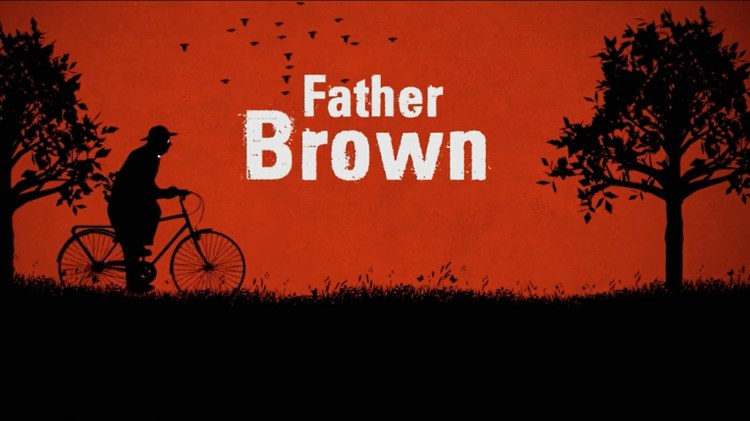
Quote from G. K. Chesterton who was an early 20th century British writer, poet, philosopher, dramatist, journalist, orator, lay theologian, art and literary critic and biographer. Apart from many literary works, Chesterton is well known for his book series of Catholic priest-detective Father Brown. These books were produced for television by BBC One with Mark Williams in the lead role.
Here is a small selection of Chesterton novels:
The Napoleon of Notting Hill (1904)
The Man Who Was Thursday (1908)
The Ball and the Cross (1910)
Man Alive (1912)
The Flying Inn (1914)
The Return of Don Quixote (1927)
Chesterton once said “Education is simply the soul of a society as it passes from one generation to another.”
This is my first children’s picture-book book review. Legions of preschool storytime fans are hanging out for this one! Of course, you will have to read it to them. I could have bored you with reams (remember reams?) of lucid, erudite adult book reviews but I’ve decided to revisit an all-time rollicking favourite “I Went Walking”.
In my no-holds-barred, honest-to-goodness style, I will explore the deeper meaning of taking a walk through a farmyard. Or maybe it’s all just good fun.
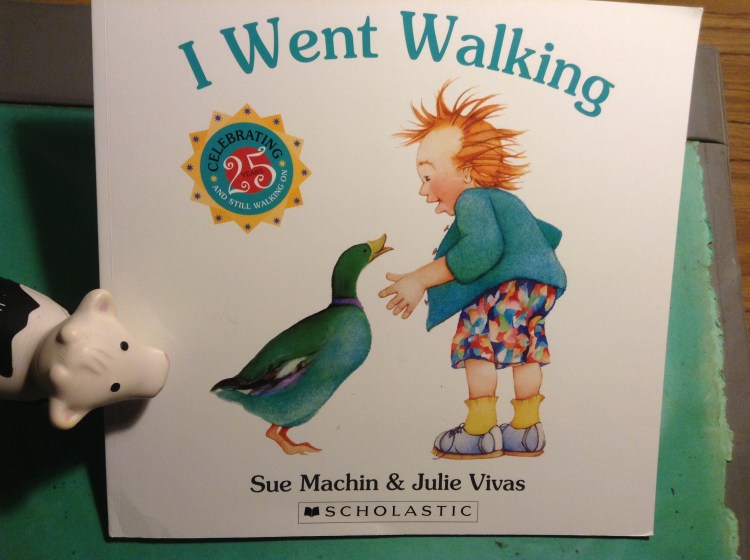
“I Went Walking” written by Sue Machin and illustrated by Julie Vivas An Omnibus Book from Scholastic Australia First published 1989, reprinted approx 23 times, sometimes twice in one year.
My softcover copy of this slim 32-page volume celebrates 25 years of publication so that means at the time of writing it’s now 28 years old. I am sure the book’s huge following of under 5s will be planning a suitable 30th shindig, perhaps everyone invited to come as their favourite barnyard animal. There could be hay bales to sit on while devouring plate-loads of themed food. The country and western band would…sorry, got a bit off-topic there…
The front cover artwork displays a young boy talking to a quacking duck. Open to the second page and this young boy is putting on his coat. Pay attention to this coat, and other parts of his apparel. Naturally the page reads “I went walking” with the response on the next page “What did you see?” and thereafter. Without going into too much detail, he sees a black cat, a brown horse, an apple tree, a red cow who offers him a ride, a green duck and the boy sheds his first piece of clothing.
“I went walking” and “What did you see?” other sidelines like a sack of potatoes but in this instance it’s a muddy pink pig which is hosed down, necessitating the removal of wet shoes, then socks and t-shirt. The gang of farm animals is following the boy when he bumps into a friendly yellow dog. He marches off with all six animals following. They do a wild dance together and that’s the end of the story.
You really have to see the pictures in this picture book to appreciate it. The clear, colourful drawings and uncluttered storyline combine to make a five-star bedtime reading experience.


![the_ten_penners_Nov16[1]](https://thoughtsbecomewords.com/wp-content/uploads/2017/09/the_ten_penners_nov161.jpg?w=750)

![the_ten_penners_sept17_2_cropped[1]](https://thoughtsbecomewords.com/wp-content/uploads/2017/09/the_ten_penners_sept17_2_cropped1.jpg?w=750)


![MMM_cover[1]](https://thoughtsbecomewords.com/wp-content/uploads/2017/09/mmm_cover1.jpg?w=750)

![julie_at_her_book_launch_Sept17[1]](https://thoughtsbecomewords.com/wp-content/uploads/2017/09/julie_at_her_book_launch_sept171.jpg?w=240&h=320)
 A.
A. 


![ten_penners_part_group[1]](https://thoughtsbecomewords.com/wp-content/uploads/2017/09/ten_penners_part_group1.jpg?w=150&h=83)


 SEND: There’s pleasure in finding and choosing suitable postcards and stamps uniquely representative of your own location. Clever members can match a postcard to followers hobbies. It took a couple of weeks for the first postcard to hit my letterbox but I could start mailing out straight away.
 Right down to the different shapes of the stamps, and in some cases, distinctly long addresses, I was hooked on the fun.
 Postcrossing friendships are possible via their blog, forum and meet-ups. Due to work commitments, I closed my Postcrossing account and gave many of my postcards to a collector. I kept a few colourful ones to wistfully gaze at on a quiet day.





 Thoughts Become Words