My pictorial of the Brookfield Show 2019 is pretty much in the order of how I wandered around this country-style event. Although the local landowners are on acreage, the suburb of Brookfield, Queensland, is no longer strictly a farming district nor agricultural growing region.
Yet every year the Brookfield Show comes along and every year thousands of residents flock through the old wooden gates, keen to sample what is known as Brisbane’s Biggest Little Country Show.
I will loosely describe my photos by what they do and don’t feature:
General store, main entrances and show arena.
Inside Brookfield Hall built 1871 housing the Needlework and Craft Sections.
Scarecrows on the way to the Cake Pavilion and cupcake winners.
Side view of the main arena and medieval-looking food tents.
Prize-winning flower displays and trays of prize-winning fruit and vegetables.
Sideshow alley with a ride pumped up and down at a frightening pace.
This year I didn’t photograph the sweet hand-spun pink fairy floss on a stick.
Side view of the traditional Country Women’s Association tea room.
Woodwork Pavilion (not shown) to racing pigs having a break between gigs.
I purchased a framed mixed media artwork (shown below) from Art Pavilion.
Detoured the snake handling demonstration (not shown!)
Had a rest in the ‘grandstand’ before heading home.
The newspapers which highlight features of the show.
Evening events included live music in the Members’ Bar (aka pub) and ringside nighttime spectaculars featured bucking broncos and fireworks.
The Brookfield Show was the forerunner of our State’s grandest show The Royal National Exhibition but this year I didn’t see (or couldn’t find) any farm animals on Sunday except showjumping horses and pig racing. Perhaps other contenders had already been judged and gone home, taking their ribbons with them.
Nowadays it’s difficult to take photos at events especially where there are children. I am mindful of safety and privacy standards. Usually I wait until everyone has gone out-of-frame before I snap an image. Sometimes this makes it look like the place is empty!
Brookfield Show is held over three days in May and, as the legend goes, it often rains but this year the autumn weather in Brookfield was delightfully warm and sunny.
On a go-slow day at home, I clicked a link from a fellow writer and discovered this cool/cute/interesting Adobe Create personality test. It invited me to answer 15 questions. Eight creative types are on offer and once I’d completed the test I was given a full explanation of My Creative Type.
This quiz-like questionnaire gave me a joyful, colourful few minutes. I could take it or leave it, the results are rather like a horoscope, but it did give me a confidence boost.
‘Visionary’ Creative from Adobe Types Test
Apparently I am “VISIONARY – A visionary combines a vivid imagination with a desire for practical solutions. Your introspective and intuitive nature is balanced by a keen interest in the world around you.” The rest is private!
The Adobe Creators say “The Creative Types test is an exploration of the many faces of the creative personality. Based in psychology research, the test assesses your basic habits and tendencies—how you think, how you act, how you see the world—to help you better understand who you are as a creative. Answer these 15 questions and you’ll gain a deeper understanding of your motivations, plus insight into how to maximize your natural gifts and face your challenges.”
“These personality types aren’t black-and-white labels. Think of them more as signposts pointing you toward your full creative potential. While there’s probably one core type that best describes you, you may change types at different points in your life and career, or even at different stages of the creative process. As a creative, you have a little bit of all eight Types inside you.”
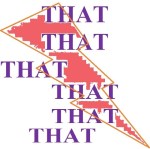
THAT debate rages on. THAT is an overused, unnecessary word, a redundant filler which bulks out your manuscript and changes just about anything into THAT nothingness.
Increasingly, ambiguous THAT is being used instead of ‘who’ and ‘which’ or more descriptive words to introduce a defining clause. This is happening universally in writing today; THAT is slowing and neutralising sentences.
Seven examples where THAT is incorrect or useless, write your own, you get my drift:
She said that it was in her best interest – delete.
They walked down the stairs that are rather grand – use which.
He visits the koala that he sponsors – delete.
Judy thinks Angela is the sort of woman that enjoys tennis – use who.
He assumed that they all wanted to singalong with him – delete.
It takes a minute to realise that Sue is talking – delete.
Tom has to tell her that her dog has been stolen – OK-ish.
A pronoun is a word taking the place of a noun. THAT is a demonstrative pronoun and used in the right context it has a legitimate reason to exist, e.g. ‘That’s a good idea’.
It is perfectly valid when THAT appears in character dialogue, but when a writer indiscriminately uses THAT in other areas of their work, I find it needlessly clunky.
Of course, you can change a passive voice to an active voice, or use the rule ‘Who is a person, THAT is an object’. Remember ‘Who, what, when, where, why’ to help you decide.
On the other hand, there’s always exceptions. Use your own discretion as to where you like or don’t like THAT, and where THAT actually does fit in your sentence. Once you become aware of THAT, you will probably get rid of it unless you use American English.
CHALLENGE
Read through text or a draft you have written in the last month.
Check for how many time you use the word THAT.
Are you surprised at your usage?
Could you use a more expressive word than THAT?
Could you condense your word count by omitting THAT?
Read a novel or document and watch for THAT exploitation.
If there’s a ‘Ditch THAT’ campaign running, I will sign up!
Why? Because current literary exertion is being spent on THAT, an overworked and superfluous word. What more can I say about THAT? Or, what more can I say?
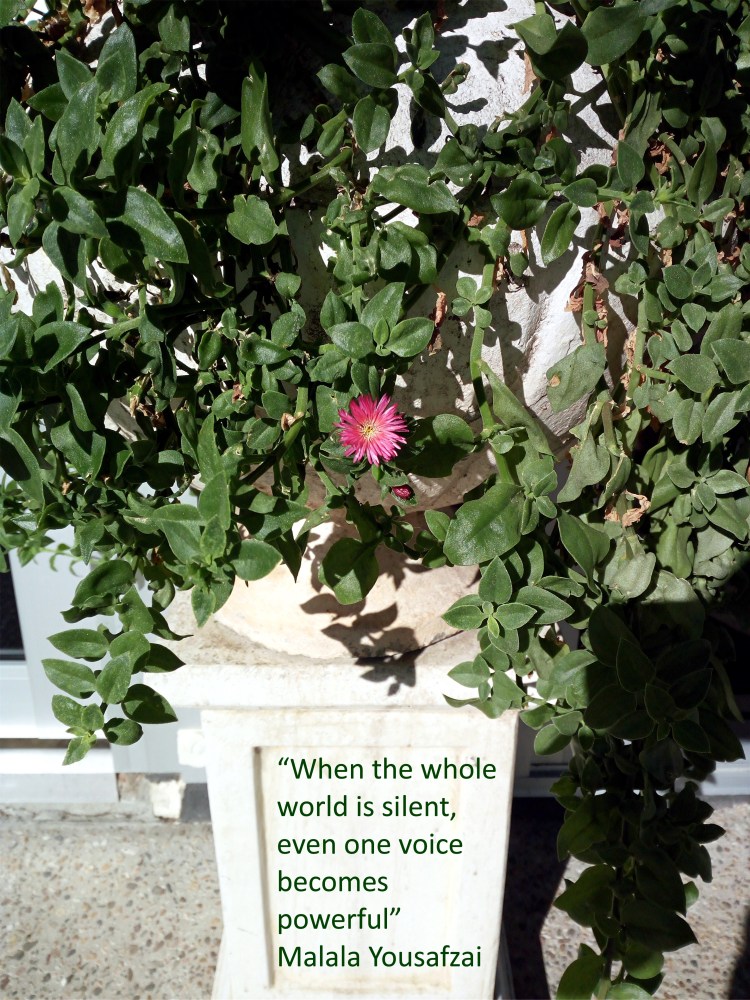
Malala Yousafzai was born 12 July 1997 in the Swat district of northwest Pakistan, where her father was a school owner, active in educational issues and humanitarian work. Malala Yousafzai became a Pakistani activist for female education and the youngest Nobel Prize laureate. She is known for human rights advocacy, especially the education of women and children in her native Swat Valley in Khyber Pakhtunkhwa where the local Taliban had banned girls from attending school. Malala’s advocacy has grown, with acknowledgement and awards world-wide and the establishment of Malala Fund which invests in education programmes to help girls go to school and reach their full potential https://www.malala.org/malalas-story
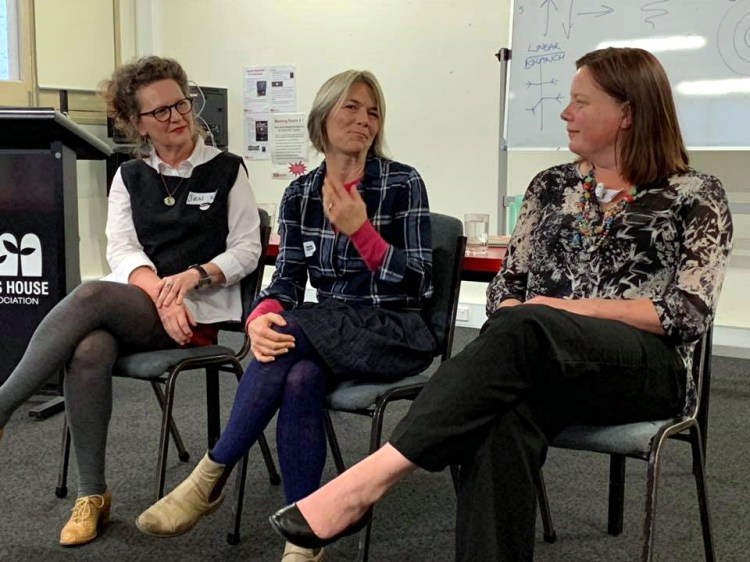
One of my favourite contemporary children’s writers is Jen Storer. Wise, warm and wonderful, Jen imparts her wealth of knowledge on Girl and Duck online with Scribbles courses, Questions and Quacks videos, Facebook live sessions and a yearly Masterclass.
Here is a letter from Jen Storer
Scribbles Masterclass 2019
Dear Children’s Literature Creators,
KidLit Vic is fast approaching and so is the annual Scribbles Masterclass!
Scribbles Masterclass
4.1 Hayden Raysmith Room
Ross House
247 Flinders Lane (That’s right. Across the street from Brunetti!) Melbourne Australia
Friday 24 May 2019
2pm – 5pm
Note: This year we have a SECRET special guest joining us!
If you would like to join me (and my special guest), please CLICK HERE to book your place by Wednesday, 15 May 2019 10pm (AEST). There are still a few spots left.
IMPORTANT: You do not have to be attending KidLit Vic Melbourne in order to join the Masterclass. We are not affiliated, we just time it that way because lots of Scribblers are in town!
Stay scribbly!
Jen Storer Children’s Author and Chief Inspirationalist at Girl and Duck.com*
*Girl and Duck is a flourishing online community of emerging and established children’s literature creators (authors, illustrators, publishers, editors, designers and enthusiasts) with members from all over Australia, New Zealand, the USA and Europe.
This faded old book jumped out at me. I believe interconnections exist everywhere in many forms but none so strongly as with books.
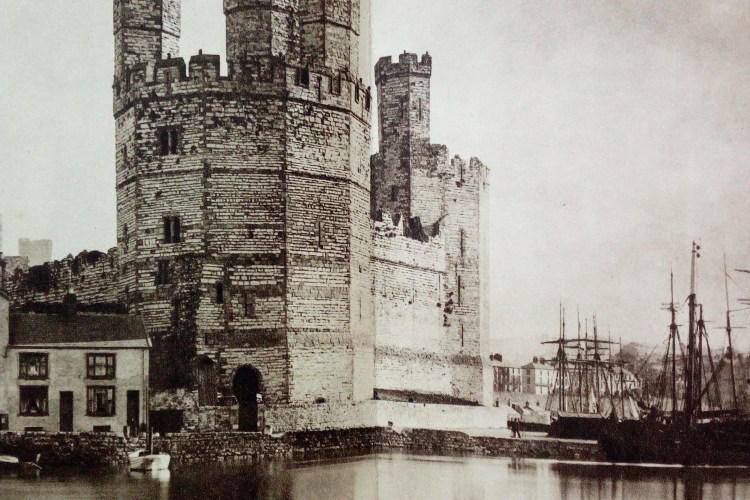
I spied this hardback ‘In Search of Wales’ by H.V. Morton, with sixteen illustrations and a map, resting on one of the tables at UQ Alumni Book Fair. It was published by Methuen & Co. Ltd London in 1932 and purchased by the Parliamentary Library in Queensland, Australia, on 27 July 1932. My photographs don’t convey the substance of this volume.
Apart from my purchase giving me a tenuous Queensland connection, since I have been blogging I have come to know bloggers from Wales like Book Jotter, and people with ties to Wales, so I guess I was curious to find out some early 20th century history.
There is a city named Ipswich, west of the capital Brisbane, Queensland, and it has Welsh heritage from the founding families, the legacy of coal mines, and street names I can’t pronounce. It was going to be our capital city but being situated inland away from sea ports (and always hotter in summer) Brisbane took over the coveted position.
When I look at the B&W images in this book, I can’t help but feel strong emotion for those Welsh families, the people who came to Queensland in 1851 and started afresh. Whether it was out of necessity, assisted passage, general interest or just sheer bravery, it was a long way to come to start a new life in a totally different land.
The three photos (below) are 1. Cornfields, 2. Druid ceremony conducted by the Archdruid at the Gorsedd Stone, 3. Cockle women of Penclawdd on the seashore. It looks cold! Throughout there are two-page spreads of dramatic valleys, stoney castles and heartbreaking portraits of mining men and soot-covered boys.
My new old book was deleted from the Old Parliament Library catalogue on 22 October 1996 and I wondered where it had been since then. ‘Oh well,’ I thought, ‘I am enjoying it now on 10 May 2019’. Then I saw a small pencilled Dewey notation on the back cover map UL914.29 Mor. It had probably languished in the University Library.
As yet I haven’t tracked down all the details of author, Henry Vollam Morton, and even though he was a well-known journalist and travel writer, the information in the final pages doesn’t give much away. There is an insightful personal comment (photo below) which ends with three tiny icons, perhaps foreshadowing today’s social media links.
Further material tells me that the author’s book ‘…is more than a travel book, it is a sensitive interpretation of a country’s people and their history.’ He wrote a series called ‘The Search Books’ and further along it reads ‘Since that time Mr Morton’s gay and informative travels…have gained him thousands of readers.’
At this late stage, a book review would be rather tricky—okay, it would be hard for me to get my head around. H.V. Morton travels far and wide through Wales and writes in depth. The voice, the style of that era (nicer than brash Bill Bryson) is easy to read and written in a friendly, personal way with warmth in every chapter. Allowing for the off-key words we don’t use today, there is factual information and humorous stories, and in Chapter Six he asks the usual traveller’s question and receives a great reply—
“The first village, commonly and charitably called Llanfair, provides the stranger with an impossible task among the Welsh place-names.
Its title is: Llanfairpwllgwyngyllgogerychwyrndrobwllllandysiliogogogoch This is no joke. It is only too true! The full name, however, is never used but it appears only slightly amputated in the Ordnance Survey maps.
The postal name is Llanfair P.G. or Llanfairpwll. I entered the first inn and said to those who were drinking in the bar ‘I will buy anyone a drink who can pronounce the full name of this place.’
There was an ominous silence until an old man, finishing his beer, stood up and sang it! ‘And what does it mean?’ I asked. ‘It means,’ I was told, ‘the Church of St Mary in a wood of white hazel near a rapid whirlpool and near St Tysilio’s cave close to a red cave’.”
Sounds magical to me. Daith yn hapus!
♥Gretchen Bernet-Ward
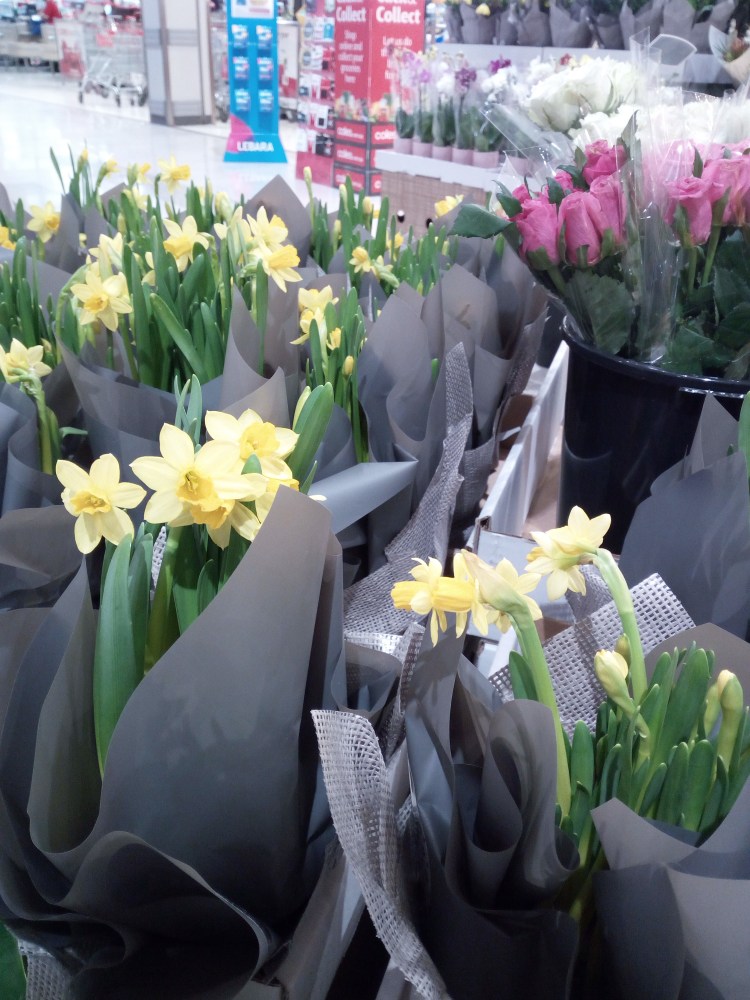
Another beautiful coincidence – it is not springtime in Australia, it is cool autumn weather. Yet these daffodils, a Welsh symbol, were outside my local supermarket the day after I purchased the book at UQ Alumni Book Fair.
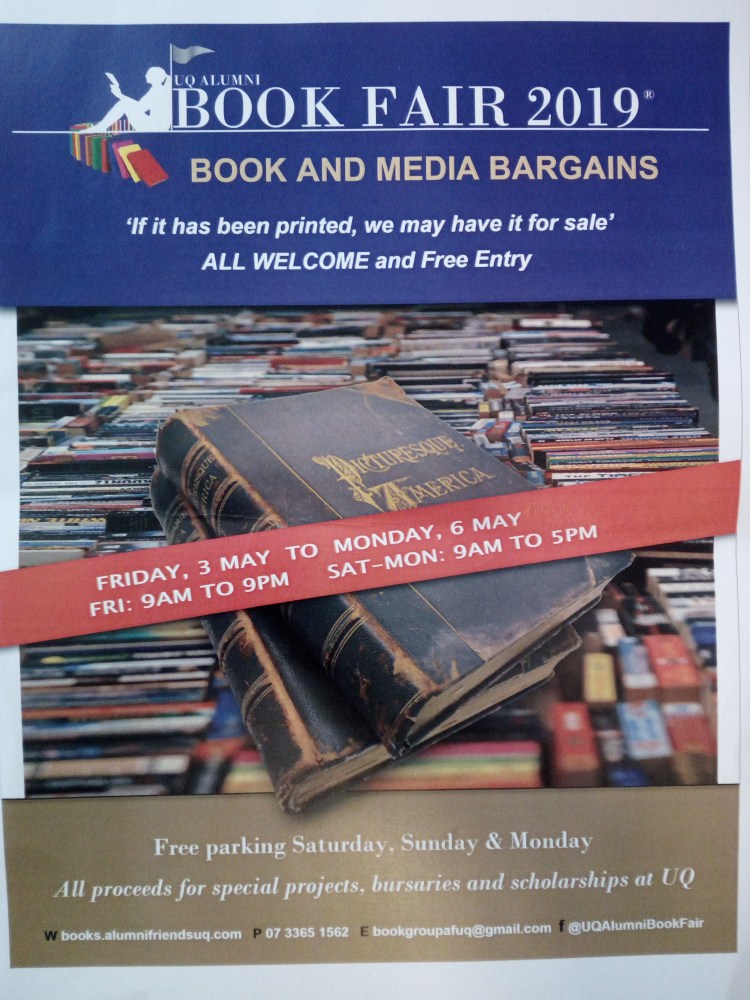
The University of Queensland Alumni Book Fair 2019 at St Lucia, Brisbane, had been in full swing for a couple of days before I arrived on the third day. One more day to go with no sign of running out of keen customers or brilliant book bargains.
The Exhibition Hall is huge!
The whole area was filled with tables covered in books of every shape, size, colour and genre. I couldn’t name every section without going cross-eyed but there were technical books, reference books, fiction, non-fiction, and fun stuff like mixed media (including old vinyl records) and cool kids books.
I could say romance novels jostled for position with items such as travel guides and political biographies but everything was grouped in an orderly manner, well marked and easy to access. I was surprised to see numerous large old dictionaries for sale, however, the eclectic poetry section caught my eye. Ooh, Bruce Dawe.
Total absorption
The whole area was spacious, clean and civilised. I expected a few gasps or cries of joy when The One, that perfect addition to a series or a special edition was found and held aloft. But no, basically the customers had their own agendas and moved calmly from book table to book table with carry bags, totally absorbed. By my estimation, I think you could expect to spend about two hours scanning and sifting through the books, more if you wanted to read pages here and there.
A corner of the UQ Alumni Book Fair 2019
Stacks of boxes
In the first photo (above) in the distance you can see a stack of book boxes, then in the second photo you see the book boxes up close. That opened box was about head-height and a volunteer told me those boxes had stretched along the walls, and every day they were emptied. Volunteers in purple t-shirts worked tirelessly the whole time I was there, unpacking, shelving, answering queries, and working at the payment points.
Afternoon tea
In the adjacent cafeteria (delicious homemade strawberry cake) I displayed some of the haul. You will spy a small red book in the left-hand photo which I have opened in the right-hand photo. The dust-jacket is missing and the previous owner had not liked naughty boy Pierre and scribbled on him in pencil but I love it. After a bit of searching, I found out this little Maurice Sendak volume is one of four, a Nutshell Library boxed set published in 1962 by HarperCollins.
Time to go
On display in the foyer of the Exhibition Hall were enlarged travel images and I couldn’t resist taking a photo of the duck and ducklings. Overall, the synchronicity of UQ Alumni Friends, Members and volunteers created an exceptional event.
Walking back to the bus stop, weighed down with my treasure, the water bubbling through the pipes of this fountain made a relaxing sound so I stopped to admire it.
As I stood there, I thought about the massive amount of books on every subject imaginable which showed how far we have come, and how much of value we have left behind.
The plot twists and turns over many months as I follow the lives of three families jolted sideways after two untimely deaths.
Michael’s friend Janey has lost her dad to cancer and Michael understands this, but the other person who died? Nextdoor neighbour and dear friend Irma. Was it a heart condition, an accident or murder?
The safe, cosy world of young Michael and his Nan changes dramatically. Michael also has to cope with George, a bully, who moves into Irma’s house with his father Shawn prior to her death.
The sudden loss of Irma is deeply felt by Michael. As the saying goes he has “an old head on young shoulders” but is confused over what actually happened and gets no real help from the adults. Advice is conflicting.
Deep down Michael believes Irma was murdered and is determined to convince Nan and the gatekeepers. There are complexities to face and he over-reaches in the hope of finding justice. Anxiety joins his grief, he challenges his homelife and raises old questions. Why does he live with his grandmother? Where are his parents?
During a bad night, Michael’s old teddy bear comes down off the shelf for support as he works on his theory of Irma’s demise. He thinks she may have been poisoned. The chicken soup in question was homemade by Irma and well loved by Michael, his favourite panacea for cold symptoms.
At one stage, Michael suspects his Nan – she’s my favourite character! – and while out walking he dashes away and hides. Quote “Michael?” calls Nan. I don’t move. “Michael”. “He’s fallen in the bloody moat,” says the man who isn’t Grandad. “Good job there’s no water in it.” “Feeder canal,” says Nan. “This is no time to be right about everything,” he growls. I’ve never heard anyone tell Nan off like that before. Unquote.
Real clue? Fake clue?
Author Maria Donovan portrays well-rounded, believable characters and each brings small yet highly significant details to the story. Bully and his father are thorns in Michael’s side but nothing distracts him from the hunt for clues. Janey has her own family problems. To relieve her frustration she gets a box of golf balls and stands in The Middle, a green opposite the houses…
Being of a nosey disposition myself, I empathise with Michael’s underlying emotions and the need for resolution. Tension escalates and stoic Nan marches towards a showdown. Maria Donovan’s tightly written finale comes at a penultimate time of year for everyone.
Skillfully woven through the story are school holidays, the seaside, and events on telly like Wimbledon. Occasionally the zeitgeist side-tracks Michael’s quest yet adds a kaleidoscope of nostalgia for me.
Michael’s journey isn’t for children although young adult readers would identify with the youthful side. Part mystery, part coming-of-age, I think adults will enjoy the unique elements of the plot, and appreciate less gore than currently found in mystery novels.
Maria Donovan’s book walks a fine line between innocence and adult behaviour and succeeds in capturing the mood beautifully. It demands to be read again. Seek out those clever clues!
My star rating
♥Gretchen Bernet-Ward
AUTHOR BIOGRAPHY:
‘The Chicken Soup Murder’ is Maria Donovan’s debut novel and was a finalist for the Dundee International Book Prize. Apart from this book, Maria has many literary credits to her name including her flash fiction story ‘Chess’ which won the Dorset Award in the Bridport Prize 2015.
Maria is a native of Dorset UK and has strong connections with Wales (also in the book) and Holland. Her past careers include training as a nurse in the Netherlands, busking with music and fire around Europe and nine years lecturing in Creative Writing at the University of Glamorgan, South Wales.
On arrival, drinks and nibbles were a nice surprise after travelling by bus along winding streets to UQ Alumni Rare Book Auction. From then onward it was non-stop action from 6pm until 9pm in Fryer Library.
Twilight sky
Beforehand, I walked not the ‘hallowed halls’ but the beautiful arched sandstone walkways of the Great Court to the Fryer Library entrance. I caught the lift to the fourth floor where several people were mingling in the foyer beside the bidding registration table. On receiving Number 30, I hoped it was a lucky number.
Lucky number 30
I wandered in to the library, strolled through all the assembled black chairs, and entered the book viewing area. Lighting was subdued but it was easy to see the fascinating array of old books waiting patiently for my frenzied bidding. Not quite frenzied; but to jump ahead, I did offer a bid for a beautiful book, at least I think it is, which started and finished at the same amount, i.e. nobody out-bid me. Shame really because Smith, A. Croxton ‘Tail-Waggers’ Country Life, London, 1935, 147 pp has superbly rendered B&W mounted etchings by Malcolm Nicholson.
Lights, camera, action
After ascertaining if I could take photos, permission granted, I ended up being so entranced by the bidding that I didn’t take many shots. The introductions, welcome and Acknowledgement of Country were conducted (first by university librarian Caroline Williams originally from Nottingham UK) and at 6.45pm, auctioneer Jonathan Blocksidge stood behind the lectern. Game on!
Quickly, keep up
The bidding was fast and Mr Blocksidge kept the pace up, the heat on and the bids rising. There seemed to be some pretty serious collectors and possibly agents in the audience and at times the bids rose in increments so rapidly it was hard to keep track.
The highest bidder
There were absentee bidders and Lot 27 rose above the reserve price. As the night progressed – 146 lots were listed – bidding ‘wars’ occurred, particularly between two people behind me. The jousting for Lot 62, first edition of ‘Human Action: A Treatise on Economics’ made the audience applaud in appreciation. Same for Lot 66 ‘The Natural History of Man’ and Lot 86 James Cook’s ‘A Voyage Towards the South Pole’ which later culminated in Lot 105 Charles Kingsford-Smith’s personally signed copy of ‘Story of Southern Cross’ going for a huge amount.
Regrettably, the star of the show and expected highlight of the evening Lot 146 Gauss (de Brunswick) book ‘Recherches Arithmetiques’ did not meet the hefty reserve price.
Until tomorrow
The UQ team of staff and volunteers worked tirelessly throughout the evening, quiet yet ready to assist, and I think they did an excellent job. In fact, I have been reliably informed that all of the auction organisers I had contact with are UQ Alumni Friends, Members and volunteers. They were supported by the Fryer Library team (led by Manager, Simon Farley) who organised the chairs, allowed use of the library space, and provided the hospitality pre-event. A success well deserved!
I purchased and collected my precious old book of ‘Tail-Waggers’ and headed out into the cool, calm night.
Stick around for Part Three coming soon, my adventure with books, books and more books. Or better still, visit the UQ Alumni Book Fair yourself!
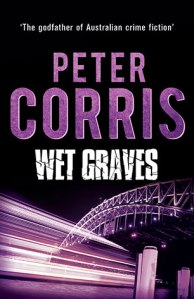
The final Peter Corris crime novel featuring PI Cliff Hardy.
A few years ago I was going through a rough patch in my professional and personal life. I wanted to close the door and read, read, read myself back to normality.
Search and ye shall read
The trouble was I hadn’t seriously knuckled down and read a well-written book for a long time. I felt distanced from northern hemisphere writers (what’s snow?) and never really got the whole Scandi-noir buzz. Several genres, including the ambiguous literary fiction, didn’t hold my interest. I felt I needed comedy, something I could relate to and laugh at. Also I wanted characters and places I understood, and possibly had visited.
Readers of my blog will know I like quirky writing so, rather than reach for self-help books, I began to search for way-out humour on the library shelves. Unfortunately back then humorous Australian writers were thin on the ground so I hung around the bookshops until the next Thursday Next dilemma or Ankh-Morpork debacle was published. Yes, Messrs Fforde and Pratchett saved my sanity with their insane books.
From comedy to crime
After trial and error, and iffy recommendations from friends, I discovered Australian crime writers. The good old Aussie turn-of-phrase drags me in every time. I know the cities, the vast distances between those cities, the weather, the beaches, the Great Dividing Range, the smell of gum trees and especially the food. Our food is a mish-mash of many cultures but in there somewhere is real Aussie tucker and nobody does a Chiko Roll or TimTam like we do. And our criminals are a bit special too.
I read in no particular order (and by no means all our contemporary crime writers) Garry Disher, Kerry Greenwood, Peter Temple, Leigh Redhead, Geoffrey McGeachin, Jane Harper, Robert G. Barrett, Honey Brown, Matthew Condon, Emma Viskic, Adrian McKinty (adopted Irishman) Candice Fox, Shane Maloney, Barry Maitland, Michael Robotham and my absolute all-time favourite, the iconic Peter Corris.
And Peter Corris came with Sydney private investigator Cliff Hardy
Peter Robert Corris (8 May 1942 – 30 August 2018) was an Australian academic, historian, journalist, biographer and novelist of historical and crime fiction. As a crime fiction writer, he was described as “the Godfather of contemporary Australian crime-writing”. After writing 42 books in his PI Cliff Hardy series, from 1980 to 2017, Corris announced in January 2017 that he would no longer be writing novels owing to “creeping blindness” because of type-1 diabetes and passed away the next year.
Naturally I was saddened to learn of his death but it hit me in another way. I never wrote and told him how his Cliff Hardy books lead me into the badlands and showed me that my life was all right. Well, in comparison to the criminal underworld Hardy inhabited. Despite the sleaze, the drugs, the murder, Hardy had his own set of morals, he was a good judge of character and played fair. However, he knew how to defend himself and fought hard when necessary. Forget that it’s fiction. Compared to his daily grind, I had nothing to worry about.
As Bowie said Ch-ch-ch-Changes
These Corris crime novels also documented a changing way of life through Hardy, especially the Sydney cityscape and his beloved Newtown. For nearly 40 years, semi-permanent characters came and went, and mobile phones and laptops took hold. High tech digital devices and spyware increased; electronic locks, security cameras and internet surveillance replaced skeleton keys and good old shoulder-to-the-door. I feel the loss of a metal filing cabinet, its papers viewed by torchlight in the middle of the night.
But through it all, Corris always managed to side-step technology, keeping Hardy real, doing the leg work, nailing the bad guy. His astute observations of human nature, and how he wrote plausible characters, made me feel I’d just met a crooked barrister or a smarmy crime baron.
The book on the right is one of my favourites. Recognise the bridge? These days I do read more widely but I’m missing my yearly dose of hard-boiled Hardy—to use Corris’ own description.
Below I have listed all the Cliff Hardy books even though it doesn’t have the visual appeal of the bookcovers. If you wish to check out more about each story, please visit Allen & Unwin Publishers website:
There could be reprints, anniversary issue, possible screenplay, theatre adaptation, prequel, or Grandson of Hardy for younger readers. I won’t give away the ending of the last book because I expect you to BINGE READ the complete oeuvre, then see for yourself whether or not you like Cliff Hardy’s final installment.
My sincere condolences to Jean Bedford, wife of Peter Corris, and his family.
♥Gretchen Bernet-Ward
PI Cliff Hardy book series
The Dying Trade (1980)
White Meat (1981)
The Marvelous Boy (1982)
The Empty Beach (1983)
Heroin Annie and Other Cliff Hardy Stories (1984)
The Big Drop and Other Cliff Hardy Stories (1985)
Make Me Rich (1985)
The Greenwich Apartments (1986)
Deal Me Out (1986)
The January Zone (1987)
The Man in the Shadows: Cliff Hardy Omnibus (1988)
O’Fear (1990)
Wet Graves (1991)
Aftershock (1992)
Beware of the Dog (1992)
Burn and Other Stories (1993)
Matrimonial Causes (1993)
Casino (1994)
The Reward (1997)
The Washington Club (1997)
Forget Me If You Can (1997)
The Black Prince (1998)
The Other Side of Sorrow (1999)
Lugarno (2001)
Salt and Blood (2002)
Master’s Mates (2003)
Taking Care of Business (2004)
The Coast Road (2004)
Saving Billie (2005)
The Undertow (2007)
Appeal Denied (2008)
The Big Score: Cliff Hardy Cases (2008)
Open File (2009)
Deep Water (2009)
Torn Apart (2010)
Follow the Money (2011)
Comeback (2012)
The Dunbar Case (2013)
Silent Kill (2014)
Gun Control (2015)
That Empty Feeling (2016)
Win, Lose or Draw (2017)










 The sudden loss of Irma is deeply felt by Michael. As the saying goes he has “an old head on young shoulders” but is confused over what actually happened and gets no real help from the adults. Advice is conflicting.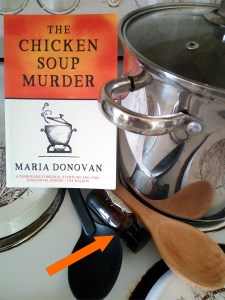
 Skillfully woven through the story are school holidays, the seaside, and events on telly like Wimbledon. Occasionally the zeitgeist side-tracks Michael’s quest yet adds a kaleidoscope of nostalgia for me.



 Thoughts Become Words