Peculiar Place to Sleep

♥ Gretchen Bernet-Ward
Miscellaneous Collection by Gretchen Bernet-Ward

♥ Gretchen Bernet-Ward
Note: These images appeared at different times on my regular Home page ‘Photo of the Week’.
♥ Gretchen Bernet-Ward


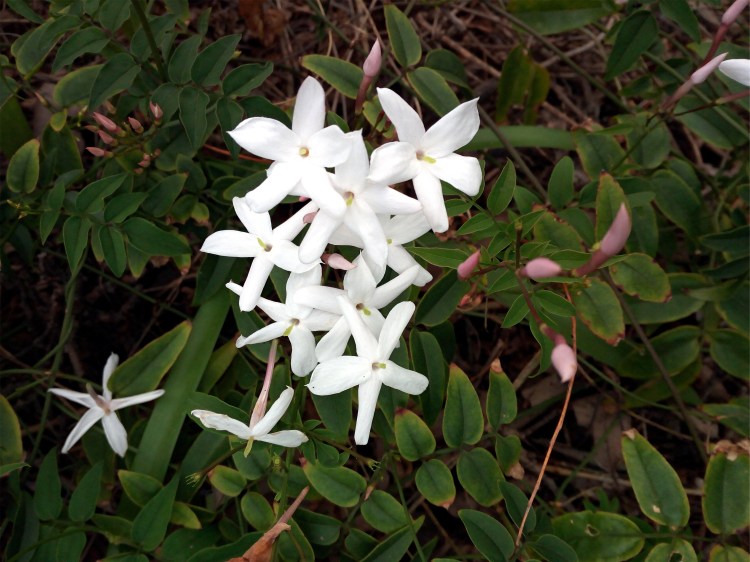
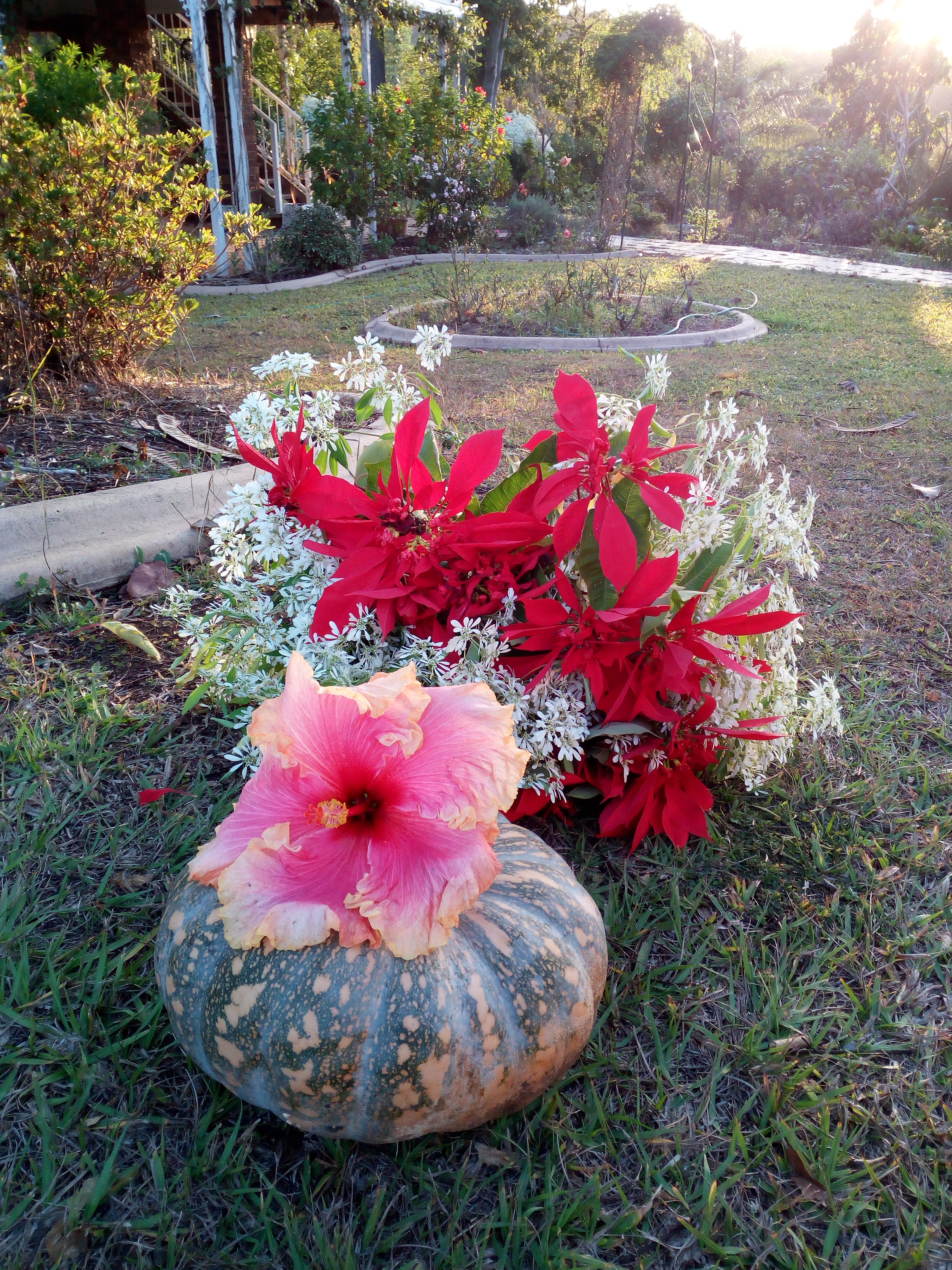
Plants and flowers come and go in the garden according to the seasons but Spring seems to be the best time for Nature to attract my attention.
Here is a tiny sample of what’s happening now in a suburban backyard in Brisbane…


Protect the natural environment, recycle, reuse, conserve water, and remember social distancing doesn't apply to plants.
♥ Gretchen Bernet-Ward
Back when the century had ticked over into another millennium, I was given seven canisters of China Tea. These dragon-covered tins languished on a high kitchen shelf, unopened and forgotten in favour of Queensland-grown black tea from the Russell family.
Eventually it was decided that the pantry shelves had to be Covid Cleaned, e.g. needing a serious going-over. Various items were inspected and sorted into good and bad piles but the tea, packed in Hong Kong and imported to Australia, remained in a different category.

Although the tin lids were dust coated and faded, it was decided to open all seven of them, brew the contents—in cup and pot—and drink regardless of aroma. Flavour was another matter. To add to the excitement, one tin had lost its label and the large tin was Earl Grey teabags.
The lid seals had perished but once the canisters were ‘prised’ open, the interiors were pristine clean. I only sniffed the contents and did not taste it, nevertheless considering its age the Jasmine Tea was still beautifully aromatic.
Pro tip—don’t eat pickles after tea tasting.

Put the kettle on and brew a pot of tea—milk and sugar optional—sweet treat essential. Or check out my earlier post regarding the ubiquitous Afternoon Tea ritual https://thoughtsbecomewords.com/2018/03/11/afternoon-tea-and-fancy-food/
♥ Gretchen Bernet-Ward
Queensland’s Nerada Tea blog is packed with wonderful things, from the tea plantation to recipes and tree kangaroos https://www.neradatea.com.au/blog

In the depths of a July winter here in Brisbane, Queensland, I am sitting with a cold nose and knees, contemplating warmer weather. Our winters probably seems mild to those countries with ice and snow. We have misty mornings then clear blue skies and by lunchtime some clothing layers can be removed for a couple of hours before the cold creeps in again.
The issue is home heating. Of course, I am not talking about the hermetically sealed grey boxes of the millennium. This older house is built like thousands of others—for the heat. We don’t have a fireplace, we don’t have insulation, we don’t have ducted heating, but we do have reverse cycle air-conditioning. Problem is the unit swirls the air around at the edges so it never feels warm enough.
Brrr! This is where an old three-bar radiator and a portable column oil heater come in handy for three months of the year.
So saying, we human beings are a contrary lot—I enjoy the wintertime.
Winter is more conducive to a brisk walk before settling down to writing. Cold weather calls for cosy pursuits. In a hot, humid summer, it’s more a case of lying around gasping after foolishly thinking some physical exercise like gardening was a good idea. The lush, rampant growth of a subtropical summer is a sight to behold but right now the garden lacks happy vegetation; the leaves are brown, the grass is sparse, the earth is hard and dry.
This morning the temperature is currently 8 degrees Celsius, the sun is shining but the air is freezing. Well, maybe not. We don’t really do freezing, more on the chilly side. I am going to make a hot beverage and pull on an extra pair of socks.
♥ Gretchen Bernet-Ward


Following on from our large home-grown pumpkin and Grandma’s Pumpkin Scone Recipe, every cookery book containing a pumpkin formulation now comes under scrutiny. Our most recent addition is Pumpkin Chia Mini Muffins.
Here’s the recipe if you feel like something tasty for lunch – with or without an accompaniment – and you can make them any size you wish!
80g ( ⅓ cup) Butter
1 Spring Onion, thinly sliced
2 Garlic Cloves, crushed
250g (1 cup) Pumpkin, peeled, seeded, coarsely grated
375g (2 ½ cups) Self-Raising Flour
½ tsp Salt
120g (1 cup) Cheddar Cheese, coarsely grated
2 tbs Chia Seeds
1 Egg, lightly whisked
310ml (1 ¼ cups) Buttermilk
Chia Seeds, to sprinkle
Butter/Condiment, to serve
Preheat oven to 190°C (374° F)
Grease a 12-hole (80ml) Muffin Pan (or 2 x 12-hole Mini Muffin Pans)
Heat 1 tbs of butter in a medium flying pan over medium heat.
Add spring onion and garlic and cook, stirring 3 mins until spring onion softens.
Add pumpkin and cook, stirring 5 mins or until pumpkin softens.
Set aside to cool.
Melt remaining butter into a saucepan over medium heat.
Combine flour and salt in a bowl.
Stir in cheddar cheese and chia seeds.
Whisk egg, buttermilk and melted butter in a bowl.
Season with salt.
Pour the egg mixture over the flour mixture.
Add pumpkin mixture.
Use a large spoon to stir until just combined.
Spoon mixture into prepared pans.
Sprinkle with extra chia seeds on top.
Bake approx 20-25 minutes, depending on your oven.
Insert skewer to check, should come out clean.
Cool muffins in pan for 5 mins before turning onto wire rack.
Eat Pumpkin Chia Mini Muffins with soup, plain or with savoury topping.
Can be baked in muffin pans or paper patty pans for children.
Next time I would add corn or diced capsicum or chopped green herbs.
Using buttermilk seemed to make a difference.
Chia seeds taste is not very noticeable, but apparently is very good for you.
♥ Gretchen Bernet-Ward


Pumpkin scones are a traditional morning tea favourite in Queensland. Unsophisticated yet delicious, these golden scones were much-loved by the late Lady Flo Bjelke-Petersen, politician and wife of former Premier Sir Joh Bjelke-Petersen, and she often baked them for public occasions.
Seen as tea-time treats, they are available by the half dozen in bakeries and displayed in the cookery section of annual shows and exhibitions. For home cooking, pumpkin scones have stood the test of time due to their quick preparation and adaptability. They can be eaten sweet with strawberry jam and whipped cream, or savoury with cheddar cheese and chutney.
For full flavour, pumpkin scones are best eaten warm from the oven, but they store well and a quick turn in the microwave gives them a boost on a chilly morning.

3 cups self raising flour
pinch salt
½ cup sugar
1 tablespoon butter
1 cup mashed pumpkin – cooled
1 egg
milk
Cream butter and sugar. Add egg, add mashed pumpkin. Sift in flour alternately with enough milk to make soft, light dough. Pat out or roll on floured board to desired thickness. Cut with round cutter. Place on tray and brush with milk or lightly dust with flour. Bake in a hot oven. Serve warm; plain or with topping.
Above recipe is adapted from Jenny Purvis, “Kilmarnock” Clermont, Queensland.
Courtesy of “Country Hospitality: A Comprehensive Cookery Book” compiled by the Clermont Branch of Isolated Children’s Parents’ Association 1984 edition.

A prayer follows the foreword by former Executive Officer, Queensland Council ICPA, Mr E C Powne MBE, and reprinted below:
Bless my little kitchen, Lord,
I love its every nook,
And bless me as I do my work,
Wash pots and pans and cook.
May the meals that I prepare,
Be seasoned from above,
With thy blessing and thy grace,
But most of – thy Love.
As we partake of earthly food,
Thy table Thou has spread,
We’ll not forget to thank thee, Lord,
For all our daily bread.
So bless my little kitchen, Lord,
And those who enter in,
May they find nought but joy and peace,
And happiness therein. Amen.

♥ Gretchen Bernet-Ward
ADDENDUM: Kent pumpkin (also known as Jap pumpkin) has ribbed, grey-green mottled skin and golden yellow flesh. This pumpkin is of the sweeter variety, perfect for pumpkin scones, salads and baked dishes. Great mashed, roasted or steamed and mixed with a variety of sweet or savoury foods. Pumpkin is an excellent source of beta carotene and contains dietary fibre, potassium, and vitamins C and E for good health.

I started to add tags to my photo and realised that most things associated with the beach start with the letter ‘S’ and I’d barely scratched the surface. Sand, sea, swimming, shells. I paused at shells because a sunbeam tinged my glass bowl of seashells which holds countless memories.
… I drifted away… the smell of sunscreen and the feel of sand sifting through my fingers… one day I will take those shells back to the ocean…
In case you missed my front page Photo Of The Week, below I have reproduced the wording which accompanied a close-up photo of my shell collection. More scientific than personal but nonetheless I found it fascinating:
“SHELLS are made of calcium carbonate, in the mineral form of calcite or aragonite. Animals build their shells by extracting the necessary ingredients—dissolved calcium and bicarbonate—from their environment. As the animal grows, its home—the protective shell that surrounds it—must get bigger, and so they grow their shells layer upon layer, creating ‘growth-bands’, or growth increments, within the shell.
“Some of these growth increments are visible on the external surface of the shell, while others are only visible in the internal structure. But the interesting thing about the growth increments is that their width, or thickness, is affected by environmental conditions, like temperature. Some growth increments are a reflection of tidal cycles, some show annual periodicity.
“So the series of growth increments within a shell are essentially a record of the animal’s lifetime and, similar to the study of tree-rings, some scientists study them to make interpretations about the environment where that animal lived and grew. The oldest known individual animal lived in a shell—a specimen of the shellfish Arctica islandica has been documented to be 507 years old.”
For colours, shapes, biodiversity visit Academy of Science
https://www.science.org.au/curious/earth-environment/sea-shells
FOSSIL collector, dealer and palaeontologist Mary Anning (1799 –1847) was the inspiration for the tongue twister “She sells sea shells by the sea shore” from the original song written in 1908 by Terry Sullivan relating to Mary Anning’s beach-combing lifestyle. Anning is known for the important finds she made in Jurassic marine fossil beds in the cliffs along the English Channel at Lyme Regis in the county of Dorset in Southwest England.
The fascinating truth behind the old tongue twister
https://www.littlethings.com/she-sells-seashells-meaning
♥ Gretchen Bernet-Ward


225g plain flour
1 pinch salt
115g rice flour
115g castor sugar
225g butter
Sieve flour, rice flour, sugar into basin, rub in butter and knead until smooth paste formed. Turn on to floured board, make shape or shapes as desired, prick with a fork. Place on cold greased slide, cook in a slow oven ¾ hour to an hour, until a pale brown.
Reproduced in original style from my mother’s PWMU Cookery Book 1976
Printed in Australia by Simpson Halligan Co Pty Ltd
Distributed by Jolly Book Supplies, Brisbane
Twenty-first edition revised and enlarged with over 200,000 copies issued
Mix 227g (1/2 lb) butter and 113g (1/4 lb) fine white sugar or icing sugar; add pinch salt and .45kg (1 lb) plain flour; knead all well together; roll out to the thickness of about half an inch, cut into rounds or finger lengths; prick with fork. Note 340g (¾ lb) flour and 113g (1/4 lb) rice flour may be substituted for .45g (1 lb) flour. Bake in slow oven about 40 minutes until fawn colour.

Bought new rice flour
Put the kettle on
Time for a cuppa!
♥ Gretchen Bernet-Ward

The cat stared through the screen door as though Darth Vader was chasing him. “You are my only hope, G-Obi-Wan Kenobi.” I doubted that, but knew in these pandemic-plagued times there are thousands of pets being abandoned just when a person-pet bond is needed the most.
The day before materialising at our back door, this grey cat had meowed in a distressed and pitiful fashion outside our house.
I had seen him doing similar acts of desperation at other houses. One evening when I left to buy groceries, he ran across the road in front of my car. “That darn cat,” I muttered.
And then later, well, I leaned over and a small piece of sausage happened to hit the concrete below the balcony—it was pounced upon and disappeared immediately.
The cat licked his lips and the glint in his eye said “Foolish move, human”.

Next morning he was waiting outside the door as I filled the kettle with water and popped bread into the toaster.
Tentatively he began to meow. Gradually he started a high-pitched, upset-cat mewling. As he wailed, he placed a paw on the screen door. He started twanging on the metal mesh.
The noise reverberated around the metal door frame. I told him to cut it out or he might impale himself “Hanging by one paw won’t get you sympathy”. Ping. Ping. Ping. He timed it just right. Every. Time.
I gave him some cooked chicken and he practically breathed it in.
Our late lamented dog would have been disgruntled to see a cat lapping at her water bowl. But I think she would have appreciated the irony; the ceramic pattern of dogs and bones.
It became apparent that he was desperate to come inside. Just what I did not need. An inside cat. With my allergies.
He was quickly named Jo-Jo. As we try to navigate the back door, you may recall The Beatles song and understand why this name stuck.
As befitted a homeless feline, Jo-Jo was lean with dull, dusty fur. I visited the local pet supplies warehouse and came out with a heavy carry bag and a lighter bank balance.
One week later and Jo-Jo is still yowling at the back door and pinging the mesh screen.
But our stray is sleeker, his meow is less anxious, and his is more accepting of the morning-evening no snacking between meals timeline. He doesn’t have the luxury of grazing because other creatures, like ants and possums, are partial to cat food.
Jo-Jo is partial to a chin-scratch.

As I type this today, Jo-Jo is languishing on our doormat in the warm autumn sun, fur gently ruffled by the breeze, safe in the knowledge that there is a cat cubby to snuggle into when the evenings grow cooler. Dozing, sleepy now…
Yesterday was different. I saw a mysterious lump in the grass of our backyard. A blob of something which blowflies were finding mighty interesting.
It was a bird, a dead bird. Minus its wings. A murder scenario was easy to reconstruct, but hard to fathom. It looked more like a destructive act than a burning desire for a fresh meal. The next bird was brought to the backdoor as an offering.
A decision will have to be made on the future of Jo-Jo. Find his owner? Find a foster home? Send him to the animal shelter? Take him to the vet for a microchip scan? Cat-proof the house…? Time will tell.
A discovery has already been made—our stray waif is a ‘she’ not a ‘he’.
♥ Gretchen Bernet-Ward
RSPCA Australia COVID-19 Response
Like all of us, the RSPCA is closely monitoring the coronavirus/COVID-19 situation. We’re very aware of the possible risk to our people and impact on animals. It’s possible that minimising this risk may require some changes to our operations. For helpful advice to avoid inconvenience, please check our website and social media (Facebook, Twitter) regularly.
Information on COVID-19 and Companion Animals
There is no evidence that companion animals play a role in the spread of this human disease or that they become sick if they are exposed to the virus. However, you should stay informed about how to minimise the effects of self-isolation or hospitalisation on your pets. View all articles related to COVID-19 on the RSPCA Knowledgebase.